ACG2021 Chapter 14 (Principles of Financial Accounting)
Study these flashcardsFree · spaced repetition · iPhone, Android, Mac & web
All cards
1
Cash Flow
Cash Reciepts and Cash payments of a business
In accounting, cash receipts specifically mean all money the business takes in.
In accounting, cash receipts specifically mean all money the business takes in.
2
The statment of cash flow does the following
1. Reports on the cash flows of a business—where cash came from (receipts) and how cash was spent (payments).
2. Reports why cash increased or decreased during the period.
3. Covers a span of time and is dated the same as the income statement—“Year Ended December 31, 2025,” for example.
2. Reports why cash increased or decreased during the period.
3. Covers a span of time and is dated the same as the income statement—“Year Ended December 31, 2025,” for example.
3
The statement of cash flows helps do the following:
1. Predict the future Cash Flow
2. Investors can evaluate the management of a company to determine to determine if investing in that company is a wise decision
3. Predict ability to pay loans or dividends
-Lenders want to know whether they will collect on their loans
-Stockholders want to know whether they will collect on their dividends.
2. Investors can evaluate the management of a company to determine to determine if investing in that company is a wise decision
3. Predict ability to pay loans or dividends
-Lenders want to know whether they will collect on their loans
-Stockholders want to know whether they will collect on their dividends.
4
What are the three basic types of Cash flow?
(In the order they are in, on the Cash Flow Statment)
(In the order they are in, on the Cash Flow Statment)
1. Operating Activities
2. Investing Activities
3. Financing Activities
*In the same order as in the Cash Flow Statment
2. Investing Activities
3. Financing Activities
*In the same order as in the Cash Flow Statment
5
Operating Activities
-Revenue and expenses that comes from day-to-day operations.
PLUS
-Interest expense: expense of borrowing money
-Interest Revenue: Bank Account, Bought another companies bond, gave out a loan
-Dividend Income: The company owns stock in another company and gets money from that companies dividends
-Income Tax Expense
PLUS
-Interest expense: expense of borrowing money
-Interest Revenue: Bank Account, Bought another companies bond, gave out a loan
-Dividend Income: The company owns stock in another company and gets money from that companies dividends
-Income Tax Expense
6
Investing Activities
Activities that Increase or Decrease long-term assets
7
Financing Activities
Activities that increase or decrease long-term liabilities and equity
Includes
-Issuing Stocks
-Paying Dividends
-Buying and Selling Treasury Stock
-Paying off Long-term liabilities
-Borrowing Money
Includes
-Issuing Stocks
-Paying Dividends
-Buying and Selling Treasury Stock
-Paying off Long-term liabilities
-Borrowing Money
8
1) Borrowing Money (long-term) - Financial Activity
2) Repaying Loan Principal - Financial Activity
3) Paying Interest on that loan - Operating Activity
Categories for GAAP, where each of these transactions would fall under each type of Cash Flow
1) Borrowing Money (long-term)
2) Repaying Loan Principal
3) Paying Interest on that loan
1) Borrowing Money (long-term)
2) Repaying Loan Principal
3) Paying Interest on that loan
1) Borrowing Money (long-term) - Financial Activity
2) Repaying Loan Principal - Financial Activity
3) Paying Interest on that loan - Operating Activity
9
How does the difference types of cash flows affect different parts of the balance sheet
Operating Cash activities: Current Assets and Current Liabilities
Investing Cash Activities: Long-Term Assets
Financing Cash Flows: Long-term Liabilities and Equity
PS: Chart is a good generalization, BUT NOT PERFECT!
Adjustments:
1. Long term Liabilities
-Operational: When accruing business expenses (So, you just pay later)
-Financing: Borrowing Money or repaying that money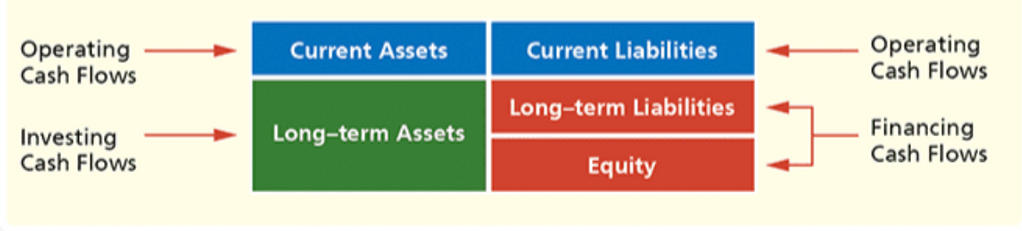
Investing Cash Activities: Long-Term Assets
Financing Cash Flows: Long-term Liabilities and Equity
PS: Chart is a good generalization, BUT NOT PERFECT!
Adjustments:
1. Long term Liabilities
-Operational: When accruing business expenses (So, you just pay later)
-Financing: Borrowing Money or repaying that money
10
1) What are transactions that do not involve cash called?
2) Where are these types of transactions typically located in the Financial Statements?
2) Where are these types of transactions typically located in the Financial Statements?
1) non-cash investing and financing activities
2) typically shown ("as a separate schedule" -textbook) at the bottom of the cash flow statement or in the notes to the financial statments.
2) typically shown ("as a separate schedule" -textbook) at the bottom of the cash flow statement or in the notes to the financial statments.
11
Steps for Writing a Cash Statment
Step 1: Operating Activities (Either choose the indriect method or the direct method)
*PS: The Direct/Indirect Method only effects Operating Activities. All other sections of the Cash Flow Statement are the same.
Step 2: Investing Activities
Step 3: Financing Activities
Step 4: Net Increase (Decrease) in Cash
Step 5: Create a separate schedule for any "non-cash investing and financing activities"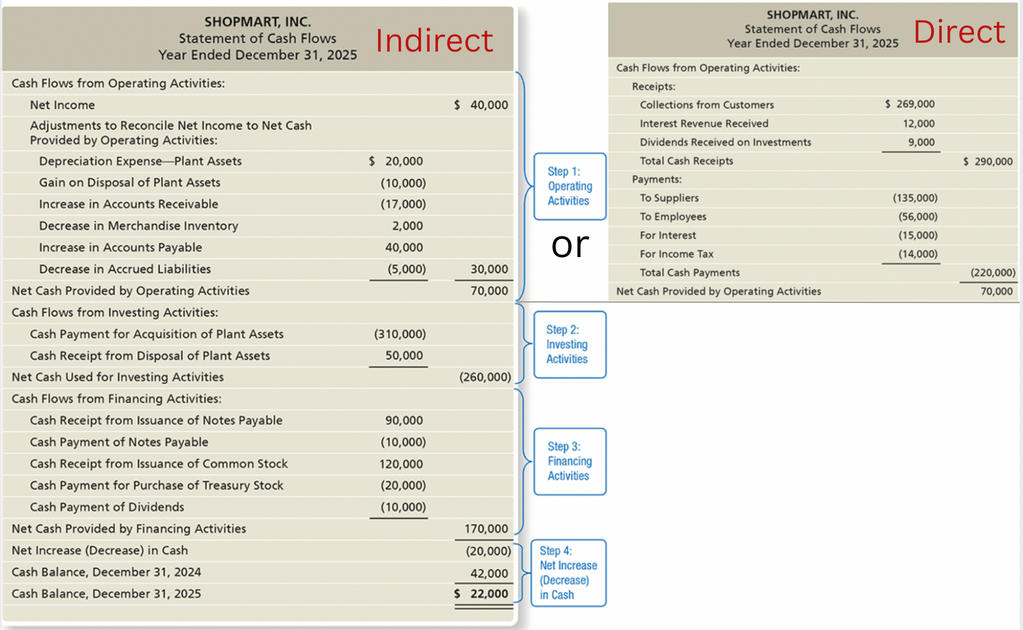
*PS: The Direct/Indirect Method only effects Operating Activities. All other sections of the Cash Flow Statement are the same.
Step 2: Investing Activities
Step 3: Financing Activities
Step 4: Net Increase (Decrease) in Cash
Step 5: Create a separate schedule for any "non-cash investing and financing activities"
12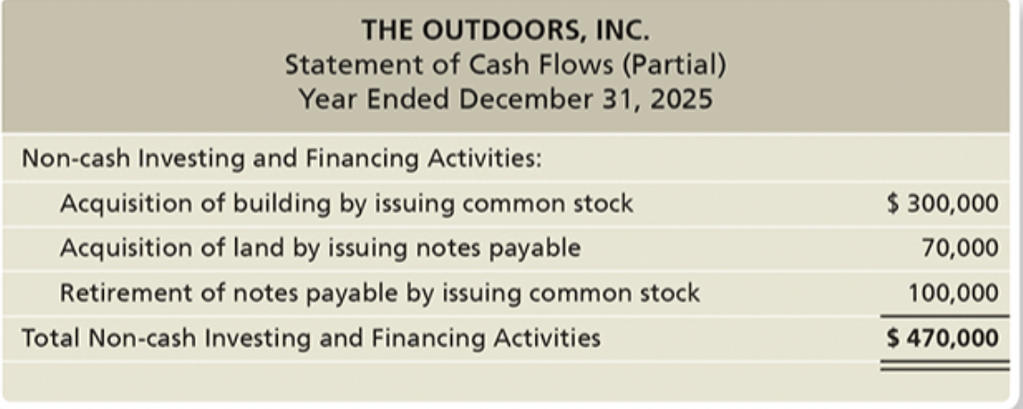
(Based on last Slide)
Image of Step 5
"Non-cash Investing and Financing Activities"
Image of Step 5
"Non-cash Investing and Financing Activities"
13
For Operating Activitives, which method follows GAAP?
Which is most common.
Which is most common.
Both direct and indirect follow GAAP. Indirect i most common.
14
How to determine the Cash flow of operating activities using the indirect method.
Your basically trying to get from your
1. Reverse Depreciation, Depletion, and Amortization Expenses
-So, if you have a \$20,000 depreciation expense, then you would have to increase net income by \$20,000
2. Gains or Losses from Non-Operating Activities need to be Reversed
3. Reverse increases or decreases in Current assets & Liabilities
-Increased Current Asset = Decrease Net Income
-Decreased Current Asset = Increased Net Income
-Increased Current Liability = Increased Net Income
-Decreased Current Liability = Decrease Net Income
1. Reverse Depreciation, Depletion, and Amortization Expenses
-So, if you have a \$20,000 depreciation expense, then you would have to increase net income by \$20,000
2. Gains or Losses from Non-Operating Activities need to be Reversed
3. Reverse increases or decreases in Current assets & Liabilities
-Increased Current Asset = Decrease Net Income
-Decreased Current Asset = Increased Net Income
-Increased Current Liability = Increased Net Income
-Decreased Current Liability = Decrease Net Income
15
Free cash Flow is the amount of cash available from operating activities after paying for planned investments in long-term assets and after paying cash dividends to shareholders.
Free Cash Flow = Net Cash provided by operating Activities - Cash Payments for investments in Long-term assets - Cash Dividends
Free Cash Flow
Free cash Flow is the amount of cash available from operating activities after paying for planned investments in long-term assets and after paying cash dividends to shareholders.
Free Cash Flow = Net Cash provided by operating Activities - Cash Payments for investments in Long-term assets - Cash Dividends
16
Which method (direct or indirect) for reporting operating Income is most preffered for companies? Why?
What about for the FASB?
What about for the FASB?
Indirect is most preferred for companies since it requires less computations
However, FASB does prefer Direct.
However, FASB does prefer Direct.
17
Steps on how to do the direct Method for operating Activities.
(Next _ of Slides)
(Next _ of Slides)
Steps on how to do the direct Method for operating Activities.
(Next _ of Slides)
(Next _ of Slides)
18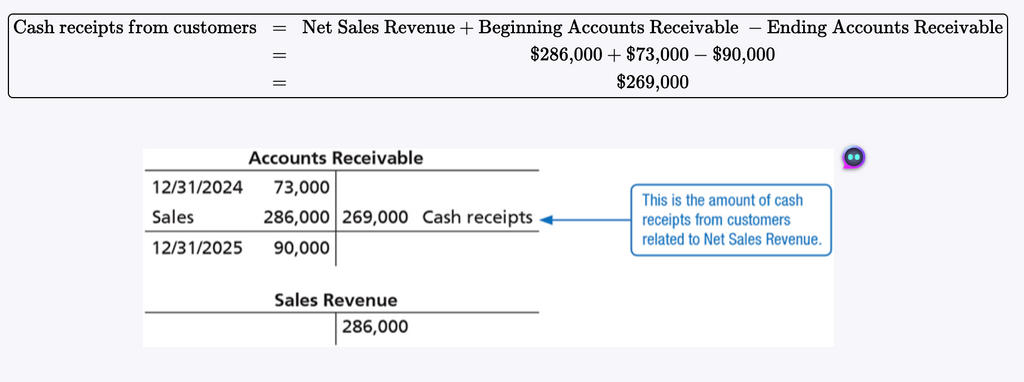
How to find the "Collections from Customers"?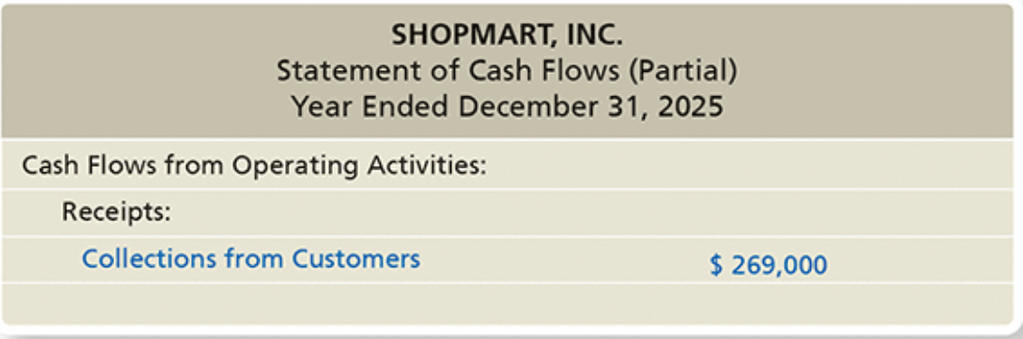
19
How to find the "Interest Revenue Received"?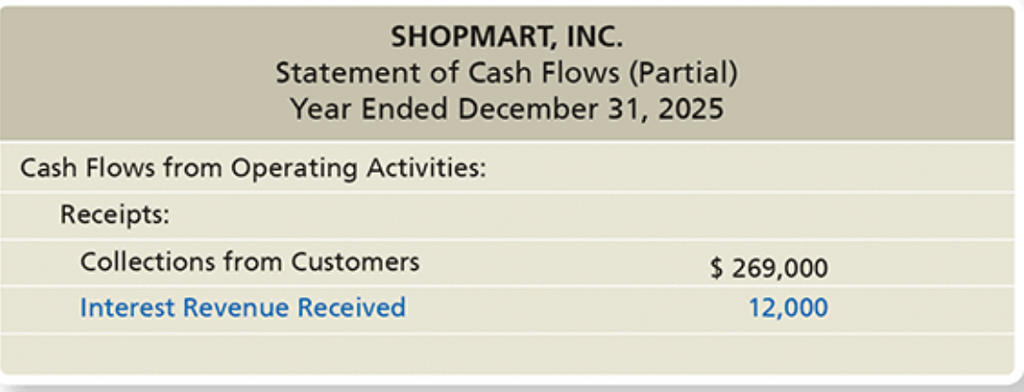
If the interest revenue is \$12,000, and there is NO interest receivable, then that means all the interest has been received by cash.
So, the 'Interest Revenue Received' would be \$12,000
So, the 'Interest Revenue Received' would be \$12,000
20
How to find the "Dividend Received on Investments"?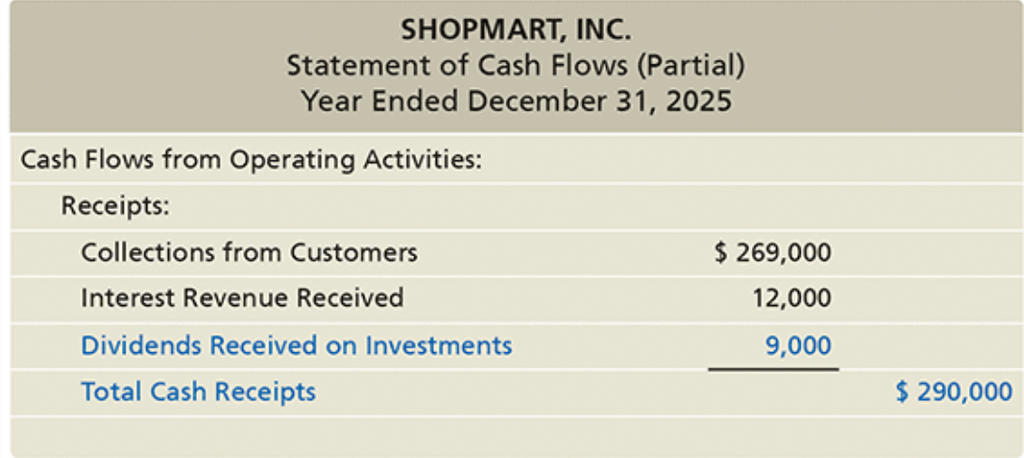
If the Dividend revenue (recieved from the companies investmnets in OTHER companies and recieivng a dividend) is \$9,000, and there is NO dividend receiavble, then that means all the revenue has been received by cash.
So, the 'Dividends Received on Investments' would be \$9,000.
So, the 'Dividends Received on Investments' would be \$9,000.
21
How to find the "To Suppliers"?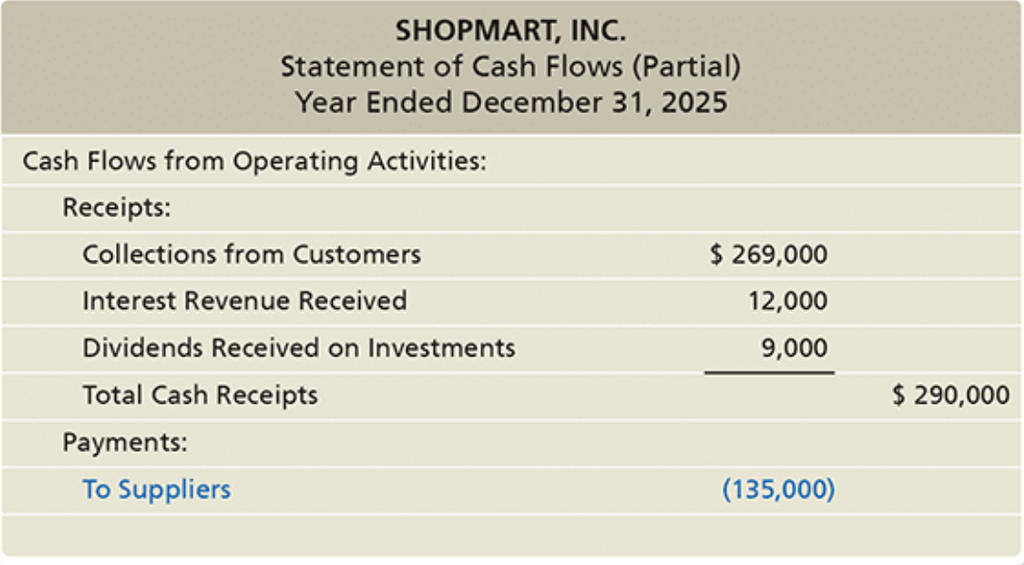
Cash payments to suppliers include all payments for:
-Merchandise Inventory
-Operating Expenses (except employee compensation, interest, and income tax)
*Just add the totals of each of the formulas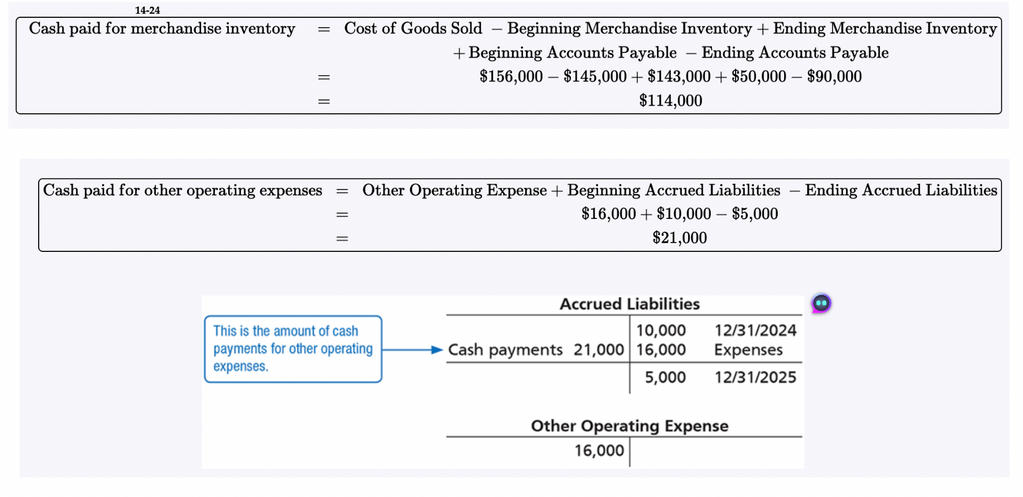
-Merchandise Inventory
-Operating Expenses (except employee compensation, interest, and income tax)
*Just add the totals of each of the formulas
22
How to find the "To Employees"?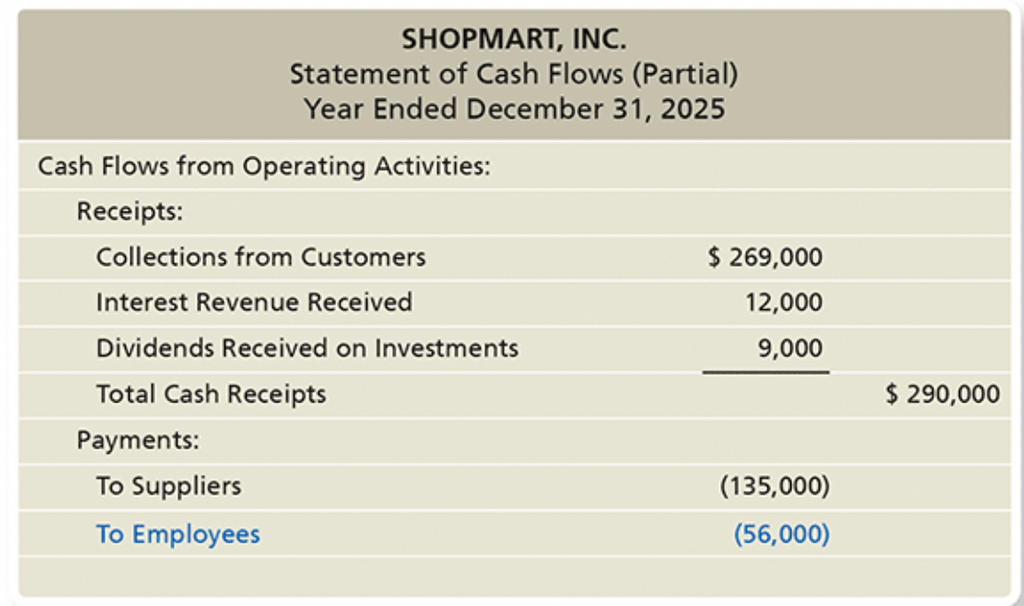
If the Salaries and Wages Expense is \$56,000, and there is NO Salaries and Wages Payable, then that means all the expenses has been paid by cash.
So, the 'To Employees' would be \$56,000.
So, the 'To Employees' would be \$56,000.
23
If the Interest Expense is \$15,000, and there is NO Interest Payable, then that means all the expenses has been paid by cash.
So, the 'For interest' would be \$15,000.
If the Income Tax Expense is \$14,000, and there is NO Income Tax Payable, then that means all the expenses has been paid by cash.
So, the 'For Income tax' would be \$14,000.
How to find the "For interest" and the 'For Income Tax"?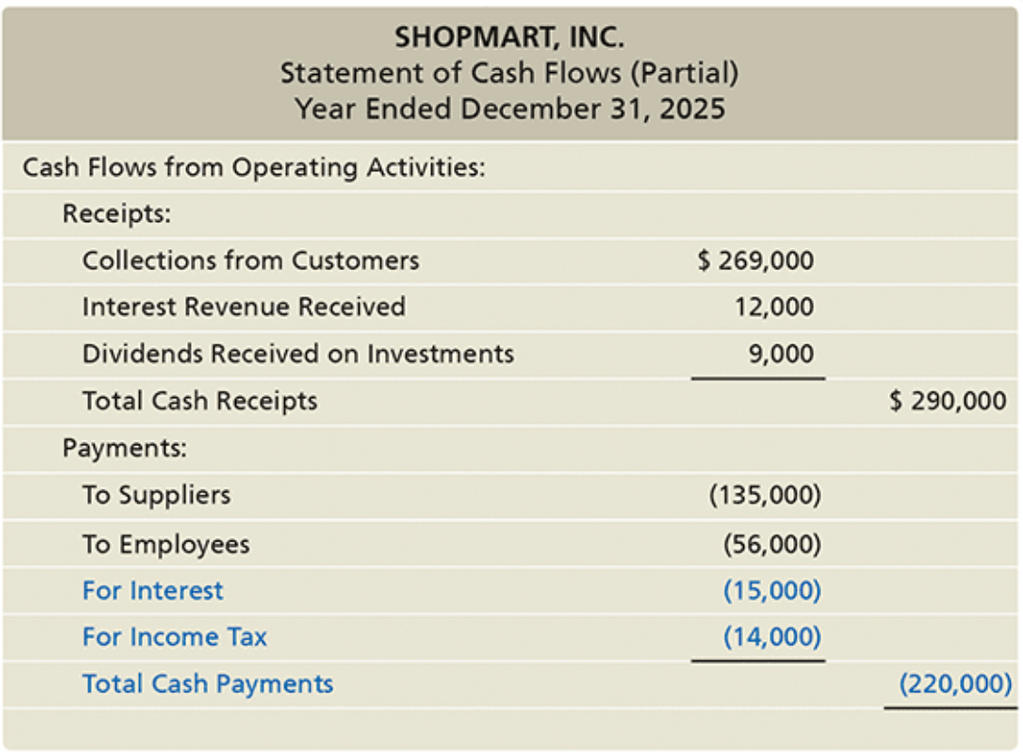
If the Interest Expense is \$15,000, and there is NO Interest Payable, then that means all the expenses has been paid by cash.
So, the 'For interest' would be \$15,000.
If the Income Tax Expense is \$14,000, and there is NO Income Tax Payable, then that means all the expenses has been paid by cash.
So, the 'For Income tax' would be \$14,000.
24
Cash received from borrowing money is WHAT TYPE OF ACTIVITY!!
FINANCIAL ACTIVITY!!
(NOT OPERATIONAL!)
(NOT OPERATIONAL!)
25
What is an accrued liability?
Expense incurred but not yet paid
26
What is an accrued asset?
Revenue earned but not yet paid
27
How would a decrease in accrued liabilities effect the net income.
It would DECREASE net income, since accured liabilities are just expenses you haven't paid yet. So, if it decreased, then that means you paid an expense, with cash.
28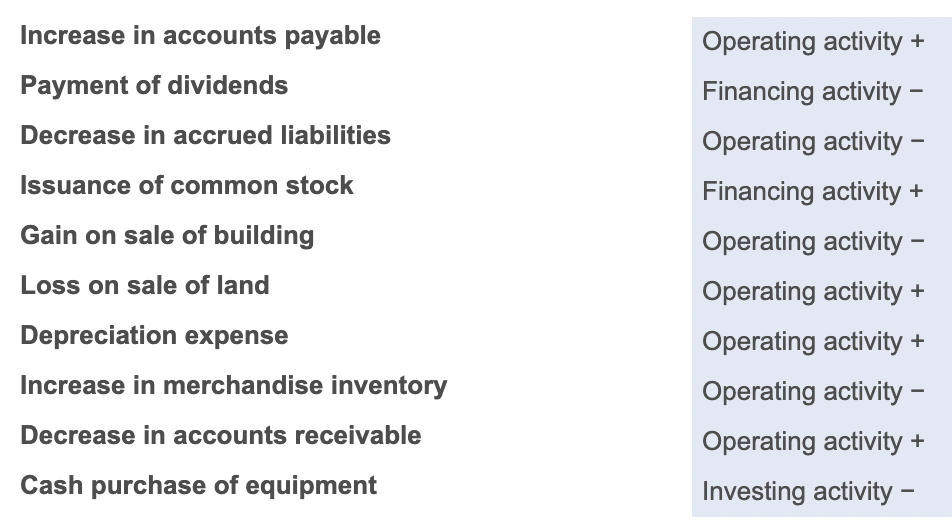
Better wording:
What section of the indirect cash flow statement does this belong ? (Operating, Investing, Financing, or non-cash)
Tips,
Follow the
-Increased Current Asset = Decrease Net Income
-Decreased Current As
set = Increased Net Income
-Increased Current Liability = Increased Net Income
-Decreased Current Liability = Decrease Net Income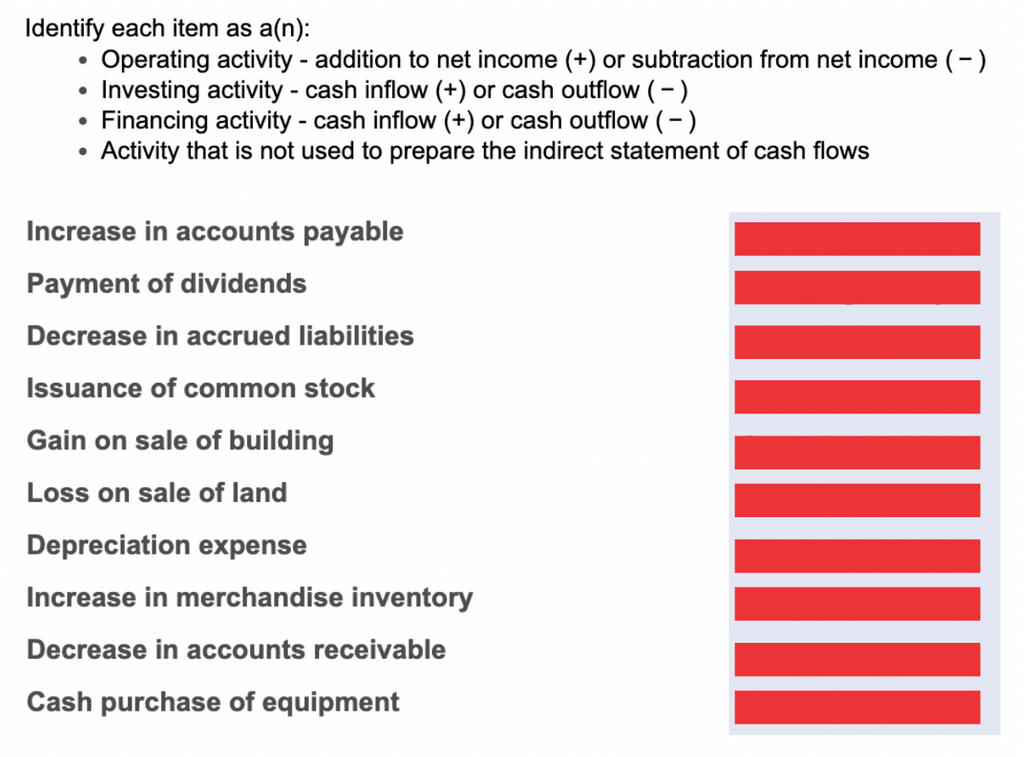
What section of the indirect cash flow statement does this belong ? (Operating, Investing, Financing, or non-cash)
Tips,
Follow the
-Increased Current Asset = Decrease Net Income
-Decreased Current As
set = Increased Net Income
-Increased Current Liability = Increased Net Income
-Decreased Current Liability = Decrease Net Income
More Business & economics flashcards
Commerce: Consumer RightsBusiness & economics · EnglishharleyModule 5: Financial Management P2Business & economics · EnglishAngelicMidterm Review Business & economics · EnglishKeeganBUSINESS PLAN 2Business & economics · EnglishKylaExam 1 Management 3335Business & economics · EnglishjujuOpenness in financial marketsBusiness & economics · EnglishFathiaMIS Quiz 1Business & economics · EnglishLexieIFRS 16 LeasesBusiness & economics · EnglishEllaFRL 3151: Money Markets and InstrumentsBusiness & economics · EnglishJohnOperations Management Exam 1 ReviewBusiness & economics · EnglishLexieManagement: Control (Chapter 7)Business & economics · EnglishPriyaMarketing Basics: Value and ConsumerBusiness & economics · EnglishDevina
All Business & economics decks
Study these decks in the app
Free on iPhone, Android, Mac and the web. Add any deck to your account in one tap.

