Biology and Aboriginal History Exam Prep
Study these flashcardsFree · spaced repetition · iPhone, Android, Mac & web
All cards
1
What are the types of antibodies and their functions?
IgA – protects mucosal surfaces (saliva, mucus and breast milk). IgD – primarily acts as a B-cell antigen receptor. IgE – mediates allergy responses and contributes to defence against parasites. IgG – provides longer-term protection, prevalent in blood and can cross the placenta. IgM – usually produced first in a primary response; effective at agglutination.
2
What are the main models of modern human migration?
Out of Africa/African replacement – Homo sapiens evolved in Africa and dispersed worldwide, largely replacing earlier populations. Multiregional hypothesis – modern humans evolved regionally from earlier populations while gene flow connected populations; the strong form is poorly supported. Out of Africa with interbreeding – an African origin with subsequent interbreeding with Neanderthals and other lineages; this best reflects current genetic evidence.
OOA = evolved 200k to 300k left 60 k
MRE = h.erectus left 1.8 mya
AM = 180-200k first wave second 60 k
OOA = evolved 200k to 300k left 60 k
MRE = h.erectus left 1.8 mya
AM = 180-200k first wave second 60 k
3
What should be known about Aboriginal/Torres Strait Islander migration, Country, Place, Songlines and morphological groupings?
Ancestors migrated through Southeast Asia to Sahul (the ancient landmass connecting Australia, New Guinea and Tasmania), followed by dispersal and long-term regional occupation. Country – traditionally owned/cared-for lands and waters with physical, spiritual, cultural and ancestral relationships. Place – spaces defined physically or culturally and associated with Torres Strait Islander peoples. Songlines – linked ancestral journeys and cultural knowledge of places, geography and responsibilities. Morphological groupings use shared anatomical features to compare fossils. EXAM: Explain migration evidence and connections to Country/Place; do not memorise particular Songlines or dates for all migration waves.
4
What evidence supports human migration models, including Aboriginal migration?
Fossil distribution – early H. sapiens fossils in Africa and later discoveries elsewhere support African origin; regional morphological similarities were used to argue continuity.
mtDNA – maternally inherited DNA sequences accumulate changes, helping infer maternal ancestry and population movements.
Whole genomes – compare many markers from both parental lineages to infer shared ancestry, gene flow and interbreeding. Ancient Neanderthal DNA in modern humans supports interbreeding.
Australian fossils, archaeological sites and genetic evidence support early settlement through Southeast Asia and long-term population connections. Fossils show anatomical/ geographical patterns; DNA reveals ancestry and admixture.
5
What shared features define mammals, primates, hominoids and hominins?
Mammals – mammary glands, hair/fur, three middle-ear bones and 1 lower jaw bone. Primates – binocular forward-facing vision, grasping hands/feet, opposable digits, relatively large brain and mobile shoulders. Hominoids/apes – no external tail, broad chest, highly mobile shoulders and relatively large brains. Hominins – human lineage characterised by habitual bipedalism: centrally positioned foramen magnum, S-shaped spine, short/ broad pelvis, inward femoral angle, arched feet. Hierarchy: Mammals → Primates → Hominoids → Hominins. EXAM: VCAA specifies no number; aim to recall around three distinctive features per group.
6
What are the major evolutionary trends from Australopithecus to Homo?
- U shaped jaw to parabolic = better and clearer speech/sounds, less hard foods
- Decreasing arm:leg length ratio
- Less pronounced brow ridge = less hard foods
- More central foramen magnum
- Decreasing arm:leg length ratio
- Less pronounced brow ridge = less hard foods
- More central foramen magnum
7
What types of vaccines are there, and what are their pros and cons?
* **Live attenuated:** Weakened pathogen that replicates without causing severe disease; provides strong, long-lasting immunity, but risks reverting or causing harm in immunocompromised individuals [Jacaranda 130, 199; Edrolo 802, 803].
* **Inactivated:** Killed/inactivated pathogen that cannot replicate or cause disease; safer for immunocompromised people, but produces a weaker immune response and often requires booster shots [Jacaranda 130, 200; Edrolo 802, 804].
* **Subunit:** Contains only specific isolated antigens of a pathogen; highly targeted with minimal side effects, but generally produces a weaker response requiring adjuvants or boosters [Jacaranda 131, 199; Edrolo 803, 806].
* **Viral vector:** Uses a modified, harmless virus as a vehicle to deliver genetic instructions for the host cell to produce the target pathogen's antigen; elicits a robust immune response, but pre-existing host immunity against the viral vector can reduce efficacy [Jacaranda 172; Edrolo 461].
* **mRNA:** Delivers mRNA strands into host cells to be translated by ribosomes into target antigens; highly adaptable to emerging variants, but RNA and lipid delivery vehicles require strict cold storage [Jacaranda 172, 262; Edrolo 461].
8
What are the four levels of protein structure and the bonds involved?
Primary – linear amino acid order, held by peptide bonds (between the COOH and NH2).
Secondary – α-helices and β-pleated sheets, stabilised by hydrogen bonds between backbone groups.
Tertiary – functional 3D shape is stabilised by interactions between variable R-groups, including hydrogen and ionic bonds between polar or charged R-groups, hydrophobic interactions between non-polar R-groups, and strong covalent disulfide bridges between the sulfur atoms of cysteine R-groups
Quaternary – two or more polypeptide subunits assembled through similar interactions. Amino acids contain amino group, carboxyl group and variable R group. Antibodies and Rubisco have quaternary structure.
9
What are the steps of the inflammatory response?
1) Initiation: damaged body cells signal to the immune system that a pathogen has entered. This causes mast cells to degranulate, releasing histamines into the body.
2) Vasodilation: Histamines travel to blood vessel cells, whereby they bind to its surface, stimulating them to widen (vasodilate) and for their permeability to increase, making the m ‘leaky’ to components of the blood. This causes swelling and redness associated with inflammation.
3) Migration: Phagocytes (primarily neutrophils) as well as complement proteins travel to the site of infection via the circulatory system. Complement proteins can opsonise pathogens, flagging them for destruction by phagocytes. Neutrophils phagoc ytose and destroy the pathogen and create ‘pus’ in the area.
4) Resolution: anti-inflammatory cytokines are secreted restoring blood vessel permeability and diameter
10
What are the main steps of fever?
1) Cytokine release: A cytokine from phagocytes such as a macrophage signals the hypothalamus in the brain to be reset to a higher core temp equilibrium
2) Brain activation and muscular responses: The brain sends signals via the nervous system to promote shivering of the skeletal muscles and vasoconstriction of the peripheral blood vessels. These processes create and/or conserve heat and make the core body temp higher than what is the norm (eg 37 to 38 degrees Celsius).
3) Higher core temp/pathogen inhibition: Microbe reproduction in the body is slowed while immune metabolism speeds up
11
What are the steps of humoral adaptive immunity (targets extracellular pathogens)?
1. Antigen Presentation (Initial Activation): A "professional" Antigen-Presenting Cell (APC), such as a dendritic cell or macrophage, engulfs a pathogen via phagocytosis. 2. Migration & Presentation: The APC travels through the lymphatic system to a lymph node (secondary lymphoid tissue) and displays the digested antigen fragments on its MHC-II markers. 3. Th Cell Clonal Selection: A naïve Helper T (Th) cell with a receptor complementary to the specific antigen binds to the APC's MHC-II/antigen complex, marking the moment of clonal selection for the Th cell. 4. Th Cell Clonal Expansion: Once selected, the Th cell undergoes clonal expansion (many cycles of mitosis) to produce a large population of identical effector Th cells and memory Th cells. 5. Independent B Cell Selection: Independently, a naïve B cell binds directly to the same raw antigen via its membrane-bound antibodies—this is the moment of clonal selection for the B cell. 6. B Cell Presentation: This selected B cell internalises the antigen and displays it on its own MHC-II markers to a previously activated effector Th cell. 7. Cytokine Signal: The effector Th cell recognises this antigen and releases cytokines (specifically interleukins) to "license" and activate the B cell. 8. B Cell Clonal Expansion: These cytokines trigger the B cell to undergo its own clonal expansion to produce a large population of identical cells. 9. Differentiation: These B cells differentiate into plasma B cells (active responders) and memory B cells (remain in the lymph node for long-term protection). 10. Effector Response: Plasma cells secrete massive amounts of soluble antibodies that travel through the blood and lymph to neutralise, agglutinate, or opsonise the specific pathogen.
12
What are the steps of cell-mediated adaptive immunity (targets intracellular pathogens/abnormal cells)?
1. Antigen Presentation: A professional APC (e.g., a dendritic cell) phagocytoses a pathogen and displays the pathogenic antigens on its MHC-II markers. 2. Migration: The APC travels through the lymphatic system to a lymph node. 3. Th Cell Clonal Selection: The APC presents the antigen to a naïve Helper T (Th) cell with a complementary receptor; this binding is the clonal selection of the Th cell. 4. Th Cell Clonal Expansion: The activated Th cell undergoes clonal expansion, proliferating into a large population of effector Th cells and memory Th cells. 5. Tc Cell Selection (The "First Signal"): Independently, a naïve Cytotoxic T (Tc) cell binds its specific receptor to a complementary antigen displayed on the MHC-I marker of an infected self-cell or an APC. This binding is the clonal selection of the Tc cell. 6. Cytokine Release (The "Second Signal"): An activated effector Th cell releases cytokines (interleukins) to the selected Tc cell to fully activate it. 7. Tc Cell Clonal Expansion: Upon receiving the cytokine signal, the Tc cell undergoes clonal expansion, dividing rapidly to produce many identical copies. 8. Differentiation: These cells differentiate into effector Cytotoxic T cells and memory T cells. 9. The Kill: Effector Tc cells leave the lymph node, identify body cells displaying that specific antigen on MHC-I, and induce apoptosis (programmed cell death) using perforin (to create pores) and granzymes (to trigger the death pathway).
13
What are the steps of an allergic response?
1) Sensitization: Initial receptor activation to allergen results in the initiation of a B cell response whereby they differentiate into plasma cells. Plasma cells create IgE
(allergen antibodies) which stick to the surface of mast cells in high numbers, increasing the likelihood of crosslinking
2) Reexposure: Upon reintroduction of allergen into the body, the non-pathogenic antigen binds to two IgE antibodies simultaneously (cross linking) This causes mast cells to degranulate by releasing very high conc of histamines.
3) Hyper inflammation: Histamines stimulates heightened vasodilation, causing a HYPER inflammatory response as marked by areas that become excessively red, hot, swell with pain
14
What is the difference between antigenic drift and antigenic shift?
Antigenic drift – gradual accumulation of mutations in viral genes coding for antigens, creating relatively small changes. Antigenic shift – abrupt, major antigenic change, commonly when segmented viruses reassort genomic segments between strains. Both may reduce recognition by existing immunity. Drift = gradual; Shift = sudden major change.
Drift -> new strains of virus
Shift -> new subtype
Strains are PARTS OF subtype i.e. subtype is big change strain is version of subtype
Drift -> new strains of virus
Shift -> new subtype
Strains are PARTS OF subtype i.e. subtype is big change strain is version of subtype
15
What are the steps and technical limitations of RT-PCR?
1. Extract target RNA. 2. Reverse transcriptase synthesises complementary DNA (cDNA). 3. PCR: denaturation (~95°C) breaks DNA hydrogen bonds; annealing (~50–65°C) allows target-specific DNA primers to bind; extension (~72°C) uses thermostable polymerase and DNA nucleotides to extend strands. 4. Repeat amplification cycles and detect product, potentially with fluorescence. Limitations – RNA degradation; contamination/false positives; inhibitors/false negatives; mutations at primer-binding sites; specialised equipment; presence of viral nucleic acid does not necessarily mean infectious virus. Reverse-transcription PCR and real-time PCR are distinct terms.
16
What is the broad order of major evolutionary events, including the Cambrian explosion?
Early unicellular organisms → eukaryotes → multicellular life → major diversification of animal life (Cambrian explosion) → expansion/diversification of terrestrial plants and animals → diversification of later groups including mammals and birds → much later hominin evolution. Mass extinctions can remove lineages, followed by diversification of survivors. EXAM: Know faunal succession and relative chronology; specific geological dates and period names are not required.
17
What are the steps of recombinant human insulin production?
1) Isolation and cutting: Two plasmids are selected and isolated (both with Ampicillin resistance gene and Lac Z gene- reporter gene) and cut using restriction endonucleases (BamHI) to produce sticky ends in the reporter gene region Each insulin subunit (A and B) are synthetically produced (exons only) and cut with the same restriction endonucleases to create complementary sticky ends
2) Annealing and ligation: Each plasmid group is mixed with either insulin A or B desired gene to allow annealing (nitrogenous base pairing eg A and T 2 H bonds). The formation of phosphodiester bonds are catalysed by DNA ligase
3) Plasmid uptake and Transformation: Heat shock or electroporation is undertaken to make E.coli strain A (bacterial vector) and Ecoli strain B highly permeable and absorb plasmids. E coli is put on an agar plate containing Amp antibiotic. Only bacteria that have absorbed plasmids will continue to reproduce in the presence of amp antibiotic.
To check whether these surviving E coli are ‘recombinant ‘transformed bacteria, various colonies are isolated from the amp agar plate and grown on sectioned areas of an agar plate with an indicator stain called Xgal. Xgal reacts with the protein made by Lac Z (B gal).The colony that does NOT change colour to blue informs the scientist that the colourless colonies from the amp should be selected for the final step.
5) Humulin Protein creation: White colonies are grown by binary fission and they carry out gene expression. Each insulin tertiary structure subunit - a and b) and beta galactosidase “reporter’ remnant are harvested from the transformed bacteria and separated with chemicals. This is a purification process. Insulin tertiary subunits(a and b) and mixed to form a disulphide bridge to create functional lab made insulin (a quaternary structure). Diabetics can now regulate their glucose conc in their blood
18
What are the four types of ELISA and their core steps?
Direct – an enzyme-linked antibody binds an immobilised antigen.
Indirect – patient sample antibodies bind known antigen, then enzyme-linked secondary antibody detects them.
Sandwich/ reverse – capture antibody binds patient sample antigen, then a detection antibody binds antigen; substrate produces colour.
Competitive – 1. Mix patient sample antigen with a limited amount of enzyme linked antibody and add to an antigen-coated plate. More antigens = more bound antigens that can't bind to plate antigens 2. Wash away unbound components. 3. Add substrate (after detection step if required) and measure color (more antigen = less color as less antibodies are free).
General principle: immobilise target → bind complementary antigen/antibody → wash → enzyme-linked detector → substrate → observable signal.
19
What are the steps and differences of C3, C4 and CAM photosynthesis?
C3 – CO₂ is fixed directly by Rubisco in the mesophyll Calvin cycle; can experience substantial photorespiration when hot/dry.
C4 – CO₂ first fixed by a selective enzyme in mesophyll cells → transported in a carbon compound → released in bundle-sheath cells for the Calvin cycle; spatial separation concentrates CO₂ around Rubisco.
CAM – stomata open at night for CO₂ fixation/storage; close during day while stored CO₂ is released for the Calvin cycle; temporal separation conserves water.
20
What are the inputs, outputs and locations of both photosynthesis stages?
Light-dependent reactions (thylakoid membranes): inputs = light, H₂O, ADP + Pi, NADP⁺; outputs = O₂, ATP, NADPH.
Calvin cycle (stroma): inputs = CO₂, ATP, NADPH; outputs = carbohydrate (ultimately glucose), ADP + Pi and NADP⁺.
Splitting water supplies replacement electrons and produces oxygen. ATP supplies energy and NADPH supplies reducing power. EXAM: Know both stages' locations, main inputs and outputs; specific intermediates of the Calvin cycle are not required.
21
What are the major leaf cross-section structures and functions?
Waxy cuticle – reduces evaporation. Epidermis – protects leaf. Palisade mesophyll – densely packed chloroplasts, major photosynthesis site. Spongy mesophyll – air spaces permit gas exchange; also photosynthesises. Stomata – openings for gas exchange. Guard cells – regulate stomatal aperture. Xylem – water/mineral transport. Phloem – sugar/organic compound transport. Bundle sheath – surrounds vascular tissue and is the Calvin-cycle cell type in C4 plants. EXAM: Prioritise understanding mesophyll/stomata/ bundle sheath in photosynthesis examples.
22
SKIP
SKIP
23
What are the major immune cell types and their functions?
Granulocytes - Mast cell basophil eosinophil
Phagocytes - Macrophage and dendritic cell
Lymphocytes - B cell T cell NK cell
NEUTROPHIL IS BOTH GRANULOCYTE AND PHAGOCYTE
Neutrophils – rapid phagocytosis. Macrophages – phagocytosis, cytokines, antigen presentation. Dendritic cells – professional antigen presentation/naïve T-cell activation. Mast cells – histamine release. Eosinophils – parasite defence/allergy by release of toxic chemicals to digest pathogens rare in blood common in mucous membranes . Natural killer cells – innate cytotoxic defence. B lymphocytes – antigen recognition; plasma cells – secrete antibodies; memory B cells – faster secondary humoral response. Helper T cells – coordinate adaptive response with signals/cytokines. Cytotoxic T cells – apoptosis of infected/abnormal cells. Memory T cells – support secondary cellular responses. Complement and interferons are non-cellular immune components.
24
How do mAbs work for cancer?
- Coats the surface of cancer cells flagging them for phagocytosis
- Activates complement proteins -> MAC
- Binds to tumour growth signals secreted by cancer cells blocks andiogenesis (formation of new blood vessels, starving tumour of O2 + nutrients)
- Binds to growth factor receptors on cancer cells blocking signals for cell division
- Conjugated mAbs deliver chemotherapy drug/toxin/ radioisotope to deliver to cancer cells only
25
What are the nine VCAA scientific-investigation methodologies, and how are they recognised?
FLMSP - remainder C
Controlled experiment – deliberately changes an independent variable and measures dependent variable with controls.
Correlational study – measures relationships without deliberate manipulation.
Case study – detailed investigation of a specific situation.
Classification/identification – groups or identifies specimens.
Fieldwork – collects observations/data in natural settings.
Literature review – synthesises existing published research.
Modelling – constructs a simplified physical conceptual or mathematical representation of a system.
Simulation – uses a model to imitate/test system behaviour over time.
Product/process/system development – the design and optimization of an object, procedure, or technology to meet a human need or solve a practical problem
26
What is the difference between natural bacterial CRISPR and engineered CRISPR-Cas9?
Natural CRISPR – prokaryotic adaptive defence: stored phage DNA spacers in a CRISPR array guide a Cas protein to matching viral DNA on reinfection, allowing cleavage. Engineered CRISPR-Cas9 – synthetic sgRNA guides Cas9 endonuclease to a selected PAM-adjacent DNA target in an organism so DNA breaks and subsequent repair can alter a gene. Natural = microbial defence; engineered = genome editing.
27
What functional parts make up guide RNA?
* **crRNA (CRISPR RNA):** Contains the foreign viral **spacer RNA** (the targeting sequence complementary to target DNA) attached to a transcribed **repeat section**.
* **tracrRNA (trans-acting CRISPR RNA):** Base-pairs with the crRNA **repeat section** and serves as the scaffold sequence that binds directly to the **Cas9 enzyme**.
* **Single-Guide RNA (sgRNA):** A synthetic single strand used in gene editing that fuses the **spacer RNA** (targeting region from crRNA) and **scaffold region** (Cas9-binding region from tracrRNA) into one molecule.
* **VCE Exam Distinction:** Natural bacterial gRNA is a **crRNA:tracrRNA duplex**, whereas engineered gene editing uses a single-stranded **sgRNA**.
28
What are the steps of CRISPR in bacterial defence and engineered gene editing, including repair?
Natural: (1) phage infects bacterium; (2) phage-derived spacer is inserted between CRISPR repeats; (3) CRISPR DNA is transcribed/processed into guide RNA which complexes with Cas9; (4) on reinfection, Cas9 recognises PAM and complementary target DNA; (5) Cas9 cleaves viral DNA, interfering with infection. Engineered: design sgRNA complementary to chosen target beside suitable PAM → deliver sgRNA and Cas9 → recognise PAM/target → double-strand cut → cell repairs DNA. Error-prone end joining may cause insertion/deletion/knockout; template-directed repair can introduce intended edit if a suitable template exists; accurate repair may restore unchanged DNA. A cut does not guarantee a desired mutation.
29
What are three agricultural uses of CRISPR-Cas9?
Increase photosynthetic efficiency, increase crop yields, and increase disease/stress resistance. Examples: edit pathways affecting carbon fixation/photorespiration; alter genes affecting productivity or resource use; modify susceptibility to pathogens/environmental stresses. EXAM: Higher photosynthetic efficiency and higher crop yield are the two VCAA-specified teaching examples; recognise broader uses in unfamiliar scenarios.
30
What does sgRNA mean and what does it do?
Single-guide RNA. A designed RNA that contains a targeting sequence complementary to selected DNA and a Cas9-binding scaffold, directing Cas9 to a specific sequence close to a suitable PAM. VCAA distinguishes engineered sgRNA from natural bacterial guide RNA.
31
What does tRNA mean and what is its function?
Transfer RNA. Transfers a specific amino acid to a ribosome during translation; its anticodon base-pairs with a complementary mRNA codon so the correct amino acid is added to a growing polypeptide.
32
Why does eukaryotic gene regulation generally not use the bacterial trp attenuation mechanism?
In bacteria, transcription and translation can be coupled in the cytoplasm; a ribosome translating a leader sequence can influence RNA polymerase termination. In eukaryotes, transcription is mainly nuclear and translation cytoplasmic, so the same coupled attenuation mechanism cannot operate. Eukaryotic genes usually have independent regulatory elements. Avoid the absolute claim that eukaryotes never contain operon-like gene arrangements.
33
What is the purpose of positive and negative experimental controls?
A **negative control** is not exposed to the independent variable to provide a baseline confirming that any change in the dependent variable is caused solely by the IV rather than uncontrolled factors
A **positive control** is exposed to a treatment/variable with a known effect on the DV similar to the IV to confirm that the experimental setup, reagents, and procedures are functioning correctly
A **positive control** is exposed to a treatment/variable with a known effect on the DV similar to the IV to confirm that the experimental setup, reagents, and procedures are functioning correctly
34
What are the steps of transcription?
Initiation – transcription factors (eukaryotes) and RNA polymerase associate with promoter; DNA locally unwinds. Elongation – RNA polymerase reads template DNA and polymerises complementary RNA nucleotides (A pairs U, T pairs A, C pairs G). Termination – transcription ends in response to sequence signals and RNA transcript is released. In eukaryotes, protein-coding transcription creates pre-mRNA in nucleus. STOP CODON ends translation, not transcription.
35
What are transcription factors, structural genes, regulatory genes and repressors?
* **Transcription Factors:** **A transcription factor is a type of regulatory protein that bind to the promoter
region and control the functioning of RNA polymerase
* **Structural Genes:** **A structural gene is a class of gene that codes for proteins or functional RNA molecules that contribute directly to the physical structure or biological functioning of a cell or organism [Jacaranda 330; Edrolo 429].**
* **Regulatory Genes:** **A regulatory gene is a class of gene that codes for functional products, such as transcription factors or repressor proteins, which control or alter the expression of other genes [Jacaranda 319; Edrolo 429].**
* **Repressors:** **A repressor is a protein coded for by a regulatory gene that prevents gene expression by binding to its operator
36
What are the steps of eukaryotic RNA processing?
Cap → Tail → Remove → Splice. Add modified guanine cap to one end and poly-A tail to the other to stabilise mRNA and assist its function. Remove introns with splicing machinery and join retained exons to produce mature mRNA. Alternative splicing produces different exon combinations, increasing possible protein products. Processing events are not necessarily in strict chronological order. EXAM: 5′ and 3′ terminology is not required.
37
What are the steps of translation?
Initiation – ribosome binds mRNA and recognises AUG start codon; initiator tRNA brings methionine. Elongation – complementary tRNA anticodons pair with mRNA codons and amino acids are joined by peptide bonds as ribosome moves along mRNA. Termination – stop codon recruits a release factor and polypeptide is released. Translation occurs on free cytosolic or rough-ER-bound ribosomes in eukaryotes. Codon = three nucleotides.
38
What is an epidemic compared with a pandemic?
Epidemic – incidence of a disease significantly above expected levels in a particular population/ region. Pandemic – epidemic with sustained spread across multiple countries/ regions of the world. Endemic – disease continually present at a relatively expected background level. Pandemic describes geographical spread, not necessarily lethality.
39
What is trp attenuation, including the roles of leader regions 1–4?
The leader mRNA can fold into alternate hairpins. At high tryptophan, abundant charged tRNA-Trp permits continuous translation through two consecutive Trp codons in the leader; a terminator hairpin forms and RNA polymerase stops before trp structural genes. Region 3–4 pairing is a terminator; region 2–3 pairing can form an antiterminator when Trp is scarce. EXAM: High-Trp hairpin and premature termination ARE required; exact numbered pairings and low-Trp mechanism are NOT required.
40
What do validity, accuracy, precision, repeatability, reproducibility and reliability mean?
Validity – investigation measures what it claims to measure. Accuracy – closeness to true value. Precision – repeated values close to each other. Repeatability – consistent measurements under same method/conditions. Reproducibility – agreement under changed observers, equipment, methods or settings. Reliability – broader dependability/consistency of results. Improve validity by controlling confounders; accuracy by correcting calibration/systematic errors; precision by reducing random error; reproducibility by independent replication. VCAA formally defines the first five; reliability is broader usage.
41
What are the stages, locations, inputs, outputs and ATP yields of aerobic respiration?
Glycolysis (cytosol): glucose → 2 pyruvate + 2 NADH + net 2 ATP.
Link reaction (mitochondrial matrix): 2 pyruvate → 2 acetyl-CoA + 2 CO₂ + 2 NADH; 0 ATP.
Krebs cycle (matrix): acetyl-CoA is oxidised, producing CO₂, NADH, FADH₂ + net 2 ATP/ glucose.
Electron transport/oxidative phosphorylation (inner mitochondrial membrane): NADH/FADH₂ donate electrons, O₂ is terminal electron acceptor and H₂O forms; ~26 or 28 ATP. TOTAL ~30 or 32 ATP per glucose.
42
What are the steps, inputs, outputs and ATP yields of anaerobic fermentation?
Glycolysis converts glucose into 2 pyruvate, producing net 2 ATP and 2 NADH. Fermentation regenerates NAD⁺ to allow glycolysis to continue.
Lactic acid fermentation (animals): 2 pyruvate + 2 NADH → 2 lactate + 2 NAD⁺.
Alcoholic fermentation (yeast/some plants): 2 pyruvate + 2 NADH → 2 ethanol + 2 CO₂ + 2 NAD⁺. Both processes yield net 2 ATP per glucose, from glycolysis rather than fermentation itself.
Lactic acid fermentation (animals): 2 pyruvate + 2 NADH → 2 lactate + 2 NAD⁺.
Alcoholic fermentation (yeast/some plants): 2 pyruvate + 2 NADH → 2 ethanol + 2 CO₂ + 2 NAD⁺. Both processes yield net 2 ATP per glucose, from glycolysis rather than fermentation itself.
43
What is natural compared with artificial immunity?
Natural – acquired without deliberate medical intervention, e.g. infection or maternal antibody transfer. Artificial – induced by medical intervention, e.g. vaccination or injected antibodies. Natural/artificial tells HOW immunity is obtained; active/passive tells whether host produces its own immune response.
44
What is active compared with passive immunity?
Active – own antigen-specific immune response creates effector and memory cells; usually slow initially but potentially long-lasting. Passive – receive pre-made antibodies; immediate but temporary protection without new immunological memory. Natural active = infection; artificial active = vaccination; natural passive = maternal antibody transfer; artificial passive = therapeutic antibody administration.
45
What is the virtues-based approach in bioethics?
An approach which focuses on the virtue or moral character of the individual, prioritising the actions that a moral, good person would undertake
46
What are the major cellular and non-cellular disease-causing agents?
Bacteria – cellular prokaryotes. Fungi – cellular eukaryotes (yeast/moulds). Protists/protozoa – diverse cellular eukaryotes, some parasitic. Parasitic animals – multicellular eukaryotic parasites. Viruses – acellular DNA or RNA packaged in a protein capsid, sometimes enveloped; use host machinery to replicate. Prions – infectious misfolded proteins lacking nucleic acid.
Viruses can have single stranded circular DNA, bacteria ALWAYS have double stranded
Viruses can have single stranded circular DNA, bacteria ALWAYS have double stranded
47
What are the differences between prokaryotes and eukaryotes?
Prokaryotes – no membrane-bound nucleus/organelles; typically circular chromosome in nucleoid and sometimes plasmids; 70S ribosomes; coupled transcription/translation; usually binary fission. Eukaryotes – membrane-bound nucleus/organelles; usually linear nuclear chromosomes; 80S cytosolic ribosomes; nuclear transcription and cytoplasmic translation; mitosis/meiosis. Both have plasma membrane, DNA, cytoplasm and ribosomes.
48
What is the difference between social and scientific disease-control strategies?
**Scientific strategies** involve biological, medical, or technological interventions that directly target the pathogen or host to treat or prevent infection (such as vaccines and antibiotics), **whereas** **social strategies** involve public policies and behavioural changes that control human interactions to minimise pathogen transmission (such as lockdowns and physical distancing).
49
What are the major modes of pathogen transmission?
OI DAD
Faecal-Oral
Indirect
Direct
Airborne
Droplets
Indirect physical contact: Pathogens spread without direct contact through fomites (contaminated objects, food, water) or vectors (e.g. mosquitoes).
Direct physical contact: Pathogens spread through touching, bodily fluids, kissing, sexual contact or mother-to-baby transmission.
Airborne transmission: Tiny infectious particles remain in the air for long periods and can be inhaled, even after the infected person leaves.
Faecal-oral transmission: Pathogens from infected faeces enter the body through contaminated food, water or hands.
Droplet transmission: Respiratory droplets spread through coughing, sneezing or talking and can infect through the eyes, nose or mouth, directly or via contaminated surfaces.
Droplet vs airborne: Airborne particles are smaller and linger longer, whereas larger droplets fall quickly and usually spread over shorter distances.
50
What are the main pathogen-identification methods?
PIMP
P – Physical: Visualising pathogens using microscopes (Light and electron) to determine their structure
I – Immunological: antigen-antibody binding (e.g. ELISA).
M – Molecular: genetic material detection by PCR, probe or sequencing.
P – Phenotypic: Selective media – an agar plate designed to allow certain pathogens to grow and multiply to test for their presence in a sample OR scientists can run a Gram stain to determine if bacteria are Gram-positive or negative, then test if they are aerobic or anaerobic
51
What are the types of radiometric dating and the key carbon-14 facts?
Radiometric dating estimates absolute age from parent isotope decay/daughter-product buildup. Carbon-14 – dates suitable relatively recent once-living material; half-life ~5,730 years. Potassium-argon – dates some volcanic rocks. Uranium-lead – dates some very old minerals/ rocks. Half-life fractions: after 1 = 50% remaining, 2 = 25%, 3 = 12.5%. EXAM: Carbon-14 is required; other isotopes' details are not.
52
How do virulence, infectiousness and contagiousness differ?
Virulence = how much it harms host
Infectiousness = how easily it can infect a host
Contagiousness = how easily it can spread between hosts
Infectiousness = how easily it can infect a host
Contagiousness = how easily it can spread between hosts
53
SKIP
SKIP
54
What are the major physical and chemical plant immune adaptations?
Physical – INTACT waxy cuticle prevents entry, bark protects tissues, stomatal closure blocks openings, trichomes deter damage, protective tissue limits spread. Chemical – defensins are antimicrobial peptides; chitinases/ glucanases attack fungal cell-wall components; phenolic and other antimicrobial chemicals inhibit microbes.
PHYSICAL ALSO HAS THE FORMATION OF GALLS -> BLOCKS PATHOGEN SPREAD TO OTHER TISSUES/PARTS OF HOST
PHYSICAL ALSO HAS THE FORMATION OF GALLS -> BLOCKS PATHOGEN SPREAD TO OTHER TISSUES/PARTS OF HOST
55
How do primary and secondary adaptive immune responses differ?
Primary – first antigen exposure activates naïve B/T cells by clonal selection, expansion and differentiation, giving slower and generally weaker antibody response while generating memory cells. Secondary – later exposure activates antigen-specific memory cells, causing faster and stronger response and usually higher antibody concentrations. In graphs the secondary curve rises sooner and reaches a higher peak.
56
What are relative and absolute fossil dating, and why date nearby rock?
Relative dating – determines older/younger order without age in years; uses superposition/faunal succession. Absolute dating – estimates an age in years, including radiometric dating. Many fossils/sedimentary deposits lack suitable parent isotopes, so volcanic strata above and below are dated to bracket fossil age: lower layer older; upper layer younger, if undisturbed. Some organic remains can be directly dated using carbon-14.
57
How do index fossils differ from transitional fossils?
Index fossil – widespread organism existing during a relatively short time interval; used to correlate and relatively date rock layers. Transitional fossil – mixture of ancestral and derived traits, supporting evolutionary change and relatedness. Index = Indicates age; Transitional = Shows transition. Transitional fossil is not necessarily direct ancestor.
58
What are the main structural terms of a phylogenetic tree?
Root – ancestral lineage at base. Branch – evolutionary lineage. Node – most recent common ancestor/divergence event. Tip – terminal taxon. Sister taxa – two groups sharing an immediate ancestral node. Clade – ancestor and ALL descendants. Outgroup – lineage outside focal group, helping root tree. Branch length only represents timeenetic change if calibrated. EXAM: Interpret trees and insert a putative species; constructing full trees from scratch is not required.
59
What is the difference between superposition and faunal succession?
Superposition – in undisturbed sedimentary strata, lower layers are older than those above. Faunal succession – fossil organisms/assemblages appear in a recognisable chronological order, helping correlate and relatively date strata. Superposition relies on rock position; faunal succession on fossil assemblages.
60
What does BIRD-TAP stand for in Humulin production?
B – Beta cells produce insulin; Type 1 diabetes is autoimmune destruction of these cells. I – Intron-free genes for A and B insulin chains separately. R – Restriction enzymes cut plasmids/insulin DNA at compatible sites. D – DNA ligase forms phosphodiester bonds to make recombinant plasmids. T – Transformation places plasmids into bacteria. A – Antibiotic marker selects transformed bacteria and reporter reveals recombinants. P – Protein expression as fusion proteins → purification → release and joining of A/B insulin chains.
61
What is the difference between a marker gene and a reporter gene in Humulin?
A **selectable marker gene** (such as an antibiotic resistance gene) identifies transformed bacteria by allowing them to survive on selective media, **whereas** a **reporter gene** (such as *gfp* or *lacZ*) produces an easily observable phenotype to confirm whether those transformed bacteria carry a recombinant plasmid containing the gene of interest.
62
What are the advantages of recombinant human insulin over pig/cattle insulin?
Can produce human insulin with intended human amino-acid sequence, lowering risk of immune recognition of animal-sequence differences; microbial cultures support large-scale, controlled, reliable production/purity and reduce reliance on animal pancreas extraction. EXAM: Tie claims to sequence compatibility and manufacturing mechanism rather than saying "better".
63
What is an operon?
Group of prokaryotic structural genes controlled together using shared regulatory DNA such as a promoter and operator, permitting coordinated transcription. Example: trp operon expresses tryptophan-biosynthetic enzymes when needed.
64
What are examples of the three main bioethical approaches?
Consequences-based – maximise benefits/minimise harm, e.g. assess whether genetic engineering raises food security more than it creates risks. Duty/ rule-based – follow moral obligations despite consequences, e.g. obtain informed consent. Virtues-based – act with honesty, compassion and integrity, e.g. truthfully disclose unwelcome research results. Relevant ethical concepts: Integrity, Justice, Beneficence, Non-maleficence, Respect.
65
What is a mechanical versus biological vector?
Mechanical – physically carries pathogen between hosts without pathogen developing or reproducing inside vector, e.g. fly carrying bacteria on body. Biological – pathogen reproduces or undergoes developmental stage in vector, e.g. mosquito and malaria parasite. Main distinction: whether a biological stage takes place inside vector.
VECTOR = an organism which is unaffected by a disease yet spreads it between hosts/other organisms
VECTOR = an organism which is unaffected by a disease yet spreads it between hosts/other organisms
66
What is the femoral carrying angle and its relationship to bipedalism?
The bicondylar/femoral angle describes inward orientation of the femur from hip to knee. A greater inward (valgus) angle brings knees/feet beneath the centre of mass, improving upright walking stability and efficiency compared with a relatively straight femur. Extremely large angles are not universally better; explain adaptation in comparative evolutionary context.
67
What is a coenzyme versus a cofactor?
cofactor = any organic or inorganic molecule, such as a
coenzyme or metal ion, that assists enzyme function
coenzyme = a non-protein organic cofactor that assists
enzyme function. They transport H+s e-s or energy
between reactions and are recycled between their
loaded and unloaded forms
coenzyme or metal ion, that assists enzyme function
coenzyme = a non-protein organic cofactor that assists
enzyme function. They transport H+s e-s or energy
between reactions and are recycled between their
loaded and unloaded forms
68
What is an emerging versus re-emerging disease?
emerging - an infectious disease that is new
to appear in the human population, or that is rapidly
increasing in incidence
re-emerging - an infectious disease that was
previously under control but that is now increasing in
incidence
to appear in the human population, or that is rapidly
increasing in incidence
re-emerging - an infectious disease that was
previously under control but that is now increasing in
incidence
69
What features distinguish adaptive immunity from innate immunity?
Adaptive – specific antigen recognition by B/T receptors, clonal selection and expansion, and classical immunological memory; generally slower on first exposure and faster later. Innate – rapid, broad detection of conserved microbial patterns; barriers, phagocytes, NK cells, mast cells, complement; no corresponding classical antigen-specific B/T-cell memory. Three high-yield features: Specificity → Clonal selection → Memory.
70
What is a vector versus a reservoir versus a host?
vector - an organism that is not affected by a disease but
spreads it between hosts
reservoir - a population of animals or environment in which
a pathogen normally lives
host - an organism that harbours a pathogen
spreads it between hosts
reservoir - a population of animals or environment in which
a pathogen normally lives
host - an organism that harbours a pathogen
71
What reaction joins nucleotides and how do the major bonds differ?
Phosphodiester bonds form between adjacent nucleotides in the sugar-phosphate backbone; DNA polymerase adds nucleotides during synthesis and DNA ligase seals nicks. Hydrogen bonds form between complementary bases of different DNA strands; peptide bonds join amino acids into polypeptides.
72
What are the high-tryptophan attenuation steps?
1. Some transcription begins when repressor temporarily dissociates. 2. High charged tRNA-Trp allows ribosome to translate two leader Trp codons without pausing. 3. Terminator hairpin forms in the leader mRNA. 4. RNA polymerase terminates transcription prematurely. 5. Structural genes remain unexpressed, saving cellular resources.
73
SKIP
SKIP
74
How do amino-acid sequence comparisons and conserved proteins reveal relatedness?
Compare homologous amino acid sequences; fewer differences generally imply a more recent common ancestor, accounting for mutation rates and selection. Conserved proteins serve important functions and change slowly, enabling comparison even between distantly related species. Identical protein sequences do not guarantee identical DNA because multiple codons can encode one amino acid.
75
What does putative mean?
Tentatively proposed or inferred from currently available evidence without definitive confirmation. A putative Homo species is a proposed classification that may be revised when new fossilsenetic evidence emerge.
76
How do coding, non-coding, template, sense and antisense DNA differ?
* **Template (Antisense) Strand:** The DNA strand read and transcribed by RNA polymerase to construct a complementary pre-mRNA molecule.
* **Coding (Sense) Strand:** The untranscribed DNA strand whose nucleotide sequence is identical to the resulting pre-mRNA (except it contains thymine instead of uracil).
* **Non-coding DNA:** Genomic regions (such as introns, promoters, and short tandem repeats) that do not code for amino acid sequences in proteins.
77
What are the trp operon diagram components and their roles?
Simplified organisation: separately encoded trpR regulatory gene, then Promoter (P) → Operator (O) → Leader (trpL) → trpE, trpD, trpC, trpB, trpA structural genes. trpR encodes repressor; promoter binds RNA polymerase; operator binds activated repressor; leader supports attenuation; five structural genes encode enzymes for tryptophan synthesis. EXAM: Understand roles; specific structural-gene enzyme chemistry is not required.
78
How does bacterial antibiotic resistance affect treatment strategies?
Antibiotics can become less effective, requiring alternatives/combinations, increasing cost/treatment difficulty and allowing resistant populations to spread. Strategies: appropriate prescribing/antimicrobial stewardship, improved infection control, surveillance and new therapies. Antibiotics select for resistant variants rather than intentionally causing adaptive mutations.
79
What are the steps leading to antibiotic-resistance evolution?
Variation → Selection pressure → Differential survival/ reproduction → Allele frequency change. Mutations or gene transfer create resistance in some bacteria; antibiotics kill/inhibit susceptible bacteria while resistant bacteria survive; resistant bacteria reproduce and spread the allele, so resistance allele frequency increases over generations. Horizontal transfer can occur by conjugation, transformation and transduction.
80
What are other uses of bacterial transformation?
Take up recombinant DNA/plasmids to express therapeutic proteins, industrial enzymes and other biotechnology products; amplify plasmid DNA and investigate gene functions. General pathway: obtain suitable gene/plasmid → recombine → transform bacteria → select suitable transformants → culture/express. EXAM: Apply to unfamiliar cases, not just insulin.
81
What are the main steps of bioethanol production?
BHAD
1) Biomass sourcing and Deconstruction: In the primary generation of biofuel production, biomass (edible plant harvest) undergoes mechanical digestion. e.g. through physical grinding or by chemicals such as strong acids or heat to increase its surface area to volume ratio to starch nutrient
2) Hydrolysis: The biomass is then mixed with water and amylase. This causes the chemical digestion of starch and cellulose to form glucose molecules
3) Anaerobic yeast fermentation: In a sealed (oxygen-free) bioreactor with yeast, the glucose acts as the substrate for glycolysis. This is followed by the yeast anaerobically fermenting to produce CO2 and ethanol.
4)Distillation and Purification: Ethanol is extracted via the removal of water, and purification procedures produce pure fuel (bioethanol) that can be combusted in engines.
82
How are attenuation and repression different?
Repression – tryptophan-bound active repressor binds operator and prevents transcription initiation (DO NOT START). Attenuation – transcription initiates but leader mRNA forms a terminator hairpin, stopping transcription prematurely before structural genes (STOP EARLY). Both conserve energy/ resources when tryptophan is abundant.
83
How can gel electrophoresis help determine whether a CRISPR edit occurred?
PCR-amplify target locus → load sample, control and DNA ladder into agarose gel → apply electric field; negatively charged DNA moves to positive electrode and smaller fragments travel further → compare band sizes to predicted edited/ unedited fragments. E.g. deleting 200 bp from a 1,000-bp amplicon gives an expected 800-bp band. Limitation: a small mutation may not visibly change fragment size; sequencing or restriction-based assays may be needed.
84
What is the difference between structural and regulatory genes?
Structural genes encode functional products (such as tryptophan-biosynthesis enzymes). Regulatory genes encode products controlling gene expression (such as the trp repressor protein). A regulatory gene is DNA; a repressor is its protein product.
85
What is the structure of an antibody?
Disulfide bridges are in the hinge region
HINGE REGION IS ONLY MIDDLE BIT
Two chains joined together with disulfide bridges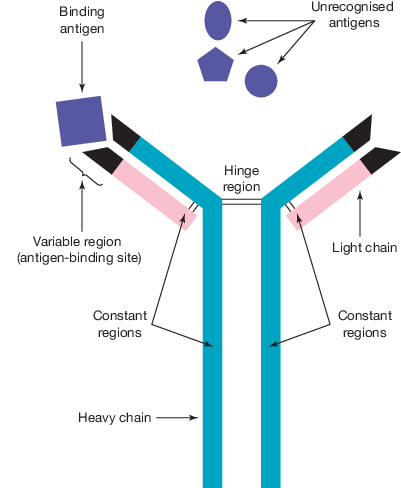
HINGE REGION IS ONLY MIDDLE BIT
Two chains joined together with disulfide bridges
86
What is the purpose of the trp operon and functions of its enzymes?
Allows bacteria to regulate production of enzymes required for synthesising the amino acid tryptophan, conserving resources when tryptophan is plentiful. trpE–trpA structural genes encode biosynthetic enzymes. Low Trp generally permits greater expression; high Trp promotes repression and attenuation. EXAM: Know overall function, not the exact reaction catalysed by each named enzyme.
87
Why can trp attenuation occur despite repression?
Repressor binding to the operator is not permanent; some basal transcription starts when it transiently dissociates, even with high tryptophan. Attenuation acts as additional fine control: when charged tRNA-Trp is readily available, ribosome translates leader quickly, terminator hairpin forms and transcription ends before structural genes, preventing wasteful enzyme synthesis.
88
Where is tryptophan found and how does it influence trp operon regulation?
Found free in the cytosol, incorporated into proteins and attached to tRNA-Trp during translation; animals also obtain it from dietary protein. Free intracellular tryptophan acts as co-repressor by binding repressor protein. Charged tRNA-Trp allows leader peptide translation through two adjacent Trp codons without pausing, supporting attenuation. EXAM: Know the difference between free tryptophan and availability of charged tRNA.
89
What role do AU/GC sequences play in attenuator formation?
Complementary GC-rich sections help stabilise RNA terminator hairpin; downstream U-rich sequences are commonly associated with intrinsic transcription termination. In trp attenuation, leader mRNA hairpin causes premature transcription termination. EXAM: Exact sequence and numbered stem-loop pairing are not required.
90
How many standard amino acids and human essential amino acids are there?
20 standard amino acids are commonly used in protein synthesis. Nine are essential in the human diet: histidine, isoleucine, leucine, lysine, methionine, phenylalanine, threonine, tryptophan and valine. EXAM: VCAA requires amino acids as protein monomers, but memorising all nine essential amino acids is not specified Unit 3/4 content.
91
What structures should be recognised in bacterial versus eukaryotic cell diagrams?
Bacterial – cell wall (where present), membrane, cytoplasm, nucleoid DNA, plasmids, ribosomes and possible flagellum. Eukaryotic – plasma membrane, nucleus, mitochondria, ribosomes, ER and Golgi; plant cells may have chloroplasts, cellulose wall and large vacuole. Bacteria lack membrane-bound organelles and usually have circular DNA; eukaryotes possess nuclei/organelles.
92
What is the difference between label and annotate?
Label – identify/name the relevant component on a diagram (e.g. “mitochondrion”). Annotate – name it AND add a relevant explanation (e.g. “mitochondrion – Krebs cycle occurs in matrix, ETC on inner membrane”). A name alone may not earn marks when annotation is required.
93
How do you determine closest relatedness on a phylogenetic tree?
Find the most recent common ancestor (MRCA). Two species sharing a more recent node are more closely related than species whose shared ancestor is older. Tip proximity on the page, left–right order and rotation of branches do NOT determine relatedness. Branch lengths only indicate timeenetic change if calibrated. If X and Y share a node and Z branched earlier, X is closer to Y than Z.
94
What are the 5 modes of pathogen transmission (OI DAD)?
O – Oral (faecal-oral): pathogens from infected faeces are ingested through contaminated food/water. I – Indirect physical contact: transmission through an intermediate object (fomite), e.g. contaminated bedding or needles, or through a vector such as a mosquito. D – Direct physical contact: transmission through physical contact between hosts, e.g. touching, kissing or sexual contact; includes vertical transmission from mother to child. A – Airborne: small infectious respiratory particles remain suspended in air and can be inhaled, sometimes over longer distances. D – Droplet: larger respiratory droplets generally travel short distances before settling and can infect nearby individuals.
95
How do you distinguish airborne vs droplet transmission and direct vs indirect physical contact?
Airborne vs droplet – airborne particles can remain suspended for prolonged periods and travel further, whereas larger droplets generally settle more quickly and transmit over shorter distances. A 5 µm cutoff is a traditional simplification, not an absolute biological boundary. Direct vs indirect – direct transmission involves contact between hosts (e.g. touching or bodily fluids), whereas indirect transmission involves an intermediate object (fomite) or organism (vector). EXAM: Identify whether transmission involves suspended particles, close-range droplets, direct host contact or an intermediate carrier.
96
SKIP
SKIP
97
What is the difference between a screening test and a diagnostic test?
Screening test – performed on a broad population, often asymptomatic, to identify individuals who may have an unrecognised disease or increased risk and require further investigation.
Example: newborn heel-prick screening for phenylketonuria (PKU).
Diagnostic test – performed to confirm or rule out a specific disease in individuals with symptoms, relevant exposure or a positive screening result.
Example: PCR testing to confirm influenza infection.
KEY DIFFERENCE: Screening identifies possible disease/ risk; diagnostic testing establishes whether the disease is present.
98
How can the accuracy of an experiment be improved?
1. Calibrate measuring equipment against a known standard before use. 2. Use appropriate, correctly functioning measuring instruments. 3. Identify and eliminate systematic errors, e.g. correcting a miscalibrated balance. 4. Use a suitable measurement technique to minimise bias. IMPORTANT: Repeating measurements does NOT eliminate systematic errors or necessarily improve accuracy.
99
How can the precision of measurements be improved?
1. Use measuring instruments with finer resolution where appropriate. 2. Standardise measurement techniques to reduce variation. 3. Control environmental factors that may introduce random variation. 4. Take repeated measurements and calculate a mean to reduce the influence of random errors on the final estimate. KEY: Precision refers to how closely repeated measurements agree with one another, NOT how close they are to the true value.
100
How can the validity of an experiment be improved?
1. Change only the independent variable while keeping other relevant variables controlled. 2. Include an appropriate control group where necessary. 3. Ensure the dependent variable directly measures what the investigation intends to measure. 4. Identify and minimise confounding variables. 5. Use a method appropriate for testing the research question/hypothesis. KEY: Validity = investigating what you claim to investigate.
101
How can the repeatability and reproducibility of an experiment be improved?
Repeatability – use the same equipment, observer, method and conditions; standardise the procedure, control variables and minimise random errors so repeated measurements agree closely. Reproducibility – provide a clear, detailed method that independent researchers can follow using different observers/equipment/locations; calibrate instruments and standardise relevant conditions to obtain consistent results. KEY: Repeatability = same conditions; Reproducibility = changed conditions.
102
How can the reliability of experimental results be improved?
1. Conduct multiple trials/ replicates rather than relying on one result. 2. Increase sample size where appropriate to reduce the influence of chance variation. 3. Calculate means and examine variation between results. 4. Use standardised, consistent methods. 5. Repeat the investigation and check whether similar results are obtained. KEY: Reliability concerns the consistency/dependability of results; reliable results are not necessarily accurate or valid.
103
What are random errors, and how can they be reduced?
Random errors – unpredictable variations in the measurement process that cause readings to fluctuate above or below the true value, reducing PRECISION. Examples: inconsistent reaction timing, fluctuating environmental conditions or small reading variations. Reduce by taking repeated measurements and calculating a mean, improving measurement techniques and controlling environmental fluctuations. Random errors generally cannot be completely eliminated.
104
What are systematic errors, and how can they be reduced?
Systematic errors – errors that consistently shift measurements away from the true value in the same direction, reducing ACCURACY. Examples: a balance consistently reading +0.5 g or a thermometer incorrectly calibrated. Reduce by calibrating equipment, checking against known standards, correcting faulty instruments and improving the measurement method. IMPORTANT: Repeating measurements and calculating a mean will NOT remove a systematic error.
105
What are personal errors, and how can they be prevented?
Personal errors – mistakes made by the experimenter through incorrect procedures, calculations, recording or equipment use. Examples: reading the wrong scale, recording 25 instead of 52, incorrect calculations or accidentally using the wrong reagent. Prevent by checking calculations/data entries, following procedures carefully, using equipment correctly and repeating an incorrectly performed experiment. EXAM: VCAA distinguishes personal mistakes from random/systematic MEASUREMENT errors; personal errors should be corrected rather than treated as unavoidable uncertainty.
106
How do you identify whether an error is random, systematic or personal in an exam question?
RANDOM – unpredictable fluctuations/scattered readings → reduces precision → repeat measurements, calculate mean and improve technique. SYSTEMATIC – consistent bias in one direction, e.g. miscalibrated equipment → reduces accuracy → recalibrate/correct equipment or method. PERSONAL – experimenter makes a mistake, e.g. misreads instrument or records wrong value → correct mistake/ repeat procedure properly. EXAM: Identify the error, explain its effect on results and suggest a specific improvement addressing its cause.
107
What are the functions of antibodies (PIANOC)?
Precipitation/immobilisation – antibodies bind to soluble antigens/toxins, cross-linking them to make them insoluble, causing them to settle out of solution so phagocytes can clear them;
Inflammation – antibody-mediated complement activation can promote recruitment of immune cells and inflammatory responses;
Agglutination – antibodies cross-link antigens on separate pathogens, forming large clumps that are easier to phagocytose;
Neutralisation – antibodies bind to pathogens or toxins, blocking viral attachment/entry sites or toxin active sites, preventing harmful effects;
Opsonisation – antibodies coat pathogen surfaces, making them easier for phagocytes to recognise and engulf;
Complement activation – antigen-bound antibodies activate the complement cascade, which can form membrane attack complexes (MACs) that lyse pathogens.
108
What are the three functions of complement proteins (OCL)?
O – Opsonisation: complement proteins bind to the surface of pathogens, marking them for recognition and destruction by phagocytes; C – Chemotaxis: complement proteins attract phagocytes towards pathogens and sites of infection; L – Lysis: complement proteins assemble into membrane attack complexes (MACs), forming pores in pathogen membranes, allowing fluid to enter and causing the pathogen to swell and burst.
109
What is the difference between primary and secondary lymphoid organs?
Primary lymphoid organs are responsible for lymphocyte production and maturation. Bone marrow produces immature B and T lymphocytes and is where B cells mature; the thymus is where T cells mature. Secondary lymphoid organs are responsible for antigen recognition and initiation of adaptive immune responses. Lymph nodes (including tonsils) and the spleen contain mature lymphocytes that encounter complementary antigens, undergo clonal selection, expansion and differentiation.
110
What is the difference between lysozymes and lysosomes?
Lysozymes are antimicrobial enzymes that break down bacterial cell walls, helping destroy bacteria. They occur in tears and saliva as chemical barriers and are also described in the supplied phagocytosis resources. Lysosomes are membrane-bound organelles containing digestive enzymes that fuse with phagosomes during phagocytosis to digest engulfed pathogens. Lysozyme = enzyme; lysosome = enzyme-containing organelle.
111
What is a fossil?
The preserved body, impression or trace of a dead organism.
112
What are the conditions that favour fossilisation (RUDD)?
R – Rapid burial: remains are quickly covered by sediment, protecting them from decomposition and scavenging; U – Undisturbed: remains are physically protected from scavengers, decomposers and other disturbances; D – Deoxygenation: low oxygen availability slows decomposition by microorganisms; D – Dark and cool: low light exposure and consistently cool temperatures reduce decomposition and favour preservation.
113
What are the different types of fossils and how does each form?
Permineralised fossil – mineral-rich groundwater deposits minerals such as silica or calcite into organic remains, preserving their structure as a mineral relic; Mould fossil – the buried organism decomposes, leaving an impression or cavity in the surrounding sediment; Cast fossil – sediment fills a mould and hardens, producing a three-dimensional copy of the organism; Trace fossil – indirect evidence of an organism's presence or activities, such as footprints, burrows or nests; Preserved remains – organisms or tissues preserved through conditions such as freezing, amber entrapment or mummification.
114
How does the fossil record provide evidence of evolution, and why is it insufficient on its own?
Fossils found in different geological strata demonstrate changes in the morphology and diversity of organisms over time, providing evidence of evolutionary change. Transitional fossils possess characteristics shared by ancestral and descendant groups, demonstrating evolutionary relationships. Index fossils assist in determining relative ages.
However, the fossil record is incomplete because fossilisation is rare, organisms may decompose or be scavenged, fossils may be destroyed by erosion, many fossils remain undiscovered, and recovered specimens are often fragmentary.
Consequently, fossil evidence alone may not establish exact evolutionary relationships and must be supported by molecular evidence such as DNA and amino acid sequence comparisons.
115
Why are aquatic environments more likely to produce fossils?
Aquatic environments often experience rapid sediment accumulation, allowing remains to be buried quickly and protected from scavengers and environmental disturbances. They may also have lower oxygen availability and cooler temperatures, reducing decomposition by microorganisms and increasing the likelihood of fossilisation.
116
What is the difference between faunal succession and superposition?
Superposition describes the relative ages of undisturbed sedimentary rock layers: older layers are found below younger layers. Faunal succession uses the occurrence of fossils, including index fossils, within sedimentary strata to determine relative ages and correlate layers between locations. Superposition focuses on the order of rock layers, whereas faunal succession focuses on the fossil evidence within them.
117
How does radiocarbon dating work, including ¹⁴C, ¹²C and ¹⁴N?
While an organism is alive, it exchanges carbon with its environment, maintaining a ¹⁴C:¹²C ratio similar to its surroundings. After death, carbon exchange stops. Radioactive ¹⁴C decays into stable ¹⁴N at a predictable rate, while stable ¹²C remains relatively unchanged. Scientists compare the remaining ¹⁴C:¹²C ratio in the sample with that of a reference sample and use the 5730-year half-life of ¹⁴C to calculate the time since death. After one half-life, 50% of the original ¹⁴C remains; after two, 25%; after three, 12.5%. Radiocarbon dating is useful for organic remains approximately 1000–50,000 years old. ¹⁴C decays into ¹⁴N, NOT ¹²C.
118
From what fossils can DNA be recovered, and what is the maximum age?
DNA can sometimes be extracted from sufficiently well-preserved fossil remains, particularly specimens retaining biological material. The supplied resources describe mtDNA and nuclear DNA recovered from ancient hominin fossils, including approximately 100,000-year-old Neanderthal material. The resources do not establish a universal maximum age for DNA recovery. The approximately 50,000-year limit applies to radiocarbon dating, NOT DNA extraction.
119
What factors must be considered when evaluating bioethical issues (SELP)?
S – Social: effects on health, wellbeing, cultural beliefs, equality, accessibility and communities; E – Economic: costs, funding, affordability, commercial interests and distribution of resources; L – Legal: laws, regulations, consent, ownership and individual rights; P – Political: government policies, public funding, regulation and competing public priorities. A complete evaluation should identify stakeholders, explain relevant factors, apply appropriate bioethical concepts and justify a course of action.
120
What are the five bioethical concepts and three bioethical approaches?
Five concepts: Integrity – honesty, truthful reporting and commitment to knowledge; Justice – fairness and equitable distribution of benefits and burdens; Beneficence – maximising benefits to others; Non-maleficence – minimising harm; Respect – recognising autonomy, beliefs, cultural heritage and welfare. Three approaches: Consequences-based – maximise positive outcomes and minimise negative consequences; Duty/ rule-based – follow moral obligations, rules and responsibilities; Virtues-based – act according to morally desirable characteristics such as honesty, compassion and care.
121
What is a disease?
The impaired functioning of cells or biological processes within the body. Infectious diseases are caused by pathogens, whereas non-infectious diseases are not caused by pathogens.
122
When is PCR used before gel electrophoresis, and what is its specific purpose?
PCR is used before gel electrophoresis when insufficient quantities of the target DNA are available for reliable analysis. It amplifies a specific DNA sequence, producing many identical copies so that sufficient DNA can be loaded into the gel and visualised as detectable bands. PCR increases the quantity of target DNA; gel electrophoresis separates DNA fragments according to length. PCR does NOT separate DNA fragments.
123
What is the difference between a virion and a viroid?
A **virion** is a complete, extracellular viral particle consisting of genetic material enclosed within a protein capsid, whereas a **viroid** is a simpler pathogen composed solely of a short strand of single-stranded RNA lacking a protein capsid.
124
What is the difference between precision and power grips, and what are they characteristic of?
Precision grip – grasping or manipulating small objects between the fingertips, particularly the thumb and index finger, allowing fine control. It is characteristic of primates due to their opposable digits but is especially developed in humans. Power grip – firmly grasping objects using the palm and fingers to generate greater force, particularly useful for climbing or holding branches. Chimpanzees are relatively better adapted for power gripping. Both grips occur in primates to varying degrees.
125
What is a totem, and how can genetic lineages help identify human migration patterns?
A totem is an emblem or symbol, such as an animal, plant or landscape feature, representing the spiritual connection between Aboriginal people and Country.
Genetic lineages can be traced by comparing inherited DNA sequence similarities and differences. mtDNA is maternally inherited, does not undergo meiotic recombination and accumulates mutations over generations, allowing scientists to trace maternal ancestry. Comparing mtDNA variation between geographical populations helps infer common ancestry and migration patterns.
Genetic lineages can be traced by comparing inherited DNA sequence similarities and differences. mtDNA is maternally inherited, does not undergo meiotic recombination and accumulates mutations over generations, allowing scientists to trace maternal ancestry. Comparing mtDNA variation between geographical populations helps infer common ancestry and migration patterns.
126
Are transcription factors and repressors found in eukaryotes?
Transcription factors are involved in eukaryotic gene regulation. They bind to promoter regions and help control RNA polymerase binding and transcription initiation in the nucleus. Repressor proteins decrease or prevent gene expression. The trp operon provides a specific prokaryotic example in which a repressor binds the operator and prevents transcription. Eukaryotic cells also regulate gene expression, but the bacterial trp operon mechanism should not be applied directly to eukaryotes.
127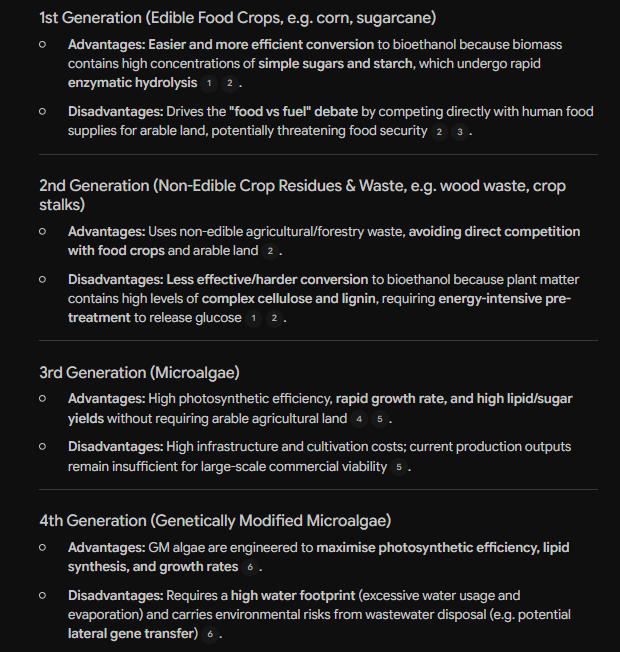
What are the generations of biofuels, including their advantages and disadvantages?
128
What is the difference between extraneous and confounding variables?
An extraneous variable is any variable other than the independent variable that could influence the dependent variable if not controlled. A confounding variable is an uncontrolled variable associated with both the independent variable and dependent variable, making it difficult to determine whether changes in the dependent variable were caused by the independent variable. Example: age may confound a study of exercise and heart disease because it can influence both physical activity and heart-disease risk. Confounding reduces experimental validity.
129
What is the difference between a cofactor and a corepressor?
Cofactor – an organic or inorganic molecule or ion that assists an enzyme in catalysing a biochemical reaction; examples include metal ions and organic coenzymes. Corepressor – a molecule that binds to a repressor protein and enables it to inhibit gene transcription. In the bacterial trp operon, tryptophan acts as a corepressor, binding to the repressor and changing its conformation so it can bind the operator and block transcription. Cofactor = assists enzyme activity; corepressor = assists repression of gene expression.
130
What are the key structural differences between mitochondria and chloroplasts?
Both are double-membrane-bound organelles with an outer membrane, inner membrane and intermembrane space. Mitochondria contain a fluid-filled matrix and an inner membrane folded into cristae. The Krebs cycle occurs in the matrix, while the electron transport chain occurs on the cristae. Chloroplasts contain a fluid-filled stroma and internal thylakoid membranes stacked into grana. The light-dependent reactions occur on thylakoid membranes, while the Calvin cycle occurs in the stroma. Mitochondria = matrix and cristae; chloroplasts = stroma, thylakoids and grana.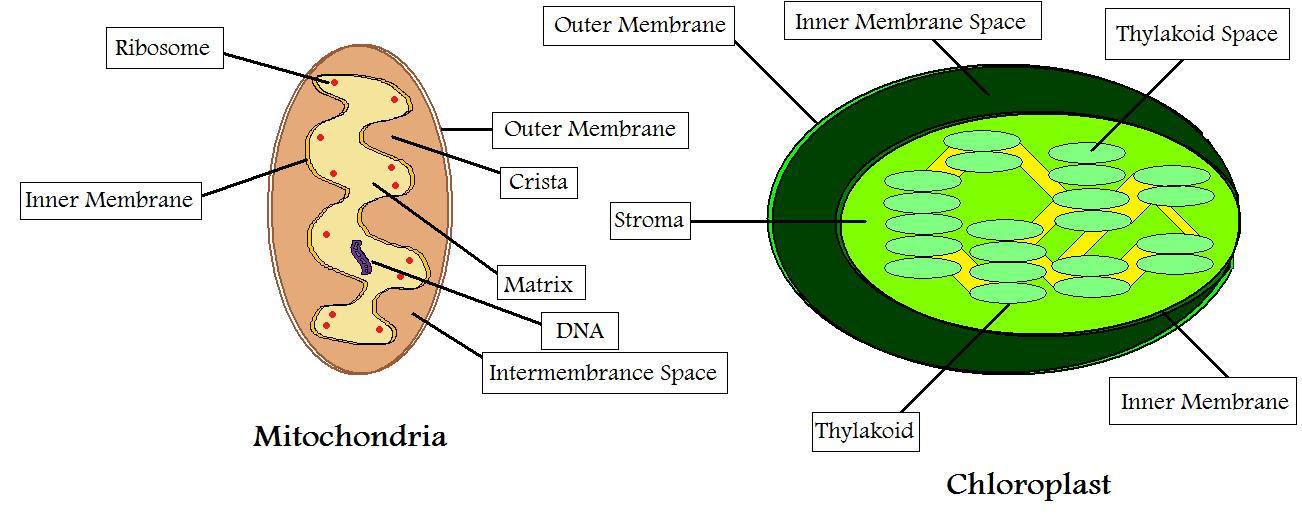
131
What is a case study?
An investigation of an event or problem involving a real or hypothetical situation. It may involve historical analysis, examining a bioethical dilemma, role-playing a hypothetical situation or designing a solution to a real-world problem.
132
What factors contribute to the emergence versus re-emergence of infectious diseases?
Emerging - antigenic shift, increased proximity to animal populations, climate change, increased global exploration and travel (humans reach uncharted new areas and discover new pathogens)
Re-emerging - reduced vaccination rates/coverage (lowers herd immunity and increases susceptible hosts/spread), public health disruptions (compromises sanitation and disease control measures thus more susceptible hosts and spread), antibiotic resistance (basically same bacteria except resistance thus emerging), antigenic drift (same virus subtype most types just different strain i.e. different human race, thus re-emerging)
Re-emerging - reduced vaccination rates/coverage (lowers herd immunity and increases susceptible hosts/spread), public health disruptions (compromises sanitation and disease control measures thus more susceptible hosts and spread), antibiotic resistance (basically same bacteria except resistance thus emerging), antigenic drift (same virus subtype most types just different strain i.e. different human race, thus re-emerging)
133
What are the steps of phagocytosis (EDS)?
1) Engulfment: A pathogenic antigen binds to a PRR (pattern recognition receptor) of a phagocyte such as a neutrophil. With the aid of ATP, the plasma membrane encloses it into a vesicle that buds into the cell as a phagosome or endocytic compartment.
2) Digestion: Phagosome fuses with a lysosome, allowing lysozymes to digest pathogen
3) Secretion: Undigested pathogenic material is released(ATP required) from the cell by exocytosis into the extracellular environment
2) Digestion: Phagosome fuses with a lysosome, allowing lysozymes to digest pathogen
3) Secretion: Undigested pathogenic material is released(ATP required) from the cell by exocytosis into the extracellular environment
134
What does increasing sample size improve, and why?
Increasing sample size improves the reliability of results by reducing the influence of random variation and individual outliers, allowing measurements to be averaged across more observations. It can improve precision by reducing the influence of random errors and increase the likelihood that a properly selected sample is representative of the population. Increasing sample size does not automatically eliminate systematic errors, confounding variables or experimental bias.
135
What is the evolutionary significance of Homo heidelbergensis?
Homo heidelbergensis was an ancient hominin species within the genus Homo, existing approximately 700,000–200,000 years ago. It is positioned close to Homo sapiens and Homo neanderthalensis in evolutionary models and is considered a proposed ancestral lineage associated with their evolution. However, its exact placement and direct ancestral relationships depend on the fossil and molecular evidence presented, because hominin classifications remain open to interpretation and revision.
136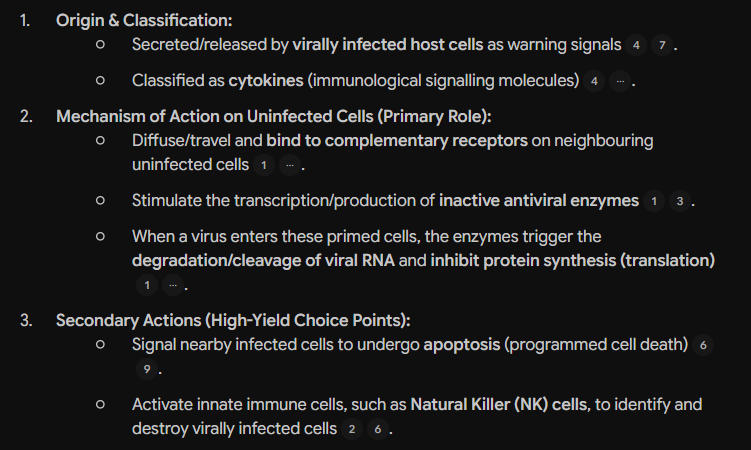
What are the functions of interferons?
137
What is adaptive radiation?
The RAPID divergent evolution of a single ancestral species into a large number of different descendant species or forms, typically as populations adapt to different ecological niches and environmental selection pressures. Example: ancestral Galápagos finches rapidly diversified into species with different beak structures adapted to different food sources.
138
Why is the human fossil record considered an incomplete and contested classification scheme (U4 2.11)?
The human fossil record is incomplete because fossilisation is rare, organisms may decompose or be consumed by scavengers, rock layers can erode, many fossils remain undiscovered, and recovered specimens are often incomplete skeletons or isolated fragments. Fossils may display characteristics shared by several hominin species, producing disagreement about whether a specimen represents a new species, a transitional form or variation within an existing species. Consequently, scientists make inferences from limited evidence, and evolutionary classifications may be contested, refined or replaced when new fossils, dates or genomic evidence are discovered. Hominin evolution is not a simple linear progression from one species to another.
139
What are putative Homo species, and how does Homo naledi illustrate contested classifications (U4 2.11)?
Putative species are proposed species whose existence or precise evolutionary relationships require further investigation and evidence.
Homo naledi fossils discovered in South Africa display a mixture of Australopithecus-like traits, including curved fingers, primitive shoulders and small brain size, and Homo-like traits, including rounded skull features and hands and feet suited to manipulation and walking. Scientists initially proposed that H. naledi could represent a transitional form between Australopithecus and Homo. However, subsequent dating placed the fossils at approximately 250,000 years old, after the emergence of the Homo genus, challenging this interpretation. Other examples illustrating classification difficulties include Homo floresiensis and Homo luzonensis.
Homo naledi fossils discovered in South Africa display a mixture of Australopithecus-like traits, including curved fingers, primitive shoulders and small brain size, and Homo-like traits, including rounded skull features and hands and feet suited to manipulation and walking. Scientists initially proposed that H. naledi could represent a transitional form between Australopithecus and Homo. However, subsequent dating placed the fossils at approximately 250,000 years old, after the emergence of the Homo genus, challenging this interpretation. Other examples illustrating classification difficulties include Homo floresiensis and Homo luzonensis.
140
What evidence demonstrates interbreeding between Homo sapiens, Neanderthals and Denisovans (U4 2.11)?
Comparisons of ancient and modern nuclear DNA reveal genetic sequences inherited from other hominin species, providing evidence of interbreeding and gene flow. The supplied Edrolo resource reports approximately 1–4% Neanderthal-derived DNA in many non-African modern human genomes, suggesting interbreeding after Homo sapiens migrated out of Africa into regions occupied by Neanderthals. It also reports approximately 4–6% Denisovan-derived DNA in sampled Melanesian populations, suggesting interbreeding with Denisovans during migration through Asia and Oceania. These interbreeding events demonstrate that human evolutionary history involves both divergence and gene flow, and phylogenetic trees may therefore include connections between separate evolutionary branches.
141
What is the Out of Africa hypothesis, and what evidence supports it (U4 2.12)?
The Out of Africa hypothesis proposes that modern Homo sapiens evolved in Africa approximately 200,000–300,000 years ago before migrating outwards in multiple waves and populating other regions of the world, replacing or interbreeding with earlier hominin populations.
Oldest H. sapiens fossils in Africa; highest African genetic diversity (more time for mutations to accumulate); founder effects in non-Africans (small migrating groups carried only a subset of African genetic diversity); mtDNA tracing maternal ancestry to Africa (supports African origins of modern humans); Neanderthal DNA in modern non-Africans (confirms interbreeding after migration)
Oldest H. sapiens fossils in Africa; highest African genetic diversity (more time for mutations to accumulate); founder effects in non-Africans (small migrating groups carried only a subset of African genetic diversity); mtDNA tracing maternal ancestry to Africa (supports African origins of modern humans); Neanderthal DNA in modern non-Africans (confirms interbreeding after migration)
142
How can mitochondrial DNA (mtDNA) and whole-genome sequencing be used to investigate human migration (U4 2.12)?
mtDNA is inherited maternally and does not undergo meiotic recombination, meaning sequence differences primarily arise through accumulated mutations. Comparing mtDNA mutations between populations allows scientists to trace maternal lineages, identify common ancestry and infer population divergence and migration patterns. African populations show the greatest mtDNA diversity, consistent with older ancestral populations and more time for mutations to accumulate. Whole-genome sequencing compares nuclear DNA across many genetic regions, providing broader evidence of evolutionary relatedness, genetic diversity and gene flow. It can reveal ancient interbreeding events, such as the inheritance of Neanderthal and Denisovan DNA, and help refine models of human migration.
143
What does fossil and genetic evidence reveal about the migration of Aboriginal and Torres Strait Islander peoples to Australia (U4 2.12)?
Fossil, archaeological and genomic evidence supports the arrival of ancestors of Aboriginal and Torres Strait Islander peoples in Sahul approximately 50,000–65,000 years ago. Sahul was the prehistoric landmass connecting present-day Australia, Tasmania and New Guinea. Early populations dispersed across the landmass before rising sea levels separated its regions, contributing to geographical isolation. Genomic evidence links Aboriginal Australians to early migrations out of Africa, and the long continuity of their populations makes them one of the oldest continuously resident modern human populations in the world.
144
What is Connection to Country and Place, and why is it relevant to scientific interpretations of human migration (U4 2.12)?
Connection to Country describes the reciprocal spiritual, cultural, social and practical relationship between Aboriginal and Torres Strait Islander peoples and their ancestral lands and seas. Country is connected to identity, kinship, cultural responsibilities, beliefs and traditions, rather than representing only a geographical location. Some First Nations communities hold creation narratives that differ from scientific migration models assigning numerical arrival dates. Consequently, research into human ancestry, fossil remains and migration must consider respect for Indigenous knowledge, cultural beliefs, community involvement, ownership of ancestral remains and the potential implications for cultural identity and Connection to Country.
145
How does a small sample size affect precision?
Reduces precision due to greater random sampling variation.\
146
How can a small sample size affect representativeness?
A small group may not accurately represent the broader population.\
147
Why is a short experimental duration a limitation?
May fail to reveal long-term trends, delayed effects or side effects.\
148
How might a short vaccine trial compromise non-maleficence?
Long-term adverse effects may remain undetected, potentially exposing recipients to harm.\
149
How does random allocation improve validity?
Reduces systematic differences between experimental groups and distributes potential confounding variables.\
150
How do uncontrolled variables affect validity?
Changes in the DV may be caused by factors other than the IV.\
151
What is a confounding variable?
A variable that systematically changes with the IV and also affects the DV.\
152
What is an extraneous variable?
A variable other than the IV that may influence the DV.\
153
How does killing infected cells assist phagocytosis?
Releases intracellular pathogens, making them accessible to phagocytes.\
154
Why are antibodies less effective against intracellular pathogens?
Antibodies generally cannot access pathogens protected inside host cells.\
155
What units measure CO₂ and O₂ concentrations?
ppm or %.\
156
What units measure light intensity?
lux (lx).\
157
What units measure liquid substrateeagent concentrations?
M, mM or mol/L.\
158
What units measure chemical products such as pyruvate and ethanol?
µmol for amount or mM for concentration.\
159
What units measure gas product volumes?
mL or cm³.\
160
What oxygen-transport protein can be compared to determine evolutionary relationships?
Haemoglobin.\
161
What enzyme involved in cellular respiration can be compared to determine evolutionary relationships?
Cytochrome c oxidase.\
162
Why can DNA sequencing provide more evolutionary information than amino acid sequencing?
Detects silent mutations that do not change amino acid sequences.\
163
What is the key consideration for the bioethical principle of respect?
Respect extends beyond humans to other living organisms and the environment, including non-living components.\
164
Why are conserved genes useful for comparing evolutionary relationships?
They are shared across many organisms, allowing sequence comparisons.\
165
Why do conserved genes generally accumulate mutations slowly?
They encode essential functions, so many harmful mutations are removed by natural selection.\
166
How can conserved genes act as molecular clocks?
Some accumulate mutations at relatively predictable rates, allowing divergence times to be estimated.\
167
What fossil evidence supports the Out of Africa model?
The oldest known Homo sapiens fossils have been discovered in Africa.\
168
How does African genetic diversity support the Out of Africa model?
Greater genetic diversity suggests a longer period for mutations to accumulate in African populations.\
169
How do founder effects support the Out of Africa model?
Small migrating populations carried only a subset of African genetic diversity.\
170
How does mtDNA support the Out of Africa model?
Modern human maternal ancestry can be traced back to Africa.\
171
What anatomical evidence has been used to support the Multiregional Evolution Model?
Regional similarities between archaic and later human fossils suggest local evolutionary continuity.\
172
What fossil evidence has been used to support the Multiregional Evolution Model?
Proposed transitional Eurasian fossils suggest local progression from archaic to modern human forms.\
173
How do early H. sapiens fossils in Israeli caves support the Assimilation Model?
Demonstrate migration out of Africa earlier than 60,000 years ago.\
174
How does modern human DNA in ancient Neanderthals support assimilation?
Provides evidence of early interbreeding between modern humans and Neanderthals.\
175
How does Neanderthal DNA in modern non-Africans support assimilation?
Demonstrates interbreeding and gene flow after modern humans migrated out of Africa.\
176
How does intact skin prevent pathogen entry?
Forms a continuous physical barrier blocking pathogens from entering internal tissues.\
177
How does shedding of skin cells defend against pathogens?
Removes microorganisms attached to dead surface keratinocytes.\
178
How do mucous membranes and mucus prevent infection?
Mucous membranes secrete sticky mucus that physically traps pathogens.\
179
Is mucus primarily a physical or chemical barrier?
Physical — traps pathogens rather than directly destroying them.\
180
How do cilia prevent respiratory infections?
Sweep pathogen-containing mucus towards the throat for swallowing or expulsion.\
181
How do lysozymes prevent bacterial infections?
Break down peptidoglycan in bacterial cell walls.\
182
How does stomach acid prevent infection?
Creates a low-pH environment that destroys many ingested pathogens.\
183
How do sebum and acidic sweat prevent infection?
Create an acidic environment and provide antimicrobial substances that inhibit microbial growth.\
184
How does the waxy cuticle protect plants against pathogens?
Forms a hydrophobic physical barrier preventing pathogen penetration and limiting moisture for fungal germination.\
185
How does thick bark protect plants against pathogens?
Dead cork tissue forms a durable physical barrier blocking pathogen penetration.\
186
How does stomatal closure protect plants against pathogens?
Closes stomatal pores to restrict pathogen entry into internal leaf tissues.\
187
How do plant cell walls protect against pathogens?
Rigid cellulose walls form structural barriers resisting pathogen penetration.\
188
How do defensins protect plants against pathogens?
Antimicrobial peptides inhibit or damage invading microorganisms.\
189
How do phenols protect plants against pathogens?
Antimicrobial compounds inhibit or damage invading pathogens.\
190
How do chitinases protect plants against fungal pathogens?
Enzymatically break down chitin in fungal cell walls.\
191
How do glucanases protect plants against fungal pathogens?
Enzymatically break down glucans in fungal cell walls.
More Science flashcards
OVERVIEW OF LAB MANAGEMENT Science · EnglishMauChapter 9 and 10 peopleScience · EnglishOliver28 - Electromagnetic InductionScience · EnglishNicoPrinciples of Cell + Membrane FunctionScience · EnglishKrisMedCardsBIO110: Biology Themes and Soil ScienceScience · EnglishMacEARTH AND LIFE SCIENCES Science · Englishkylie1.5 Types Of SubstanceScience · EnglishKonradAstronomy 2022 November 7-9Science · EnglishEmma3.24 PROPERTIES OF PERIOD 3 ELEMNTSSSScience · EnglishSabs20233.3.9 CARBOXYLIC ACIDS AND DERIVATIVESScience · EnglishSabs2023part 2 of exercise 5Science · EnglishLlancePORG LAB 1Science · EnglishLlance
Study these decks in the app
Free on iPhone, Android, Mac and the web. Add any deck to your account in one tap.

