ACG2071 Chapter 5 (Principles of Managerial Accounting)
Study these flashcardsFree · spaced repetition · iPhone, Android, Mac & web
All cards
1
Variable Costs
Variable costs are costs that increase or decrease in total in direct proportion to increases or decreases in the volume of activity.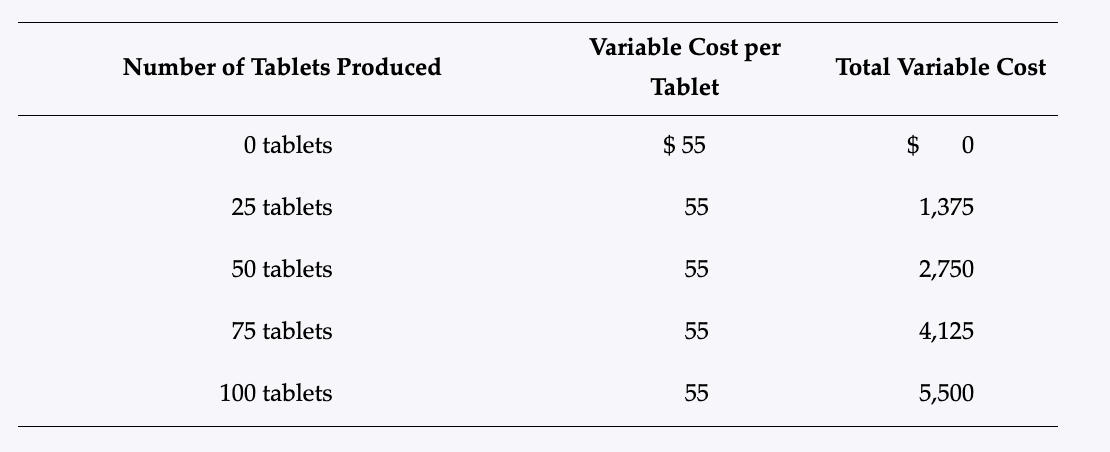
2
Fixed Costs
Fixed costs are costs that do not change in total over wide ranges of volume of activity.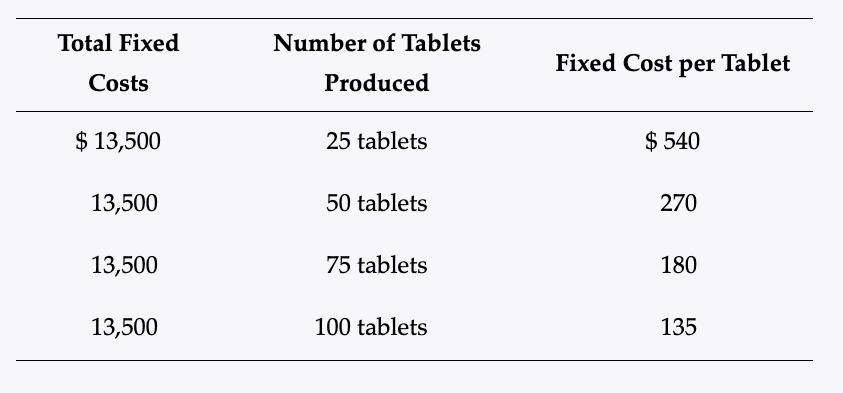
3
Mixed Costs
Costs that have both variable and fixed components are called mixed costs. For example, Smart Touch Learning’s sales representatives earn a salary plus commissions on sales.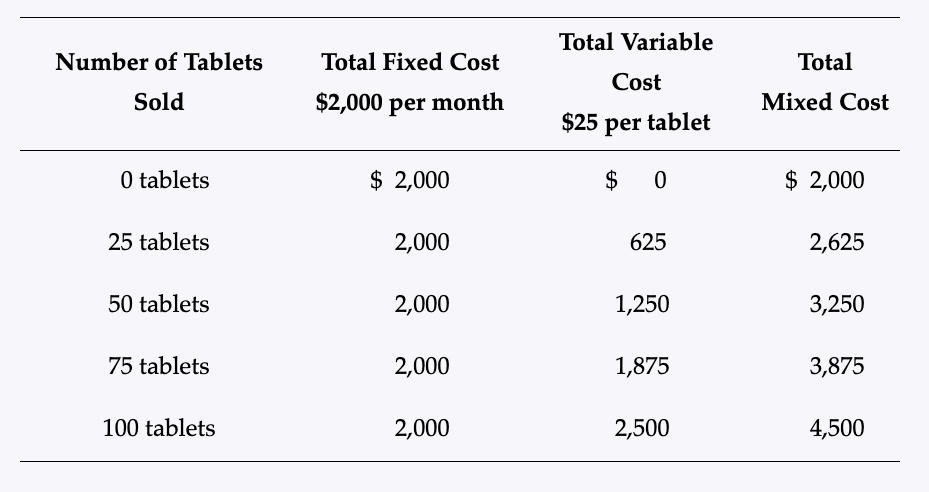
4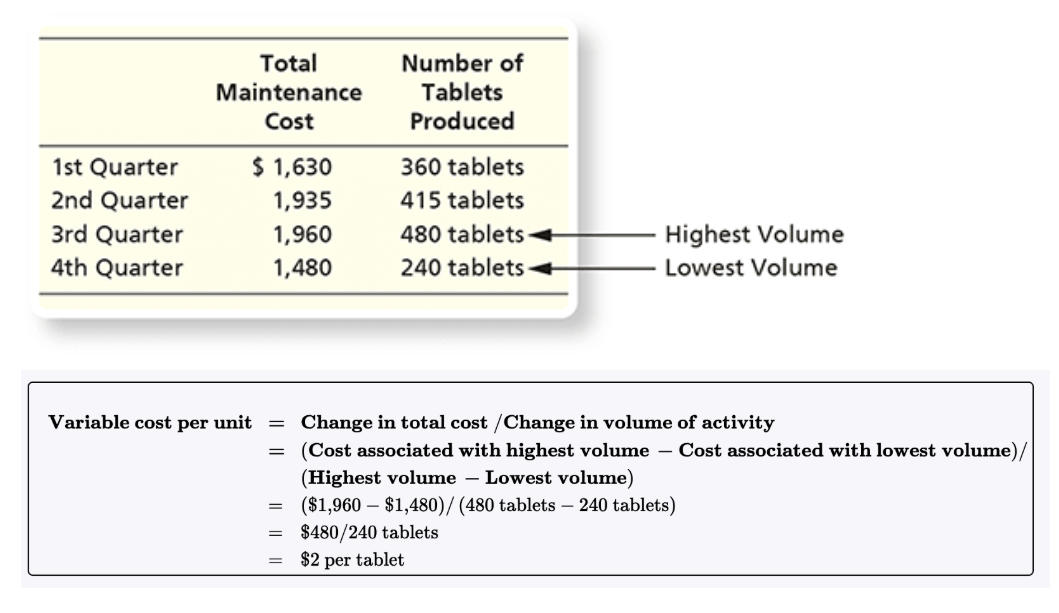
High-Low Method for Estimating Mixed Costs
Step 1:
(Next FC are the other Steps)
Step 1:
(Next FC are the other Steps)
5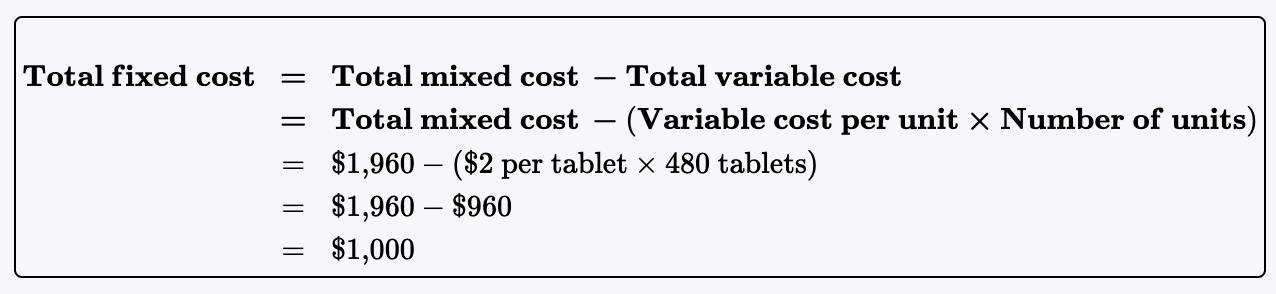
Step 2:
6
Step 3:
Find the "Total Maintenance Cost" (Idk what this exactly means, they don't really explain.
Total Maintenance Cost = (Maintenance cost per unit x number of units) + Total Fixed Costs
Total Maintenance Cost = (Maintenance cost per unit x number of units) + Total Fixed Costs
7
Regression Analysis for Estimating Mixed Costs
Step 1: Put in the data (ex, 360 costs \$1,630, 415 costs \$,1935).
Step 2: Find the Slope-intercept form, (y = 2.1792x + 936.76
Step 3: The 2.1792 is the variable cost, the x is the amount of units, and the 936.76 is the fixed cost.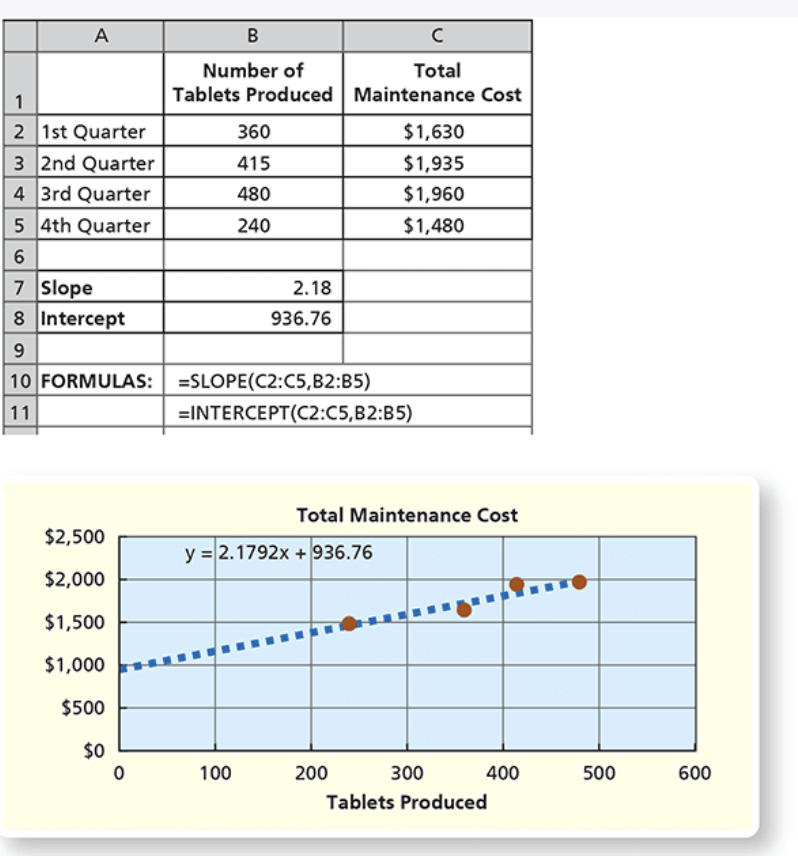
Step 2: Find the Slope-intercept form, (y = 2.1792x + 936.76
Step 3: The 2.1792 is the variable cost, the x is the amount of units, and the 936.76 is the fixed cost.
8
Relevant Ranges
The range of volume where the total fixed costs and the variable costs PER UNIT remain constant.
So, at 0-2,000 tablets, the company can operate with the same staff, equipment and factory. This keeps the same varibale cost PER UNIT and total fixed costs the same.
But, at >2,001 tablets, they need to get more staff and factoyr and equipment, which increases the variable costs PER UNIT and total fixed costs.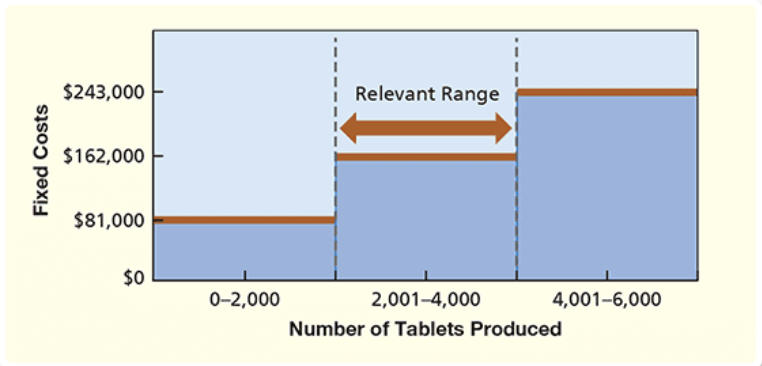
So, at 0-2,000 tablets, the company can operate with the same staff, equipment and factory. This keeps the same varibale cost PER UNIT and total fixed costs the same.
But, at >2,001 tablets, they need to get more staff and factoyr and equipment, which increases the variable costs PER UNIT and total fixed costs.
9
Contribution Margin
Contribution margin = Total Net Sales Revenue - Total Variable Costs
10
Unit Contribution Margin
Unit Contribution Margin = Net Sales Revenue per unit - Variable Costs per unit
11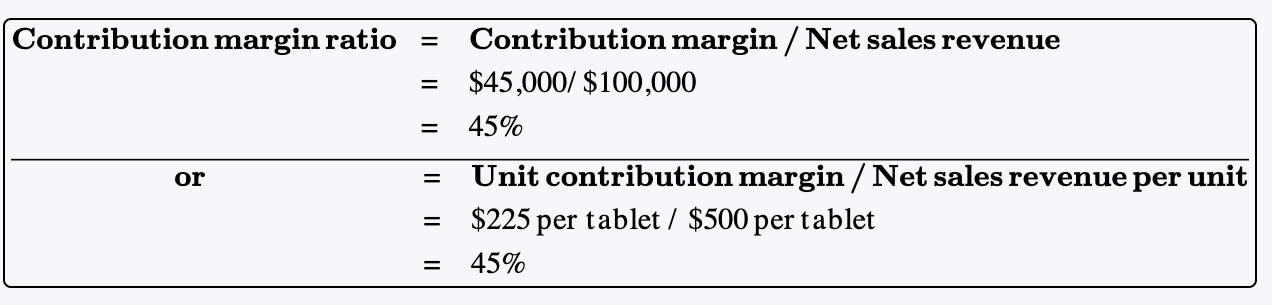
Contribution Margin Ratio
12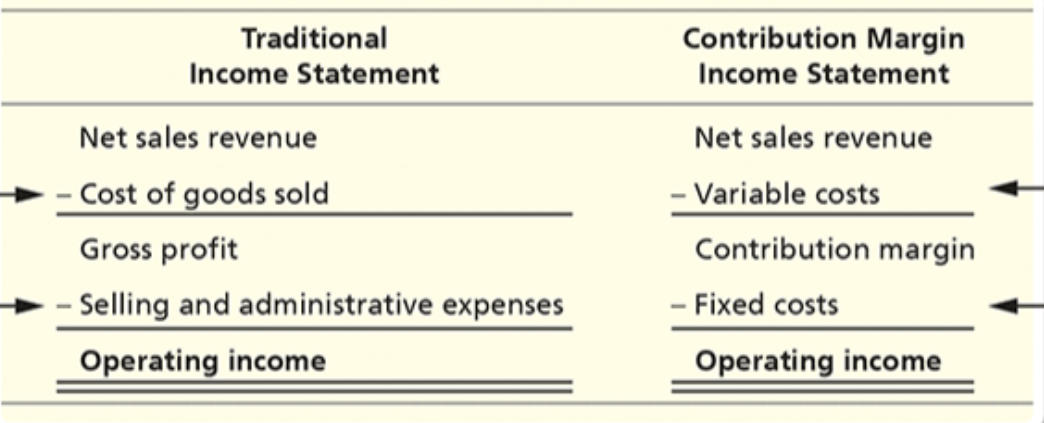
Contribution Margin Income Statement
13
Breakeven Point
The breakeven point is the sales level at which the company does not earn a profit or incur a loss but has an operating income of zero.
There are three methods to find the breakeven point
1. Equation Method
2. Contribution margin approach
3. Contribution margin ratio approach
(IMPORTANT: Can also use the "target profit" to put in whatever target profit you want, and not just the break-even point of \$0)
There are three methods to find the breakeven point
1. Equation Method
2. Contribution margin approach
3. Contribution margin ratio approach
(IMPORTANT: Can also use the "target profit" to put in whatever target profit you want, and not just the break-even point of \$0)
14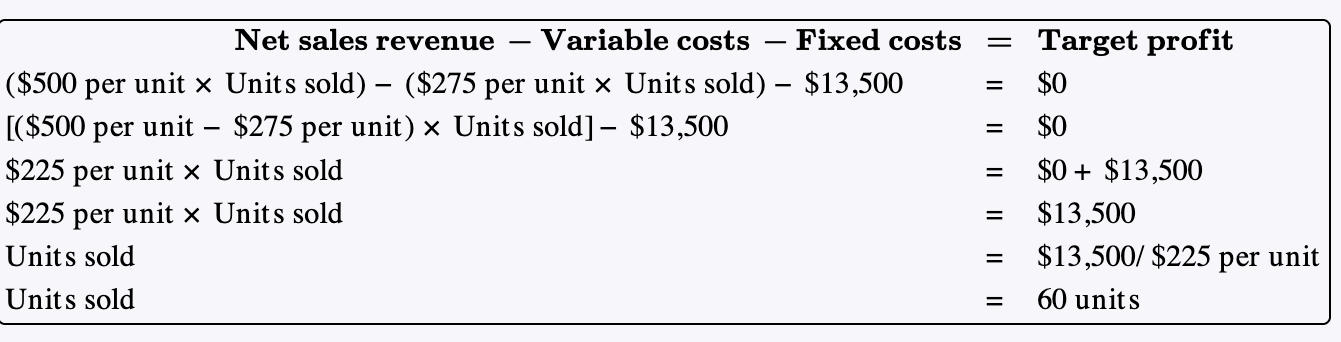
Equation Method to find the breakeven point
15
Contribution Margin Method to find the breakeven point
Used to the find the "required sales in units"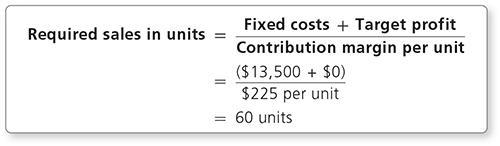
16
Contribution Margin Ratio method to fin the break even point
Used to the find the "required sales in dollar"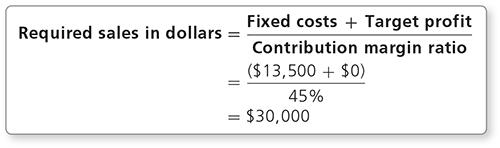
17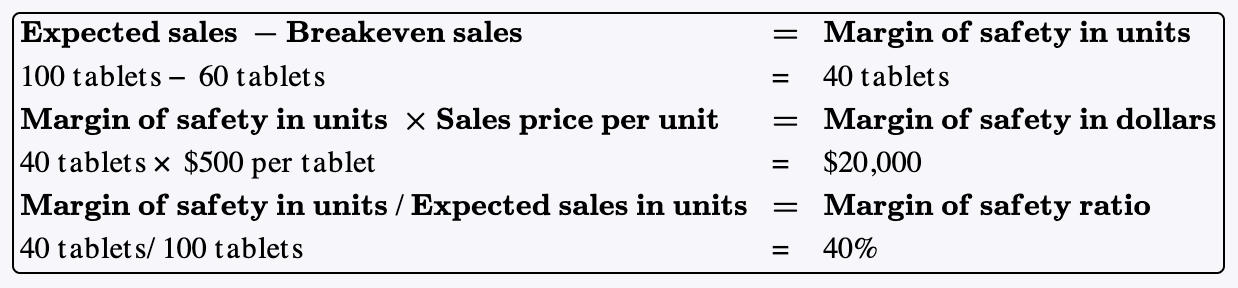
-Margin of Safety in Units
-Margin of Safety in dollars.
-Marin of safety ratio
-Margin of Safety in dollars.
-Marin of safety ratio
18
What is operating Leverage (And how to calculate)
Operating leverage: measures how much a company's profit changes when its sales volume change.
"The degree of operating leverage for Company A is 2.50. This means that the percentage change in operating income will be 2.50 times the percentage change in sales. For Company B, the percentage change in sales will have a lesser effect on operating income at 1.25 times the change."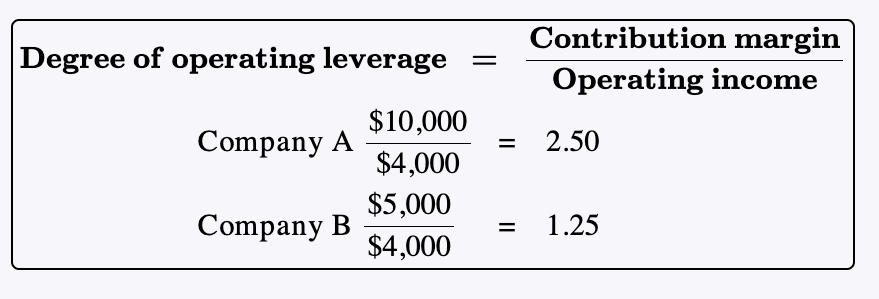
"The degree of operating leverage for Company A is 2.50. This means that the percentage change in operating income will be 2.50 times the percentage change in sales. For Company B, the percentage change in sales will have a lesser effect on operating income at 1.25 times the change."
19
Sales Mix
Its basically the combination of products that makeup total sales
"For example, assume Cool Cat Furniture sold 6,000 cat beds and 4,000 scratching posts during the past year. The sales mix of 6,000 cat beds and 4,000 scratching posts creates a ratio of 6,000/10,000 or 60% cat beds and 4,000/10,000 or 40% scratching posts. You could also convert this to the least common ratio, as 6/10 is the same as 3/5 cat beds and 4/10 is the same as 2/5 scratching posts.
So, we say the sales mix is 3:2, or for every three cat beds sold, Cool Cat Furniture expects to sell two scratching posts.
"
"For example, assume Cool Cat Furniture sold 6,000 cat beds and 4,000 scratching posts during the past year. The sales mix of 6,000 cat beds and 4,000 scratching posts creates a ratio of 6,000/10,000 or 60% cat beds and 4,000/10,000 or 40% scratching posts. You could also convert this to the least common ratio, as 6/10 is the same as 3/5 cat beds and 4/10 is the same as 2/5 scratching posts.
So, we say the sales mix is 3:2, or for every three cat beds sold, Cool Cat Furniture expects to sell two scratching posts.
"
20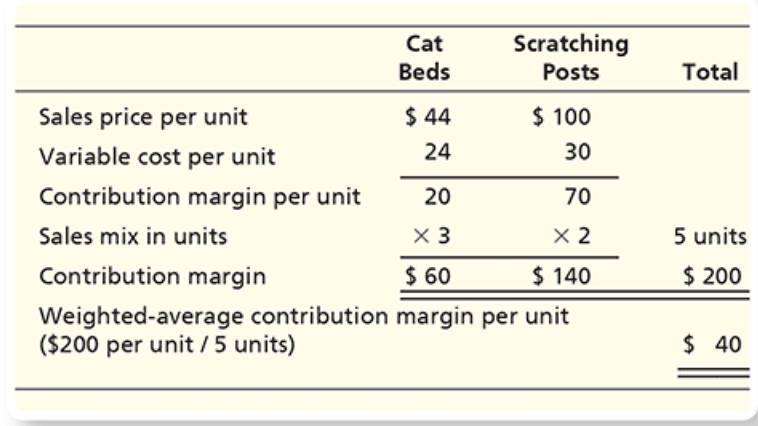
How to find the breakeven point of a Sales Mix?
Step 1:
Info Provided
-Total Fixed Costs: \$40,000
-Cat Bed Unit Sales Price: \$44
-Cat bed variable cost per unit: \$24
-Starching Bed Unit Sales Price: \$100
-Starching Bed variable cost per unit: \$30
Sales Mix: 3 : 2 (3 Cat beds sold for every 2 straggling beds sold)
Step 1:
Info Provided
-Total Fixed Costs: \$40,000
-Cat Bed Unit Sales Price: \$44
-Cat bed variable cost per unit: \$24
-Starching Bed Unit Sales Price: \$100
-Starching Bed variable cost per unit: \$30
Sales Mix: 3 : 2 (3 Cat beds sold for every 2 straggling beds sold)
21
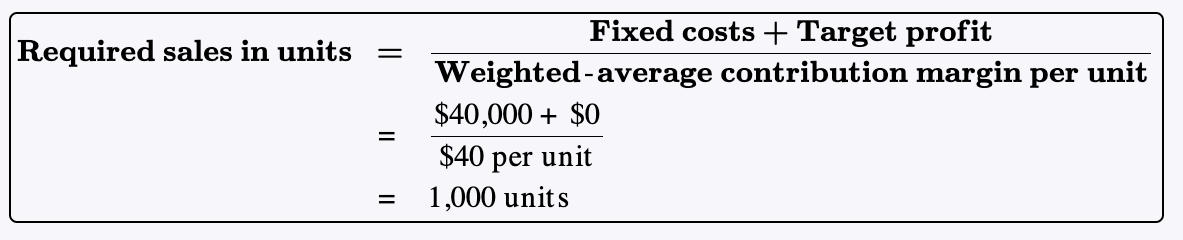
Step 2:
(How to find the breakeven point of a Sales Mix?)
(How to find the breakeven point of a Sales Mix?)
Use the 'weighted-average contribution margin per unit' you found in step 1
22
Step 3:
(How to find the breakeven point of a Sales Mix?)
(How to find the breakeven point of a Sales Mix?)
More Business & economics flashcards
macroeconomics Vocab 4Business & economics · EnglishAllimSegmentation, Positioning, and TargetingBusiness & economics · EnglishrikishakennedyChapter 3 Econ BehavBusiness & economics · EnglishshyannekendraGr 11 Hfst 6 - Kreatiewe denke en probleemoplossingBusiness & economics · DutchSnipperkasProject Construction Management TermsBusiness & economics · EnglishjeniCONM374 Leadership and Decision MakingBusiness & economics · Englishan OutLearn studentAuditing and Accounting Standards Exam 1Business & economics · EnglishwowiepowPrincipes de revenue management Business & economics · FrenchalixVince & BookletBusiness & economics · EnglishMatteoLesson 1: Overview of Cost Management and StrategyBusiness & economics · EnglishDionFree tradeBusiness & economics · EnglishEliascmgmt Exam 2Business & economics · Englishevan
All Business & economics decks
Study these decks in the app
Free on iPhone, Android, Mac and the web. Add any deck to your account in one tap.

