Veterinary Hematology: Leukocytosis and Stress Leukograms
Study these flashcardsFree · spaced repetition · iPhone, Android, Mac & web
All cards
1
What causes physiologic leukocytosis?
Epinephrine released during excitement or exercise.
2
What happens to neutrophils during epinephrine-mediated physiologic leukocytosis?
They shift from the marginal pool to the circulating pool.
3
What neutrophil pattern occurs with physiologic leukocytosis? Which animals commonly show physiologic leukocytosis?
1.Neutrophilia, often up to about 2× normal, without a left shift.
2. Excited, healthy young animals, especially cats and pigs.
2. Excited, healthy young animals, especially cats and pigs.
4
What lymphocyte change can occur with physiologic leukocytosis?
Lymphocytosis, especially in cats because 3:1 marginal pool (bigger) to circlating pool
5
How long do epinephrine-mediated leukogram changes usually last?
Seconds to about 20–30 minutes.
6
An excited young cat has neutrophilia and lymphocytosis without a left shift. What is the likely cause?
Physiologic leukocytosis from epinephrine.
7
How can exercise affect the equine hemogram?
It can increase PCV (spleen squeezes blood), WBCs, neutrophils, and lymphocytes.
8
What causes the corticosteroid-induced stress leukogram?
Endogenous or exogenous corticosteroids.
9
How do corticosteroids cause neutrophilia? 3 ways EXAM
↑Release from marrow storage, marginal-to-circulating shift, and prolonged circulating time.
10
Does corticosteroid-induced neutrophilia usually have a left shift? EXAM
No, unless the marrow storage pool is depleted.
11
What four leukocyte changes characterize the classic canine stress leukogram? EXAM
Neutrophilia, lymphopenia, eosinopenia, and monocytosis.
12
In which species is stress-associated monocytosis characteristic?
Dogs.
13
Can corticosteroid neutrophilia occur at the same time as inflammatory neutrophilia?
Yes, inflammation causes left shift
14
What is neutropenia?
A decreased blood neutrophil concentration.
15
At what neutrophil count is a patient considered at increased risk for sepsis?
<500 neutrophils/µL.
16
What are the two most common mechanisms of neutropenia?
Decreased neutrophil production and increased tissue demand.
17
Which viruses can decrease neutrophil production?
Canine parvovirus, feline panleukopenia virus, and bovine viral diarrhea virus.
18
Which retroviruses can decrease neutrophil production?
FeLV, FIV, and BIV.
19
What toxins or drugs can decrease neutrophil production?
Bracken fern, estrogen, phenylbutazone, and phenobarbital.
20
What infectious agents besides viruses can decrease neutrophil production?
Ehrlichia and Anaplasma.
21
What medical treatments can decrease neutrophil production?
Radiation therapy and cancer chemotherapy.
22
Which breed is classically associated with cyclic neutropenia?
Grey Collies.
23
What 3 less common mechanisms can cause neutropenia?
Immune-mediated destruction, ineffective granulopoiesis, and sequestration in the marginal pool.
24
What can cause sudden neutrophil sequestration into the marginal pool?
The initial response to endotoxin.
25
What is leukergy?
Abnormal aggregation or “stickiness” of leukocytes, as can occur with endotoxemia.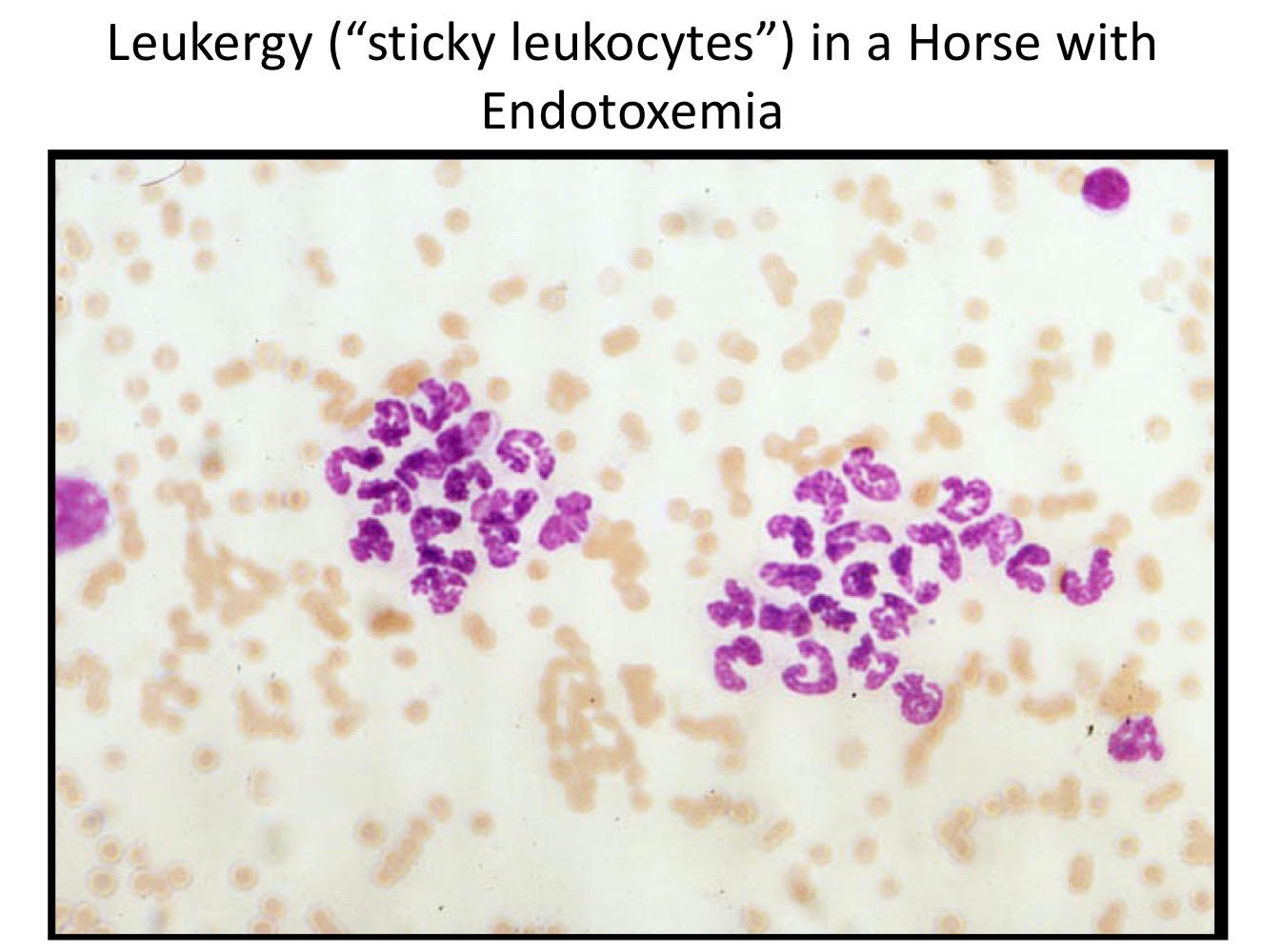
26
What is toxic change in neutrophils?
Morphologic abnormalities caused by accelerated granulopoiesis during strong inflammation.
27
What causes toxic neutrophil changes?
Increased inflammatory cytokines/mediators, sometimes combined with bacterial toxins.
28
What does marked toxic change most strongly suggest?
Severe bacterial infection, sepsis, or endotoxemia.
29
Why should a fresh blood smear be used to evaluate toxic change?
EDTA causes time-dependent artifacts that can mimic toxic changes.
30
What are the major features of neutrophil toxic change? EXAM
Döhle bodies, cytoplasmic basophilia, vacuolation, large size, and sometimes toxic granulation.
31
What are Döhle bodies? EXAM
Blue cytoplasmic inclusions seen in toxic neutrophils.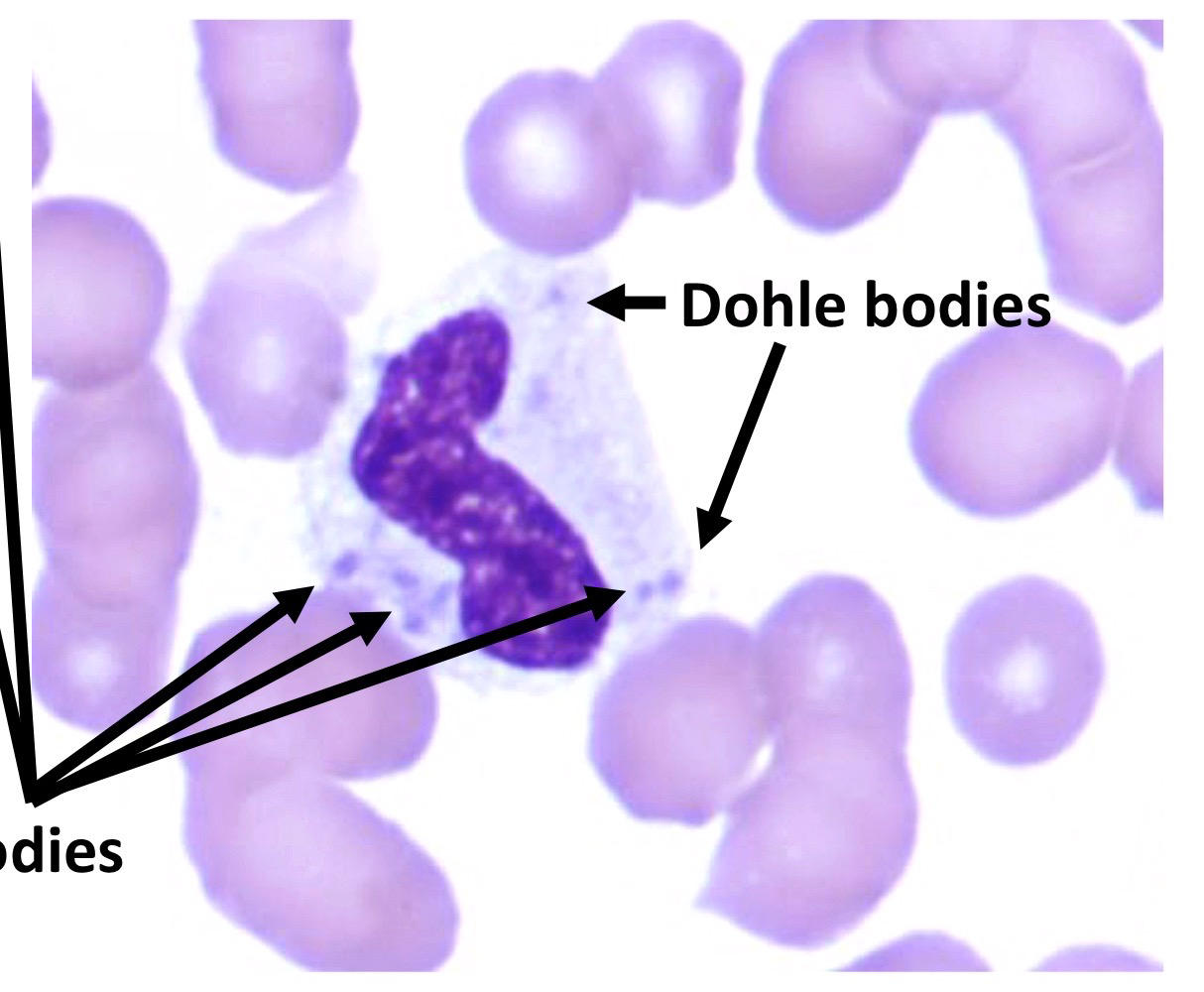
32
What does diffuse cytoplasmic basophilia look like in a toxic neutrophil?
The cytoplasm becomes abnormally blue.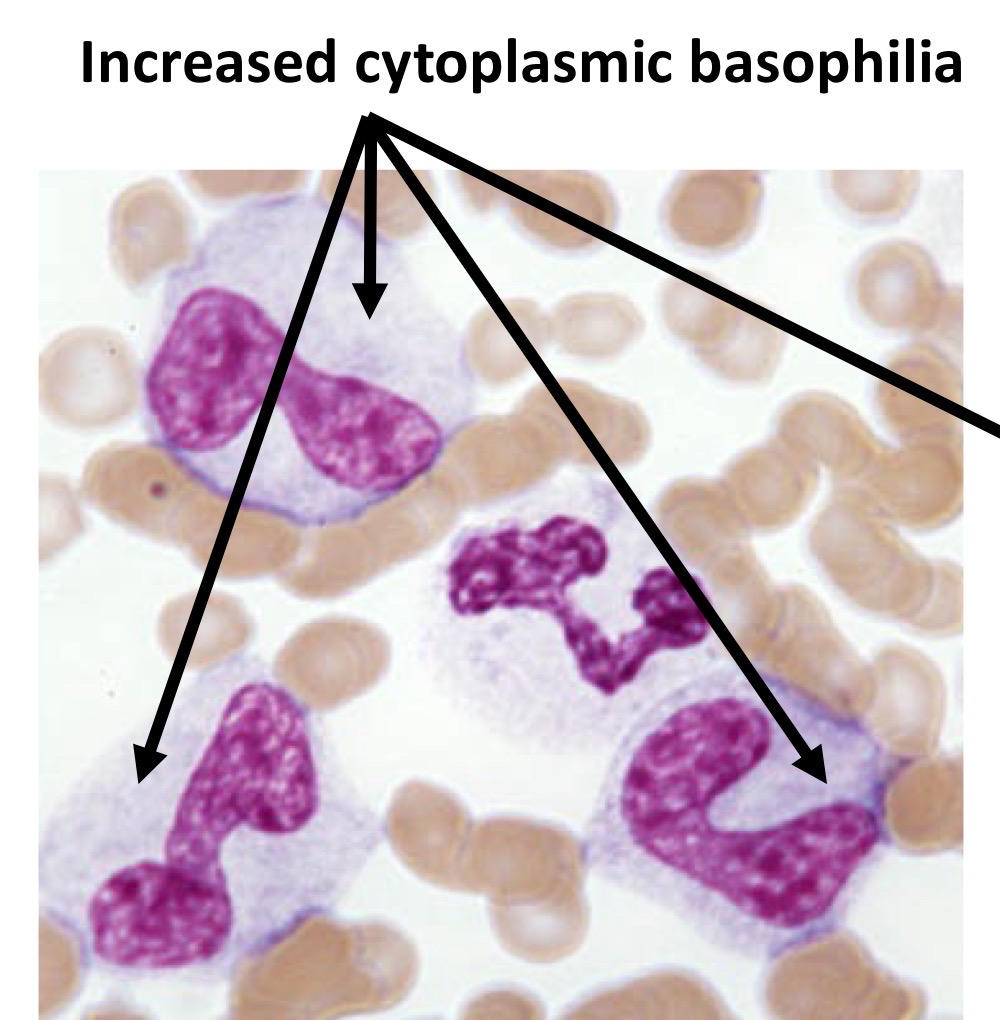
33
What does cytoplasmic vacuolation indicate in a toxic neutrophil?
Foamy-appearing cytoplasm associated with toxic change.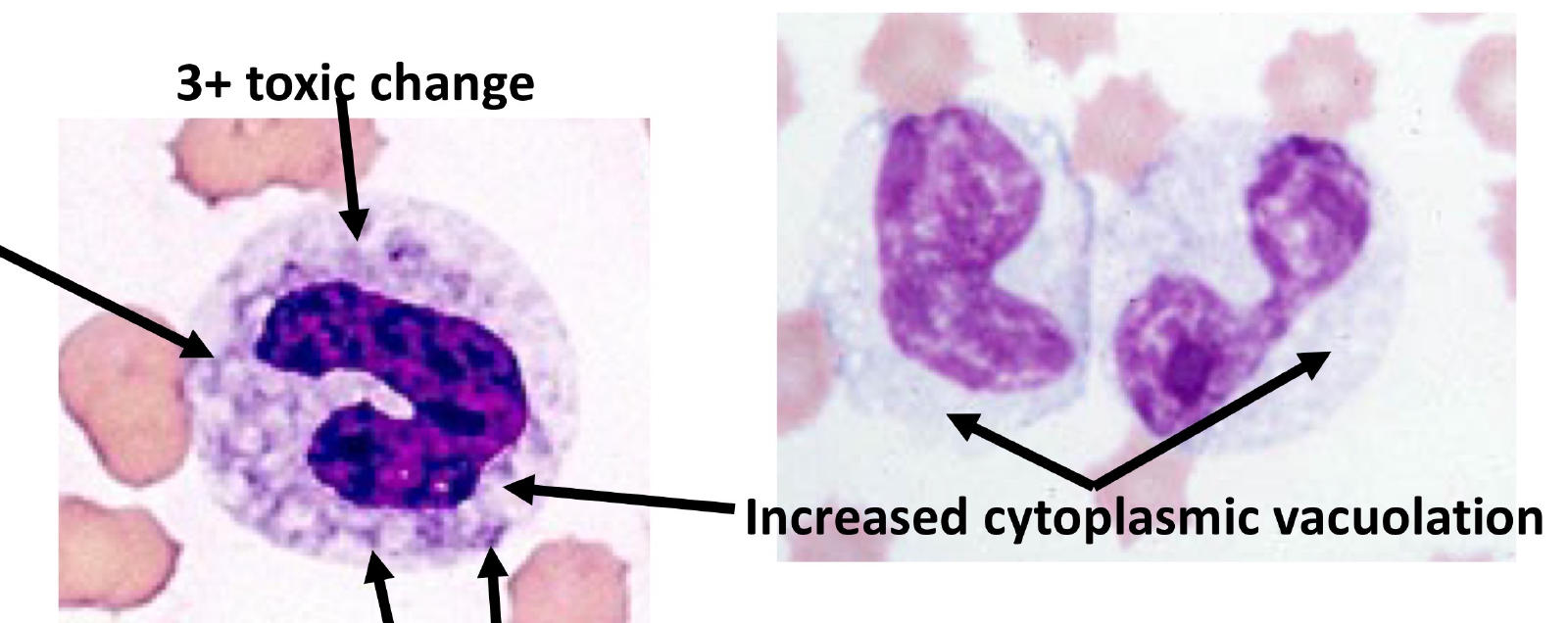
34
In which species are abnormally large toxic neutrophils especially noted?
Cats.
35
What is toxic granulation?
Persistent azurophilic/purple cytoplasmic granules in toxic neutrophils.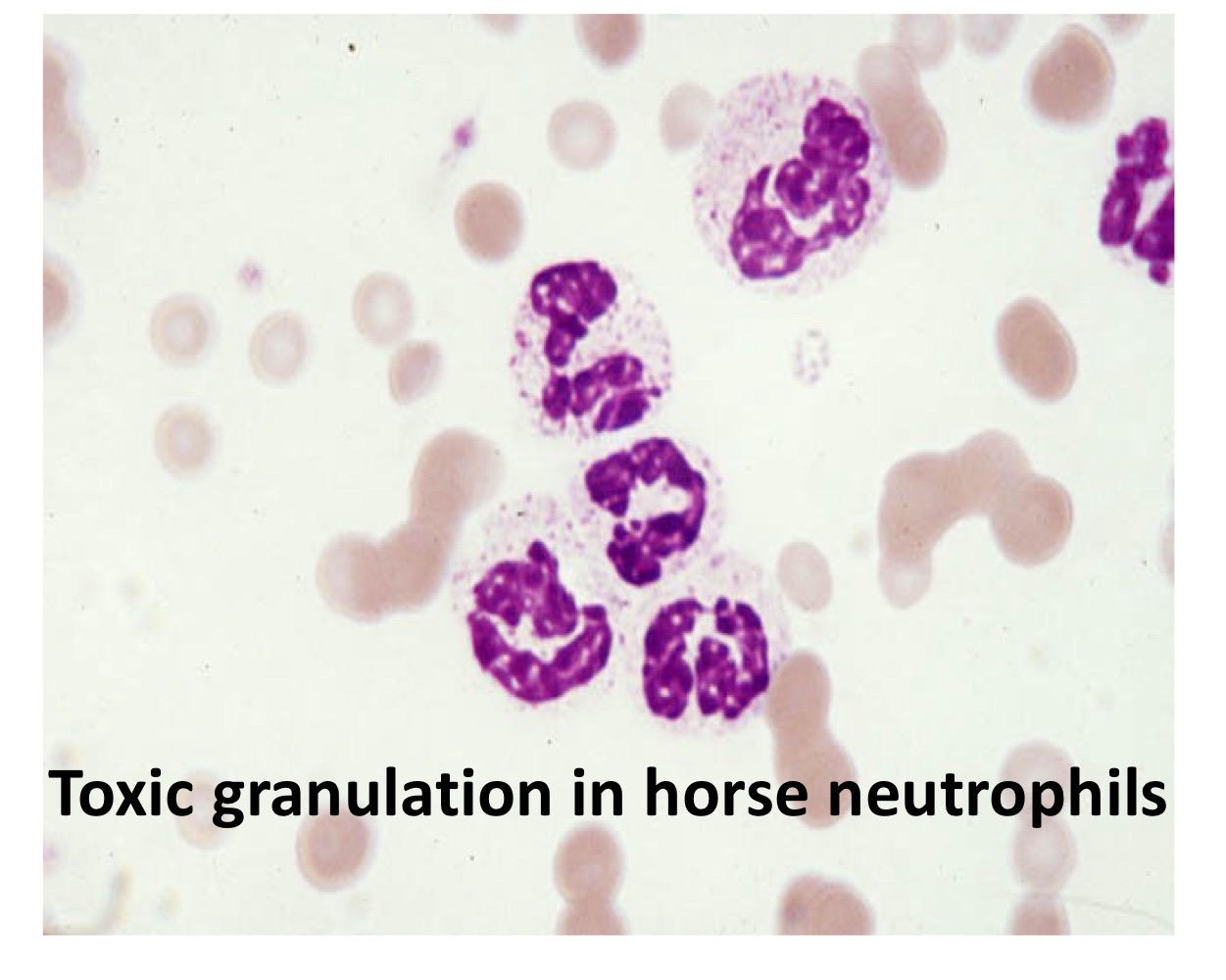
36
What defines 1+ toxic change?
Döhle bodies only.
37
What defines 2+ toxic change?
Döhle bodies plus cytoplasmic basophilia OR vacuolation.
38
What defines 3+ toxic change?
Döhle bodies plus basophilia AND vacuolation, with or without toxic granulation.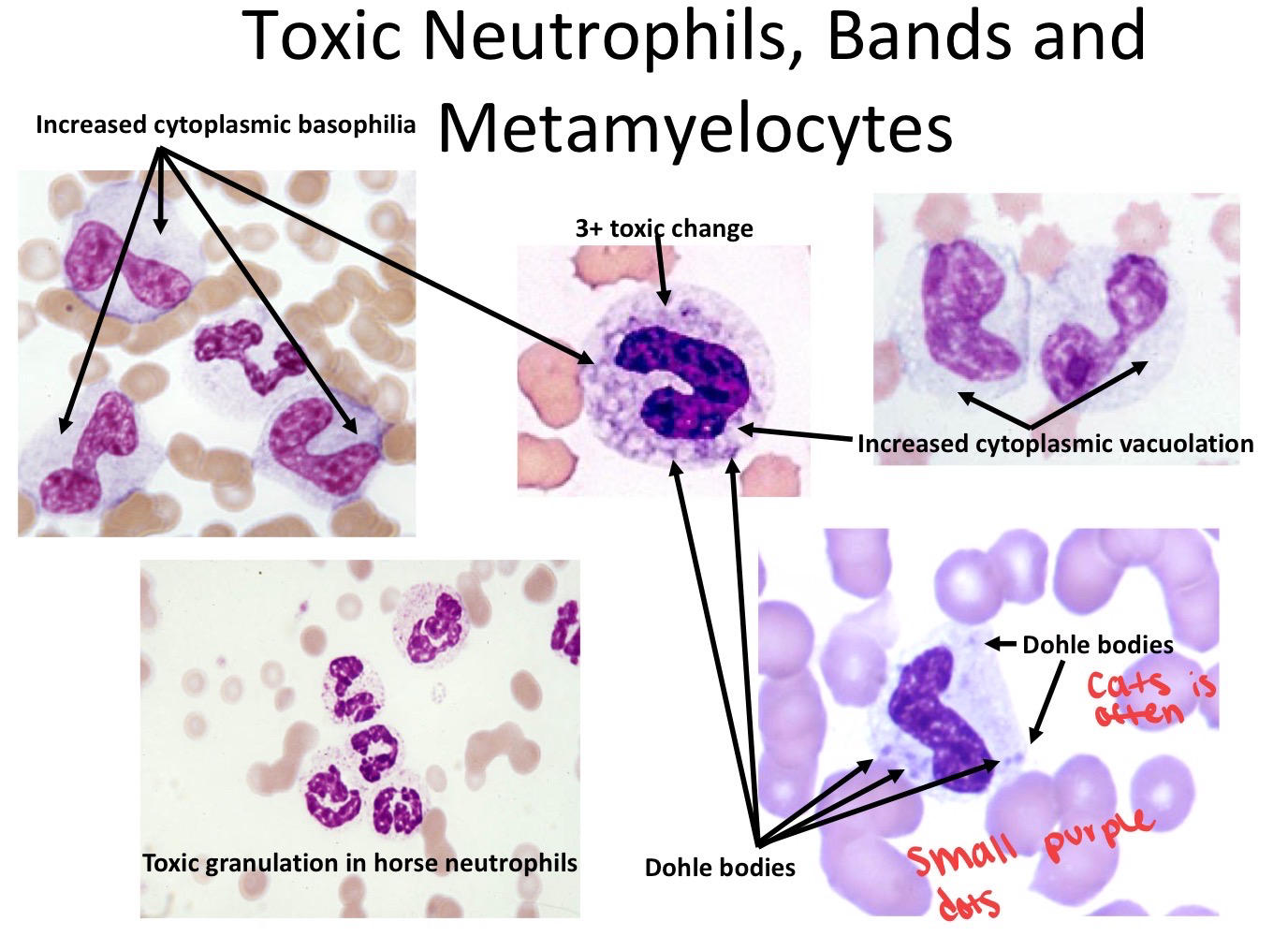
39
What defines 4+ toxic change?
Neutrophils are so toxic they may be difficult to distinguish from monocytes.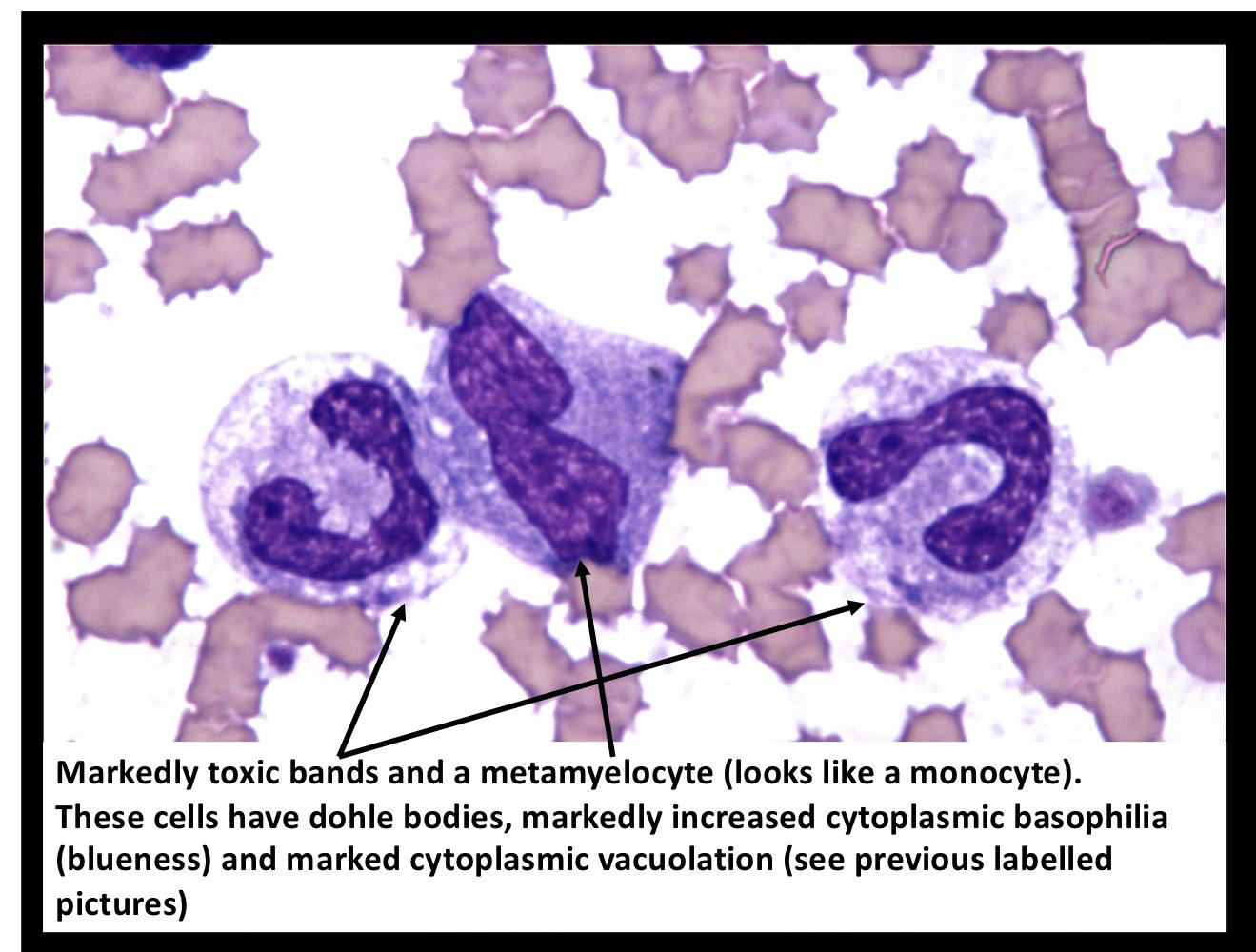
40
What degree of toxic change generally suggests infection, sepsis, or endotoxemia?
2+, 3+, or 4+.
41
Can mild toxic change occur without infection?
Yes; 1+ and occasionally 2+ can occur with strong noninfectious marrow stimulation like immune mediated hemolysis and tissue necrosis.
42
What 3 cellular changes underlie toxic neutrophil morphology?
Increased ribosomes/ER (blue), lysosomal enzymes, and/or bacterial damage to cytoplasmic proteins and organelles.
43
What does finding bacteria inside circulating neutrophils suggest?
- Septicemia with overwhelming infection and a poor prognosis.
uncommon
44
What intracellular organism can form morulae in neutrophils of horses and dogs?
Anaplasma phagocytophilum.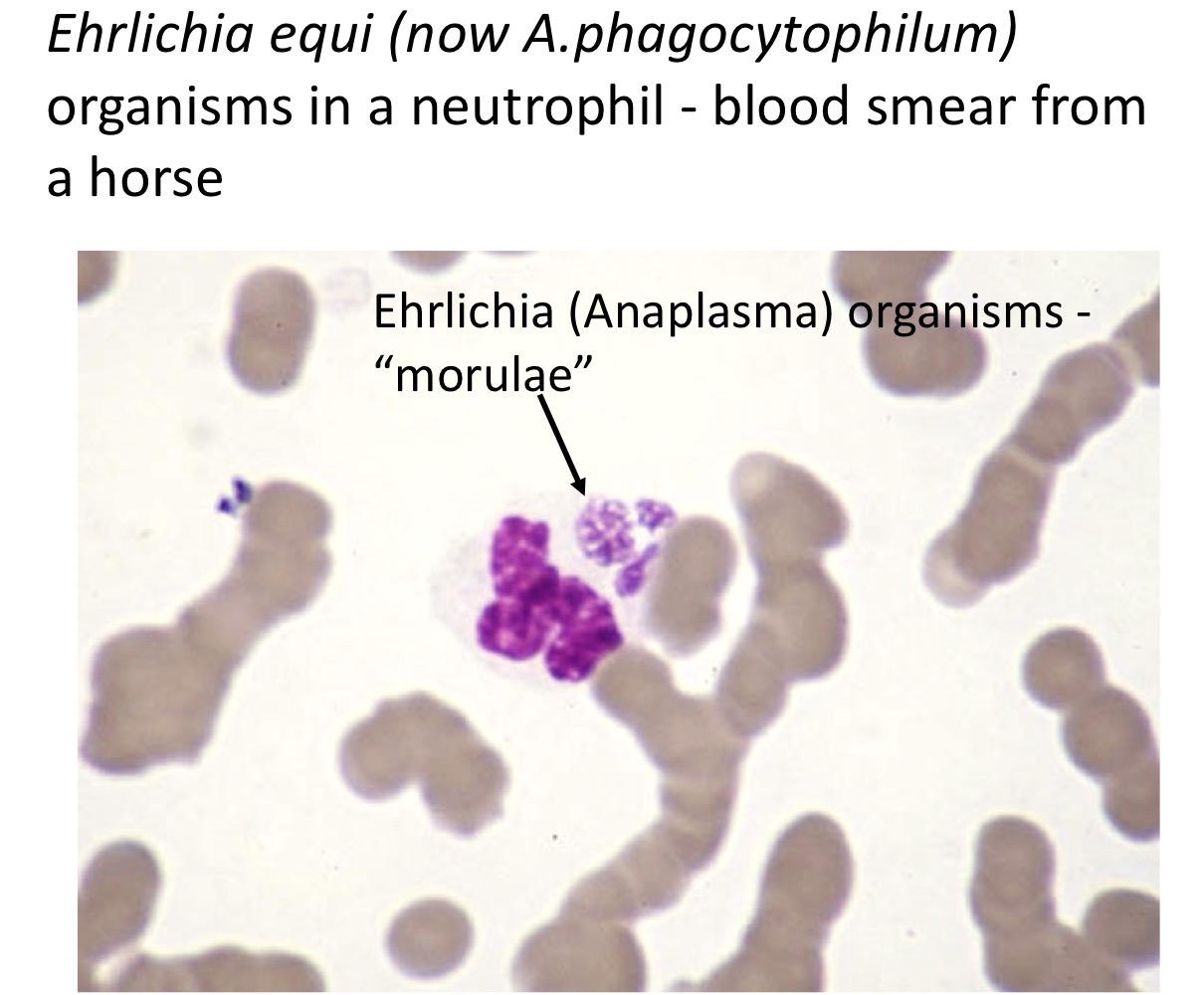
45
What are morulae?
Clusters of intracellular Anaplasma/Ehrlichia organisms visible within leukocytes.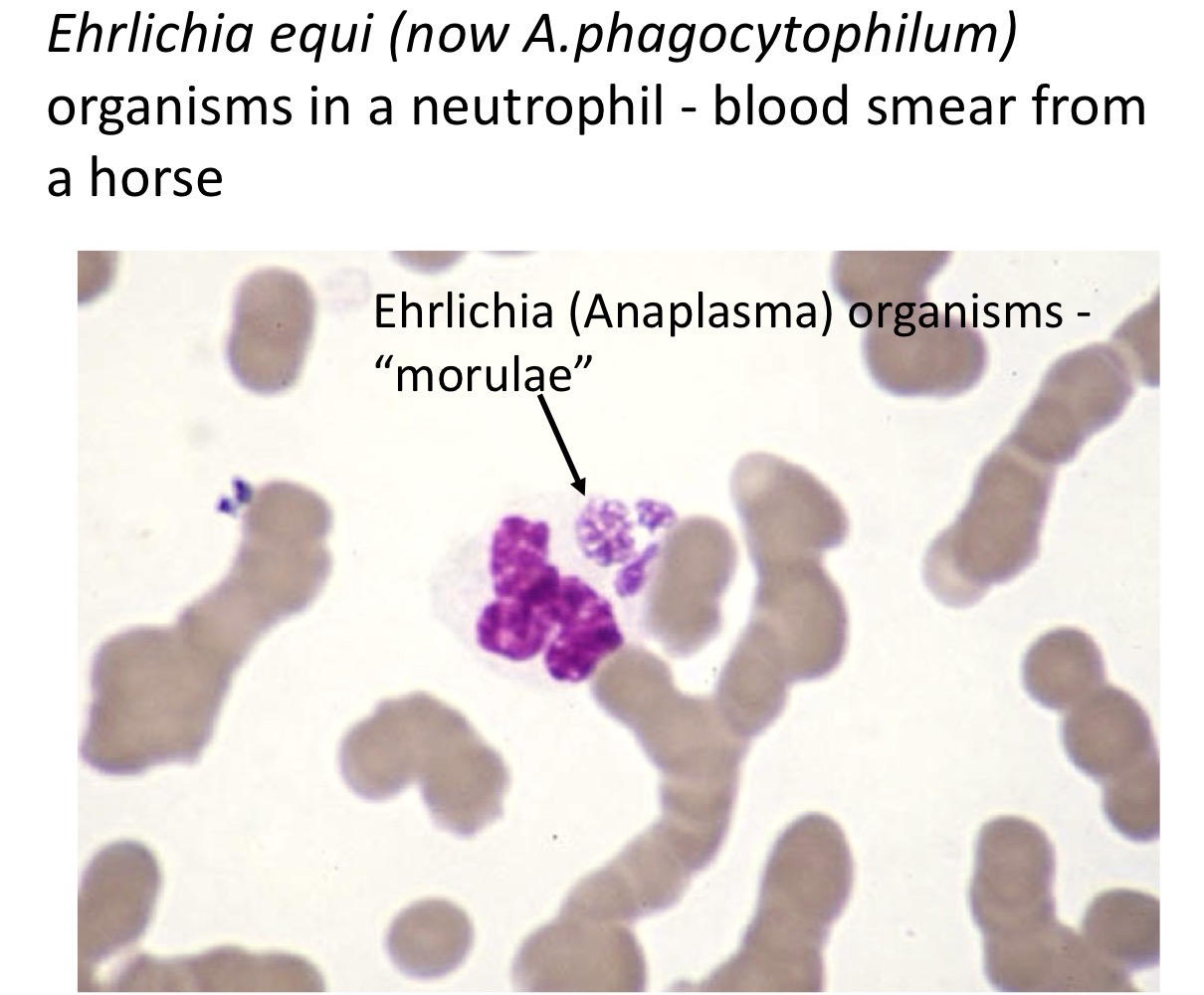
46
What protozoal organism can be identified within neutrophils?
Hepatozoon americanum.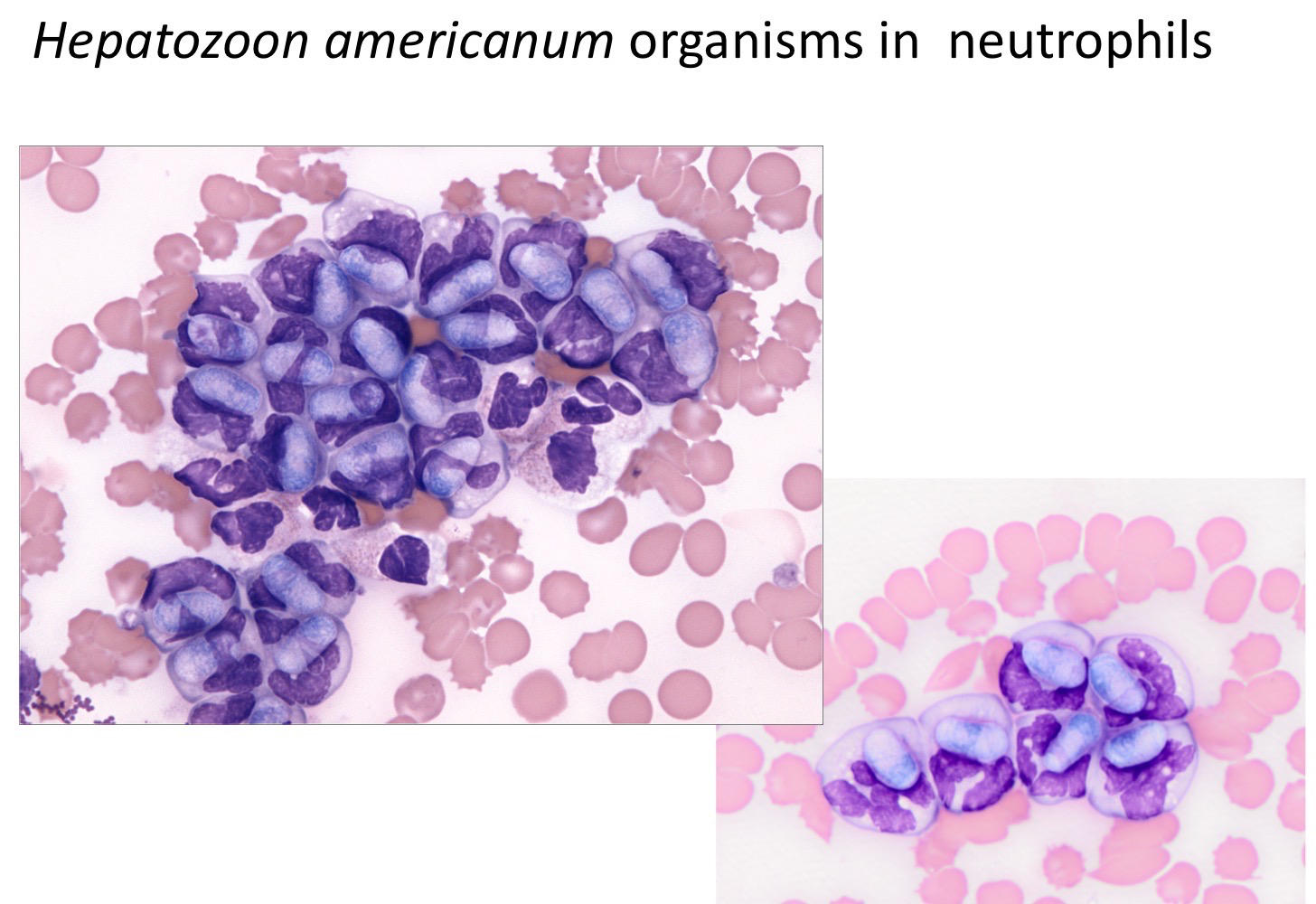
47
A horse with Strangles has purple granules remaining in its neutrophils. What morphologic change is present?
Toxic granulation associated with inflammation from Streptococcus equi.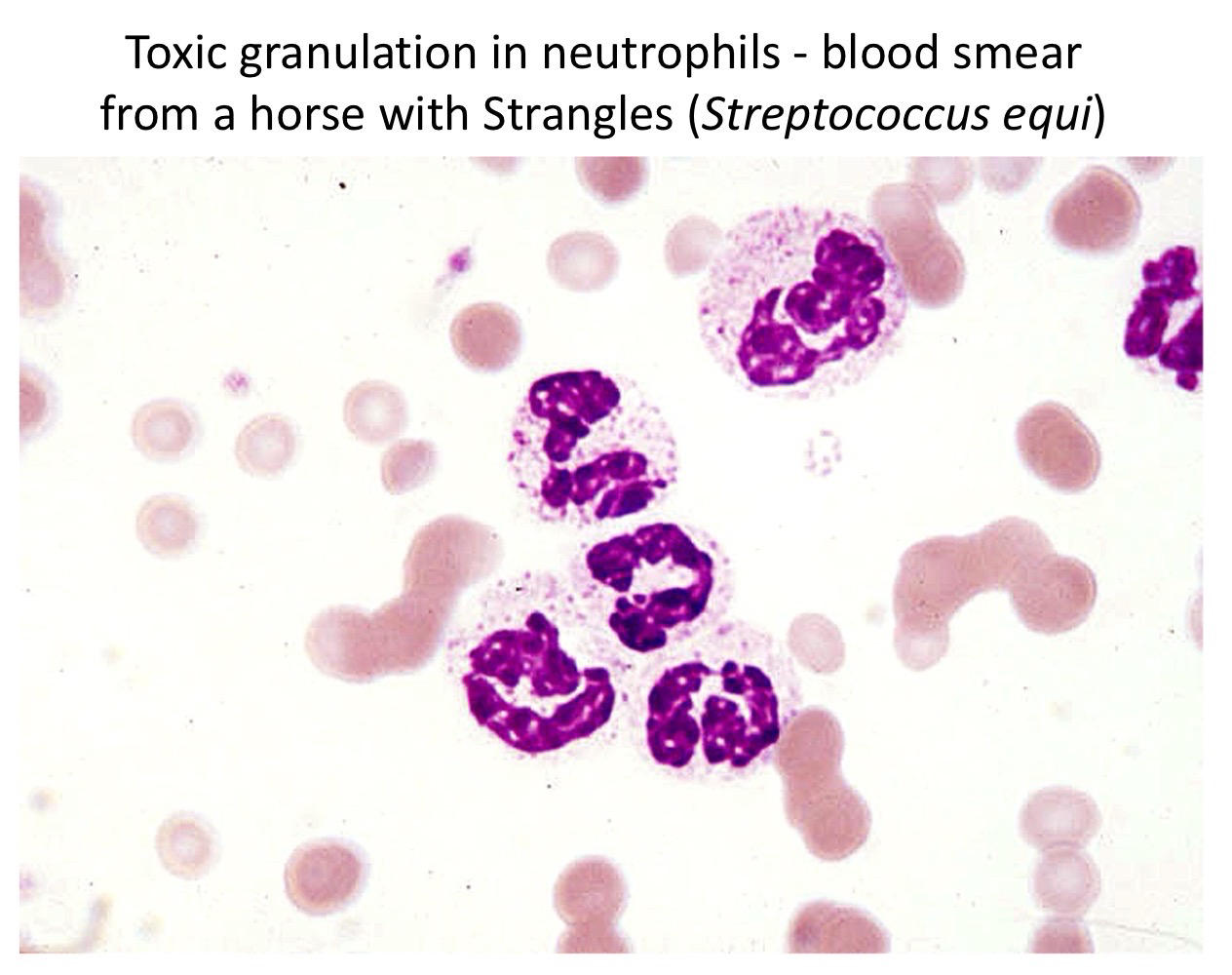
More Medicine & health flashcards
2- cavités nasalesMedicine & health · FrenchOcéaneResponsabilité infirmière et transfusion sanguineMedicine & health · FrenchClaraMedical TermsMedicine & health · EnglishAveryLSD Exam 2Medicine & health · EnglishLexieMedical and Nursing Final PrepMedicine & health · EnglishTaylorEmbriologíaMedicine & health · SpanishSheylaIntroduction to endocrine Pharmacology Medicine & health · EnglishYemidaleterms heheMedicine & health · EnglisheliSCORE 7-9Medicine & health · Englishyyl109histology intro p1Medicine & health · EnglishAnthonyPhlebotomy Medicine & health · EnglishMARIAEndocrineMedicine & health · EnglishEliazar
Study these decks in the app
Free on iPhone, Android, Mac and the web. Add any deck to your account in one tap.

