Pharmacology: Drug Absorption and Membrane Transport
Study these flashcardsFree · spaced repetition · iPhone, Android, Mac & web
All cards
1
What are the three main mechanisms drugs use to cross cellular membranes?
Passive diffusion, carrier-mediated transport, and endocytosis/exocytosis.
2
What is the difference between transcellular and paracellular passive diffusion?
Transcellular moves through cells; paracellular moves between cells (small/aqueous)
3
How does molecular weight affect passive diffusion?
Smaller molecules generally cross membranes more easily than larger molecules.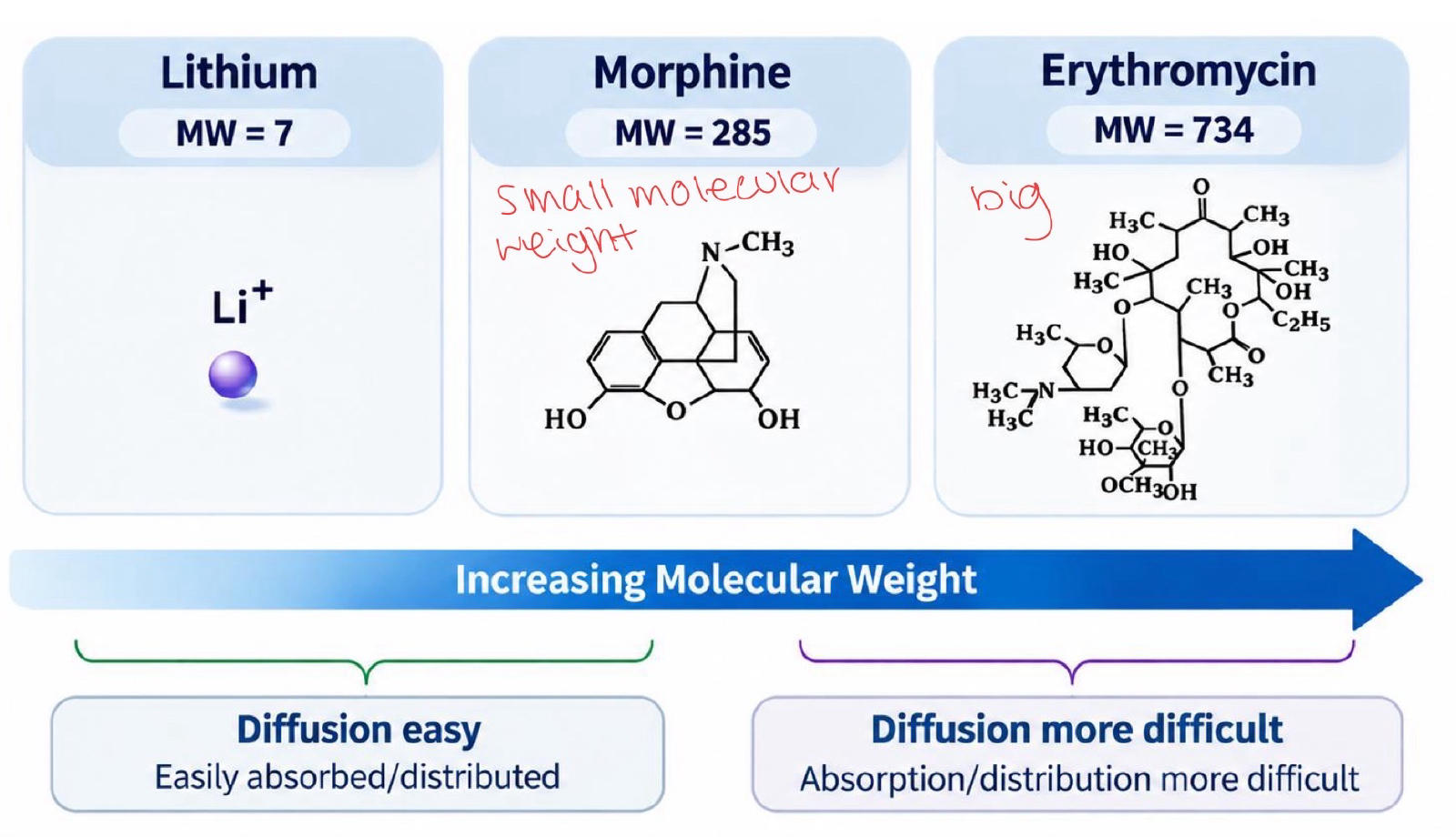
4
Why is lipid solubility important for drug absorption?
Lipid-soluble drugs cross cell membranes more easily; higher octanol/water partition coefficients indicate greater lipophilicity (hydrophobic).
5
Why does a drug's ionization state affect membrane permeability?
Unionized drugs are more lipid-soluble and cross membranes more easily than ionized (charged) drugs.
6
What is the unionized form of a weak acid?
What is the unionized form of a weak base? EXAM
The protonated form (HA), which is more lipid-soluble.
The unprotonated form (B), which is more lipid-soluble.
7
How does pH affect the ionization of weak acids? EXAM
When pH is below pKa, weak acids are predominantly unionized; above pKa, they are ionized.
8
How does pH affect the ionization of weak bases? EXAM
When pH is above pKa, weak bases are predominantly unionized; below pKa, they are ionized.
9
What happens when the environmental pH equals a drug's pKa?
The drug is approximately 50% ionized and 50% unionized.
10
How does facilitated diffusion differ from active transport?
Facilitated diffusion requires no energy and follows the gradient; active transport requires energy and can oppose the gradient.
11
What is the primary mechanism by which most drugs cross biological membranes?
Passive diffusion.
12
What is drug absorption?
Movement of a drug from its administration site into systemic circulation.
13
Why is IV administration preferred for a dog experiencing hypovolemic shock?
It delivers drugs directly into circulation, providing rapid and reliable effects despite poor tissue perfusion.
14
Why might an orally administered antibiotic fail to reach therapeutic concentrations?
Poor absorption, vomiting, drug properties, or first-pass metabolism may reduce systemic drug availability.
15
What is the difference between enteral, parenteral, intravascular, and extravascular administration?
1. Enteral uses the GI tract
2. parenteral via other route other than digestive system (injection)
3. intravascular enters blood vessels
4. extravascular does not.
16
What factors determine the best route of drug administration?
Drug properties, physiological limitations, and the patient's clinical condition.
17
How do IV and extravascular concentration-time curves differ? EXAM
IV drugs enter circulation immediately; extravascular drugs undergo an absorption phase before reaching peak concentration.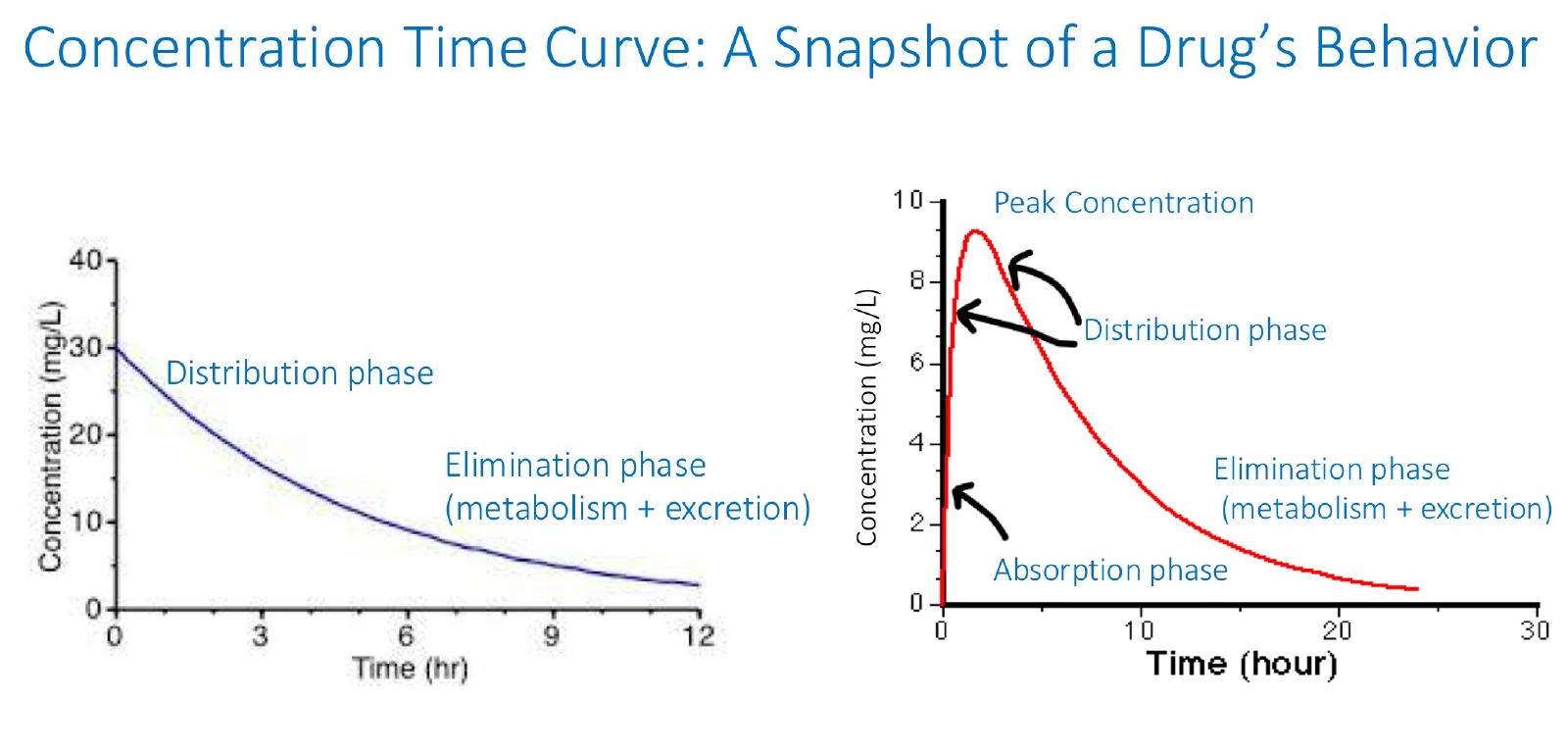
18
What do Cmax and Tmax represent on a concentration-time curve?
Cmax is the maximum observed drug concentration; Tmax is the time required to reach Cmax.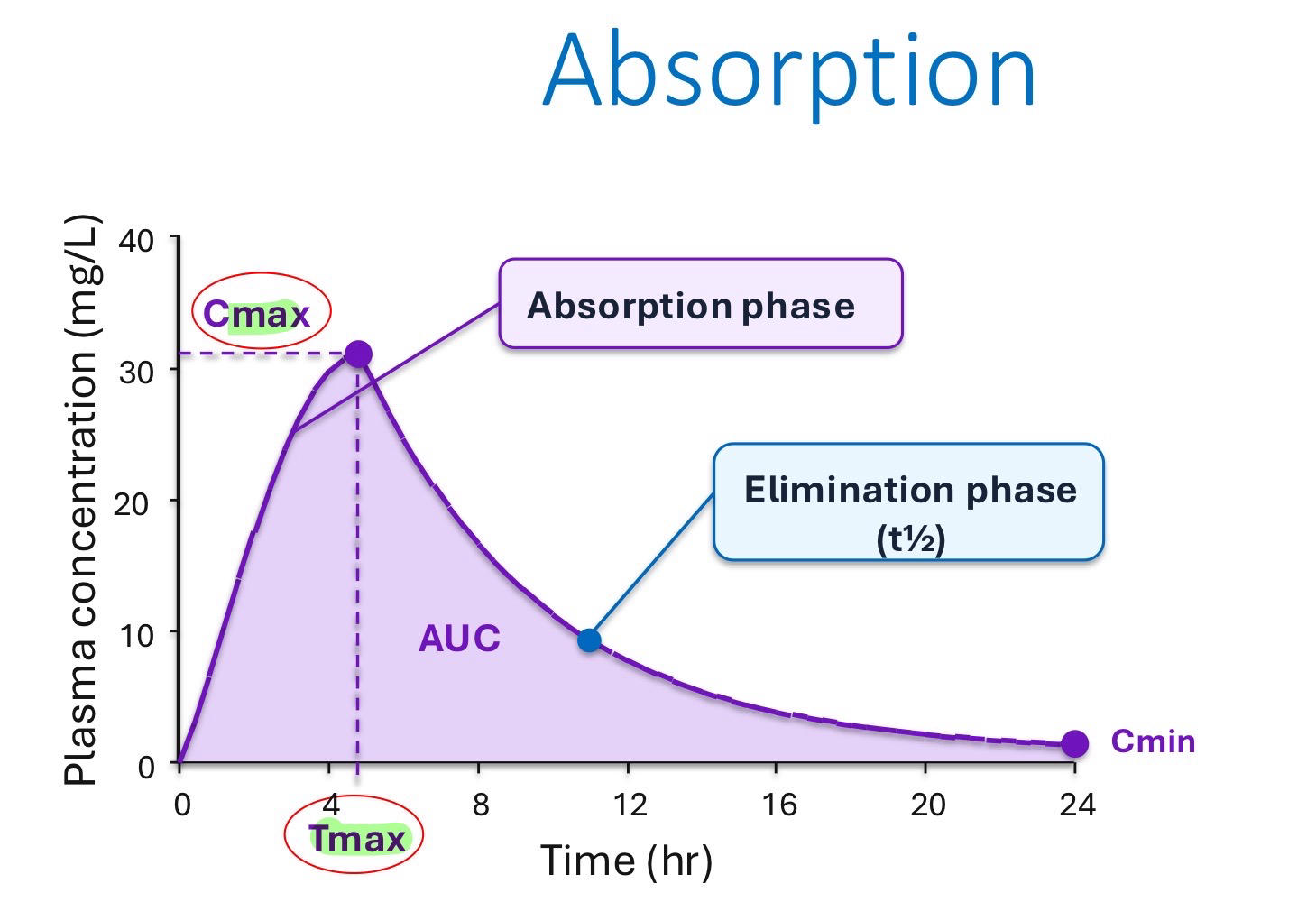
19
Why is the small intestine an important site for oral drug absorption? EXAM
Its villi, microvilli, and extensive surface area promote drug absorption.
20
Why can oral drug absorption differ between animal species?
Differences in GI pH, gastric emptying, microflora, anatomy, and surface area.
21
How does drug formulation influence oral absorption?
Tablets and capsules must disintegrate and dissolve before the drug can cross the intestinal membrane.
22
What is the first-pass effect? EXAM
Drug metabolism in the GI tract or liver before reaching systemic circulation, reducing unchanged drug availability.
23
How does P-glycoprotein (P-gp) affect intestinal drug absorption?
It transports drugs out of intestinal cells, reducing the amount reaching systemic circulation.
24
When might oral drug administration be unsuitable?
When a drug is unstable or poorly absorbed, or the patient is vomiting, unable to swallow, or needs immediate treatment.
25
What is an advantage of buccal or sublingual drug administration?
Absorption through the cheek or under the tongue can bypass the GI tract and hepatic first-pass metabolism.
26
Why can pulmonary drug administration produce rapid absorption?
The lungs have extensive alveolar surface area, thin membranes, and abundant blood supply.
27
How does intramuscular (IM) absorption generally compare with subcutaneous (SC) absorption?
IM absorption is generally faster due to greater blood flow; both depend on local perfusion.
28
What is the purpose of a depot drug formulation?
To slow absorption and prolong drug release from the injection site.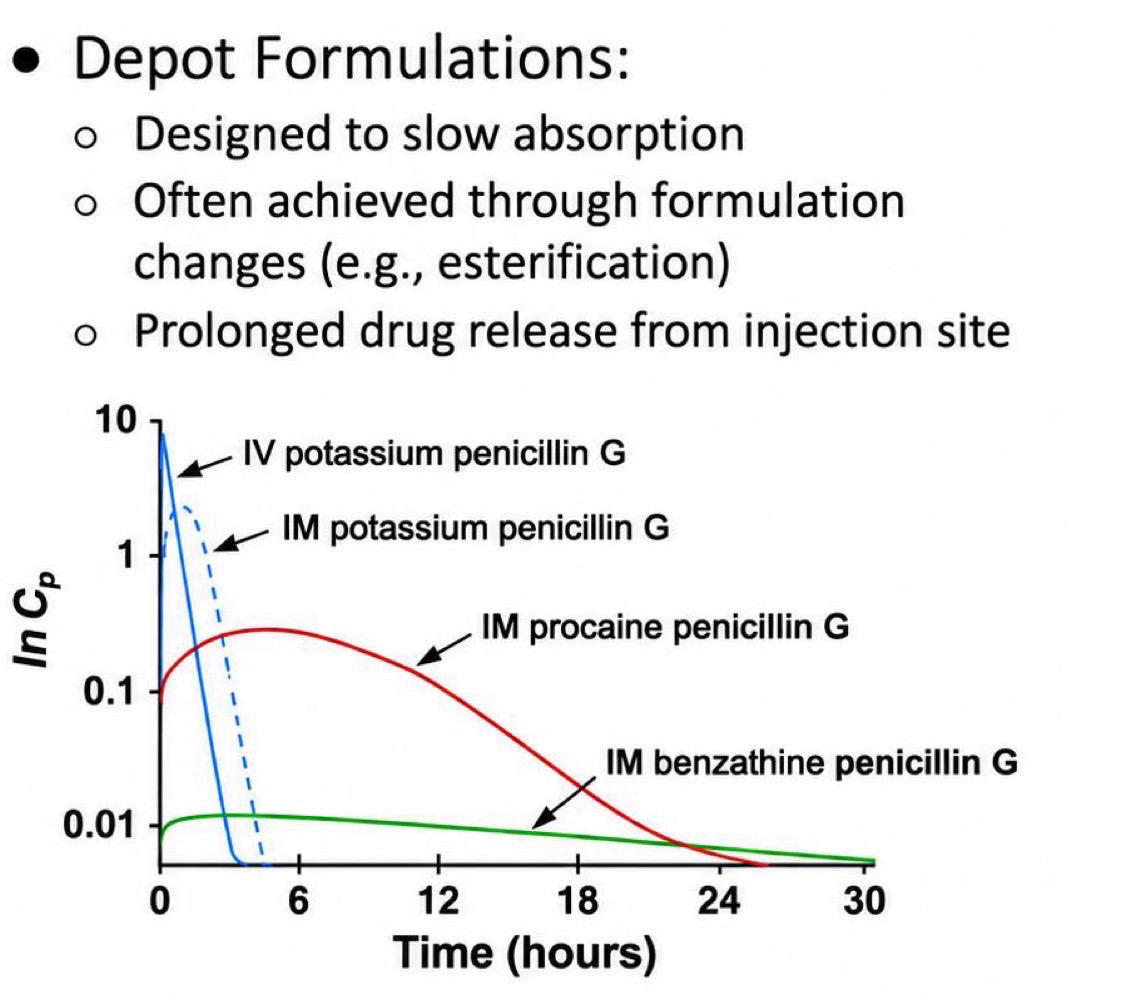
29
What is the difference between topical and transdermal drug administration?
Topical treats the skin locally; transdermal delivers drugs through the skin into systemic circulation.
30
What is the advantage of local drug administration?
It produces high drug concentrations at the target site with fewer systemic side effects.
31
What is bioavailability (F), and what does AUC represent?
F is the fraction reaching systemic circulation intact; AUC estimates total systemic drug exposure.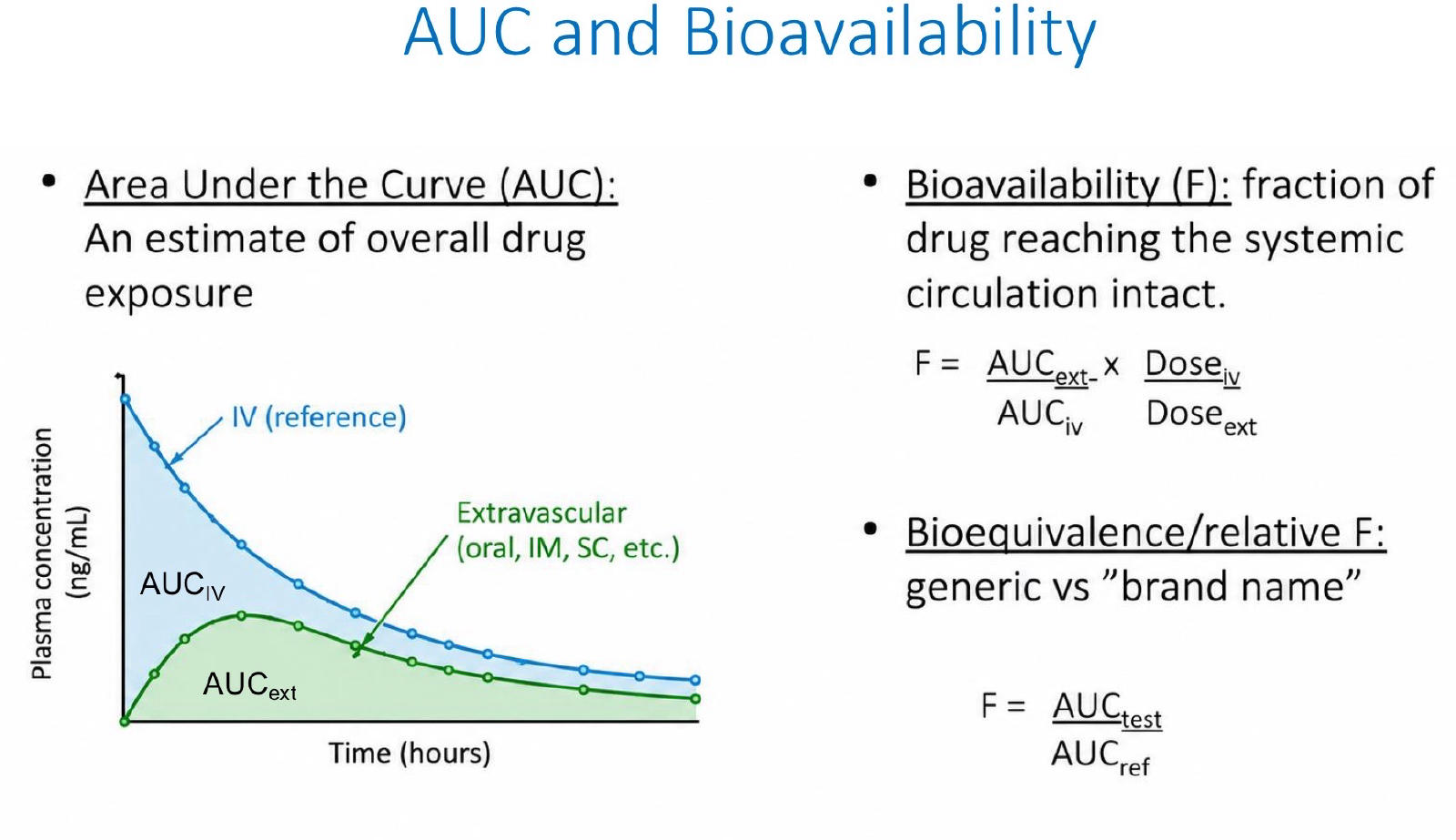
32
How can absorption rate and bioavailability influence drug efficacy and toxicity?
Fast absorption may cause toxic peaks; slow absorption may prolong effects; poor bioavailability may cause subtherapeutic concentrations.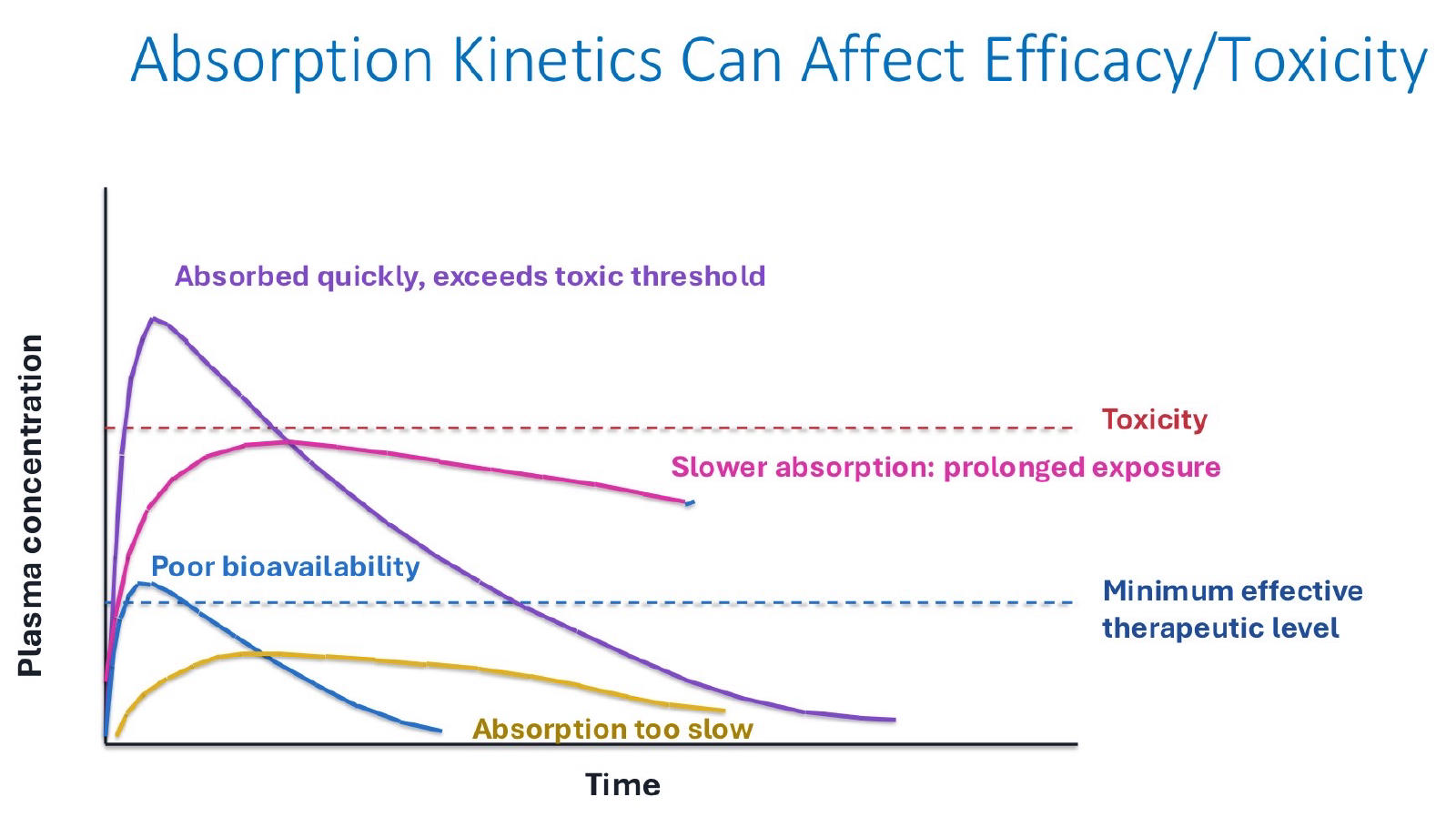
33
What is drug distribution?
The movement of drugs between the bloodstream and body tissues.
34
What two major processes determine drug distribution?
Perfusion delivers drugs through blood flow; diffusion moves drugs from blood into tissues.
35
Why do highly perfused organs receive drugs faster than poorly perfused tissues?
Greater blood flow delivers drugs more rapidly to organs like the brain, liver, and kidneys than to fat or bone.
36
How do continuous, fenestrated, and sinusoidal capillaries differ in drug permeability?
Continuous capillaries are restrictive; fenestrated allow more exchange; sinusoidal are highly permeable.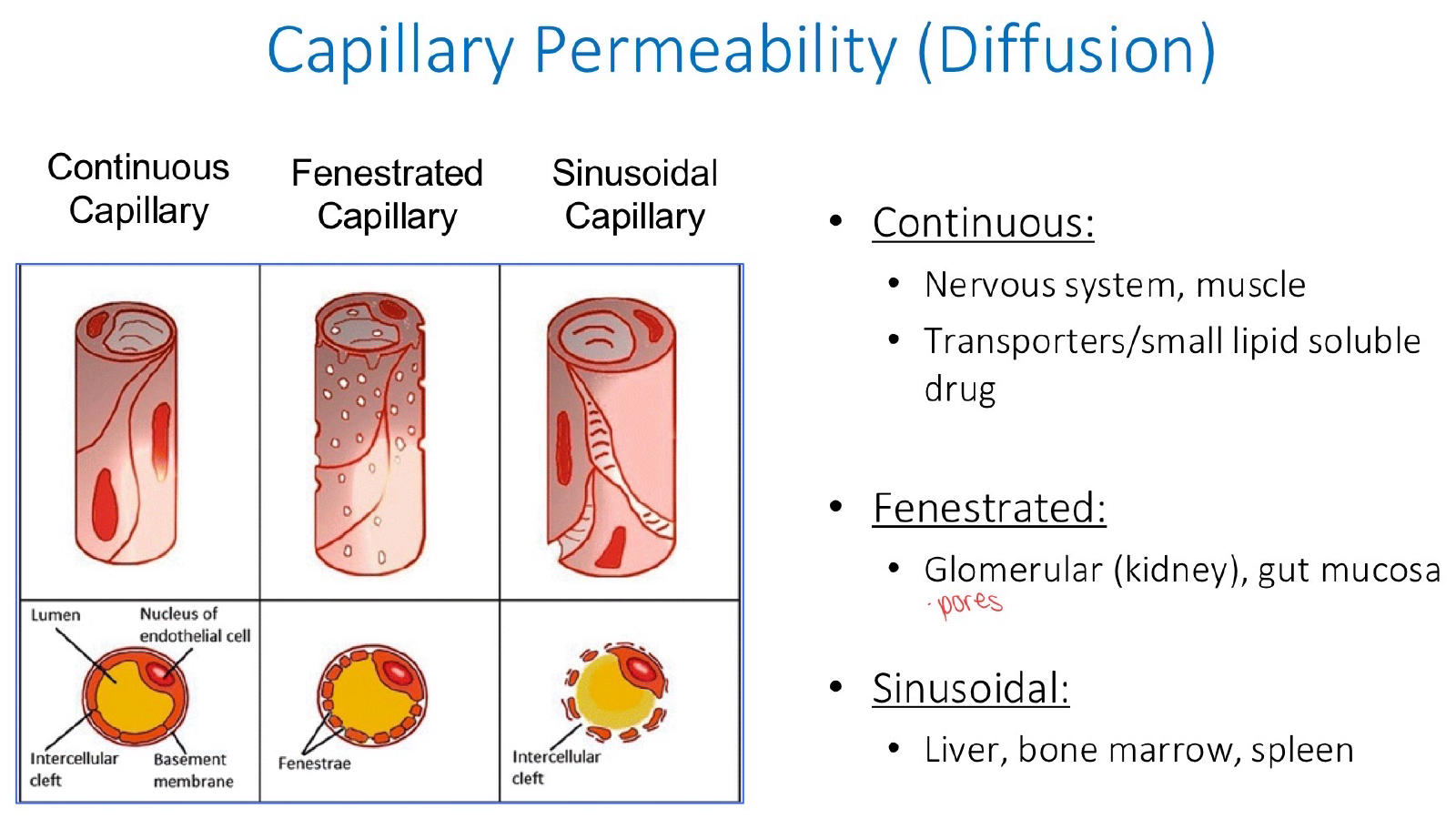
37
How does plasma protein binding affect drug distribution?
Only free (unbound) drug readily crosses membranes; protein-bound drug is largely restricted to plasma.
38
Most drugs bind to
albumin, the other is Alpha-1 acid glycoprotein
39
Why can changes in plasma protein concentrations or drug competition affect toxicity?
They can increase free drug concentrations, potentially increasing drug effects and toxicity.
40
How does tissue binding affect drug distribution?
Drugs may accumulate in tissues, creating reservoirs that increase apparent volume of distribution and prolong drug persistence.
41
What is the volume of distribution (Vd)?
The apparent volume relating drug amount in the body to plasma concentration; Vd = amount of drug/plasma concentration.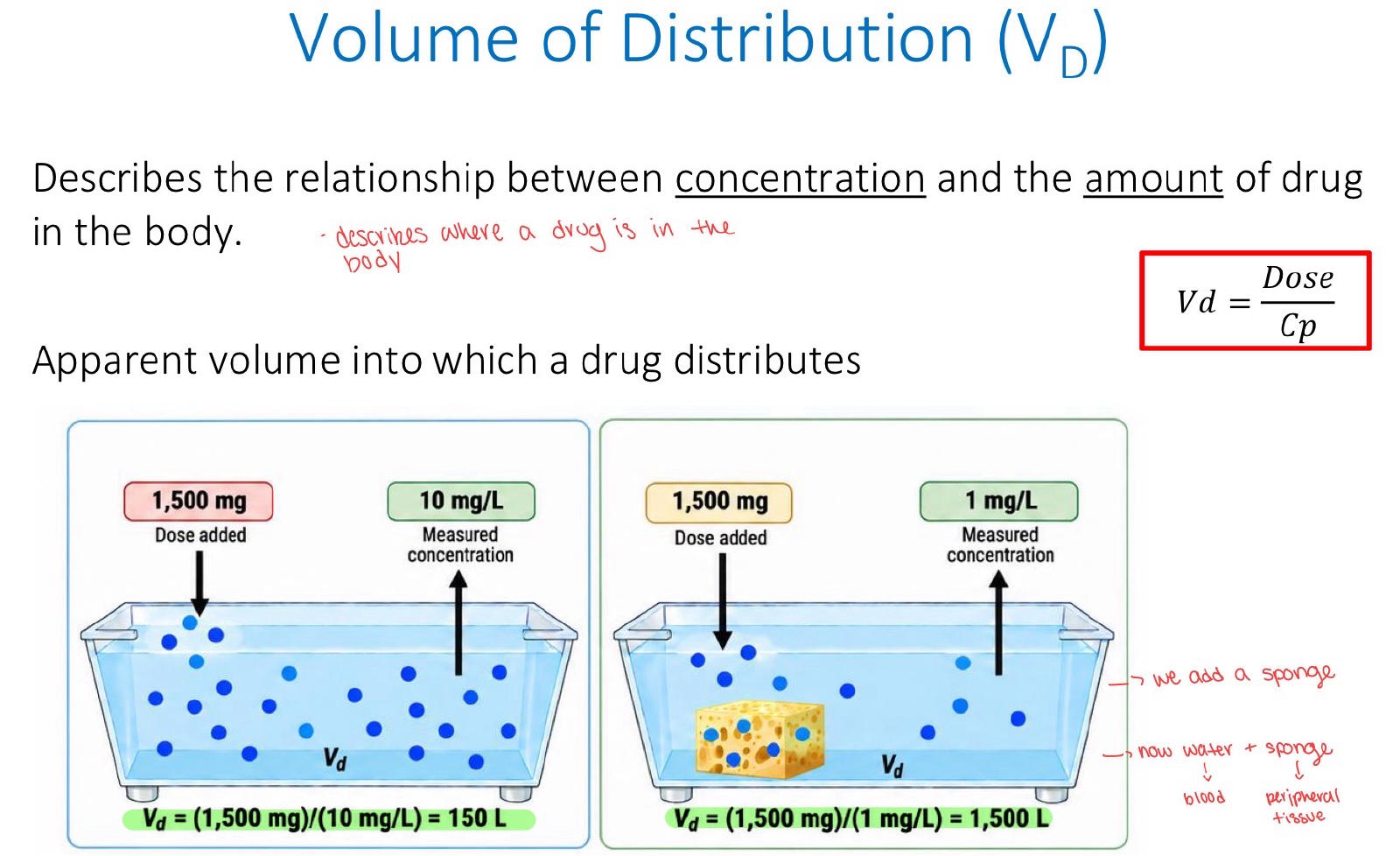
42
What does a low versus high volume of distribution indicate?
Low Vd means drug remains mainly in plasma; high Vd means extensive distribution into tissues.
43
How do plasma protein binding and tissue binding affect Vd? EXAM
Greater plasma protein binding generally decreases Vd; greater tissue binding generally increases Vd.
44
What structures form the blood-brain barrier (BBB), and why is it important?
Continuous capillaries, astrocytes, and efflux transporters restrict drug entry into the CNS.
45
Why are dogs with an MDR1 gene mutation more susceptible to ivermectin toxicity?
Impaired P-glycoprotein efflux allows ivermectin to accumulate in the CNS, potentially causing severe neurological toxicity.
46
What is ion trapping?
Accumulation of a drug in a compartment where the pH favors its ionized form, preventing easy diffusion back across membranes.
More Medicine & health flashcards
3.6.3 Skeletal musclesMedicine & health · EnglishSabs2023Nutrition Support Risk AssessmentMedicine & health · EnglishCoryHematopoiesis: Stem Cells and DifferentiationMedicine & health · EnglishJESSQTRANDigestive System Composition and ProcessesMedicine & health · Englishan OutLearn studentBrain AnatomyMedicine & health · EnglishAnaïsNST10: Nutrition, Obesity, and DiabetesMedicine & health · Englishjorelcirculation & respirationMedicine & health · EnglishKfemale reproduction Medicine & health · Englishnewblood and immunity terms tableMedicine & healthelijahType II DM MedicationsMedicine & health · EnglishcathsimsTest 1 directivesMedicine & health · Englishninapns antagMedicine & health · Englishoozu
Study these decks in the app
Free on iPhone, Android, Mac and the web. Add any deck to your account in one tap.

