Infection Control (Chapter 17)
Study these flashcardsFree · spaced repetition · iPhone, Android, Mac & web
All cards
1
At the start of the 20th century, major US causes of death included pneumonia, TB, gastroenteritis, and ______.
diphtheria
2
What two situations (groups of people) find microbial infections especially dangerous today?
Being immunocompromised; living in an underdeveloped country
3
Microbes are essential to life because they recycle ______ and inorganic material.
organic
4
Which scientist first observed microbes, which he called "wee animalcules"?
Anton van Leeuwenhoek
5
A disease-producing microorganism is called a ______.
pathogen
6
An infection is called a disease only when it causes ______ to the host.
injury (tissue damage)
7
What three abilities make pathogens harmful?
Multiply in large numbers and cause an obstruction
Cause tissue damage
Secrete exotoxins
Cause tissue damage
Secrete exotoxins
8
Organic substances secreted by pathogens that can cause high fever, nausea, vomiting, and shock are called ______.
exotoxins
9
What are the four basic classifications of infectious agents?
Bacteria, viruses, fungi, and protozoan parasites
10
Bacteria are single-celled organisms that lack a true ______.
nucleus
11
Bacteria are prokaryotes, meaning they lack a nucleus and ______ organelles.
membrane-bound
12
Cocci are ______-shaped bacteria.
round
13
Bacilli are ______-shaped bacteria.
rod
14
Spirilla are ______-shaped bacteria.
spiral
15
Bacteria are routinely classified by shape using a simple staining technique called ______.
Gram staining
16
Bacteria that form spores have a high ______ ability.
survival
17
A bacterium makes a dormant, highly resistant internal structure called an ______ when nutrients are scarce.
endospore
18
Which two medically important bacterial genera form endospores?
Bacillus and Clostridium
19
Strep throat, Klebsiella pneumonia, and Clostridium botulinum food poisoning are caused by which infectious agent?
Bacteria
20
Bacterial infections are controlled with antibiotics and ______.
sterilization
21
Most bacteria are harmless or helpful and make up the body’s normal ______.
flora
22
Why must radiology equipment and contrast materials be kept sterile?
To prevent bacterial spread between patients
23
What are the smallest known disease-causing microorganisms?
Viruses
24
Viruses need a ______ cell to live and reproduce.
host
25
A viral particle that attaches to a host cell is called a ______.
virion
26
A virus carries DNA or RNA (never both) inside a protein coat called a ______.
capsid
27
The common cold, influenza, COVID-19, and RSV are all caused by which infectious agent?
Viruses
28
A cold sore from herpes simplex is an example of a ______ viral infection that reappears sporadically.
latent
29
Fungi are complex organisms that include yeasts and ______.
molds
30
Fungi differ from bacteria in having a true ______.
nucleus (they are eukaryotes)
31
Fungi commonly come from air, soil, water, and ______.
plants
32
Thrush is an overgrowth of ______ in the mouth or throat.
Candida
33
Ringworm, thrush, and athlete’s foot are infections caused by which infectious agent?
Fungi
34
Fungi thrive in ______ and ______ environments.
warm; moist
35
Fungi are spread by airborne ______ or direct contact.
spores
36
Fungi that can grow as either a single-celled yeast or filamentous mold are called ______.
dimorphic
37
The tiny, lightweight spores formed by molds are called ______.
conidia
38
What are the four classifications of fungal infection?
Superficial
Cutaneous
Subcutaneous
Systemic
Cutaneous
Subcutaneous
Systemic
39
Athlete’s foot is also known as tinea pedis?
True
40
Protozoan parasites are single-celled organisms that live in or on a host and need ______ environments.
moist
41
How are protozoan parasites spread?
Through an insect bite (e.g., mosquito) or by ingesting contaminated food or water
42
Malaria and giardiasis are illnesses caused by which infectious agent?
Protozoan parasites
43
Giardiasis is an intestinal infection caused by a microscopic ______.
parasite
44
Malaria is caused by the protozoan ______ vivax.
Plasmodium
45
How are protozoa grouped by motility?
Ameboid (slow flowing)
Flagellates (flagellum)
Ciliates (cilia)
Sporozoans (nonmotile)
Flagellates (flagellum)
Ciliates (cilia)
Sporozoans (nonmotile)
46
Some protozoa form a protective stage called a ______ that lets them survive outside a host.
cyst
47
What are the six steps in the establishment of infectious disease?
Encounter, entry, spread, multiplication, damage, outcome
48
For infection to develop, the host must be ______.
susceptible
49
Infection occurs when the pathogen overcomes host ______.
defenses
50
The first step, when a host comes into contact with a pathogen, is the ______.
encounter
51
The strength of a microorganism is called its ______.
virulence
52
What three factors determine whether an encounter leads to disease?
Virulence (strength) of the microbe
Dose (number of organisms)
Host defenses and immune status
Dose (number of organisms)
Host defenses and immune status
53
When microbes grow on or in a host without causing illness, it is called ______.
colonization
54
Infections such as rubella and syphilis that cross the placenta to the unborn child are called ______ infections.
congenital
55
What are four common portals of entry?
Digestive tract
Respiratory tract
Breaks in the skin
Urinary and genitourinary tracts
Respiratory tract
Breaks in the skin
Urinary and genitourinary tracts
56
Inhaling contaminated aerosols or dust gives pathogens entry through the ______ tract.
respiratory
57
Cuts, wounds, needles, and vector bites let pathogens in through ______ in the skin.
breaks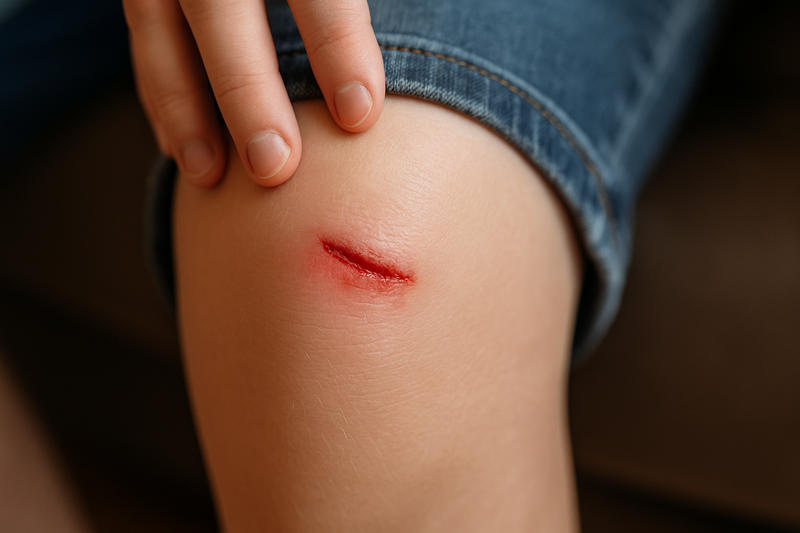
58
Mucous membranes and ______ trap particles and move them out of the body.
cilia
59
Stomach and vaginal ______ help prevent pathogen entry.
acidity
60
Tears and urine contain lysozyme, an enzyme that destroys ______.
bacterial cell walls
61
What is the difference between ingression and penetration?
Ingression: microbes adhere to the cell surface and secrete toxins without deep invasion (e.g., diarrhea, pneumonia)
Penetration: microbes invade past the epithelial barrier (flagella, vectors, wounds)
Penetration: microbes invade past the epithelial barrier (flagella, vectors, wounds)
62
Direct spread of microorganisms in the body occurs through tissues and fluids such as the bloodstream and ______ system.
lymphatic
63
Indirect spread occurs through contaminated instruments, hands, or ______.
surfaces
64
An infection that stays at the site of entry is a ______ infection.
local
65
What is the difference between a local and a systemic infection?
A local infection stays at the site of entry (e.g., an infected wound), whereas a systemic infection spreads through blood and lymph to the whole body.
66
The time from overcoming host defenses until a substantial microbe population is reached is the ______ period.
incubation
67
Direct damage occurs when microbes ______ and kill host cells.
multiply
68
Indirect damage is caused by toxins or the body's own ______ response.
immune
69
Fever, inflammation, and pain result from ______ injury.
tissue
70
What are the three possible outcomes of an infection?
Host controls the infection and recovers
Infection causes disease or death
Pathogen remains in the body in a latent (inactive) state
Infection causes disease or death
Pathogen remains in the body in a latent (inactive) state
71
A pathogen that remains in the body in an inactive state is called ______.
latent
72
What are the links in the chain of infection?
Textbook: host, infectious microorganism, mode of transmission, reservoir (four factors)
PPT: infectious agent, reservoir, portal of exit, mode of transmission, portal of entry, susceptible host (six links)
PPT: infectious agent, reservoir, portal of exit, mode of transmission, portal of entry, susceptible host (six links)
73
If the chain of infection is broken at any link, the infection ______.
cannot continue (it ceases)
74
Who introduced the germ theory of disease in 1876?
Robert Koch
75
What factors increase the host's risk of infection?
Age (very young or very old)
Poor nutrition
Chronic illness
Stress
Fatigue
Immunosuppression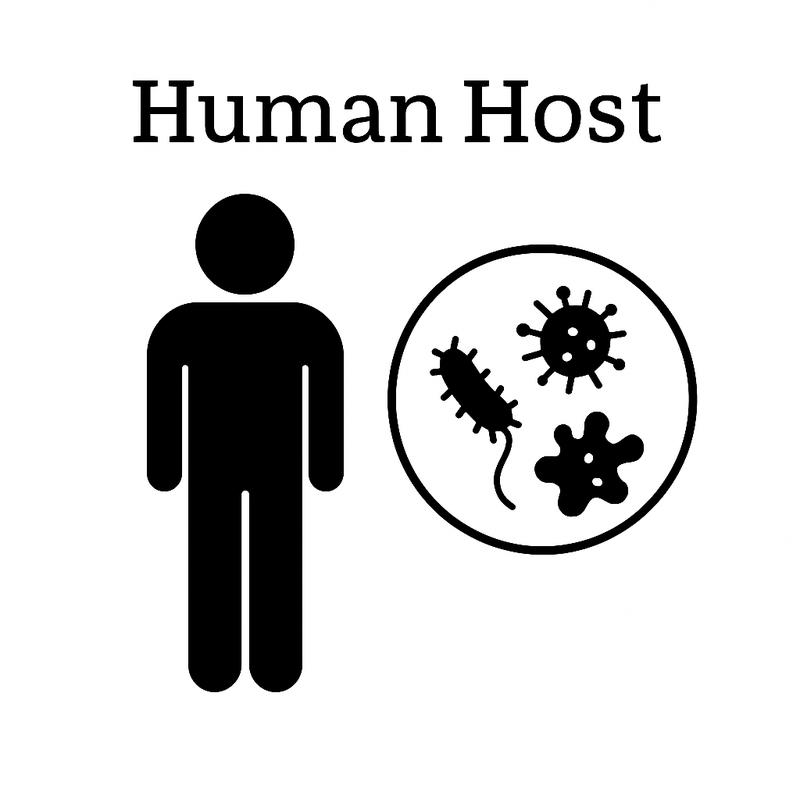
Poor nutrition
Chronic illness
Stress
Fatigue
Immunosuppression
76
What are the five main routes of transmission?
Contact, droplet, airborne, vehicle, and vector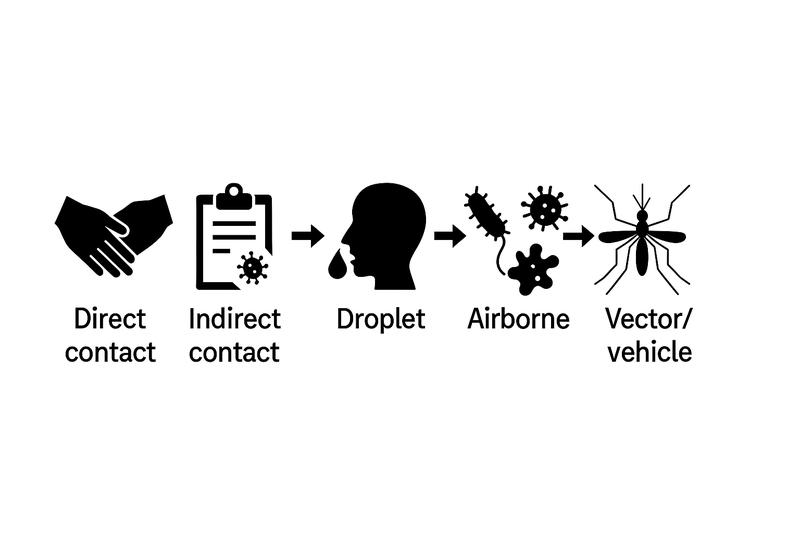
77
A contaminated object or surface where a pathogen may live is called a ______.
fomite
78
Transmission by contaminated food, water, or a medical device is ______ transmission.
vehicle
79
Malaria is carried by a vector, the ______.
mosquito
80
The deer tick is a vector for ______ disease.
Lyme
81
What is the difference between a vehicle and a vector?
A vehicle is a nonliving carrier such as food, water, or a medical device, whereas a vector is a living animal or insect such as a mosquito, flea, or tick.
82
Airborne particles may be blocked with an ______ mask.
N95
83
Hand hygiene and ______ are key to breaking transmission.
PPE
84
What is the difference between exogenous and endogenous transmission?
Exogenous: from a microbe in the environment (contact, vector, fomite)
Endogenous: from the body's own normal flora moving to a new site
Endogenous: from the body's own normal flora moving to a new site
85
Any place where pathogens can survive and multiply is called a ______.
reservoir
86
What are three common types of reservoirs?
Humans (patients or healthcare workers)
Animals
Environment (water, soil, contaminated equipment)
Animals
Environment (water, soil, contaminated equipment)
87
Infections passed from animals to humans, such as rabies, are called ______ infections.
zoonotic
88
An infected person with no symptoms who can still spread disease is called a ______.
carrier
89
Proper cleaning and disinfection eliminate ______ of infection.
reservoirs
90
Infections that develop while receiving medical care are called ______ infections.
healthcare-associated (HAIs)
91
Nosocomial infections typically show signs about ______ hours after contact.
Textbook: about 72 hours
PPT: 48 hours
PPT: 48 hours
92
What are four common types of HAI?
Urinary tract infection from a contaminated catheter
Infection from improper aseptic handwashing
Airborne respiratory infection
Bloodstream infection from pathogens at an instrument or injection site
Infection from improper aseptic handwashing
Airborne respiratory infection
Bloodstream infection from pathogens at an instrument or injection site
93
Two common HAI-causing organisms are MRSA and ______.
C. diff
94
What are three common sources of HAIs?
Contaminated instruments or surfaces
Invasive devices (catheters, IV lines)
Poor hand hygiene or breaks in aseptic technique
Invasive devices (catheters, IV lines)
Poor hand hygiene or breaks in aseptic technique
95
An infection resulting from a physician's intervention is called ______.
iatrogenic
96
What is the most common nosocomial infection, and what causes it?
Urinary tract infection, introduced by a Foley (urinary) catheter
97
Patients with weakened immune systems are called ______ patients.
compromised
98
What causes compromised immunity?
Age (very young or elderly)
Disease (cancer, HIV/AIDS, diabetes)
Medical treatments (chemotherapy, radiation, steroids, transplants)
Imbalanced gut flora
Disease (cancer, HIV/AIDS, diabetes)
Medical treatments (chemotherapy, radiation, steroids, transplants)
Imbalanced gut flora
99
Reverse isolation requires foot covers, IR covers, and ______.
PPE
100
Healthcare workers can be ______ carriers who spread infection without symptoms.
asymptomatic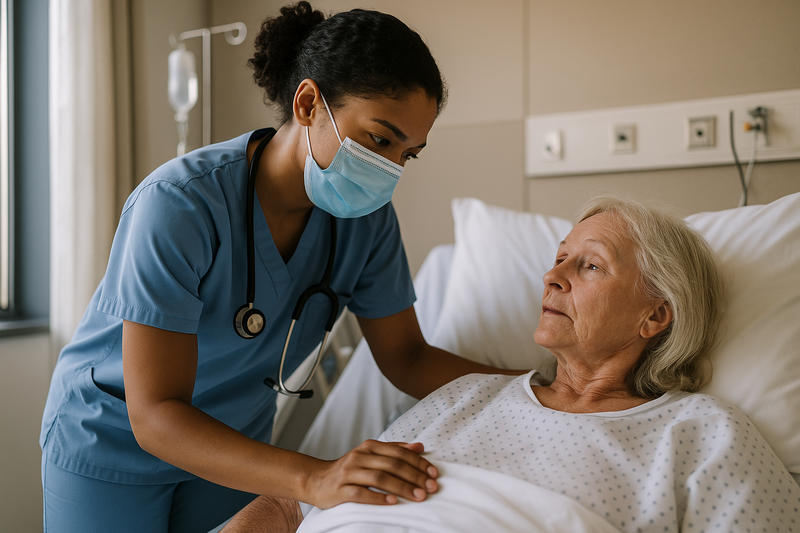
101
Healthcare worker transmission often occurs through hands, clothing, or ______.
equipment
102
Normal flora is found on the skin, mouth, nose, throat, and ______ tract.
digestive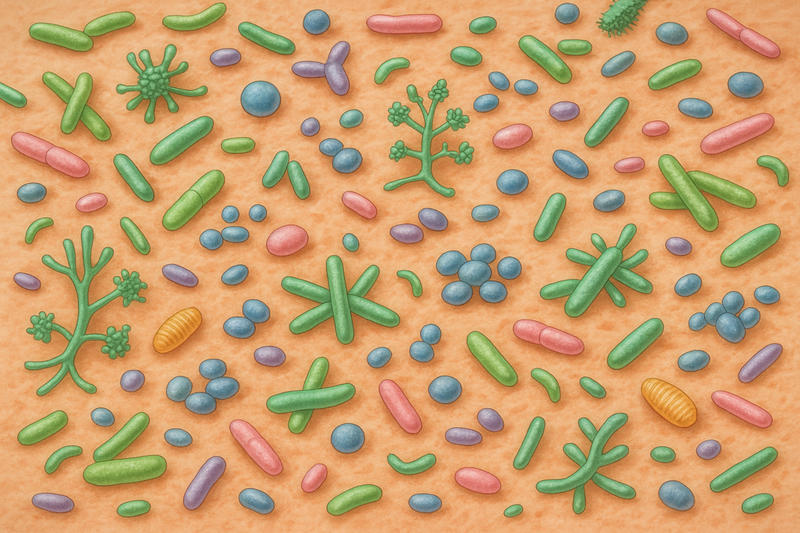
103
When can normal flora cause infection?
When it enters sterile areas (urinary tract, lungs, spinal fluid, nervous system) or when the immune system is weak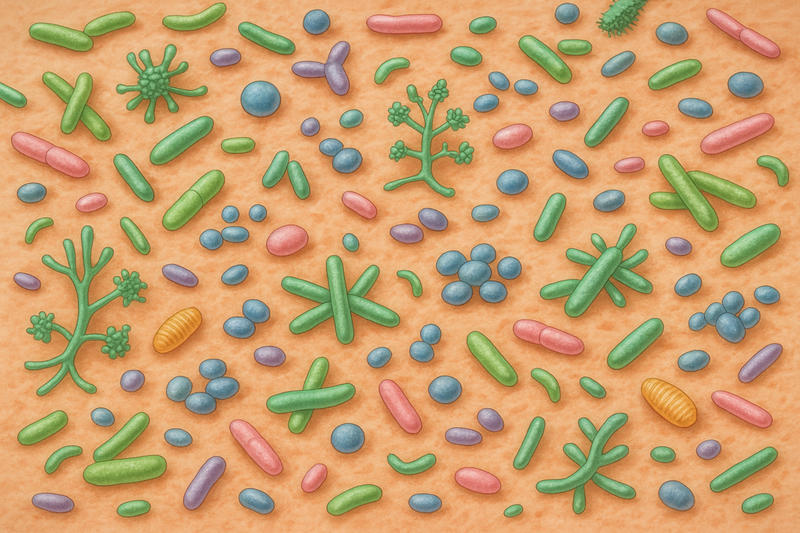
104
Which common healthcare items can harbor pathogens?
Bed rails, tables, keyboards, imaging equipment, linens, gowns, and reusable supplies such as blood pressure cuffs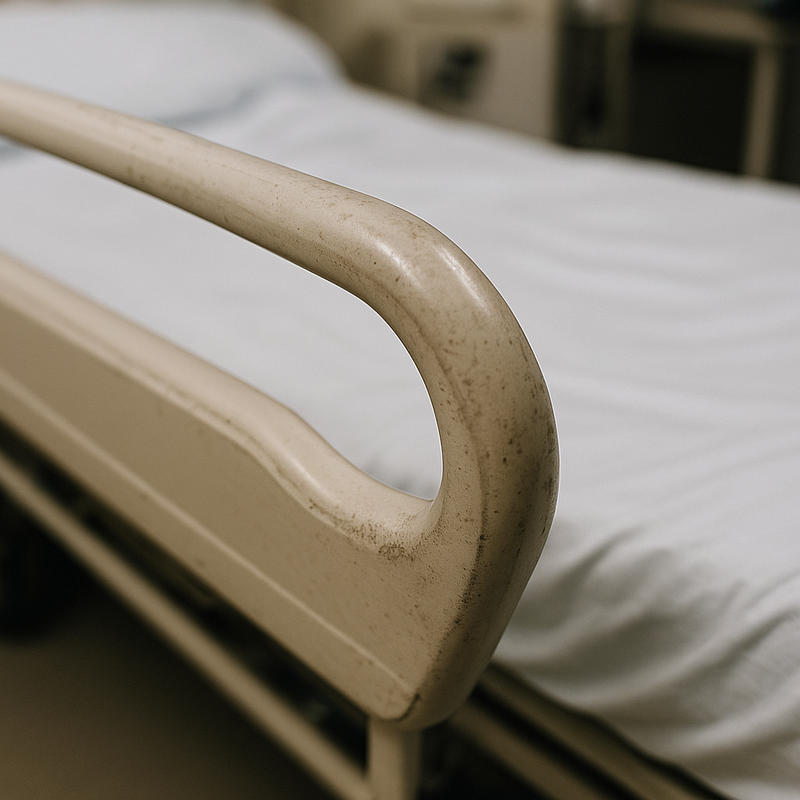
105
If cleaning is inadequate, infections spread through ______ contact.
indirect
106
Blood-borne pathogens are microorganisms found in human blood and ______.
body fluids
107
Which blood-borne virus is the most common and most infectious?
Hepatitis B virus (HBV)
108
Hepatitis B can be prevented with a highly effective ______.
vaccine
109
Which blood-borne virus has no vaccine?
Hepatitis C virus (HCV)
110
Hepatitis B can cause liver dysfunction, cirrhosis, and the need for a liver ______.
transplant
111
Untreated HIV may lead to ______.
AIDS (acquired immunodeficiency syndrome)
112
HIV specifically infects the immune system's ______ T cells.
CD4+
113
How can blood-borne pathogens enter the body?
Needlestick injuries, cuts, or mucous membranes
114
Invasive procedures break the body's natural ______.
barriers
115
Invasive procedures create a ______ of entry for microorganisms.
portal
116
What are the three types of constitutive (innate) defenses?
Mechanical, chemical, and cellular
117
Skin, mucous membranes, and cilia are ______ barriers.
mechanical
118
Stomach acid, tears, and saliva are ______ barriers.
chemical
119
Which cells attack cells that look abnormal or infected?
Natural killer (NK) cells
120
Phagocytes engulf and destroy foreign particles through a process called ______.
phagocytosis
121
Fever and inflammation help ______ microbial growth.
slow
122
Normal flora protects the body by ______ with harmful microbes.
competing
123
Normal flora is disrupted by antibiotics, illness, or poor ______.
hygiene
124
The goal of chemotherapy is ______ toxicity: harming the pathogen but not the patient's cells.
selective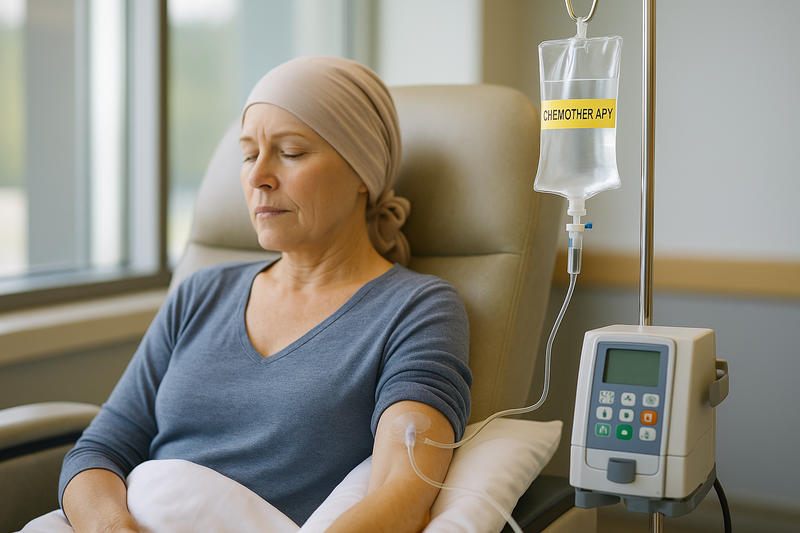
125
Which drug types treat bacteria, viruses, fungi, and protozoa?
Antibiotics, antivirals, antifungals, and antiparasitics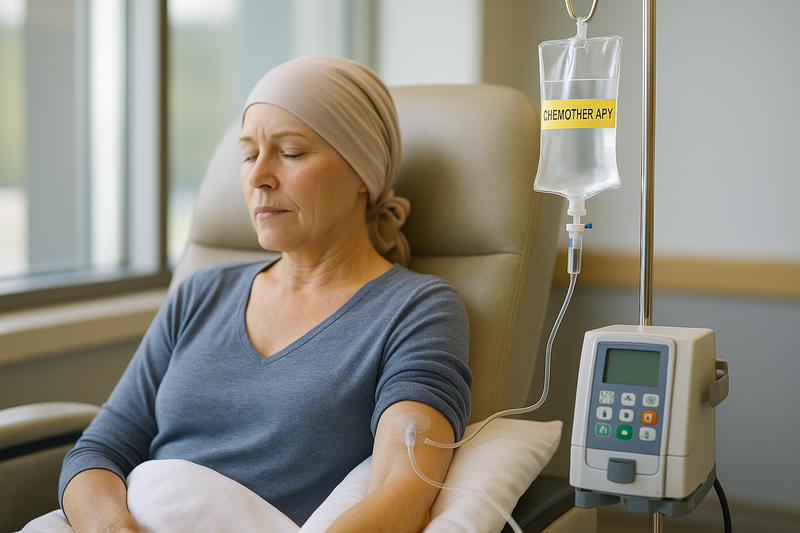
126
The most difficult infections to treat are MRSA, C. diff, and sometimes ______.
TB
127
Overuse or misuse of antimicrobial drugs can lead to drug-______ strains.
resistant
128
What is the difference between -static and -cidal drugs?
-static drugs inhibit growth but do not kill (e.g., tetracyclines), whereas -cidal drugs kill microbes (e.g., penicillins).
129
Vaccines introduce a weakened form of a disease so the body makes antibodies and ______ cells.
memory
130
Immunity gained when the body makes its own antibodies is ______ immunity.
active
131
Immunity passed from a mother to her child in utero is ______ immunity.
passive
132
______ immunity occurs when enough of a community is immune that person-to-person spread is unlikely.
Herd (population)
133
A booster addresses waning immunity or evolving strains; the annual ______ shot is one example.
flu
134
The MMR vaccine protects against measles, mumps, and ______.
rubella (German measles)
135
What three environmental factors are controlled in healthcare facilities?
Proper ventilation
Humidity and temperature
Surface cleanliness
Humidity and temperature
Surface cleanliness
136
Microorganisms grow best in warm and ______ places.
humid
137
Most human pathogens grow best at body temperature, ______.
37°C (98.6°F)
138
What are the three cleaning categories?
Cleaning (physically removing dirt)
Disinfection (chemicals kill most pathogens but not spores)
Sterilization (destroys all microorganisms and spores)
Disinfection (chemicals kill most pathogens but not spores)
Sterilization (destroys all microorganisms and spores)
139
Disinfection kills most pathogens but not ______.
spores
140
Sterilization is the complete destruction of all microorganisms and ______.
spores
141
Asepsis means free from ______ microorganisms.
infection-causing
142
What is the difference between medical and surgical asepsis?
Medical asepsis (clean technique) reduces the number of microorganisms, whereas surgical asepsis (sterile technique) eliminates all microorganisms and spores.
143
Cleaning a stethoscope with alcohol between patients is an example of ______ asepsis.
medical
144
Sterile items must be kept ______ waist level at all times.
above
145
Surgical asepsis may be used for biopsies, mammographic procedures, and OR cases with a ______.
C-arm
146
Chlorine and bleach are effective against bacteria and ______.
viruses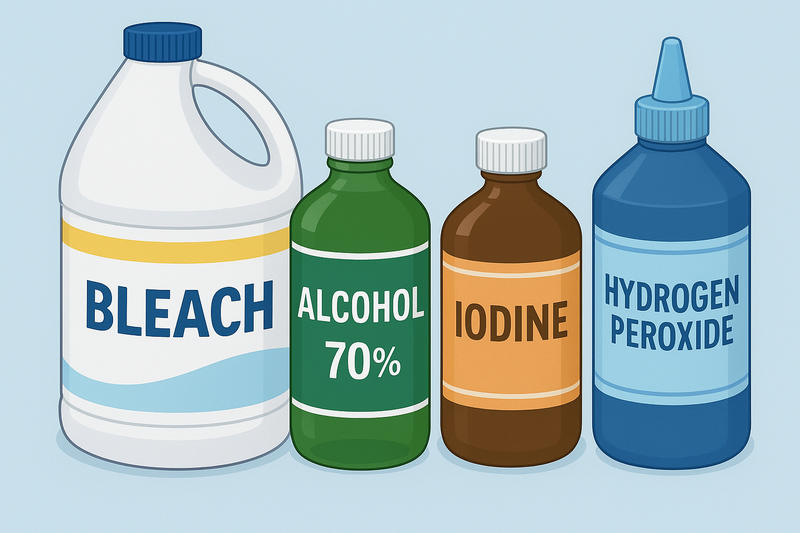
147
Alcohol is ineffective against spores because it ______ quickly.
evaporates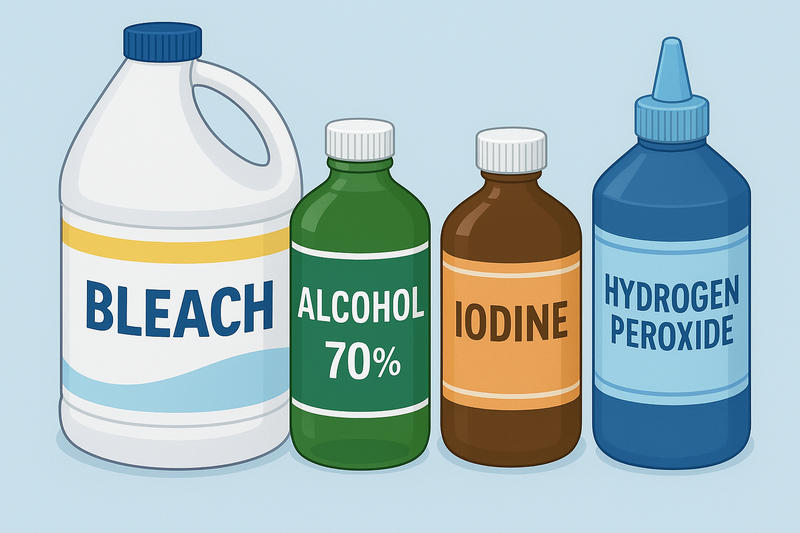
148
Iodine is used for skin asepsis but has a high rate of skin ______.
irritation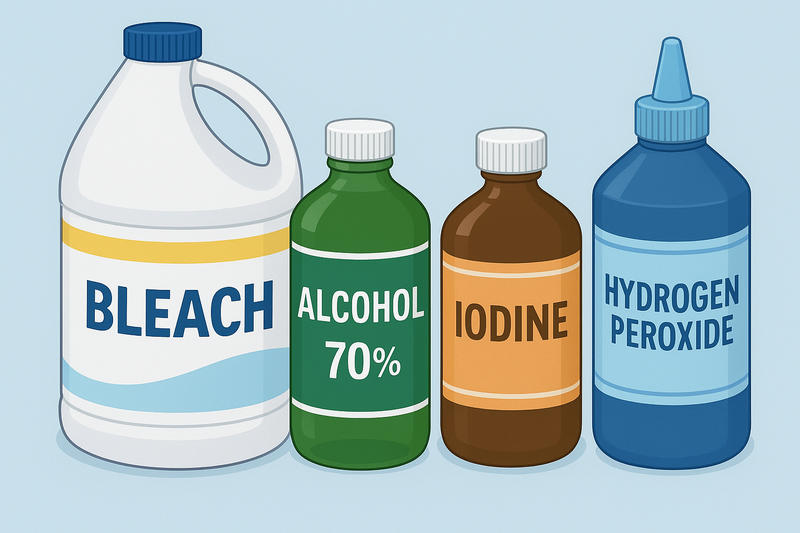
149
Which disinfectant breaks down into water and oxygen and is more environmentally safe?
Hydrogen peroxide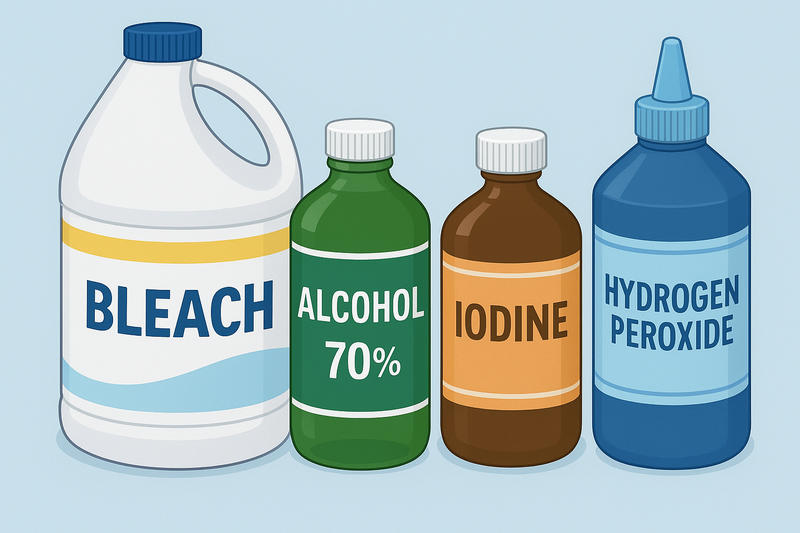
150
Most chemical methods cannot kill spores; stubborn examples are C. diff and ______.
TB
151
A disinfectant applied topically to living tissue is called an ______.
antiseptic
152
Which gas sterilizes electronic and plastic equipment damaged by heat?
Ethylene oxide
153
The most common physical method of sterilization is steam under pressure, called ______.
autoclaving
154
How many minutes does autoclaving take at 121°C (250°F)?
Textbook: 15 minutes (at 15 lb/in2)
PPT: 20 consecutive minutes
PPT: 20 consecutive minutes
155
Dry heat is used for items ruined by moisture, such as oils, glass, and ______.
powders
156
How hot and how long does dry heat sterilization run?
Textbook: 160°C (320°F) for 120 minutes
PPT: very high temperature (no values given)
PPT: very high temperature (no values given)
157
Using moderate heat on heat-sensitive materials is called ______.
pasteurization
158
UV radiation uses short-wavelength ______ light to inactivate microorganisms.
ultraviolet
159
Air filtration removes microorganisms from air in ______ systems.
ventilation
160
Rank the physical methods by commonality.
1. Steam under pressure (autoclaving)
2. Dry heat
3. Pasteurization
4. UV radiation
5. Air filtration
2. Dry heat
3. Pasteurization
4. UV radiation
5. Air filtration
161
What is the single most effective method to prevent infection transmission?
Handwashing (hand hygiene)
162
Who showed in 1846 that handwashing prevents the spread of infection?
Dr. Semmelweis
163
Wash hands before and after every ______ contact.
patient
164
How long should handwashing last?
Textbook: up to 7-8 minutes may be needed to remove transients from soiled hands
PPT: at least 20 seconds with soap and warm water
PPT: at least 20 seconds with soap and warm water
165
Alcohol-based sanitizer is acceptable only when hands are not visibly ______.
soiled
166
During medically aseptic handwashing, keep the hands lower than the ______.
elbows
167
During handwashing, treat the sink as ______.
contaminated
168
Standard precautions are used for ______ patient regardless of diagnosis.
every
169
Always assume every patient is ______.
infectious
170
What are the elements of standard precautions?
Hand hygiene
PPE
Respiratory hygiene and cough etiquette
Safe injection practices
Environmental cleaning
Linen and waste management
PPE
Respiratory hygiene and cough etiquette
Safe injection practices
Environmental cleaning
Linen and waste management
171
Blood and body fluid waste goes in the ______ bin.
biohazard
172
Wear ______ gloves for every patient.
new
173
Never ______ or wash disposable gloves.
reuse
174
What are the common types of PPE?
Gloves, gowns, masks and respirators, goggles or face shields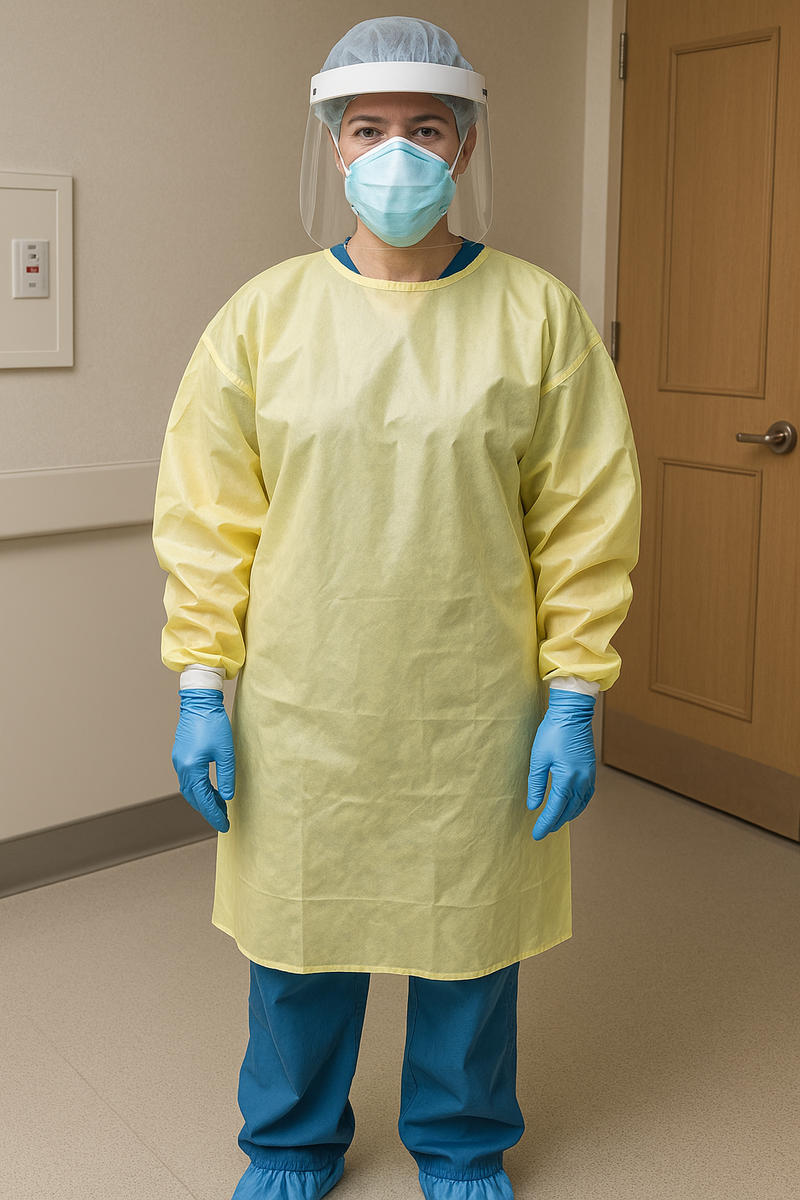
175
Choose PPE based on the level of ______ risk.
exposure
176
Goggles or face shields protect the eyes from ______.
splashes
177
Never ______ used needles.
recap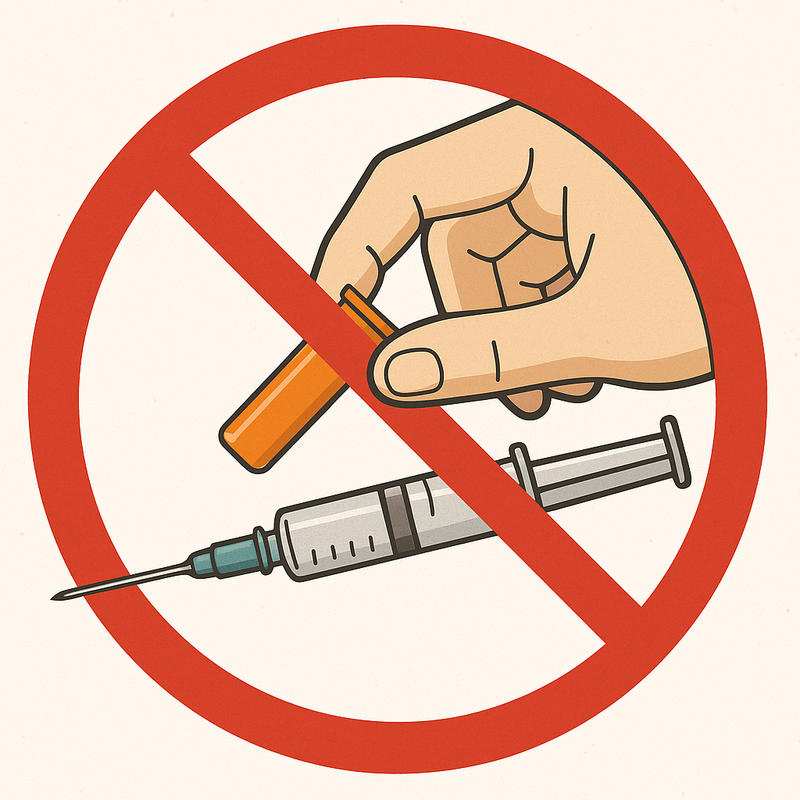
178
Needles and sharps are disposed of in ______ containers.
puncture-resistant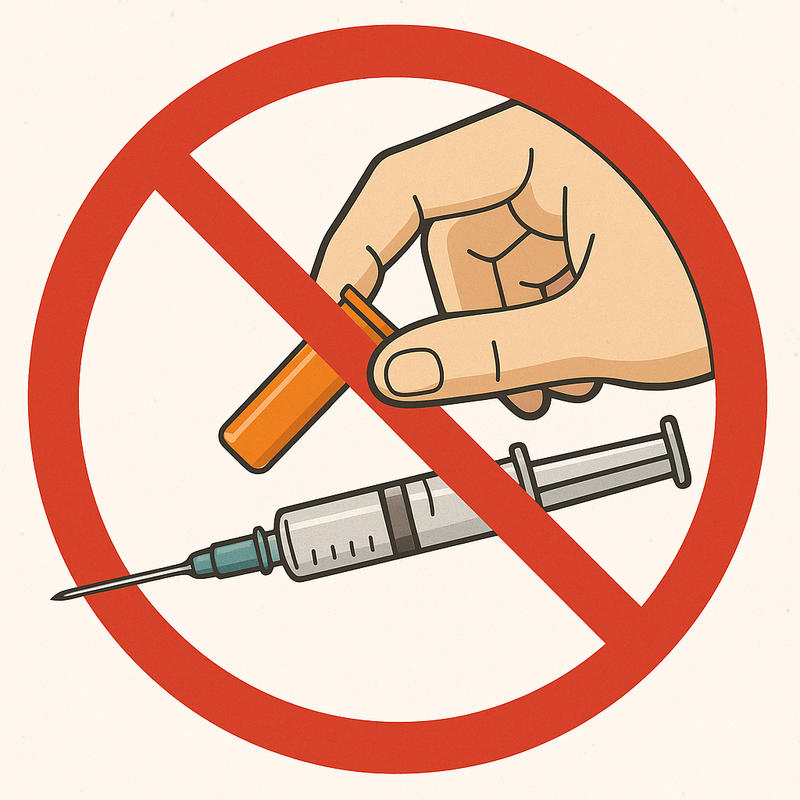
179
If recapping is unavoidable, which technique can be used?
The one-handed scoop technique (or a recapping device)
180
What must you do after any sharps injury?
Report it and follow up immediately
181
What PPE is worn before handling a biohazard spill?
Gloves, gown, and eye protection
182
What can be used to clean a biohazard spill area?
A hospital-approved disinfectant (e.g., bleach solution)
183
Transmission-based precautions are used in addition to ______ precautions.
standard
184
What are the three categories of transmission-based precautions?
Airborne, droplet, and contact
185
Airborne precautions protect against tiny particles that remain ______ in the air.
suspended
186
Airborne precautions require a ______-pressure isolation room.
negative
187
In a negative-pressure room, air rushes ______ the room when the door opens.
into
188
For airborne precautions, healthcare workers wear an ______ respirator or higher.
N95
189
Name diseases that require airborne precautions.
TB, measles (rubeola), chickenpox (varicella), and shingles
190
Shingles is a variation of the ______ virus that reactivates in older adults.
varicella
191
Droplet precautions protect against large respiratory droplets that travel up to ______ feet.
3
192
Droplet precautions apply to particles ______ microns or larger.
5
193
Name diseases that require droplet precautions.
Textbook: rubella, mumps, influenza, adenovirus
PPT: influenza, meningitis, mumps, pneumonia
PPT: influenza, meningitis, mumps, pneumonia
194
Droplet precautions require a ______ mask and sometimes eye protection.
surgical
195
During transport, a patient on airborne or droplet precautions wears a ______.
surgical mask
196
Name diseases that require contact precautions.
Textbook: MRSA, hepatitis A, impetigo, varicella (zoster)
PPT: MRSA, C. diff, norovirus, impetigo
PPT: MRSA, C. diff, norovirus, impetigo
197
Sterilization removes ______, which make C. diff hard to kill.
spores
198
Contact precautions require ______ and ______ for all patient or surface contact.
gloves; gown
199
Contact precautions use ______ equipment when possible.
dedicated
200
Contact precautions technique follows a ______-step protocol.
21
201
In what order is PPE removed when leaving a contact precautions room?
Textbook: gown first, then gloves, then cap and mask, then wash hands
PPT: gloves first, then gown into biohazard trash, then wash hands
PPT: gloves first, then gown into biohazard trash, then wash hands
202
Spores often survive handwashing, heat, and ______.
chemicals
203
Each cassette in a contact precautions exam is placed in a protective ______.
bag
204
When removing the mask, touch only the strings or ______.
elastic
205
Label the five routes of disease transmission (left to right).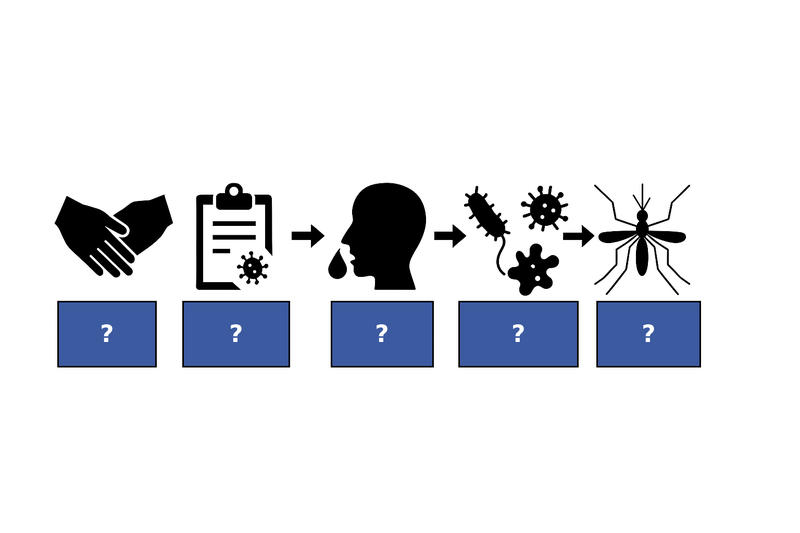
1. Direct contact
2. Indirect contact
3. Droplet
4. Airborne
5. Vector/vehicle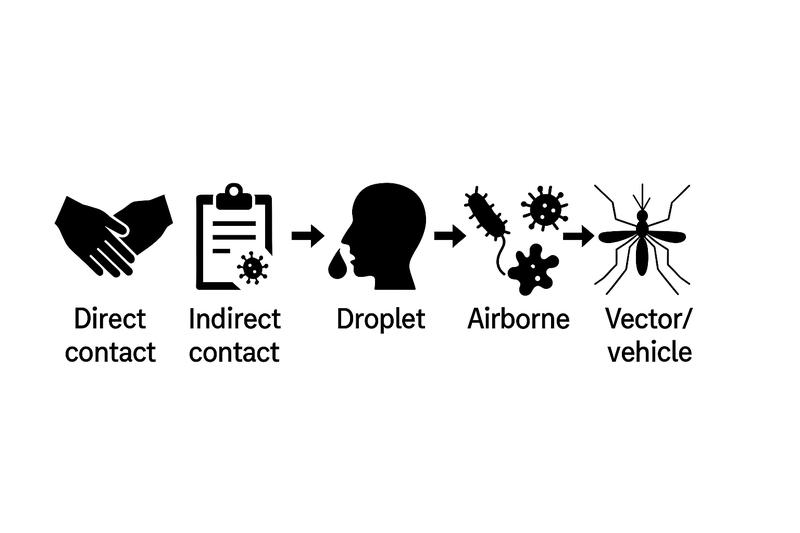
2. Indirect contact
3. Droplet
4. Airborne
5. Vector/vehicle
206
Which route of transmission is shown by the icon above the "?" box (icon 1 of 5, left to right)?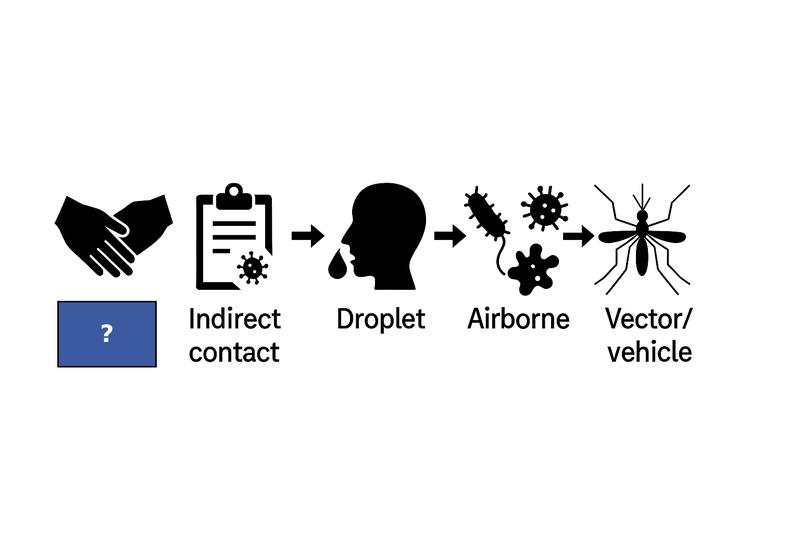
Direct contact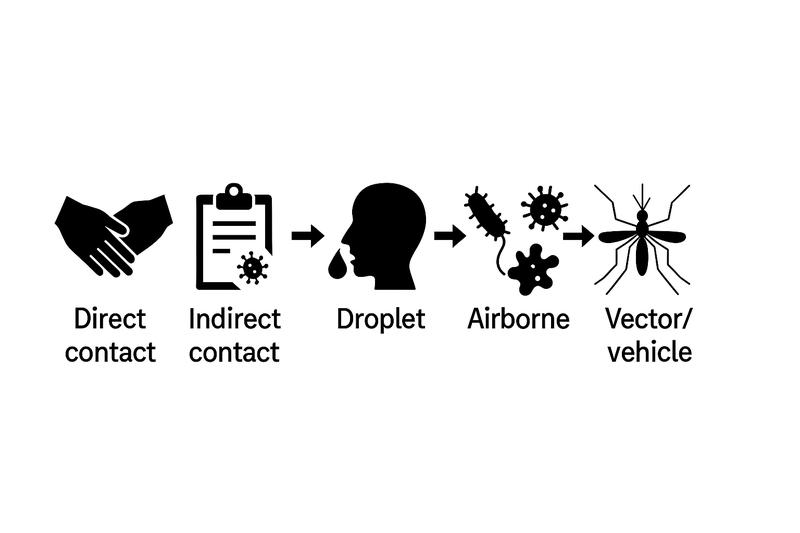
207
Which route of transmission is shown by the icon above the "?" box (icon 2 of 5, left to right)?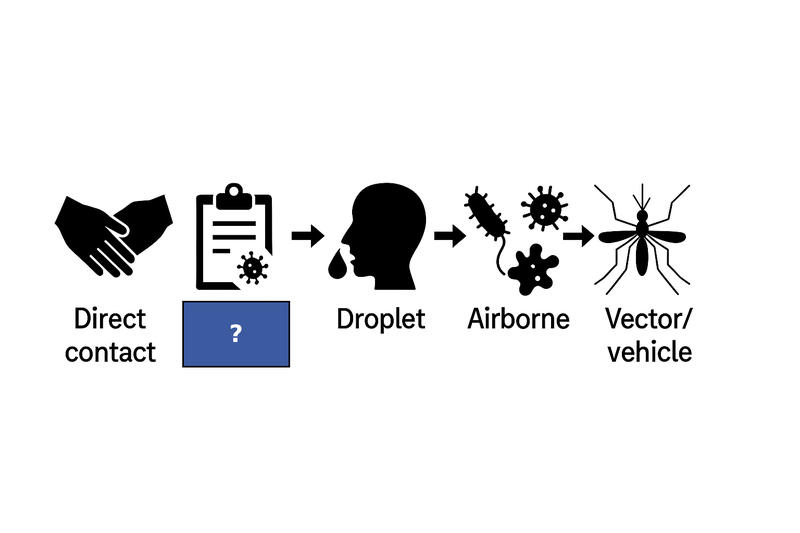
Indirect contact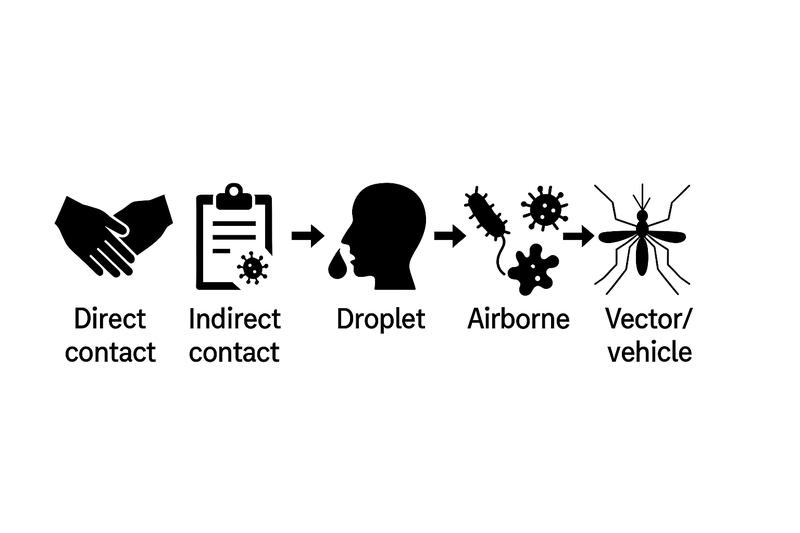
208
Which route of transmission is shown by the icon above the "?" box (icon 3 of 5, left to right)?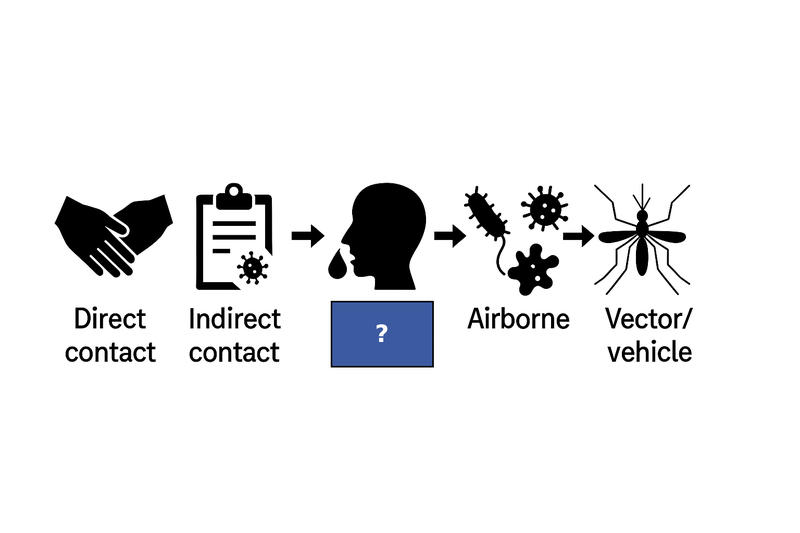
Droplet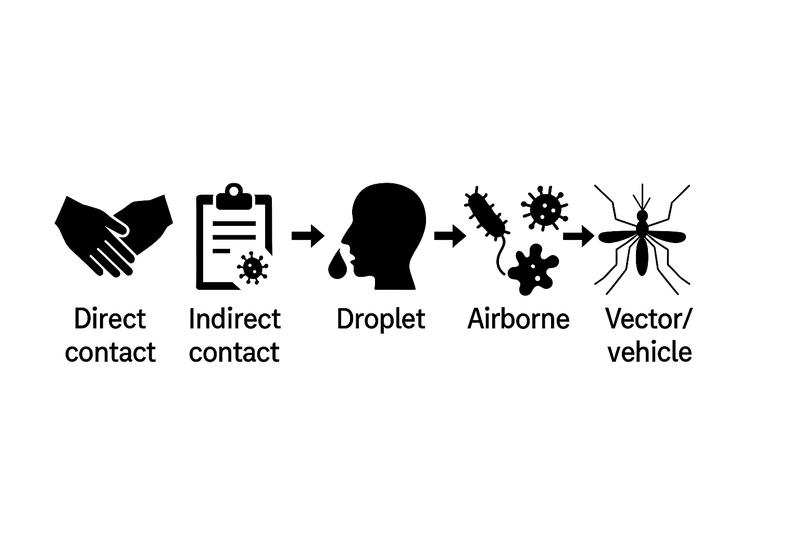
209
Which route of transmission is shown by the icon above the "?" box (icon 4 of 5, left to right)?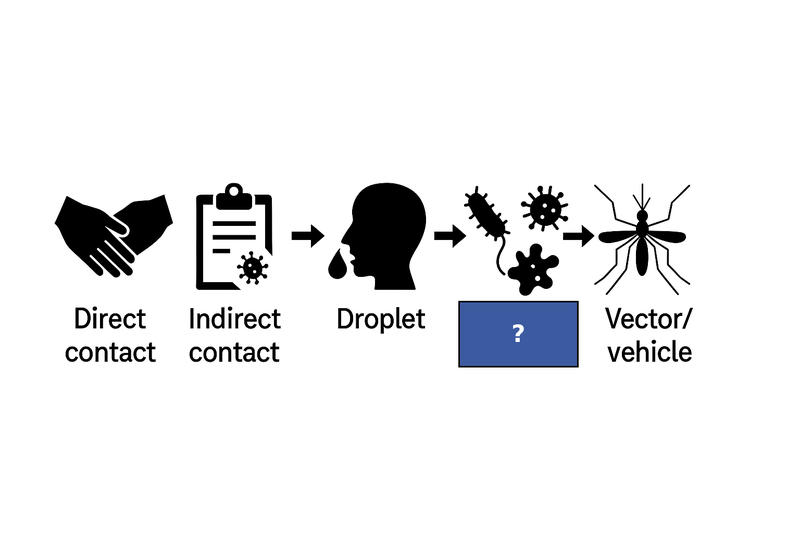
Airborne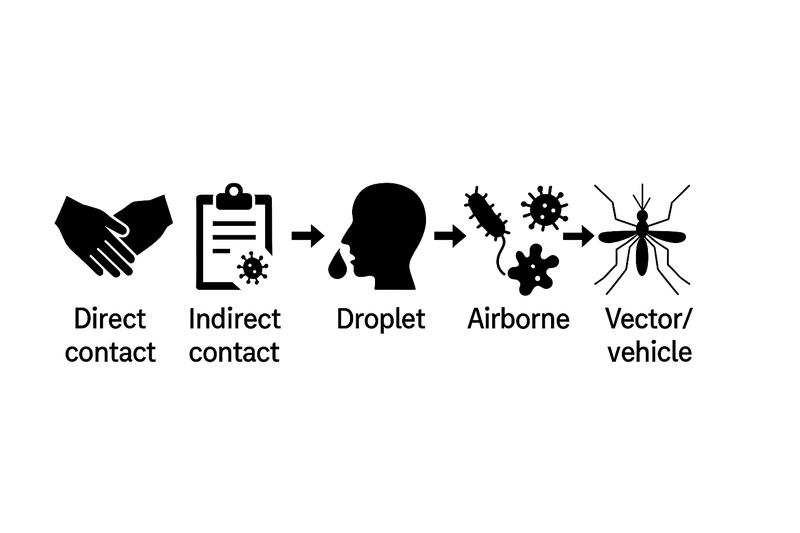
210
Which route of transmission is shown by the icon above the "?" box (icon 5 of 5, left to right)?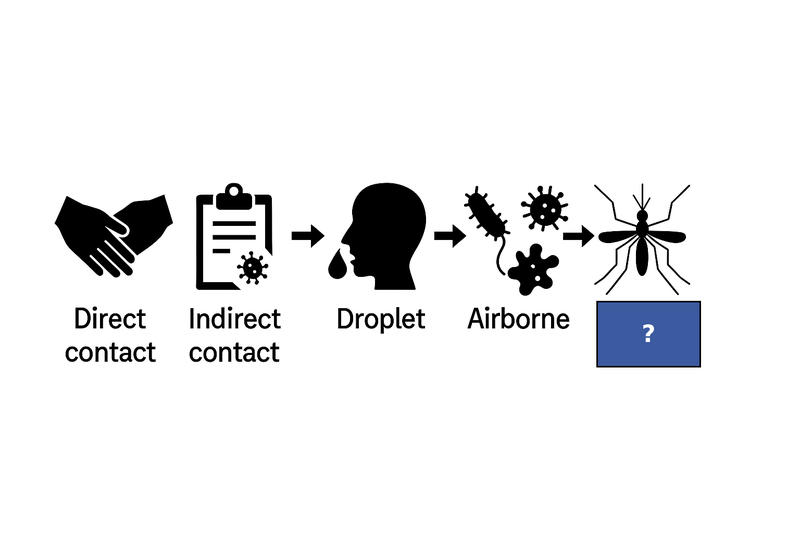
Vector/vehicle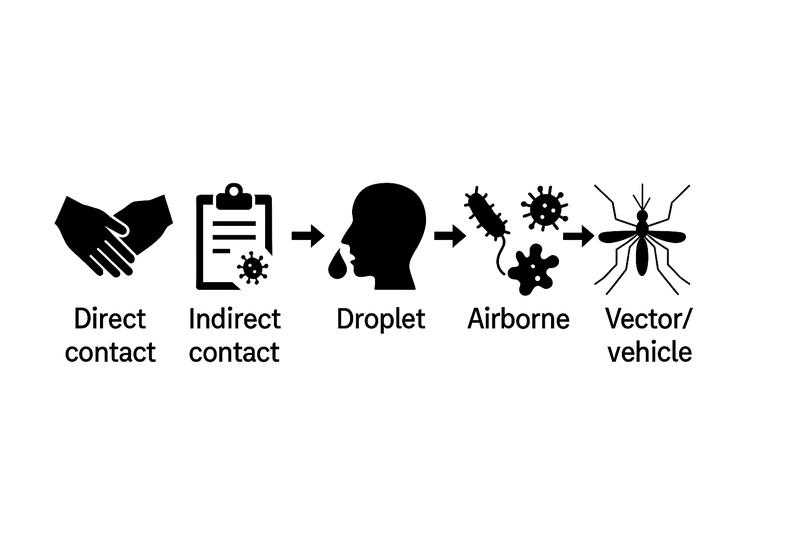
More Medicine & health flashcards
PSYC 301: Somatic and Autonomic Nervous SystemsMedicine & health · EnglishTotallyLegitUpper Limb ArteriesMedicine & health · EnglishEshaTraumatic Brain Injury (TBI)Medicine & health · EnglishCoryNervous System Study Guide Week 4Medicine & health · EnglishkjResistanceMedicine & health · EnglishAveryIII U4 verbsMedicine & health · SpanishSHRSpanishabdomMedicine & health · EnglishillegitThalassaemia and Sickle Cell AnaemiaMedicine & health · EnglishfaithC2.2: neural signalingMedicine & health · EnglishMicahTinciones Medicine & health · SpanishLarita4- la trachée + bronchesMedicine & health · FrenchOcéanelower limb anatomyMedicine & health · Englishtobi
Study these decks in the app
Free on iPhone, Android, Mac and the web. Add any deck to your account in one tap.

