Innate Immunity: First Line Defenses
Study these flashcardsFree · spaced repetition · iPhone, Android, Mac & web
All cards
1
first line defenses
physical and chemical barriers that block microbial entry
example: skin, mucous membranes
example: skin, mucous membranes
2
sensor systems
detect invaders using pattern recognition receptors and the complement system
3
effector actions
destroy invaders through mechanisms such as interferon response, phagocytosis, complement activation, inflammatory response and fever
4
physical barriers to pathogens
skin: acts as tough water repellent barrier
mucous membranes: line internal tracts and trap microbes
mucous membranes: line internal tracts and trap microbes
5
dermis
tightly woven fibrous connective tissue
6
epidermis
multiple layers of epithelial cells; outermost are dead and filled with keratin, repelling water and maintaining a dry environment
7
mucous membranes
composed of mucus-producing cells; some have cilia to remove microbes
8
antimicrobial substances
salt, lysozyme, peroxidases, lactoferrin and transferrin, defensins
9
salt
accumulates on skin from perspiration, creating a hostile environment for microbes
10
lysozyme
degrades peptidoglycan in bacterial cell walls
11
peroxidases
form antimicrobials by breaking down hydrogen peroxide
12
lactoferrin and transferrin
bind iron, limiting microbial access
13
defensins
host defense peptides that form pores in microbial membranes
14
competitive exclusion
normal microbiota cover binding sites and consume nutrients, preventing pathogen colonization
15
production of toxic compounds
some species of microbiota produce fatty acids or bacteriocins that inhibit pathogens
16
immune system development
normal microbiota are essential for proper immune system maturation
17
disruption
antibiotic use can predispose to infections by Clostridium difficile or Candida albicans
18
neutrophils
engulf and destroy bacteria; most abundant and first responders during infection
19
basophils
involved in allergic reactions and inflammation; granules contain histamine
20
mast cells
similar to basophils; found in tissues
21
eosinophils
fight parasitic worms and participate in allergic reactions
22
monocytes
circulate in blood and differentiate into macrophages upon entering tissues
23
macrophages
sentinel cells found in nearly all tissues; phagocytize debris and invaders
24
dendritic cells
sentinel cells that engulf material and present it to adaptive immune cells
25
lymphocytes
include B and T cells (adaptive immunity), innate lymphoid cells and natural killer (NK) cells
26
surface receptors
proteins that span the cell membrane and transmit signals upon ligand binding
27
cytokines
small proteins that act as cell "voices," including changes such as growth, differentiation, movement or cell death
28
adhesion molecules
enable cells to adhere to each other, facilitating migration and interaction
29
chemokines
direct chemotaxis of immune cells
30
colony-stimulating factors (CSFs)
stimulate multiplication and differentiation of leukocytes
31
interferons
control viral infections and regulate immune responses
32
interleukins
produced by leukocytes; important in both innate and adaptive immunity
33
tumor necrosis factor (TNF)
induces inflammation and apoptosis
34
PRRs
located on cell surfaces, in phagosomes/endosomes and in the cytoplasm; detect microbial components and cell damage
35
TLRs
a type of PRR anchored in membranes of sentinel cells; surface TLRs monitor extracellular environment, while TLRs in phagosomal/endosomal membranes characterize ingested material
36
complement system
proteins circulating in blood and tissue fluid named C1 through C9, with activation occuring via three pathways all leading to the formation of C3 contervase which splits C3 into C3a and C3b
37
alternative pathway
triggered by C3b binding to foreign cell surfaces
38
lectin pathway
pattern recognition molecules (MBLs) bind to mannose on microbial cells
39
classical pathway
activated by antibodies bound to antigens
40
opsonization
C3b binds to bacterial cells, promoting engulfment by phagocytes
41
inflammatory response
C5a attracts phagocytes; C3a and C5a increase blood vessel permeability and induce cytokine release
42
lysis of foreign cells
membrane attack complexes (MACs) formed by C5b, C6, C7, C8 and C9 assemble in cell membranes of Gram-negative bacteria
43
chemotaxis
phagocytes are recruited by chemoattractants (eg. C5a)
44
recognition and attachment
direct: receptors bind mannose
indirect: binding to opsonins like C3b
indirect: binding to opsonins like C3b
45
engulfment
pseudopods surround the microbe, forming a phagosome
46
phagosome maturation and phagolysosome formation
fusion with lysosomes releases digestive enzymes
47
destruction and digestion
toxic reactive oxygen species (ROS), nitric oxide, and enzymes degrade the invader
48
exocytosis
expulsion of digested remains
49
inflammation process
1. vascular changes
2. cellular changes
3. clotting
4. pus formation
2. cellular changes
3. clotting
4. pus formation
50
vascular changes
blood vessel diameter increases, causing heat and redness; fluid (exudate) leaks into tissues causing swelling and pain
51
cellular changes
cytokines cause endothileal cells to "grab" phagocytes, which move into tissues (diapedesis)
neutrophils arrive first, followed by monocytes and lymphocytes
neutrophils arrive first, followed by monocytes and lymphocytes
52
clotting
clotting factors wall off site of infection
53
pus formation
accumulation of dead neutrophils and tissue debris forms pus; a localized collection is called an abscess
54
acute inflammation
short-term, mainly neutrophils; macrophages clean up debris
55
chronic inflammation
if acute fails, macrophages and giant cells accumulate, forming granulomas
56
necrosis
traumatic cell death due to damage
57
apoptosis
programmed cell death; does not trigger inflammation
58
pryoptosis and necroptosis
trigger inflammatory reponses, sacrificing infected cells
59
adaptive immunity
highly specialized defense mechanism that develops to eliminate specific microbial invaders
characterized by molecular specificity, immunological memory and immune tolerance
takes around a week or more to develop after first exposure but subsequent exposures elicit much faster and stronger responses
characterized by molecular specificity, immunological memory and immune tolerance
takes around a week or more to develop after first exposure but subsequent exposures elicit much faster and stronger responses
60
molecular specificity
lymphocytes recognize unique antigens
61
immunological memory
enables stronger response upon re-exposure; basis of vaccination
62
immune tolerance
prevents immune responses against "self" tissues
63
humoral immunity
involves B lymphocytes that produce antibodies to neutralize pathogens in blood and tissue fluids
64
cell-mediated immunity
involves T lymphocytes that eliminate infected or abnormal "self" cells
65
cytotoxic T cells (CD8)
induce apoptosis in infected or corrupted cells
66
helper T cells (CD4)
direct and assist immune responses
67
primary lymphoid organs
bone marrow (B cell maturation)
thymus (T cell maturation)
thymus (T cell maturation)
68
secondary lymphoid organs
sites where mature lymphocytes encounter antigens and become activated
69
TCRs (T cell receptors)
require antigen presentation by MHC molecules; guided by CD markers (CD8 for cytotoxic T cells and CD4 for helper T cells)
70
BCRs (B cell receptors)
membrane-anchored antibodies with two identical antigen-binding sites; bind free antigens
71
secondary lymphoid organs function
serve as sites where lymphocytes gather to encounter antigens
72
major secondary lymphoid organs
lymph nodes, spleen, tonsils
73
peyer's patches
specialized for sampling intestinal contents
74
mucosal immunity
prevents microbial invasion via mucous membranes
75
clonal selection
ensures only lymphocytes with receptors specific to an encountered antigen are activated and proliferate, generating a population of clones capable of mounting an effective immune response
76
mechanism of clonal selection
each B and T cell recognizes a single epitope, while activation requires antigen binding and additional signals. during expansion, activated cells multiply producing effector and memory cells
77
structure of antigens
Y- shape with two identical arms (Fab regions) that bind to antigen and a stem (Fc region) that marks the antigen for elimination by immune cells
78
neutralization
prevents toxins and viruses from bindint to host cells
79
opsonization.
enhances phagocytosis
80
complement activation
triggers the classical pathway
81
immobilization
interferes with bacterial motility and adherence
82
cross-linking
links antigens together
83
ADCC
targets cells for destruction by NK cells
84
epitopes
short amino acid sequences or three dimensional shapes recognized by antibodies
85
bacterial cells
possess numerous different epitopes
86
B-cell receptor structure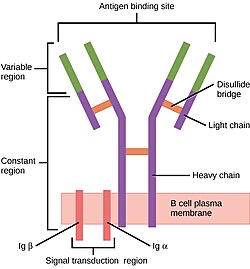
membrane bound antibody composed of two heavy chains and two light chains forming a Y shaped structure.
variable region: binds to specific antigen
constant region: anchors receptors to cell membrane
variable region: binds to specific antigen
constant region: anchors receptors to cell membrane
87
B-cell activation
B cells encounter antigens in secondary lymphoid organs and upon binding antigen internalizes and processes it, presenting fragments on MHC Class II molecules. Helper T cells then recognize these fragments and activate the B cel via cytokine delivery, leading to proliferation and differentiation
88
antibody regions
variable region conferrs antigen-binding specificity while constant region determines antibody class and function
89
IgM
first produced during primary response
pentamer
efficient in complement activation
pentamer
efficient in complement activation
90
IgG
most abundant immunoglobulin class
provides long term protection
crosses placenta
found in Colostrum
provides long term protection
crosses placenta
found in Colostrum
91
IgA
dimer
important in mucosal immunity
found in secretions
important in mucosal immunity
found in secretions
92
IgD
involved in antibody response development
function in serum is unclear
function in serum is unclear
93
IgE
bound to basophils and mast cells
important in allergic reactions and parasite defenses
important in allergic reactions and parasite defenses
94
affinity maturation
B cells with higher affinity for antigen binding proliferate
95
class switching
B cells switch to producing one class of immunoglobulin to another (ex IgM to IgG) to ehance the immune response
96
primary response
slower and less efficient
takes 10-14 days; produces IgM first
takes 10-14 days; produces IgM first
97
secondary response
faster, mediated by memory cells
produces IgG or IgA
eliminates pathogens before harm
produces IgG or IgA
eliminates pathogens before harm
98
MHC class I
presents endogenous antigens
recognized by CD8+ cytotoxic T cells
recognized by CD8+ cytotoxic T cells
99
MHC class II
presents exogenous antigens
recognized by CD4+ helper T cells
recognized by CD4+ helper T cells
100
cytotoxic T cells
release perforin and proteases to induce apoptosis in infected cells
101
helper T cells
deliver cytokines to activate B cells and macrophages
102
natural killer cells
induce apoptosis in antibody-bound "self" cells and cells lacking MHC class I molecules
103
antibody-dependent cellular cytotoxicity (ADCC)
NK cells recognize and kill cells coated with antibodies
104
hypersensitivity
exaggerated immune response that damages host tissue
105
autoimmune disease
misdirected immune response that damages host tissue
106
immunodeficiency
lack of adequate immune responses
107
type I hypersensitivity
immediate IgE-mediated
allergic reactions
allergic reactions
108
type II hypersensitivity
antibodies react to molecules on cell surfaces leading to cell death via complement activation or antibody-dependent cellular cytotoxicity (ADCC)
example: hemolytic transfusion
example: hemolytic transfusion
109
type III hypersensitivity
immune complex-mediated
caused by formation of immune complexes bw antibodies and soluble antigens. large complexes are removed while smaller ones can lodge in blood vessels, activate complement, and trigger inflammation
ex: lupus, infective endocarditis, glomerulonephritis
caused by formation of immune complexes bw antibodies and soluble antigens. large complexes are removed while smaller ones can lodge in blood vessels, activate complement, and trigger inflammation
ex: lupus, infective endocarditis, glomerulonephritis
110
arthus reaction
localized immune complex reaction after infection of antigen into a previously immunized individual
111
serum sickness
systemic immune complex disease caused by passive immunization with animal antibodies
112
type IV hypersensitivity
delayed-type cell-mediated
mediated by antigen-specific T cells and peaks 2-3 days after exposure
common causes: nickel, cosmetics, latex, poison ivy
mechanism: dendritic cells present hapten-peptide complexes to T cells, leading to activation, proliferation and differentiation. memory T cells respond to subsequent exposures causing inflammation and rash
113
transplant rejecfion
allografts: most common
autografts and isografts avoid rejection
xenografts evoke strong immune responses
autografts and isografts avoid rejection
xenografts evoke strong immune responses
114
self-tolerance
maintained by negative selection (apoptosis) of self-reactive lymphocytes and development of regulatory T cells (Treg) that inhibit responses to autoantigens (one's own cells)
115
primary immunodeficiency
congenital / genetic
116
secondary immunodeficiency
acquired after birth
ex. AIDS
ex. AIDS
117
localized allergic reactions
hives: skin condition with wheal and flare; blocked by antihistamines
hay fever: teary eyes, sneezing and runny nose; blocked by antihistamines
asthma: bronchial spasms, mucus; antihistamines not effective
hay fever: teary eyes, sneezing and runny nose; blocked by antihistamines
asthma: bronchial spasms, mucus; antihistamines not effective
118
immunotherapy
alters immune response by inducing IgG production against allergens
IgG competes with IgE for binding, reducing allergic reactions
Omalizumab binds Fc portion of IgE, blocking its attachment to mast cells and basophils
IgG competes with IgE for binding, reducing allergic reactions
Omalizumab binds Fc portion of IgE, blocking its attachment to mast cells and basophils
119
hemolytic disease of newborn
occurs when Rh-negative mother carries an Rh-positive fetus
if fetal RBCs enter the mother's circulation, she may develop anti-Rh antibodies. in subsequent pregnancies, maternal IgG antibodies can cross placenta and destroy fetal RBCs
treatment; RhoGAM
if fetal RBCs enter the mother's circulation, she may develop anti-Rh antibodies. in subsequent pregnancies, maternal IgG antibodies can cross placenta and destroy fetal RBCs
treatment; RhoGAM
120
Penicillin G
first antibiotic discovered by Fleming
effective against many bacteria
Chain and Florey purified penicillin and tested it clinically in 1941
WWII accelerated research and mass production
effective against many bacteria
Chain and Florey purified penicillin and tested it clinically in 1941
WWII accelerated research and mass production
121
selective toxicity
greater harm to microbes than hunan cells
122
therapeutic index
lowest dose toxic to patient divided by the dose that is used for therapy
123
therapeutic window
range bw therapeutic and toxic dose
124
topical use
medications too toxic for systemic use can be used topically
125
bacteriostatic antimicrobials
inhibit bacterial growth
host defenses must eliminate pathogens
host defenses must eliminate pathogens
126
bactericidal antimicrobials
kill bacteria
effectiveness may depend on drug concentration and microbial growth stage
effectiveness may depend on drug concentration and microbial growth stage
127
broad-spectrum antibiotics
affect a wide range of organisms
useful for acute life threatening diseases; may disrupt microbiome
useful for acute life threatening diseases; may disrupt microbiome
128
narrow-spectrum antibiotic
affect limited range of organisms
require pathogen identification and are less disruptive to microbiome
require pathogen identification and are less disruptive to microbiome
129
antagonistic interactions
medications inhibit the effects of one another
130
synergistic interactions
medications enhance each other's effects
131
additive interactions
combined effect equals sum of individual effects
132
dysbiosis
imbalance in microbiome
ex. bacterial overgrowth
ex. bacterial overgrowth
133
cell wall synthesis inhibition
certain antibiotics degrade peptidoglycan
134
B-lactam antibiotics
inhibit penicillin-binding proteins (PBPs) that catalyze peptide bridge formation between glycan strands
135
glycopeptide antibiotics
bind to amino acid side chains of NAM molecules, blocking cross-link formation
136
bacitracin
interferes with transport of peptidoglycan precursors across cytoplasmic membrane; used topically
137
B-lactam antibiotic variants
differing in side chains influences spectrum and resistance properties
138
penicillins
grouped by side chain modifications
natural penicillins are narrow-spectrum and susceptible to penicillinases
natural penicillins are narrow-spectrum and susceptible to penicillinases
139
penicillinase-resistant penicillins
developed to counter resistance in S. aureus
140
cephalosporins
resistant to some B-lactamases; later generations more effective against Gram-negatives and MRSA
141
50S subunit protein inhibitors
Lincosamides, oxazolidinones, streptogramins, pleuromutilins, chloramphenicol, macrolides
142
30S subunit protein inhibitors
aminoglycosides, tetracyclines, glycylcyclines
143
sulfonamides
structurally similar to PABA; competitively inhibit enzyme in folate synthesis
144
trimethoprim
inhibits later step in folate synthesis
little effect on human enzymes
little effect on human enzymes
145
synergistic combination
co-trimoxazole (trimethoprim + sulfonamide) enhances efficacy
146
medication-inactivating enzymes
enzymes such as penicillinase and extended-spectrum B-lactamases degrade antibiotics
147
alteration in target molecules
structural changes prevent antibiotic binding
148
decreased uptake
changes in porin proteins block antibiotic entry
149
increased elimination
efflux pumps remove antibiotics from cell
150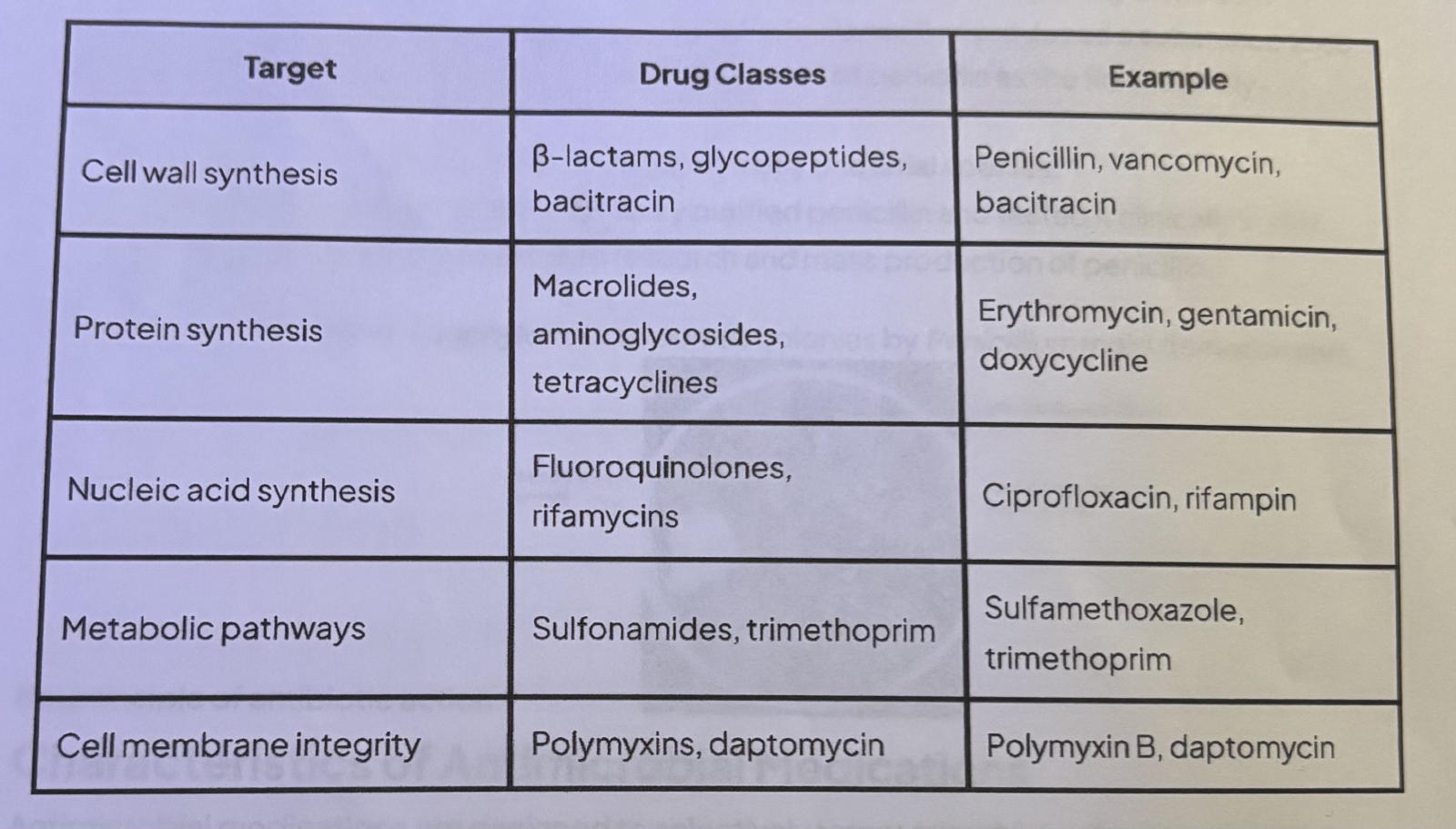
summary table of antibiotic mechanisms of action
More Medicine & health flashcards
Muscle Anatomy: Origin, Insertion and InnervationMedicine & health · EnglishZanderGastrointestinal SystemMedicine & health · EnglishkarebearSomatosensation + Pain - cutaneous receptorsMedicine & health · EnglishAnaïsDigestive System FlashcardsMedicine & health · EnglishVickyDementia and DeliriumMedicine & health · EnglishCorythe brain and neuropsychologyMedicine & health · English17Assessments & Barbell MovementsMedicine & health · EnglishAristotelisCNS Drug Generic and Brand NamesMedicine & health · EnglishebradstreetRenal/GU Comp Exam ReviewMedicine & health · EnglishMadiHomeostasis and ResponseMedicine & health · EnglishLemCOVID-19Medicine & health · EnglishRenles médicaments de la douleur palier 1 et 2 et AINSMedicine & health · FrenchClara
Study these decks in the app
Free on iPhone, Android, Mac and the web. Add any deck to your account in one tap.

