ACG 3103 Chapter 7 (Intermediate Financial Accounting)
Study these flashcardsFree · spaced repetition · iPhone, Android, Mac & web
All cards
1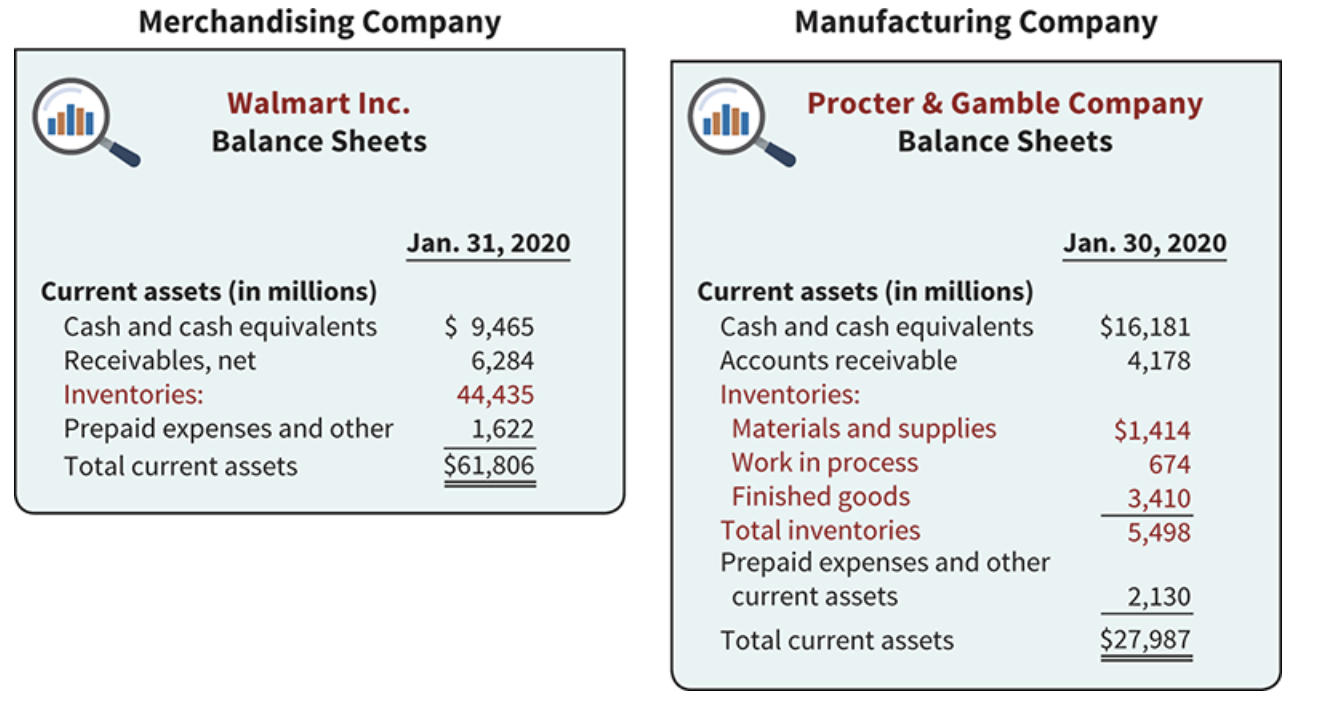
Difference between the inventories for merchandising vs manufacutring companies
2
What is the Flow of Costs Through Manufacturing and Merchandising Companies
PS: Assets have a normal debit balance, so, for example, in raw materials the credit balance is Materials used since its decreasing the amount of raw materials since its being used
PS: COGM = Beginning WIP Inventory + Direct materials Used + Direct Labor + Manufacturing Overhead - Ending WIP Inventory
PS: COGS = Beginning FG Inventory + COGM - Ending FG Inventory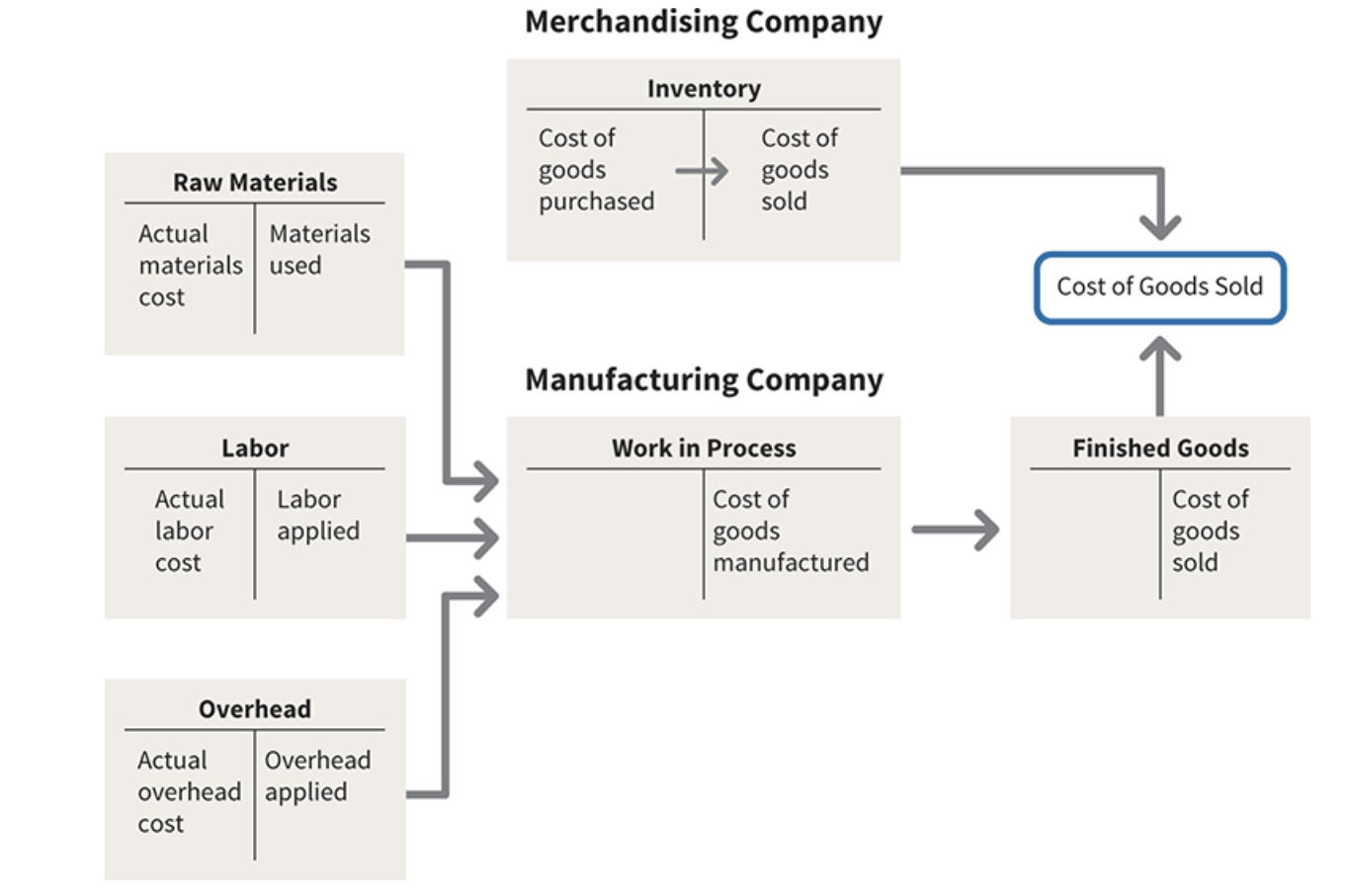
PS: COGM = Beginning WIP Inventory + Direct materials Used + Direct Labor + Manufacturing Overhead - Ending WIP Inventory
PS: COGS = Beginning FG Inventory + COGM - Ending FG Inventory
3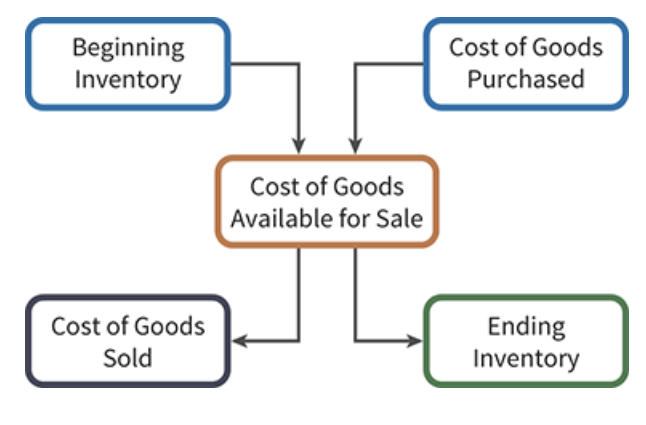
Inventory Cost Flow
4
COGS Formula
(Two you must know)
(Two you must know)
1) COGS = Beginning FG Inventory + COGM - Ending FG Inventory
2) {Shown in Image}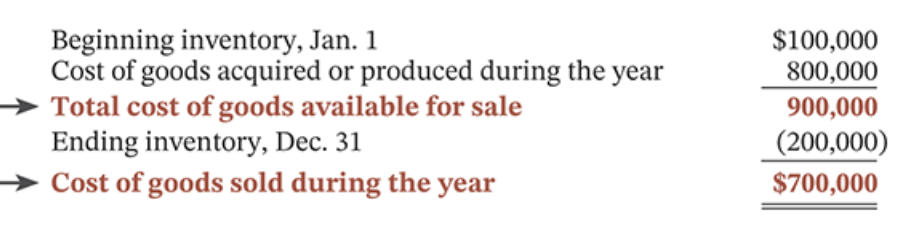
2) {Shown in Image}
5
Perpetual Inventory System
vs
Periodic Inventory System
vs
Periodic Inventory System
Perpetual Inventory System: Continously tracks and updates the inventory account
Periodic Inventory System: Counts the Inventory at the end of each period (They Get the Beginning Invnetory + Purhcases - Ending Inventory = COGS, to find the COGS)
Periodic Inventory System: Counts the Inventory at the end of each period (They Get the Beginning Invnetory + Purhcases - Ending Inventory = COGS, to find the COGS)
6
Buying Inventory (J/E)
1) Perpetual Inventory System
2) Periodic Inventory System
1) Perpetual Inventory System
2) Periodic Inventory System
1) Perpetual Inventory System
Dr Inventory
__Cr Cash or Accounts Payable
2) Periodic Inventory System
Dr Purchases
__Cr Cash or Accounts Payable
Dr Inventory
__Cr Cash or Accounts Payable
2) Periodic Inventory System
Dr Purchases
__Cr Cash or Accounts Payable
7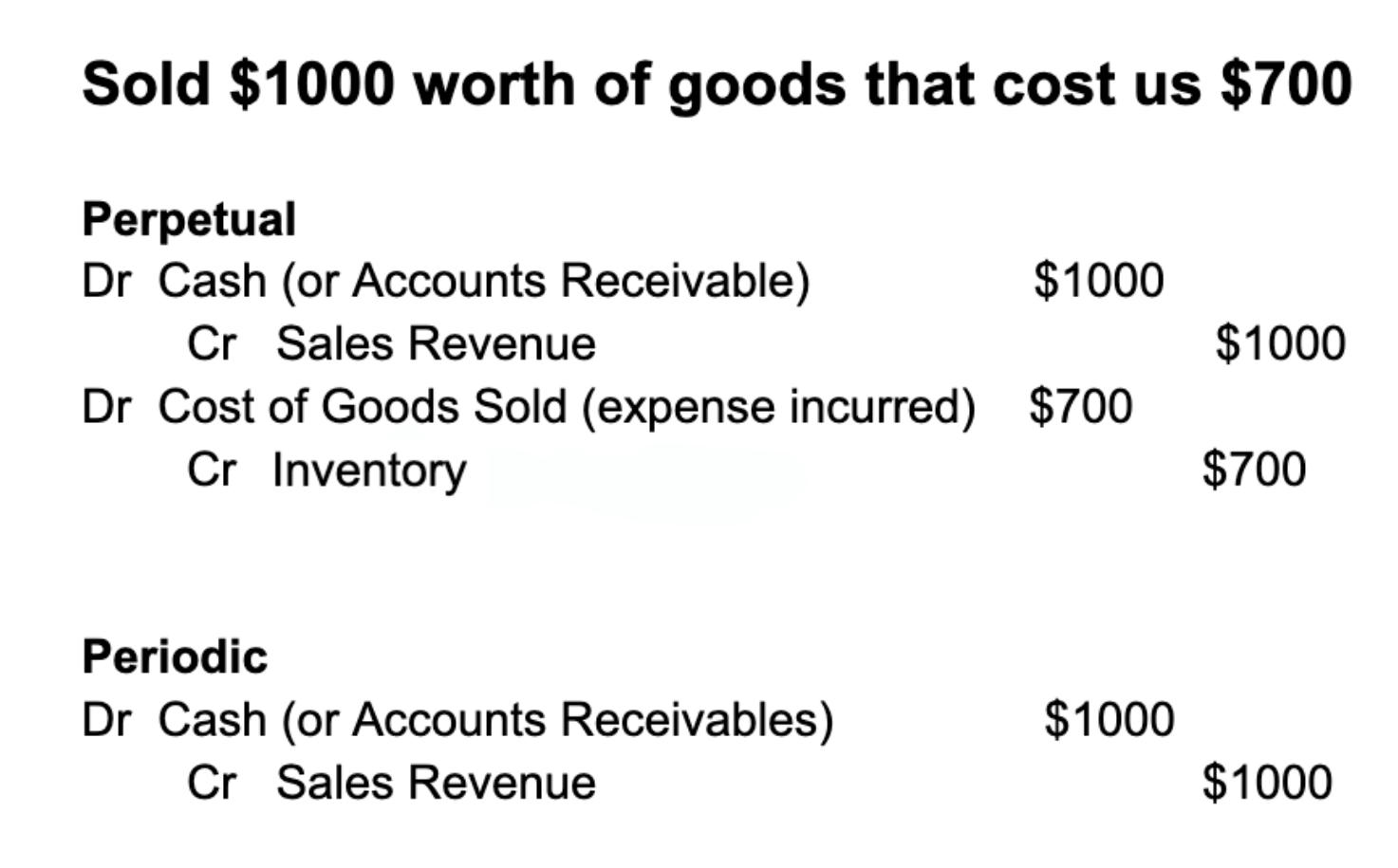
Sold \$1000 worth of goods that cost us \$700 (J/E) for,
- Perpetual Inventory System
- Periodic Inventory System
- Perpetual Inventory System
- Periodic Inventory System
8
In what types of journal entries, does the Perpetual method not use Contra (Special) accounts.
*Special is not a technical accounting name btw, I just think it special
(YOU MIGHT NEED THIS, THIS IS WHAT YOU NEEDED FOR THE LAST CLASS)
*Special is not a technical accounting name btw, I just think it special
(YOU MIGHT NEED THIS, THIS IS WHAT YOU NEEDED FOR THE LAST CLASS)
Purchase (Purchase Returns, Purchase Discounts, Purchase Allowances) DO NOT use contra (special) accounts
Sales (Sales Returns, Sales Discounts, Sales Allowances) ALWAYS use contra (special) accounts. (PS: The contra-account used is the same for both perpetual and periodic)
Sales (Sales Returns, Sales Discounts, Sales Allowances) ALWAYS use contra (special) accounts. (PS: The contra-account used is the same for both perpetual and periodic)
9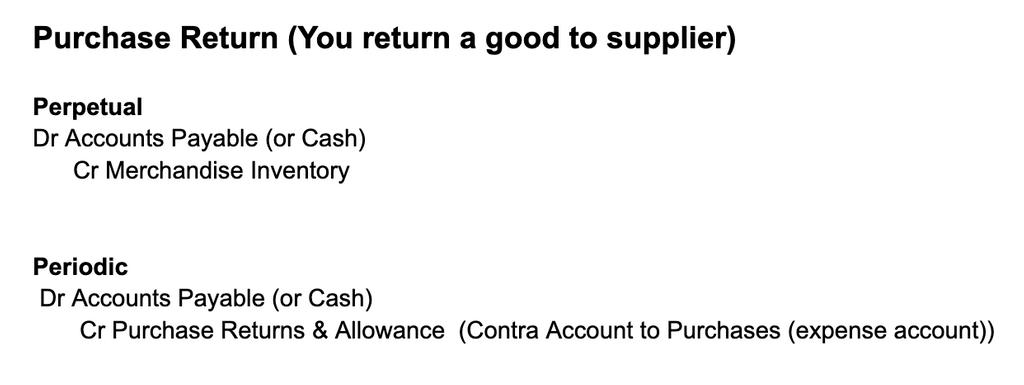
Purchase Return (J/E) for,
1) Perpetual Inventory System
2) Periodic Inventory System
1) Perpetual Inventory System
2) Periodic Inventory System
10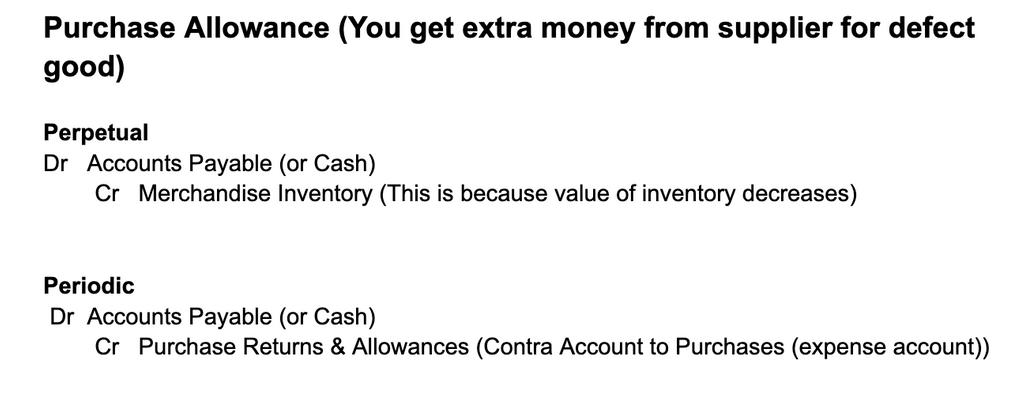
Purchase Allowance (J/E) for,
-Perpetual Inventory System
-Periodic Inventory System
-Perpetual Inventory System
-Periodic Inventory System
11
Purchase Discount (J/E) for,
-Perpetual Inventory System
-Periodic Inventory System
-Perpetual Inventory System
-Periodic Inventory System
*Remeber that the Gross Method assumes that the customer will NOT take it, while the Net method assumes the customer WILL take it!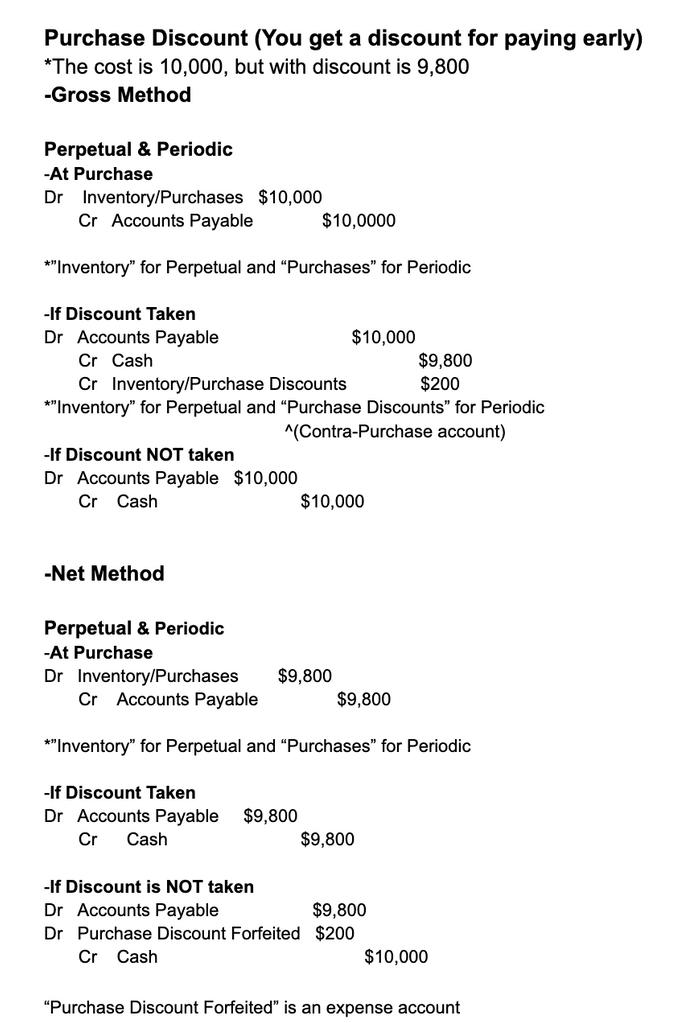
12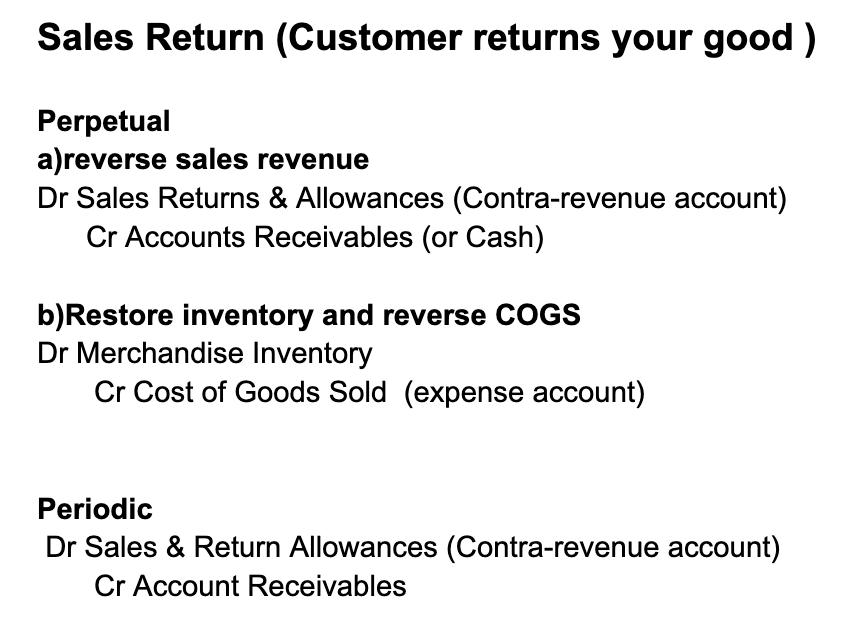
Sales Return (J/E) for,
-Perpetual Inventory System
-Periodic Inventory System
-Perpetual Inventory System
-Periodic Inventory System
13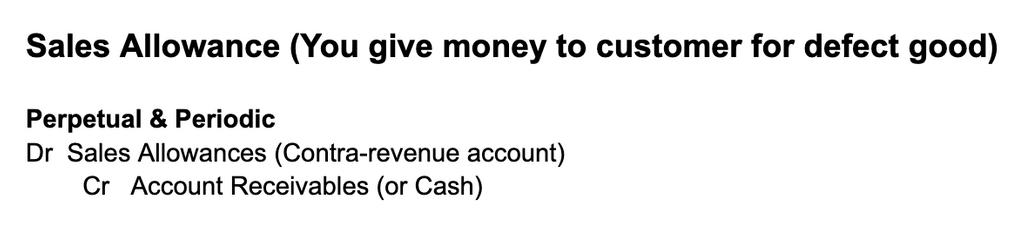
Sales Allowance (J/E) for,
-Perpetual Inventory System
-Periodic Inventory System
-Perpetual Inventory System
-Periodic Inventory System
14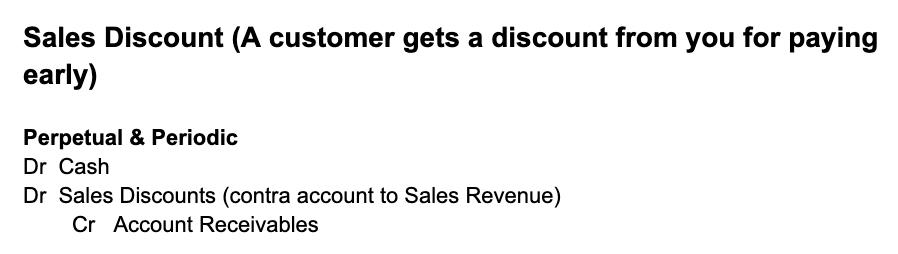
Sales Discount (J/E) for,
-Perpetual Inventory System
-Periodic Inventory System
-Perpetual Inventory System
-Periodic Inventory System
15
Freight in
Freight out
Freight out
Freight in: The transportation cost of a good from the supplier to the ware hourse
Freight out: The transportation cost of a good from the warehouse to the customer
Freight out: The transportation cost of a good from the warehouse to the customer
16
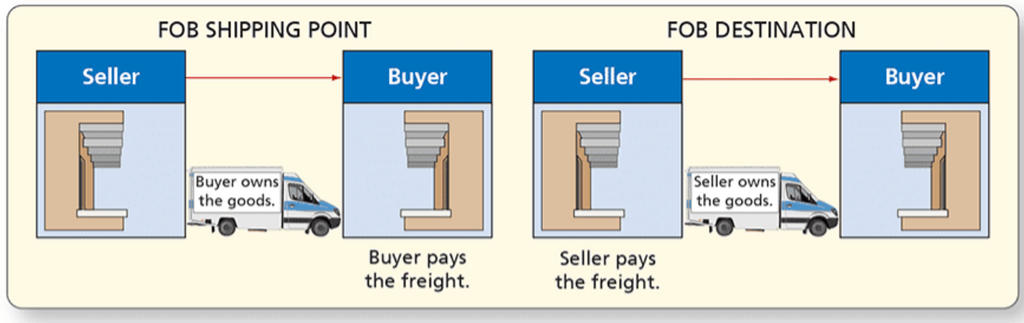
FOB Explained
FOB Shipping Point-Buyer owns goods during shipping. The buyer pays for shipping
FOB Destination-Sellers owns good until delivered to buyer. The seller pays for shipping.
FOB Destination-Sellers owns good until delivered to buyer. The seller pays for shipping.
17
Freight in (J/E) for,
-Perpetual Inventory System
-Periodic Inventory System
-Perpetual Inventory System
-Periodic Inventory System
(REMEMBER to take into account whether its FOB Shipping Point or FOB Destination Point)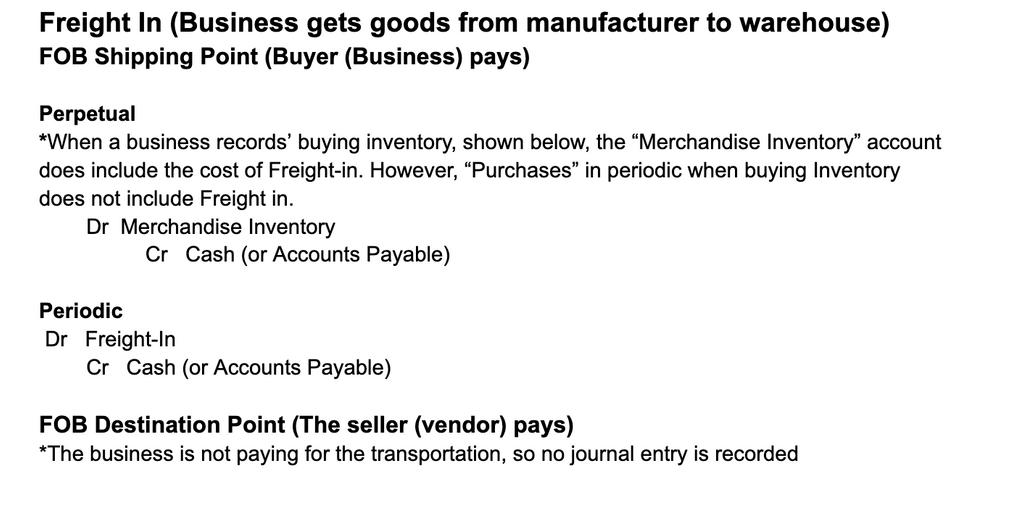
18
Freight out (J/E) for,
-Perpetual Inventory System
-Periodic Inventory System
-Perpetual Inventory System
-Periodic Inventory System
(REMEMBER to take into account whether its FOB Shipping Point or FOB Destination Point)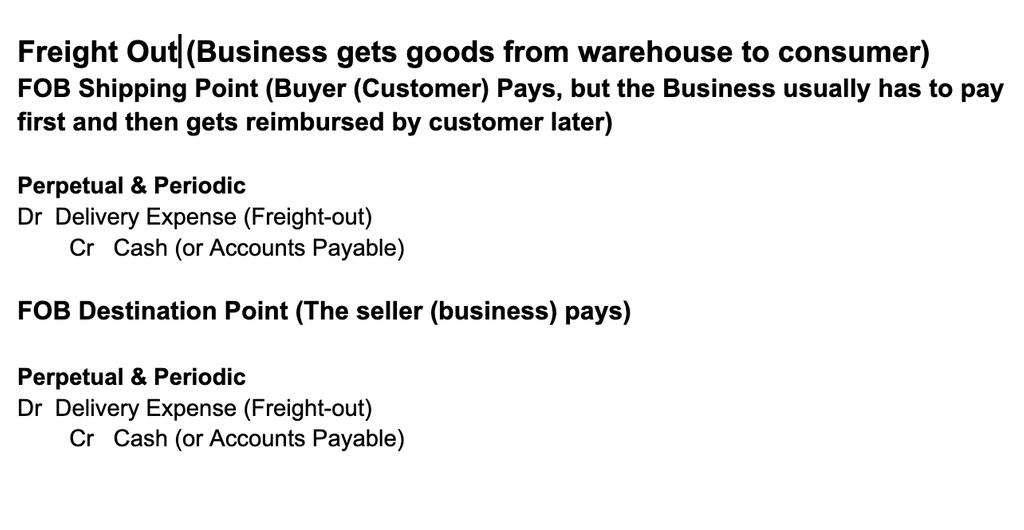
19
1) Shipping product to the final customer costs a product or period cost?
2) Shipping cost from the supplier to the warehouse a product or period cost?
2) Shipping cost from the supplier to the warehouse a product or period cost?
1) Shipping product to the final customer costs a product or period cost? (Frieght Out)
-Period Cost
2) Shipping cost from the supplier to the warehouse a product or period cost? (Freight In)
-Product Cost
-Period Cost
2) Shipping cost from the supplier to the warehouse a product or period cost? (Freight In)
-Product Cost
20
Interest costs related to financing inventory purchases a product or period cost?
Interest costs related to financing inventory purchases a product or period cost?
IS a Period COST!!
IS a Period COST!!
21
Inventory Costing Methods
1) What are they for
2) What Methods do you use?
1) What are they for
2) What Methods do you use?
1) What are they for:
-They are to find the Ending Inventory Value and the Cost of Goods Sold
2)
If the cost of units are the same, then just do
Ending Merchandise Inventory = Number of units on hand x Unit Cost
Cost of Goods Sold = Number of units sold x Unit Cost
If the cost of units are NOT the same, then do either
The four types of methods are
1)Specific Identification
2)First-in, First-out (FIFO)
3)Last-in, First-out (LIFO)
4)Weighted-average
-They are to find the Ending Inventory Value and the Cost of Goods Sold
2)
If the cost of units are the same, then just do
Ending Merchandise Inventory = Number of units on hand x Unit Cost
Cost of Goods Sold = Number of units sold x Unit Cost
If the cost of units are NOT the same, then do either
The four types of methods are
1)Specific Identification
2)First-in, First-out (FIFO)
3)Last-in, First-out (LIFO)
4)Weighted-average
22
Specific Identification
An inventory costing method which is based on the cost of a specific unit of inventory. So, that specific unit has an easily identifiable unit that has a specific cost attached to it.
23
First-in, First-out (FIFO)
An inventory costing method.
The first units purchased are assumed to be the first unit sold. So, the first unit sold has the Cost attached to the first unit purchased.
*Understand on the table why it is FIFO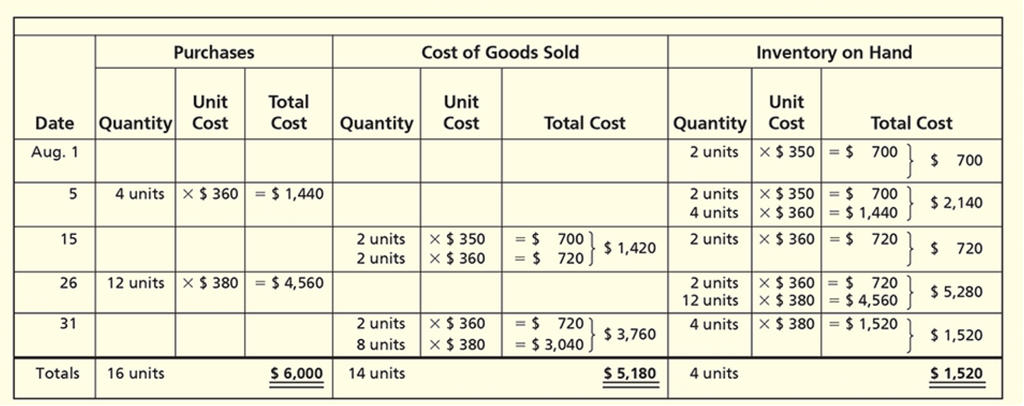
The first units purchased are assumed to be the first unit sold. So, the first unit sold has the Cost attached to the first unit purchased.
*Understand on the table why it is FIFO
24
Last-in, First-out (LIFO)
An inventory costing method.
The last units purchased are assumed to be the first units sold. So, the first unit sold has the Cost attached to the last unit purchased.
*Understand on the table why it is LIFO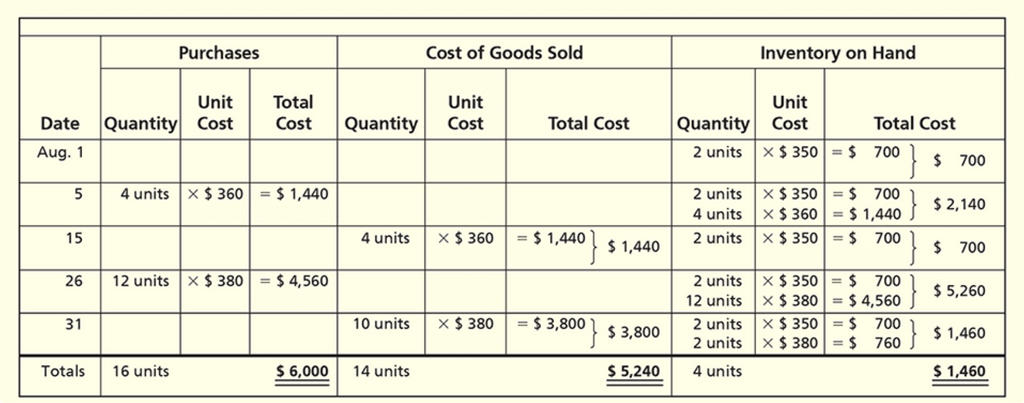
The last units purchased are assumed to be the first units sold. So, the first unit sold has the Cost attached to the last unit purchased.
*Understand on the table why it is LIFO
25
Weighted-Average Method
(aka moving average method)
An inventory costing method.
Weighted-average unit cost = Total Cost of goods available for sale / Number of units available for sale
*Understand on the table why it is weighted-average method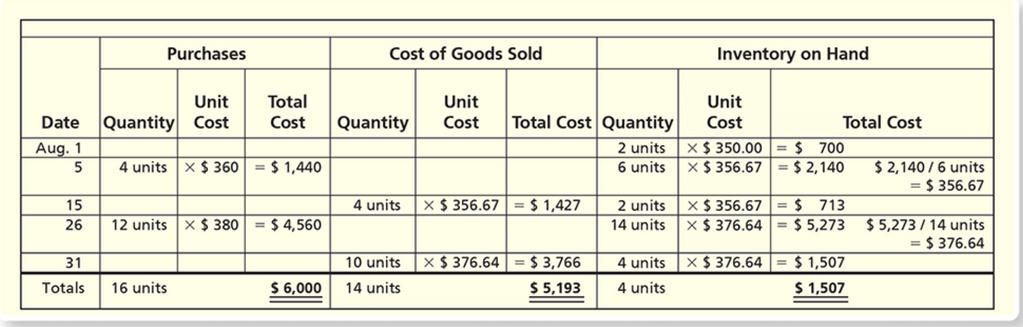
An inventory costing method.
Weighted-average unit cost = Total Cost of goods available for sale / Number of units available for sale
*Understand on the table why it is weighted-average method
26
Effects on the Financial Statements During Periods of Rising and Declining Inventory Costs,
For the four inventory costing method
-Specific Identification
-First-in, First-out (FIFO)
-Last-in, First-out (LIFO)
-Weighted-average
For the four inventory costing method
-Specific Identification
-First-in, First-out (FIFO)
-Last-in, First-out (LIFO)
-Weighted-average
*PS: The income tax will also be higher if the Net Income is Higher. 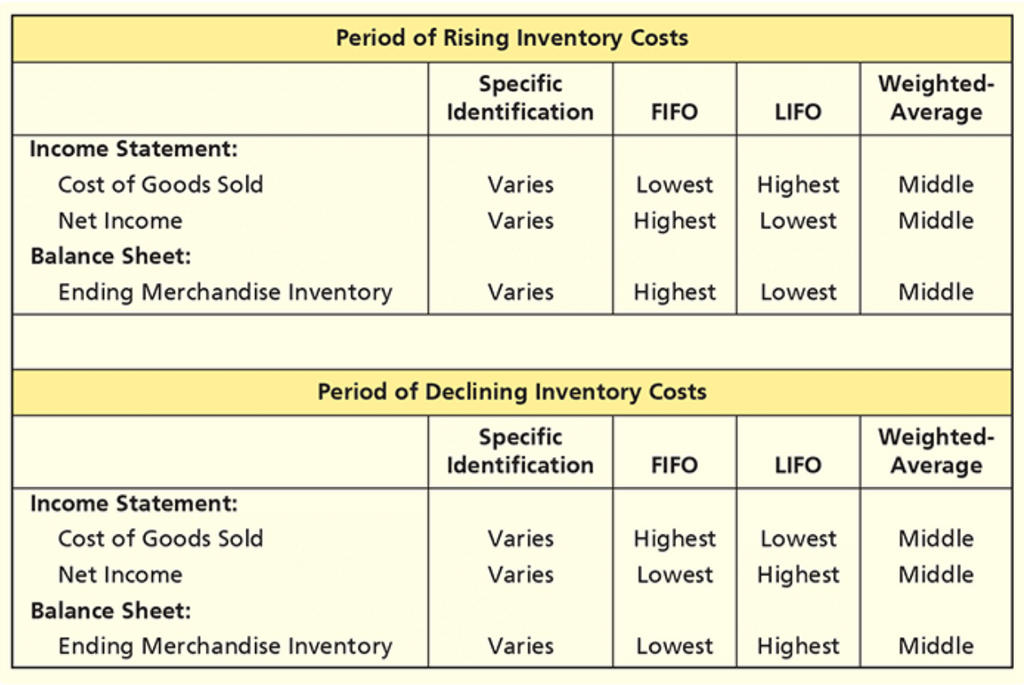
27
1) Explain what the LIFO Reserve is?
2) And why people use it?
3) What is the LIFO Effect?
2) And why people use it?
3) What is the LIFO Effect?
1) The LIFO Rervse Account (also more commonly called the "Allowance to Reduce Inventory to LIFO account") is the difference between the value of Inventory from using FIFO vs LIFO.
2)
-It is common for companies to use FIFO for internal purposes, while using LIFO for tax and external purposes.
-So, in order to have LIFO for external reporting and FIFO for internal reporting, do they need to have a use a LIFO Reserve account (Also called a " Allowance to Reduce Inventory to LIFO account") to go from their their internal financials to their external.
3)
LIFO Effect: Is defined as in ANY change to this LIFO reserve account.
2)
-It is common for companies to use FIFO for internal purposes, while using LIFO for tax and external purposes.
-So, in order to have LIFO for external reporting and FIFO for internal reporting, do they need to have a use a LIFO Reserve account (Also called a " Allowance to Reduce Inventory to LIFO account") to go from their their internal financials to their external.
3)
LIFO Effect: Is defined as in ANY change to this LIFO reserve account.
28
Inventory Adjustment Formula
29
LIFO Liquidation
LIFO liquidation happens when a company using the Last-In, First-Out (LIFO) inventory method sells more inventory than it acquires during a period, dipping into older, cheaper inventory "layers" to fulfill current sales
(When it says "layers" the text book has aa picture to visualize it. In 2025, the invnetory cost \$10, then in the period before that, it cost \$9) (So, the layers are based on acccounting periods)
(When it says "layers" the text book has aa picture to visualize it. In 2025, the invnetory cost \$10, then in the period before that, it cost \$9) (So, the layers are based on acccounting periods)
More Business & economics flashcards
Year 2 Economics Key TermsBusiness & economics · EnglishluluFacilities Layout and Location PlanningBusiness & economics · EnglishPsalmsFederal Taxation (C239)Business & economics · EnglishdNature of economicsBusiness & economics · Englishan OutLearn studentH2 klantgedragBusiness & economics · DutchDemiBLesson 1: Overview of Cost Management and StrategyBusiness & economics · EnglishDionFree tradeBusiness & economics · EnglishEliasChapter 10 and 13 quiz Business & economics · Englishmattmc03Finance Chapter 5 Terms + EquationsBusiness & economics · EnglishGavynF2 Related Party TransactionsBusiness & economics · EnglishEllaPoABusiness & economics · EnglishLeifiling requirements Business & economics · Englishachu
All Business & economics decks
Study these decks in the app
Free on iPhone, Android, Mac and the web. Add any deck to your account in one tap.

