Veterinary Blood Groups and Transfusions
Study these flashcardsFree · spaced repetition · iPhone, Android, Mac & web
All cards
1
Why are blood groups clinically important in veterinary medicine?
To provide compatible transfusions, prevent neonatal isoerythrolysis, and advise breeders.
2
What determines an animal's blood group?
Genetically inherited antigens, usually glycoproteins or glycolipids, on RBC surfaces.
3
What does positive or negative mean for an RBC antigen?
Positive means the antigen is present; negative means it is absent.
4
What are alloantibodies (isoantibodies)?
Antibodies directed against RBC antigens from another animal of the same species.
5
What are naturally occurring alloantibodies? EXAM
Antibodies present without previous transfusion or pregnancy-related sensitization.
- risk of adverse rxn on FIRST transfusion
- risk of adverse rxn on FIRST transfusion
6
What are acquired alloantibodies, and how do they develop?
Antibodies formed after exposure to foreign RBC antigens through mismatched transfusion or pregnancy.
- second time exposed = rxn
- second time exposed = rxn
7
What causes a hemolytic transfusion reaction?
Recipient alloantibodies bind donor RBC antigens, causing agglutination and hemolysis (destruction of transfused RBCs).
8
What are the two goals of recipient-donor screening?
Prevent incompatible transfusions and minimize sensitization (new antibody formation) to foreign RBC antigens
9
What is the difference between blood typing and crossmatching?
Typing identifies RBC antigens; crossmatching detects antibodies causing donor-recipient incompatibility.
10
What is the principle behind blood typing?
Known antibodies (antisera) bind specific patient RBC antigens, producing hemagglutination.
11
What are the four methods of blood typing?
Card agglutination, immunochromatographic cartridges, gel column agglutination, and tube agglutination.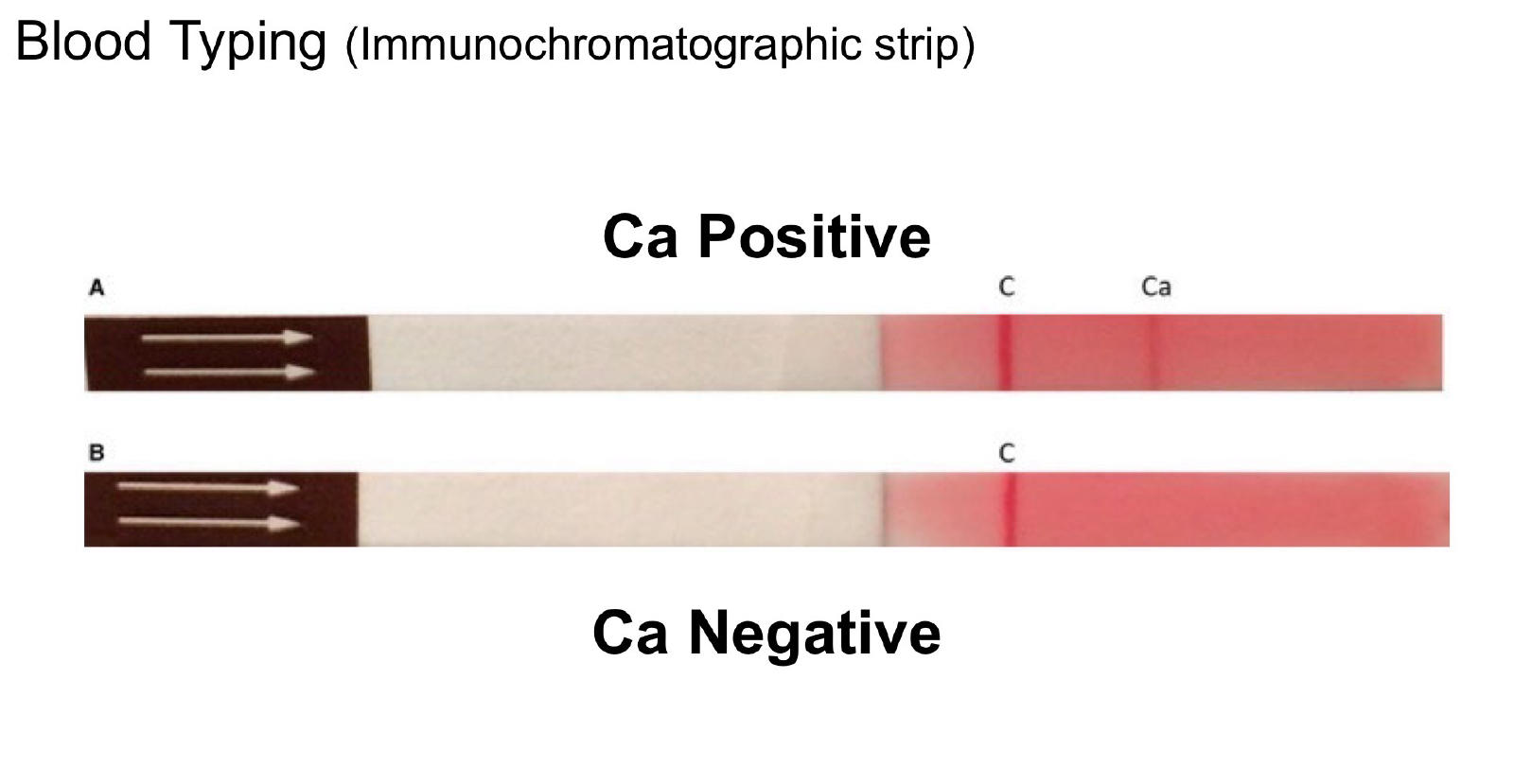
12
Why can IMHA interfere with blood typing?
Autoagglutination may produce false-positive results; use saline or autoagglutination controls.
- they destroy RBCs so much
- they destroy RBCs so much
13
What is the purpose of crossmatching?
To detect antibody-mediated incompatibilities involving RBC antigens, including those not routinely typed. (mix donor + recipient components)
14
What is a MAJOR crossmatch? EXAM
Recipient plasma/serum + donor RBCs; detects recipient antibodies against donor cells.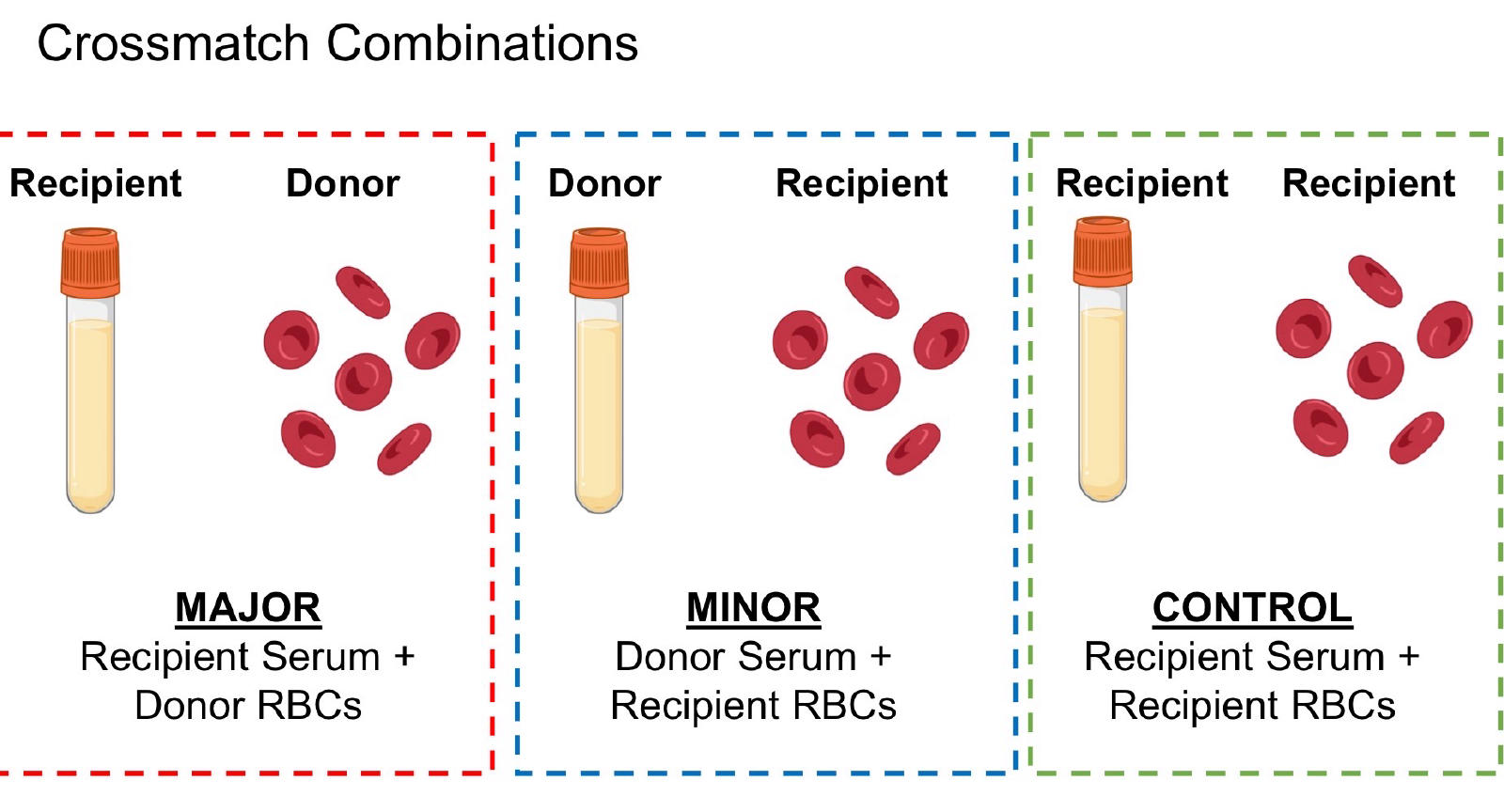
15
What is a MINOR crossmatch? EXAM
Donor plasma + recipient RBCs; detects donor antibodies against recipient cells.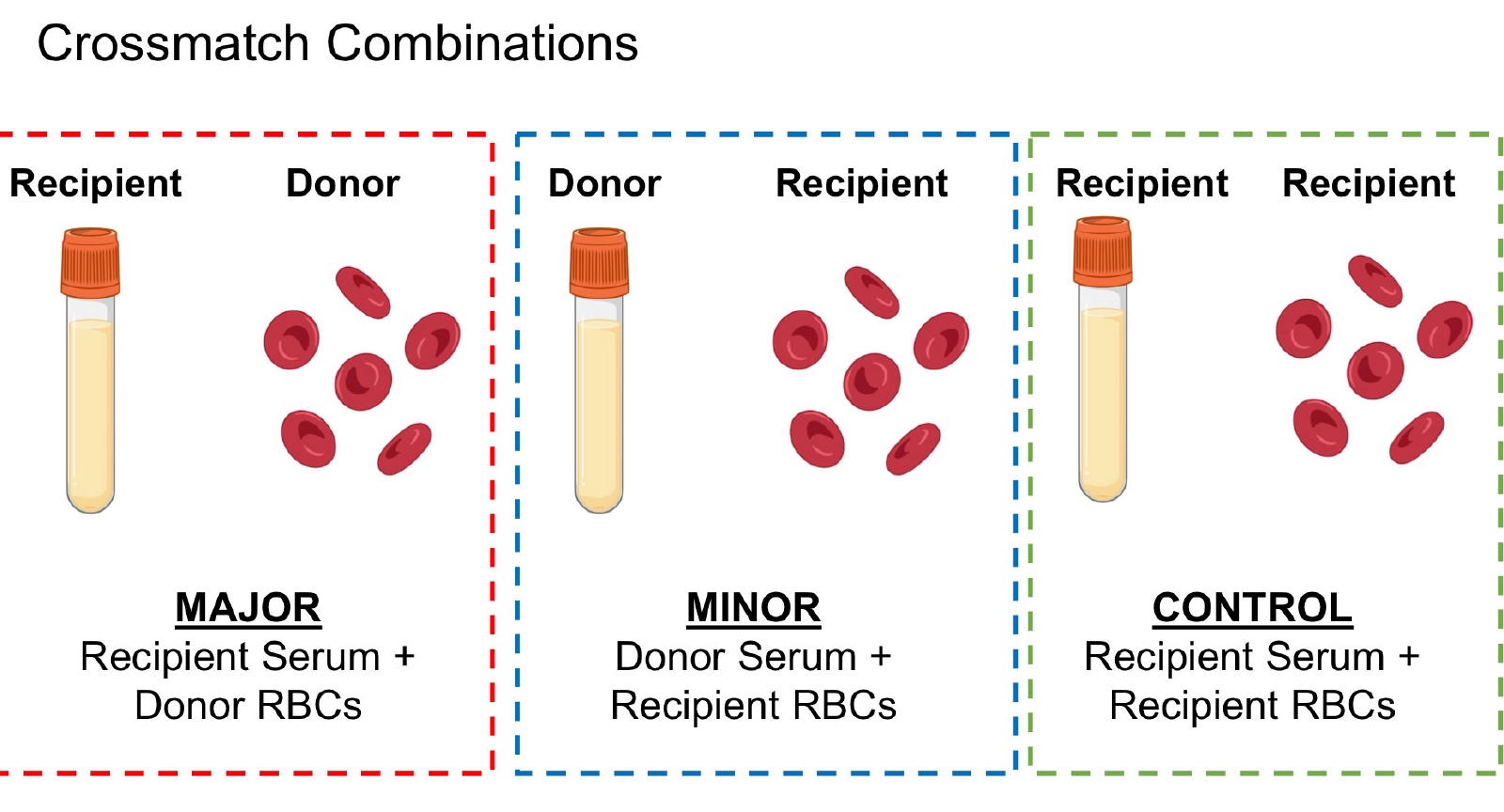
16
What is the control used during crossmatching?
Recipient plasma + recipient RBCs to detect autoagglutination.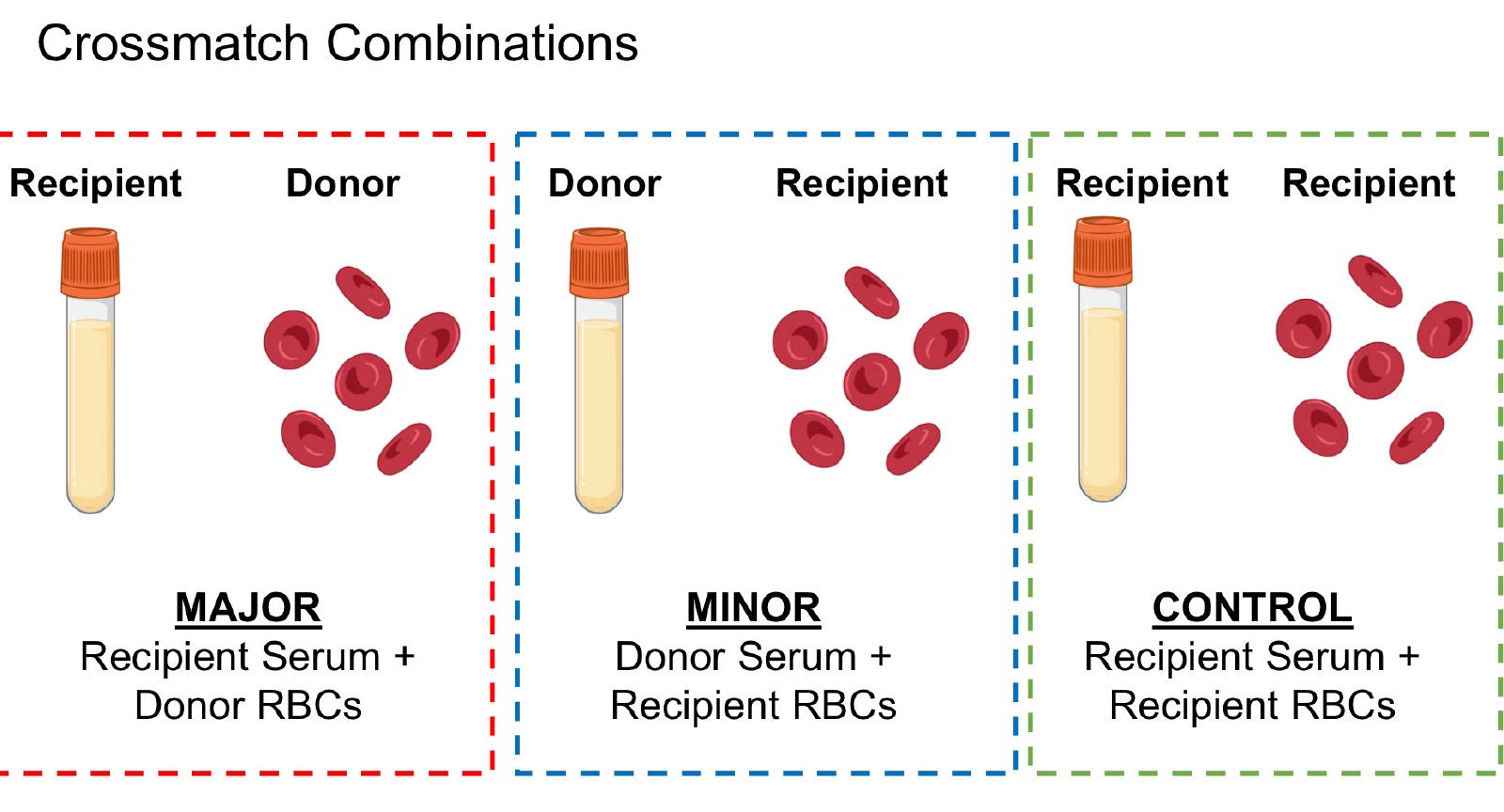
17
What findings indicate an incompatible crossmatch?
Agglutination or hemolysis, detected macroscopically or microscopically.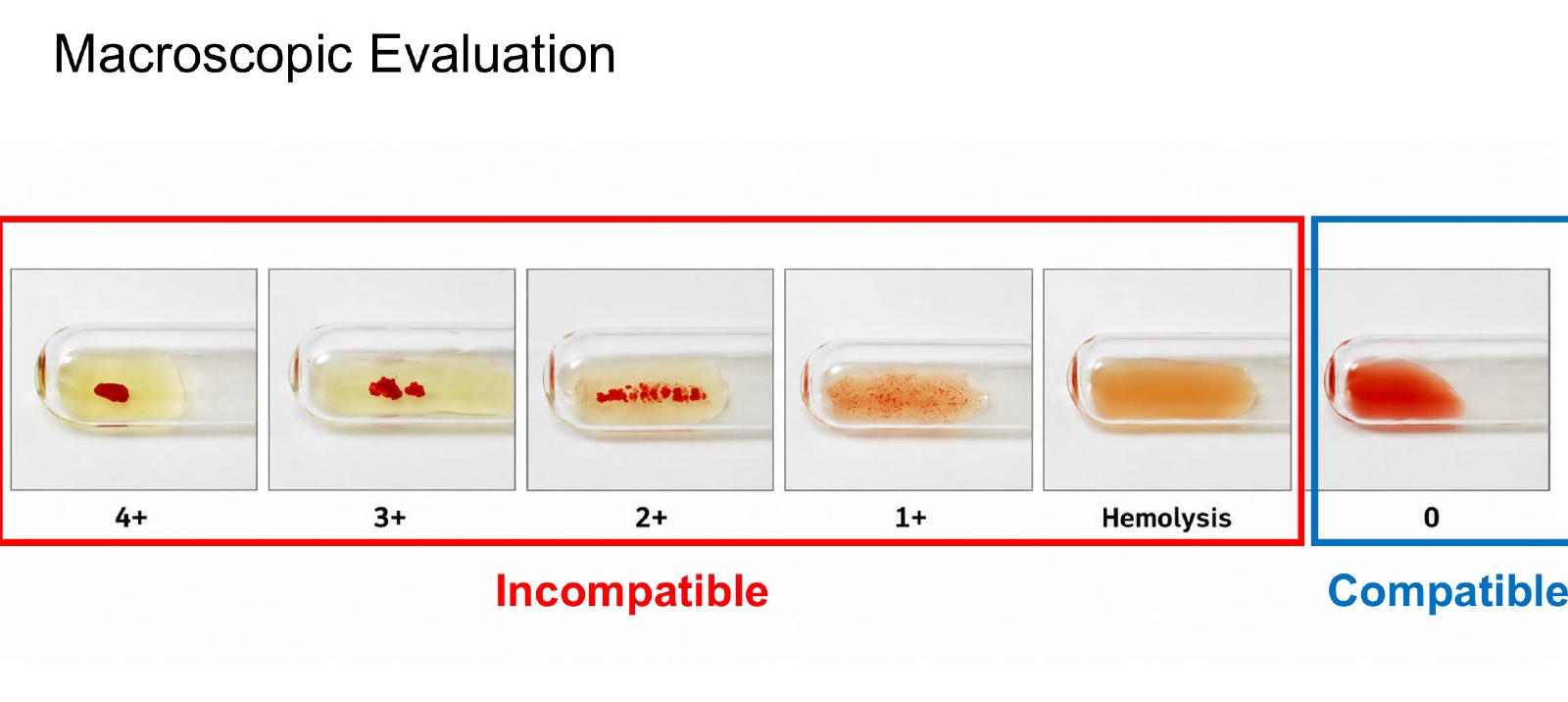
18
What does DEA stand for, and which canine antigen is MOST important?
Dog erythrocyte antigen; DEA 1 is most important and occurs in approximately 50–60% of dogs.
- do not have naturally occurring alloantibodies
- do not have naturally occurring alloantibodies
19
Why is canine DEA 1 especially clinically important?
It is highly antigenic and causes strong alloantibody responses after sensitization.
20
Do dogs have clinically important naturally occurring alloantibodies?
Generally no; weak natural anti-DEA 3, 5, or 7 antibodies may cause delayed RBC destruction.
21
Why is a dog's FIRST mismatched transfusion usually less dangerous than a later one?
Dogs generally lack natural anti-DEA 1, but the first mismatch can sensitize them.
22
Which recipients can receive DEA 1-negative donor blood?
Both DEA 1-negative and DEA 1-positive dogs.
23
Which recipients can receive DEA 1-positive donor blood?
Only DEA 1-positive dogs; DEA 1-negative recipients should receive DEA 1-negative blood.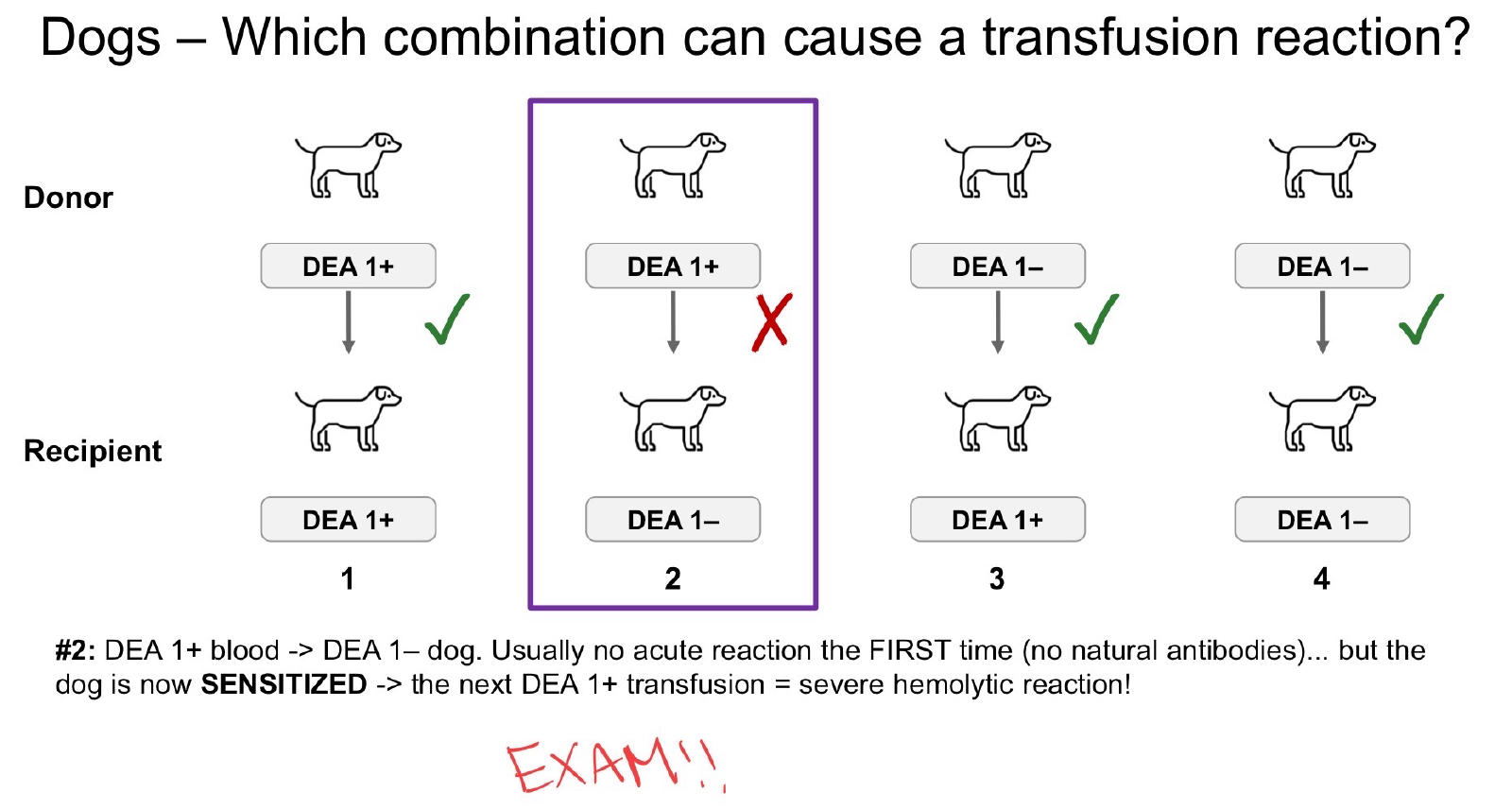
24
When is crossmatching recommended for a transfusion-naive dog?
It is ideal but not routinely required; it is recommended in IMHA to find a compatible unit.
25
When is crossmatching REQUIRED in previously transfused dogs?
If previously transfused more than 4 days ago, even with prior compatible typing or crossmatching.
26
What are the three feline AB blood types, and which is most common?
Type A, type B, and type AB; type A is most common, while AB is rare.
27
What is the feline Mik antigen?
A non-AB RBC antigen; feline erythrocyte antigen 1 (FEA 1) is believed to be the same as Mik.
28
Which naturally occurring alloantibodies do type B cats possess? What happens if a type B cat receives type A blood?
1. STRONG anti-A antibodies.
2. Severe, potentially fatal hemolysis can occur on the FIRST transfusion, even with about 1 mL.
2. Severe, potentially fatal hemolysis can occur on the FIRST transfusion, even with about 1 mL.
29
Which naturally occurring alloantibodies do type A cats possess?
Weak anti-B antibodies, causing shortened survival of transfused type B RBCs.
30
Do type AB cats have naturally occurring anti-A or anti-B antibodies?
No; they lack both anti-A and anti-B.
31
Why can two cats with matching AB blood types still have incompatible blood?
Mik-negative cats may possess anti-Mik antibodies against Mik-positive donor RBCs.
32
What blood typing precautions are emphasized for cats?
Type ALL donors and recipients, and confirm type B or AB results with another method.
33
Which RBC blood types should type A and type B cats receive?
Type A cats receive type A; type B cats receive type B.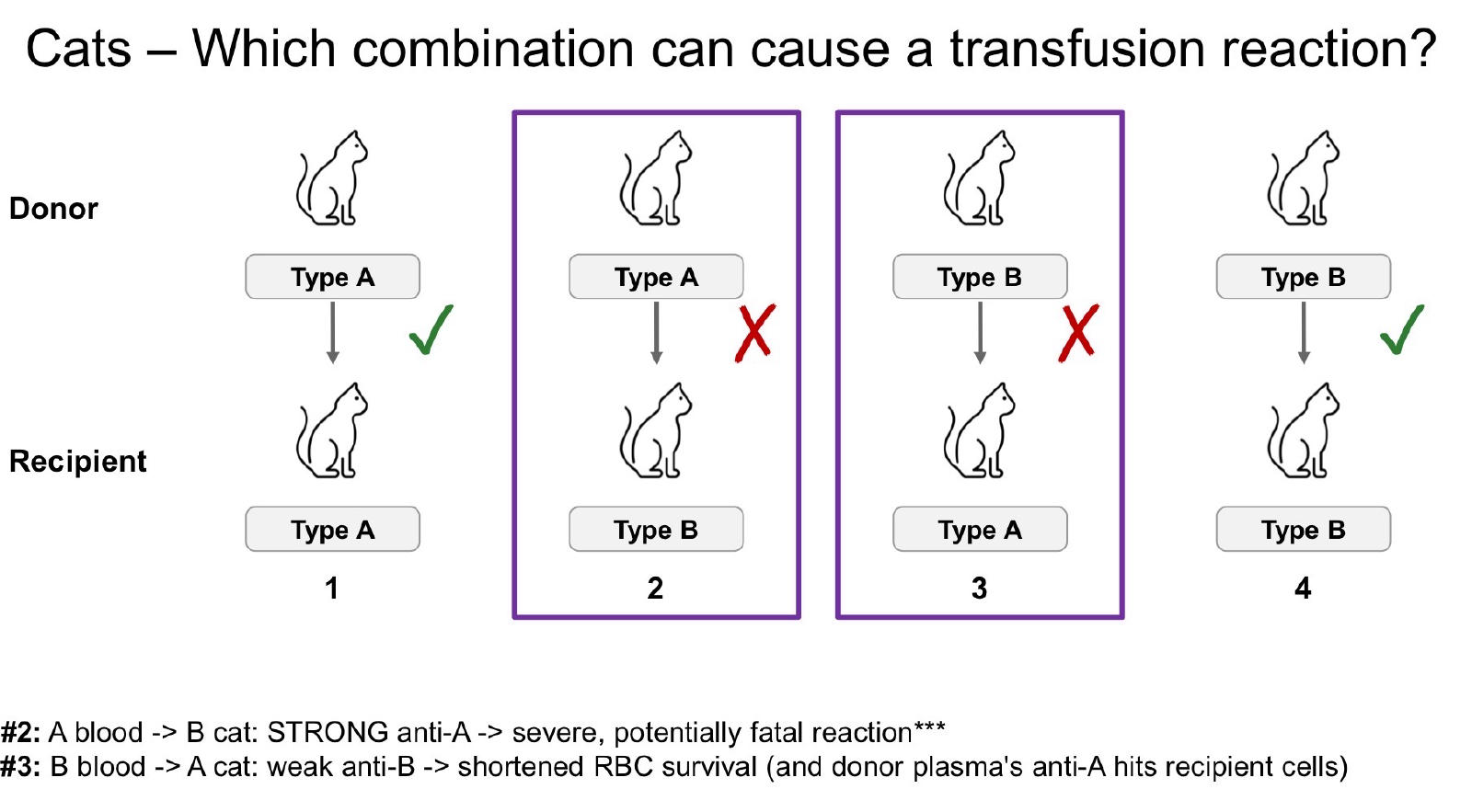
34
What can a type AB cat receive if type AB blood is unavailable?
Type A packed RBCs, because they contain very little donor plasma.
35
When should cats be crossmatched?
Before EVERY transfusion is recommended; REQUIRED if previously transfused more than 2 days ago.
36
Which feline breeding combination creates the classic risk for neonatal isoerythrolysis?
Type B queen × type A tom, producing type A or AB kittens.
37
How does neonatal isoerythrolysis develop in kittens?
Anti-A antibodies in the type B queen's colostrum are absorbed during the first 12–24 hours and destroy kitten RBCs.
38
How can feline neonatal isoerythrolysis be prevented?
Type before breeding; for at-risk kittens, avoid the queen's colostrum for ~24 hours and provide a suitable foster queen or milk replacer. The reverse mating is not the classic risk.
39
How many major equine blood group systems are recognized?
Seven: A, C, D, K, P, Q, U; more than 30 factors create over 400,000 possible combinations.
40
What is the difference between an equine blood group system and factor?
The uppercase letter identifies the system; lowercase identifies its antigen, e.g., Aa is factor a in system A.
41
Which three equine RBC factors are MOST clinically relevant?
Aa, Qa, and Ca; Aa and Qa can cause severe reactions and NI, while Ca reactions are usually weaker.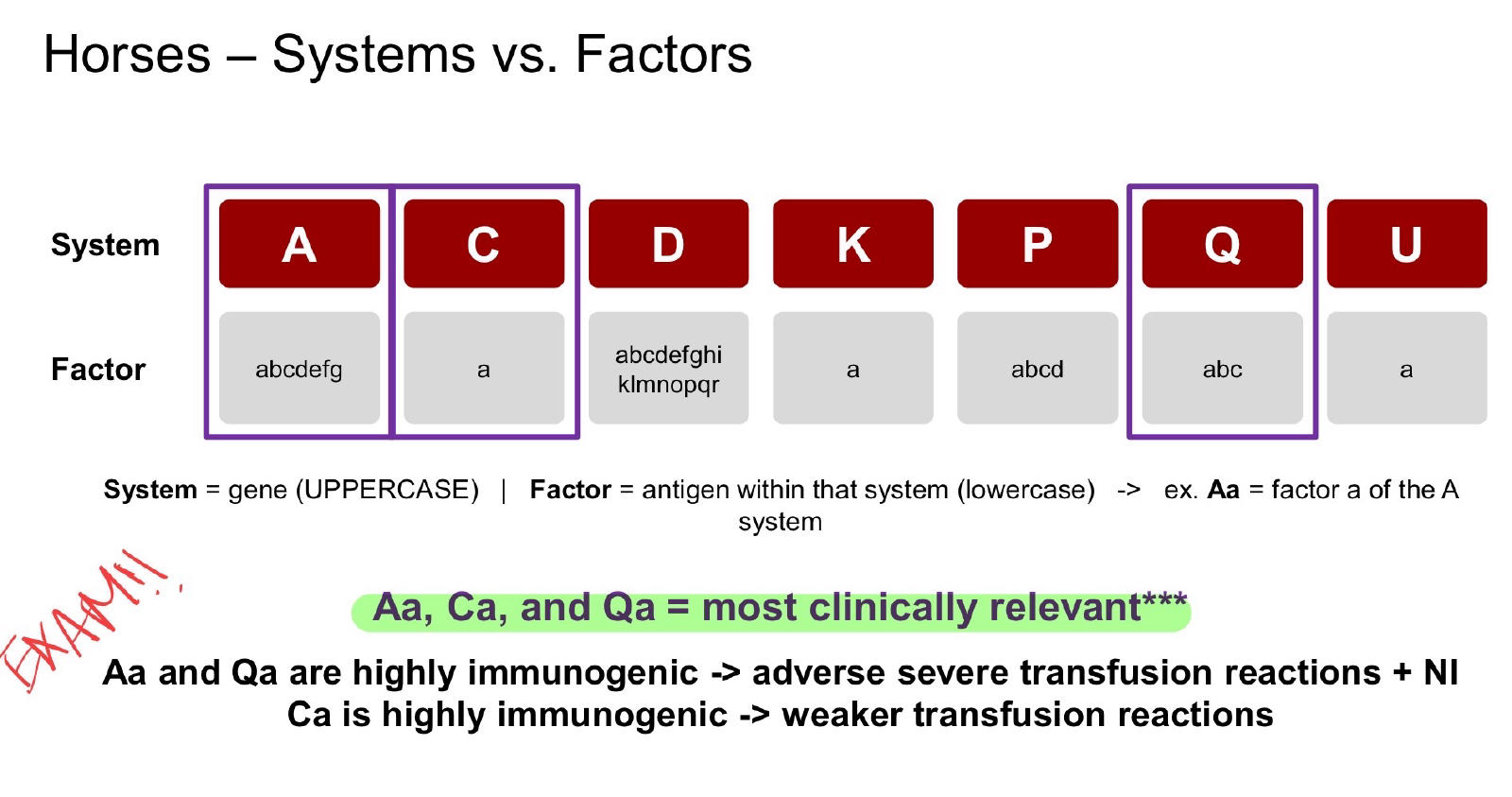
42
What is the donkey factor, and why is it important?
An antigen unique to donkeys that horses lack; it contributes to neonatal isoerythrolysis and alloimmune thrombocytopenia in mules.
43
Do horses have naturally occurring alloantibodies?
About 90% do not; around 10% have anti-Aa or anti-Ca. Anti-Aa can cause acute hemolysis, while anti-Ca is usually less significant.
44
How do horses acquire alloantibodies after sensitization?
Through previous transfusion or pregnancy, especially against highly immunogenic Aa and Qa factors.
45
What is the ideal equine blood donor?
An Aa-negative, Qa-negative gelding with no transfusion history and a negative antibody screen; no universal donor exists.
46
What pre-transfusion testing is recommended for horses?
Type donor and recipient as closely as possible, especially A, C, Q, and perform a major crossmatch.
47
What are the transfusion guidelines for other species with limited blood typing?
Prefer a never-transfused donor of the same species, breed, use a close relative if necessary, and ALWAYS crossmatch.
More Medicine & health flashcards
PNP Management 3: Exam #3Medicine & health · EnglishAddieAntimicrobial Drugs Part 1Medicine & health · EnglishKatlynKECOMPETENCY STANDARDS IN THE DIFFERENT AREASMedicine & health · EnglishLlanceInteractions of X-rays with MatterMedicine & health · Englishan OutLearn studentmedlist 101 week 1 Medicine & health · EnglishkjThyroid PharmMedicine & health · EnglishMadiruth2#4 - Classification SystemsMedicine & health · EnglishagrawrockCardiac Boards ReviewMedicine & health · EnglishMadiAnatomy of Facial Muscles and NervesMedicine & health · EnglishPeyschCancer de endometrio Medicine & health · SpanishFERNANDAFluid & Electrolyte DisordersMedicine & health · EnglishAveryFecal AnalysisMedicine & health · EnglishJESSQTRAN
Study these decks in the app
Free on iPhone, Android, Mac and the web. Add any deck to your account in one tap.

