Immunology: B Cell Activation and Antibody Functions
Study these flashcardsFree · spaced repetition · iPhone, Android, Mac & web
All cards
1
What are the three major functions of antibodies?
1. Neutralization blocks attachment or harmful activity
2. Opsonization helps phagocytes take up a target
3. Complement activation helps eliminate target
2. Opsonization helps phagocytes take up a target
3. Complement activation helps eliminate target
2
How do B cells initially recognize antigens?
Their B-cell receptors (BCRs) bind directly to antigens.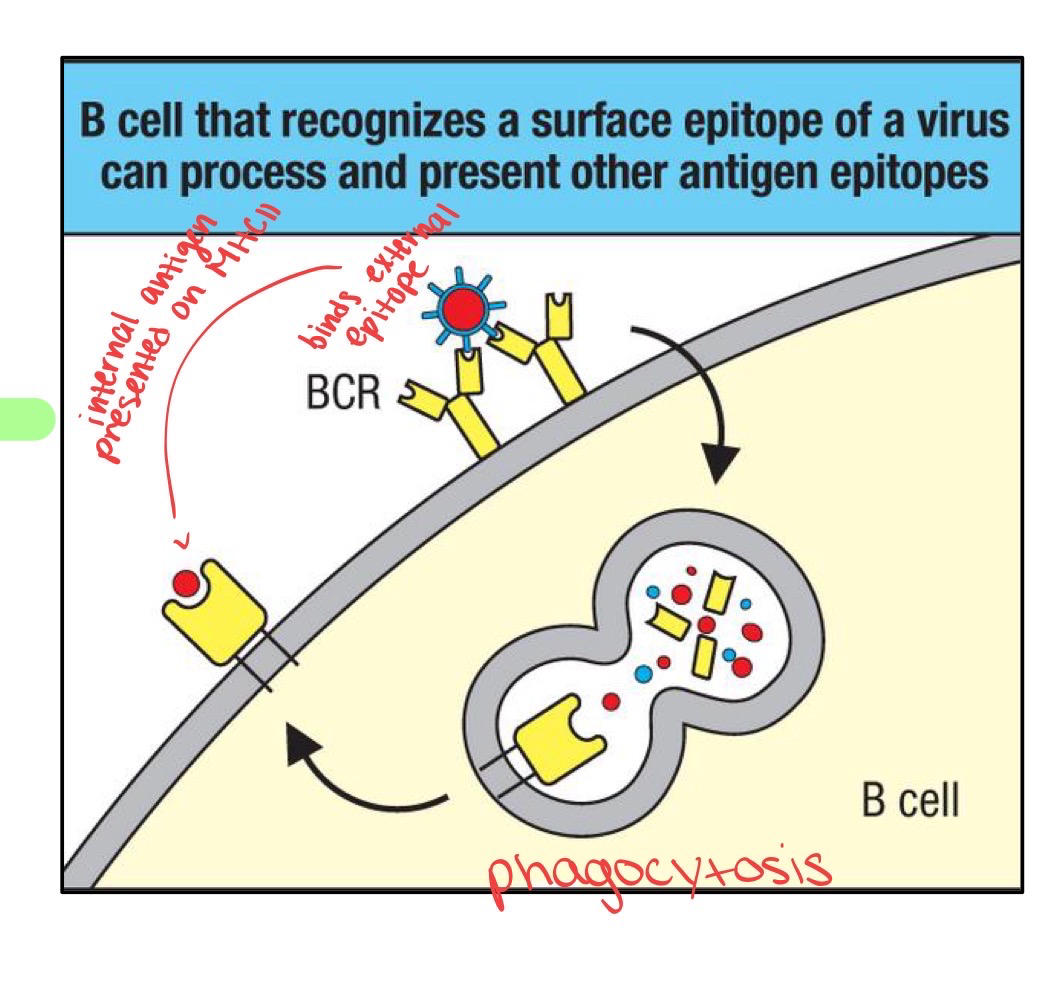
3
What happens after a BCR binds its specific antigen?
The B cell internalizes and processes the antigen.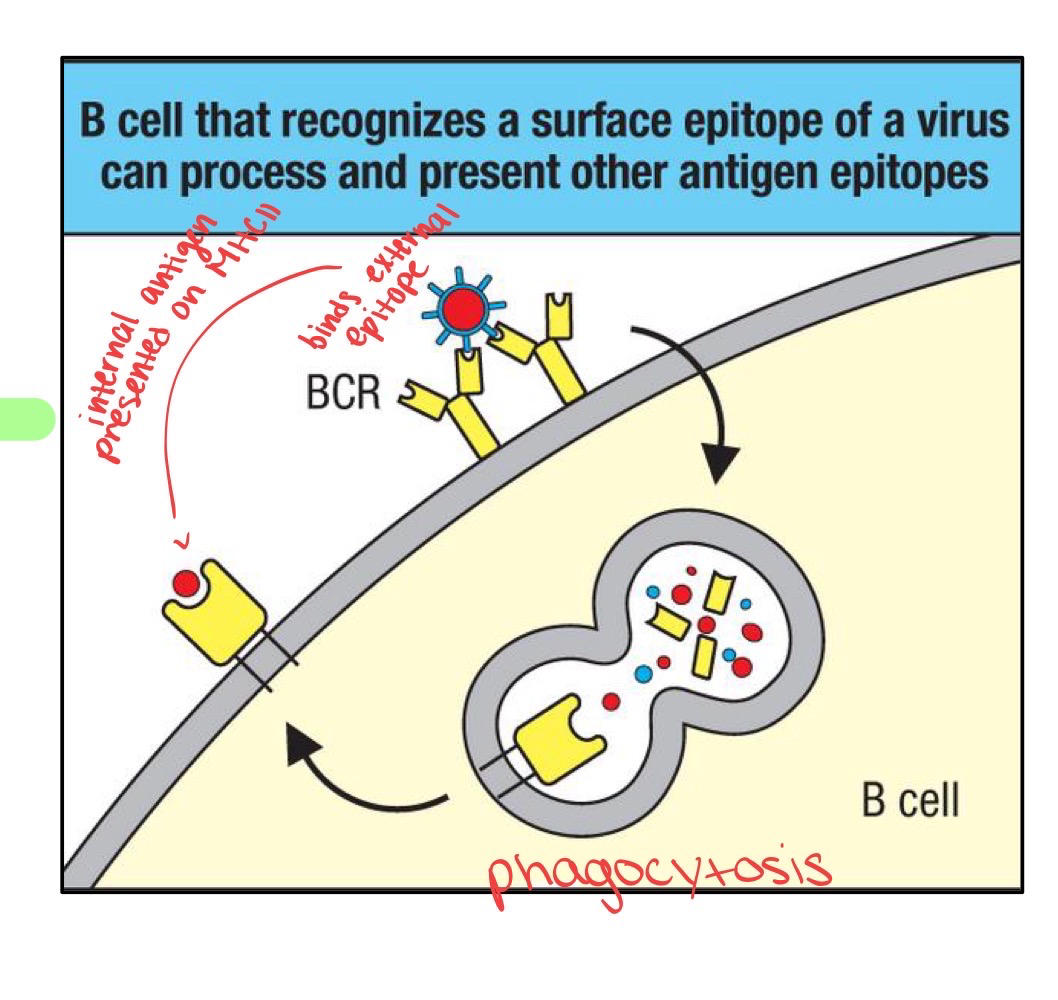
4
How do B cells present processed antigens to helper T cells?
By displaying peptide fragments on MHC II which activates a CD4 T cell with matching specificity.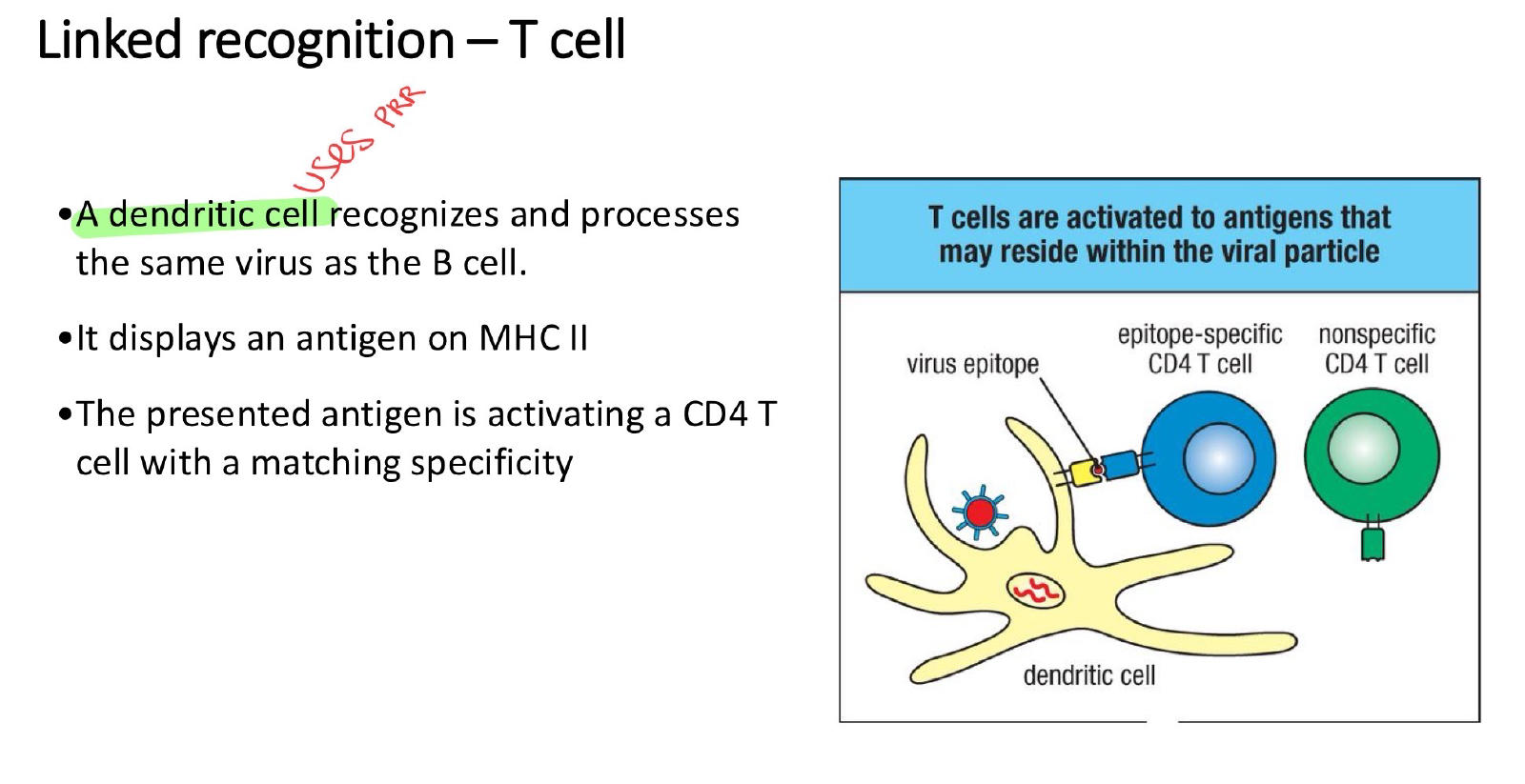
5
What is linked recognition?
A B cell and helper T cell recognize different epitopes from the same physically linked antigen.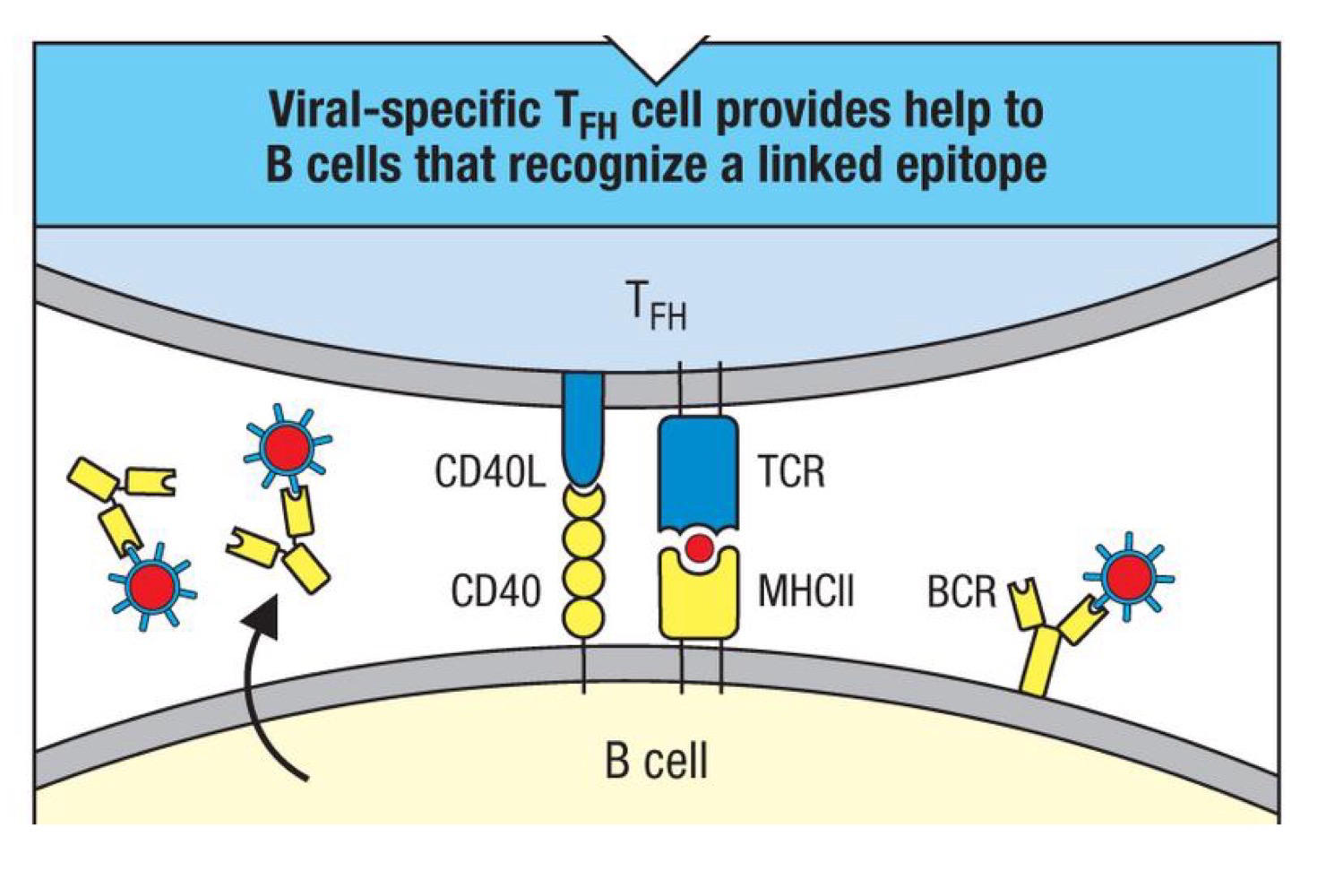
6
Do B cells and helper T cells need to recognize identical epitopes?
No; their epitopes must come from linked antigenic material.
7
Which helper T-cell subset provides specialized help to B cells?
T follicular helper (Tfh) cells.
8
What do cytokines from Tfh cells do?
Promote B-cell proliferation and guide differentiation.
9
What type of antigen typically causes T-dependent B-cell activation?
Protein antigens.
10
What are the major outcomes of T-dependent B-cell activation?
Class switching, affinity maturation, and immune memory with the help of T-cell signals
11
What is the typical antibody response to T-independent antigens?
An early response by IgM, using a strong BCR engagement
12
Where do B cells encounter tissue-derived antigens?
In lymph node follicles.
13
Where do activated B cells and helper T cells meet in lymph nodes?
At the T-B cell border (end of germinal centers/follicles)
14
Which secondary lymphoid organ responds to blood-borne antigens?
The spleen.
15
What is clonal expansion of B cells?
Proliferation of antigen-specific B cells after activation.
16
What is a germinal center?
A structure within a B-cell follicle where activated B cells proliferate and improve antibody binding.
17
What is somatic hypermutation?
Point mutations in antibody variable-region genes that create different binding abilities.
18
Do all mutations during somatic hypermutation improve antibody binding?
No; some improve binding while others do not.
19
What is affinity maturation?
Selection of B cells with improved antigen-binding affinity after somatic hypermutation.
20
Why do higher-affinity B cells survive better in germinal centers?
They capture antigen more effectively and receive more T-cell help.
21
What happens to germinal-center B cells that cannot obtain enough antigen or T-cell help?
They undergo apoptosis.
22
What is antibody class switching?
Changing the antibody heavy-chain constant region to alter antibody function.
23
Does class switching change antigen specificity?
No; the variable region remains unchanged.
24
What is the major difference between class switching and affinity maturation?
Class switching changes antibody function; affinity maturation improves antigen binding.
25
Which antibody class is associated with early immune responses and complement activation?
IgM, a pentamer
26
A vaccinated dog produces IgG instead of IgM while recognizing the same antigen. What process occurred?
Class switching.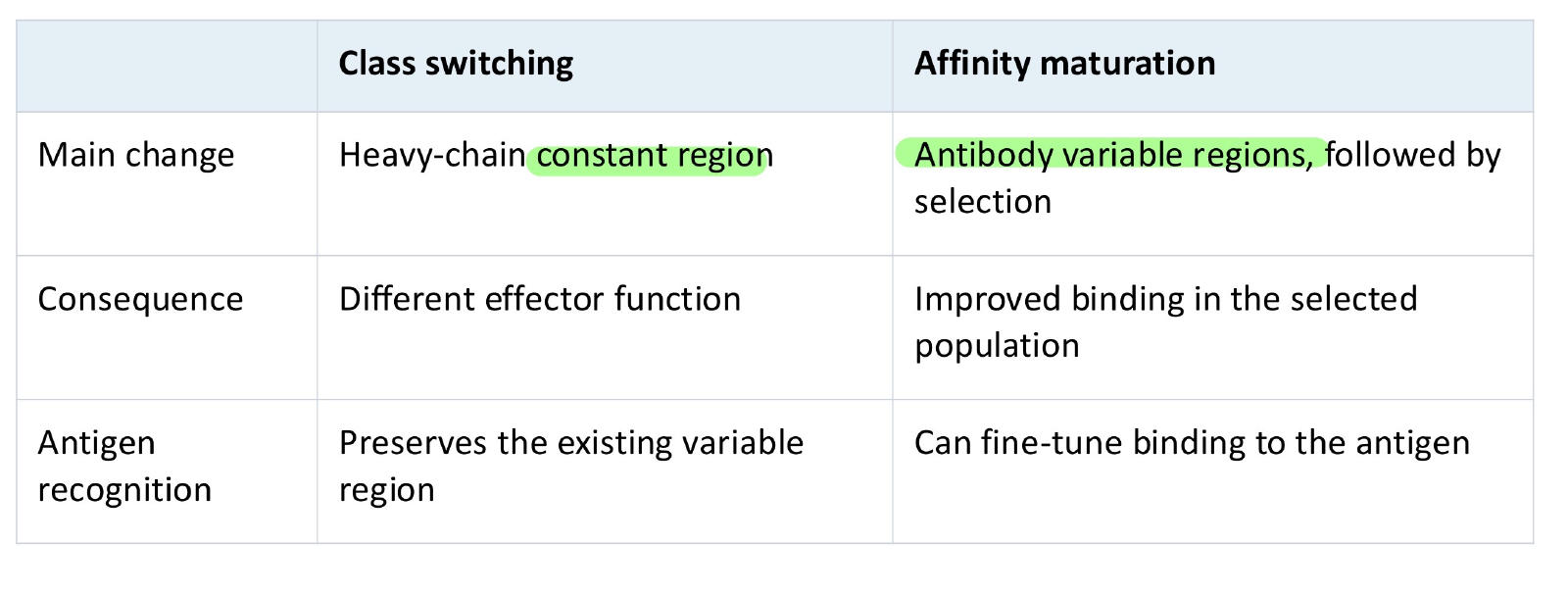
27
A vaccinated dog produces antibodies that bind an antigen more strongly after repeated exposure. What process explains this?
Affinity maturation.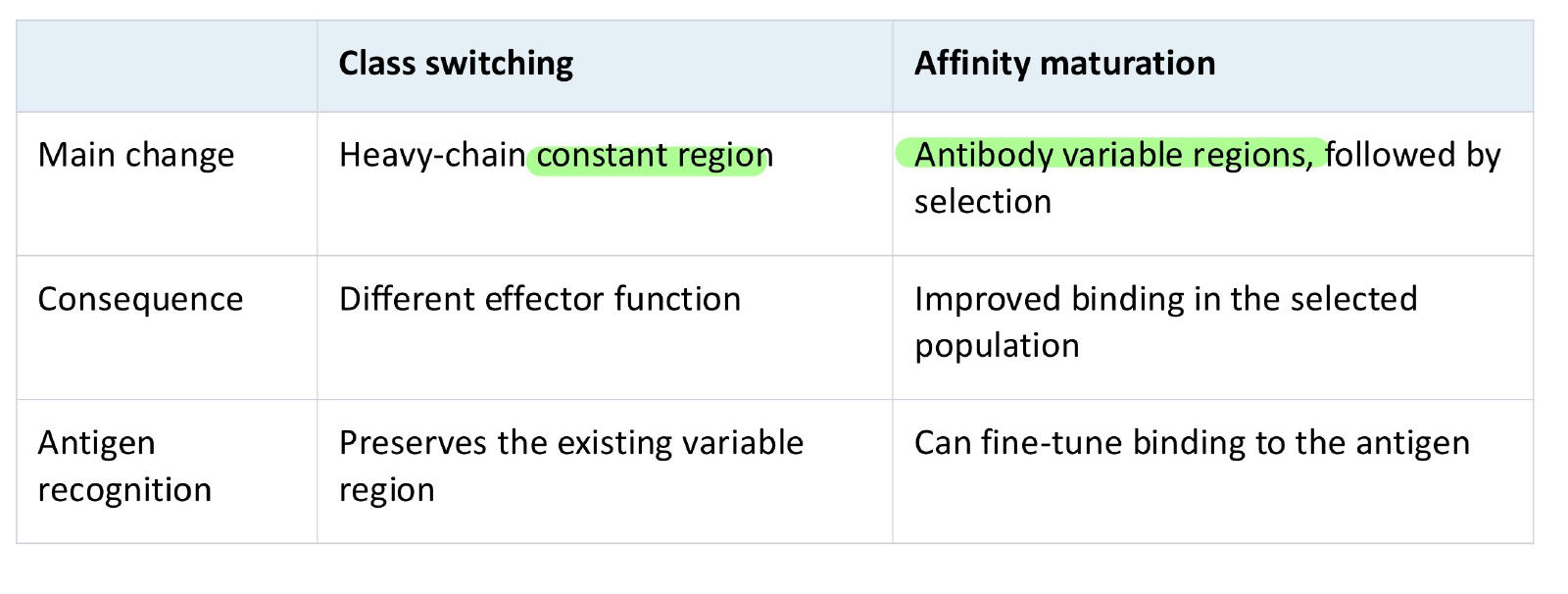
28
What is the primary function of plasma cells?
Secrete large amounts of antibodies.
29
What is the primary function of memory B cells?
Respond rapidly to future encounters with the same antigen.
30
Do resting memory B cells continuously secrete antibodies?
No; they can differentiate into antibody-secreting cells after reactivation.
31
How do long-lived plasma cells contribute to immunity?
They maintain antibody production after the initial infection or vaccination.
32
Why is the secondary antibody response faster and stronger than the primary response?
Memory B cells rapidly expand and generate antibody-secreting cells.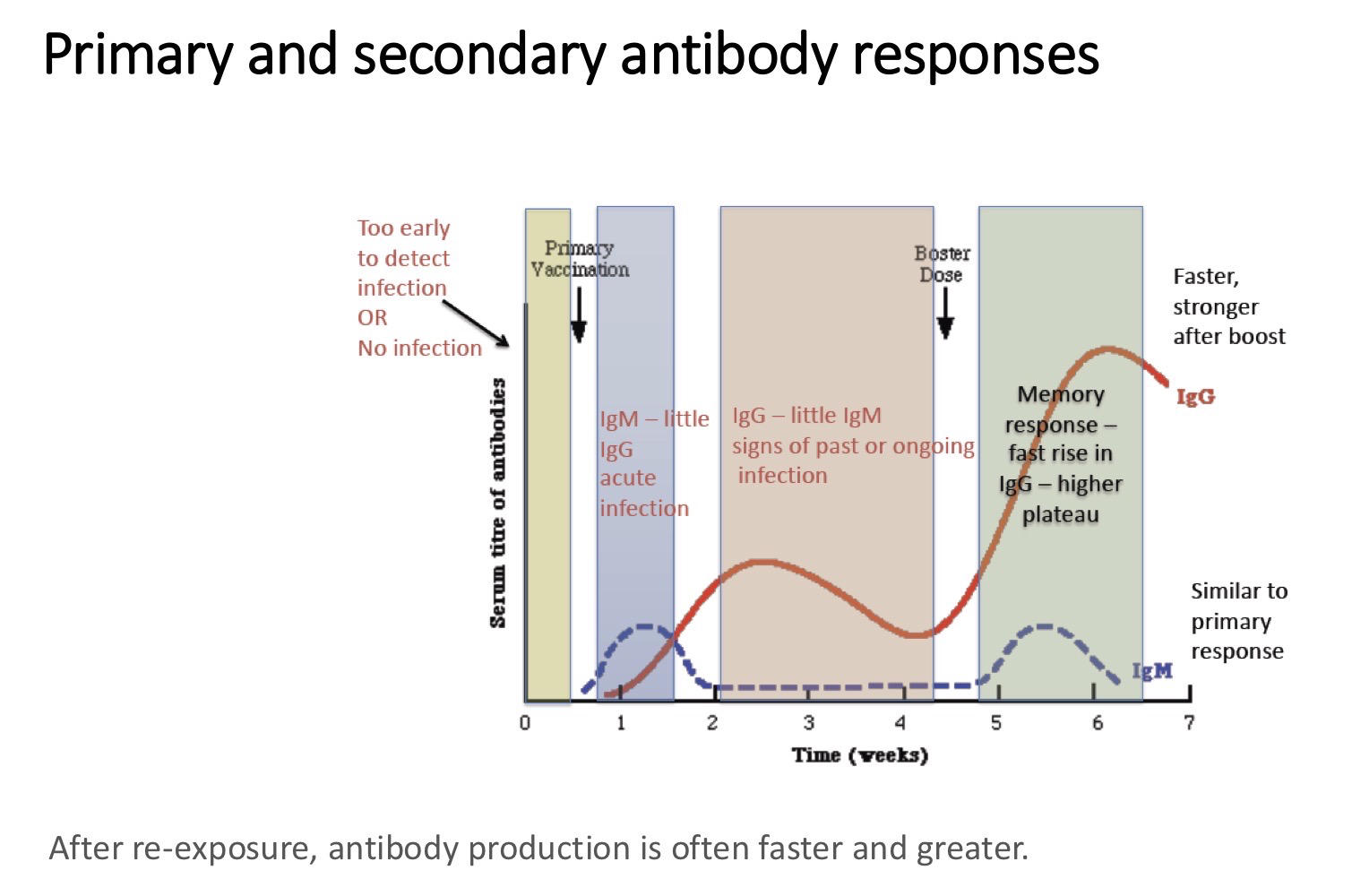
33
What happens when a vaccinated dog receives a booster containing the same antigen?
Existing antibodies provide immediate protection while memory cells generate a stronger recall response.
34
What is an ELISA?
An enzyme-linked immunosorbent assay used to detect specific antigens or antibodies.
35
What does an antigen-detection ELISA identify?
A component of the pathogen or target agent.
36
What does an antibody-detection ELISA identify?
Antibodies produced or acquired by the animal against an antigen.
37
What is an antibody titer?
The highest serum dilution that still produces a positive antibody test.
More Science flashcards
genetics - polarity of amino acidsScience · EnglishAnnieStudyScience · EnglishSonic_Games_FanFurniture and Electronics (가구 및 전자제품)Science · KoreanjaysonOrganneles + organelle functionsScience · EnglishMaxcimGenetics: Maternal Effect and EpigeneticsScience · EnglishKeilanaBiochemistry: Bile Acids and CholesterolScience · EnglishKrisMedCardsValence IonsScience · EnglishnoodleECOLOGY TEST 1Science · EnglishBekahBiodiversity Unit 1Science · EnglishgorpgurkChapter 6 EnergyScience · EnglishEmanPhysics Unit 4Science · EnglishIanto06Electricity and CircuitsScience · Englishan OutLearn student
Study these decks in the app
Free on iPhone, Android, Mac and the web. Add any deck to your account in one tap.

