Private Pilot Knowledge
Diese Karteikarten lernenKostenlos · Spaced Repetition · iPhone, Android, Mac & Web
Die ersten 300 von 451 Karten
1
ARROW
Airworthiness certificate (never expires)
Registration Certificate (renewed every seven years)
Radio Station License (Required for international)
Operating Limitations (Found in the approved flight manual or Pilot's operating handbook)
Weight and balance data
2
Hypoxic Hypoxia
inadequate supply of oxygen
3
inadequate supply of oxygen
Hypoxic Hypoxia
4
Hypemic Hypoxia
the inability of the blood to carry oxygen (CO poisoning)
5
the inability of the blood to carry oxygen (CO poisoning)
Hypemic Hypoxia
6
Stagnant hypoxia
insufficient blood circulation of oxygen
7
insufficient blood circulation of oxygen
Stagnant hypoxia
8
Histotoxic hypoxia
Caused by alcohol, drugs, or poisons
9
What is LASHO?
When a pilot is cleared to land and hold short of an intersecting runway or taxiway
10
Mode A transponder reports
Squawk only
11
Mode C Transponder reports
Squawk and pressure altitude in 100ft increments
12
Mode S transponder reports
Squaw address, ICAO 24-bit address, Pressure altitude at 25ft increments, tail number
13
Engine surging/sputtering
Switch tanks, full rich, fuel pump on
Carb heat
Test mags
14
High Oil Temp + Low/No Oil Pressure
Outcome + Causes
Outcome:
imminent engine failure, divert.
Causes:
Severe Oil loss
Oil pump failure
15
High Oil Temp + Normal Oil Pressure
Outcome and causes
Outcome:
Reduce power, reduce climb rate and enrich mixture. Monitor.
High ambient temp, slow airspeed, lean mixture
16
Normal Oil Temp + Low Oil Pressure Outcome and causes
Outcome:
Expect failure, divert.
Causes:
Gasket failure, oil loss, oil pump failure, faulty gauge.
17
Normal Oil Temp + High oil pressure Outcome and Cause
Outcome:
Monitor. Engine failure unlikely. Divert.
Cause:
Stuck pressure release valve, line blockage, cold oil
18
A gradual decrease in RPMS w/ engine roughness likely cause:
Induction icing
19
Rough running engine, drop in RPM.
Magneto failure, try grounding one at a time and run on the smoother one.
20
Power on stall entry speed
70kts
21
Power off stall entry speed
65kts
22
$V_{S0}$ speed
45
23
$V_S$ speed
50
24
$V_R$ Speed
60
25
$V_X$ speed
64
26
$V_Y$ Speed
76
27
$V_G$ speed
76
28
$V_{FE}$ speed
102
29
$V_{NO}$ Speed
125
30
$V_A$ at MGW
113
31
$V_{S0}$ 45
$V_S$ 50
$V_R$ 60
$V_X$ 64
$V_Y$ 76
$V_G$ 76
$V_{FE}$ 102
$V_{NO}$ 125
$V_{NE}$ 154
$V_A$ 113
Write out the V speeds
$V_{S0}$
$V_S$
$V_R$
$V_X$
$V_Y$
$V_G$
$V_{FE}$
$V_{NO}$
$V_{NE}$
$V_A$
$V_{S0}$ 45
$V_S$ 50
$V_R$ 60
$V_X$ 64
$V_Y$ 76
$V_G$ 76
$V_{FE}$ 102
$V_{NO}$ 125
$V_{NE}$ 154
$V_A$ 113
32
White and green beacon
Lighted land airport
33
Lighted land airport beacon
White and green beacon
34
White/Yellow beacon
Seaport
35
Seaport beacon
White/Yellow beacon
36
White/White/Green beacon
Military
37
Military beacon
White/White/Green beacon
38
White/Yellow/Green Beacon
Heliport
39
Heliport beacon
White/Yellow/Green Beacon
40
What does IAU stand for?
Integrated Avionics Unit
41
Acronym to remember the 6 sigmet items
CAT SIT
42
CAT SIT
Cyclones
Ash (Volcanic)
Thunderstorms
Sand/Dust storms
Icing (Severe)
Turbulence (Severe)
43
ABCD of engine failure
Airspeed
Best place to land
Checklists
Declare
44
What is CFIT
Controlled flight into terrain
45
DECIDE
Detect
Estimate
Choose
Identify
Do
Evaluate
46
Types of NOTAMs
FDC
Type D
47
FDC NOTAM
Navigational equipment
48
D NOTAM
airport environment
49
What does 5 1-1-1 mean?
5sm, 1000 above, 1000 below, 1sm horizontal
50
What is required to fly above 10,000ft
mode c transponder adsb out
51
What law for torque
Newtons 3rd law
52
Newton's 3rd law
For every action there is an equal and opposite reaction
53
For every action there is an equal and opposite reaction
Newton's 3rd law
54
Requirements for basicmed
Drivers license
Held a valid medical after July 14 2006
Physician Exam
Online course
55
Requirements to be a private pilot
Be at least 17
Pass knowledge and practical test
Speak English
Minimum 3rd class medical
Proper logbook endorsements
Flight time experience requirements
56
What is a VOR radial?
a line extending out from a VOR station
57
What is VOR bearing?
the course you fly towards a VIR station
58
What does WAAS stand for
wide area augmentation system
59
How often do you need to update the GPS database?
Every 28 days
60
Pilotage
Using landmarks to navigate
61
Dead Reckoning
Using a known position to find time and distance
62
RAIM
Receiver Autonomous Integrity Monitoring
63
How many satellites required to determine 3D location?
4
64
How many satellites for 2D position?
3
65
How many minimum satellites for RAIM
6
66
What does RAIM do?
It ensures GPS signal integrity
67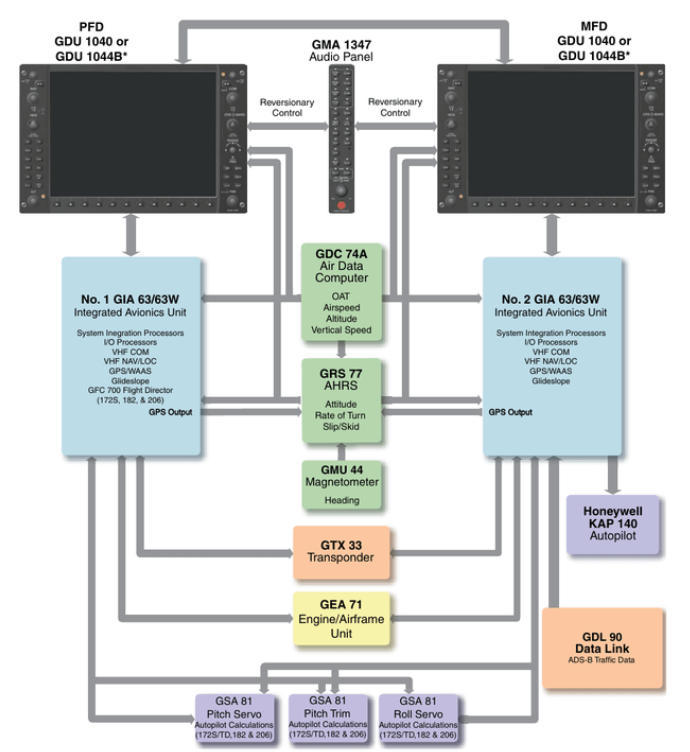
Draw the G1000 layout
68
How can you show the aircraft is airworthy?
DIE
69
Acronym for types of airspeed
ICE-T-G
70
Acronym to remember types of altitude
TAI-PD
71
TAI-PD
True Altitude
Absolutel Altitude
Indicated Altitude
Pressure Altitude
Density Altitude
72
ICE-T-G
Indicated Airspeed
Calibrated Airspeed
Equivalent
True Airspeed
Groundspeed
73
Indicated Airspeed
Airspeed off the instrument
74
Calibrated Airspeed
Airspeed corrected for instrument and positional errors
75
Equivalent airspeed
Airspeed adjusted for air compressibility
76
Groundspeed
movement of airplane relative to the ground
77
What is True Altitude?
vertical distance above sea level
78
What is Absolute Altitude?
Height Above the ground (AGL)
79
What is indicated altitude?
Altitude read off the altimeter
80
What is pressure altitude?
Height above the standard data plane when barometric pressure is set to 29.92
81
What is Density Altitude?
Pressure altitude corrected for non-standard temperature
82
Personal Minimums
5SM 10kts 4000' ceiling
83
What is the ratio of oxygen to nitrogen in the air?
78% Nitrogen 21% Oxygen 1% Other
84
Does the ratio of nitrogen and oxygen change with altitude?
No, only the density
85
How is an urgent PIREP coded?
UUA
86
What area does a TAF cover?
5nm from the airport
87
What is the acronym to remember the special use airspaces?
MCPRAWN
88
how can you find out if a restricted area is hot?
1-800-wx-brief
EFB
FAA SUA website
Contact Controlling agency
89
MCPRAWN
MOA
CFA
Prohibited
Restricted
Alert Area
Warning Area
National Security Area
90
What at the two types of fatigue?
chronic and acute
91
What are the two types of stress?
chronic and acute
92
Airthworthiness DIE
Documents (ARROW)
Inspections (AV1ATES)
Equipment (A TOMATO FLAMES)
93
What color is a temporary registration?
pink
94
How long is a temporary registration valid for?
12 months
95
Where can you find known atc delays?
NAS website
96
What should you look for in an alternate?
Fuel, maintenance facilities
97
What is wet sump?
When the oil is stored in the oil pan
98
What is dry sump?
When oil is stored outside the engine
99
What is a stable atmosphere?
The ability for it to resist vertical motion
100
What layer of the atmosphere do we fly in?
troposphere
101
What is the acronym to remember required inspections?
AV1ATES
102
Open door checklist
Airspeed 87
Close vents
open storm windows
latch side then top
103
What 3 things cause compass oscillation?
aircraft acceleration, turbulence, magnetic dip
104
What is area of ambiguity?
When you are 90° abeam the selected radial, the to/from flag will fluctuate
105
piper archer glide ratio
9.5:1
106
What does the archer glide ratio mean?
For every 1,000 feet of altitude lost, the aircraft can travel forward about 9,500 feet
107
What type of aircraft don't require an ELT
Single seat, agricultural, gliders ballons etc
108
what is the significance of 14500 feet msl in the classification of airspace
Serves as the floor of the class E and ceiling for golf
109
Acronym to remember VOR limitations
CARL
110
CARL
Cone of confusion
Area of ambiguity
reverse sensing
line of sight
111
When can you begin logging night flight time?
end of evening Civil twilight and beginning of morning Civil twilight
112
When should position lights be used?
From sunset to sunrise
113
For passenger night time currency, what times count?
an hour before sunrise and hour after sunset
114
How many miles wide is a Victor airway?
8 miles, 4 each side
115
What are 5 factors that can affect takeoff distance?
Heavy loads, high altitudes, high temperatures, runway coondition, engine wear
116
what are the basic advantages of an alternator over a generator
Better efficiency, smaller, lighter
117
At what RPM does the engine make 180hp?
2700
118
What do MELs apply to?
(my) Specific airplanes by tail number
119
Where is a KOEL found?
In the POH
120
Acronym for inop equipment decision making
MKART
121
MKART
MEL
KOEL
ADs
Regs
Type certificate data sheet
122
What is the regulation for inop equipment?
91.213
123
91.213
inoperable equipment
124
What conditions are required to be considered a severe thunderstorm?
50 knot surface winds, 3/4 inch hail or tornadoes
125
Minimum safe altitude anywhere:
An altitude that allows for a landing should the engine fail without undue hazard
126
Minimum safe altitude over a congested area
1000ft above the highest obstacle, 2,000ft horizontal
127
Minimum safe altitude other than a congested area
500ft over the surface
If over open water: 500ft from any person, vessel, vehicle or structure
128
Minimum oil
2 quarts
129
Maximum oil
8 quarts
130
School minimum oil
6 quarts
131
Oxygen requirements 12,500-14,000
More than 30 minutes, minimum flight crew must use supplemental
132
Oxygen requirements above 14,000
Oxygen required for required crew entire duration
133
Oxygen requirements above 15,000
All occupants must be supplied oxygen
134
Oxygen requirements
12,500-14,000: More than 30 minutes, required crew must use supplemental
14,000: Required crew must use continous supplemental oxygen
15,000: All occupants must be provided oxygen
135
Private pilot privileges
Can act as PIC within your privileges
PSCRIPT
Can fly at night
Can fly with pax
136
Private pilot limitations
Can't fly for compensation or hire
Must pay pro rata
Can only fly VFR
137
What regulation has the medical chart?
61.23
138
How often do you need an exam for basicmed?
Every 48 months.
139
What happens when your first or second class expires?
It reverts to a third class
140
Category in respect to airmen certification
Broad, like airplane or rotorcraft
141
Class in respect to airmen
Specific design features, like single engine land
142
Type in respect to airmen
Specific models
143
Category in respect to aircraft certification
Normal, Utility, Acrobatic, Transport
144
Class in respect to aircraft certification
Airplane, rotorcraft, glider etc
145
Type in respect to aircraft certification
Specific aircraft models of similar designs
146
How long is a convective sigmet valid?
2 hours
147
How long is a standard sigmet valid for?
4 hours
148
What are the types of sigmets
Convective, standard, cyclonic, and volcanic ash.
149
What are the types of airmets
S (Widespread IFR)
T (Turbulence)
Z (Icing)
150
What is a SIGMET?
an aviation weather advisory that alerts pilots to severe weather hazards that pose a danger to all aircraft.
151
What are the different conditions that warrant a sigmet? (6 items)
Cyclones
Ash (Volcanic)
Thunderstorms
Sand/Duststorms
Icing (Severe)
Turbulence (Severe)
152
What are the requirements for a convective sigmet
severe thunderstorms, embedded thunderstorms, continous line of at least 60nm, wide area coverage of at least 40% of 3000 square miles
153
What are the types of occluded fronts?
Cold and warm
154
What conditions can you expect with a cold front occlusion?
A mix of both warm and cold front conditions
155
What conditions can you expect with a warm occlusion?
Typically the weather is more severe than the state weather in a cold front occlusion. Embedded thunderstorms, rain, and fog.
156
How long is the airworthiness certificate valid for?
Indefintely as long as the aircraft meets its approved type desgin and is in a condition for safe operation.
157
How long is an aircraft registration valid for?
Seven years
158
Where can the operating limitations be found?
Approved flight manual or POH
159
IMSAFE (91.17)
Illness
Medication
Stress
Alcohol
Fatigue
Emotion/eating
160
PAVE (Preflight general)
Pilot
Aircraft
enVironment
External Factors
161
Acronym for 91.17
IMSAFE
162
Required aircraft documents
Airworthiness certificate (never expires)
Registration Certificate (renewed every seven years)
Radio Station License (Required for international)
Operating Limitations (Found in the approved flight manual or Pilot's operating handbook)
Weight and balance data
163
Required aircraft maintenance inspections
Annual inspection
VOR Check
100 hour inspection
Altimeter
Transponder
ELT
Static System
164
AV1ATES
Annual Inspection: Every 12 calendar months (91.409) (Must be done by an A&P IA)
VOR Check: Every 30 days (required for IFR only) (91.171)
100 Hour inspection: Required if flying for hire (91.409)
Altimeter: Every 24 calendar months (91.411) (Required for IFR only)
Transponder: Every 24 calendar months (91.413)
ELT: Every 12 calendar months; battery replaced if used for more than 1 cumulative hour or if 50% of the usable battery life has expired (91.207)
Static System: 24 Calendar months (91.411)
165
How often is a VOR check required? (And reg)
Every 30 days. (91.171) (For IFR flight)
166
When is a 100 hour inspection required? (When and the Reg)
Required if flying for hire (91.409)
167
How often does the altimeter need to be inspected? (And reg)
Every 24 calendar months (91.411)
168
How often does the transponder need to be inspected? (and what is the reg)
Every 24 calendar months (91.413)
169
When does the ELT need to be inspected? (and reg)
Every 12 calendar months; battery replaced if used for more than 1 cumulative hour or if 50% of the usable battery life has expired (91.207)
170
Acronym for minimum required equipment for VFR flight.
A TOMATO FLAMES (91.205)
171
Minimum required equipment for VFR flight. 91.205
Altimeter
Tachometer (each engine)
Oil pressure indicator (each engine)
Manifold pressure gauge (each engine)
Airspeed Indicator
Temp gauge (each engine)
Oil temp gauge (each engine)
Fuel quantity gauge (each tank)
Landing gear position lights
Anti-collision lights (certified after 1996)
Magnetic direction indicator (compass)
ELT
Safety belts (certified after 1986)
172
A TOMATO FLAMES
Altimeter
Tachometer (each engine)
Oil pressure indicator (each engine)
Manifold pressure gauge (each engine)
Airspeed Indicator
Temp gauge (each engine)
Oil temp gauge (each engine)
Fuel quantity gauge (each tank)
Landing gear position lights
Anti-collision lights (certified after 1996)
Magnetic direction indicator (compass)
ELT
Safety belts
173
Minimum required equipment for VFR night
Same as VFR AND
Fuses (spare)
Landing light (if for hire)
Anti-collision lights
Position lights (nav lights)
Source of power (such as battery)
174
Required pilot documents for PIC (61.3)
Pilot certificate
Photo ID
Medical Certificate
Radio operator permit (if outside US)
175
How long is an AIRMET valid for?
6 hours
176
How long is a SIGMET valid for?
4 hours
177
What is the standard lapse rate?
2c / 1000ft
178
Air is stable if....
the adiabatic lapse rate is greater than the ambient lapse rate
179
What are the types of fog?
Upslope
Precipitation
Advection
Ice
Radiation
Steam
180
What is the acronym to remember the types of fog?
UPAIRS
181
What type of aileron does the Archer have?
Differential ailerons.
182
What do differiential ailerons do?
Deflects further upward than the downward one to counteract the yawing effect created by the downward aileron
183
What type of flaps does the Archer have?
Slotted flaps
184
What is the benefit of slotted flaps?
Better performance at slower speeds
185
What type of propeller does the archer have?
Sesinich fixed pitch
186
What type of engine does the archer have?
Lycoming
Horizontally opposed
Air cooled
Normally aspirated
Direct drive
180 hp
187
What is the acronym to remember the engine in the Archer?
LHAND
188
What type of gear does the archer have?
Tricycle with differential hydraulic toe braking
189
How many gallons does each tank hold in the Archer at tabs?
17 gallons at tabs, 32 useable (both tanks)
190
How does the airspeed indicator work?
It compares the pressure between the pitot and the static port
191
What are the gyroscopic systems?
Heading indicator, attitude indicator, and turn coordinator
192
$V_{S0}$
Stall speed landing config (45 knots)
193
$V_{S1}$
Stall speed no flaps (50)
194
$V_X$
Best angle (64)
195
$V_Y$
Best rate (76)
196
$V_{FE}$
Maximum flap extension (102)
197
$V_A$
Maneuvering Speed (113)
198
$V_{NO}$
Max structural cruise (125)
199
$V_{NE}$
Never exceed (154)
200
What is the total useable fuel in the archer (Tabs and Full)?
32 gallons at tabs; 48 full
201
What conditions are associated with a warm front?
Steady rain, widespread clouds, poor visibility, stratifrom clouds, low ceilings
202
What is a warm front?
A warm front is when a warm air mass advances and replaces a colder body of air, covering the cold air and forcing it out below
203
What conditions are associated with a cold front?
thunderstorms, towering cumulus, precipitation
204
What is a stationary front?
A stationary front is when the forces of two air masses are relatively equal, causing them to not move.
205
What is an occluded front?
When a faster-moving cold front catches up to a warm front, forcing the warm air up.
206
What type of front is this?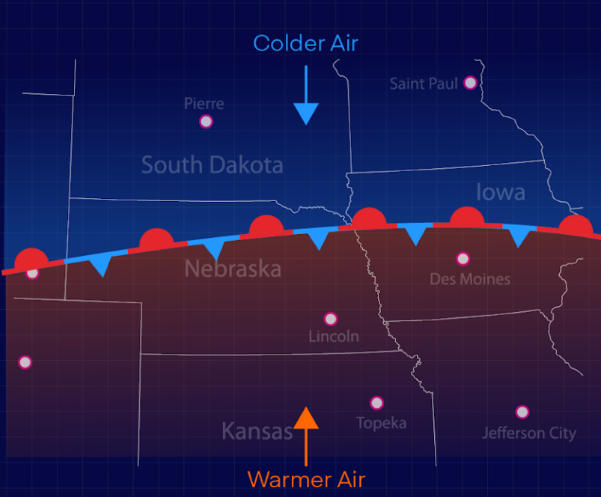
Stationary front
207
What type of front is this?
Occluded front
208
How does a high pressure system move?
Clockwise, outwards, and downwards
209
How does a low pressure system move?
Counter-clockwise, inwards, and upwards
210
What is a Sierra AIRMET mean?
Widespread IFR
211
What does a Tango AIRMET mean?
Turbulence
212
What does a Zulu AIRMET mean?
Icing
213
How does GUMPS apply to the Archer?
Gas
Undercarriage (N/A)
Mixture (Full rich)
Prop (N/A)
Switches (LDG Light and fuel pump on)
214
What altitude is used for ground reference maneuvers?
Between 600 and a 1000' AGL, or 1,200' MSL (TOP) ~1100' MSL
215
What speed do you enter for turns around a point?
Cruise speed (100-115)
216
How do you enter for turns around a point?
On a tailwind
217
How do you enter for S-Turns?
On a tailwind
218
What altitudes for performance maneuvers?
No lower than 1,500' AGL
(So ~1,800 MSL)
219
What speed do you fully retract flaps at for recovery from slow flight/stalls?
76 knots
220
When do you retract the second notch of flaps while recovering?
Once there is a postive climb rate.
221
What speed do you descend at for power-off stall?
65 knots
222
What speed do you aim for for a power-on stall before applying full power?
70-75 knots
223
Engine fire during start procedure
Keep starter on
Mixture cut
Throttle open
turn off fuel pump and fuel selector
224
Engine failure during flight restart procedure
76 knots
switch tanks
mixture rich
carb heat on
fuel pump on
turn each mag on/off one at a time
225
Power off landing checklist
close throttle and mixture
turn off battery
turn off alternator
turn off mags
turn off fuel
Crack door open
226
Electrical fire checklist
Verify emerg battery armed
Master batt off
alternator off
vents open
cabin heat off
extinguish fire
227
Emergency descent procedure
Throttle to idle
aim for 120 knots
bank 30-45 degrees
228
Spin recovery acronym
PARE
229
PARE
Power- idle
Ailerons- Neutal
Rudder opposite the turn
Elevator forward to break the stall, then back to level flight
230
How do you slip?
bank into the wind, Full rudder opposite the wind
231
Forward slip speed
Over 80 knots
232
Class B airspace requirements (Entry, Equipment, Visibility)
ATC Clearance, two-way radio communications
Mode C transponder (while inside the veil)
3sm, Clear of clouds
233
Mode C Veil description
Surrounds most Class B airports within 30nm.
Mode C transponder required
234
Class C airspace requirements (Entry, visibility, restrictions)
Establish and maintain two-way radio prior to entering, mode c transponder, adsb-out
3 miles visibility, 500 below, 1,000 above, 2000 horizontal
235
Class D airspace requirements
Establish and maintain two-way radio communication
3-152
236
Short field rotate speed
55 knots
237
Climb out speed for short field
64 knots
238
Vy speed for short takeoff
76 knots
239
What is the standard temperature at sea level?
15C 59F
240
How far should a pilot stay away from a thunderstorm, and what are the risks of flying too close?
At least 20nm
hail, turbulence, lightning
241
Squawk 7700
General emergency
242
General emergency Squawk
Squawk 7700
243
Squawk 7600
Lost communications
244
Lost communications squawk
Squawk 7600
245
Squawk 7500
Hijacking
246
Hijacking squawk
Squawk 7500
247
What are the characteristics of an aft CG?
Unstable
Takeoff ground roll decreased
Stall speed decreases
Cruise speed increases
bad stall recovery characteristics
248
What are the characteristics of a forward CG?
more stable
takeoff ground roll increased
stall speed increases
cruise speed decreases
249
What are the four forces acting on a plane in flight?
Lift, thrust, drag, weight
250
What are the two types of drag?
Parasitic and Induced
251
What are the three types of parasitic drag?
Form drag
Skin friction
Interference
252
When is wake turbulence the worse? (conditions and event)
Heavy, clean, and slow
During takeoff
253
How do wing tip vortices move?
Downwards and outwards
254
What are the four left-turning tendencies?
P-factor
Gyroscopic precession
Torque
Spiraling slipstream
255
When are left-turning tendencies the most prominient?
During high angle of attacks and high power settings.
256
What causes P-factor?
The propeller's descending blade experiencing a greater angle of attack (bigger bite of air) than the ascending blade, causing more thrust on one side causing a yaw to the left
257
What is gyroscopic precession, and type of plane does it primarily affect?
As the air hits the top of the prop, due to Newton's law of motion, will be applied at a 90 degrees later, creating a yaw to the left.
Tailwheel
258
What is torque (left turning tendency)
As the prop moves clockwise, from the pilot seat, the plane rotates in the opposite direction
259
What is slipstream spiral?
The backwash of air from the prop spirals around the plane hitting the vertical stabilizer
260
What altitude does Class E airspace start at?
700ft agl or 1,200 ft AGL
261
What altitude does Class D airspace start at?
At the surface
262
What altitudes does class G extend to?
Surface up to 1200 AGL (wherever class E airspace begins)
263
What type of airspace is depicted?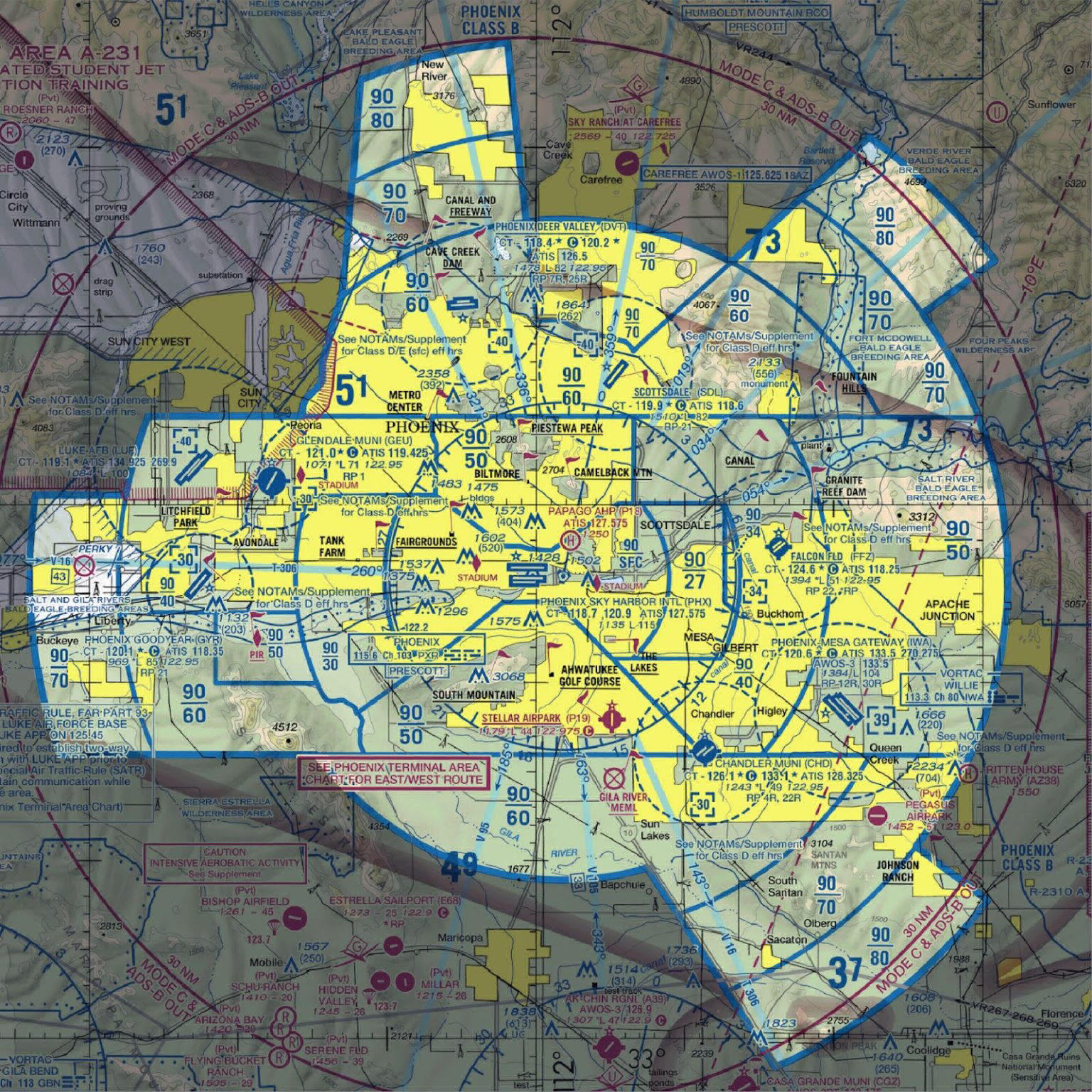
Class B
264
What type of airspace is depicted?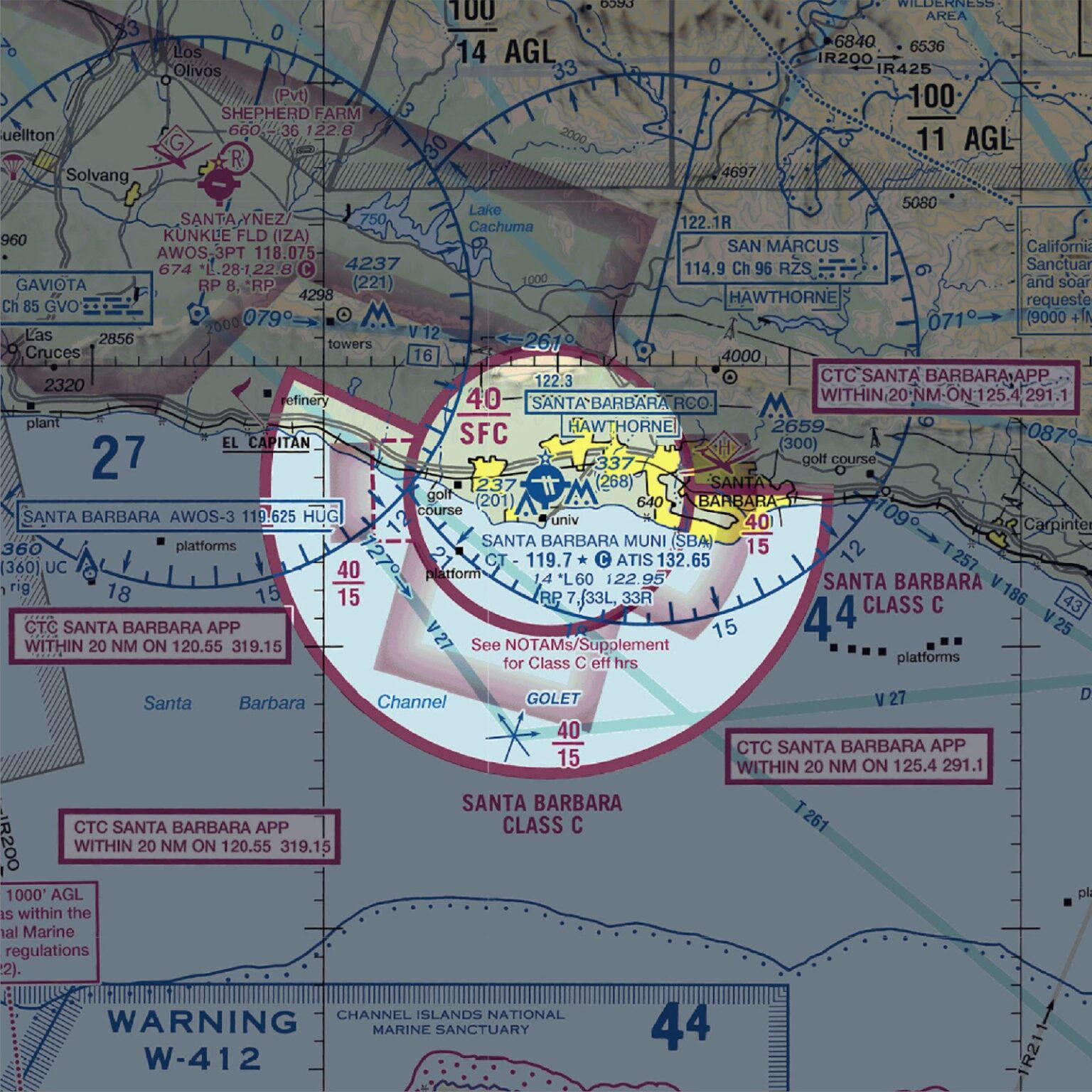
Class C
265
What type of airspace is depicted?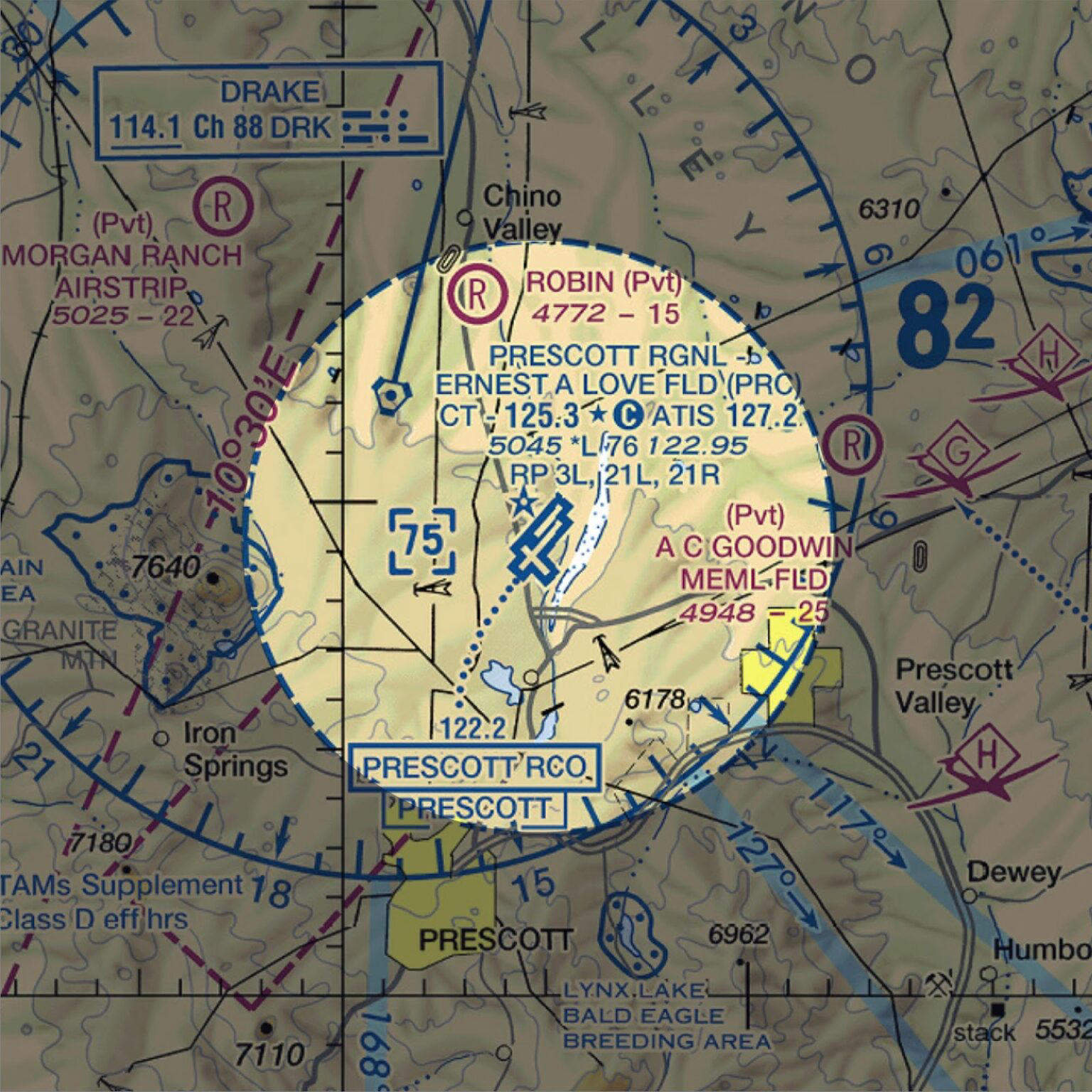
Class D
266
What type of airspace is depicted?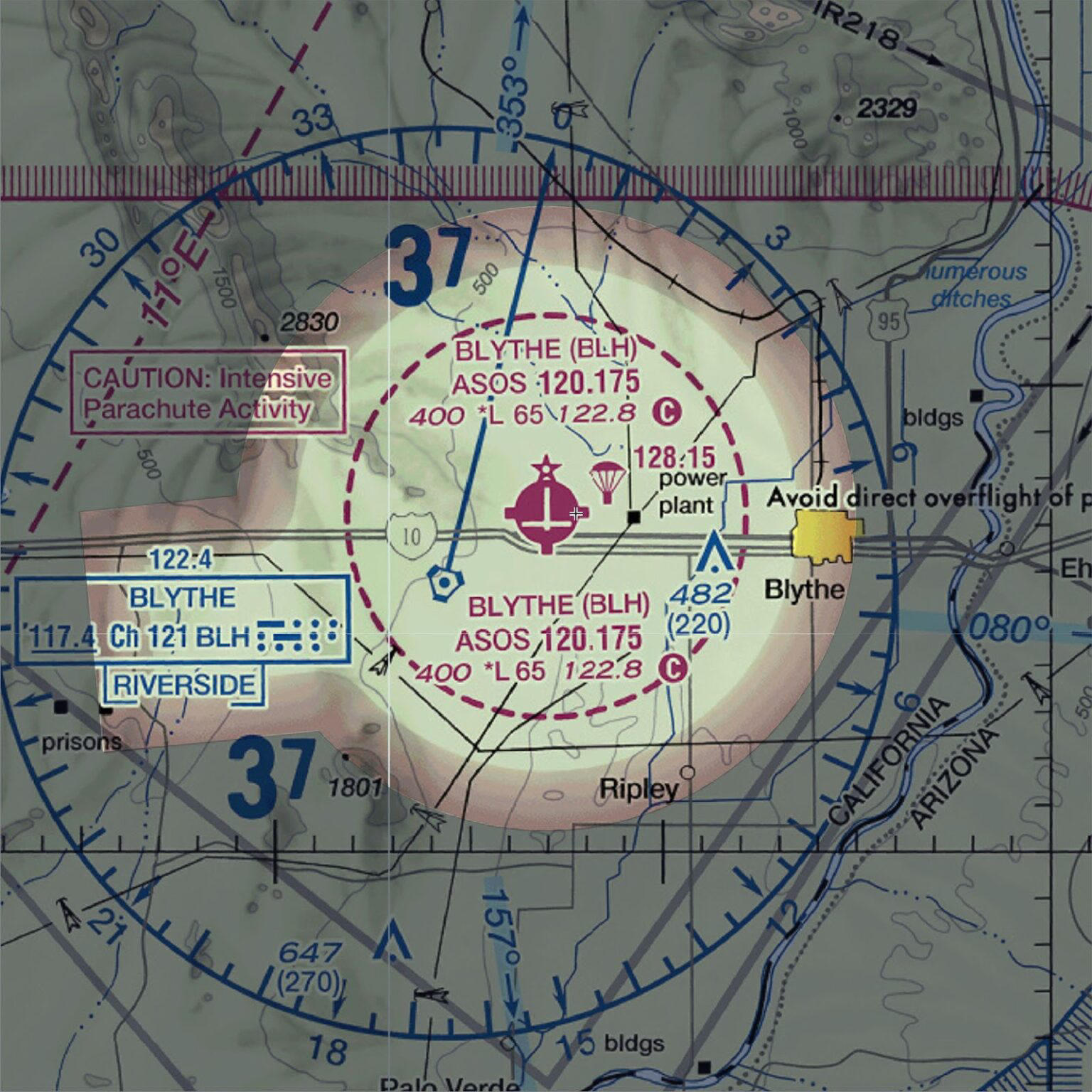
Class E
267
What type of area is this?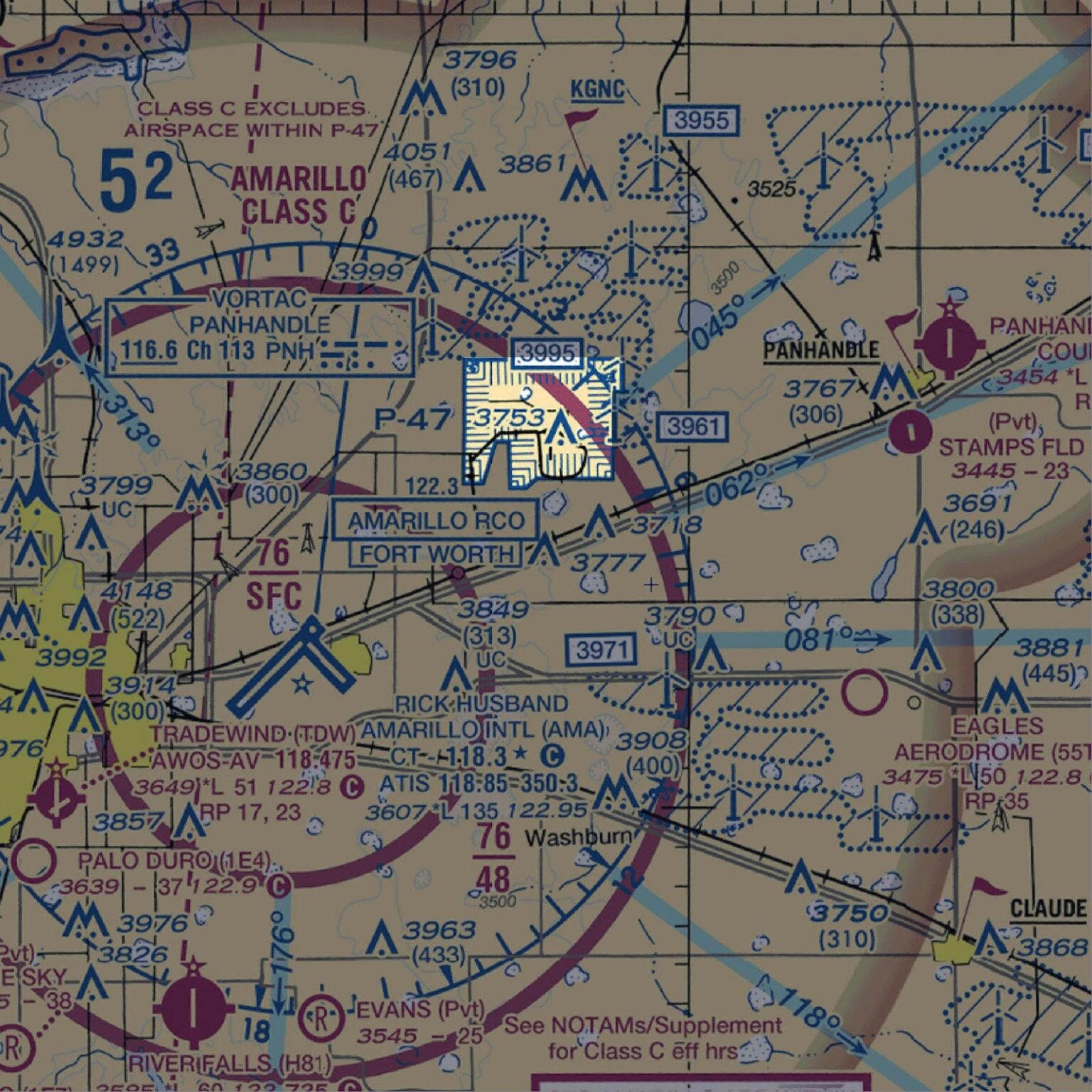
Prohibited Area
268
Class B Airspace Boundaries
Typically 10,000 ft. MSL surrounding busiest airports. Tailored to fit each airport's needs (lateral and vertical).
269
Class B Airspace Cloud Clearance & Visibility Requirements
>Clear of clouds
>3 SM visibility
270
Class B Airspace Speed Limits
250 kts
Under shelf - 200 kts
271
Class C Airspace Boundaries
Typically surface to 4,000 ft MSL
>Inner surface area: surface to 4,000 ft & 5 NM diameter
>Outer shelf area: 1,200 ft MSL to 4,000 ft MSL & 10 NM diameter
272
Class C Airspace Cloud Clearance & Visibility Requirements
1,000 ft above,
500 ft below,
2,000 ft horizontal
3 SM visibility
273
Class C Airspace Speed Limit
200 knots
274
Class D Airspace Dimensions
Typically surface to 2,500 ft AGL.
4 NM diameter.
275
Class D Airspace Cloud Clearance & Visibility Requirements
>1,000 ft above,
500 ft below,
2,000 ft horizontal
>3 SM visibility
276
Class D Airspace Speed Limit
200 kts
277
What does Class E beginning at the surface look like?
Dashed magenta
278
What does Class E beginning at 700ft AGL look like?
Shaded magenta
279
What does Class E beginning at 1,200 AGL look like?
Shaded blue
280
What does nonstandard Class E look like?
Zipper line
281
What do victor airways look like?
Light blue lines
282
How far out do you make your first radio call for Class Delta (towered)?
10 miles
283
What 3 distances do you make your traffic calls for untowered?
10, 5 and 3
284
OSUN
Overshoot South, undershoot North
285
ANDS
Accelerate North, Decelerate South
286
Class G VFR Visibility Minimums 1,200ft AGL and below Day
1 SM
287
Class G VFR Visibility Minimums 1,200ft AGL and below Night
3 SM
288
Class G VFR Visibility Minimums 1,200ft AGL and below Day and Night
1SM; 3SM
289
Class G VFR Visibility Minimums Below 10,000ft MSL Day
1 SM
290
Class G VFR Visibility Minimums Below 10,000ft MSL Night
3 sm
291
Class G VFR Visibility Minimums Below 10,000ft MSL Day/Night (Different)
1SM, 3SM
292
Class G VFR Visibility Minimums At or above 10,000ft MSL (Day and Night) (Same)
5SM
293
Class G VFR Visibility and Cloud Minimums
1,200ft AGL and below DAY
1SM,
Clear of clouds
294
Class G VFR Visibility and Cloud Minimums
1,200ft AGL and below NIGHT
3SM,
1000 feet above, 500 below, 2,000 horizontal
295
Class G VFR Visibility and Cloud Minimums
Below 10,000ft MSL DAY
1SM, 1000 above, 500 below, 2000 horizontal
296
Class G VFR Visibility and Cloud Minimums
Below 10,000ft MSL NIGHT
3SM,
1,000 above, 500 below, 2,000 horizontal
297
Class G VFR Visibility and Cloud Minimums
At or above 10,000 (night or day) (they are the same)
5SM,
1,000 above, 1,000 below, 1SM horizontal
298
Class E airspace Visibility and Cloud Minimums above 10,000ft
5SM,
1,000 above, 1,000 below, 1SM horizontal
299
What ATC Services are provided in Class G?
VFR Traffic Advisorires on Request (workload permitting)
300
What ATC Services are provided in Class E?
IFR/IFR Separation
VFR traffic advisories on request (workload permitting)
151 weitere Karten in OutLearn. Ganzes Deck öffnen
Mehr Karteikarten
Sampling Paving Mix and StockpilesWirtschaft · Englischae20202024CNS TumorsMedizin und Gesundheit · Englischeinem OutLearn-StudierendenPrinciples of Strength and ConditioningMedizin und Gesundheit · EnglischAddieLes rapports sociauxSprachen · Englisch → FranzösischAndrewTraumatic InjuriesMedizin und Gesundheit · EnglischMadi1.1 - My HomeSprachen · Spanisch → EnglischJonahChinese: Asking DirectionsSprachen · Englisch → ChinesischBrieReading, Chapter 18 BSL KanjiSprachen · Chinesisch → JapanischJSLumbar special testsMedizin und Gesundheit · EnglischAlexandraChapitre 9 : Cinématique du pointMathe · FranzösischPiouPsych TestPsychologie und Gesellschaft · EnglischnatalieEntwicklungspsychologie P1.1Psychologie und Gesellschaft · Deutscheinem OutLearn-Studierenden
Lerne diese Decks in der App
Kostenlos auf iPhone, Android, Mac und im Web. Füge jedes Deck mit einem Tipp zu deinem Konto hinzu.

