ACG2071 Chapter 1 (Principles of Managerial Accounting)
Study these flashcardsFree · spaced repetition · iPhone, Android, Mac & web
All cards
1
Managerial accounting
Managerial accounting focuses on providing information for internal decision makers.
2
Financial Accounting
Financial accounting focuses on providing information for external decision makers.
3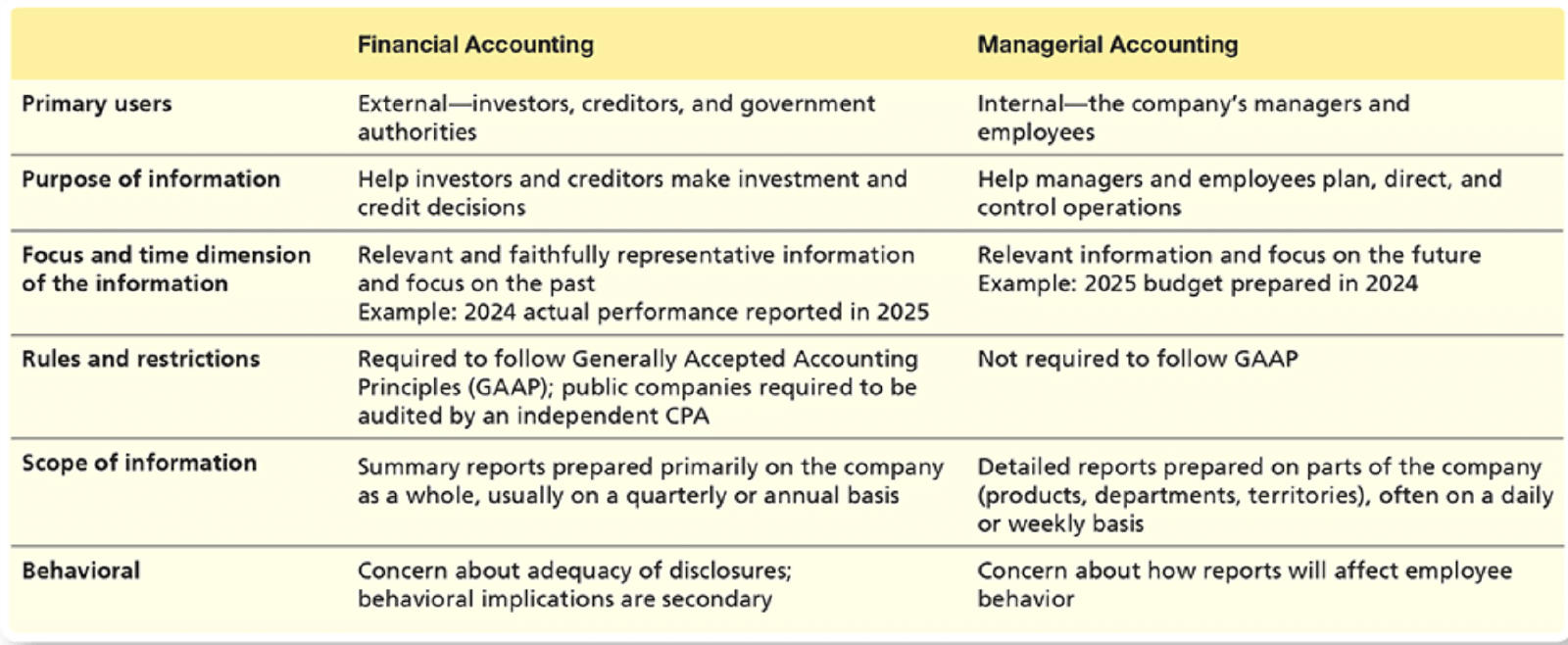
For Exam
4
Organizational chart
A company’s organizational chart helps show the relationship between departments and divisions and the managers who are responsible for each section.
5
What is & does the Board of Directors do?
(Also, what is its position in the Organizational Chart)?
(Also, what is its position in the Organizational Chart)?
The BOD is appointed by the stockholders and they are responsible for developing strategic goals of the corporation. The BOD also elects the president(CEO).
ex) An image of an example Organizational Chart is shown, to show that the BOD is ON TOP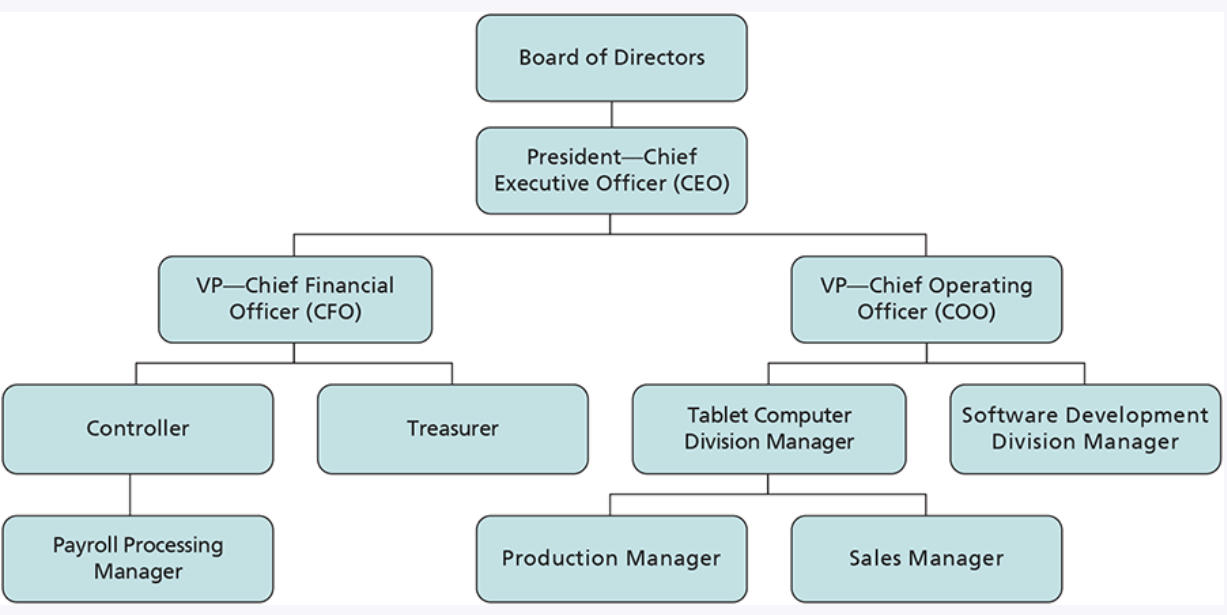
ex) An image of an example Organizational Chart is shown, to show that the BOD is ON TOP
6
Line Position
Line positions are directly involved in providing goods or services to customers.
7
Staff Position
Staff Positions support Line Positions .
ex)
CFO
Controller
Treasurer
Payroll Processor
ex)
CFO
Controller
Treasurer
Payroll Processor
8
Strategic vs Operational Planning
Strategic Planning: Based on developing long-term goals spanning from 3 - 10 yrs
Operation Planning: Based on short-term goals of the day-to-day operations.
Operation Planning: Based on short-term goals of the day-to-day operations.
9
What does the word "Directing" mean? (In terms of managerial accounting)
Directing involves running the day-to-day operations of a business.
10
What does the word "Controlling" mean? (In terms of managerial accounting)
Controlling is the process of monitoring day-to-day operations and keeping the company on track
11
What is a CMA?
Certified Managerial Accountant
12
What is a CGMA?
Certified Global Management Accountant
13
Is Financial or Managerial not required to follow GAAP?
Financial IS required to follow GAAP
Managerial IS NOT required to follow GAAP
Managerial IS NOT required to follow GAAP
14
Does financial or managerial accounting "summary reports prepared quarterly or annually"?
FINANCIAL ACCOUNTING
15
Service Companies vs Merchandising Companies vs Manufacturing Companies
Service companies sell their time, skills, and knowledge
Merchandising companies resell products they buy from suppliers.
Manufacturing companies use labor, equipment, supplies, and facilities to convert raw materials into finished products.
Merchandising companies resell products they buy from suppliers.
Manufacturing companies use labor, equipment, supplies, and facilities to convert raw materials into finished products.
16
Direct vs Indirect Costs
Direct Cost: A cost that can be easily and cost-effectively traced to a cost object. (A cost object is any item, activity or entity, such as a product, service, department, that a company wants to separately measure its accumulated costs)
ex)
Raw Materials
Indirect Costs: Costs that cannot be easily or cost-effectively traced directly to a cost object
ex)
utilities
administrative staff
jainitors
ex)
Raw Materials
Indirect Costs: Costs that cannot be easily or cost-effectively traced directly to a cost object
ex)
utilities
administrative staff
jainitors
17
What 3 kinds of inventories are used track the manufacturing costs (also known as the production cost)
1. Raw Material Inventory (RM): Materials used to make the product
2. Work-In-Progress Inventory (WIP): Includes goods in the manufacturing process but are not yet complete.
3. Finished Goods Inventory (FG): Includes complete goods that have not yet been sold
2. Work-In-Progress Inventory (WIP): Includes goods in the manufacturing process but are not yet complete.
3. Finished Goods Inventory (FG): Includes complete goods that have not yet been sold
18
Manufacturing costs can be classified into three categories
1. Direct Materials (DM): Cost of raw materials. (Is a Direct Cost.)
2. Direct Labor (DL): The cost of wages and salaries of employees who convert the raw materials into the finished product. (Is a Direct Cost)
3. Manufacturing Overhead (MOH): It includes all manufacturing costs other than direct materials and direct labor. These costs are INDIRECT and cannot be easily traced to the cost of a specific product.
2. Direct Labor (DL): The cost of wages and salaries of employees who convert the raw materials into the finished product. (Is a Direct Cost)
3. Manufacturing Overhead (MOH): It includes all manufacturing costs other than direct materials and direct labor. These costs are INDIRECT and cannot be easily traced to the cost of a specific product.
19
Explain
-Indirect Materials
-Indirect Labor
-Indirect Materials
-Indirect Labor
Indirect Materials: An example would be the glue used to make tablets. Cost tracing the drops of glue for making each tablet is not worth it.
Indirect Labor: Examples include the cost of the janitor. Can't trace that to the product. (Assembly line workers would be an example of a direct labor)
Indirect Labor: Examples include the cost of the janitor. Can't trace that to the product. (Assembly line workers would be an example of a direct labor)
20
Prime Costs:
Conversion Costs:
Conversion Costs:
Prime Costs: Combine the direct material costs and the direct labour costs
Conversion Costs: Combine the direct labour costs with manufacturing overhead. This is the cost to "convert" the direct materials into the finished product.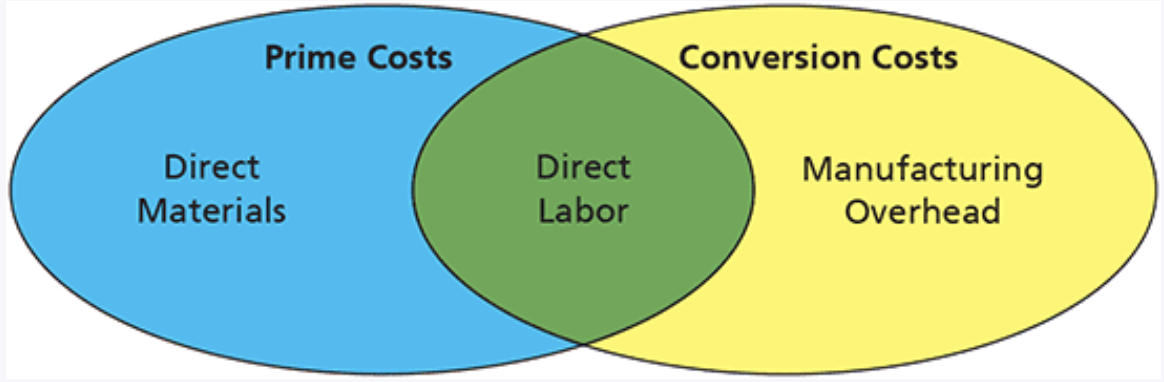
Conversion Costs: Combine the direct labour costs with manufacturing overhead. This is the cost to "convert" the direct materials into the finished product.
21
Product Costs:
Period Costs:
Period Costs:
Product Costs (Manufacturing Costs): Is the cost of purchasing or making a product.
- Product costs are recorded as assets until sold, in which they would then be recorded as an expense called "Cost of Goods Sold"
Period Costs (Non-Manufacturing Costs): Includes the costs of mainly selling & administration and also includes other costs such as taxes and interest.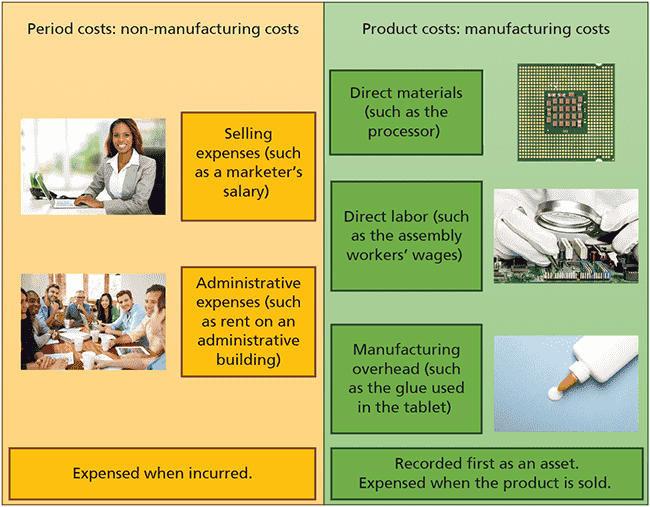
- Product costs are recorded as assets until sold, in which they would then be recorded as an expense called "Cost of Goods Sold"
Period Costs (Non-Manufacturing Costs): Includes the costs of mainly selling & administration and also includes other costs such as taxes and interest.
22
"Salary of the maintenance Supervisor"
Would this be Period Costs (Meaning its an administrative expense) of Product Costs (Meanings its a manufacturing overhead expense)
Would this be Period Costs (Meaning its an administrative expense) of Product Costs (Meanings its a manufacturing overhead expense)
It is a Product Cost, meaning it is a Manufacturing Overhead expense
23
Balance Sheet Differences from a Service Company vs Merchandising Company vs Manufacturing Company
*Service Company has no inventory, to be clear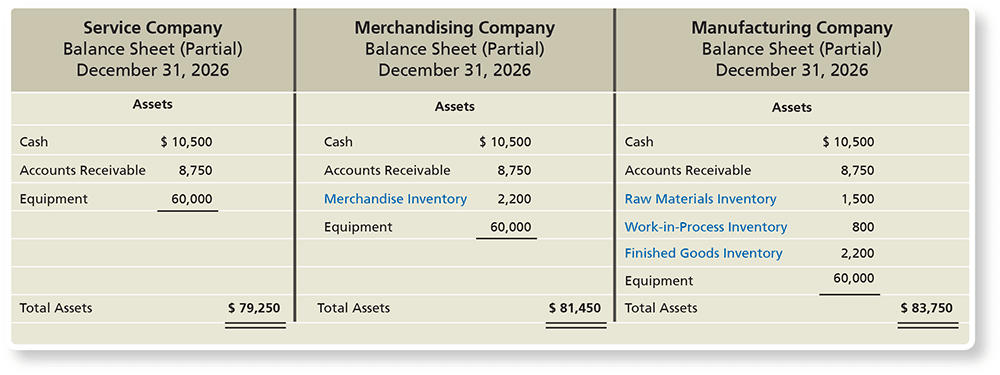
24
Income Statement Differences from a Service Company vs Merchandising Company vs Manufacturing Company
*This shows the differences in expenses between the three types of companies.**
*Merchandising Company and Manufacturing company both have two different ways of calculating COGS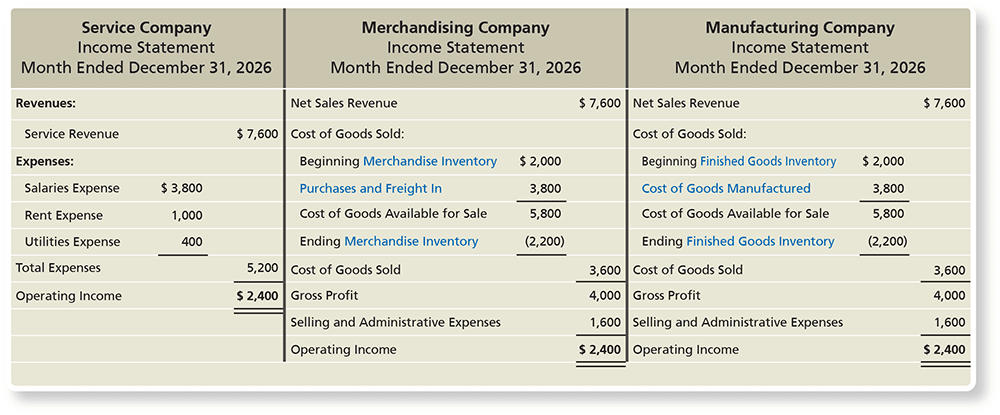
*Merchandising Company and Manufacturing company both have two different ways of calculating COGS
25
What is the account "Cost of Goods Manufactured"?
Its an account used by a manufacturing company to indicate the total cost of producing finished goods during an accounting period.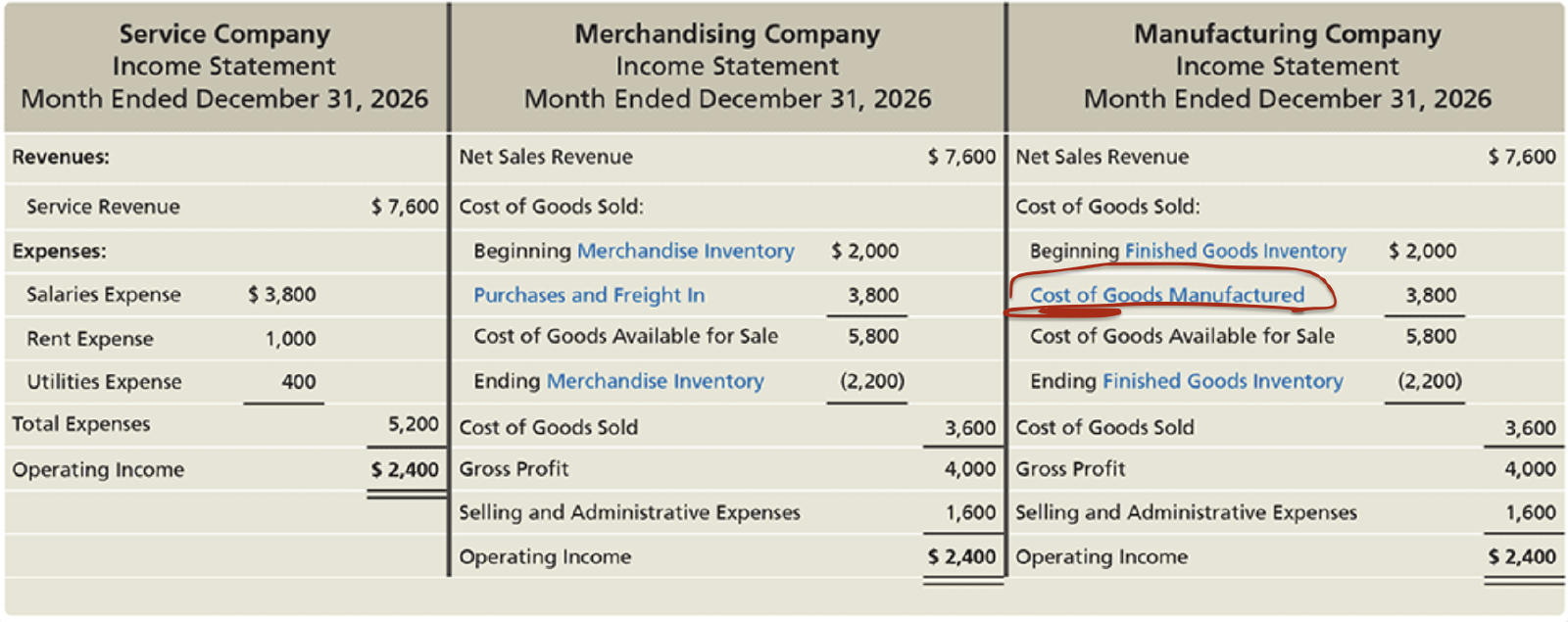
26
Explain?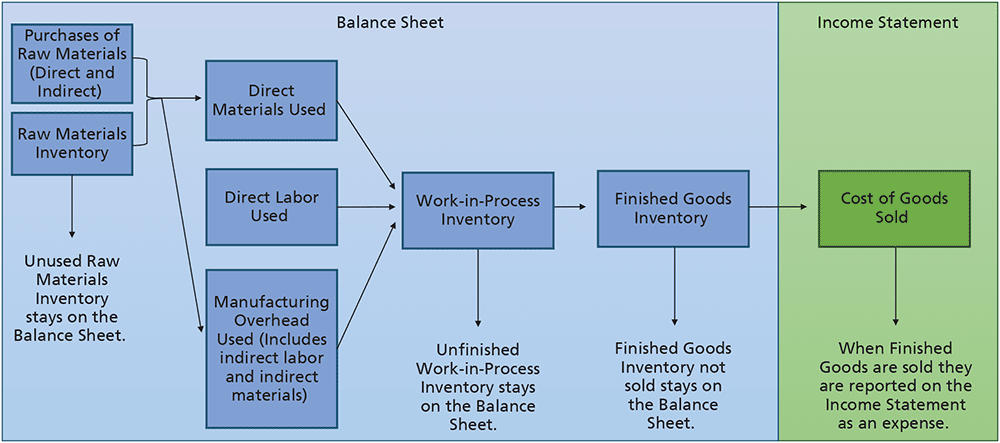
1)You have the Raw Materials you just purchased or the Raw Materials you had in your inventory. (Direct means that it can be easily and cost-effectively traced directly to a cost object (ex. so each product uses 1kg of steel), while indirect means it CANNOT be easily and cost-effectively traced to a cost object (ex. drops of glue used to make each ipad).
2)You use Direct Materials (raw materials that are ALSO direct costs), Direct Labor (labor that are ALSO direct costs) and Manufacturing overhead(all other manufacturing costs that are indirect, which would include the drops of glue used since its indirect), to turn the raw materials into "Work-in progress Inventory" which is goods in the manufacturing process but not yet complete
3) Then that turns into Finished Goods Inventory which are goods that are ready to be sold, but aren't yet.
4) Then, when those goods are sold, then you record the Costs of Goods Sold.
2)You use Direct Materials (raw materials that are ALSO direct costs), Direct Labor (labor that are ALSO direct costs) and Manufacturing overhead(all other manufacturing costs that are indirect, which would include the drops of glue used since its indirect), to turn the raw materials into "Work-in progress Inventory" which is goods in the manufacturing process but not yet complete
3) Then that turns into Finished Goods Inventory which are goods that are ready to be sold, but aren't yet.
4) Then, when those goods are sold, then you record the Costs of Goods Sold.
27
Drops of Glue used to make iPads are expensive and not easy to trace to each cost object. Which of these categories would this costs fall under?
-Direct Materials
-Direct Labor
-Manufacturing Overhead
-Direct Materials
-Direct Labor
-Manufacturing Overhead
It is MANUFACTURING OVERHEAD
(It is NOT Direct Material since it is NOT a Direct Cost)
(It is NOT Direct Material since it is NOT a Direct Cost)
28
(Step 1) How to calculate the Cost of Goods Manufactured?
*(Next 3 slides to explain the 3 Steps)
*(Next 3 slides to explain the 3 Steps)
Step 1: Add the Direct Materials they had + the ones they bought. Then subtract that from their ending direct materials and now you got the amount of Direct Materials Used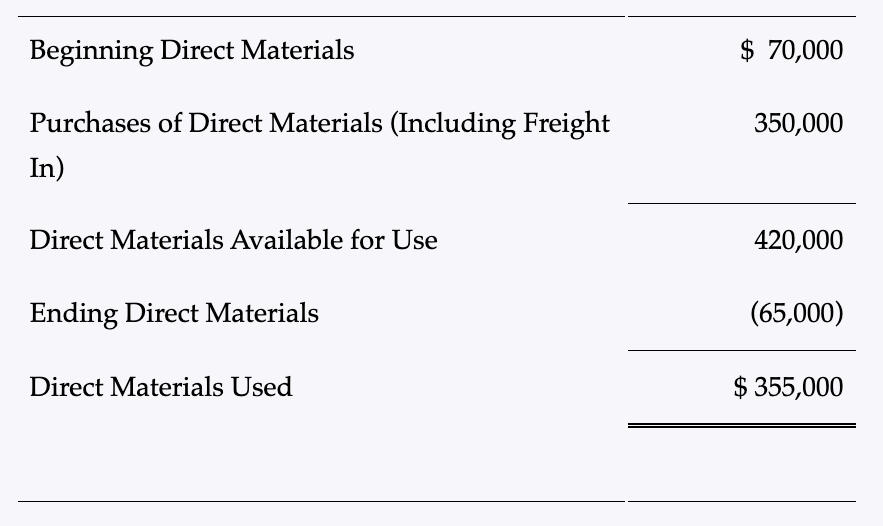
29
(Step 2) How to calculate the Cost of Goods Manufactured?
Step 2:
-You already know the Direct Materials Used from Step 1
-You just look for how much the company spent on direct labor, and manufacturing overhead. Then you add it up all together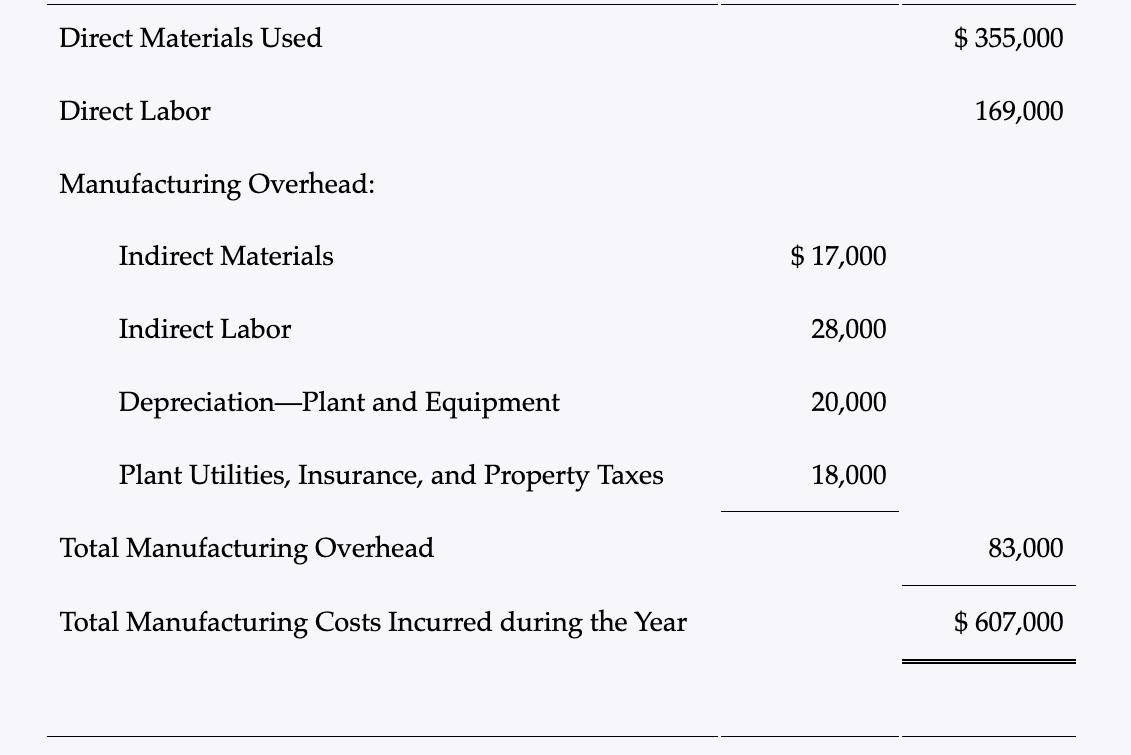
-You already know the Direct Materials Used from Step 1
-You just look for how much the company spent on direct labor, and manufacturing overhead. Then you add it up all together
30
(Step 3) How to calculate the Cost of Goods Manufactured?
Step 3:
-Total Manufacturing Costs Incurred during the Year is from Step 2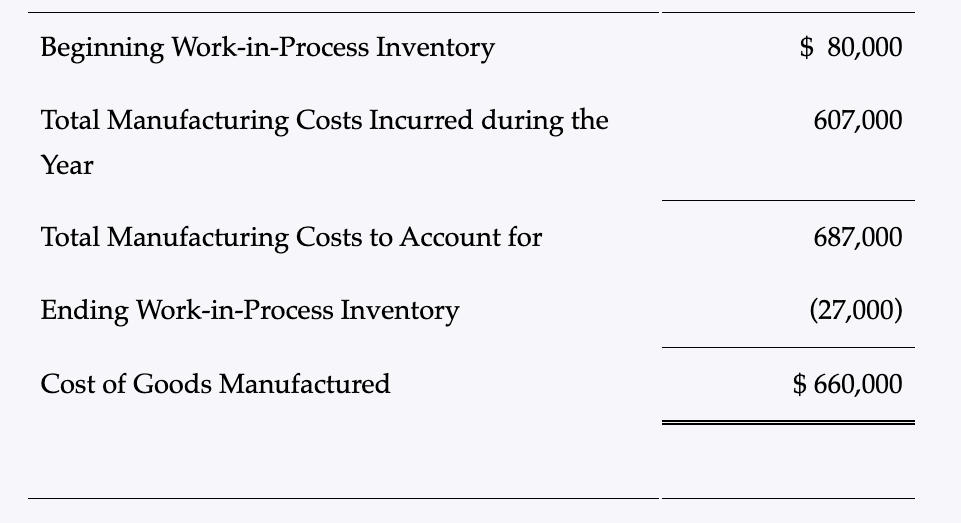
-Total Manufacturing Costs Incurred during the Year is from Step 2
31
How to calculate Cost of Goods Sold for a Manufacturing Company
*Cost of goods manufactured was just calculated last Slide
*You just at the beginning Finished Goods Inventory to it, and then subtract the ending Finished Goods Inventory and get COGS.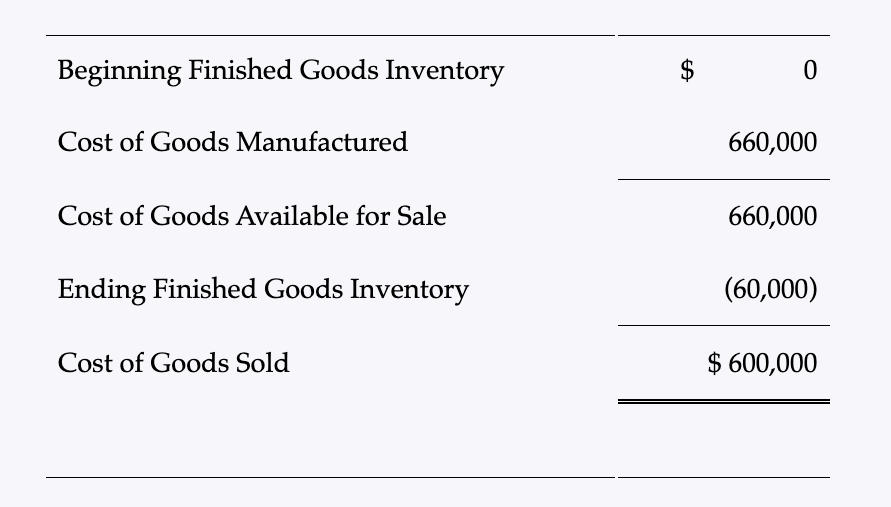
*You just at the beginning Finished Goods Inventory to it, and then subtract the ending Finished Goods Inventory and get COGS.
32
How to calculate the Unit product Cost
33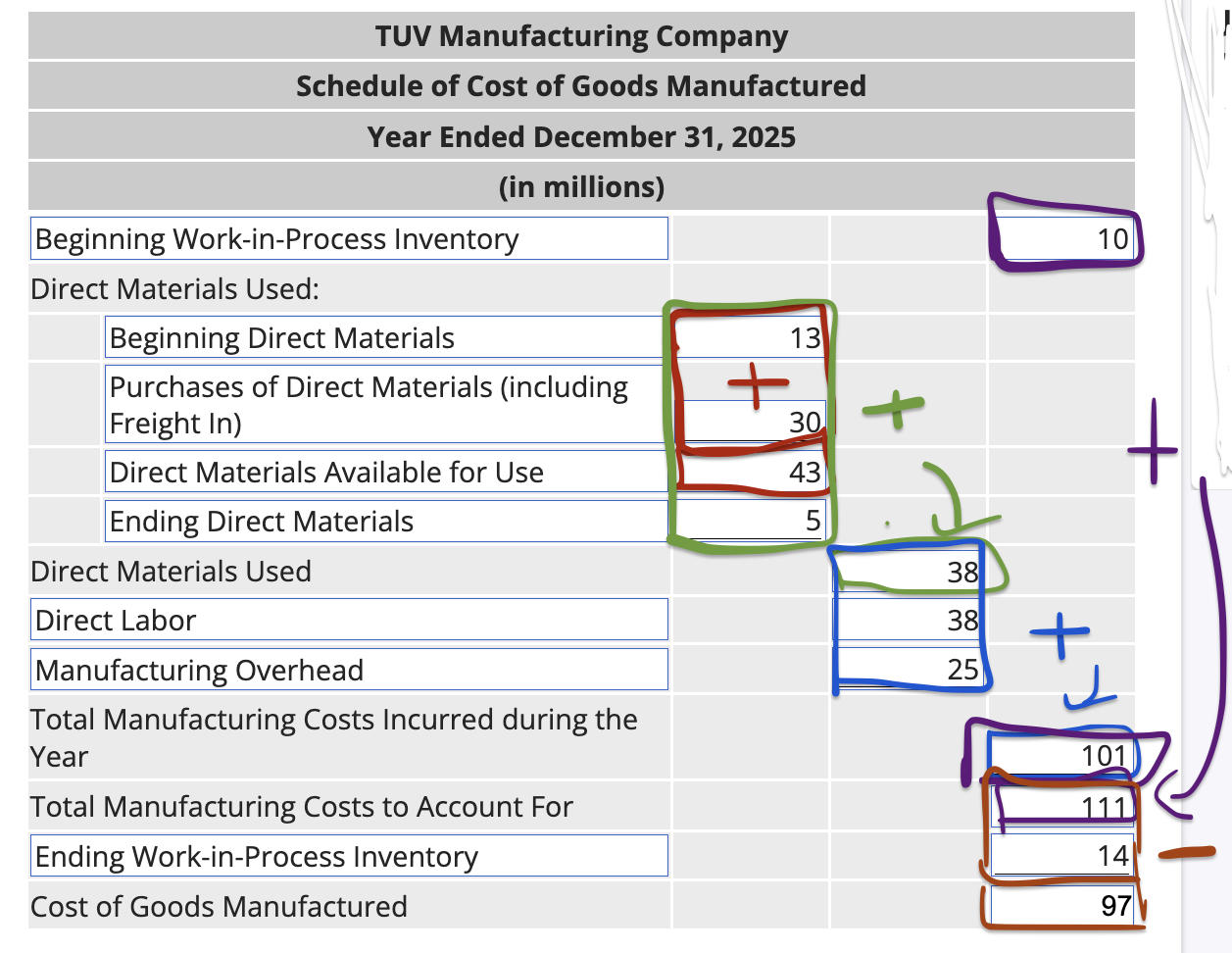
Schedule of Cost of Goods Manufactured
34
Enterprise Resource Planning (ERP)
Software system that can integrate all of the companies functions, departments, and data in a single system
35
Just-In-Time Management
Stored goods take up space and require costs
Just-In-Time Management is a cost management system in which a company produces the product just-in-time to satisfy needs.
Just-In-Time Management is a cost management system in which a company produces the product just-in-time to satisfy needs.
36
Define
Total Quality Management (TQM):
Value Chain:
Total Quality Management (TQM):
Value Chain:
Total Quality Management (TQM): A philosophy of continuous improvement of products and process.
Value Chain: Includes all activities that had value a company's product and services. (Upstream value added activities: occur before production including stuff like design. Downstream value added activities: occur after production including stuff like marketing)
Value Chain: Includes all activities that had value a company's product and services. (Upstream value added activities: occur before production including stuff like design. Downstream value added activities: occur after production including stuff like marketing)
37
Triple Bottom Line
Evaluating a company's performance based on its economic (profit), social (people), and environmental impact.
38
For a service company, how do you determine the
'Unit Cost per Service Provided"?
'Unit Cost per Service Provided"?
39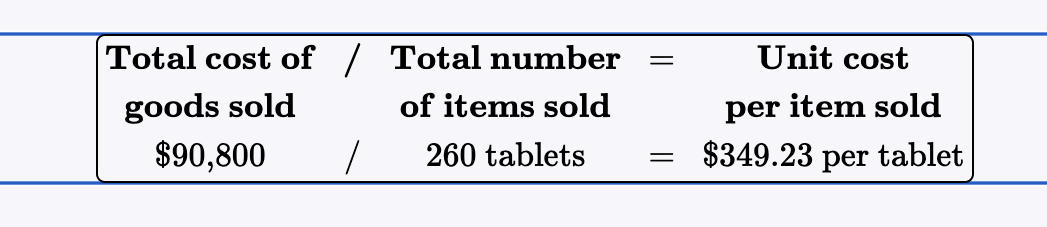
For a merchandising company, how do you determine the
'Unit Cost per item sold"?
'Unit Cost per item sold"?
More Business & economics flashcards
MGT 101Business & economics · EnglishKARISSAMineral Resources (2)Business & economics · EnglishNecole03Aggregate demandBusiness & economics · Englishan OutLearn studentDSP Module 1-4 -- Cumulative ExamBusiness & economics · EnglishZackJChapter 11 Vocab - Marketing ManagementBusiness & economics · Englishbevo612ECON Exam 1 FormulasBusiness & economics · EnglishJoshPrince 2Business & economics · EnglishEllaFinance and Accounting PracticeBusiness & economics · EnglishdTheme 2: Business Finance and OperationsBusiness & economics · EnglishDsoboE2 Project ManagementBusiness & economics · EnglishEllaMANA Midterm 2: Business Law and IncorporationBusiness & economics · EnglishAlyssaH2 Product marketing en communicatieBusiness & economics · DutchDemiB
All Business & economics decks
Study these decks in the app
Free on iPhone, Android, Mac and the web. Add any deck to your account in one tap.

