Chest X rays
Diese Karteikarten lernenKostenlos · Spaced Repetition · iPhone, Android, Mac & Web
Alle Karten
1
Which chest X-ray (CXR) projection is most commonly preferred for a patient who can stand?
Posteroanterior (PA) projection.
2
When is an anteroposterior (AP) chest X-ray usually performed?
When a patient is too unwell or unable to stand for a PA radiograph, often using a portable machine.
3
How can an AP chest X-ray differ in appearance from a PA chest X-ray?
The heart may appear magnified, the scapulae may overlap the lung fields, and the clavicles may appear more horizontal.
4
What colour does air appear on an X-ray?
Black, because air absorbs very little X-ray radiation.
5
What colour do bones and metal appear on an X-ray?
White, because they absorb or attenuate more X-ray radiation.
6
What does RIPE stand for when assessing a chest X-ray?
Rotation, Inspiration, Projection, and Exposure.
7
What is RIPE used for?
To assess the technical quality of a chest X-ray before interpreting abnormalities.
8
How is rotation assessed on a chest X-ray?
The spinous processes should lie midway between the medial ends of the clavicles, with the clavicles approximately symmetrical.
9
How many ribs should be visible on an adequately inspired PA chest X-ray?
Approximately 5–7 anterior ribs or 8–10 posterior ribs above the diaphragm.
10
How does an underpenetrated chest X-ray appear?
Too white, with insufficient detail visible behind the heart.
11
How does an overpenetrated chest X-ray appear?
Too dark, with excessive visibility of structures behind the heart and potentially reduced visibility of lung markings.
12
What artefacts or devices should be checked for when interpreting a chest X-ray?
Examples include ECG leads, pacemakers, central venous catheters, nasogastric tubes, and other monitoring or medical devices.
13
How does a pulmonary embolism usually appear on a chest X-ray?
The chest X-ray is often normal or shows nonspecific abnormalities; the embolus itself is usually not visible.
14
What does ABCDE stand for when systematically interpreting a chest X-ray?
Airway, Breathing, Cardiac, Diaphragm, and Everything else.
15
What should be assessed under A — Airway — on a chest X-ray?
Tracheal position and alignment, including any deviation, as well as the main bronchi where visible.
16
What pathologies can cause tracheal deviation on a chest X-ray?
Tension pneumothorax, major lung collapse, a large pleural effusion, pneumonectomy, or a large mass. The direction of deviation depends on the cause.
17
How does a tension pneumothorax affect tracheal position?
It can push the trachea away from the affected side, particularly when under pressure.
18
How does major lung collapse affect tracheal position?
It can pull the trachea towards the affected side due to volume loss.
19
How can a large pleural effusion affect tracheal position?
It can push the trachea away from the affected side if sufficiently large.
20
How can pneumonectomy affect tracheal position?
It can pull the trachea towards the side of the removed lung due to volume loss.
21
What should be assessed under B — Breathing — on a chest X-ray?
Lung fields and markings, consolidation, masses, pneumothorax, pleural effusions, costophrenic angles, and hilar size and appearance.
22
What does blunting of the costophrenic angle suggest on a chest X-ray?
Most commonly a pleural effusion, although pleural thickening can also cause blunting.
23
What might an enlarged hilum indicate on a chest X-ray?
Hilar lymphadenopathy, a central mass, or enlarged pulmonary vessels.
24
What should be assessed under C — Cardiac — on a chest X-ray?
Heart size, cardiac contours, mediastinal width, and the position of the cardiac silhouette.
25
How is cardiomegaly assessed on a PA chest X-ray?
The cardiothoracic ratio is greater than 50%, although projection and image quality must be considered.
26
Why is cardiomegaly more difficult to assess on an AP chest X-ray?
AP projection magnifies the heart, potentially making it appear enlarged even when its true size is normal.
27
What should be assessed under D — Diaphragm — on a chest X-ray?
The position and contour of both hemidiaphragms, their relative heights, and the costophrenic angles; look for free air beneath the diaphragm.
28
Which hemidiaphragm is normally higher on a chest X-ray?
The right hemidiaphragm is usually slightly higher than the left.
29
What can cause an elevated hemidiaphragm on a chest X-ray?
Phrenic nerve palsy, lung volume loss, diaphragmatic eventration, or subdiaphragmatic causes.
30
What should be assessed under E — Everything else — on a chest X-ray?
Bones, soft tissues, visible upper abdomen, medical devices, and other abnormalities not covered by the preceding steps.
31
What bony abnormalities should be checked for when interpreting a chest X-ray?
Rib or clavicle fractures, vertebral abnormalities, destructive bone lesions, and other skeletal injuries.
32
What abnormality is shown here?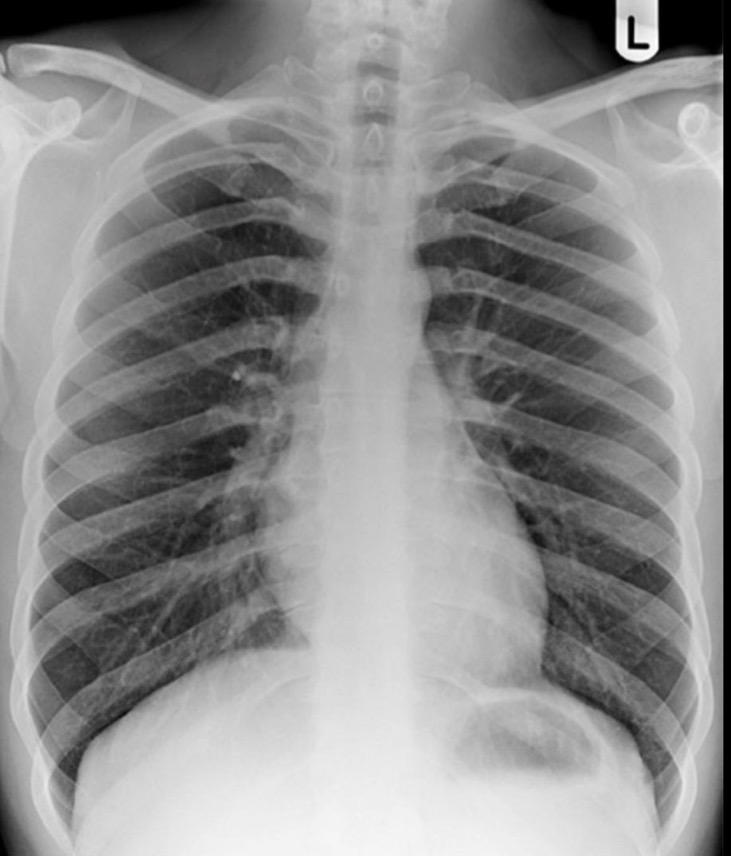
COPD
Notice the hyperinflation of the lungs due to the trapped air in the alveoli
Notice the hyperinflation of the lungs due to the trapped air in the alveoli
33
What view js this X ray taken in?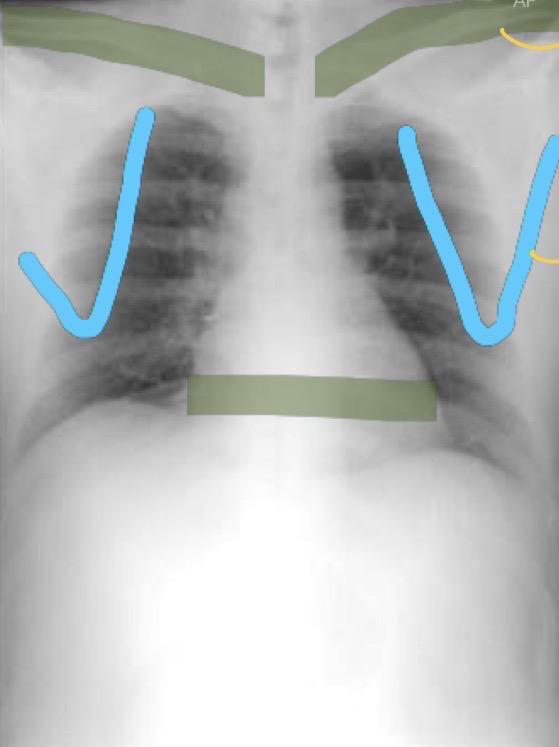
AP
34
What view is this image taken in?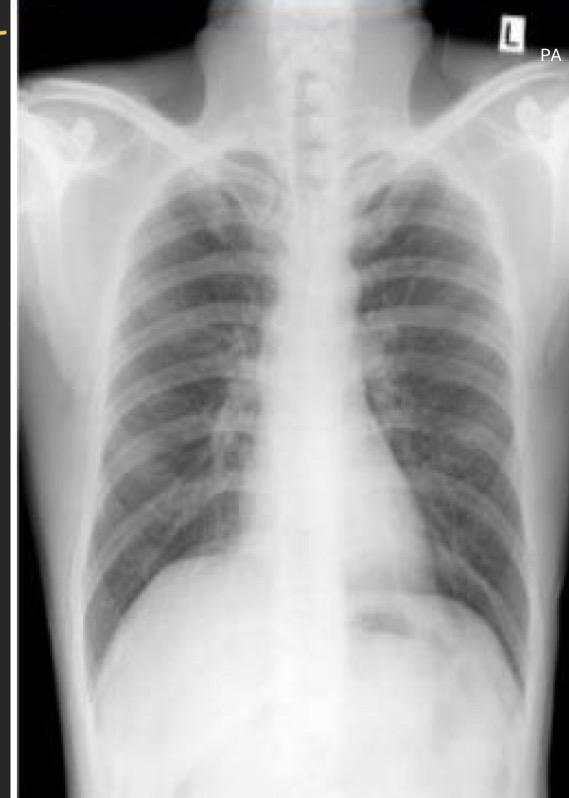
PA
35
Is this X ray under or over exposed 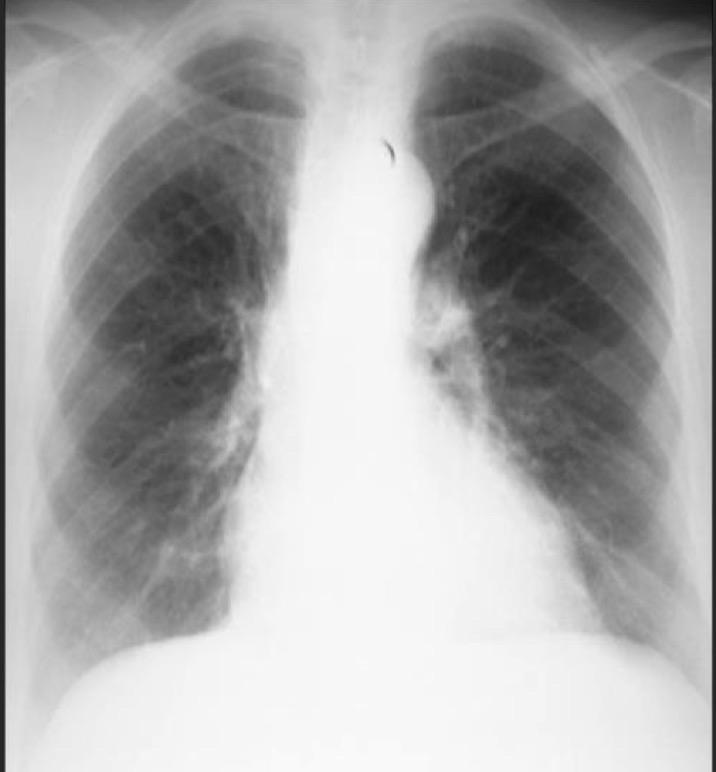
Underexposed
36
Is this X ray under or over exposed?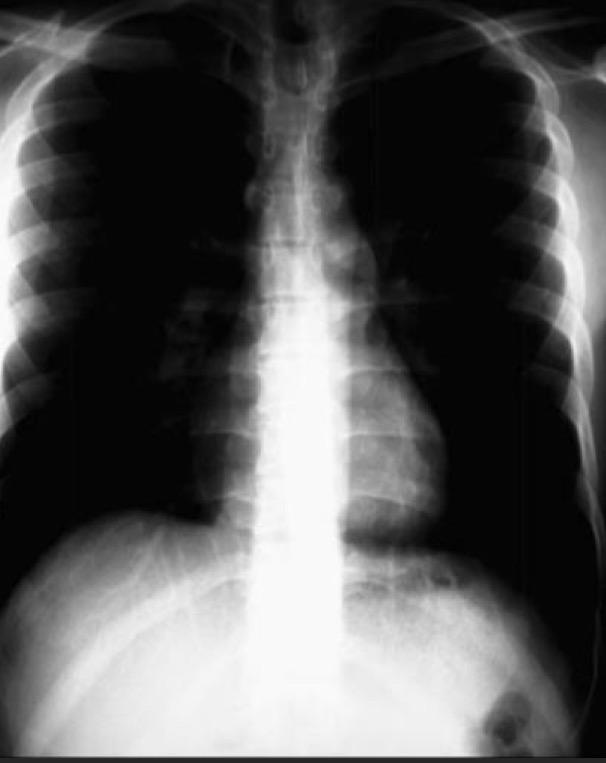
Overexposed
37
What pathology is shown in this X ray?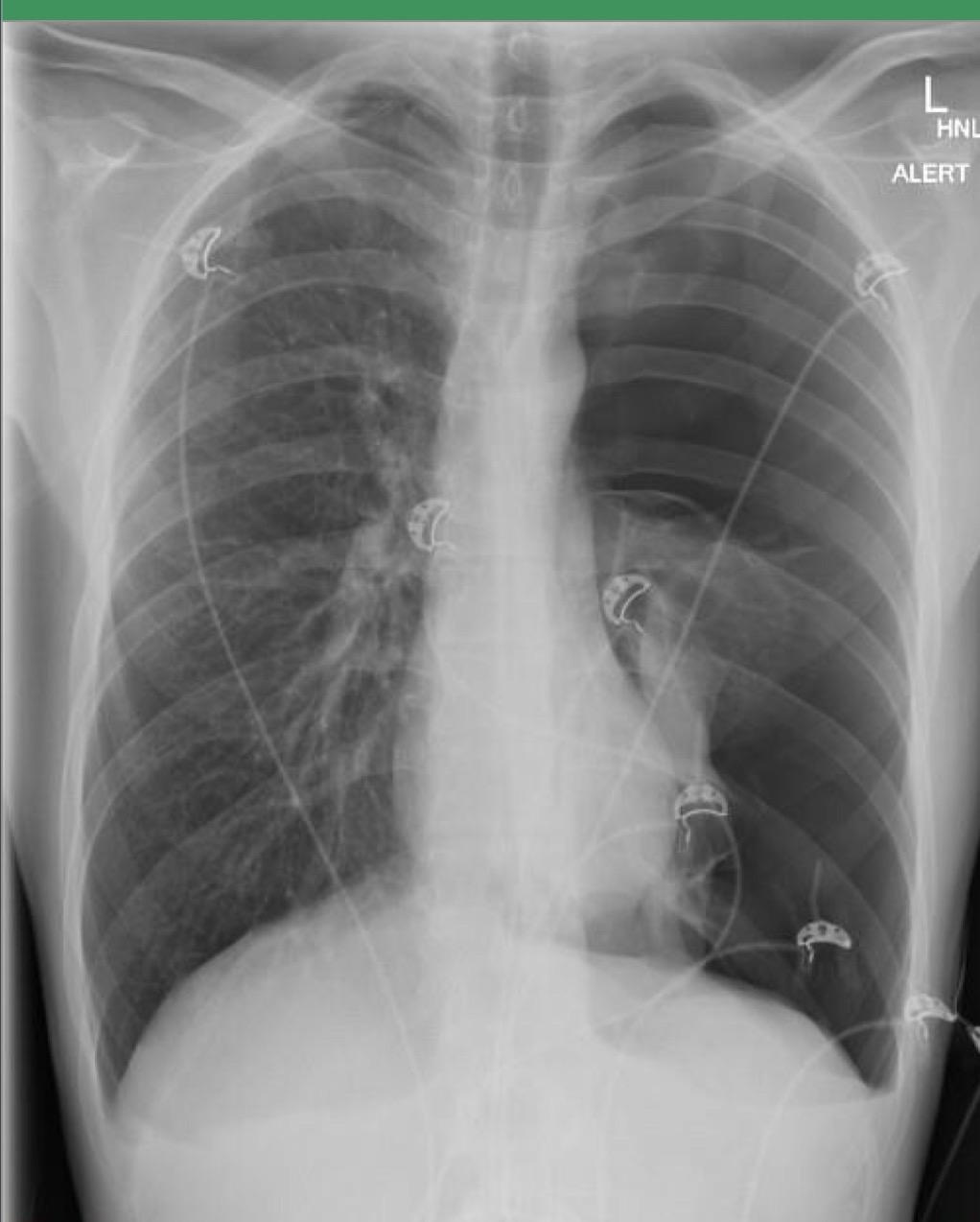
Tension Pneumothorax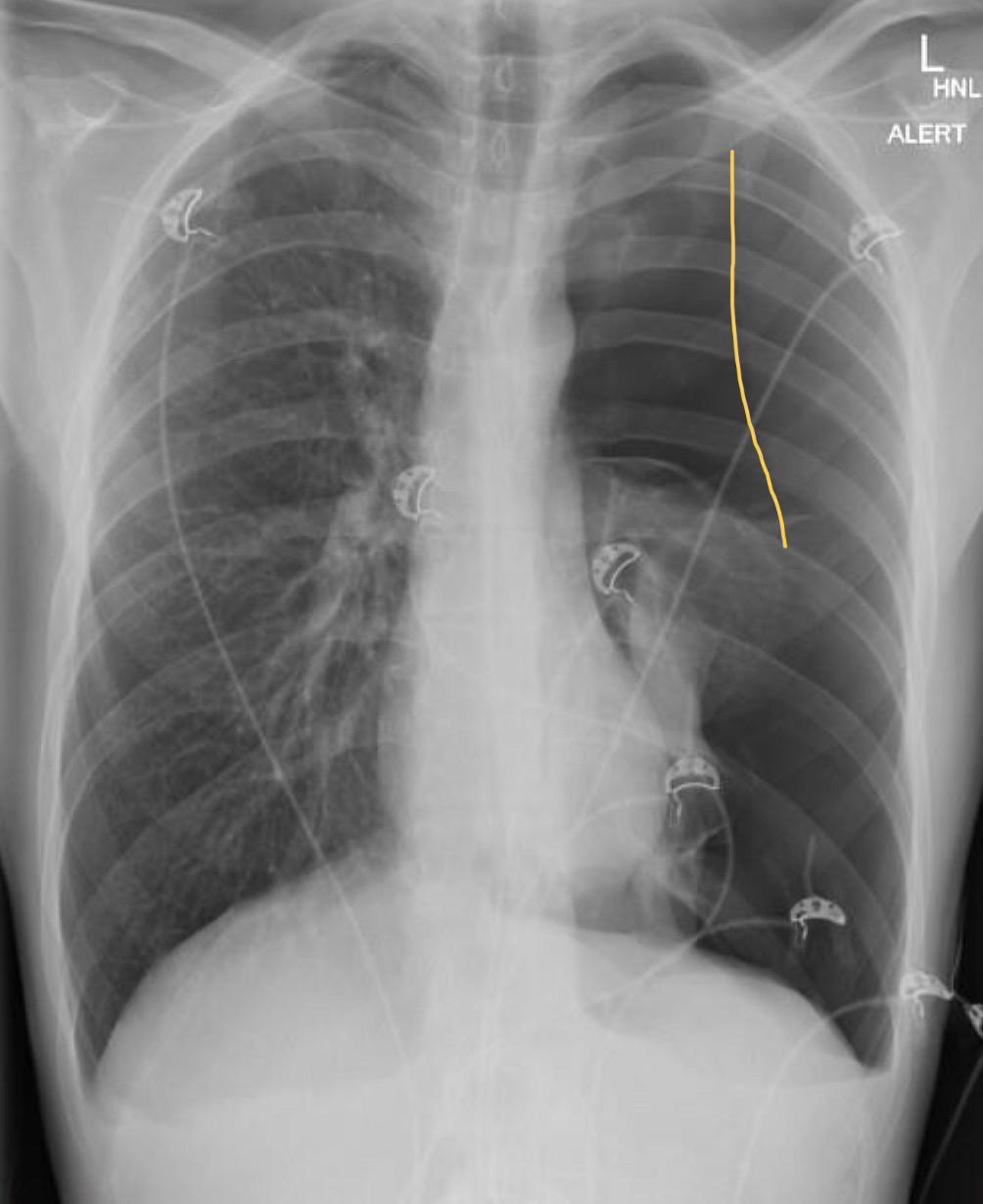
38
What pathology is shown in this X ray?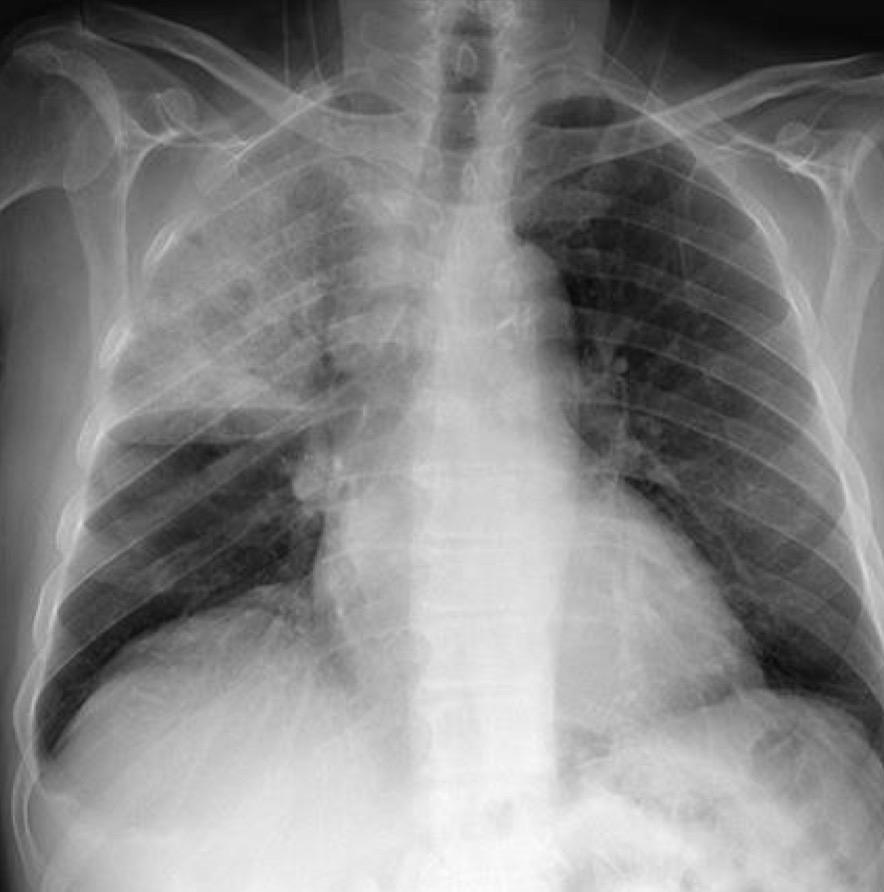
Pmeumonia
39
What pathology is shown in this X ray?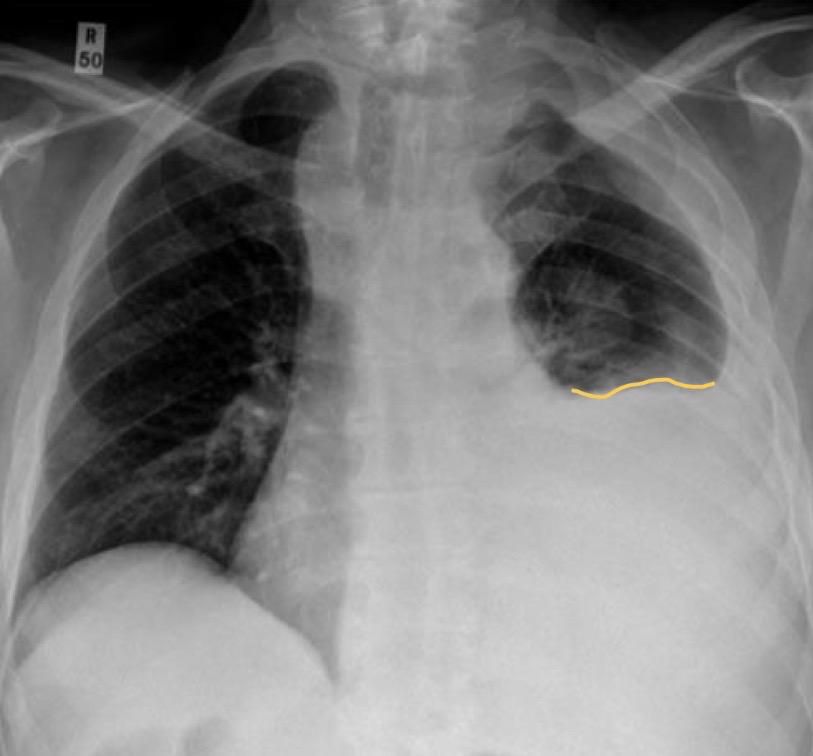
Pleural Effusion
Notice the meniscus
Notice the meniscus
40
What pathology is shown in this X ray?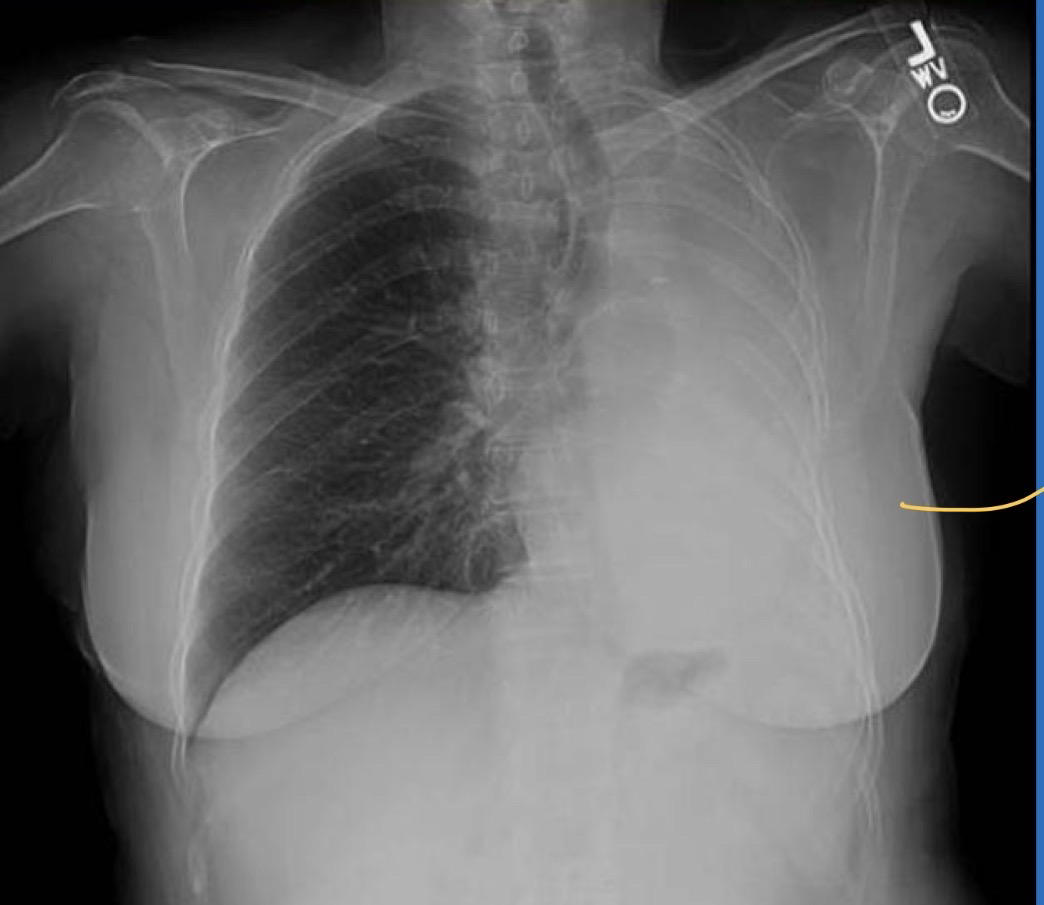
Pneumonectomy - removal of the whole lung
41
What pathology is shown?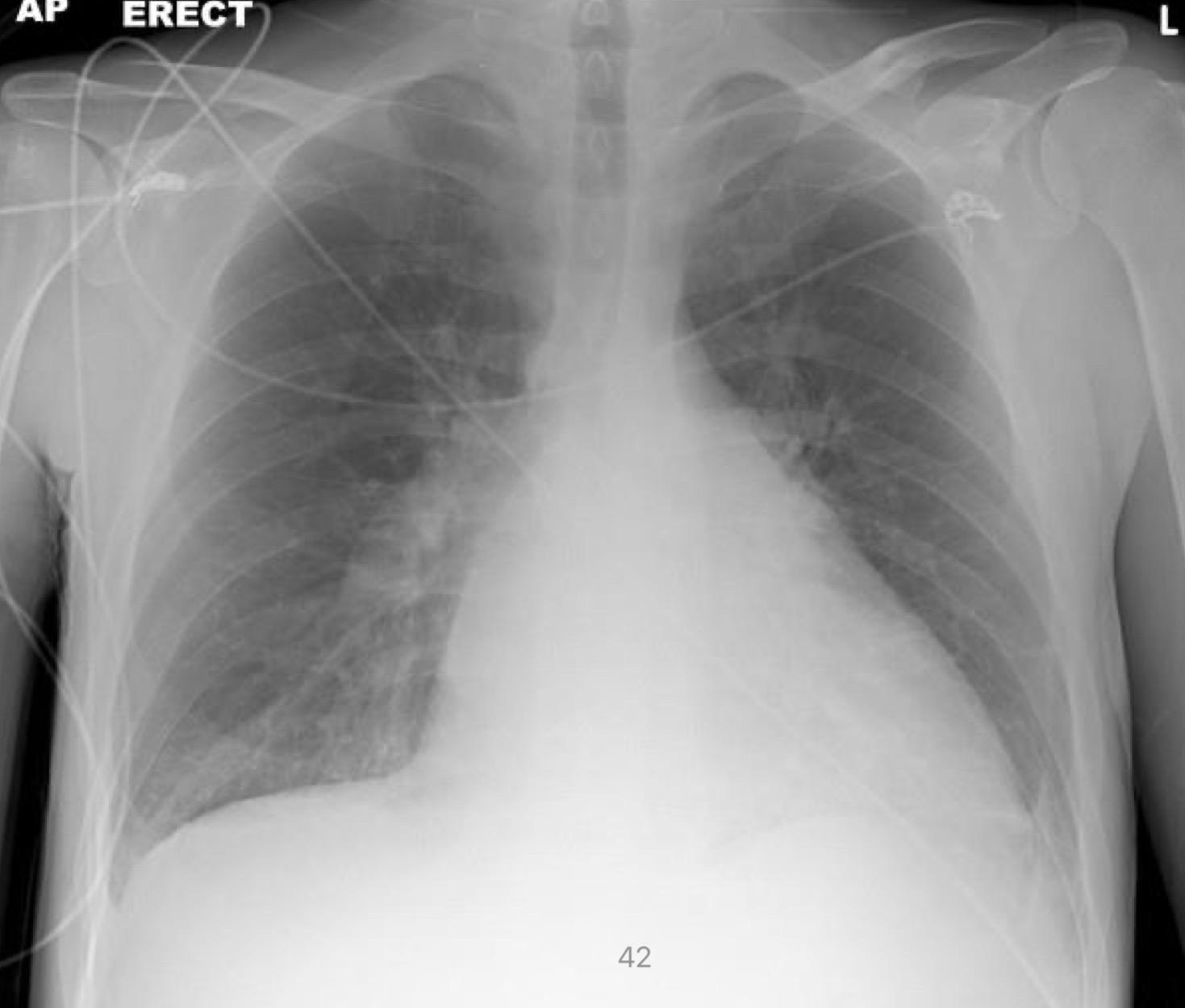
Cardiomegaly
Mehr Karteikarten: Medizin und Gesundheit
Allergy, Immunology, RheumatologyMedizin und Gesundheit · EnglischMadiPreventing and treating diseaseMedizin und Gesundheit · Englischavacado_217 - boneMedizin und Gesundheit · EnglischelijahneurotransmisoresMedizin und Gesundheit · SpanischAshleyBLD 204Medizin und Gesundheit · EnglischRemyStappNeuronal PhysiologyMedizin und Gesundheit · EnglischEmanDiabetes mellitusMedizin und Gesundheit · UngarischRitikePediatric Nurse Practitioner (PNP) Management Exam #1Medizin und Gesundheit · EnglischAddieRespiratory System PhysiologyMedizin und Gesundheit · Englischeinem OutLearn-StudierendenHemolytic Disease of the Fetus and Newborn (HDFN)Medizin und Gesundheit · EnglischKimNervous SystemMedizin und Gesundheit · EnglischVoytekLifeCycle Nut ch 9Medizin und Gesundheit · Englischkiwi
Alle Decks: Medizin und Gesundheit
Lerne diese Decks in der App
Kostenlos auf iPhone, Android, Mac und im Web. Füge jedes Deck mit einem Tipp zu deinem Konto hinzu.

