Ecology and Biogeography
Réviser ces flashcardsGratuit · répétition espacée · iPhone, Android, Mac et web
Toutes les cartes
1
relationships between population, communities, ecosystem and biomes
Multiple individuals of one species
living in the same area are a population. Interacting populations of different species are communities. A community plus its
associated non-living systems (soil, air, water etc.) form an ecosystem. Similar ecosystems are grouped into classes called biomes.
2
autotrophs vs heterotrophs
Organisms (mostly plants) that obtain energy directly from non-living sources, by photosynthesis or chemosynthesis, are called
“autotrophs” (from Greek words for “self” and “feeding”). Other organisms are known as heterotrophs (“other feeding”); this
indicates that they obtain organic matter by consuming the bodies of other organisms. Heterotrophs then obtain energy by
reacting some of that organic carbon with oxygen. Animals are typically heterotrophs, but so are some plants and most fungi.
3
gross primary production and net primary production
When plants create energy, they create cellulose. This glucose either gets converted to biomass (so mass for the organism) or gets released during cellular respiration. The gross primary production is the total amount of glucose that is created, regardless of whether it gets released due to cellular respiration or biomass. The net primary production is the sole amount that gets converted to biomass. So net_primary = gross - respiration. gross and net production are typically measured in terms of trophic levels however so net primary production refer to the entire amount of biomass available per trophic level and gross represents the total created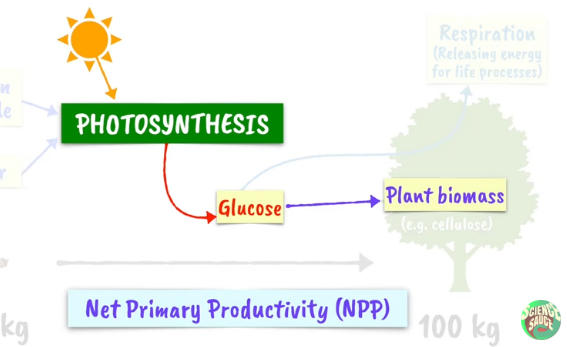
4
Explain the role of decomposers in this image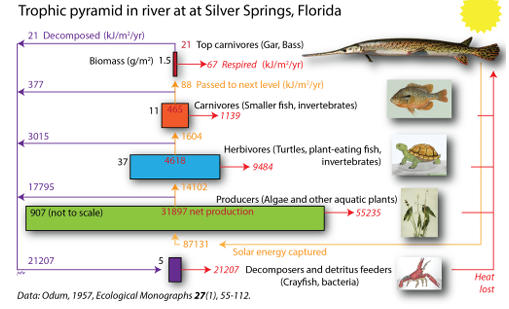
This image is showcasing the amount of biomass available at each level. The decomposers role is to break down and decompose all the dead organisms from each level as indicated by the purple arrows that go towards the decomposers from each level
5
ecological niche and invasive species
Each organism in an ecosystem occupies its own niche. When another competitor appears to threaten this role, they will try to eliminate each other (this doesnt necessarily mean they directly do it, but more so the more efficient species will survive). The competitor that gets introduced later on is called the invasive species.
6
fauna and floras
Flora means the plant life of a particular place; fauna means the animal life there.
7
biogeographic provinces or ecozones
Barriers to migration that result in regions with distinct faunas and floras 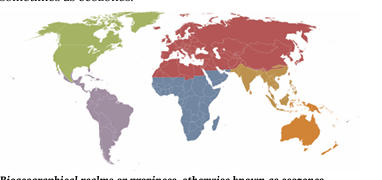
8
what period were trilobites common and what class of animals are they
They are arthropods (animals with a hard jointed exoskeleton) and were common in the paleozoic era (540 to 250 Ma) 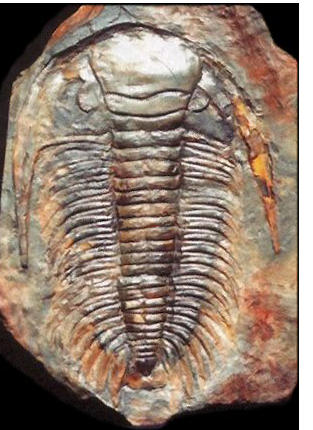
9
faunal provinces
type of biogeographic province where the fauna (type of animals) are different
Plus de flashcards : Sciences
MCB 134: Chromosomes and GenomicsSciences · AnglaisAshMembrane, Water Potential, and MetabolismSciences · AnglaisYueranBiology: Gene Expression (Ch. 17)Sciences · AnglaismbEvolutionSciences · AnglaiskoolUnit 4.1 & 4.2 benzene and isomerismSciences · AnglaisIanto06Kinetic Theory of Gases (KTG)Sciences · AnglaisclashingConservation Bio MidtermSciences · AnglaisbumpysnorkelKinetic Theory Of Gases FlashcardsSciences · AnglaisAtharvaReactions (Blank Reagents)Sciences · AnglaisADNA ReplicationSciences · CoréenDanteIonic bondingSciences · AnglaisesmeeMolecular ShapesSciences · Anglaisoohtangerine
Révise ces decks dans l’app
Gratuit sur iPhone, Android, Mac et le web. Ajoute n’importe quel deck à ton compte en un tap.

