Immunology: Adaptive Immunity and Immunoglobulins
Réviser ces flashcardsGratuit · répétition espacée · iPhone, Android, Mac et web
Toutes les cartes
1
What is the main difference between innate and adaptive antigen recognition?
Innate immunity recognizes broadly conserved motifs; adaptive immunity recognizes highly diverse specific epitopes.
2
2 universal rules of immunology
1. Nothing happens without a receptor-ligand interaction
2. If something happens, it’s usually mediated by cytokines and chemokines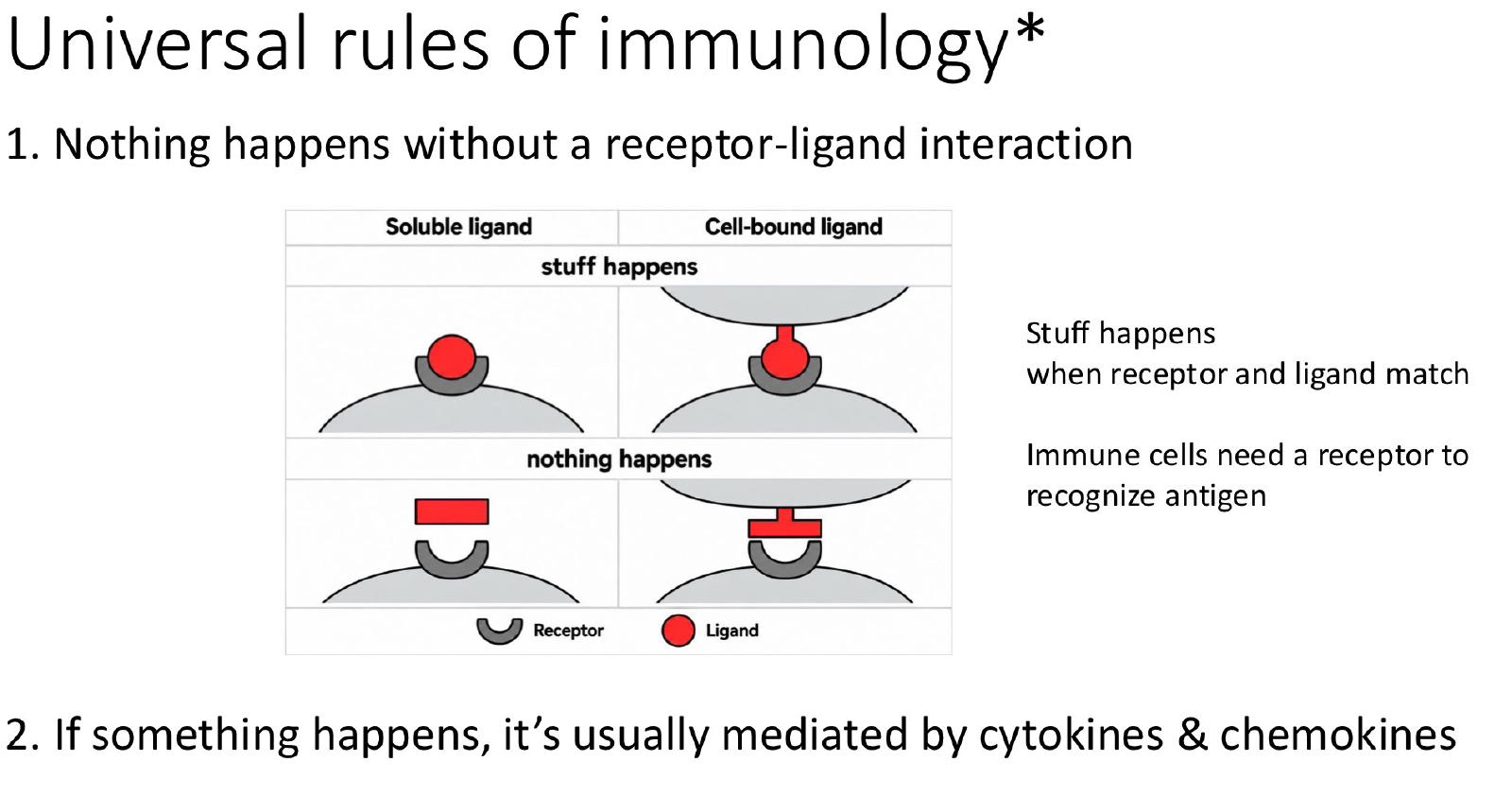
2. If something happens, it’s usually mediated by cytokines and chemokines
3
What receptors recognize antigens in adaptive immunity?
B-cell receptors (BCRs) and T-cell receptors (TCRs).
4
How are adaptive immune receptors distributed among lymphocytes?
Clonally; each lymphocyte has its own receptor specificity.
5
What are the basic structural components of an immunoglobulin?
Two identical heavy chains, two identical light chains, and a hinge region.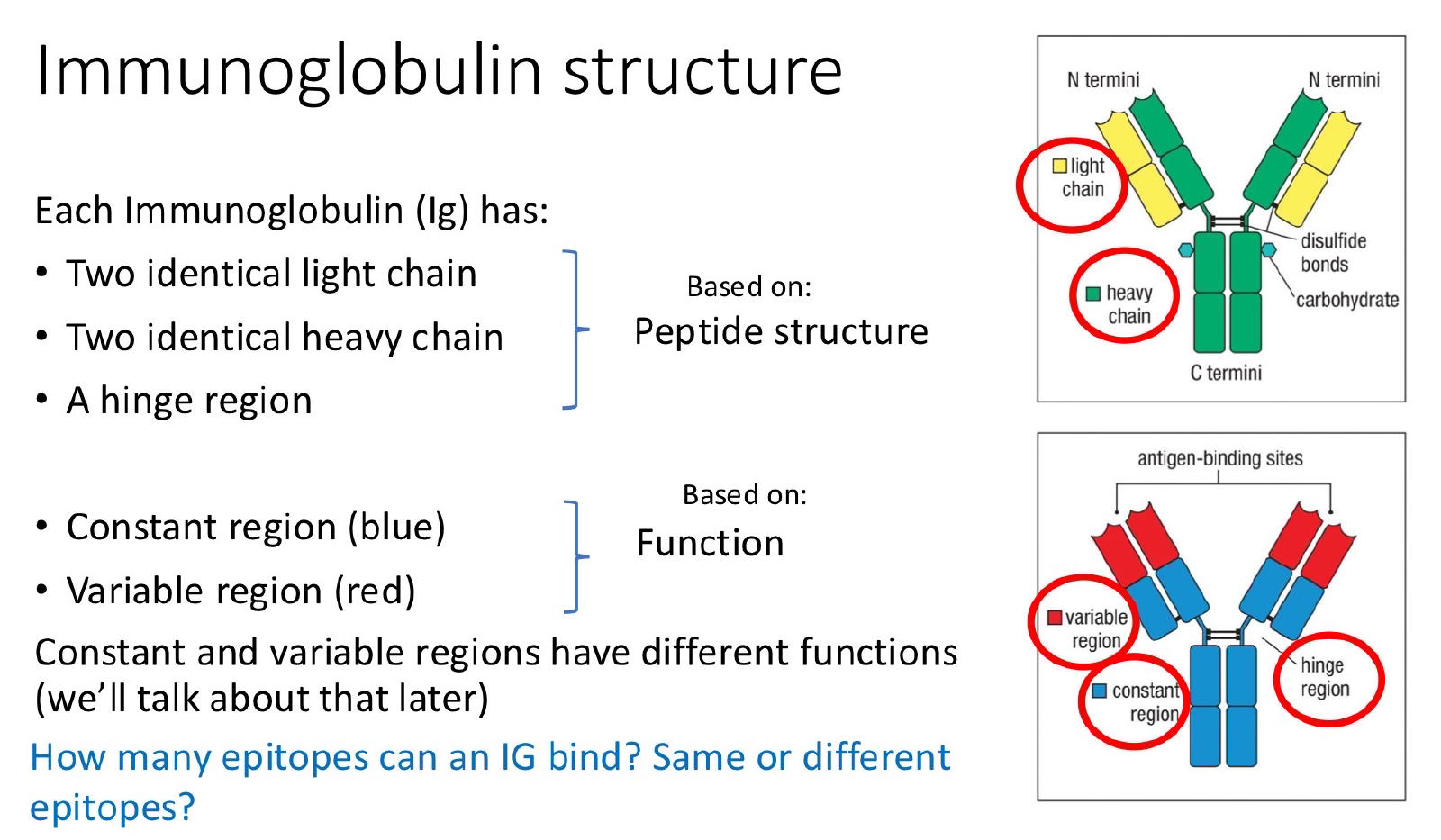
6
What does the variable region of an immunoglobulin do?
Forms the antigen-binding site and determines epitope specificity.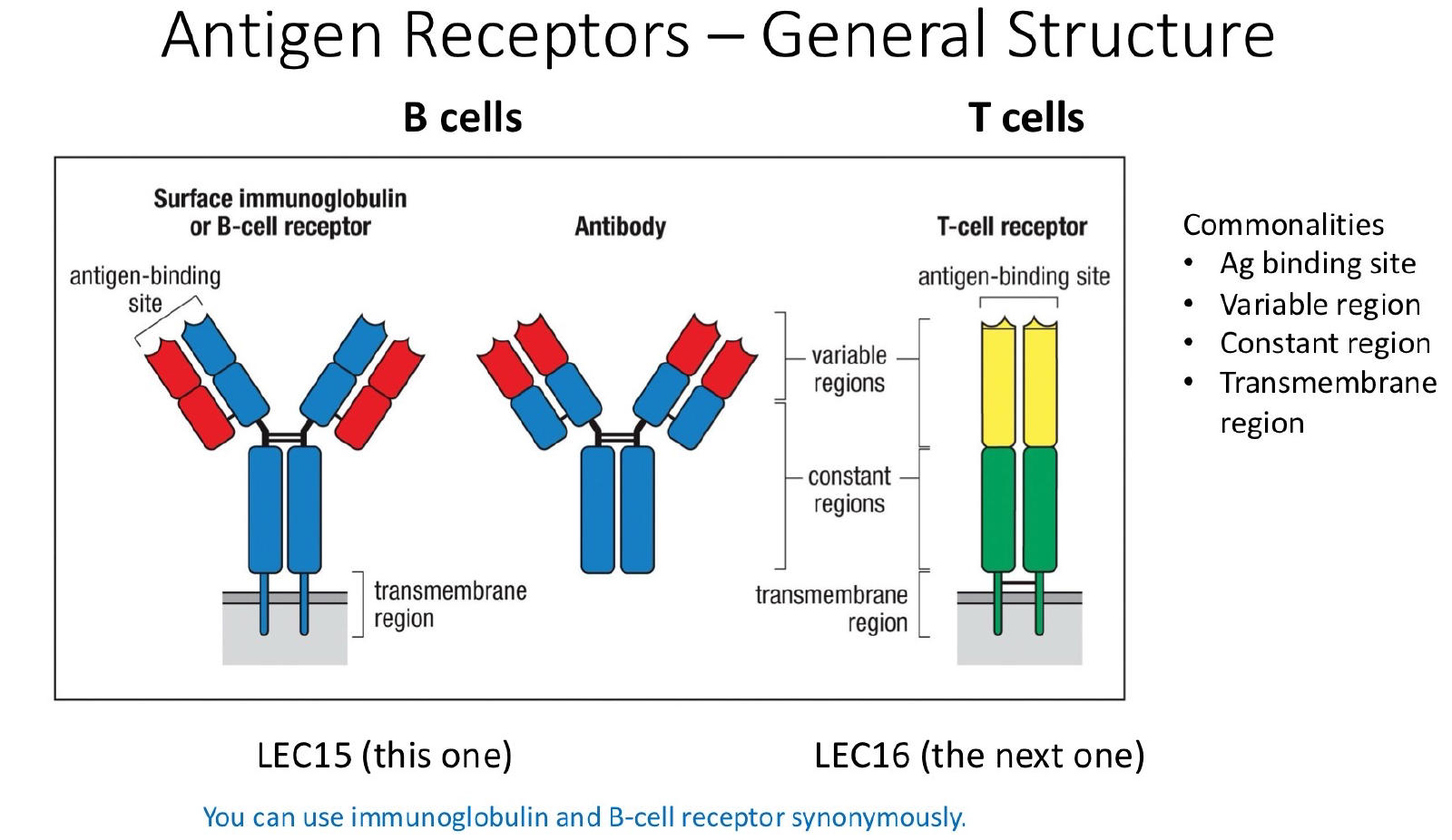
7
What does the constant region of an immunoglobulin determine?
The antibody’s function, not its antigen specificity.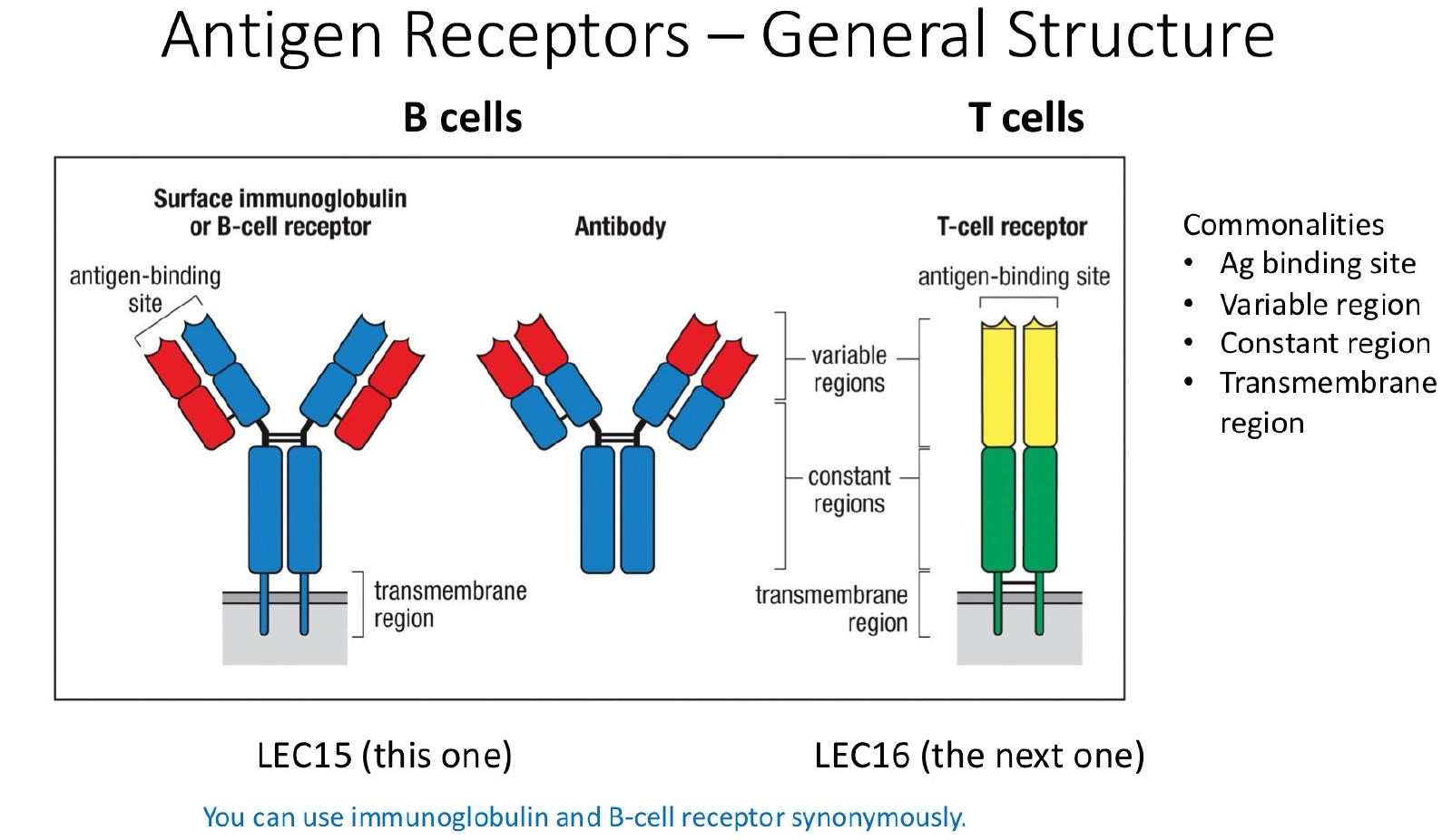
8
What does the Fab region of an antibody do?
Binds antigen.
9
What does the Fc region of an antibody do?
Interacts with Fc receptors on other cells to carry out antibody functions.
10
Hinge regions provide what for IgG, IgA, not in IgM, IgE
conveys flexibility
11
Isotopes IgA form what and IgM form what? (2)
dimers (IgA) and pentamers (IgM)
12
Which immunoglobulin is the first to appear after infection?
IgM.
13
Which immunoglobulin is most abundant and long-lasting in blood?
IgG.
14
Which immunoglobulin is associated with allergic reactions and parasites?
IgE.
15
Which immunoglobulin is secreted at mucosal barriers?
IgA.
16
What types of antigens can B cells directly recognize? (4)
Proteins, lipids, carbohydrates, and nucleic acids (DNA)
17
What is a linear epitope?
A continuous stretch of amino acids recognized by a BCR or antibody.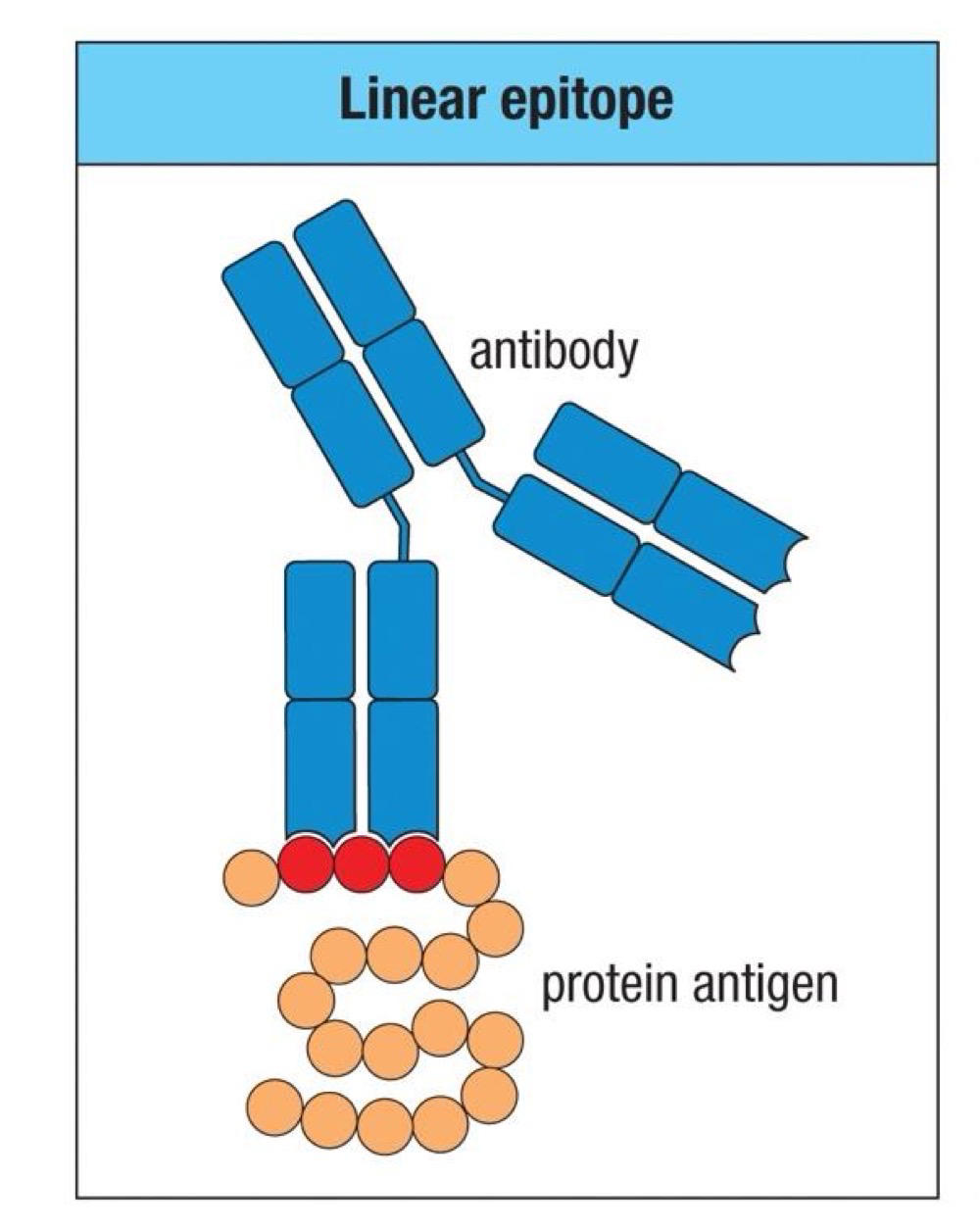
18
What is a conformational or discontinuous epitope?
Amino acids brought together by protein folding or assembly.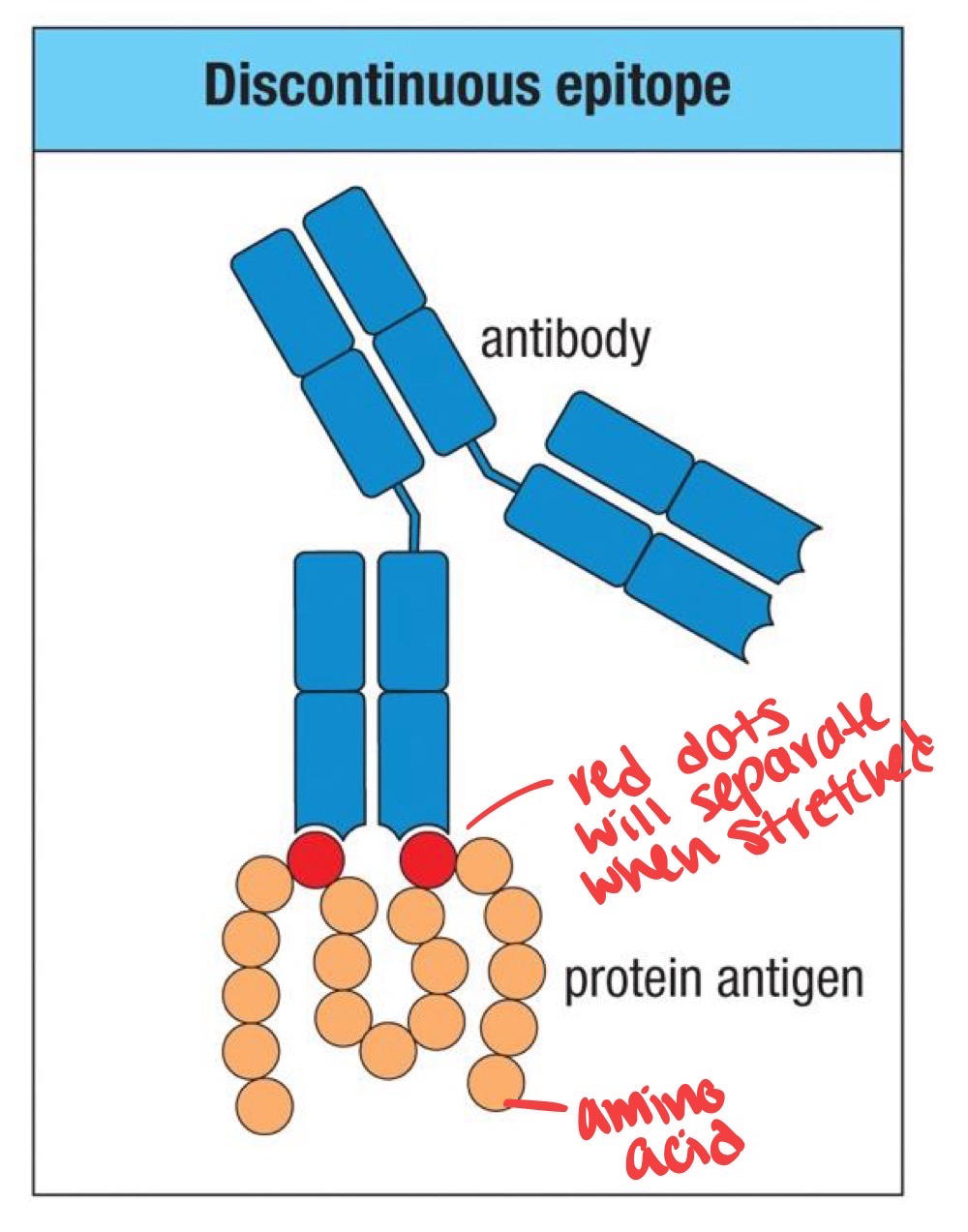
19
What happens to a discontinuous epitope if the protein loses its normal 3D structure?
The epitope can be lost.
20
What are hypervariable regions (HVs) also called? What is the function of the CDRs?
1. Complementarity-determining regions (CDR1, CDR2, and CDR3).
2. They contain amino acids that interact directly with the epitope.
2. They contain amino acids that interact directly with the epitope.
21
How many antibody specificities does an individual B cell produce?
One.
22
When is the initial diversity of B-cell receptors generated?
During B-cell development before antigen exposure.
23
What two processes create initial BCR diversity?
Random gene-segment recombination and random nucleotide addition.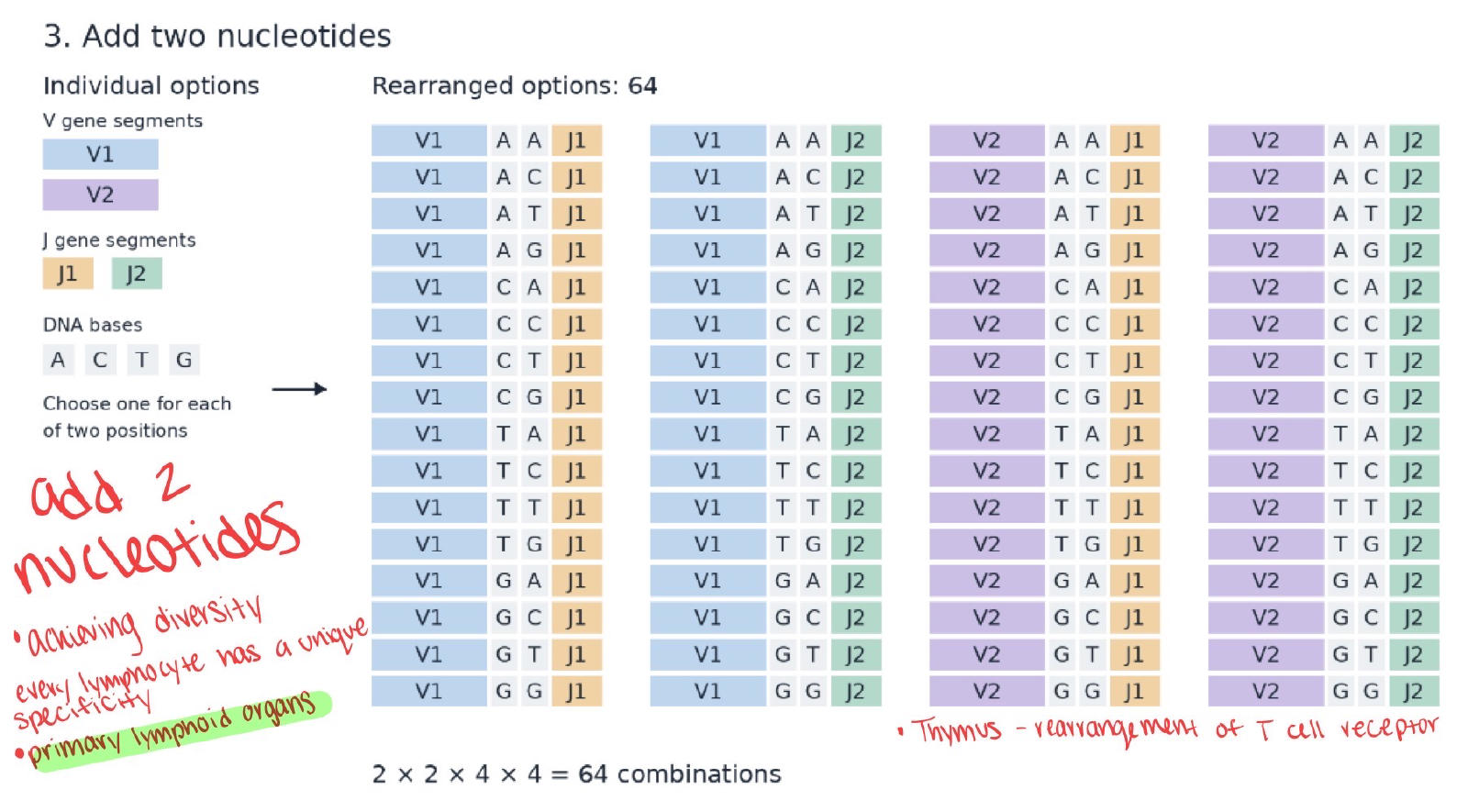
24
Where does initial BCR diversity develop?
In the bone marrow.
25
What is somatic or V(D)J recombination?
DNA-level rearrangement of Ig gene segments that creates unique BCRs.
26
Which gene segments rearrange to form the immunoglobulin heavy chain?
V, D, and J segments.
- has greater diversity
- has greater diversity
27
Which gene segments rearrange to form the immunoglobulin light chain?
V and J segments.
28
Does V(D)J recombination occur at the DNA or RNA level?
DNA level.
29
Why does random nucleotide addition increase antibody diversity?
It creates additional unique sequences at gene-segment junctions.
30
What molecules allow the BCR to transmit signals into the B cell?
Igα and Igβ.
31
What is the functional B-cell receptor complex?
Membrane immunoglobulin associated with Igα and Igβ.
32
What form of immunoglobulin is produced first by developing B cells?
Membrane-bound immunoglobulin.
33
How can the same Ig gene produce membrane-bound and secreted antibody?
Differential mRNA processing/splicing of the heavy chain.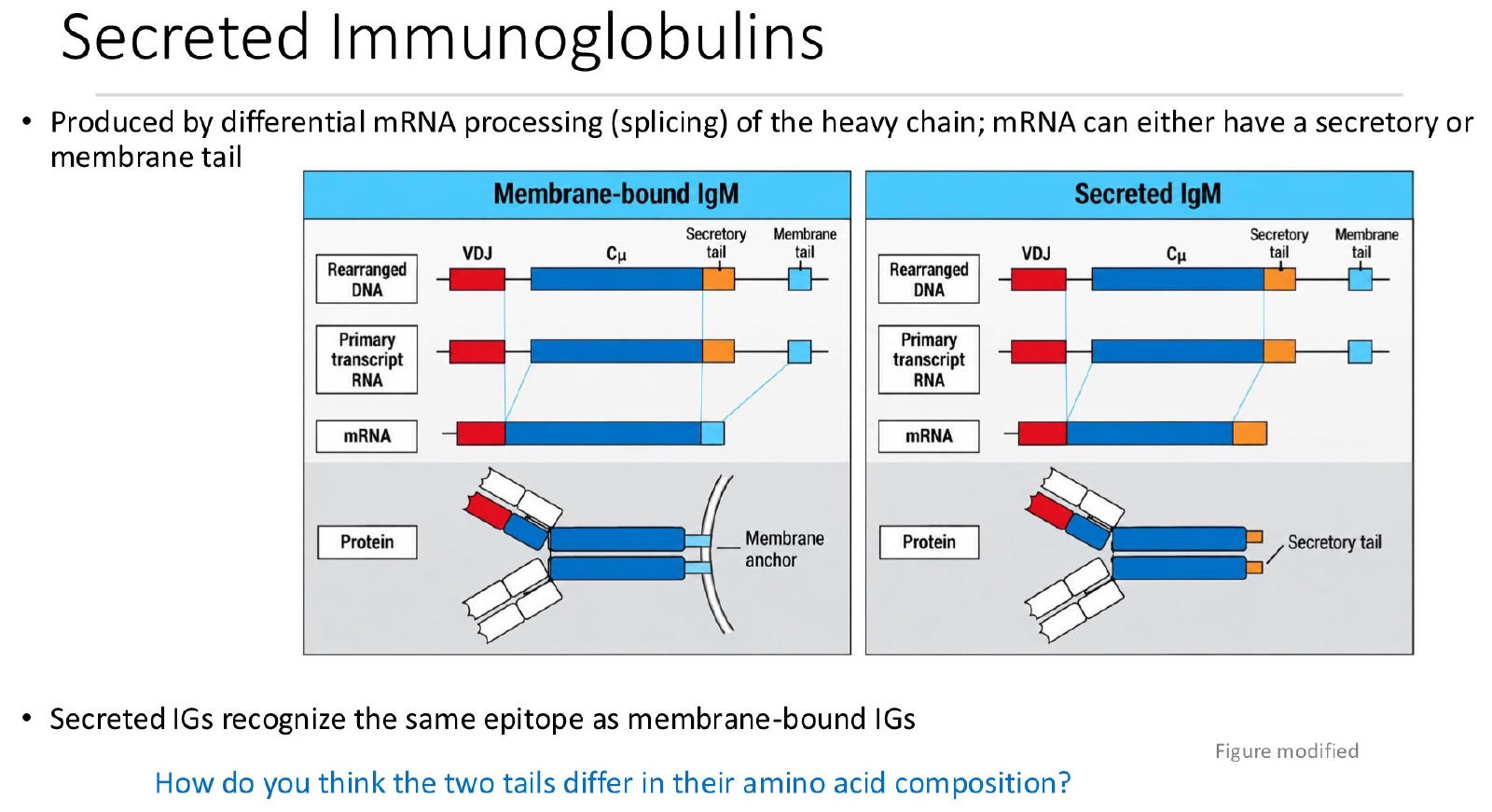
34
Does switching from membrane-bound to secreted Ig change antigen specificity?
No; both recognize the same epitope.
35
What is tested at the pre-B-cell checkpoint? EXAM
Whether the rearranged heavy chain is functional and self reactive.
36
Where is the final B-cell developmental checkpoint described in this lecture?
The spleen.
37
What is central tolerance?
Removal of self-reactive B cells in the bone marrow.
38
What is peripheral tolerance?
Removal of self-reactive B cells in peripheral tissues such as the spleen.
39
Unlike in innate immunity, B-cell receptors…
uniquely recognize a single epitope
40
The ability to bind to many different types of epitopes is:
1. Due to recombination events during B-cell development
2. When random nucleotides are incorporated
2. When random nucleotides are incorporated
41
In the pre-b-cell stage, which of the following is false
- Strong signals through the BCR allow survival
- There is a surrogate light chain
- Weak signaling allows for proliferation and light chain arrangement
Plus de flashcards : Médecine et santé
Lecture 3 - Thrombophilia Médecine et santé · AnglaiskarebearSkeletal Muscle Anatomy and PhysiologyMédecine et santé · AnglaisLucieNursing Final Exam: Endocrine, Respiratory, and NeurologicalMédecine et santé · AnglaisIreneCancer de cervix Médecine et santé · EspagnolFERNANDAPhysio S1 EOY AssessmentMédecine et santé · AnglaisAndyEsophagus, Stomach, Duo, JejunMédecine et santé · AnglaisKrisMedCardssection2_quizlet_flashcardsMédecine et santé · AnglaisJoshImmune SystemMédecine et santé · Anglaiscgilnursing18 - bone anatomyMédecine et santé · AnglaiselijahRespiration experiments Médecine et santé · AnglaisLoganAnalgesics C/NMédecine et santé · AnglaisVictorTNM staging - OncologyMédecine et santé · AnglaisALICE
Tous les decks : Médecine et santé
Révise ces decks dans l’app
Gratuit sur iPhone, Android, Mac et le web. Ajoute n’importe quel deck à ton compte en un tap.

