Immunology: T Cell Development and MHC
Réviser ces flashcardsGratuit · répétition espacée · iPhone, Android, Mac et web
Toutes les cartes
1
How is TCR and BCR diversity generated?
Through V(D)J recombination with millions of specificities.
2
How is MHC diversity generated?
Through inherited genetic variation with thousands of specificities.
3
Does pathogen exposure change an individual's MHC repertoire?
No; MHC types remain fixed throughout life.
4
What is the purpose of positive selection in the thymus?
Ensure developing T cells can recognize self-MHC without reacting to self-peptides.
5
What is the purpose of negative selection in the thymus?
Remove strongly self-reactive T cells before they leave the thymus to prevent autoimmunity.
6
What does the Aire transcription factor do?
Allows thymic epithelial cells to express tissue-specific antigens by mTECs
- express antigens not in the thymus (like insulin)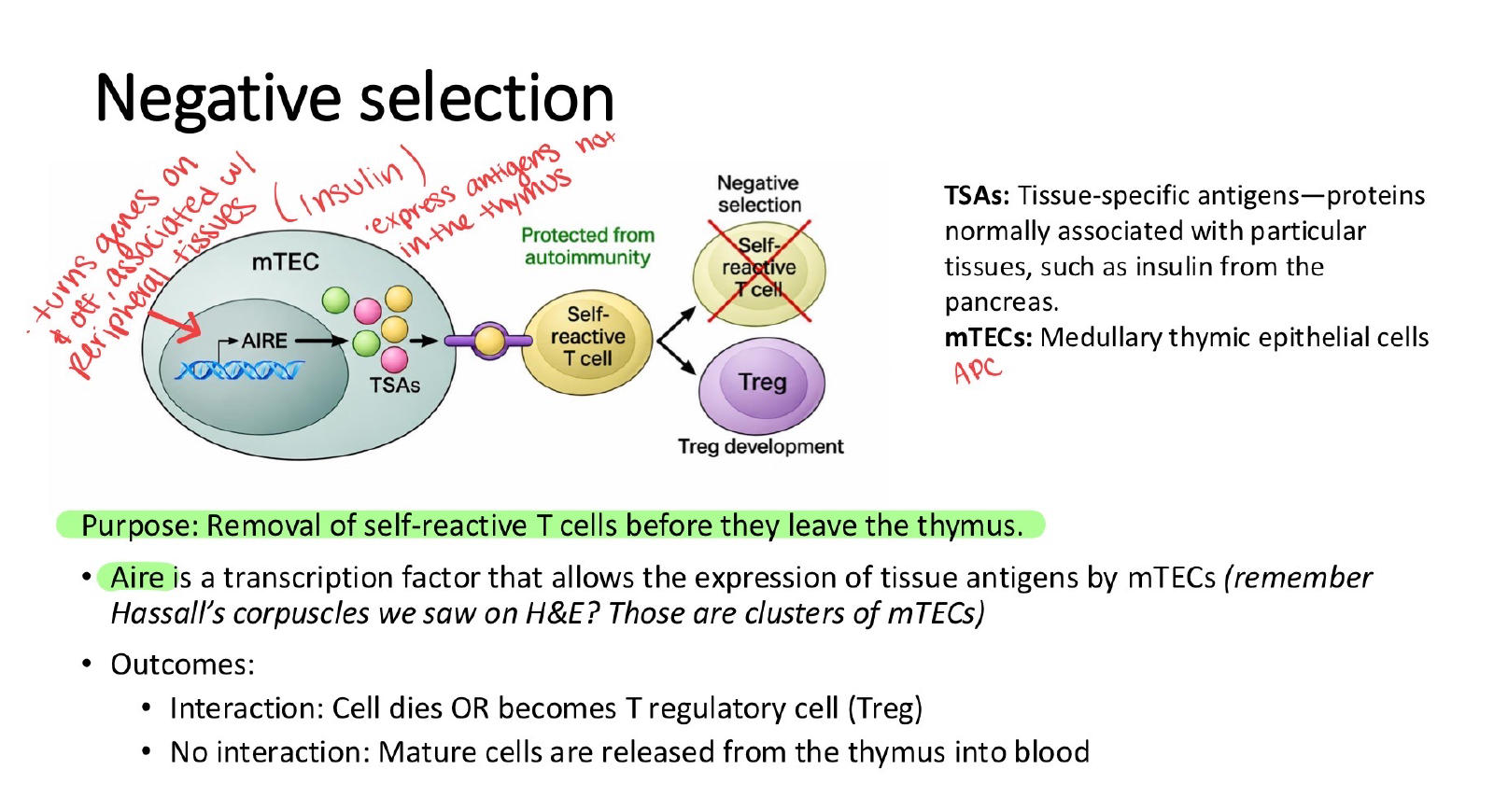
- express antigens not in the thymus (like insulin)
7
What can happen to strongly self-reactive T cells during negative selection?
They undergo apoptosis or become regulatory T cells (Tregs).
8
What four characteristics do mature T cells have when leaving the thymus?
1. Functional TCR, recognize antigen
2. CD4 or CD8 commitment (lineage decision)
3. Self-MHC recognition (positive selection)
4. Do not react to host antigens (Central tolerance/negative selection)
2. CD4 or CD8 commitment (lineage decision)
3. Self-MHC recognition (positive selection)
4. Do not react to host antigens (Central tolerance/negative selection)
9
What is a naïve T cell?
A mature T cell that has not yet encountered its specific antigen.
10
Where do antigens commonly enter the body during vaccination?
Through the skin or mucosal surfaces.
11
Where are naïve T cells typically activated after vaccination?
In the draining lymph node.
12
What transports antigens and immune cells from tissues to lymph nodes?
Afferent lymphatic vessels.
13
What is the primary function of dendritic cells (DCs)?
Capture antigens and activate naïve T cells, guided by chemokines, activated by PRR
14
Why are dendritic cells considered a bridge between innate and adaptive immunity?
They detect danger signals and present antigens to activate T cells.
15
What signals activate dendritic cells in peripheral tissues? (3)
PAMPs, DAMPs, and pro-inflammatory cytokines.
16
What happens to antigen uptake when dendritic cells become activated?
It decreases as the cells mature.
17
Why do activated dendritic cells increase chemokine receptor expression?
To migrate toward draining lymph nodes.
18
Where do activated dendritic cells migrate within lymph nodes?
T-cell zones.
19
Which MHC molecule presents intracellular antigens to CD8+ T cells?
MHC I.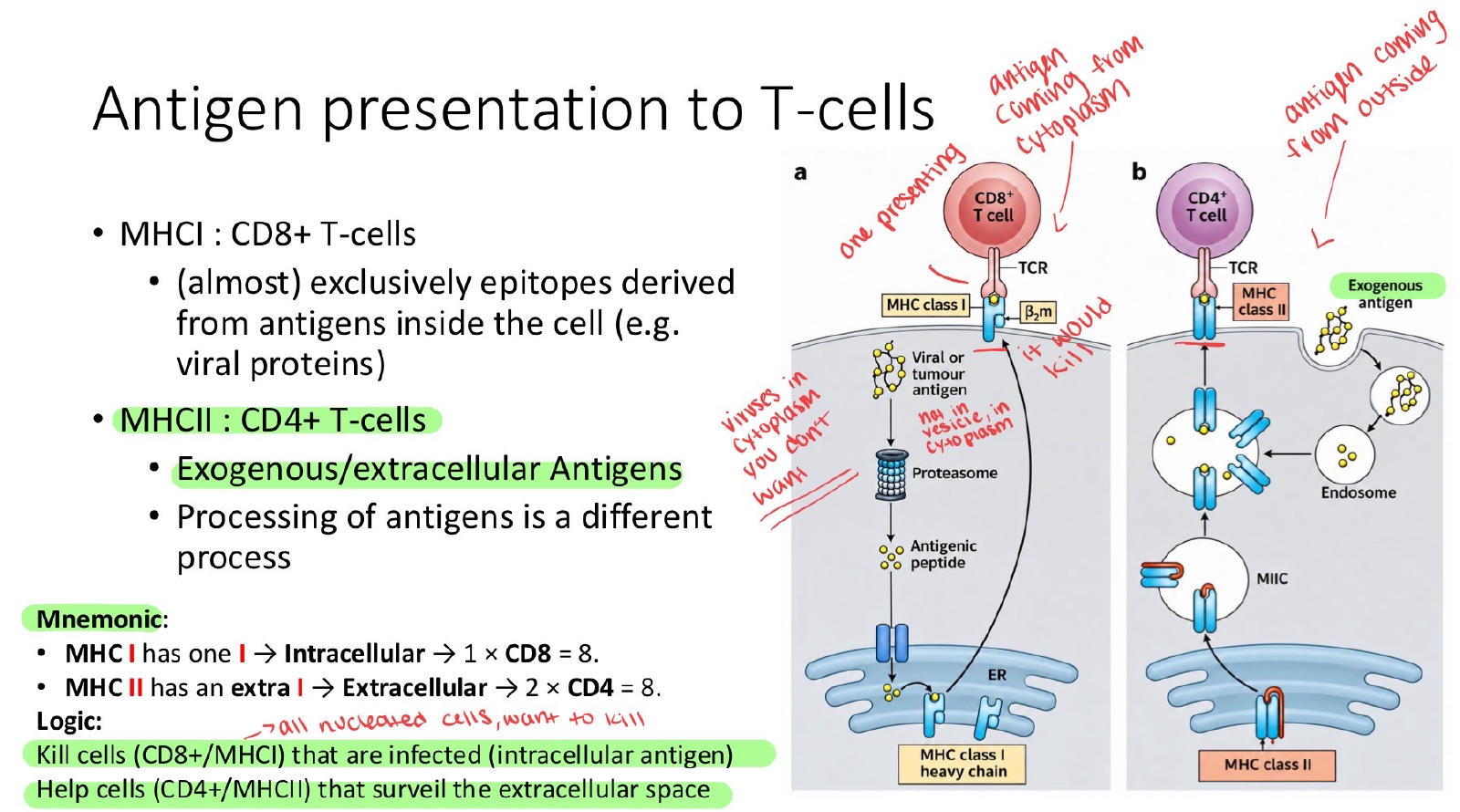
20
Which MHC molecule presents extracellular antigens to CD4+ T cells?
MHC II.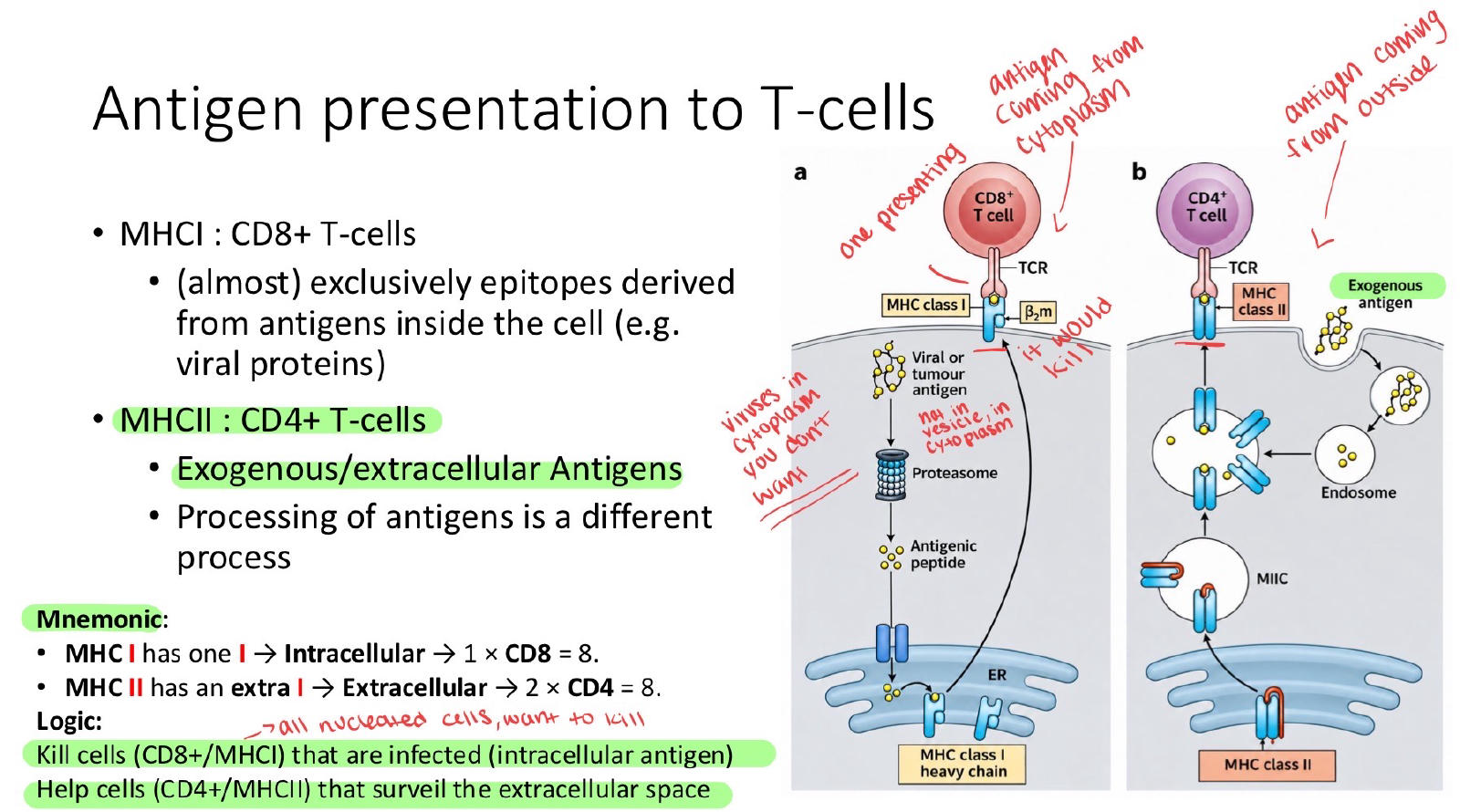
21
A dog is infected with a virus that produces proteins inside its cells. Which T cells recognize these peptides on MHC I?
CD8+ cytotoxic T cells.
22
What is signal 1 of dendritic cells during naïve T-cell activation?
Antigen-specific recognition of a peptide-MHC complex by the TCR.
23
What is signal 2 of dendritic cells during naïve T-cell activation?
Co-stimulation between CD28 on T cells and CD80/CD86 on dendritic cells.
24
What is signal 3 of dendritic cells during naïve T-cell activation?
Polarization; Cytokines and other signals that determine T-cell differentiation.
25
Which cells are especially important for activating naïve T cells?
Dendritic cells.
26
What happens when a naïve T cell receives the appropriate activation signals?
It proliferates and differentiates into effector T cells.
27
What is clonal expansion? How long between 1st and 2nd generation? How long between 2nd and 3rd generation?
1. Rapid multiplication of antigen-specific T cells with identical TCR specificity.
2. 24 hours
3. 4-8 hr per division
2. 24 hours
3. 4-8 hr per division
28
Why is the primary adaptive immune response relatively slow?
Naïve antigen-specific T cells must first become activated and proliferate.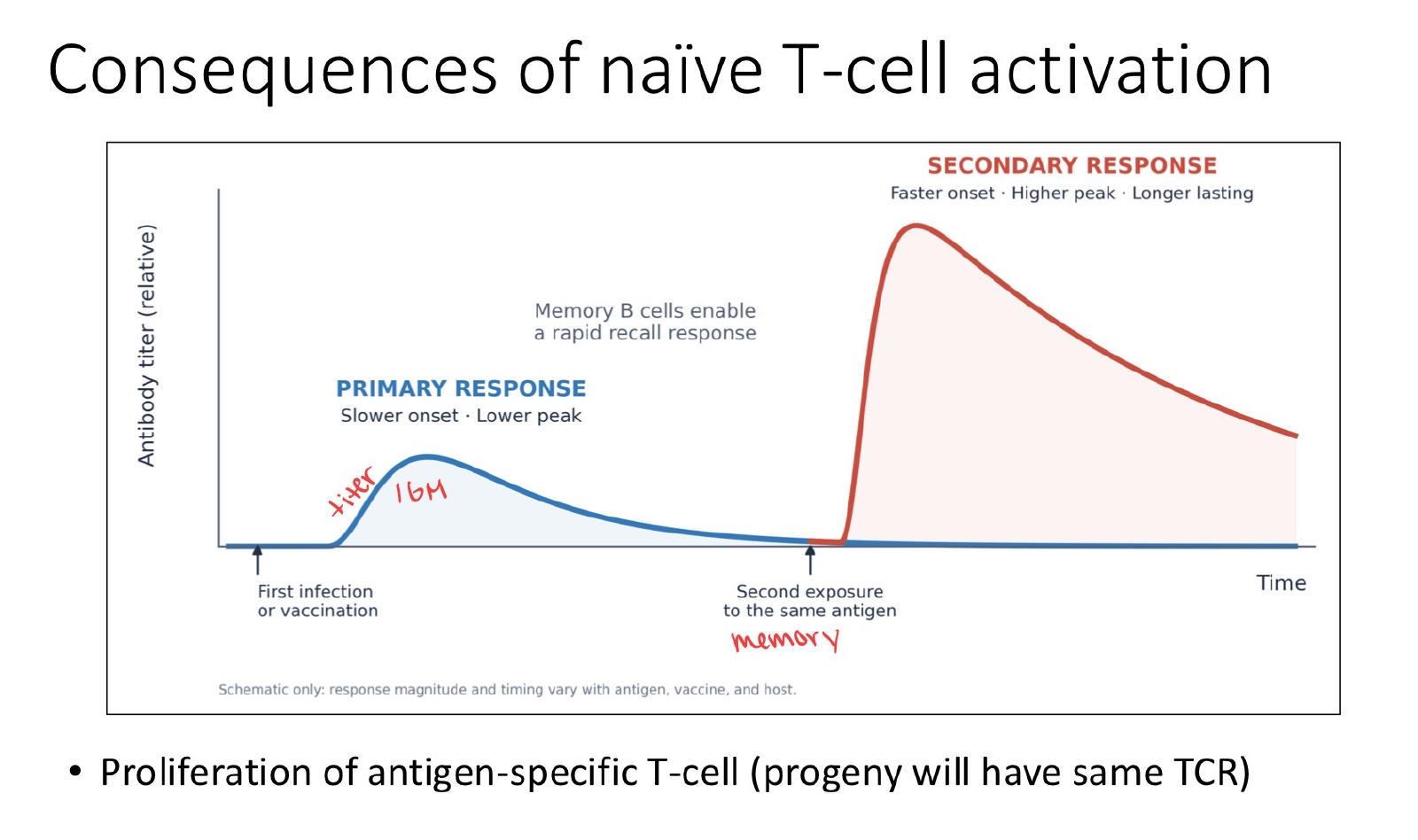
29
What determines which CD4+ helper T-cell subset develops?
Polarizing cytokines released by dendritic cells (signal 3) and then T helper cell subsets will go to cytokines 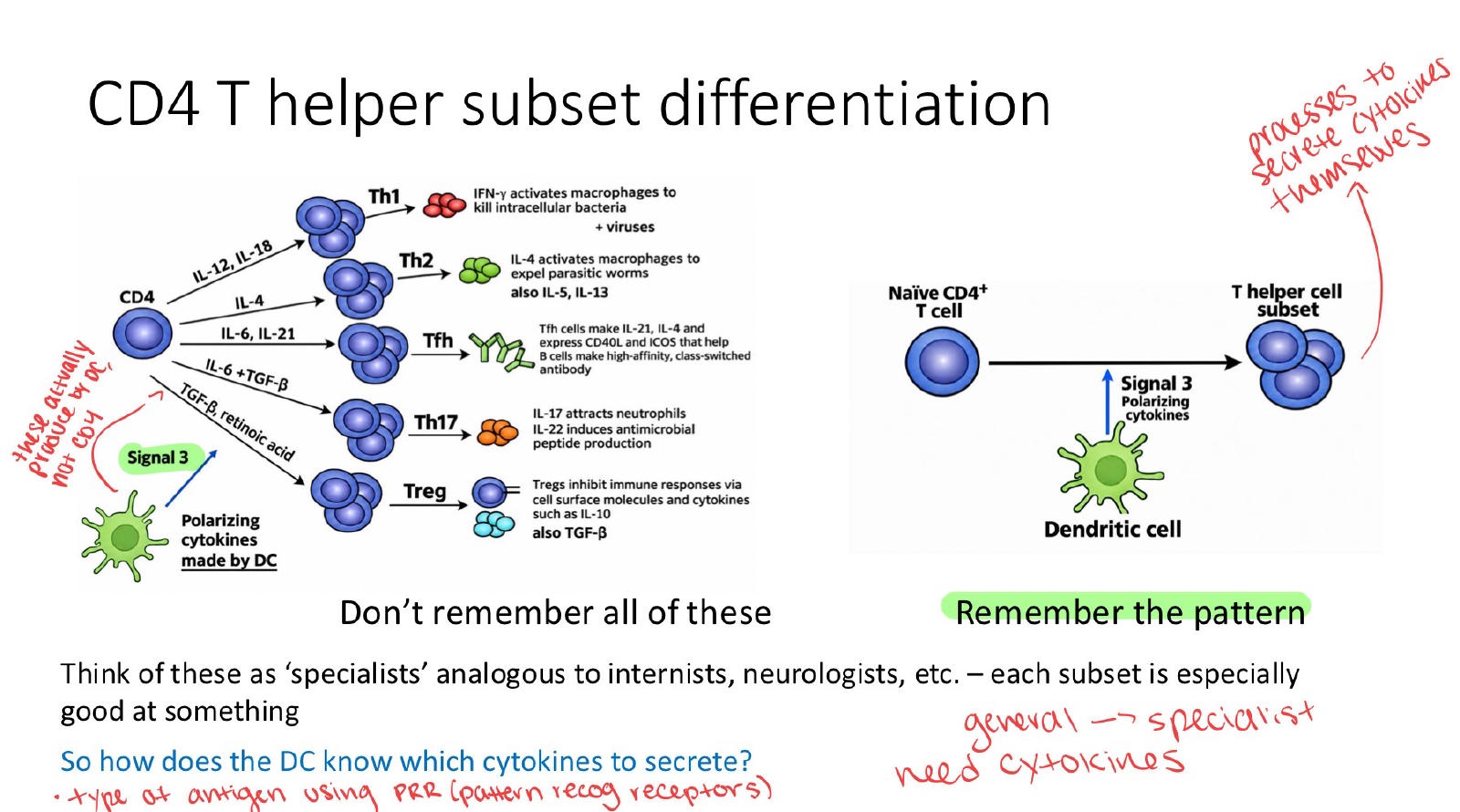
30
What is the main function of regulatory T cells (Tregs)?
Suppress excessive immune responses and maintain tolerance.
31
How do CD8+ cytotoxic T cells destroy target cells?
Release perforin and granzymes to induce apoptosis.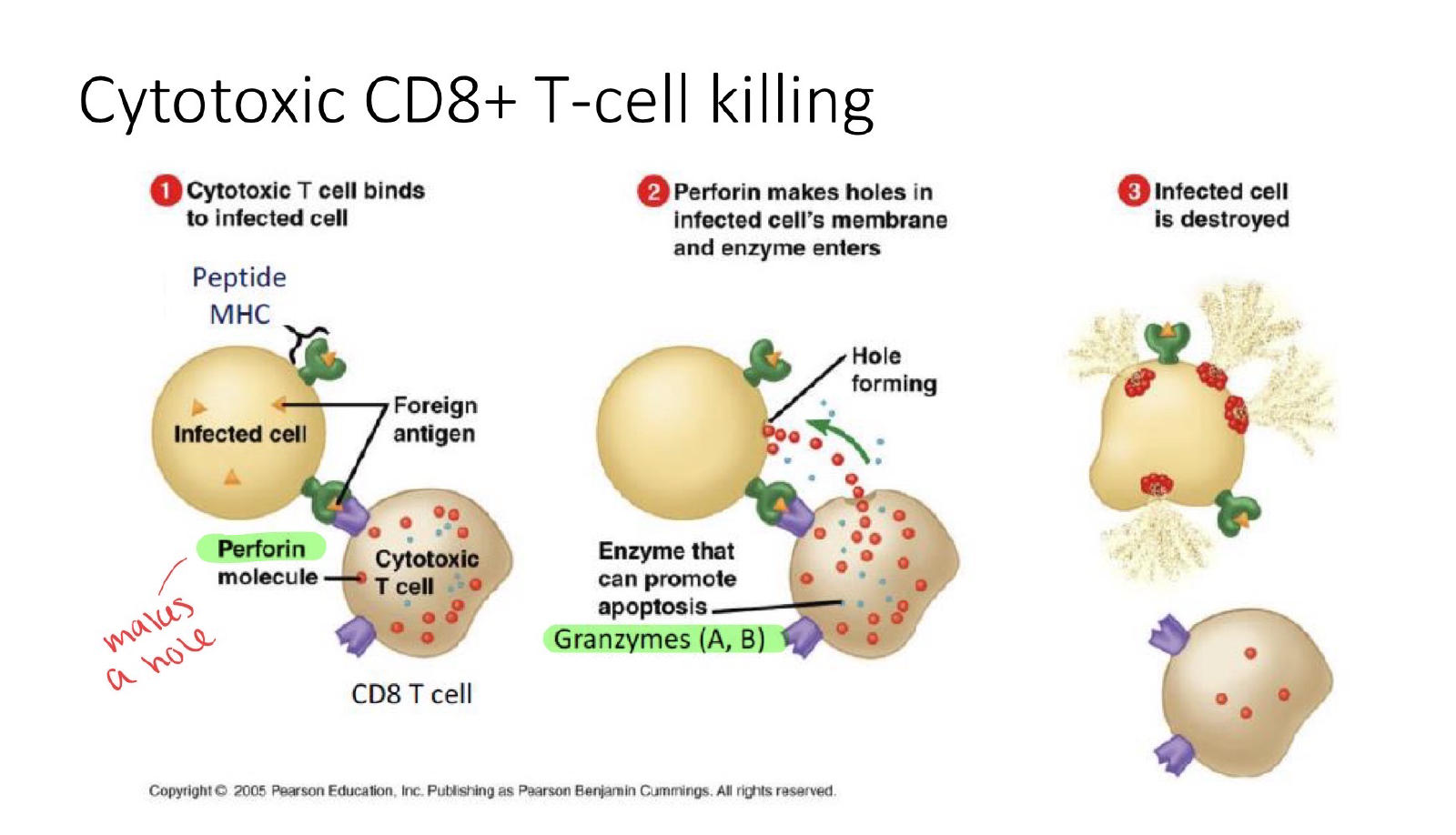
32
What does perforin do during cytotoxic T-cell killing?
Helps form pores that allow granzymes to enter target cells.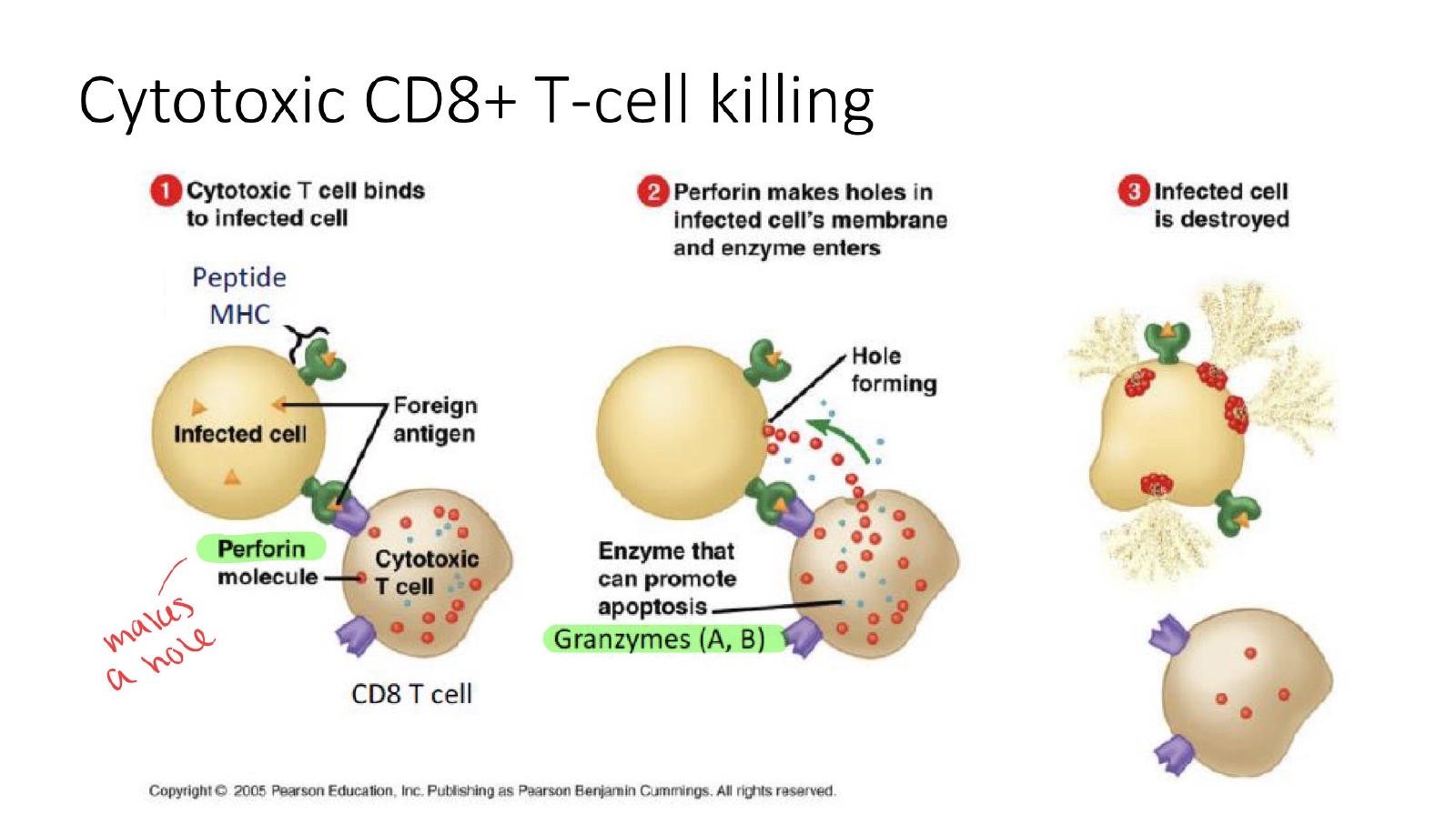
33
What do granzymes do during cytotoxic T-cell killing?
Trigger apoptosis in the target cell.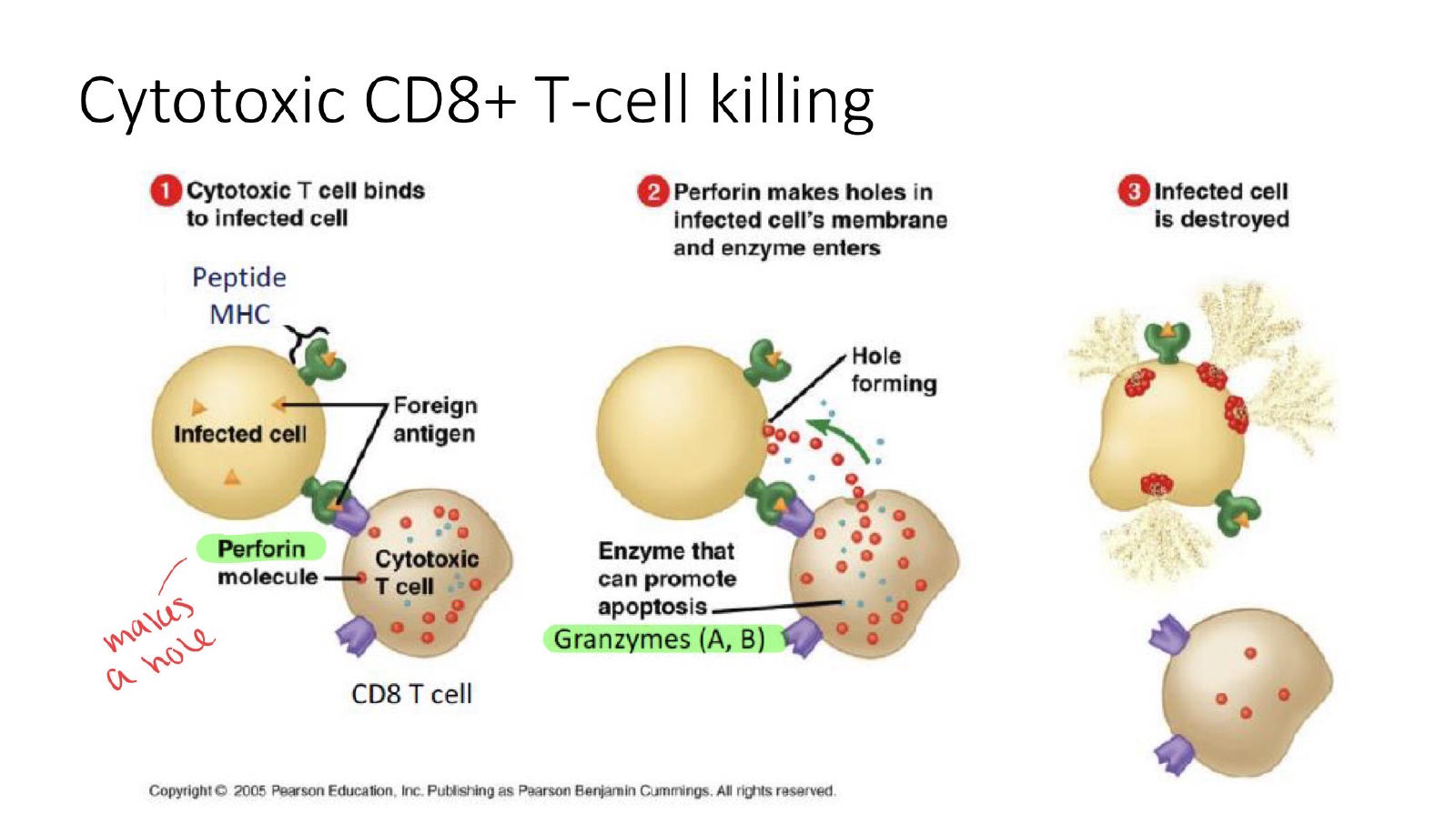
34
How do NK cells differ from CD8+ cytotoxic T cells?
NK cells kill without antigen-specific TCR recognition (without MHC1); CD8+ T cells recognize specific peptide-MHC I complexes.
35
How does MHC I affect NK-cell activity?
Normal MHC I expression provides an inhibitory signal that prevents killing, DO NOT KILL
36
A virus-infected cell loses MHC I expression. Which immune cell is more likely to kill it?
Natural killer (NK) cell.
37
Why might a CD8+ T cell kill an infected cell that still expresses MHC I?
Its TCR recognizes a specific viral peptide presented on MHC I.
38
Where do activated effector T cells travel after leaving lymph nodes?
Through circulation to peripheral tissues where inflammation is occurring.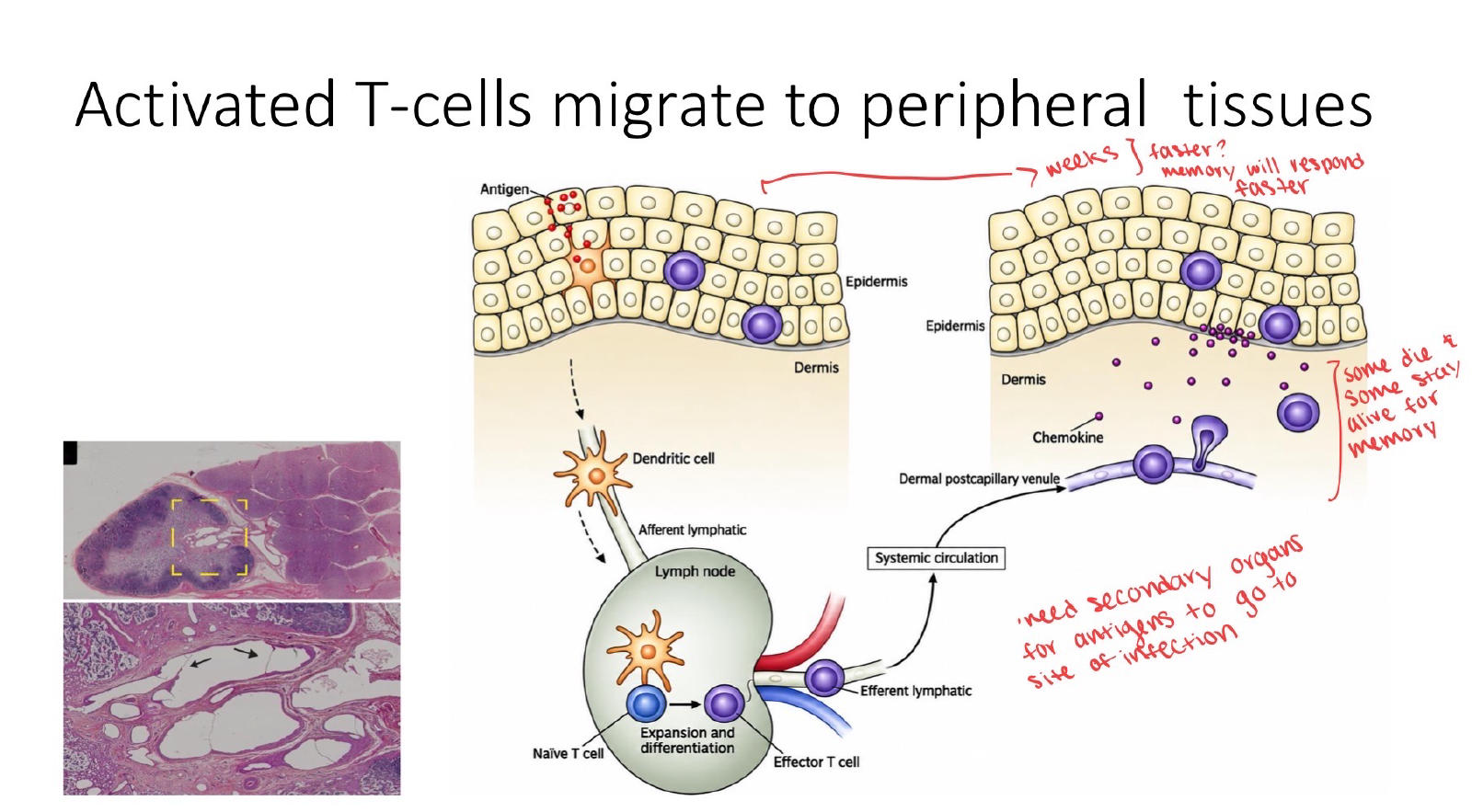
39
What happens to most effector T cells after an infection is cleared?
They undergo apoptosis as the immune response contracts.
40
What happens to memory T cells after an infection is cleared?
They survive and provide long-term immune memory.
41
Why is the secondary T-cell response faster than the primary response?
Memory T cells are already antigen-experienced and can respond rapidly.
42
What is the purpose of an ELISPOT assay (quantiFERON assay)?
Determine frequency of TB specific IFNg secreting T-cells
43
What does each spot in an ELISPOT assay represent?
An individual cytokine-secreting cell.
44
Why are antigen-presenting cells needed in an antigen-stimulated T-cell ELISPOT assay?
They process and present antigen to activate antigen-specific T cells.
45
A dog's ELISPOT assay produces many IFN-γ spots after antigen stimulation. What does this suggest?
The sample contains antigen-responsive T cells that secrete IFN-γ.
Plus de flashcards : Médecine et santé
Ibuprofeno, propranolol, losartanMédecine et santé · EspagnolLAURA11/20 Vocab ListMédecine et santé · CoréenJonathanActualisation et approfondissement des règles de prescription et de la réglementationMédecine et santé · FrançaisClaraLeprosy (Hansen's DiseaseMédecine et santé · AnglaisKatlynKEmuscle fibers Médecine et santé · AnglaisnewInnate Immunity: First Line DefensesMédecine et santé · AnglaisalexPNP Management 2: Pediatric Respiratory ConditionsMédecine et santé · AnglaisAddieChapter 14: Cranial NervesMédecine et santé · AnglaisLucieChapter 2: The Human Body in Health and DiseaseMédecine et santé · AnglaisfortwinnyCancer StatisticsMédecine et santé · AnglaisRoboThe NephronMédecine et santé · AnglaiskarebearNeurophysiology 9Médecine et santé · AnglaisKrisMedCards
Tous les decks : Médecine et santé
Révise ces decks dans l’app
Gratuit sur iPhone, Android, Mac et le web. Ajoute n’importe quel deck à ton compte en un tap.

