Chemistry: Ion Tests and Flame Tests
Réviser ces flashcardsGratuit · répétition espacée · iPhone, Android, Mac et web
Toutes les cartes
1
Why do tests for ions have to be unique?
Each ion must give a different test result so we can tell which ion is present.
If two ions give the same result, we cannot tell them apart (without another test).
If two ions give the same result, we cannot tell them apart (without another test).
2
Describe what you should do before conducting a flame test to avoid contamination
Use a loop made from unreactive wire
Dip in dilute acid
Then hold it in blue flame of bunsen burner
Until flame stops changing colour
(Repeat in between different samples)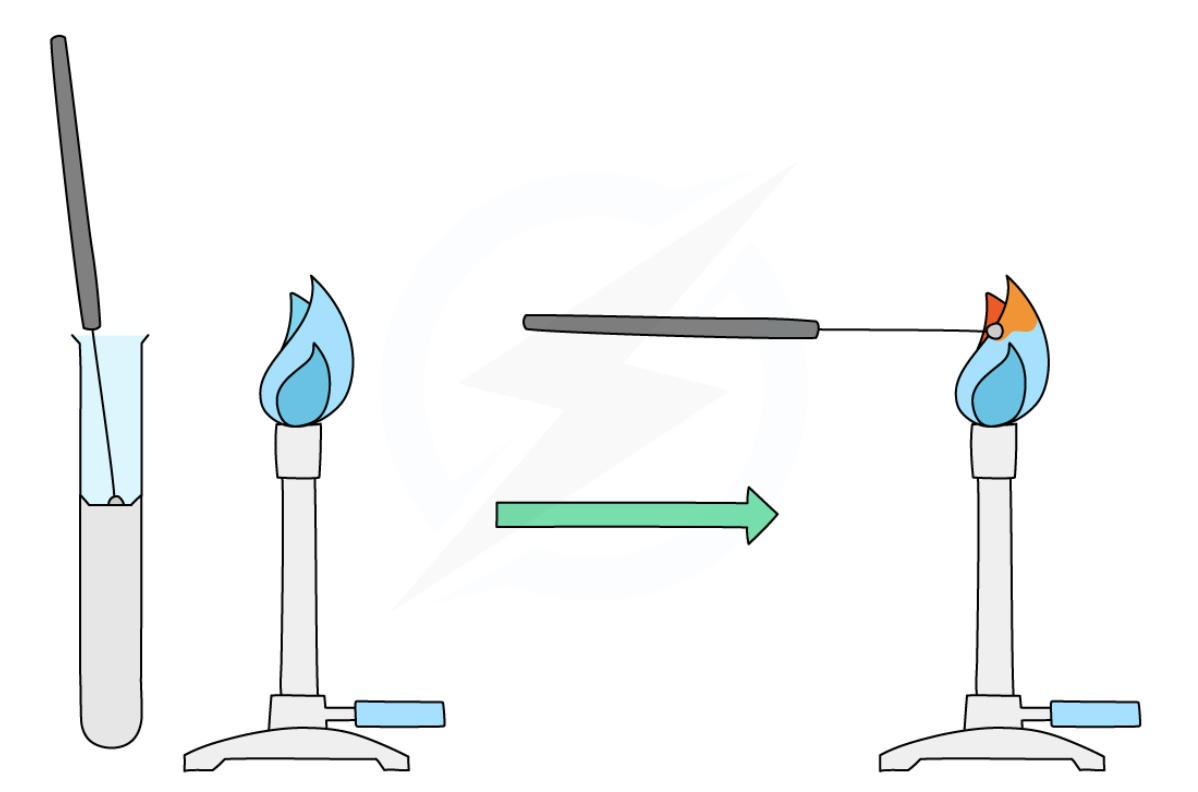
Dip in dilute acid
Then hold it in blue flame of bunsen burner
Until flame stops changing colour
(Repeat in between different samples)
3
Describe how to conduct a flame test
Use a loop made from unreactive wire
Dip loop into solid sample
Use blue flame of bunsen burner
Place loop/sample in flame and record flame colour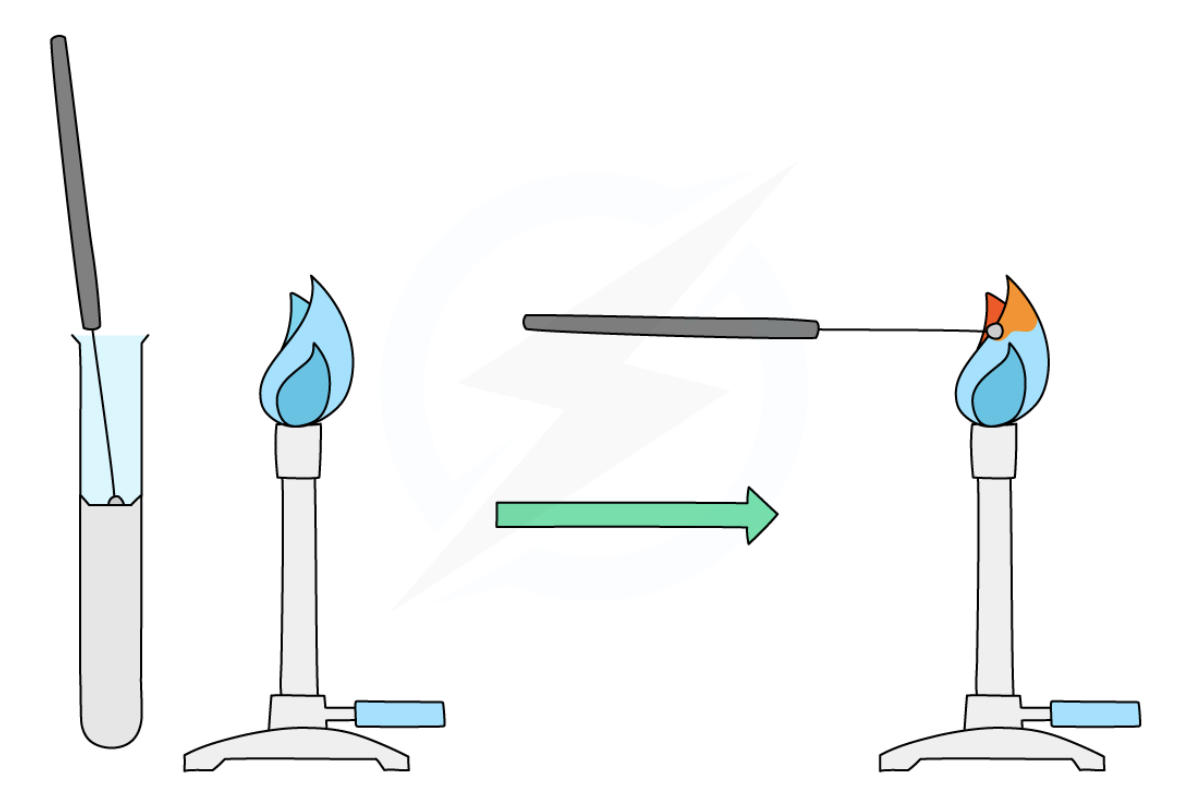
Dip loop into solid sample
Use blue flame of bunsen burner
Place loop/sample in flame and record flame colour
4
Why should you avoid leaving the wire/loop in the flame for too long?
The wire can get so hot it turns red
Which can be confused with colour of the flame
Which can be confused with colour of the flame
5
Why should the blue flame of the bunsen burner be used in flame tests?
Samples need to be heated strongly
6
Colour of flame when Li⁺ ion is present
Red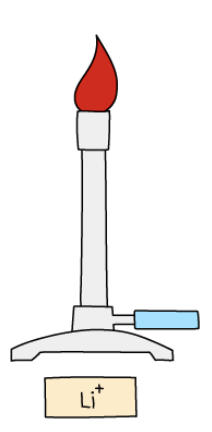
7
Colour of flame when Na⁺ ion is present
Yellow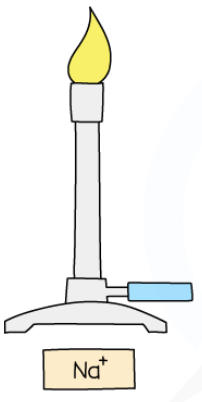
8
Colour of flame when K⁺ ion is present
Lilac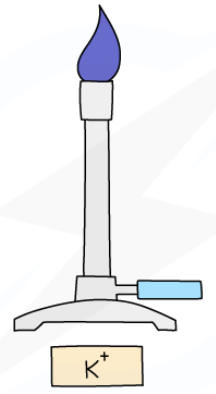
9
Colour of flame when Ca²⁺ ion is present
Orange-red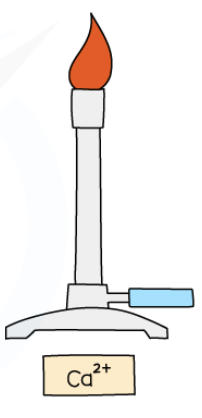
10
Colour of flame when Copper (II), Cu²⁺ ion is present
Blue-green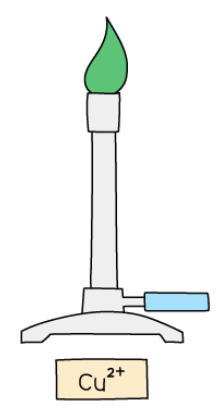
11
Explain how to conduct a test for cations using sodium hydroxide (NaOH) solution
Add only a few drops of NaOH
Note the colour of the precipitate that forms
Add excess NaOH to see if precipitate dissolves
Note the colour of the precipitate that forms
Add excess NaOH to see if precipitate dissolves
12
Result of sodium hydroxide test if Al³⁺ ion is present
White precipitate - dissolves in excess NaOH to form colourless solution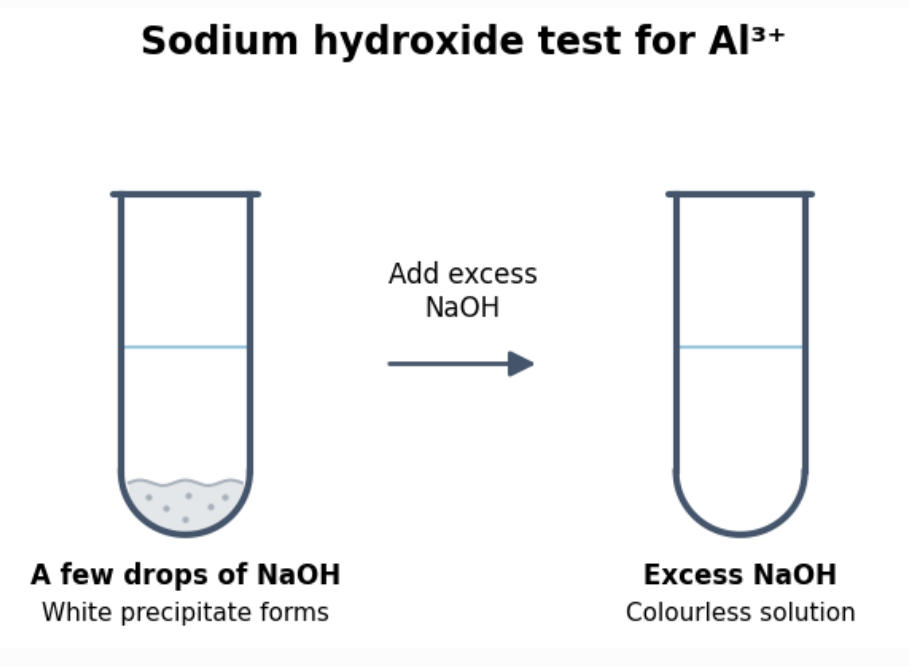
13
Result of sodium hydroxide test if Ca²⁺ ion is present
White precipitate - doesn’t dissolve in excess NaOH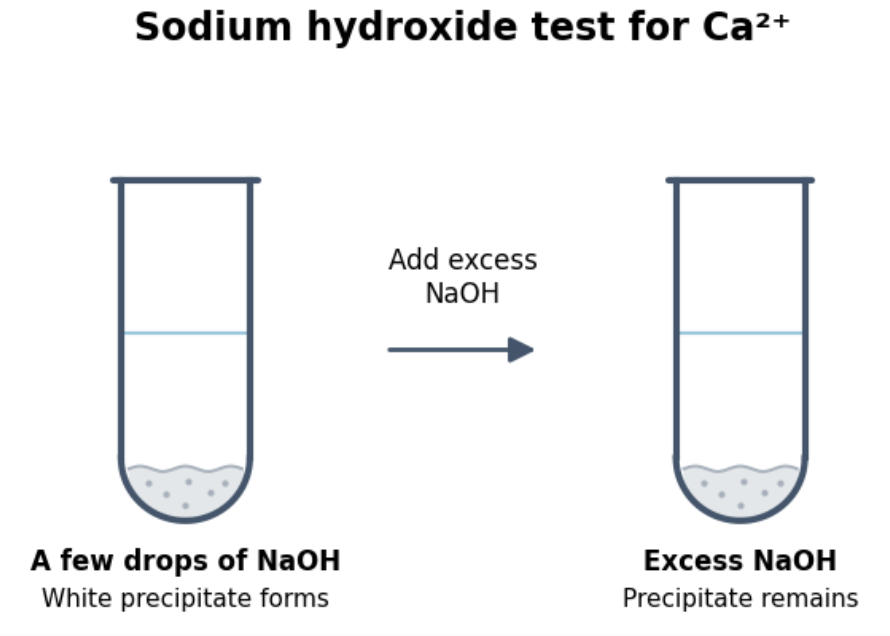
14
Result of sodium hydroxide test if Copper (II) Cu²⁺ ion is present
Light blue precipitate - doesn’t dissolve in excess NaOH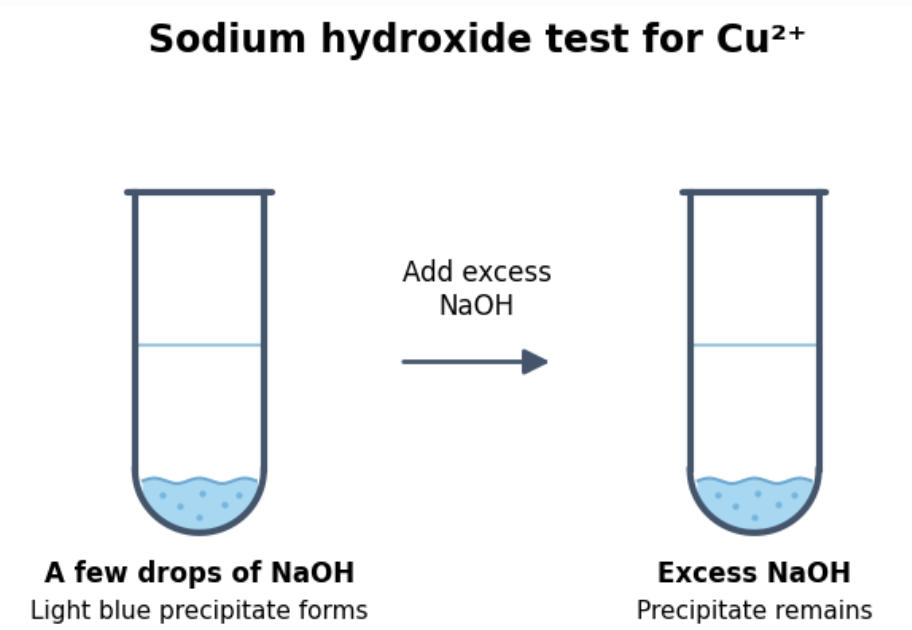
15
Result of sodium hydroxide test if Iron (II) Fe²⁺ ion is present
Green precipitate - doesn’t dissolve in excess NaOH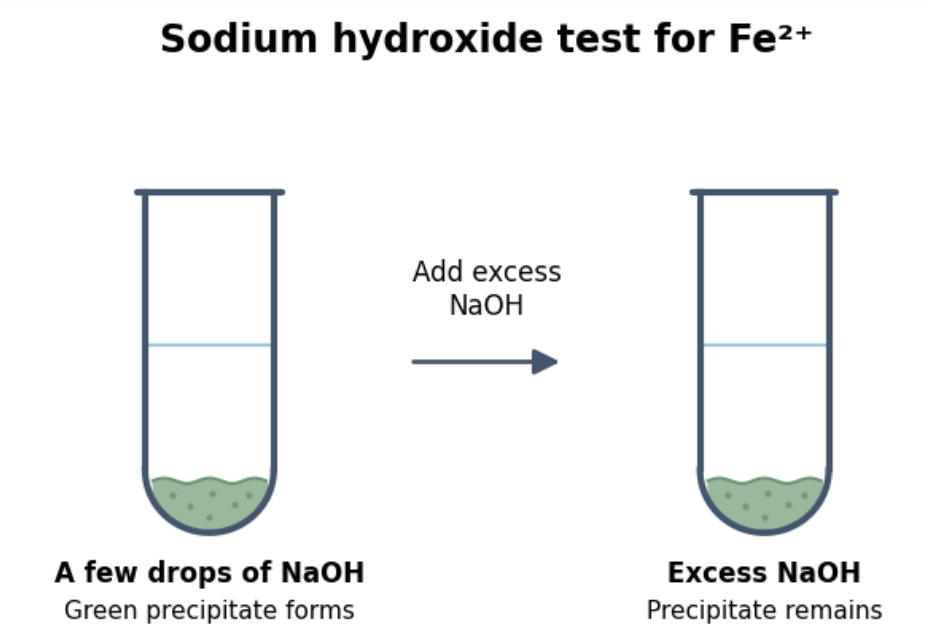
16
Result of sodium hydroxide test if Iron (III) Fe³⁺ ion is present
Red-brown precipitate - doesn’t dissolve in excess NaOH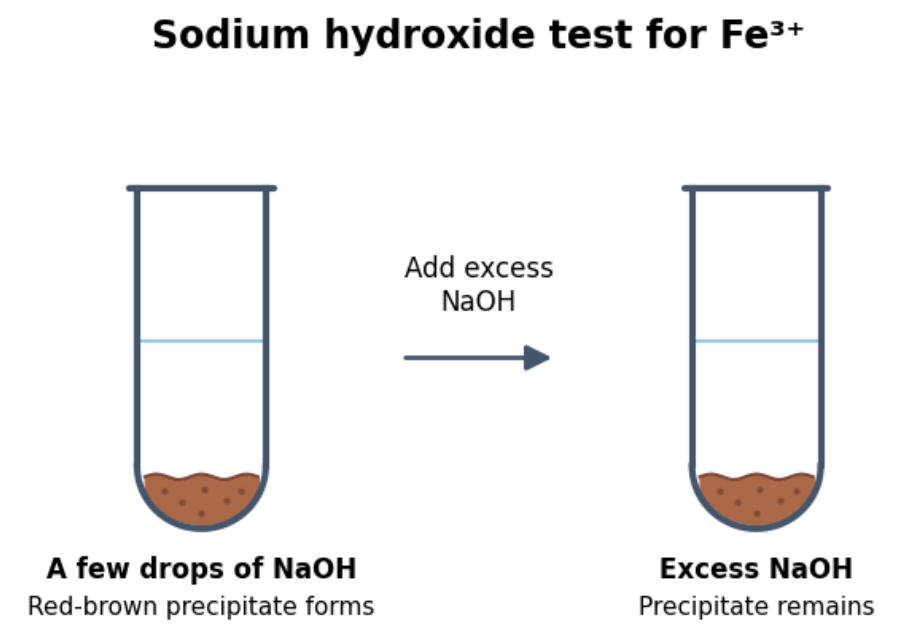
17
Describe the chemical test for ammonium, NH₄⁺ ion
Add sodium hydroxide solution
Heat gently
If ammonia gas produced, ammonium ions present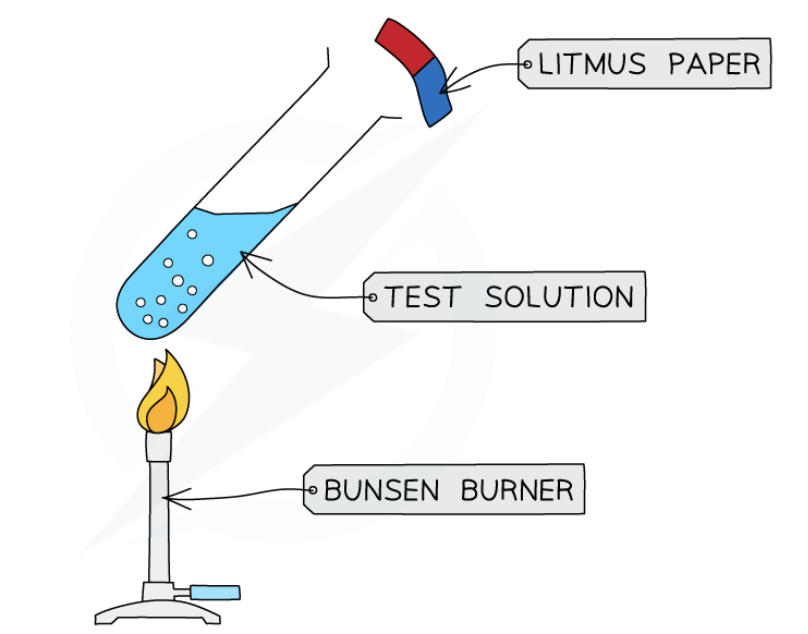
Heat gently
If ammonia gas produced, ammonium ions present
18
Test for ammonia gas
Red litmus paper test
Hold red litmus paper at mouth of test tube
If it turns blue, ammonia gas present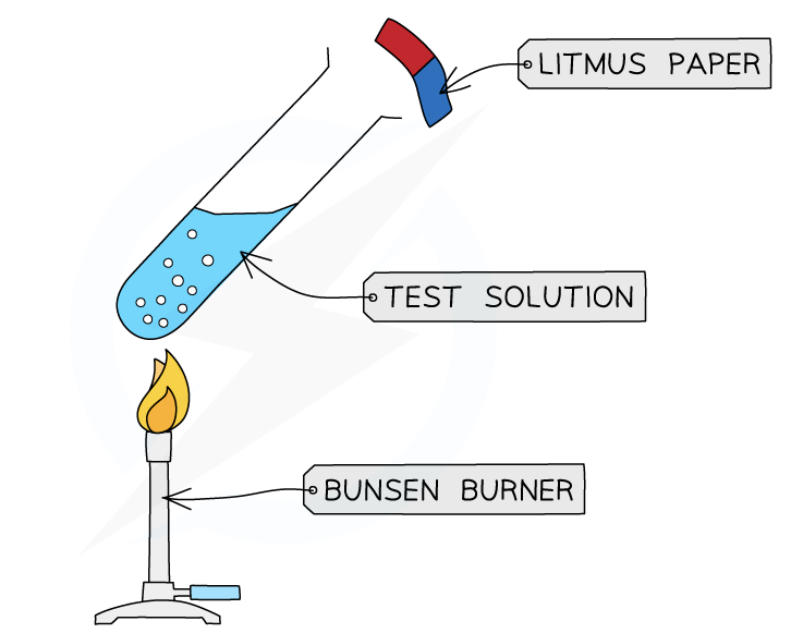
Hold red litmus paper at mouth of test tube
If it turns blue, ammonia gas present
19
Describe the chemical test for carbonate, CO₃²⁻ ion
Add dilute acid and collect gas released
If gas is carbon dioxide, carbonate ions are present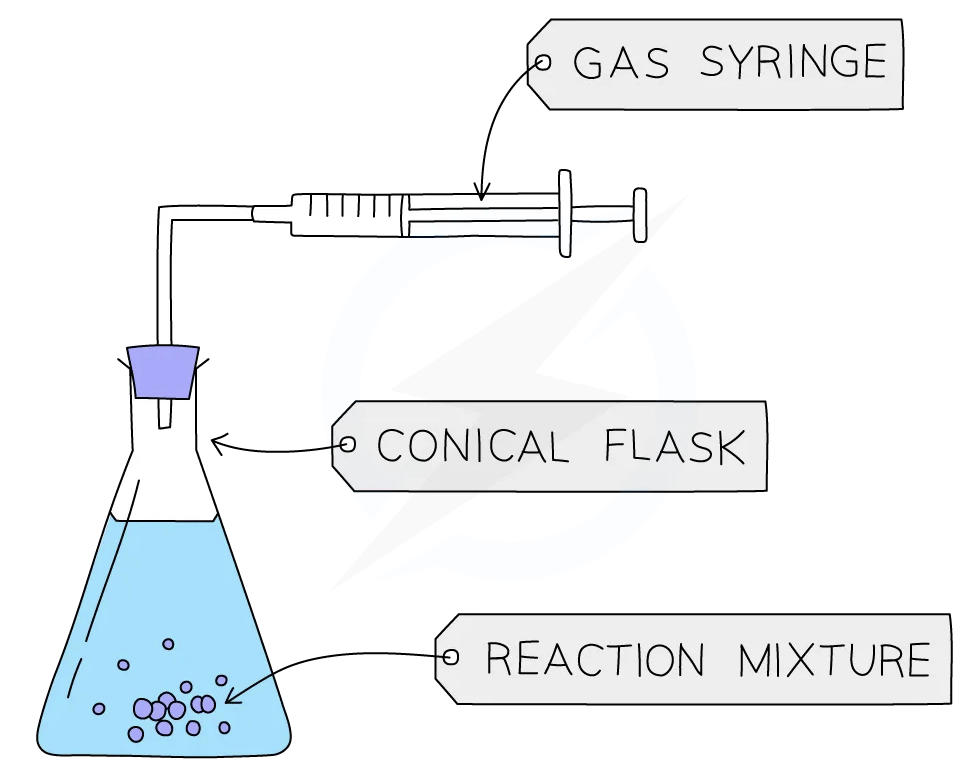
If gas is carbon dioxide, carbonate ions are present
20
Test for Carbon Dioxide
Bubble gas through limewater
If it turns cloudy, the gas is carbon dioxide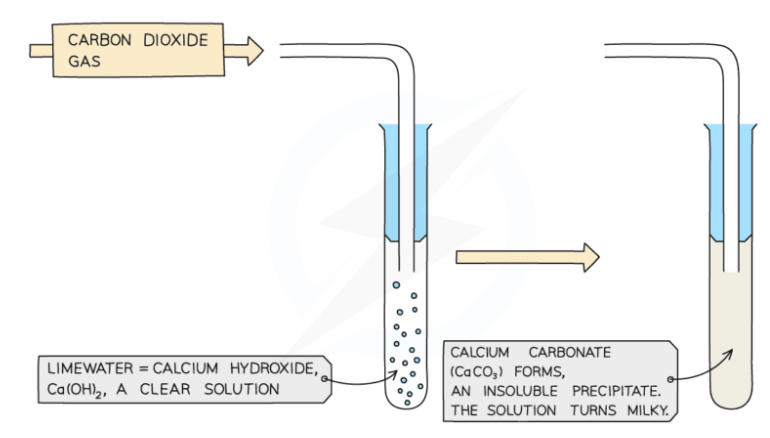
If it turns cloudy, the gas is carbon dioxide
21
Describe the test for sulfate, SO₄²⁻ ion
Acidify with dilute hydrochloric acid
Add aqueous barium chloride
If sulfate ions present, a white precipitate should form (barium sulfate)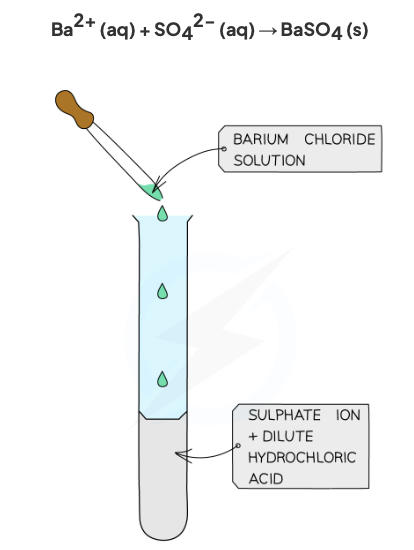
Add aqueous barium chloride
If sulfate ions present, a white precipitate should form (barium sulfate)
22
Tests for halide ions (group 7 ions)
In each case, acidify with dilute nitric acid add silver nitrate solution
Forms a silver halide precipitate
Identify by the colour:
Silver CHLORIDE - white
Silver BROMIDE - cream
Silver IODIDE - yellow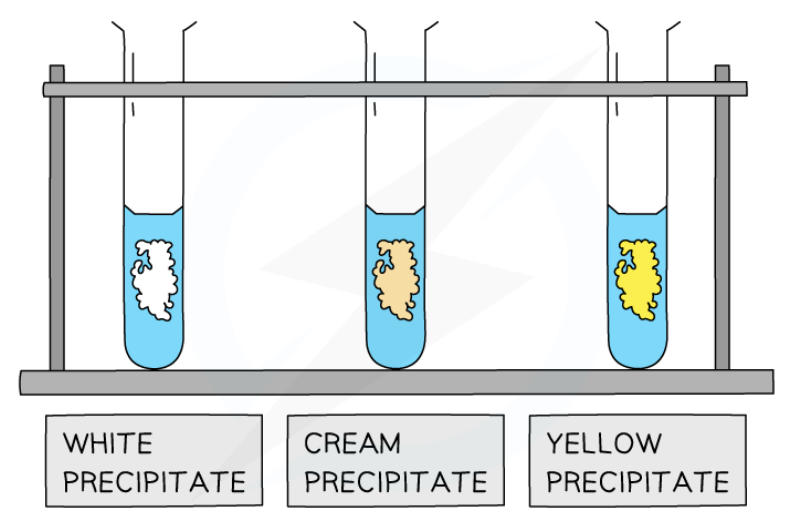
Forms a silver halide precipitate
Identify by the colour:
Silver CHLORIDE - white
Silver BROMIDE - cream
Silver IODIDE - yellow
23
How do you identify the ions present in an unknown salt?
Flame test and sodium hydroxide test to identify metal ion
Red litmus paper test to check if ammonia NH₄⁺ present (if metal not present)
Test for halide ions with dilute nitric acid and silver nitrate solution
Tests for carbonate and sulfates (if halides not present)
Red litmus paper test to check if ammonia NH₄⁺ present (if metal not present)
Test for halide ions with dilute nitric acid and silver nitrate solution
Tests for carbonate and sulfates (if halides not present)
24
Advantages of instrumental methods of analysis (such as X-ray, Infra-Red and Mass Spectroscopy, Gas Chromatography and Flame Photometry)?
Greater accuracy
Faster and easier to use
Very sensitive - only require small samples
Can be automated
Faster and easier to use
Very sensitive - only require small samples
Can be automated
25
What is the concentration of potassium ions, given that the flame photometry reading was 800?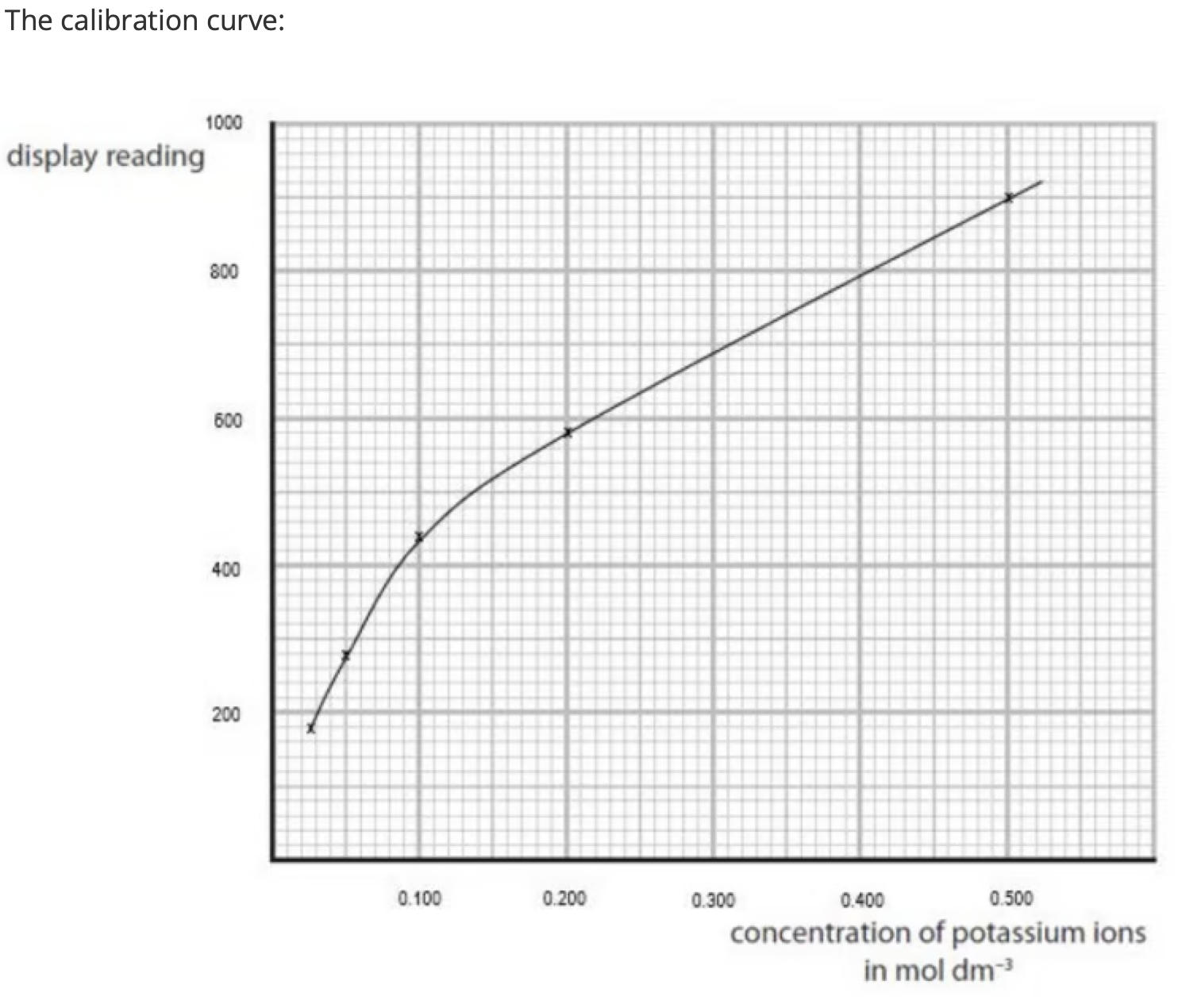
0.4 mol dm⁻³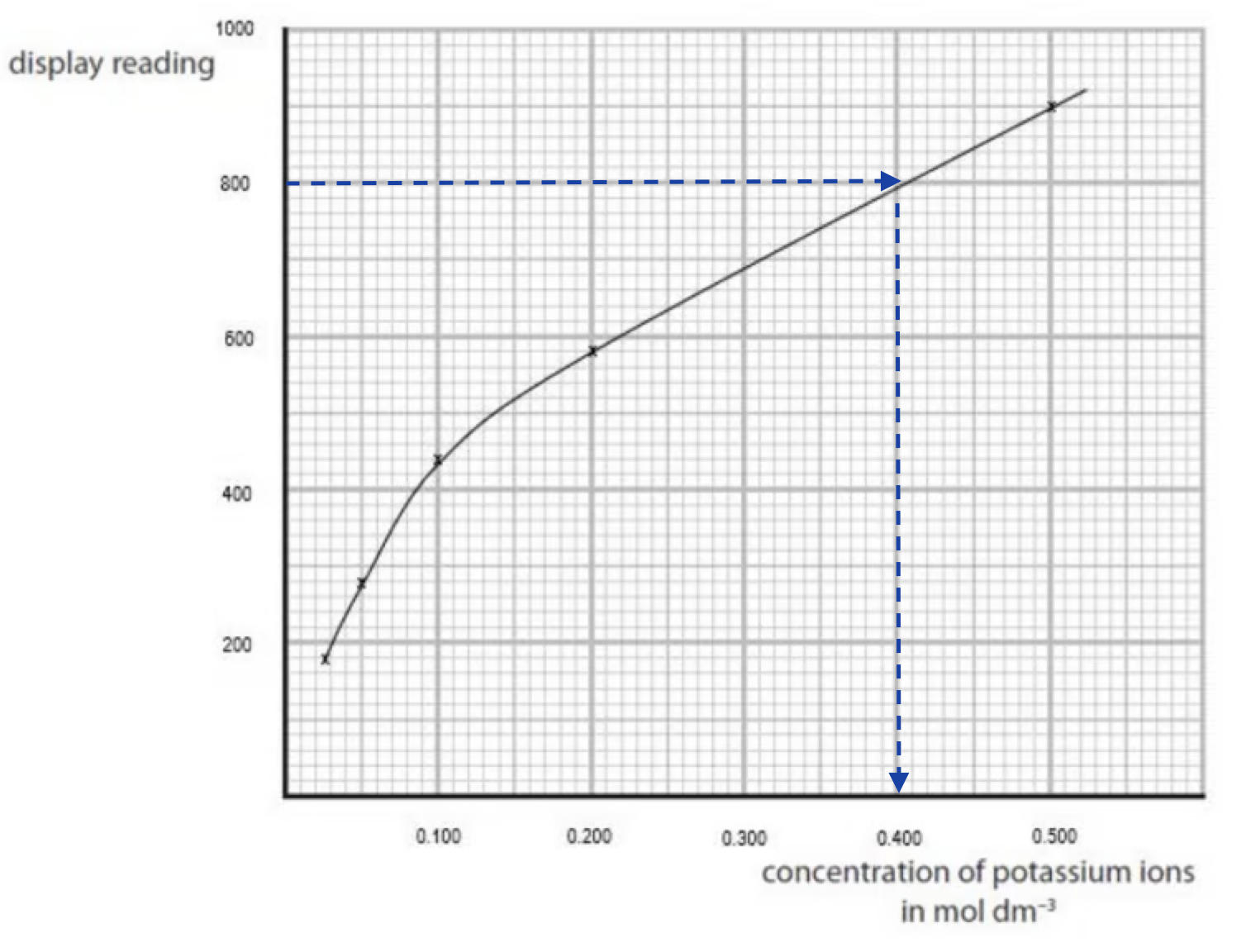
26
[Get diagrams from last question in topic questions]Look at the line spectrogram of an unknown salt. Which ions are present?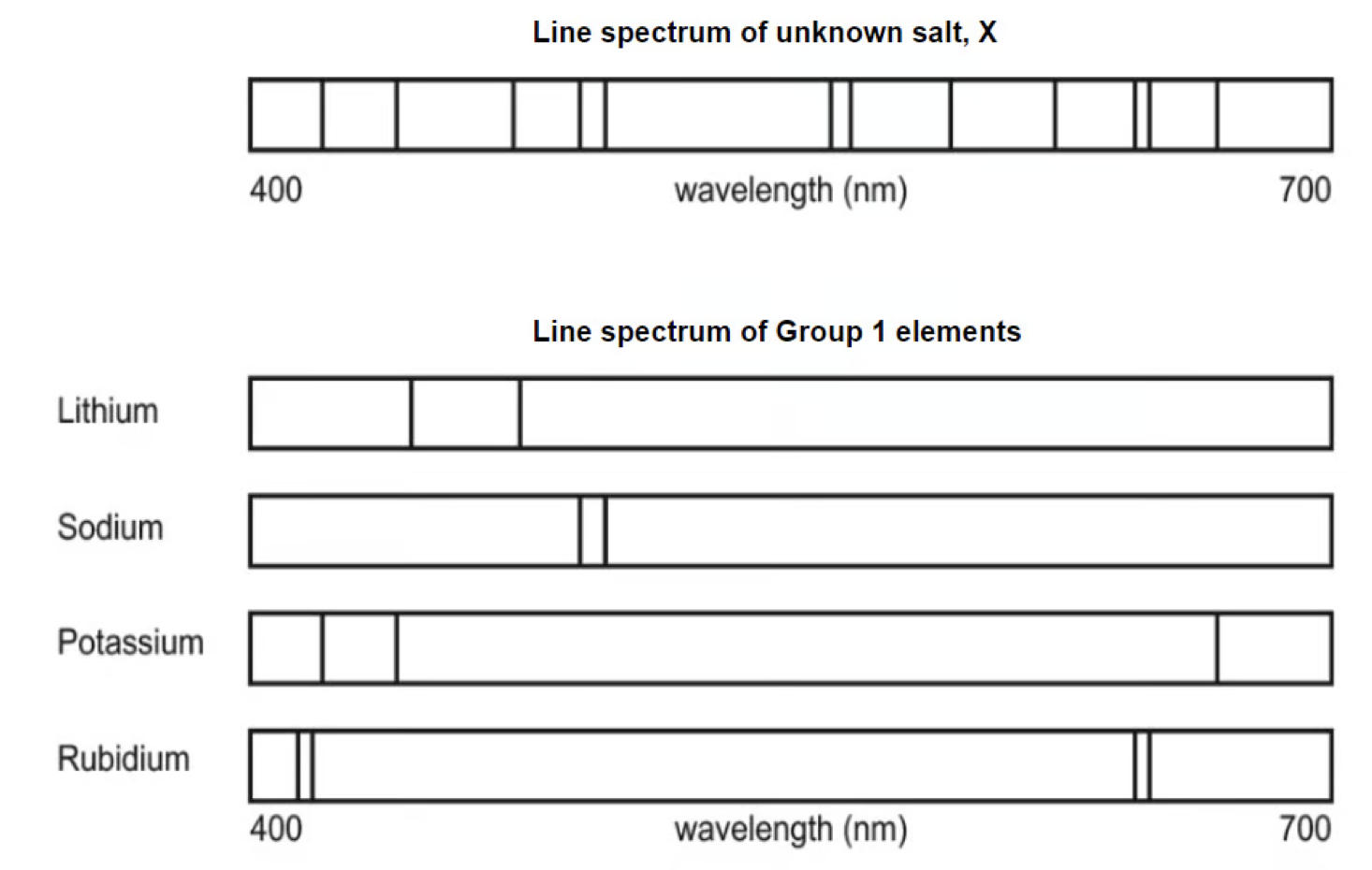
Lithium is not present because its lines do not line up! (Make sure to double check with a ruler)
Rubidium is not present because not all lines from Rubidium appear in the spectrogram!
Sodium, Potassium and other ions are present
[Diagram showing Lithium doesn’t line up and missing rubidium lines]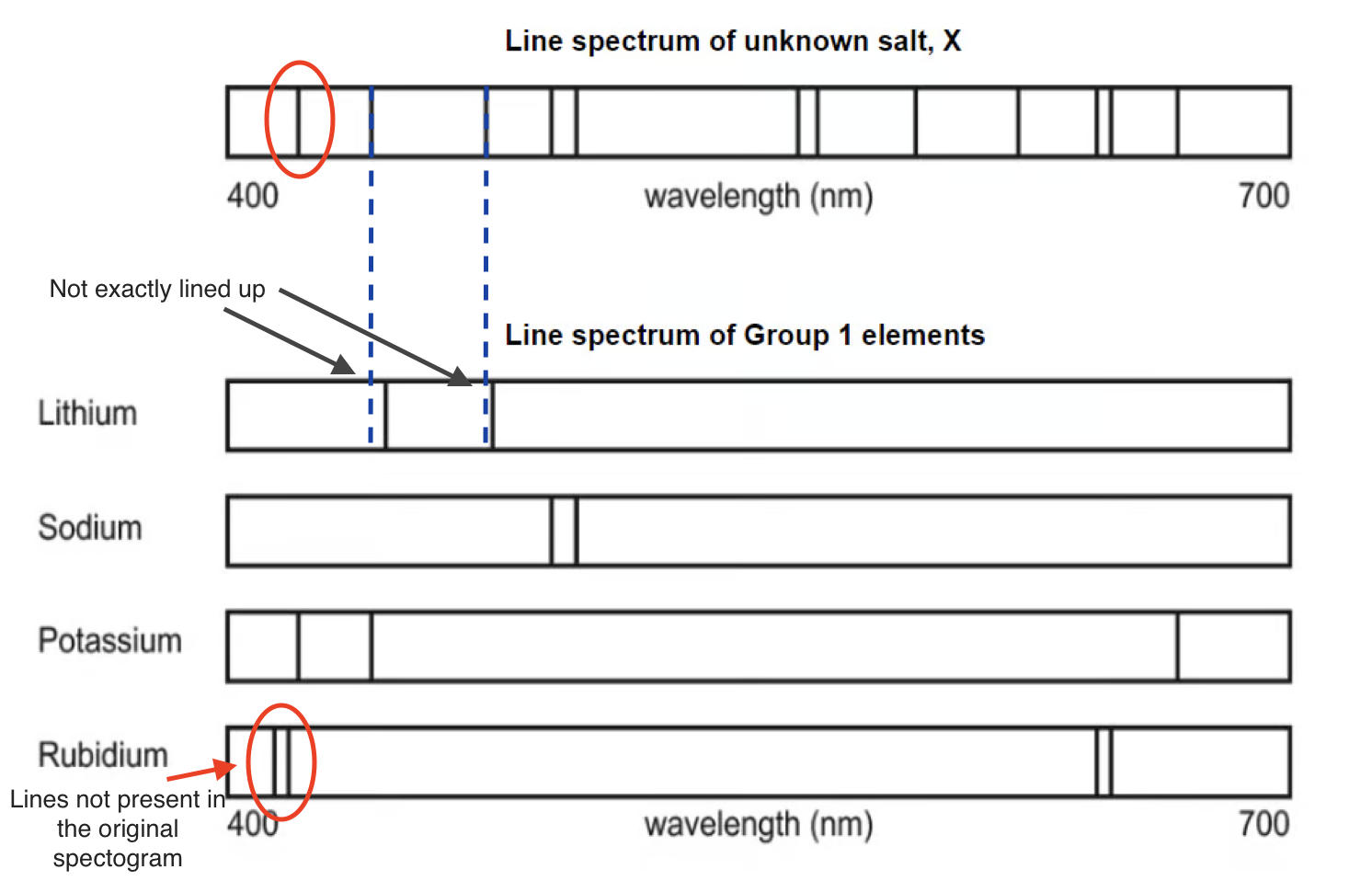
Rubidium is not present because not all lines from Rubidium appear in the spectrogram!
Sodium, Potassium and other ions are present
[Diagram showing Lithium doesn’t line up and missing rubidium lines]
Plus de flashcards : Sciences
BIO 351 EXAM 2 (Quiz_Control of Gene Expression)Sciences · AnglaisJaydellMicrobiologySciencescaeAcid and BasesSciences · AnglaisFlashCardsOrganic Chemistry: Functional GroupsSciences · AnglaisPhilipSoil Survey: Maps and ScalesSciences · AnglaisBojok4.11 Basic concepts of organic chemistry ✓Sciences · AnglaisIzzyprotein assembly 2Sciences · AnglaiszazzyCE4013 DefinitionsSciences · AnglaisMarkCATIONS +2Sciences · LatinLeianAcids and AlkalisSciences · AnglaisesmeeCentral Dogma of Molecular BiologySciences · AnglaisCordeliaAP Physics 1 Unit 1: GapSciences · Anglaisandrews_rcnd
Révise ces decks dans l’app
Gratuit sur iPhone, Android, Mac et le web. Ajoute n’importe quel deck à ton compte en un tap.

