Muscular System | HAP | PRELIMS
Diese Karteikarten lernenKostenlos · Spaced Repetition · iPhone, Android, Mac & Web
Alle Karten
1
Which of the following is NOT a function of the muscular system?
- Breaking down nutrients
- Constriction of organs and blood vessels
- Respiration
- Maintenance of posture
2
Where are smooth muscles located?
- Attached to the bone
- Walls, hollow organs, or glands
- Heart
3
What muscle does the heart have?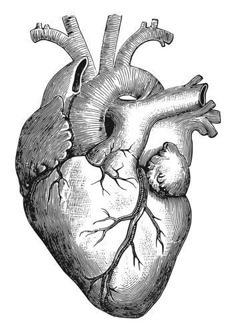
- Cardiac Muscle
- Smooth Muscle
- Skeletal Muscle
4
What is the skeletal muscles' cell shape?
- Spindle-shaped
- Long, cylindrical
- Branched
5
This muscle has a spindle-shaped cell
- Smooth Muscle
- Cardiac Muscle
- Skeletal Muscle
6
Cardiac muscle has a ____ Cell shape
- Branched
- Long, Cylindrical
- Spindle-shaped
7
These muscles' nucleus are usually single EXCEPT one
- Cardiac Muscle
- Skeletal Muscle
- Smooth Muscle
8
This muscle has a cell-to-cell attachment
- Smooth Muscle
- Cardiac Muscle
- Skeletal Muscle
9
Intercalated disks
- Skeletal Muscle
- Cardiac Muscle
- Smooth Muscle
10
Connective tissue that surrounds a fascicle
- Endomysium
- Perimysium
- Epimysium
11
Connective tissue that surrounds the entire muscle
- Epimysium
- Perimysium
- Endomysium
12
Endomysium is the connective tissue that surrounds an
individual muscle fiber
individual muscle fiber
- False
- True
13
The cell membrane of the muscle fiber; where
the multiple nuclei of the muscle fiber are deeply located
the multiple nuclei of the muscle fiber are deeply located
- Sarcoplasmic reticulum
- Sarcoplasm
- Sarcolemma
- Transverse tubules or T-tubules
14
tubelike invaginations
- Sarcoplasm
- Transverse tubules or T-tubules
- Sarcolemma
- Sarcoplasmic reticulum
15
the cytoplasm of the muscle fiber
- Sarcoplasmic reticulum
- Sarcoplasm
- Sarcolemma
- Transverse tubules or T-tubules
16
Mitochondrion is the highly organized endoplasmic
reticulum of the muscle fiber
reticulum of the muscle fiber
- False
- True
17
A cylindrical bundle of contractile
myofilaments
myofilaments
- Mayonnaise
- Myofibril
- Myocites
18
Complete the analogy:
Kasiyahan;pera :: pera ko; ubos na
actin filaments; ___ :: myosin filaments; ___
Kasiyahan;pera :: pera ko; ubos na
actin filaments; ___ :: myosin filaments; ___
- Thin :: thick
- Thick :: thin
19
The Sacromere is the basic structural and functional
unit of SKELETAL muscle
unit of SKELETAL muscle
- False
- True
20
Light band which consists only of actin myofilaments
- M band
- H band
- I band
- A band
21
Located at the center of
each sarcomere
each sarcomere
- A band
- I band
- H band
- M band
22
Dark, central region in each
sarcomere
sarcomere
- M band
- A band
- H band
- I band
23
Where the myosin myofilaments are
anchored or held in place
anchored or held in place
- A band
- M band
- I band
- H band
24
Neuromuscular Junction chronological order (punyeta ano toh ?!?!?!?)
I: An action potential arrives at the presypnatic terminal, causing Ca²+ channels to open
II: Calcium Ions ( Ca²+ ) enter the presypnatic terminal and initiate the release of a
neurotransmitter, acetylchoine ( ACh ), from sypnatic vesicles into the presypnatic cleft
III: Sodium lons (Na) diffuse down their concentration gradient, which results in depolarization
of the muscle fiber membrane; once threshold has been reached, a postsynaptic action potential results.
IV: Diffusion of ACh across the synaptic cleft and binding of ACh to Ach receptors on the
postsynaptic muscle fiber membrane opens Na+ channels.
I: An action potential arrives at the presypnatic terminal, causing Ca²+ channels to open
II: Calcium Ions ( Ca²+ ) enter the presypnatic terminal and initiate the release of a
neurotransmitter, acetylchoine ( ACh ), from sypnatic vesicles into the presypnatic cleft
III: Sodium lons (Na) diffuse down their concentration gradient, which results in depolarization
of the muscle fiber membrane; once threshold has been reached, a postsynaptic action potential results.
IV: Diffusion of ACh across the synaptic cleft and binding of ACh to Ach receptors on the
postsynaptic muscle fiber membrane opens Na+ channels.
- II > IV > I > III
- I > III > IV > II
- I > II > IV > III
- I > II > III > IV
25
The ff. are true about muscle contraction EXCEPT
- The H zones and I bands shorten during contraction,
but the A bands do not change in length - During contraction, neither
the actin nor the myosin fibers
shorten. - During muscle relaxation, sacromeres lengthen. This
lengthening requires an opposing force, such as that
produced by other muscles by gravity - None of the above
26
Choose the correct power stroke process
I: As myosin heads bind ATP, the cross-bridges detach from actin
II: Myosin heads bind to actin, forming cross-bridges
III: Myosin cross-bridges rotate toward center of
sarcomere
IV:Myosin heads hydrolyze ATP
and become reoriented and energized
I: As myosin heads bind ATP, the cross-bridges detach from actin
II: Myosin heads bind to actin, forming cross-bridges
III: Myosin cross-bridges rotate toward center of
sarcomere
IV:Myosin heads hydrolyze ATP
and become reoriented and energized
- II > I > III > IV
- III > I > III > II
- IV > II > III > I
- I > II > III > IV
27
How many skeletal muscles are in the human body?
- 650
- 910
- 455
28
Bildverdeckung: nenne die verdeckten Beschriftungen
29
Bildverdeckung: nenne die verdeckten Beschriftungen
30
Bildverdeckung: nenne die verdeckten Beschriftungen
Mehr Karteikarten: Medizin und Gesundheit
WBC CountMedizin und Gesundheit · EnglischMikeerespiratory systemMedizin und GesundheitelijahOpioids Medications merge class/brandsMedizin und Gesundheit · EnglischLoriRészletes toxikológia: szénhidrogénekMedizin und Gesundheit · UngarischRitikeSexualidad. Neuro.Medizin und Gesundheit · SpanischJulietaThe Articulatory SystemMedizin und Gesundheit · EnglischflynnpaulThoraxMedizin und Gesundheit · EnglischSaraPrinciples of Strength and ConditioningMedizin und Gesundheit · EnglischAddieChronic Kidney Disease (CKD)Medizin und Gesundheit · EnglischcathsimsPOCT: Blood Gas AnalyzersMedizin und Gesundheit · EnglischChristyViral and Bacterial PneumoniaMedizin und Gesundheit · EnglischcathsimsAllergy, Immunology, RheumatologyMedizin und Gesundheit · EnglischMadi
Alle Decks: Medizin und Gesundheit
Lerne diese Decks in der App
Kostenlos auf iPhone, Android, Mac und im Web. Füge jedes Deck mit einem Tipp zu deinem Konto hinzu.

