Leukocytes and Hematology
Diese Karteikarten lernenKostenlos · Spaced Repetition · iPhone, Android, Mac & Web
Alle Karten
1
What is a leukocyte?
A nucleated white blood cell that travels through blood to reach tissues, where it functions.
2
What is the leukon?
All leukocytes in the body, including bone marrow precursors, circulating leukocytes in blood, and tissue leukocytes.
3
What is a leukogram?
A blood test evaluating leukocytes, usually as part of a CBC.
4
What is leukocytosis? What is the most common cause of leukocytosis?
1. An increase in total leukocytes above the reference limit.
2. Neutrophilia, or heterophilia in species with heterophils.
2. Neutrophilia, or heterophilia in species with heterophils.
5
What is leukopenia? What is the most common cause of leukopenia?
1. A decrease in total leukocytes below the reference limit.
2. Neutropenia
2. Neutropenia
6
What is panleukopenia?
Decreased numbers of all leukocyte types in the blood.
7
What is pancytopenia?
Decreased leukocytes, RBCs, and platelets.
8
Where are leukocytes found after blood is centrifuged?
In the buffy coat with platelets.
9
Approximately how common are leukocytes compared with RBCs in normal blood?
About 1 leukocyte per 500–1,000 RBCs.
10
What are the three granulocytic leukocytes?
Neutrophils/heterophils, eosinophils, and basophils.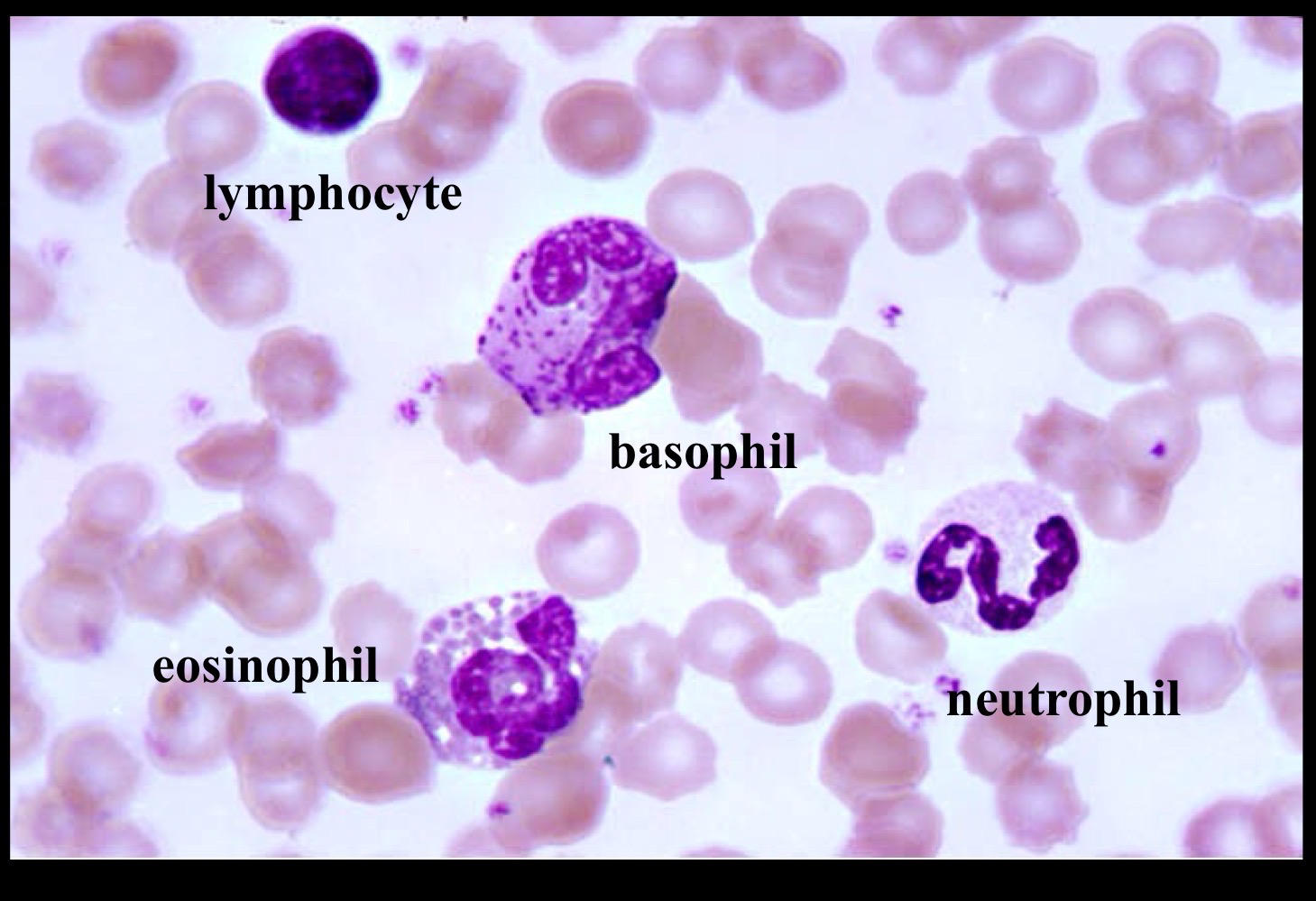
11
What are the two mononuclear leukocytes?
Lymphocytes and monocytes.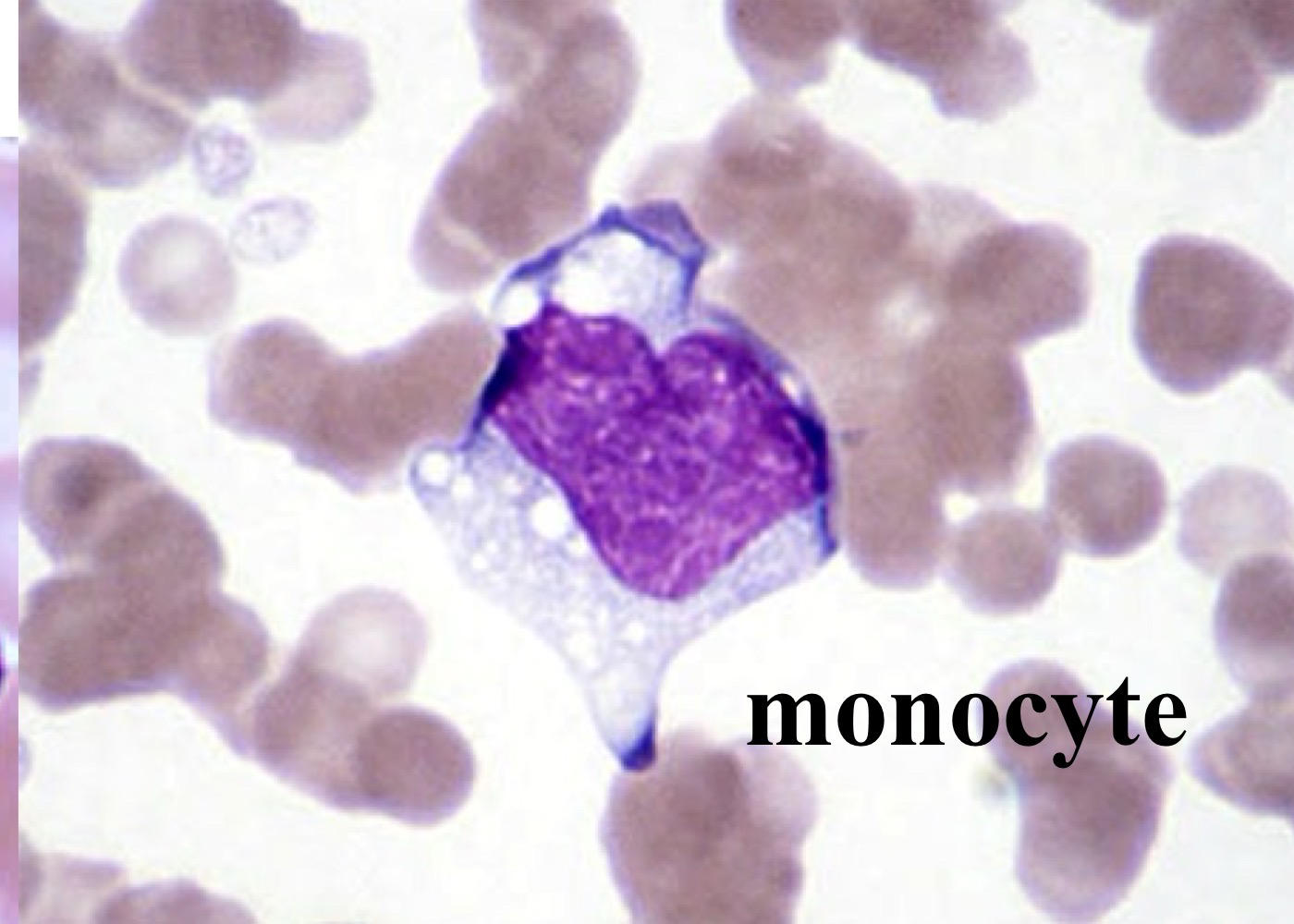
12
What are the 4 major general functions of leukocytes?
Defense, inflammation, homeostasis, and immunity.
13
What is the primary function of neutrophils?
First-line defense against bacterial infection during acute inflammation.
14
What are eosinophils and basophils especially important for?
Defense against helminths (parasites) and participation in allergic reactions.
15
What happens to monocytes after entering tissues?
They become macrophages.
16
What are 3 major functions of monocytes/macrophages?
Phagocytosis, antigen processing/presentation, and production of inflammatory mediators and cytokines.
17
What are 4 major functions of lymphocytes?
Humoral and cell-mediated immunity, antibody/cytokine production, self vs. non-self recognition, and immune memory.
18
Why do veterinarians evaluate circulating leukocytes?
To determine whether tissue injury/inflammation is occurring and what type of response is present.
19
What clinical information can a leukogram provide? (4)
Disease presence/type of inflammation, disease severity, progression, and prognosis.
20
What leukocyte-specific diseases can a leukogram help identify? (3)
Infections, neoplasia, and inherited leukocyte disorders.
21
Why is leukogram interpretation less precise than RBC or platelet assessment?
Circulating leukocytes constantly move between blood and tissues.
22
What are the main components of a leukogram?
Total WBC count, differential count, and absolute leukocyte counts.
23
What does the total WBC count include?
All nucleated cells counted by the analyzer, including nucleated RBCs if present which will need to be corrected
24
What is a leukocyte differential count?
The percentage of each leukocyte type among the total leukocyte population.
25
How is the absolute count of a leukocyte type calculated?
uses total leukocyte count x differential %
26
A dog has 25,000 WBC/µL and 90% neutrophils. What is the absolute neutrophil count?
22,500 neutrophils/µL.
27
Why are absolute leukocyte counts more useful than percentages?
They provide the best evaluation of the leukon and are compared with reference intervals.
28
What suffix indicates an increased granulocyte count?
-philia, such as neutrophilia.
29
What suffix indicates an increased mononuclear leukocyte count?
-cytosis, such as lymphocytosis.
30
What suffix indicates a decreased leukocyte count?
-penia, such as neutropenia or lymphopenia.
31
What does a mature neutrophil nucleus look like?
Multiple lobes separated by constrictions or filaments.
32
Why are neutrophils called “neutrophils”?
Their cytoplasmic granules take up little stain with routine stains.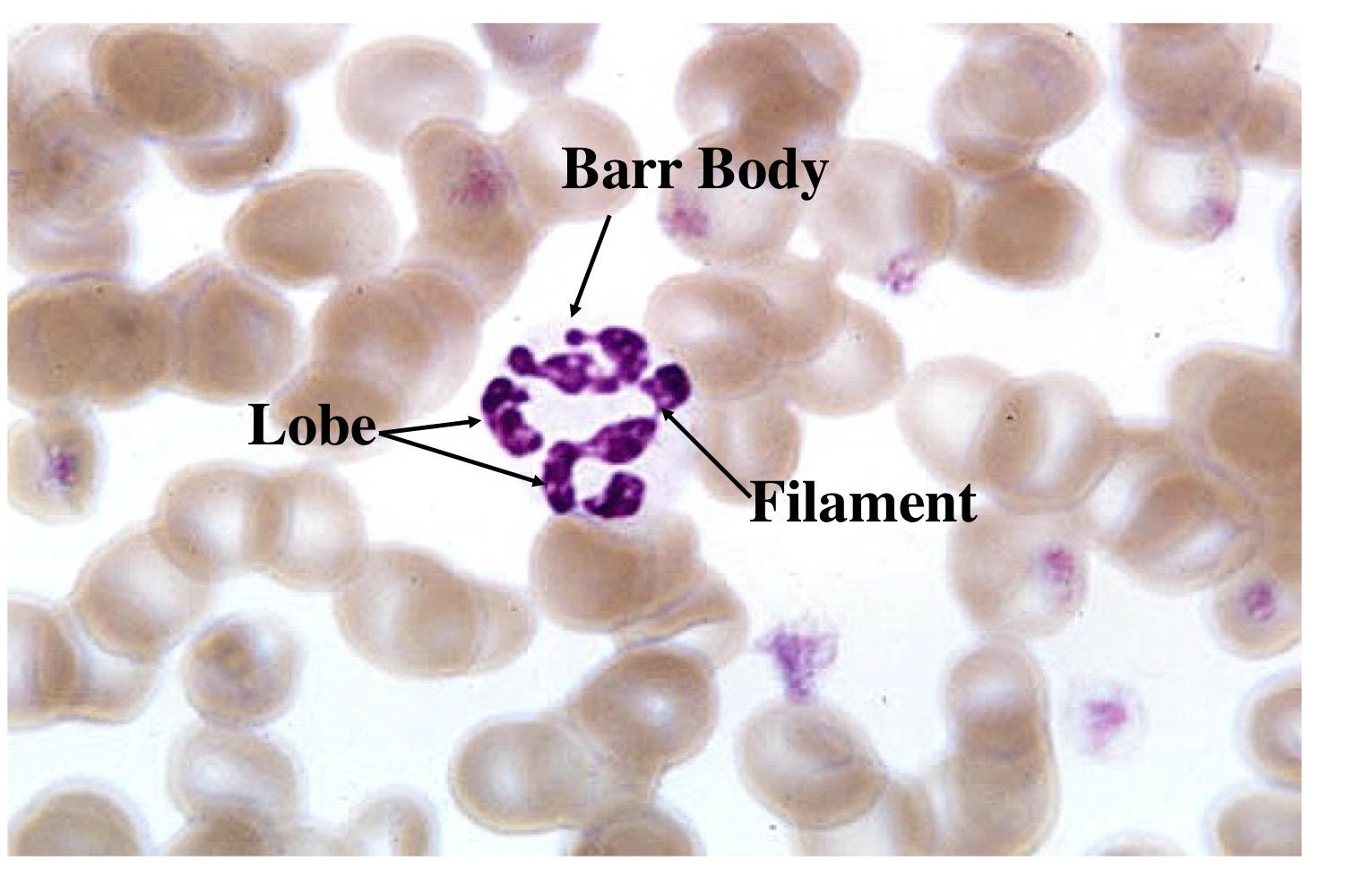
33
What are the two types of neutrophil granules?
Primary/azurophilic and secondary/specific granules.
34
What are 5 important contents of primary neutrophil granules?
Proteases, acid hydrolases, peroxidase, lysozyme, and microbicidal cationic proteins.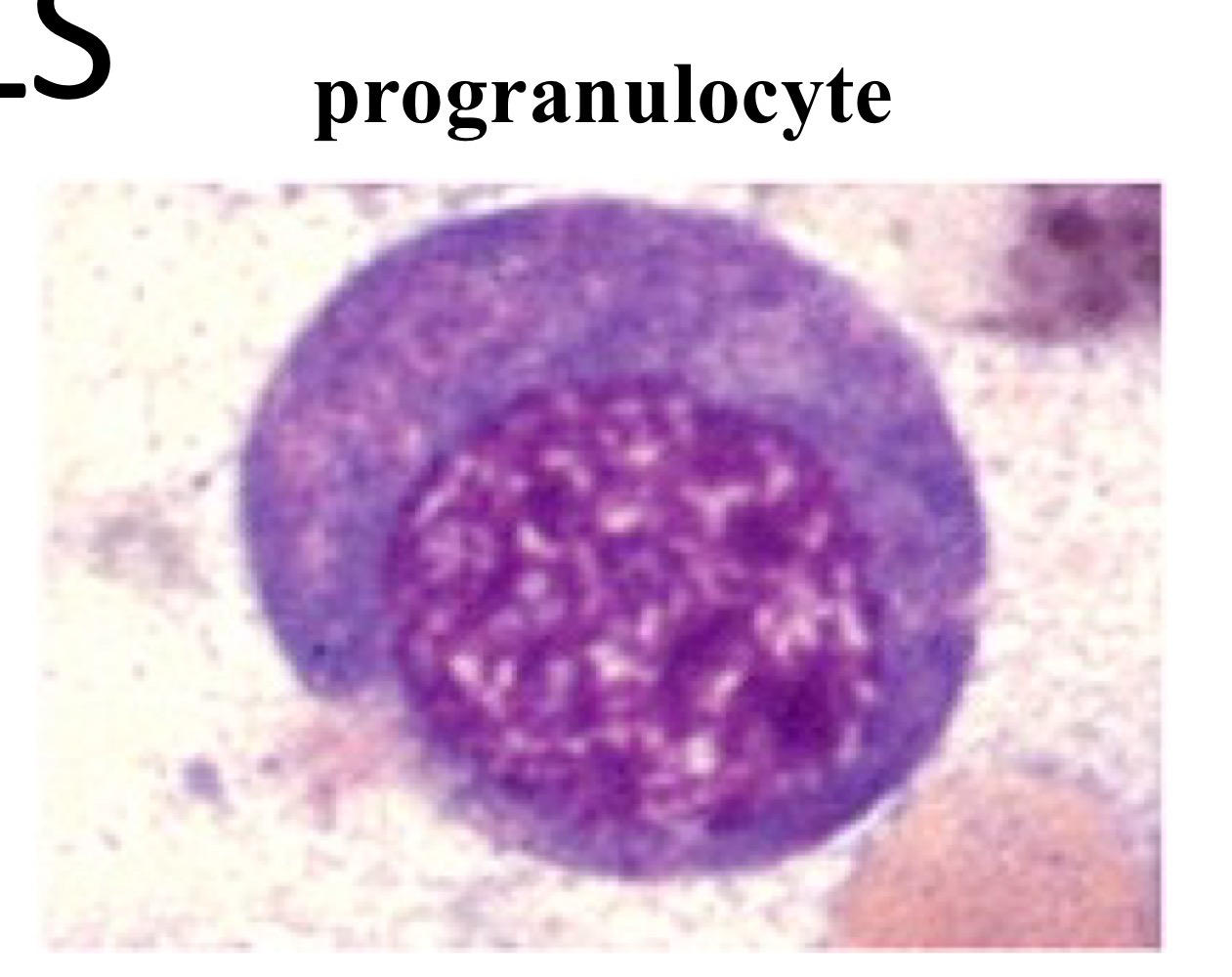
35
Where are most of the neutrophil’s microbicidal substances located?
In its lysosomal granules.
36
What is degranulation?
Release of antimicrobial enzymes and proteins from neutrophil granules.
37
What are the two major neutrophil killing mechanisms?
O₂-dependent (respiratory burst and generation of ROS) and O₂-independent killing.
38
What are the major regulators of granulopoiesis? What is the primary specific regulator of granulopoiesis?
1. IL-3, GM-CSF, and G-CSF.
2. G-CSF
2. G-CSF
39
How do granulopoietic cytokines affect bone marrow precursors?
Increase proliferation and promote neutrophil differentiation and maturation.
40
How does inflammation affect granulopoiesis?
It increases proliferation, shortens maturation time, increases neutrophil function, and promotes marrow release.
41
What is the overall goal of increased granulopoiesis during inflammation?
Increase the number of functioning neutrophils at the site of injury.
42
What are the two main functions of neutrophils?
Phagocytosis and microbicidal action.
43
What molecules are especially important for firm neutrophil adhesion?
Integrins binding endothelial ICAMs.
44
What molecules help neutrophils transmigrate through endothelium?
PECAM and other adhesion molecules.
45
What are 7 important neutrophil chemoattractants?
C5a, C567, Factor XIIa, LTB4, IL-8/CXCL8, PAF, and bacterial products.
46
What happens after a neutrophil reaches a microorganism?
Adherence → ingestion/phagocytosis → degranulation → microbial killing.
47
A neutrophil has defective respiratory burst activity. Which function is impaired?
O₂-dependent microbial killing.
Mehr Karteikarten: Medizin und Gesundheit
Acid Base DisordersMedizin und Gesundheit · EnglischCoryOrgan systemsMedizin und Gesundheit · EnglischRachaelChapter 4 PharmMedizin und Gesundheit · EnglischMadiruth2DermMedizin und Gesundheit · EnglischMadiCholeraMedizin und Gesundheit · EnglischKatlynKEaksillar ateş ölçümüMedizin und Gesundheit · TürkischNurLEC 15 BIOL 431Medizin und Gesundheit · EnglischDDFLCCell Regulation - Cytotoxic Drugs (generic & brand + Adverse Effects)Medizin und Gesundheit · EnglischFikreAngina: Pathophysiology and DiagnosisMedizin und Gesundheit · EnglischCandiceArthrex Medical Products and ProceduresMedizin und Gesundheit · EnglischWillLes parties du corps (Anglais/Français)Medizin und Gesundheit · FranzösischINSTINCTHematopoiesisMedizin und Gesundheit · EnglischCHRISTY
Alle Decks: Medizin und Gesundheit
Lerne diese Decks in der App
Kostenlos auf iPhone, Android, Mac und im Web. Füge jedes Deck mit einem Tipp zu deinem Konto hinzu.

