Dietary Protein and Amino Acids
Diese Karteikarten lernenKostenlos · Spaced Repetition · iPhone, Android, Mac & Web
Alle Karten
1
What are the two main nutritional components supplied by dietary protein?
Nitrogen and essential amino acids.
2
Why is nitrogen important in the body?
Needed to synthesize nonessential amino acids and nitrogen-containing compounds such as nucleic acids and heme.
3
How can protein contribute to energy metabolism?
Amino acid carbon skeletons can be used for energy or gluconeogenesis.
4
What are the three major characteristics of protein quality?
Amino acid amounts, amino acid proportions, and digestibility of protein/availability of amino acids
5
How is protein quality measured in vivo?
By its ability to support growth or nitrogen retention.
6
How is protein quality assessed in vitro?
By comparing the limiting amino acid concentration with a reference protein.
7
Which amino acids are limiting in dairy products and legumes?
Methionine and cysteine.
8
Which amino acid is limiting in rice, wheat, and oats?
Lysine.
9
Which amino acid is limiting in corn?
Tryptophan.
10
How can a diet containing a limiting amino acid be improved?
Combine complementary protein sources or supplement the limiting amino acid.
11
How does increasing dietary protein affect protein utilization efficiency?
Efficiency generally decreases as intake increases.
12
Why does insufficient energy intake reduce protein utilization? EXAM
Protein is used for energy instead of tissue synthesis, reducing nitrogen retention.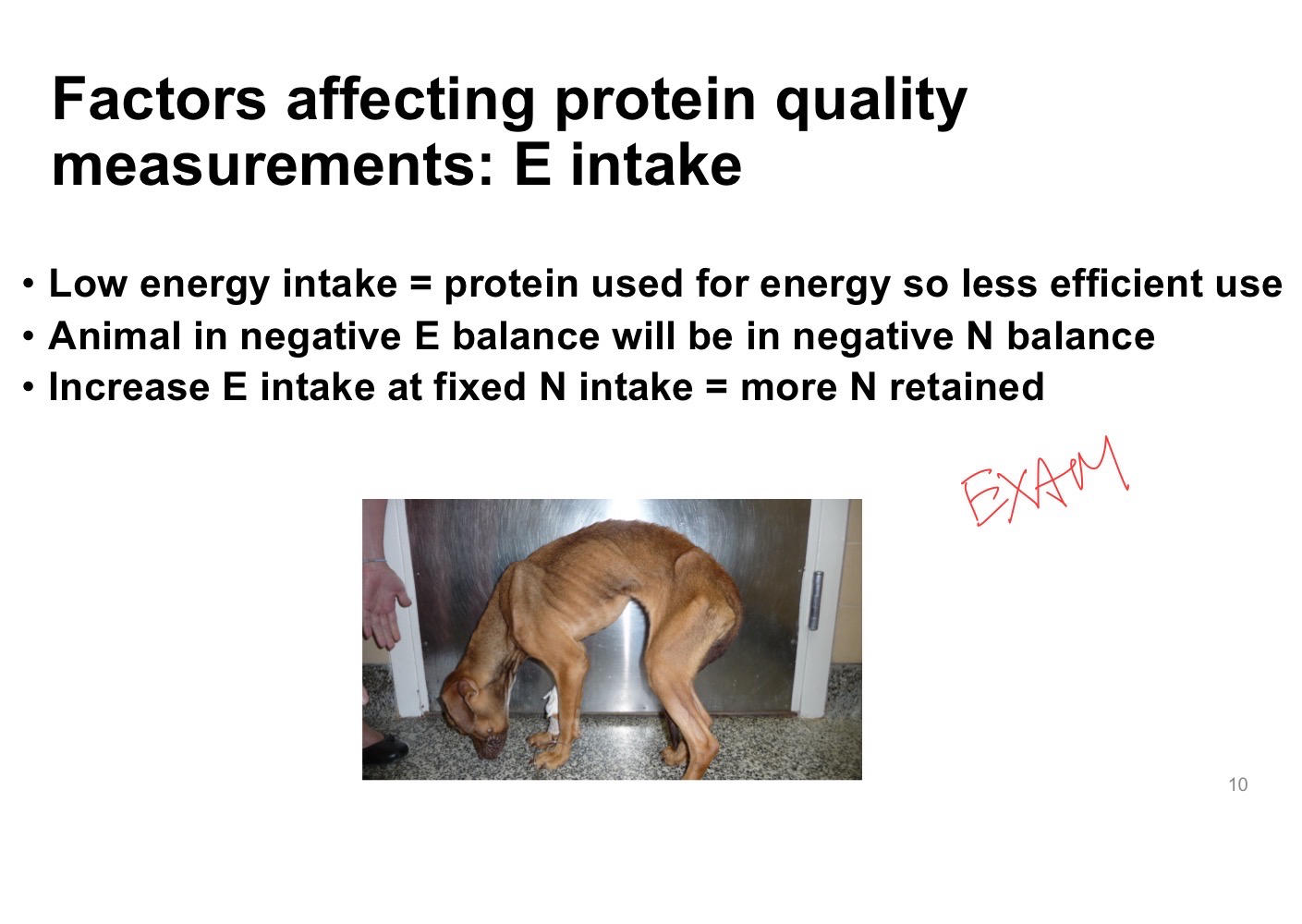
13
Why is food processing important for dietary proteins?
Improves food safety, preservation, palatability, and sometimes digestibility.
14
What is the Maillard reaction? EXAM
A nonenzymatic reaction during processing that contributes to browning but can reduce amino acid availability. COOKIES
15
How can heating improve protein digestibility?
By denaturing proteins or destroying antinutritional factors.
16
How can excessive processing decrease protein nutritional quality?
It modifies amino acids and proteins, making them less digestible or available.
17
Why doesn't protein digestibility always reflect amino acid bioavailability?
Individual amino acids may be damaged or unavailable even when total protein is digestible.
18
What are the major functions of amino acids?
Protein synthesis, metabolism, production of nonprotein compounds, and energy.
19
What is a conditionally essential amino acid?
An amino acid normally synthesized adequately but requiring dietary intake under certain conditions.
20
What does amino acid sparing mean?
Providing a downstream compound reduces the dietary requirement for its precursor amino acid.
21
How is crude protein calculated from nitrogen content?
Crude protein (%) = Nitrogen (%) × 6.25.
22
Why must animals continually consume dietary protein? Rapid turnover? Slower turnover?
There is no dedicated protein storage pool, and body proteins constantly undergo turnover.
Rapid: albumin, liver
Slower: elastin/collagen
23
What is nitrogen balance?
The difference between nitrogen intake and nitrogen losses.
24
What indicates positive versus negative nitrogen balance?
Positive: intake exceeds losses; negative: losses exceed intake.
25
What is protein malnutrition?
Inadequate protein or amino acid intake relative to the animal's requirements.
26
Why should energy intake be considered when evaluating protein requirements?
Low energy intake increases the use of protein for energy, reducing amino acids available for other functions.
27
What is cachexia in critically ill animals? EXAM
Disproportionate loss of lean body mass associated with illness and increased protein breakdown.
28
Why do weight-loss diets often contain more protein relative to calories? EXAM
To help preserve lean body mass during calorie restriction.
29
Why can easy keepers develop nutrient deficiencies on maintenance diets? EXAM
They consume fewer calories and may receive insufficient essential nutrients.
30
Why are animals receiving low-protein renal or hepatic diets at nutritional risk? EXAM
Poor appetite or low food intake may cause inadequate protein and essential nutrient intake.
31
In the lecture's CKD cat example, approximately what percentage of MER must be consumed to meet protein needs?
At least approximately 60% of maintenance energy requirement.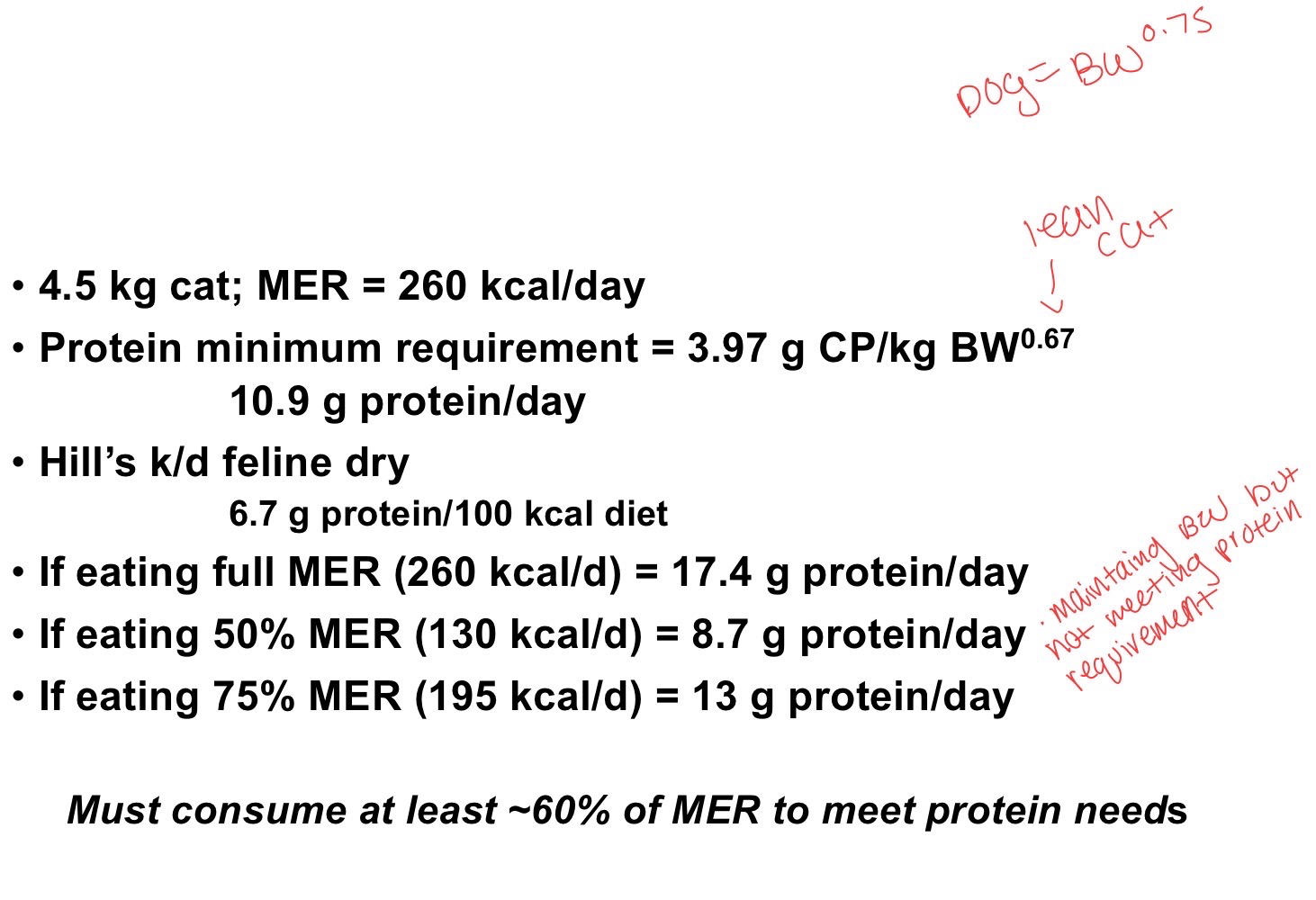
32
What are general clinical signs of protein deficiency?
Poor growth, muscle loss, anemia, hypoalbuminemia, impaired immunity, and delayed healing.
33
What are the earliest general signs of essential amino acid deficiencies?
Decreased food intake and reduced growth rates.
34
Why do cats have a particularly high dietary arginine requirement?
Their urea cycle remains highly active, requiring arginine for ammonia detoxification.
35
What happens when a fasted cat consumes an arginine-free meal?
Life-threatening hyperammonemia can develop because ammonia cannot be adequately converted to urea.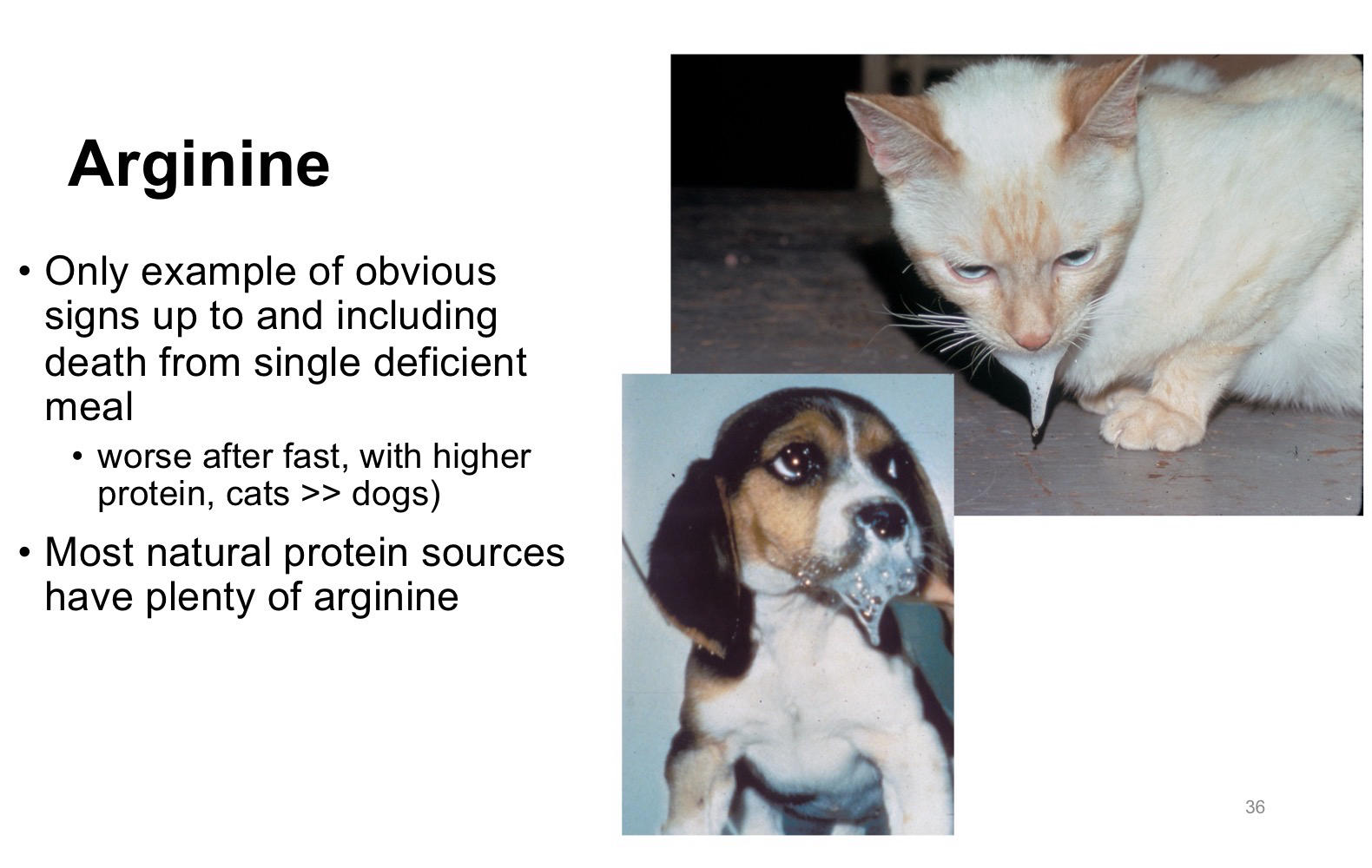
36
Which amino acids are required to maintain black coat pigmentation?
Phenylalanine and tyrosine, which support melanin synthesis.
Mehr Karteikarten: Naturwissenschaften
Unit 1 BiologyNaturwissenschaften · EnglischRh1n03.1.12 ACIDS AND BASESSSNaturwissenschaften · EnglischSabs2023 3.6 human impact on enviroNaturwissenschaften · EnglischmischaExam 2 Review - KineticsNaturwissenschaften · EnglischSarahGram Positive Cocci (GPC) - Staphylococcus speciesNaturwissenschaften · EnglischkarebearATPNaturwissenschaften · EnglischLoganVSEPRNaturwissenschaften · EnglischCrefB 1.2 ProteinsNaturwissenschaften · EnglischMicahAnimal Science: Digestion (ANSC 107 TAMU)Naturwissenschaften · EnglischElenaTLE: Sewing and Tailoring ToolsNaturwissenschaften · EnglischstudentChemistry: Mixtures and SolutionsNaturwissenschaften · EnglischrebPolyatomic Ions (All 53)Naturwissenschaften · DeutschCooper
Alle Decks: Naturwissenschaften
Lerne diese Decks in der App
Kostenlos auf iPhone, Android, Mac und im Web. Füge jedes Deck mit einem Tipp zu deinem Konto hinzu.

