Courtship Behaviour and Phylogeny
Diese Karteikarten lernenKostenlos · Spaced Repetition · iPhone, Android, Mac & Web
Alle Karten
1
What is a courtship behaviour?
The way organisms behave in order to attract and allow mating
2
What are the 4 sterotypical behavioural elements
1. Male signals female in order to mate (visual or sound stimulus)
2. Female responds with signal of her own
3a. Signals the mate to continue courtship
3b. Signals mate to terminate courtship
2. Female responds with signal of her own
3a. Signals the mate to continue courtship
3b. Signals mate to terminate courtship
3
What are the 4 things courtship allows species to do?
1. Recognise memebers of their own species (Species recognition)
2. Identify a mate capable of mating (Sexually mature and receptive)
3. Syncronised mating (mating in the same season)
4. Form a pair bond
2. Identify a mate capable of mating (Sexually mature and receptive)
3. Syncronised mating (mating in the same season)
4. Form a pair bond
4
What is phylogeny?
How scientists classify species based on evolutionary relationships
5
What are 3 key features of phylogenetic trees?
1. Shows us evolutionary history of different species
2. Branching points that represent common ancestors
3. Horizontal distances show rate of genetic change (evolutionary time)
2. Branching points that represent common ancestors
3. Horizontal distances show rate of genetic change (evolutionary time)
6
What are two key benefits of phylogenetic classification?
1. continous classification system (doesnt force species into rigid taxonmic groups)
2. No overlaps between categories
2. No overlaps between categories
7
What is Artifical classification?
Form of classifciation that relies heavily on physical traits
8
What is a problem with artificial classification?
Just using physcial traits can be misleading
9
What are analogus features?
Features which evolved due to animals living in similar environments (not from a common ancestor)
10
What 4 evidences does modern classification use?
1. Molecular comparisons
2. Embryology
3. Comparative anatomy
4. Behavioural studies
2. Embryology
3. Comparative anatomy
4. Behavioural studies
11
What are molecular comparisons?
Where you look at similarities of DNA and protien sequences to find how closely related some species are
12
What is Embryology?
Looking at similarities in developmental patterns from an organism developing from a fertilised egg for classification
13
What is comparative anatomy?
Comparing physical characteristics of living species to extinct species in fossils and tracing changes over time
14
What are behavioural studies?
Looking at how species interact
15
What 2 things does courtship behaviour ensure?
-Allows animials to recognise memebers of their own species
-Helps coordianate the timing of mating
-Helps coordianate the timing of mating
16
How do you calculate the amount of chromosomes that a hybrid species has?
Add up the total amount of chromosomes in both species and divide it by 2
17
Define the term biological community [2]
-All the populations of different species
-Living in the same habitat
-Living in the same habitat
18
Define the term courtship in animal behaviour and state its purpose [2]
-A series of acts that result mating
-To enable species recognition
-To enable species recognition
19
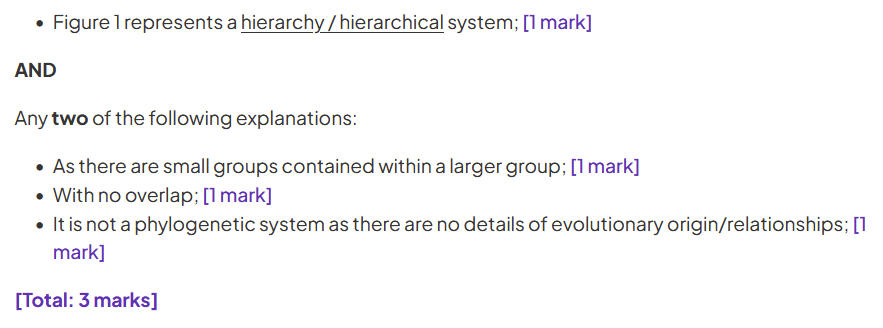
Describe one similarity and one difference between a phylogenic system and a simple hierachy [2]
-Both involve large groups which are divided into smaller groups (with no overlap)
-A phylogenetic system shows evolutionary history whereas a simple hierarchical system is based on shared characteristics
-A phylogenetic system shows evolutionary history whereas a simple hierarchical system is based on shared characteristics
20
Explain how courtship behaviour prevents mating between different species [2]
-Each species has a unique sequence of events
-Which allows individuals to recognise a member of their own species
-Which allows individuals to recognise a member of their own species
21
Give one reason why DNA analysis has been useful in the field of taxonomy
Gene/allele sequences can be compared
22
Why is classification of organisms not permenant?
more information becomes avalible over time
23
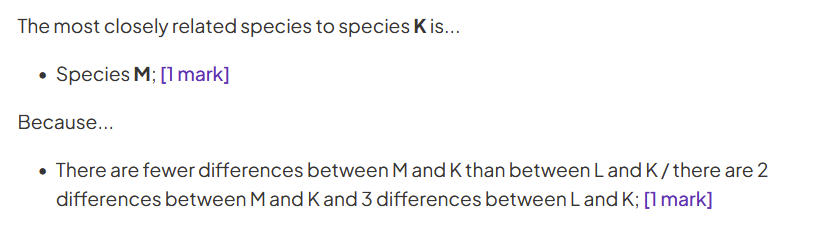
Explain how genome sequencing can be used to deduce evolutionary relationships between organisms [3]
-Determine the sequence/ order of bases in DNA
-Compare equivalent sequences of different species
-The more the differences between gene sequences, the less closely related the species are
-Compare equivalent sequences of different species
-The more the differences between gene sequences, the less closely related the species are
24
Why do comparisons of DNA sequences give more data about evoutionary relationships than amino acid sequences in protiens
There are 3 DNA bases for every one amino acid
25
Why is it perferable to compare amino acids in proteins rather than direct DNA sequences?
Proteins are easier to isolate from tissues
26
What is Immunilogical comparison?
A method used to compare the variations
In specific proteins used in the blood
In different species
In specific proteins used in the blood
In different species
27
Why do we carry out Immunilogical protein comparison?
-Protiens are too large to determine their amino acid sequence easily
-Immunilogical comparison is faster
-Immunilogical comparison is faster
28
What protein do we most commonly use when carrying out immunological comparison? Why?
Albumin as it is found in many species
29
How do you carry out immunilogical protein comparison?
1) Albumin is extracted from species
2) Albumins injected into rabbits
3) Rabbits produce antibodies
4) Mix different albumins and antibodies
5) Precipiate out complexes and weigh
2) Albumins injected into rabbits
3) Rabbits produce antibodies
4) Mix different albumins and antibodies
5) Precipiate out complexes and weigh
30
Why does the formation of more antigen-antibody complexes show evolutionary relatedness?
The albumin from more closely related species will bind more often to the specific antibodies
31
How can we get a more accurate comparsion of species when using genome sequencing?
looking at multiple regions of the same genome
32
[3]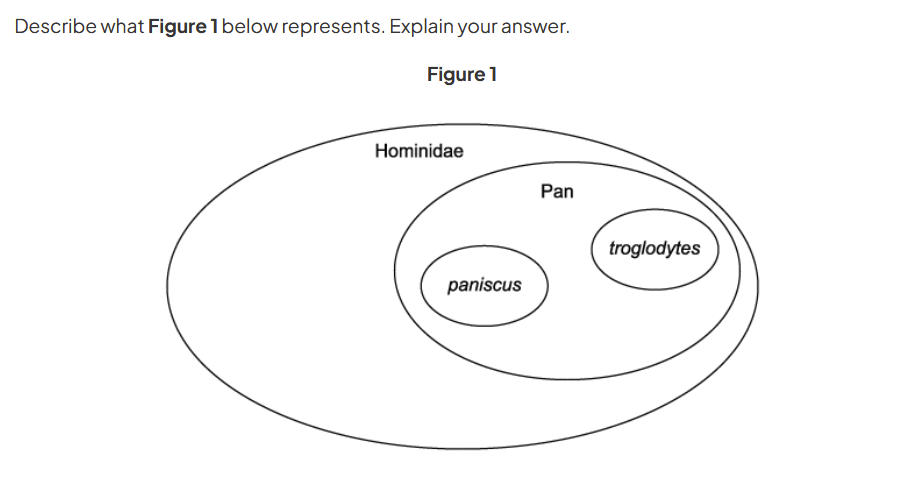
.
.
.
33
[2]
.
.
.
34
[2]
.
.
.
35
[2]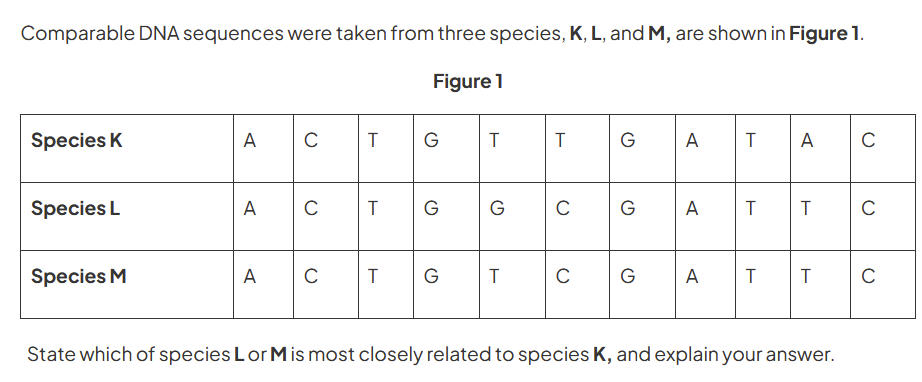
.
.
.
36
[1]
.
.
.
37
[2]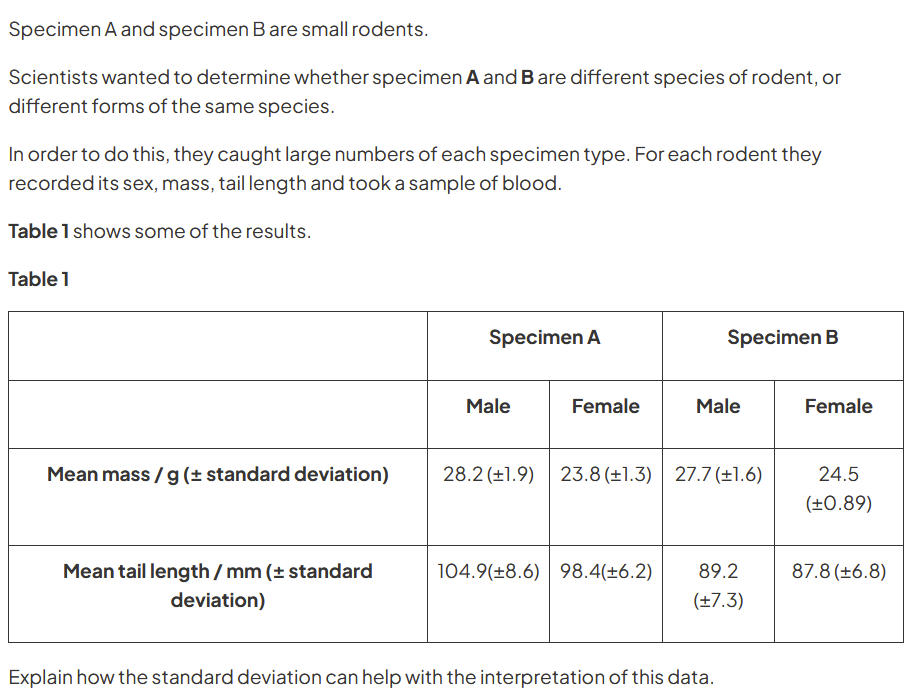
.
.
.
38
[2]
.
.
.
39
[1]
DNA is degenerate
Mehr Karteikarten: Naturwissenschaften
MRI Physics: Scanner Setup and TuningNaturwissenschaften · EnglischMollChapitre T 5 : Energétique des fluidesNaturwissenschaften · FranzösischMaelle_mlkOrganic chem reactionsNaturwissenschaften · EnglischCharlesPHOTOSYNTHESIS (FROM NOTES)Naturwissenschaften · EnglischLlanceKinetics and Thermodynamics of GasesNaturwissenschaften · EnglischJackMicrotubules and Actin FilamentsNaturwissenschaften · EnglischEmanHydrographic Surveying: Depth DeterminationNaturwissenschaften · EnglischDekanoEarth ScienceNaturwissenschaften · EnglischphiaENSC 220: Population Census and Growth ModelsNaturwissenschaften · EnglischMacPhysics for mod 1 2 3 yr 11Naturwissenschaften · EnglischADactyloscopy and Fingerprint IdentificationNaturwissenschaften · EnglischSANGALLAlect 2 life cycle onlyNaturwissenschaften · EnglischKatie
Alle Decks: Naturwissenschaften
Lerne diese Decks in der App
Kostenlos auf iPhone, Android, Mac und im Web. Füge jedes Deck mit einem Tipp zu deinem Konto hinzu.

