ACG2021 Chapter 5 (Principles of Financial Accounting)
Réviser ces flashcardsGratuit · répétition espacée · iPhone, Android, Mac et web
Toutes les cartes
1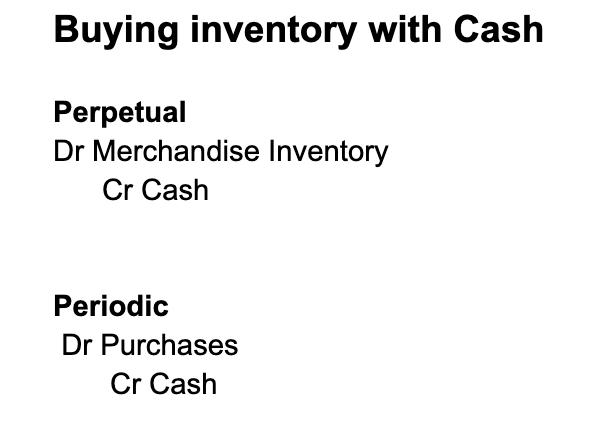
Buying Inventory with Cash
(Give the Journal Entry)
(Give the Journal Entry)
2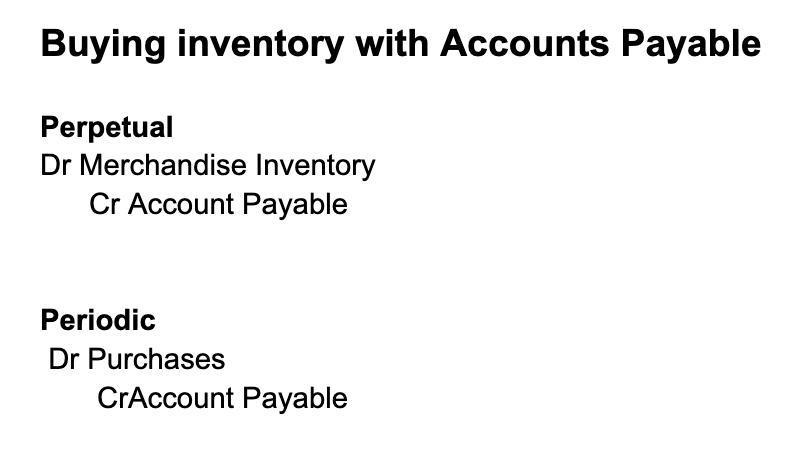
Buying inventory with Accounts Payable
(Give the Jounral Entry)
(Give the Jounral Entry)
3
In what types of journal entries, does the Perpetual method not use Contra (Special) accounts.
*Special is not a technical accounting name btw, I just think it special
2) In purchases journal entries, when do they use contra accounts?
*Special is not a technical accounting name btw, I just think it special
2) In purchases journal entries, when do they use contra accounts?
Purchase (Purchase Returns, Purchase Discounts, Purchase Allowances) DO NOT use contra (special) accounts
Sales (Sales Returns, Sales Discounts, Sales Allowances) ALWAYS use contra (special) accounts. (PS: The contra-account used is the same for both perpetual and periodic)
2) In purchase journal entires, 'Purchase Returns & Allowances' are used in th eperiodic method. Also, purchase discounts are used in the periodic method)
Sales (Sales Returns, Sales Discounts, Sales Allowances) ALWAYS use contra (special) accounts. (PS: The contra-account used is the same for both perpetual and periodic)
2) In purchase journal entires, 'Purchase Returns & Allowances' are used in th eperiodic method. Also, purchase discounts are used in the periodic method)
4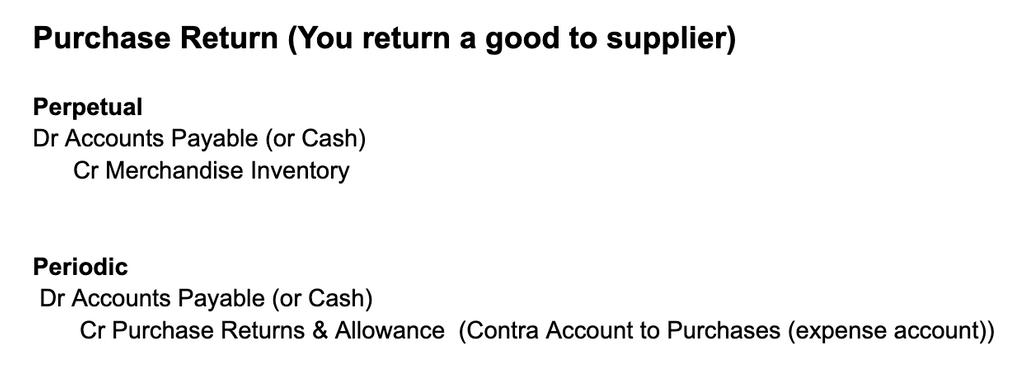
Purchase Return
(Give the Journal Entry)
(Give the Journal Entry)
5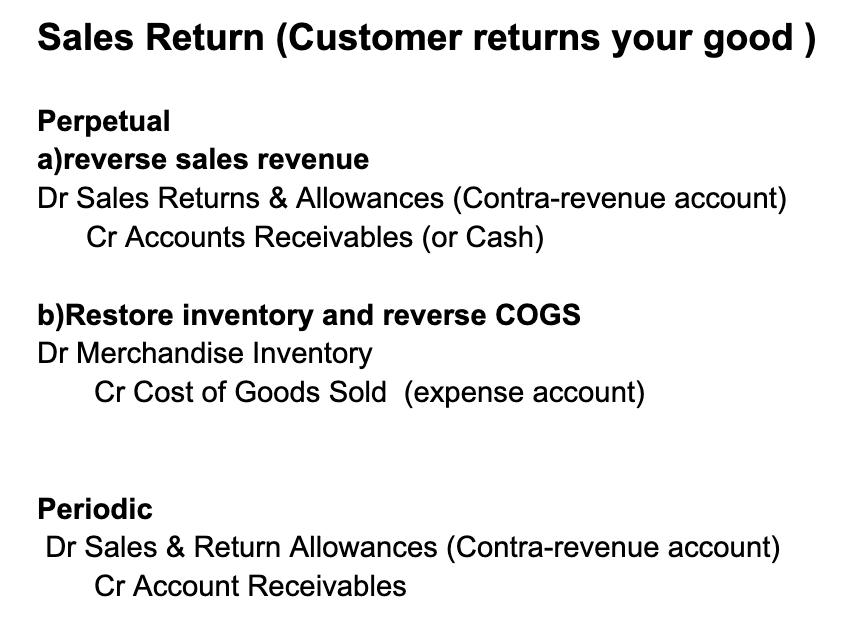
Sales Return
(Give the Journal Entry)
(Give the Journal Entry)
6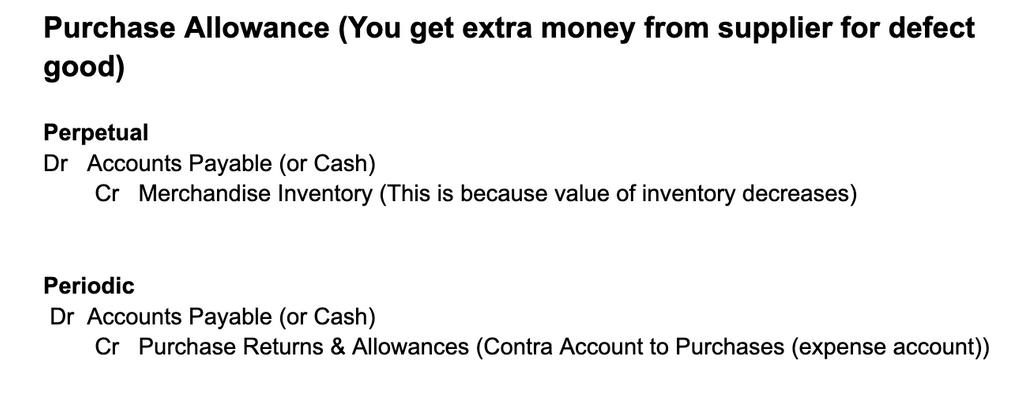
Purchase Allowance
(Give the Journal Entry)
(Give the Journal Entry)
7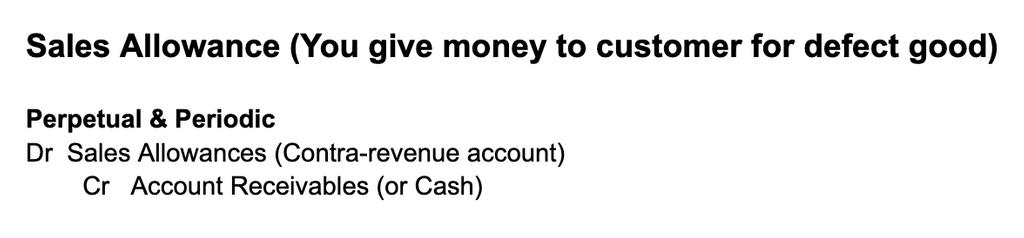
Sales Allowance
(Give the Journal Entry)
(Give the Journal Entry)
8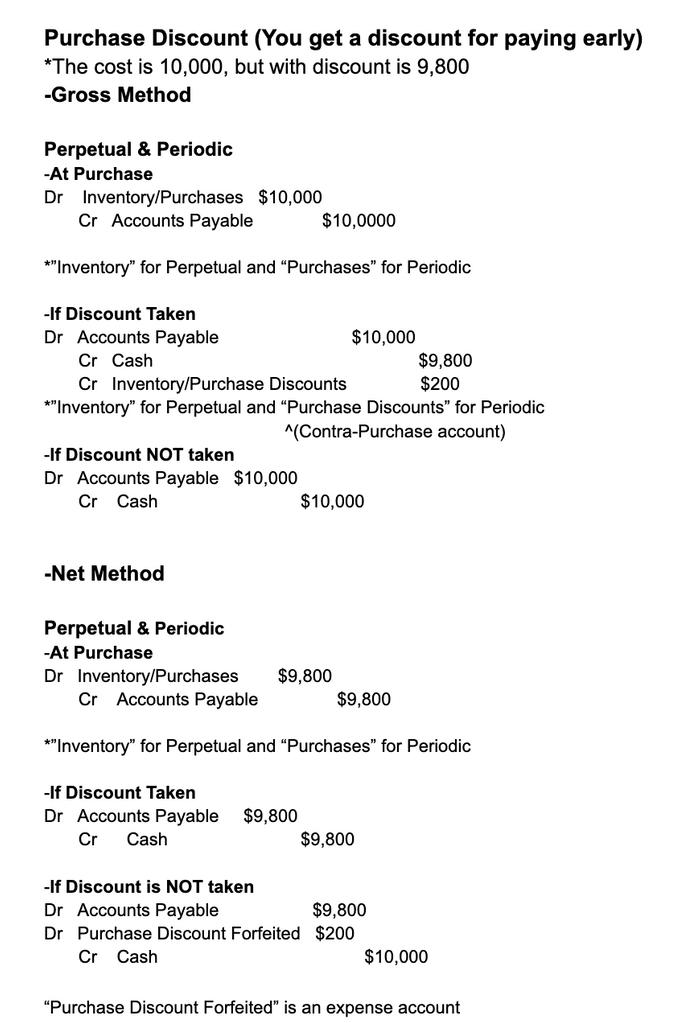
Purchase Discount
(Give the Journal Entry)
(Give the Journal Entry)
9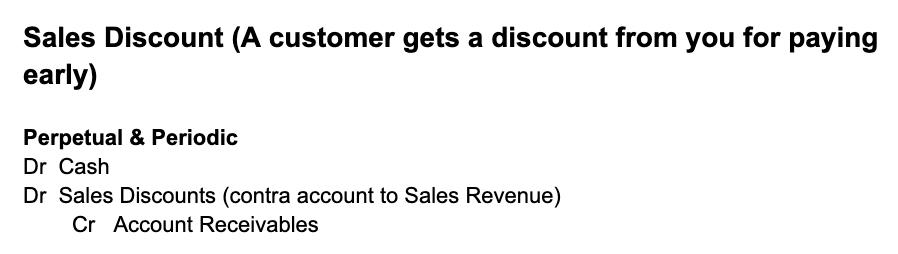
Sale Discount
(Give the Journal Entry)
(Give the Journal Entry)
10
Freight in
Freight out
Freight out
Freight in: The transportation cost of a good from the supplier to yhe ware hourse
Freight out: The transportation cost of a good from the warehouse to the customer
Freight out: The transportation cost of a good from the warehouse to the customer
11
(Free on Board) Tells you
1. Who pays for shipping
2. When ownership transfers from seller to buyer
FOB Shipping Point-Buyer owns goods during shipping. The buyer pays for shipping
FOB Destination-Sellers owns good until delivered to buyer. The seller pays for shipping.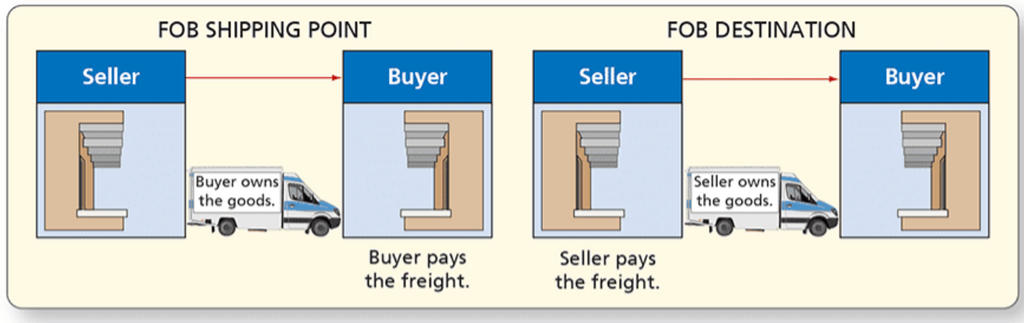
FOB
(Free on Board) Tells you
1. Who pays for shipping
2. When ownership transfers from seller to buyer
FOB Shipping Point-Buyer owns goods during shipping. The buyer pays for shipping
FOB Destination-Sellers owns good until delivered to buyer. The seller pays for shipping.
12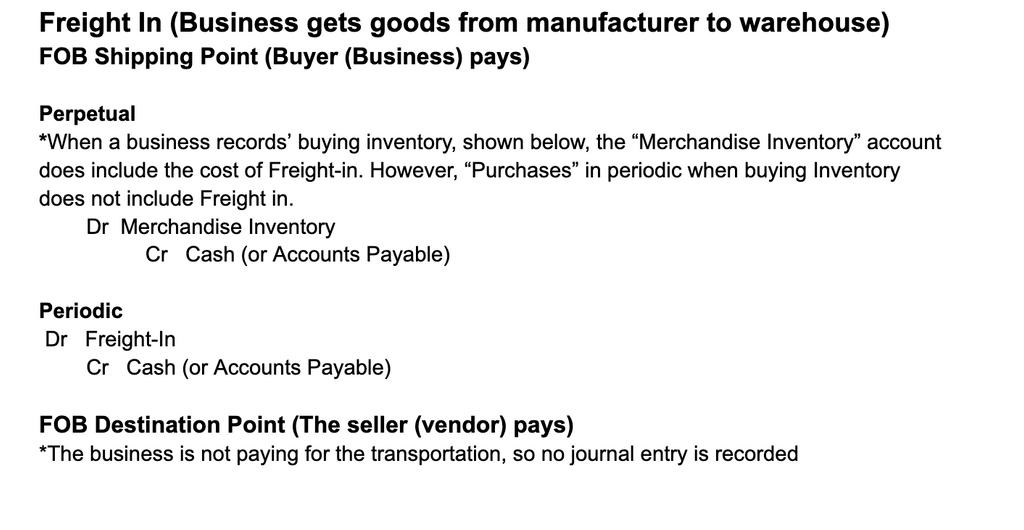
Freight In
(Give the Journal Entry)
(Give the Journal Entry)
13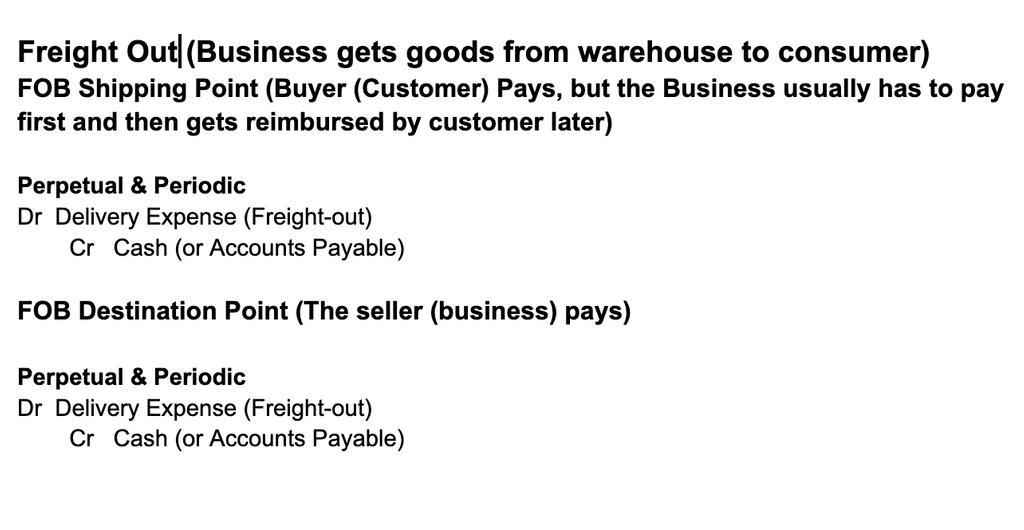
Freight Out
(Give the Journal Entry)
(Give the Journal Entry)
14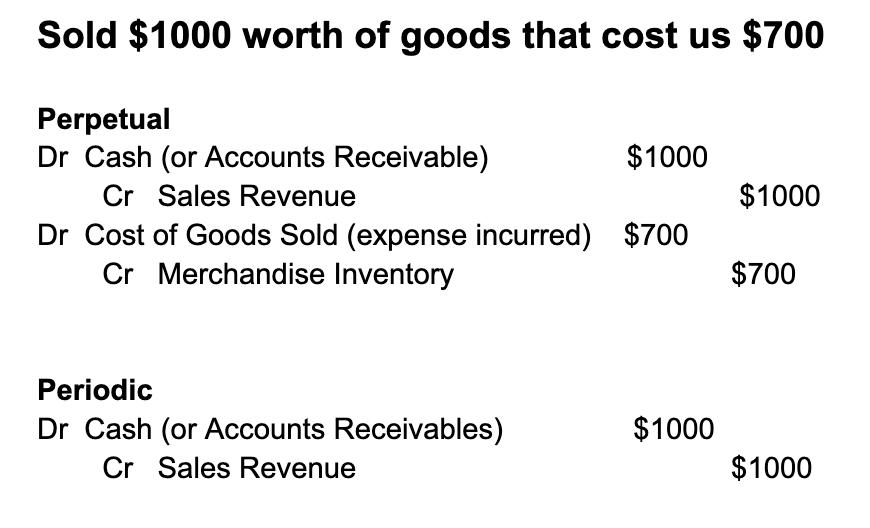
Sold \$1000 worth of goods that cost us \$700
(Give the Journal Entry)
(Give the Journal Entry)
15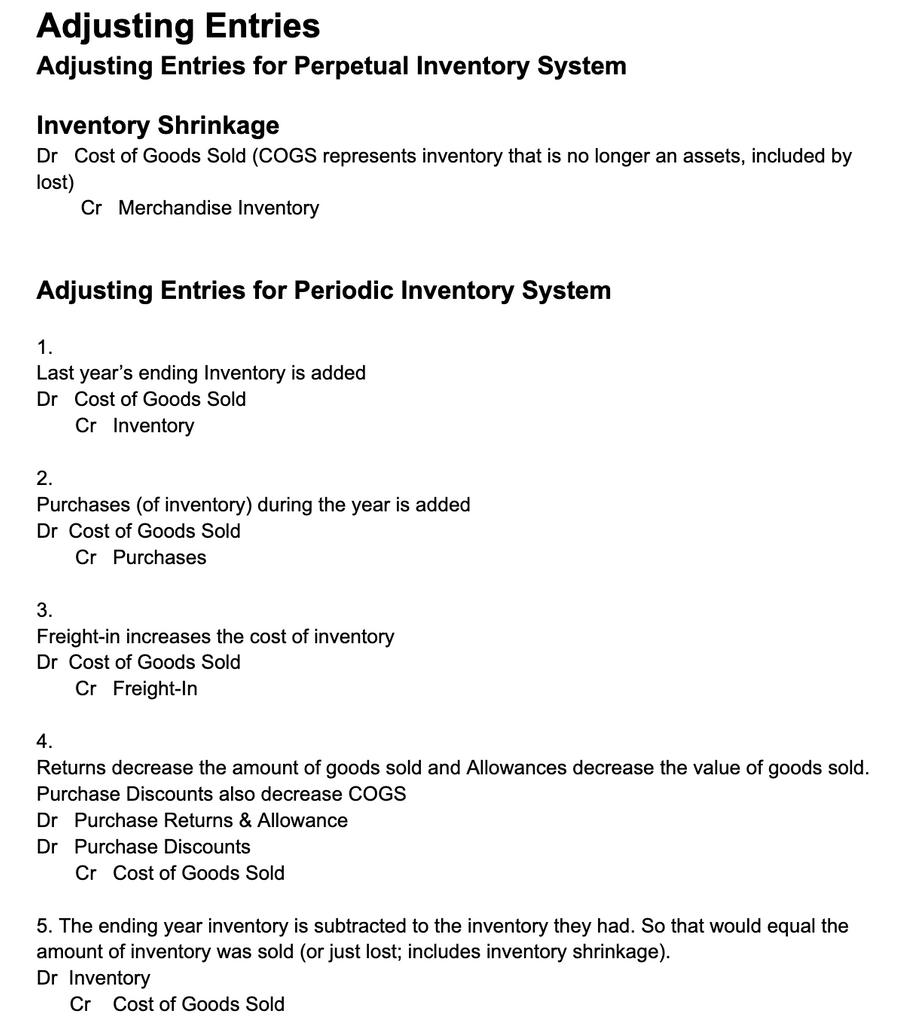
Adjusting Entries for Merchandise Stores
(Give the Journal Entry)
(Give the Journal Entry)
16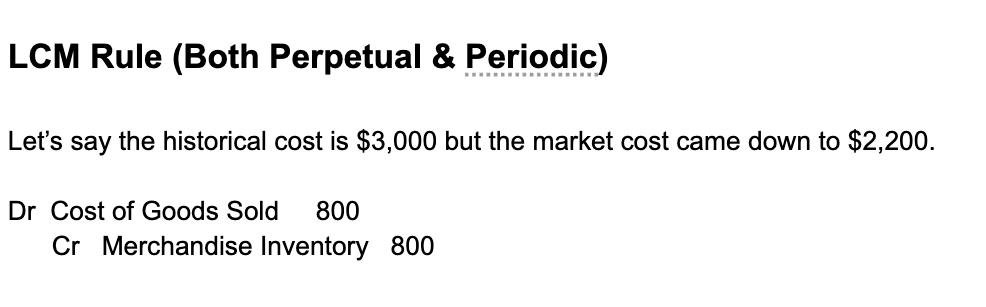
Part 2 of last slide
17
Closing Entries for Merchandise Stores
(Give the Journal Entry)
(Give the Journal Entry)
The same for service stores.
1. Close revenues
2. Close Expenses
3. Close Income Summary to Retained Earnings
4. Close Dividends
1. Close revenues
2. Close Expenses
3. Close Income Summary to Retained Earnings
4. Close Dividends
18
Net cost of inventory purchased
Net Purchased
Net Purchased
Net cost of inventory purchased = Purchase cost of inventory - Purchase returns & allowances - Purchase discounts + Freight in
Net Purchased = Purchase cost of inventory - Purchase returns & allowances - Purchase discounts
Net Purchased = Purchase cost of inventory - Purchase returns & allowances - Purchase discounts
19
Net Sales Revenue
Net Sales Revenue = Sales Revenue - Sales Returns & Allowances - Sale Discounts
20
Gross Profit percentage
Gross Profit percentage = Gross Profit / Net Sales Revenue
Gross Profit = Net Sales Revenue − Cost of Goods Sold (COGS)
Net Sales Revenue = Sales Revenue − Sales Returns − Sales Allowances − Sales Discount
*Measures a business ability to earn a profit. HIgher is better
Gross Profit = Net Sales Revenue − Cost of Goods Sold (COGS)
Net Sales Revenue = Sales Revenue − Sales Returns − Sales Allowances − Sales Discount
*Measures a business ability to earn a profit. HIgher is better
21
Multi-step Income Statment for Merchandise Company
1. Net sales Revenue - COGS = Gross Profit
2. Total Operating Expenses = Total Selling Expense + Total Administrative Expense
3. Operating Income = Gross Profit - Total Operating Income
4. Income Before Income Tax expense = Operating Income +/- the other income and expense
5.Net Income = Income before Income tax expense - Income tax expense
Terms:
Selling Expenses: Operating Expenses related to marketing and selling companies products
Administrative Expenses: Expenses unrelated to marketing.
"other income and expenses": Income that falls out of the normal money making methods of the business. An example is liquidating a plant asset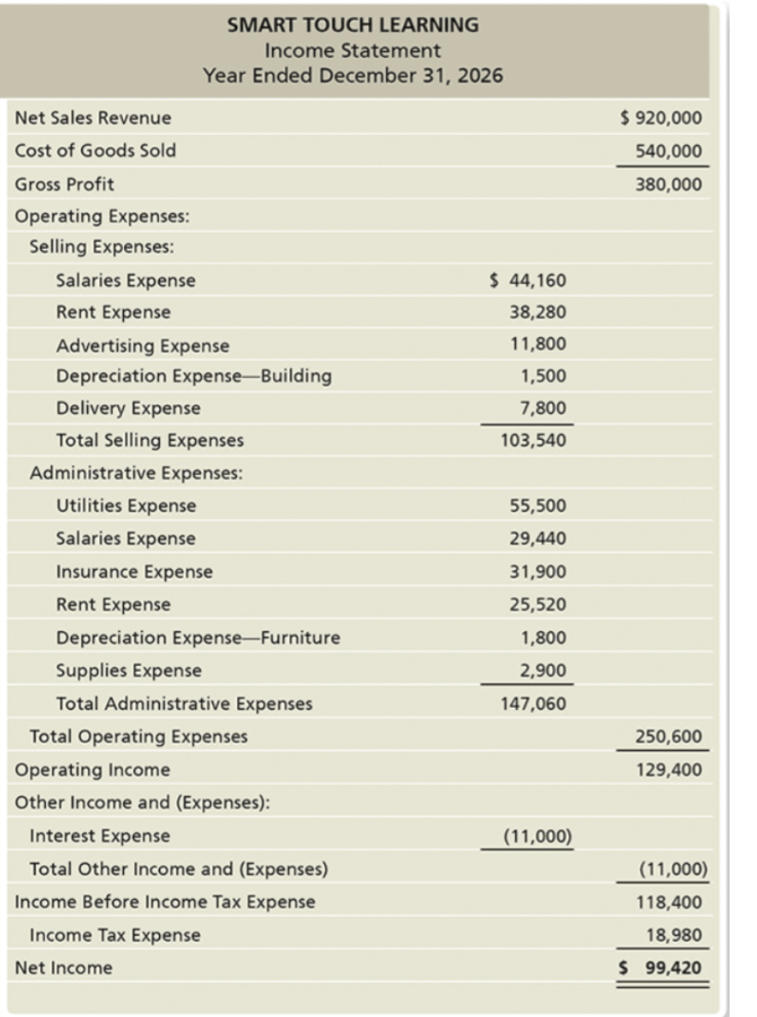
2. Total Operating Expenses = Total Selling Expense + Total Administrative Expense
3. Operating Income = Gross Profit - Total Operating Income
4. Income Before Income Tax expense = Operating Income +/- the other income and expense
5.Net Income = Income before Income tax expense - Income tax expense
Terms:
Selling Expenses: Operating Expenses related to marketing and selling companies products
Administrative Expenses: Expenses unrelated to marketing.
"other income and expenses": Income that falls out of the normal money making methods of the business. An example is liquidating a plant asset
22
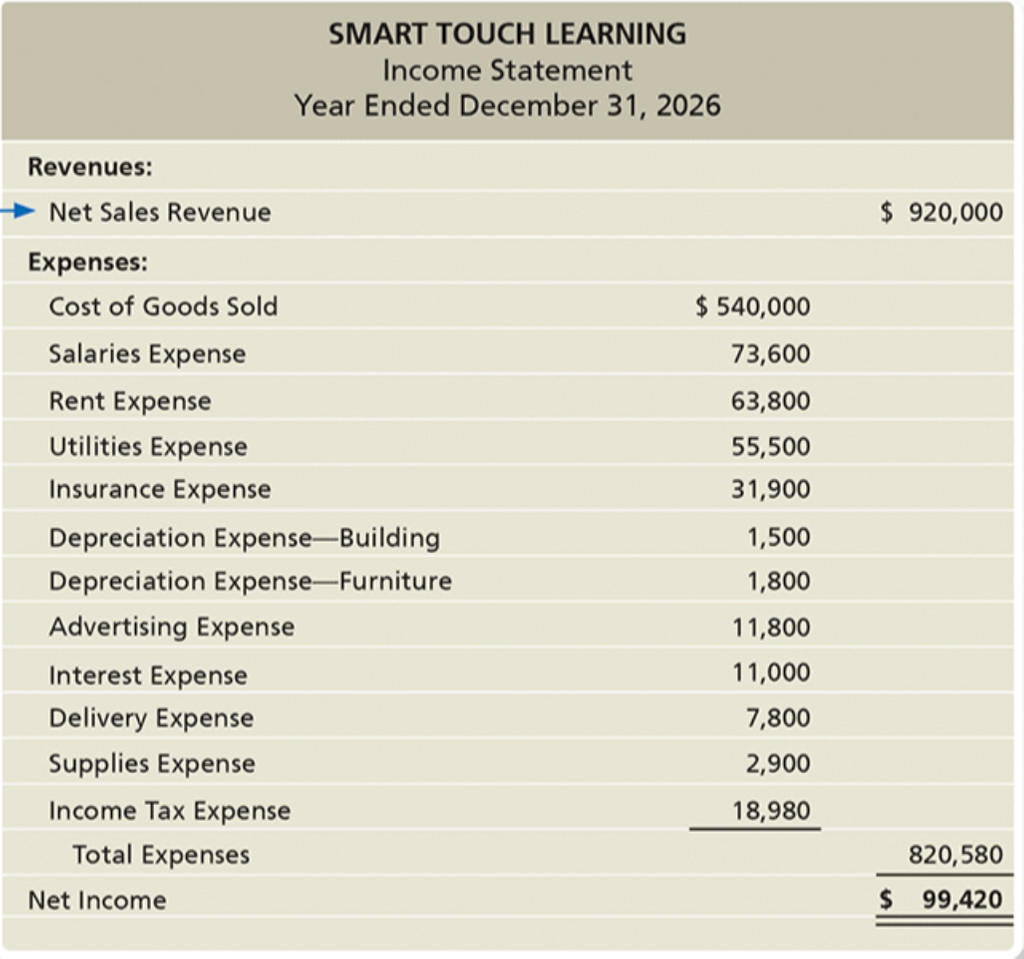
Single Step Income Statment for Merchandise Company
Just groups together revenues and expenses and then finds Net income
23
Retained Earnings Summary for Merchandise Company
The same as the Retaiend Earnings Summary for a Service Company
24
Credit Terms
(also called Payment Terms)
Credit terms are the conditions a seller offers a buyer regarding when payment is due and whether any discounts are available for early payment.
ex)
2/10, Net 30
"2/10": Buyers get 2% discount if payment is made within 10 days
"Net 30": Full payment is due within 30 days
ex)2/10, n/30
"2/10": Buyers get 2% discount if payment is made within 10 days
"n/30": Full payment is due within 30 days
ex)2/10, n/EOM
"2/10": Buyers get 2% discount if payment is made within 10 days
"n/EOM": Full payment is due at the End of the month
ex)2/10, 10 EOM
"2/10": Buyers get 2% discount if payment is made within 10 days
"10 EOM": Full payment is due 10 days at the End of the month
Credit terms are the conditions a seller offers a buyer regarding when payment is due and whether any discounts are available for early payment.
ex)
2/10, Net 30
"2/10": Buyers get 2% discount if payment is made within 10 days
"Net 30": Full payment is due within 30 days
ex)2/10, n/30
"2/10": Buyers get 2% discount if payment is made within 10 days
"n/30": Full payment is due within 30 days
ex)2/10, n/EOM
"2/10": Buyers get 2% discount if payment is made within 10 days
"n/EOM": Full payment is due at the End of the month
ex)2/10, 10 EOM
"2/10": Buyers get 2% discount if payment is made within 10 days
"10 EOM": Full payment is due 10 days at the End of the month
25
This is because it states the name of the vendor to help keep better track on who they owe money to.
Instead of syaing
"Accounts Payable"
Why say
"Accounts Payable - Electronics Direct"
"Accounts Payable"
Why say
"Accounts Payable - Electronics Direct"
This is because it states the name of the vendor to help keep better track on who they owe money to.
26
What are the two main ways to determine the value of merchandise inventory
Periodic Inventory System-Count inventory physically (by hand); usually used by small local stores2. Perpetual Inventory System-Counts inventory based on bar code scanned
27
Usually listed below Accounts Reciveables, but above prepaid assets such as supplies, pr-paid rent, & pre-paid insurance
Where is merchandise inventory usually listed in a balance sheet (relative to other accounts)
Usually listed below Accounts Reciveables, but above prepaid assets such as supplies, pr-paid rent, & pre-paid insurance
28
merchandiser
A business that sells merchandise, or goods, to customers.
29
Merchandisers are often identified as either _______ or ________.
Merchandisers are often identified as either _______ or ________.
Wholesaler: A wholesaler is a merchandiser who buys goods from a manufacturer and then sells them to retailers.
Relaitor: A retailer buys merchandise either from a manufacturer or a wholesaler and then sells those goods to consumers.
Relaitor: A retailer buys merchandise either from a manufacturer or a wholesaler and then sells those goods to consumers.
30
Operating Cycle of a Merchandising Business
Operating Cycle of a Merchandising Business
1. It begins when a company buys inventory from someone called a Vendor
2. The company sells the inventory to the customer
3.Company collects cash from customer
2. The company sells the inventory to the customer
3.Company collects cash from customer
31
Is freight out included in COGS?
No! Only freight in(cost to get the inventory)
32
LCM RULE
Requires inventory to be reported at the lower of its historical cost or its current market value (Replacment cost)
So, whichever is lower has to be used
So, whichever is lower has to be used
Plus de flashcards : Économie et gestion
PharmacoeconomicsÉconomie et gestion · Anglaiskay24[FPPS 183] Module 1 & 2Économie et gestion · Anglaisroro1 Advertising's Role in Society Économie et gestion · AnglaisJohnmacroeconomics Vocab 4Économie et gestion · AnglaisAllimInternal Analysis: ResourcesÉconomie et gestion · AnglaisrikishakennedyTCP T2 NotesÉconomie et gestion · AnglaiswowiepowTax incedence for elasticitiesÉconomie et gestion · AnglaisDariusLean Manufacturing (WSM Midterms)Économie et gestion · AnglaisEbale,Business: Supply Chain Management ReviewÉconomie et gestion · AnglaisTristanObchodní a účetní terminologieÉconomie et gestion · TchèqueZuzanaInvestment Analysis final Study Guide chap 1-3Économie et gestion · Anglaismattmc03ACC Chapter 3Économie et gestion · AnglaisTaylor
Tous les decks : Économie et gestion
Révise ces decks dans l’app
Gratuit sur iPhone, Android, Mac et le web. Ajoute n’importe quel deck à ton compte en un tap.

