Lymphocyte Biology and Markers
Réviser ces flashcardsGratuit · répétition espacée · iPhone, Android, Mac et web
Toutes les cartes
1
Which leukocyte is usually the smallest and most featureless in blood?
Lymphocytes
2
What is the typical nucleus/cytoplasm ratio of a lymphocyte?
High N/C ratio with sparse, variably blue cytoplasm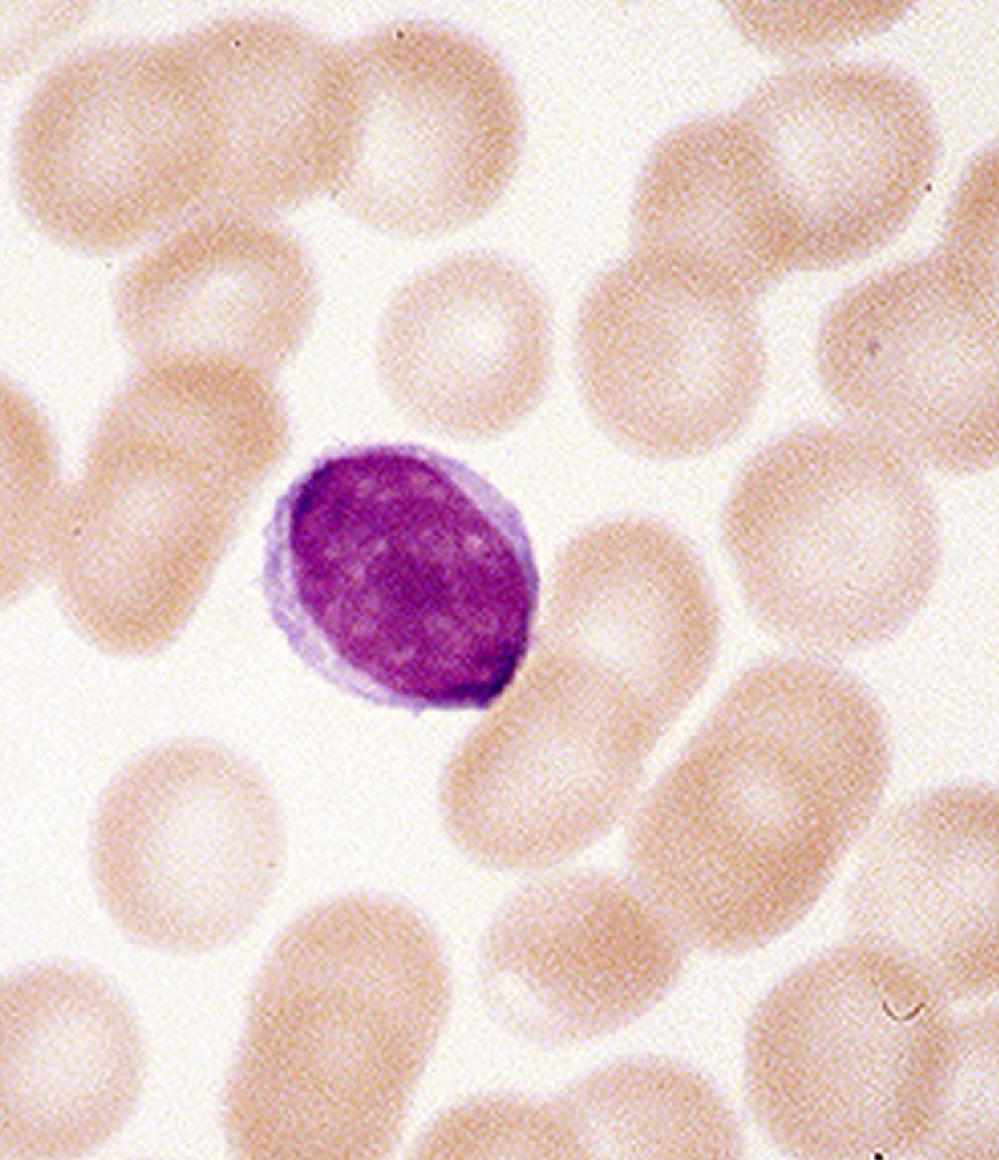
3
In which species are lymphocytes often the predominant leukocyte in health?
Ruminants
4
What do granular lymphocytes (GL/LGL) contain?
Azurophilic granules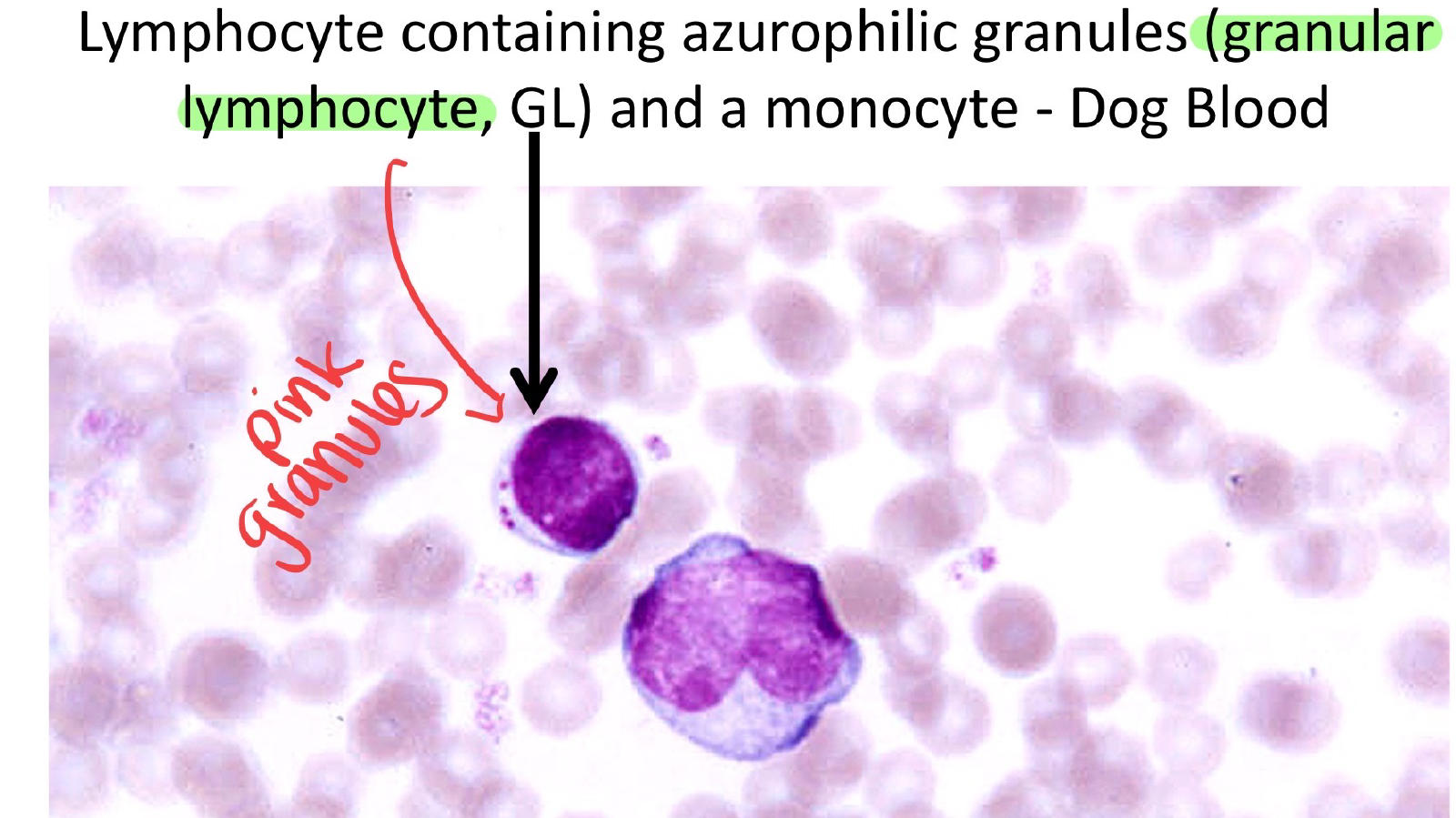
5
Which cell types may an LGL represent?
A cytotoxic T cell or NK cell
6
How is lymphocyte differentiation manifested?
By acquisition and loss of lineage-specific surface antigens (CD antigens)
7
Can morphology usually identify B vs. T lymphocytes and their stage?
No, with few exceptions
8
Which TCR chain rearranges first, giving DJ then VDJ?
TCR β
9
What is the first B-cell surface Ig?
Ig μ (IgM)
10
Which lymphocytes are morphologically recognizable?What are _____?
Plasma cells
Terminally differentiated, Ig-secreting B cells
Terminally differentiated, Ig-secreting B cells
11
Where do blood lymphocytes originate and recirculate from?
Thymus, marrow, lymph nodes, spleen and MALT
12
What percentage of lymphocytes entering tissues re-enter the vasculature?
About 70%
13
Which molecules mediate lymphocyte recirculation?
Selectins, integrins, ICAMs, chemokines, lymphatics and HEVs (PCVs)
14
Why is lymphocyte recirculation critical? EXAM
It allows generalized distribution and re-location (immune surveillance)
15
How long do many lymphocytes live?
Years to decades
16
What happens to lymphocyte appearance with antigenic or cytokine stimulation?
They become reactive (activated)
17
In which disease was a reactive lymphocyte shown in a dog?
Salmon poisoning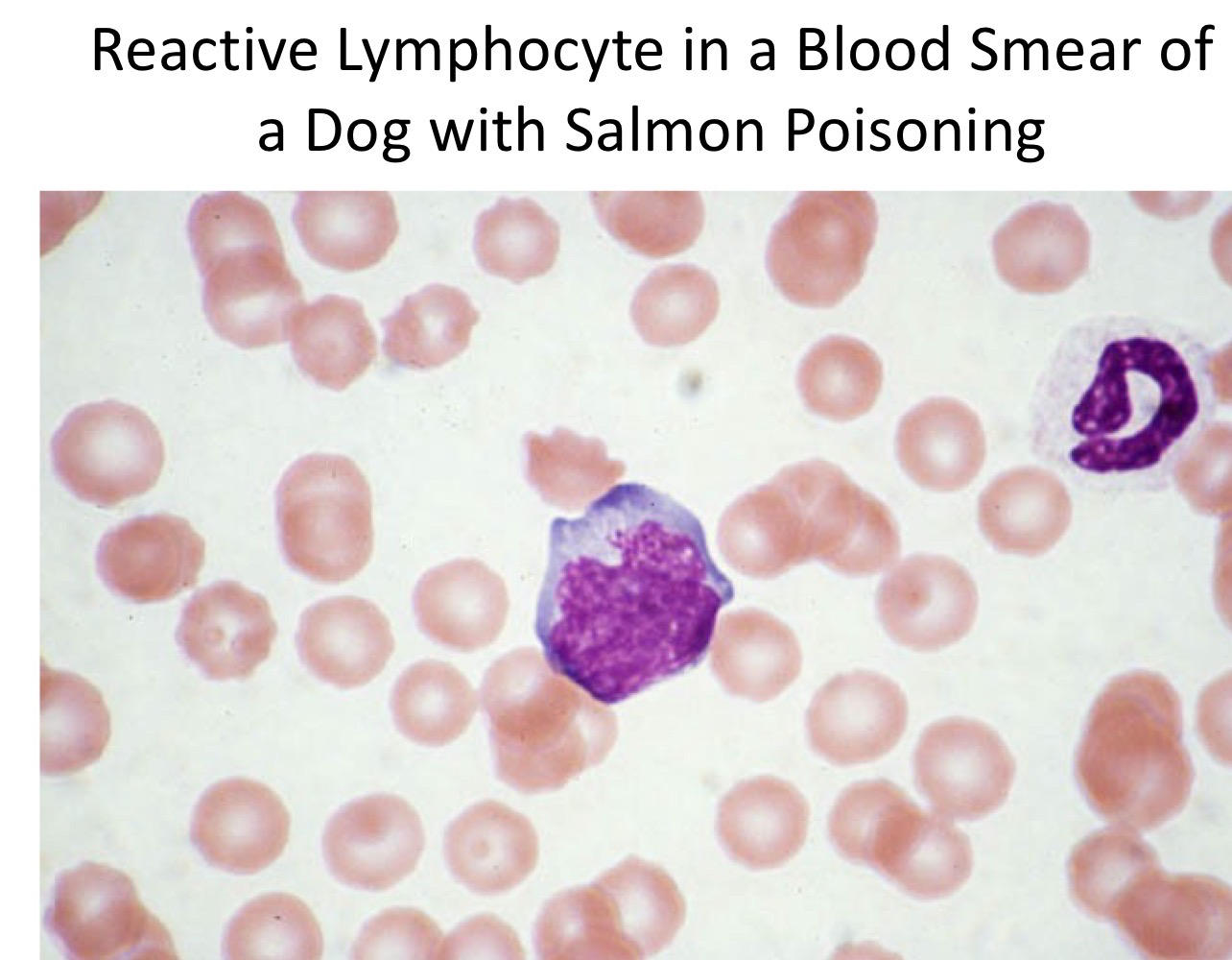
18
What is the approximate circulating lymphocyte mix in most species?
70% T cells, 20% B cells and 10% NK cells
19
How well do blood lymphocyte numbers correlate with tissue numbers?
Poorly
20
How do blood lymphocyte counts change with age?
Higher in young, growing animals and decrease with age
- their immune system is being always stimulated
- their immune system is being always stimulated
21
Which is more common on CBCs of sick animals, lymphopenia or lymphocytosis?
What is the usual cause of _____ in sick animals?
What is the usual cause of _____ in sick animals?
Lymphopenia
Corticosteroids (stress leukogram)
Corticosteroids (stress leukogram)
22
Which diseases cause lymphopenia through lymph loss?
1. Chylothorax
2. lymphangiectasia
3. inflammatory or neoplastic intestinal disease
2. lymphangiectasia
3. inflammatory or neoplastic intestinal disease
23
Which examples cause lymphopenia from lymphoid hypoplasia/aplasia?
1. Hereditary immunodeficiency (CID of Arabian foals)
2. Acquired immunodeficiency
3. Thymic aplasia/atrophy
2. Acquired immunodeficiency
3. Thymic aplasia/atrophy
24
Which therapies cause lymphopenia? 2
Immunosuppressive therapy and radiation
25
Which acute infections cause lymphopenia?
Especially viral: canine distemper, canine parvovirus, FIP
26
How can lymph node disruption cause lymphopenia?
It prevents lymphocyte recirculation (e.g., lymphoma, granulomatous lymphadenitis)
27
Why may young animals appear lymphocytotic?
Their counts exceed the adult reference interval
28
Which species show marked physiologic lymphocytosis from epinephrine?
Cats
29
How does immune stimulation usually affect lymphocyte numbers?
Increases them but usually stays within reference interval
30
What is reactive lymphocytosis?
Increased lymphocytes from persistent antigenic stimulation or chronic infection
31
Which infections can cause reactive lymphocytosis?
Viral, atypical bacterial, fungal, rickettsial and protozoal
32
Which findings may accompany reactive lymphocytosis?
Mature neutrophilia and monocytosis
33
Is lymphocytosis present in most lymphomas?
No, most are not associated with it
34
What causes persistent lymphocytosis in cattle?
Subclinical, non-neoplastic Bovine Leukemia Virus infection
35
What blood morphology indicates immune stimulation or infection?
Reactive lymphocytes
36
What blood morphology indicates lymphocyte neoplasia?
Atypical (large neoplastic) lymphocytes
37
In which species are plasma cells in blood more common with inflammation?
Birds and especially reptiles
Plus de flashcards : Médecine et santé
Pharmacology: AutacoidsMédecine et santé · AnglaisZahraaRenal AnatomyMédecine et santé · AnglaisfaithEyes Health Assessment Exam #2Médecine et santé · AnglaisMadiruth2MNT for Diabetes MellitusMédecine et santé · AnglaisAngelicThe BloodMédecine et santé · Anglaisun étudiant OutLearnNASM Section 4: Fitness AssessmentsMédecine et santé · AnglaiscardiAUrinary systemMédecine et santé · AnglaisKayleighdéveloppement et mise sur le marché des médicaments et des dispositifs médicaux implantable. matériovigilanceMédecine et santé · FrançaisClaraS&P Exam 3 Taste Médecine et santé · AnglaisjuliajLEC 21 BIOL 431Médecine et santé · AnglaisDDFLCCENEVAL MedicinaMédecine et santé · EspagnolFERNANDACardiovascular Drugs: Calcium Channel Blockers and ACE InhibMédecine et santé · Italienkay24
Tous les decks : Médecine et santé
Révise ces decks dans l’app
Gratuit sur iPhone, Android, Mac et le web. Ajoute n’importe quel deck à ton compte en un tap.

