Brain Interventions
Réviser ces flashcardsGratuit · répétition espacée · iPhone, Android, Mac et web
Toutes les cartes
1
Reasons why investigating brain function is important
For basic science - having understanding of brain function
Medicine - developing treatments for brain diseases
Society/personal - improving performance/changing how we feel
Medicine - developing treatments for brain diseases
Society/personal - improving performance/changing how we feel
2
Main issue with fMRI and other brain scanning assessments
Correlation does not mean cuasation
3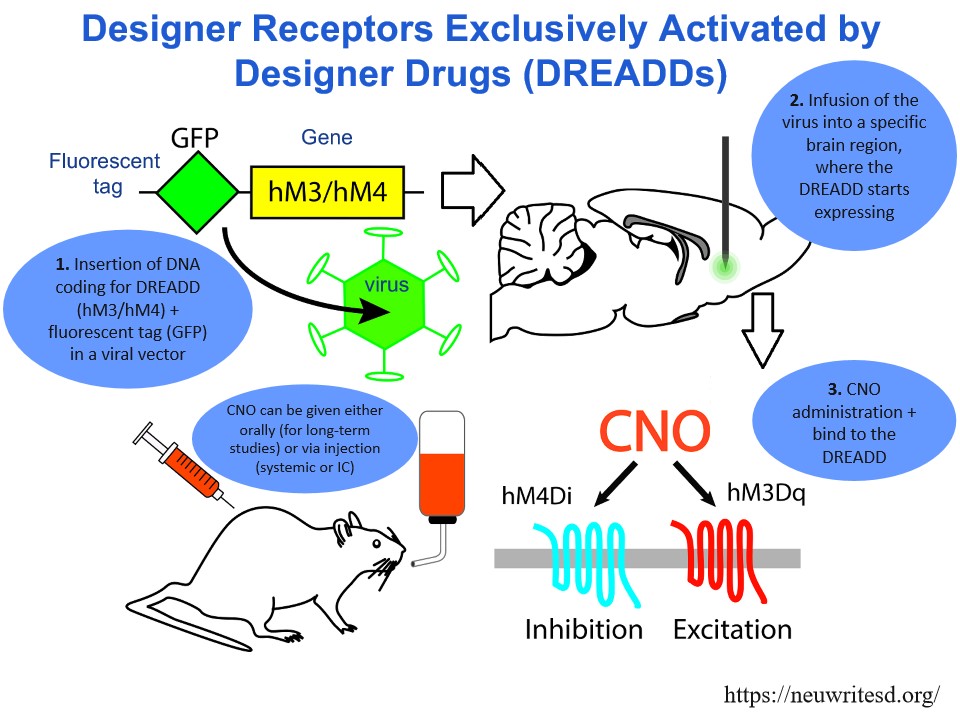
Occultation d’image : retrouve les étiquettes masquées
4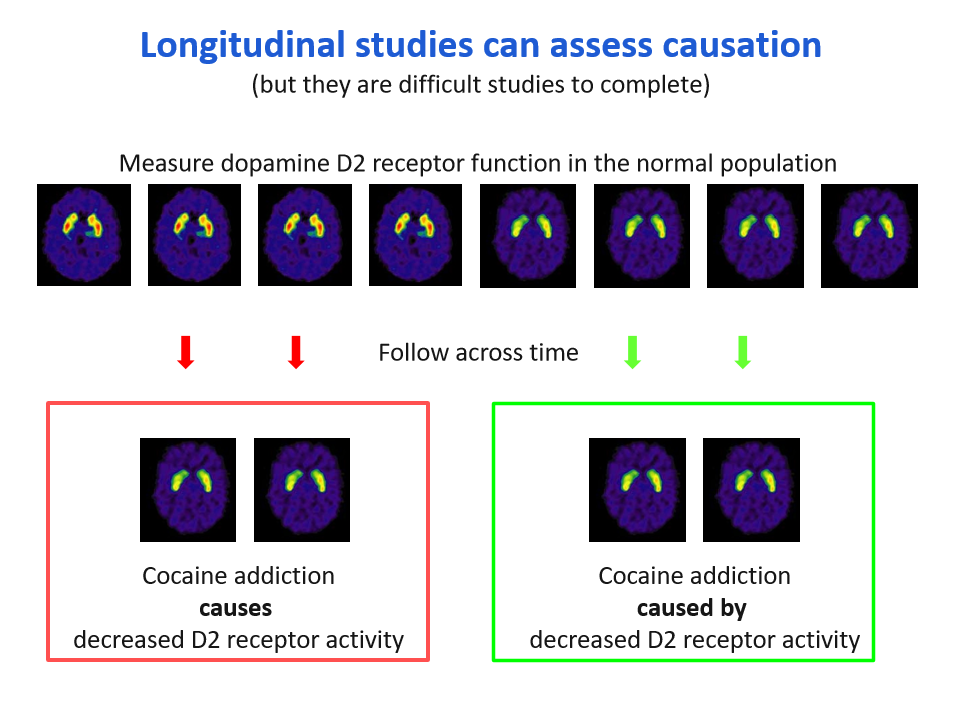
How might causation be assessed rather than correlation?
5
Occultation d’image : retrouve les étiquettes masquées
6
4 types of brain intervention
Physical/structural connectivity
Electrial signalling
Neurochemical signalling
Genetic engineering
Electrial signalling
Neurochemical signalling
Genetic engineering
7
2 examples of physical brain intervention
Phineas Gage
HM
HM
8
Describe HM case study
Bilateral medial temporal lobectomy to cure epilepsy
Damaged hippocampus and amygdala
Profound anterograde amnesia (memory loss for events after surgery)
Graded retrograde amnesia (memory loss for events before surgery worse closer to surgery date)
Damaged hippocampus and amygdala
Profound anterograde amnesia (memory loss for events after surgery)
Graded retrograde amnesia (memory loss for events before surgery worse closer to surgery date)
9
Outline 2 types of lesions
Radio frequency
Excitotoxic
Excitotoxic
10
Outline radio frequency lesions
Electrodes inserted into brain
Alternating, high frequency current
Produces heat, killing surrounding cells
Non-specific
Alternating, high frequency current
Produces heat, killing surrounding cells
Non-specific
11
Outline excitotoxic lesions
Excitatory aa injected into brain
Overstimulates neuron, causing cell death
Only kills target neuron cell bodies
Specific
Overstimulates neuron, causing cell death
Only kills target neuron cell bodies
Specific
12
4 electrical brain interventions
Deep brain stimulation (DBS)
Transcranial magnetic stimulation (TMS)
Electroconvulsive therapy (ECT)
Direct current stimulation (DCS)
Transcranial magnetic stimulation (TMS)
Electroconvulsive therapy (ECT)
Direct current stimulation (DCS)
13
Outline DBS
Electrode surgically implanted deep into brain
Delivers electrical impulses to specific target brain regions
Thought that these regions are overactive
DBS may reduce their activity, leading to more normal function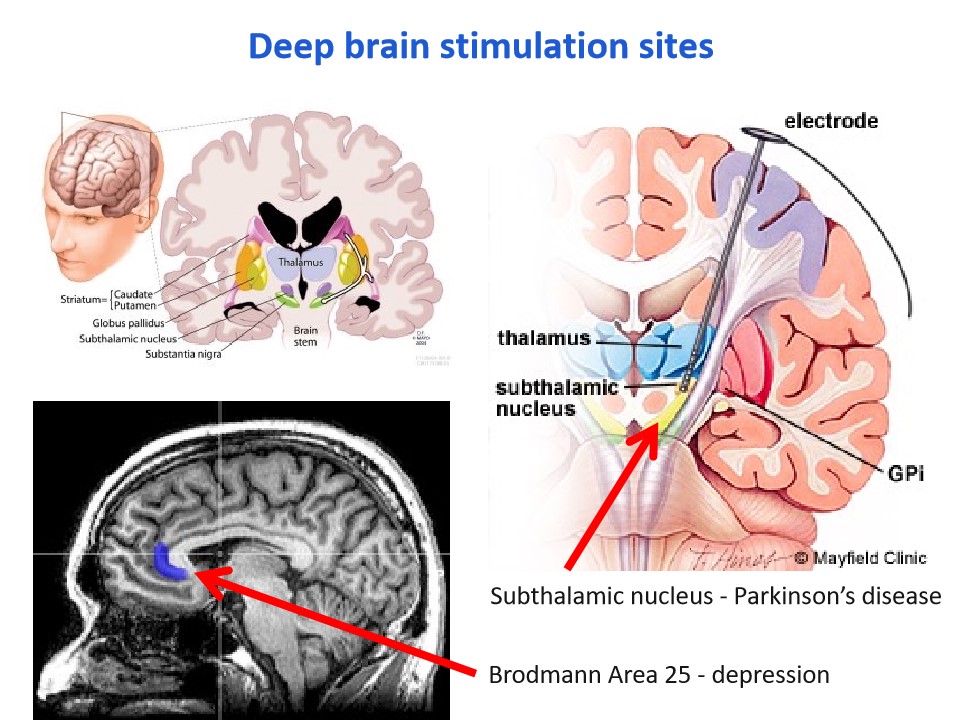
Delivers electrical impulses to specific target brain regions
Thought that these regions are overactive
DBS may reduce their activity, leading to more normal function
14
Evaluate DBS
+ Used to treat Parkinson's disease, essential tremor, OCD
+ Potential treatment for depression and Tourette's syndrome
- Surgical risks
- Not fully understood
+ Potential treatment for depression and Tourette's syndrome
- Surgical risks
- Not fully understood
15
Outline TMS
Produces temporary inactivation of specific brain regions
Electromagnetic stimulation induces electrcial activity in brain
Electromagnetic stimulation induces electrcial activity in brain
16
Evaluate TMS
+ Non invasive
+ Localised to small regions of cortex
+ Approved for treatment of depression
+ Relatively safe with few side effects
+ Terraneo 2016 - TMS treatment applied to dorsolateral PFC for 29 days reduced cocaine use and craving in humans
- Cannot penetrate deep into brain, limited to cortex / grey-white matter junction
- Not fully understood, adding noise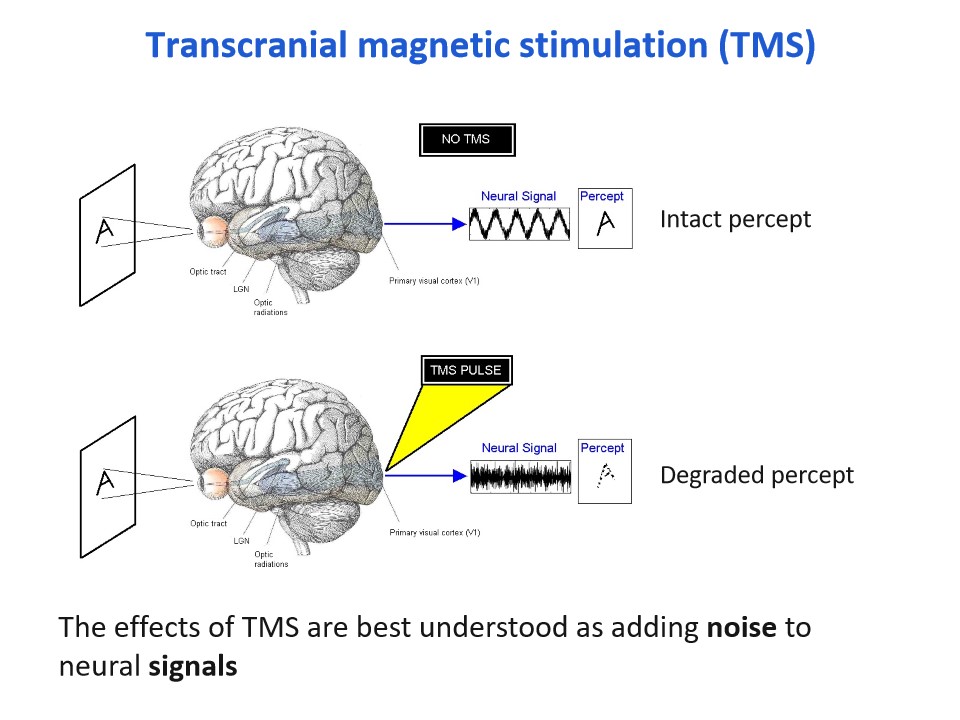
+ Localised to small regions of cortex
+ Approved for treatment of depression
+ Relatively safe with few side effects
+ Terraneo 2016 - TMS treatment applied to dorsolateral PFC for 29 days reduced cocaine use and craving in humans
- Cannot penetrate deep into brain, limited to cortex / grey-white matter junction
- Not fully understood, adding noise
17
Outline ECT
General anaesthetic
Electric current applied to precise locations on scalp
Causes short lasting seizure
Electric current applied to precise locations on scalp
Causes short lasting seizure
18
Evaluate ECT
+ Used as last resort treatment for severe depression, SCZ, mania and severe OCD
- Side effects, headaches and memory loss
- Not fully understood, may change brain chemistry and brain activity
- Side effects, headaches and memory loss
- Not fully understood, may change brain chemistry and brain activity
19
Outline DCS
Uses direct electrical currents to stimulate specific parts of brain
Constant, low intensity current passed through 2 electrodes
Anodal stimulation excites neuronal activity
Cathodal stimulation inhibits neuronal activity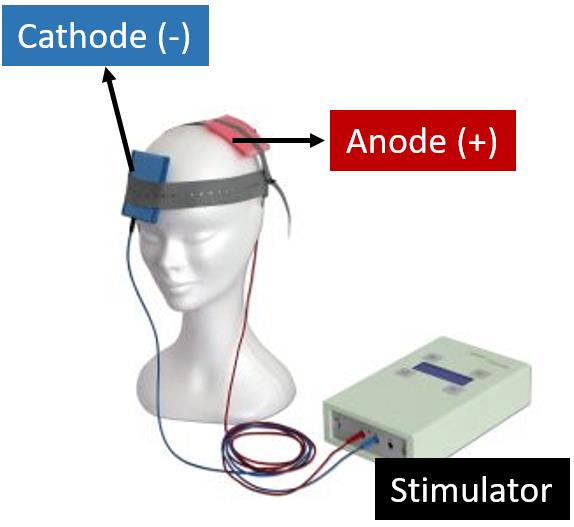
Constant, low intensity current passed through 2 electrodes
Anodal stimulation excites neuronal activity
Cathodal stimulation inhibits neuronal activity
20
Evaluate DCS
+ Non invasive
+ Painless
- Not FDA approved (+ but may be useful in treating depression, anxiety, chronic pain)
+ Painless
- Not FDA approved (+ but may be useful in treating depression, anxiety, chronic pain)
21
3 ways of interfering with neurochemical signalling
Decrease conc. of NET released into synapse
Increase conc. of NET in synapse by blocking reuptake
Change balance of action of NET at different types of receptor
Increase conc. of NET in synapse by blocking reuptake
Change balance of action of NET at different types of receptor
22
What are the 3 main neurotransmitters to learn?
Serotonin (5-HT)
Dopamine (DA)
Noradrenaline (NA)
Dopamine (DA)
Noradrenaline (NA)
23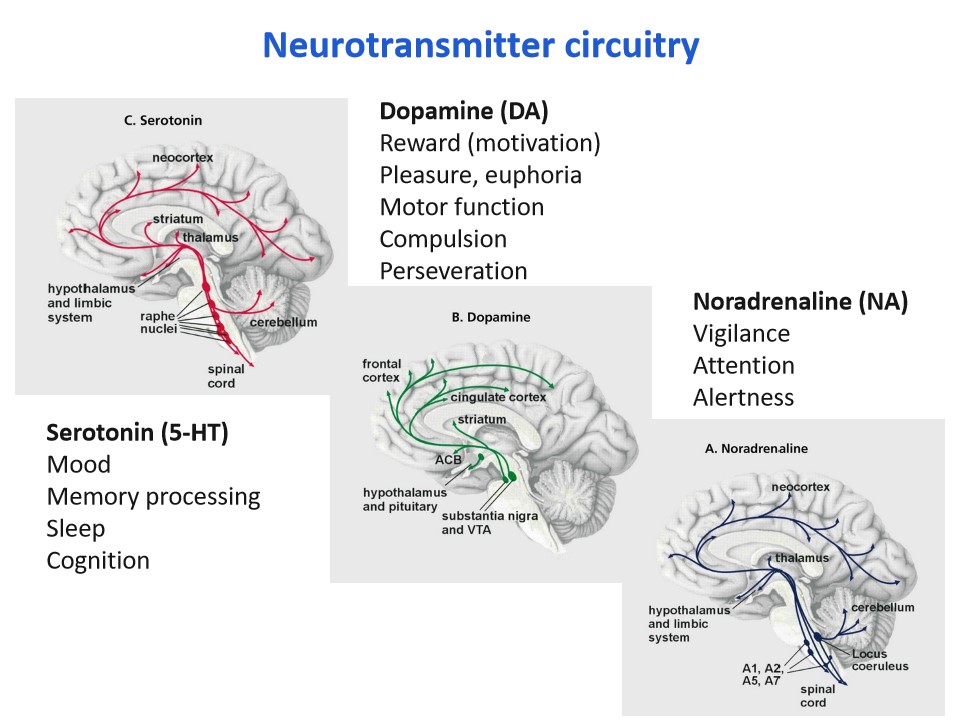
Occultation d’image : retrouve les étiquettes masquées
24
Occultation d’image : retrouve les étiquettes masquées
25
Occultation d’image : retrouve les étiquettes masquées
26
What type of receptor do all 3 NETs (serotonin, dopamine, noradrenaline) act through?
Metabotropic (G-protein coupled) receptors
27
How can NET availability be increased?
Block presynaptic transporter
Increased stimulation of synapse, AP more likely
Eg. SSRIs
Increased stimulation of synapse, AP more likely
Eg. SSRIs
28
How can NET availability be decreased?
By blocking its production
Eg. acute tryptophan depletion procedure
Eg. acute tryptophan depletion procedure
29
Outline the acute tryptophan depletion procedure
Reduces serotonin
Tryptophan (TRP) = essential aa needed to produce serotonin
Rapid and substantial decrease in TRP produced by injesting large no. of other large neutral aa (LNAA)
Stimulates liver to synthesise protein, removing aa (including TRP) from blood
Additional LNAA also introduces direct competition to protein carriers to reducing transportation of TRP across blood-brain barrier to allow for serotonin production in the brain
30
How can dopamine be reduced?
Ingest aa not containing tyrosine or phenylalanine
31
Define monoamine transporters
Proteins used to transport NET overflow back into pre-synaptic neuron from synaptic cleft
Located in pre-synaptic neuron membrane
(Reuptake protein)
Located in pre-synaptic neuron membrane
(Reuptake protein)
32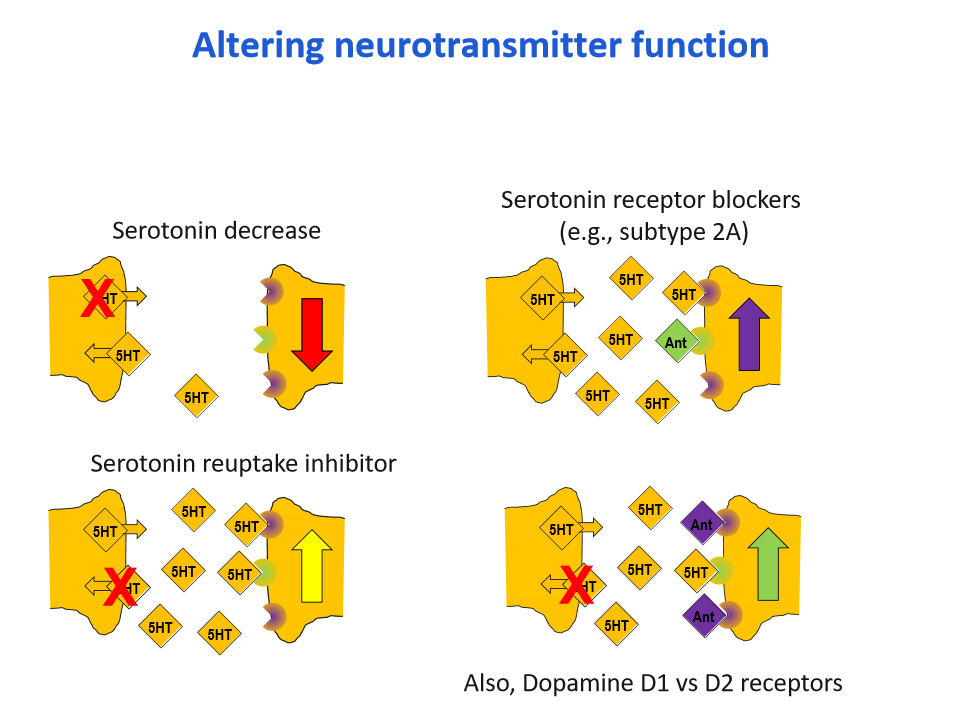
Occultation d’image : retrouve les étiquettes masquées
33
2 types of genetic engineering brain interventions
Designer receptors exclusively activated by designer drugs (DREADDs)
Optogenetics
Optogenetics
34
Define DREADDs
Method by which engineered GPCRs are activated by otherwise small, inert, drug-like molecules (designer drugs)
35
Define receptor
Protein that receives chemical signals via the binding of another molecule (ligand)
36
Outline the hM3Dq
Type of DREADD
Based on human M3 muscarinic receptor (hM3)
2 point mutations result in hM3Dq:
- Potency for CNO (clozapine-N-oxide)
- Insensitivity to acetylcholine (ACh)
- Low constitutive activity
Based on human M3 muscarinic receptor (hM3)
2 point mutations result in hM3Dq:
- Potency for CNO (clozapine-N-oxide)
- Insensitivity to acetylcholine (ACh)
- Low constitutive activity
37
Occultation d’image : retrouve les étiquettes masquées
38
Define optogenetics
Biological technique that involves using genetic engineering techniques to enable expression of light-sensitive proteins in neurons
39
2 types of light receptive proteins
Channelrhodopsins (ChR)
Harlorhodopsins (NpHR)
Harlorhodopsins (NpHR)
40
Outline ChR proteins
In the presence of blue light:
Undergoes conformational change
Permits influx of cations, activating cell
Undergoes conformational change
Permits influx of cations, activating cell
41
Outline NpHR proteins
Presence of yellow light
Hyperpolarises cell - inactivating it
Hyperpolarises cell - inactivating it
42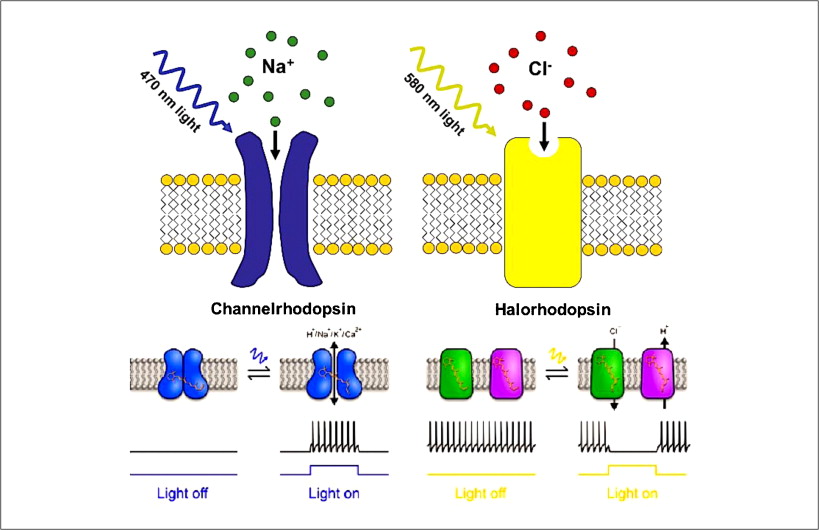
Occultation d’image : retrouve les étiquettes masquées
43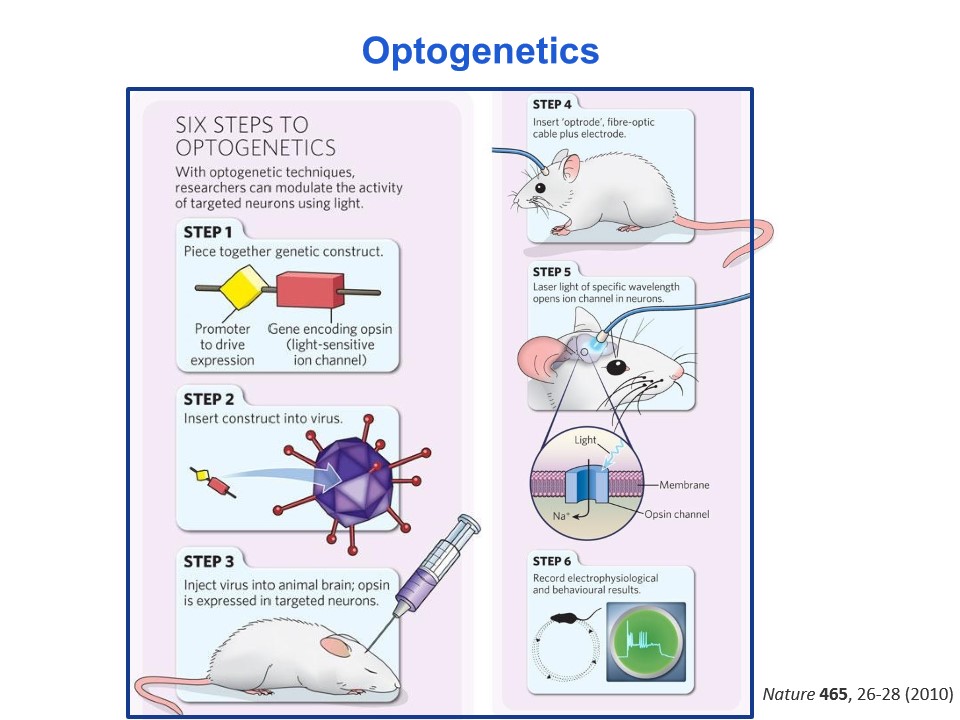
Occultation d’image : retrouve les étiquettes masquées
44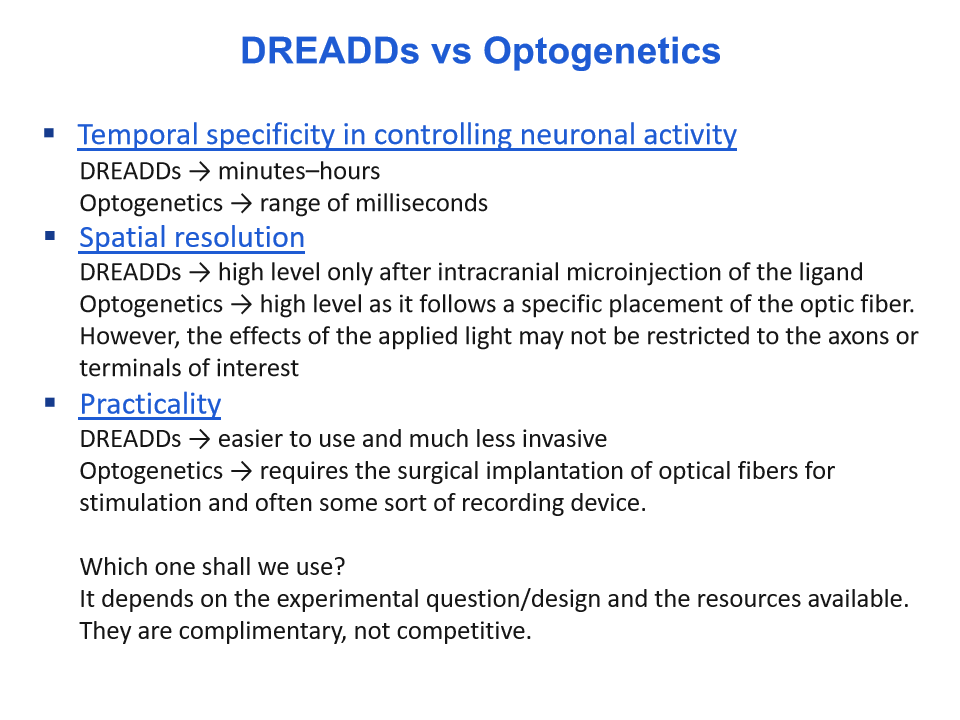
Occultation d’image : retrouve les étiquettes masquées
45
Occultation d’image : retrouve les étiquettes masquées
46
Occultation d’image : retrouve les étiquettes masquées
47
What effect of cocaine correlates with subjective high in humans?
Dopamine release in striatum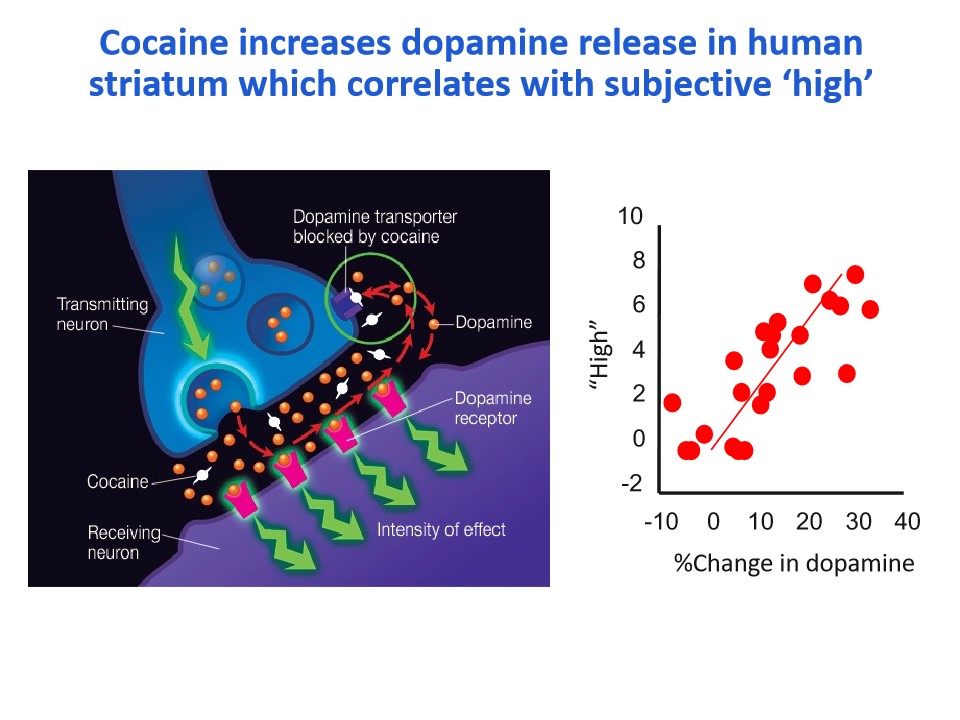
48
Difference between chronic and recreational drug users
Chronic = high impulsivity and compulsivity, executive function impairements
Recreational = low impulsivity and compulsivity
Recreational = low impulsivity and compulsivity
49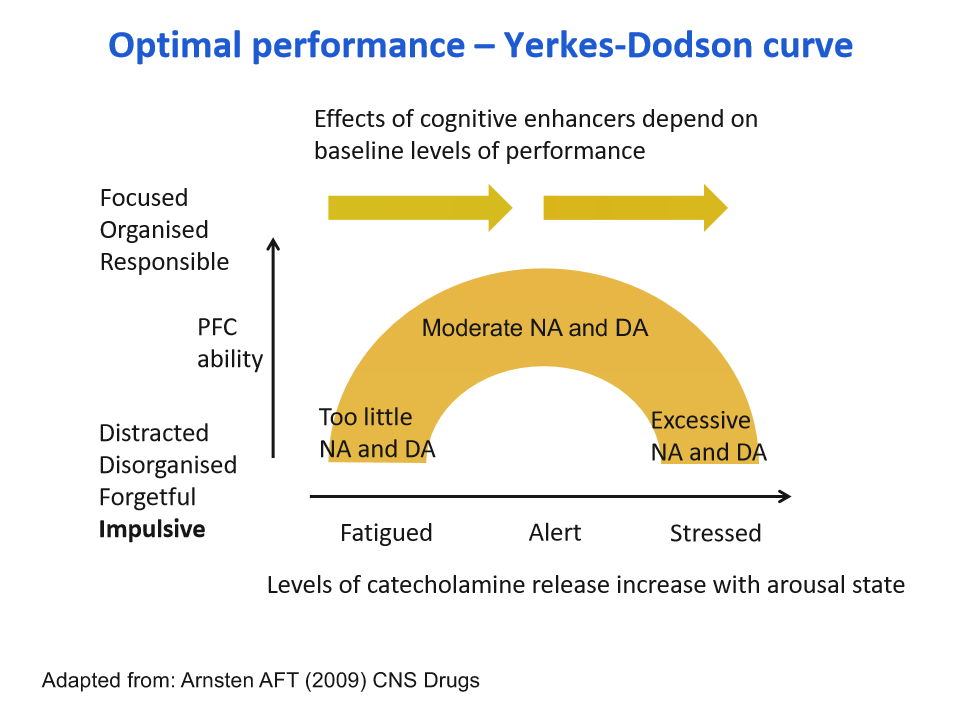
Occultation d’image : retrouve les étiquettes masquées
Plus de flashcards : Sciences
8. Mutation, Reparatur und RekombinationSciences · AllemandJenniferDC Biology Chapter 1Sciences · AnglaisNoahAtomic StructureSciences · AnglaisAlishaChem 1113 Polyatomic Ions (CU Boulder)Sciences · LatinAshleyIonisation EnergySciences · AnglaisLogan3.2.3 TRANSPORT ACROSS MEMBRANESSciences · AnglaisSabs2023BIOL-2401-03P (A&P)_Chpt1Sciences · AnglaisSavannahPhysics Sciences · AnglaisSurajBiochemistry: Plasma MembraneSciences · AnglaisPhilipEM Waves and LightSciences · AnglaisAnoushkScience Chapter 1: PhotosynthesisSciences · AnglaisIsmatAstro 4 better finalSciences · AnglaisJack
Révise ces decks dans l’app
Gratuit sur iPhone, Android, Mac et le web. Ajoute n’importe quel deck à ton compte en un tap.

