ACG3341 Chapter 2 (Cost Accounting & Control 1)
Study these flashcardsFree · spaced repetition · iPhone, Android, Mac & web
All cards
1
Vertical Analysis
Vertical Analysis selects a significant value, such as total revenue or total assets, as 100% (the whole pie), and breaks it up into pieces of it
ex)
Total Revenue = \$100,000 (100% — the whole pie)
Cost of Goods Sold = \$60,000 (60% — a piece of the pie)
Operating Expenses = \$25,000 (25% — a piece of the pie)
Net Income = \$15,000 (15% — a piece of the pie)
Simple definition: Vertical Analysis takes a significant value, such as total revenue or total asset and then breaks it up into pieces in a vertical way.
2
Are Expenditures & Expenses the same thing?
Expenditures: Cash Outflow
Expenses: A cost that is used up / incurred to generate revenue.
*All expenses are expenditures, but not all expenditures are expenses.
Expenses: A cost that is used up / incurred to generate revenue.
*All expenses are expenditures, but not all expenditures are expenses.
3
Asset: probable future economic benefit
Expenses: A resourced sacrificed that brings benefit to this benefit (with NO future benefit)
Practically, when deciding whether a cost is an asset or an expense,
1) If it fits the definition of a "probable future economic benefit" then it is an asset
2) If it does not fit that definition, then it is an expense
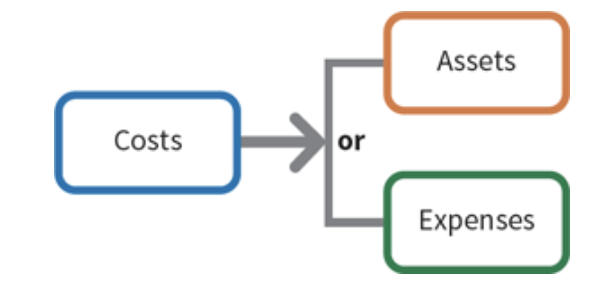
Costs can either be _____ or _______.
*Define Each term
*Define Each term
Asset: probable future economic benefit
Expenses: A resourced sacrificed that brings benefit to this benefit (with NO future benefit)
Practically, when deciding whether a cost is an asset or an expense,
1) If it fits the definition of a "probable future economic benefit" then it is an asset
2) If it does not fit that definition, then it is an expense
4
Opportunity Cost
Opportunity cost is the value of the next best alternative that you give up when you make a choice.
ex)
If you have \$60 to spend on clothes, and you choose between the 2 top choices of a jacket or 3 T-Shirts; if you choose the jacket, then the opportunity cost would be getting 3 T-Shirts.
ex)
If you have \$60 to spend on clothes, and you choose between the 2 top choices of a jacket or 3 T-Shirts; if you choose the jacket, then the opportunity cost would be getting 3 T-Shirts.
5
Sunk Costs
Sunk cost is money or resources you have already spent and cannot get back.
6
Single Step Income Statement
&
Multi Step Income Statement
&
Multi Step Income Statement
Single Step Income Statement:
Revenues
Expenses (-)
Net Income
Multi Step Income Statement
Operating Section
Net Sales: \$100,000
COGS: - \$40,000
Gross Profit: \$60,000
Operating expenses: -\$30,000
Operating Income (EBIT): \$30,0000
Non Operating Section
Non-operating Revenue: \$2,000
Non-operating Expense: -\$7,000
Total Non-operating Net: -\$5,000
Net Income: \$25,000
7
Product Costs:
Period Costs:
Period Costs:
Product Costs: Used to make the product & ready it for sale
1. Direct Materials (DM)
2. Direct Labour (DL)
3. Manufacturing Overhead (MOH)
Period Costs: The cost of being in business, which are not tied to making the product.
ex) Administrative Expenses or Selling Expenses
1. Direct Materials (DM)
2. Direct Labour (DL)
3. Manufacturing Overhead (MOH)
Period Costs: The cost of being in business, which are not tied to making the product.
ex) Administrative Expenses or Selling Expenses
8
Manufacturing Costs = Product Costs
Non-Manufacturing costs = Period Costs
Manufacturing Costs vs Non-Manufacturing costs
What are they, and what are they synonymous for?
What are they, and what are they synonymous for?
Manufacturing Costs = Product Costs
Non-Manufacturing costs = Period Costs
9
What is a Cost Object?
It is the thing a business measures & assigns cost to.
10
Direct Costs vs Indirect Costs
Direct Costs: Can be Easily traced to a product or service.
1) Direct Labour (DL)
2) Direct Material (DM)
Indirect Costs: Costs necessary to product a product or service but, Cannot be easily traced to a product or service.
3) Manufacturing Overhead (MOH)
1) Direct Labour (DL)
2) Direct Material (DM)
Indirect Costs: Costs necessary to product a product or service but, Cannot be easily traced to a product or service.
3) Manufacturing Overhead (MOH)
11
Prime Costs:
Conversion Costs:
Conversion Costs:
Prime Costs: Direct Materials + Direct Labor
Conversion Costs: Direct Labor + Manufacturing Overhead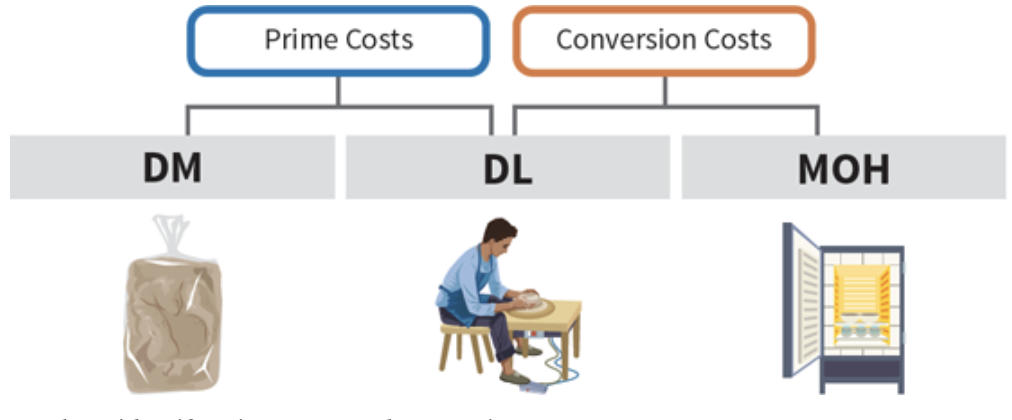
Conversion Costs: Direct Labor + Manufacturing Overhead
12
Variable Costs (aka Total Variable Costs): Business cost that change proportionally to volume activity (units purchased, produced, or sold)
*For Variable Costs per unit, they DO NOT change from changes in volume activity. However, Total Variable costs DO change from volume activity.
Variable Costs
(Also, how do Variable Costs per unit react to changes in volume activity (units purchased, produced, or sold)
(Also, how do Variable Costs per unit react to changes in volume activity (units purchased, produced, or sold)
Variable Costs (aka Total Variable Costs): Business cost that change proportionally to volume activity (units purchased, produced, or sold)
*For Variable Costs per unit, they DO NOT change from changes in volume activity. However, Total Variable costs DO change from volume activity.
13
Fixed Costs
(Also, how do Fixed Costs per unit react to changes in volume activity (units purchased, produced, or sold)
(Also, how do Fixed Costs per unit react to changes in volume activity (units purchased, produced, or sold)
Fixed Costs (aka Total Fixed Costs): Business Costs that DO NOT change from volume activity (units purchased, produced, or sold)
* For Fixed Costs per unit, they DO change from changes in volume activity. (Since the fixed cost would be spread out over more units).
* For Fixed Costs per unit, they DO change from changes in volume activity. (Since the fixed cost would be spread out over more units).
14
Relevant Ranges
(Also give an example & how it relates to fixed costs)
(Also give an example & how it relates to fixed costs)
Relevant Ranges: The range of units that can be produced, from zero up to the companies capacity.
ex)
A factor relevant range is 0 - 10,000 units. Its fixed cost is \$5,000. It gets a order for 15,000 units, so it must get another factory, which in between the two factories, it would be a fixed cost of \$10,000.
-Its fixed cost of \$5,000 is only for producing between 0-10,000 units.
-But, if you go above 10,000, then that \$5,000 fixed cost is not applicable.
15
Inventoriable Costs : All cost requires to make / buy a product that are recorded as assets on the balance sheet until the item is sold (recorded as an expense on the income statement).
Step 1) Buying Raw Materials:
Dr Raw Material Inventory
Cr Accounts Payable / Cash
Step 2) Transfer RM to WIP:
Dr WIP Inventory
Cr Raw Material Inventory
Step 3) Transfer WIP to FG:
Dr Finished Good Inventory
Cr WIP Inventory
Step 4) Finally Sold Finished Good:
Dr Accounts Receivable / Cash
Cr Sales Revenue
Dr COGS
Cr FG Inventory
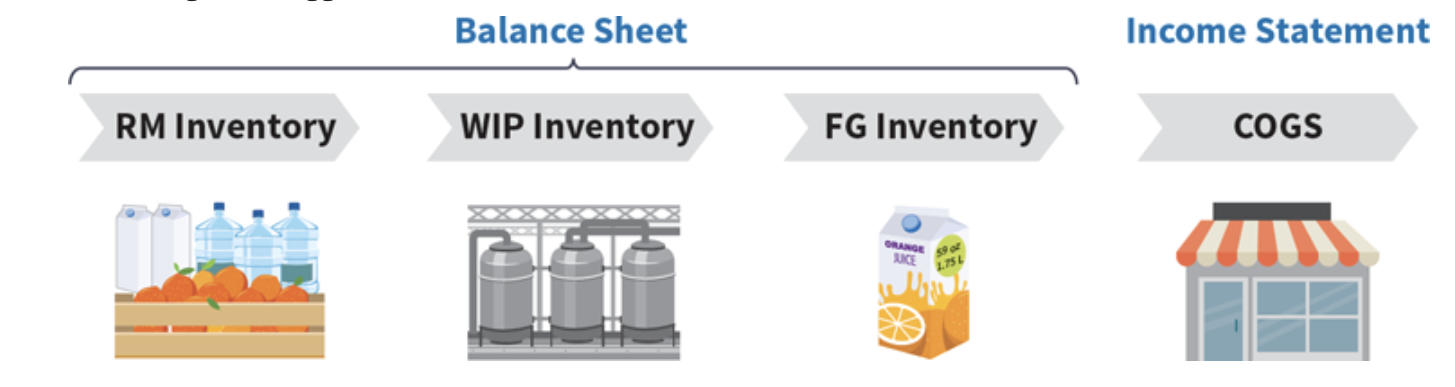
Inventoriable Costs
(also, what are all the Journal Entries for them)
(also, what are all the Journal Entries for them)
Inventoriable Costs : All cost requires to make / buy a product that are recorded as assets on the balance sheet until the item is sold (recorded as an expense on the income statement).
Step 1) Buying Raw Materials:
Dr Raw Material Inventory
Cr Accounts Payable / Cash
Step 2) Transfer RM to WIP:
Dr WIP Inventory
Cr Raw Material Inventory
Step 3) Transfer WIP to FG:
Dr Finished Good Inventory
Cr WIP Inventory
Step 4) Finally Sold Finished Good:
Dr Accounts Receivable / Cash
Cr Sales Revenue
Dr COGS
Cr FG Inventory
16
Materials requisition form
Materials requisition form: A form to request raw materials for production
17
How to solve for the direct materials used in an accounting period?
Direct materials used = Beginning DM Inventory + DM Purchased - Ending DM Inventory
18
What is the WIP Inventory account?
WIP Inventory: Asset account which is the total cost of good that is a work in progress to get it to a finished good
Includes these 3 costs
1) Direct Materials
2) Direct Labor
3) Manufacturing Overhead
ex) If a company buys the raw material of oranges to make orange juice, then WIP includes
1)DM: Oranges Cost
2)DL: Cost of the labour to squeeze Orange
3)MOH: Lights in the factory
Includes these 3 costs
1) Direct Materials
2) Direct Labor
3) Manufacturing Overhead
ex) If a company buys the raw material of oranges to make orange juice, then WIP includes
1)DM: Oranges Cost
2)DL: Cost of the labour to squeeze Orange
3)MOH: Lights in the factory
19
The total amount of money moved from WIP to FG is the ______.
Also, how do you calculate that?(Full Formula and Simplified Formula)
Also, how do you calculate that?(Full Formula and Simplified Formula)
The total amount of money moved from WIP to FG is the Cost of Good Manufactured (COGM)
Full Formula: *Shown in Image
Simplified Formula: COGM = Beginning WIP Inventory + Total Manufacturing Costs - Ending WIP Inventory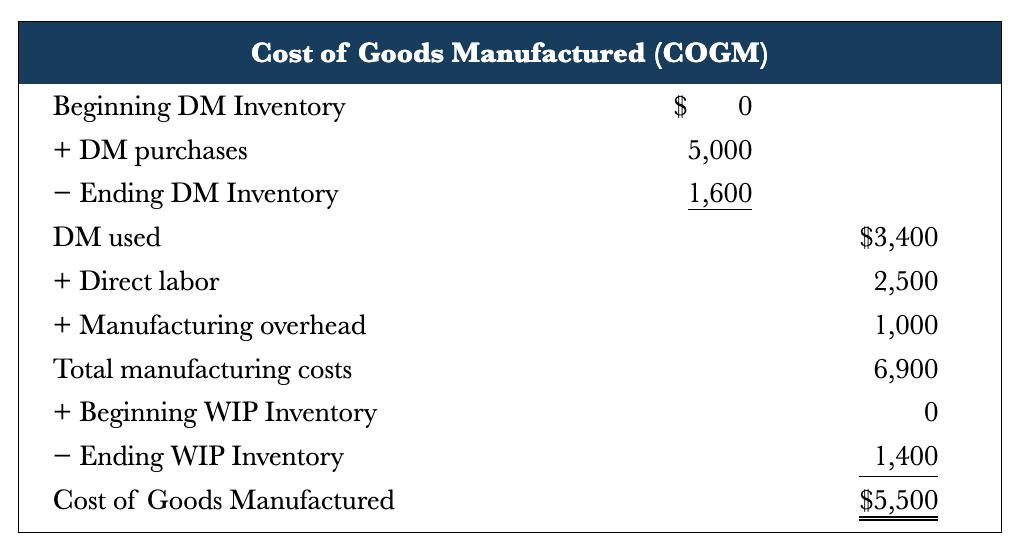
Full Formula: *Shown in Image
Simplified Formula: COGM = Beginning WIP Inventory + Total Manufacturing Costs - Ending WIP Inventory
20
Cost of Goods Available for Sale = Beginning FG Inventory + Cost of Goods Manufactured
Cost of Goods Available for Sale Formula
Cost of Goods Available for Sale = Beginning FG Inventory + Cost of Goods Manufactured
21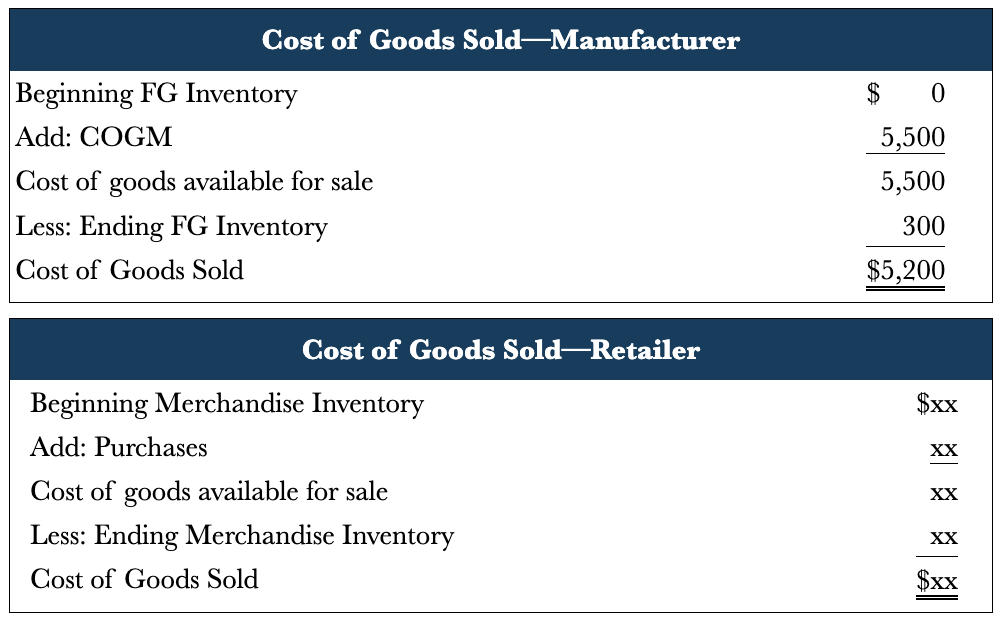
Cost of Goods Sold Formula
22
Gross Margin:
Contribution Margin:
Contribution Margin:
Gross Margin = Sales - COGS
Contribution Margin = Sales - Total Variable Costs
Contribution Margin = Sales - Total Variable Costs
23
Traditional GAP Income Statement
Contribution Margin Income Statement
Contribution Margin Income Statement
*Traditional GAP Income Statement (aka just a Gross Margin Income Statement)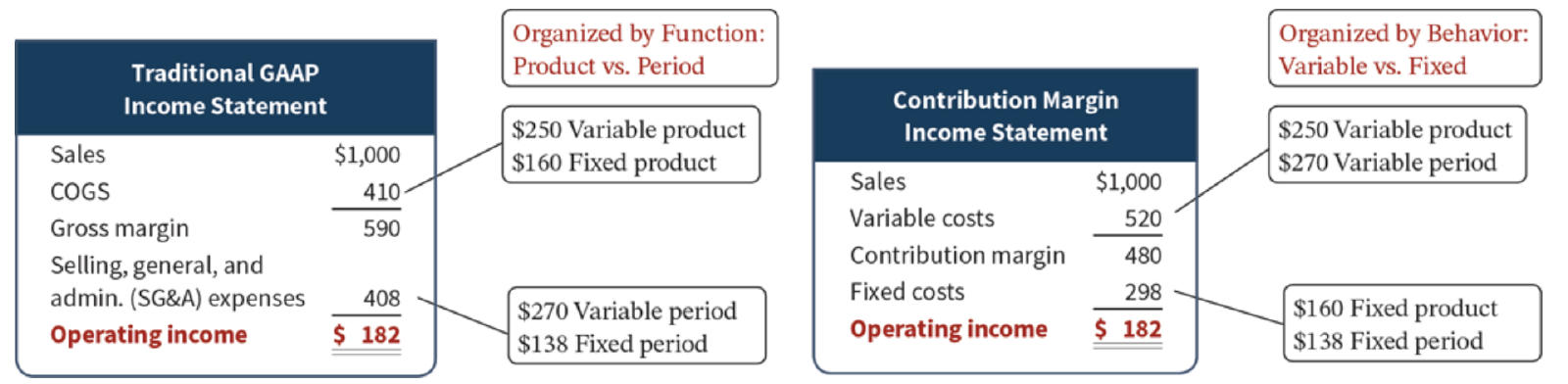
24
Full Cost
Full Cost = Total Product Cost + Total Period Cost
Ex)
Product Cost: \$350
Period Cost: \$400
Full Cost: \$750
Ex)
Product Cost: \$350
Period Cost: \$400
Full Cost: \$750
25
Production Supervisor Salary an MOH or DL?
It is INDIRECT Labor (not actually physically assembling the product) and therefore is MOH (manufcaturing overhead)
26
Ex)
Total Revenue: \$18,100
Total Variable Costs: \$6,200
Total Fixed Cost: \$4,000
Total COGS: \$5,200
SG&A: \$5,000
What is the Operating Income?
Total Revenue: \$18,100
Total Variable Costs: \$6,200
Total Fixed Cost: \$4,000
Total COGS: \$5,200
SG&A: \$5,000
What is the Operating Income?
You can either one of these methods.
YOU DO NOT JUST SUBTRACT 'Total Revenue' FROM ALL OF THEM!!!!!!!'Variable Cost', 'Fixed Cost', 'COGS' & 'SG&A (Selling, General & Administrative)'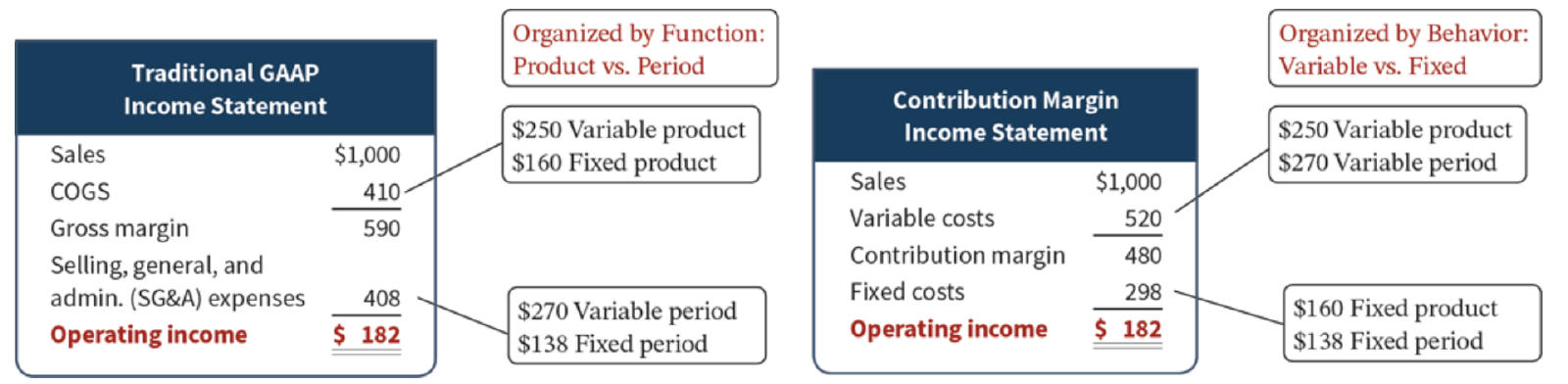
YOU DO NOT JUST SUBTRACT 'Total Revenue' FROM ALL OF THEM!!!!!!!'Variable Cost', 'Fixed Cost', 'COGS' & 'SG&A (Selling, General & Administrative)'
27
HW
HW
28
N/A
(NOT APPLICABLE)
Is social media marketing (for example of a Period Cost) a direct or indirect cost?
N/A
(NOT APPLICABLE)
29
Is "Thread for sewing the bags" a direct or indirect material cost?
It is an indirect material cost, which means it belongs in MOH.
30
1) Direct Materials
2) Direct Labor
3) Manufacturing Overhead
What are the main parts of COGS?
1) Direct Materials
2) Direct Labor
3) Manufacturing Overhead
31
Ex)
COGS: \$30,000
Direct Labor: 15,000
MOH: \$5,000
What is Direct Materials?
COGS: \$30,000
Direct Labor: 15,000
MOH: \$5,000
What is Direct Materials?
Direct Materials = \$10,000
COGS = DM + DL + MOH
30,000 = DM + 15,000 + 5,000
DM = 10,000
COGS = DM + DL + MOH
30,000 = DM + 15,000 + 5,000
DM = 10,000
32
Direct Material used Formula
Direct Material used = Beginning Inventory DM + DM Purchases - Ending Inventory DM
33
Total Cost of Manufacturing = Direct Materials Used + Direct Labor + MOH
!!!! "Direct Materials Used" = Beginning Inventory DM + DM Purchases - Ending Inventory DM
What is the formula for "Total Cost of Manufacturing"?
Total Cost of Manufacturing = Direct Materials Used + Direct Labor + MOH
!!!! "Direct Materials Used" = Beginning Inventory DM + DM Purchases - Ending Inventory DM
34
How would you find Ending WIP?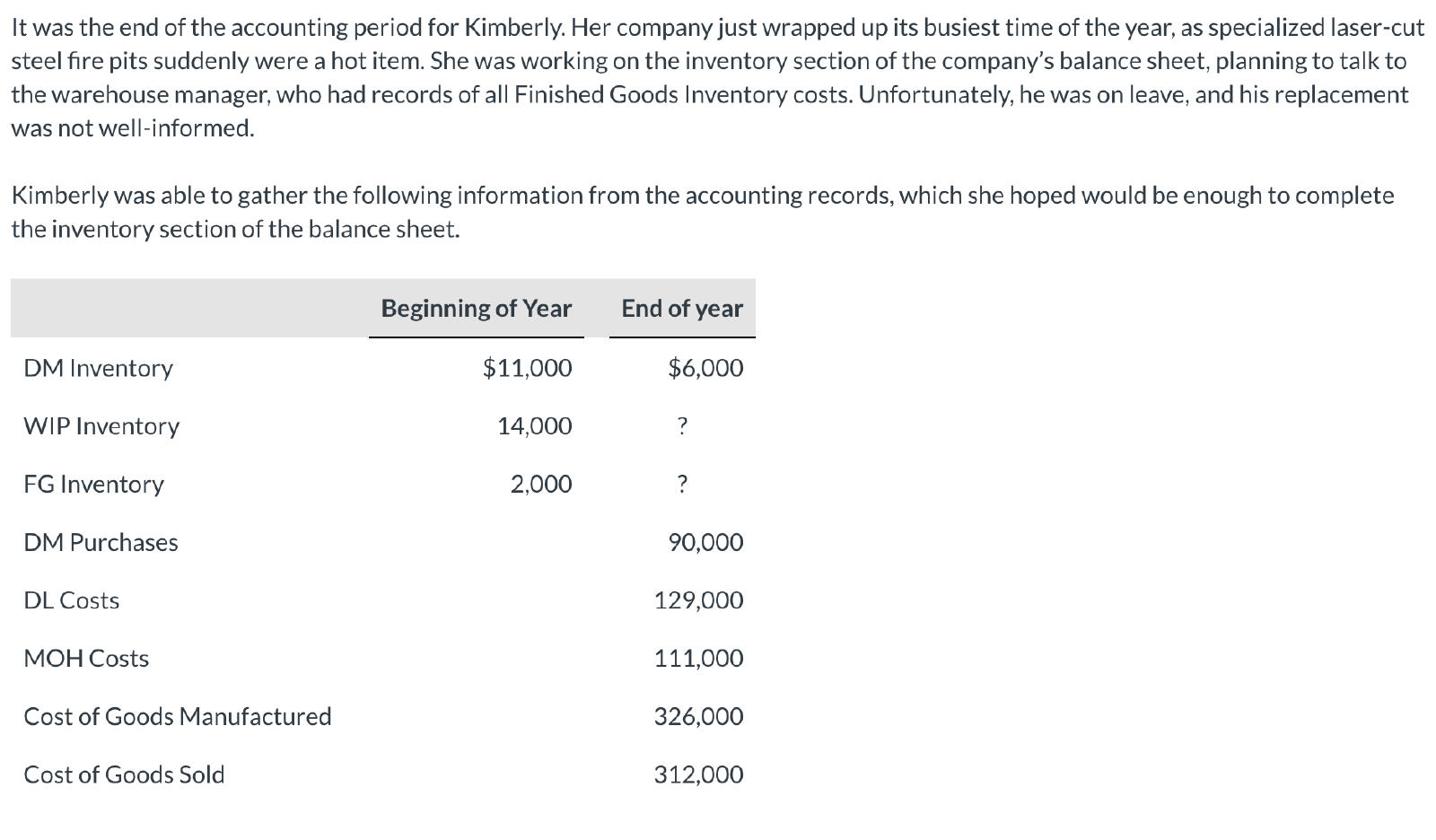
Since, COGM = Beginning WIP + Total Manufacturing Cost - Ending WIP
Then,
Ending WIP = COGM - Beginning WIP - Total Manufacturing Cost)
*If the anwser goes to (-) its fine, just make it positive (+) since inventory accounts cannot be negative
*Also,
Total Manufacturing Cost = Direct Materials Used + DL + MOH, So,
Direct Materials Used = (Beginning Inventory DM + DM Purchased - Ending Inventory DM)
So,
Total Manufacturing Cost = (11,000 + 90,000 - 6,000) + 129,000 + 111,000
35
How would you find the Ending FG Inventory?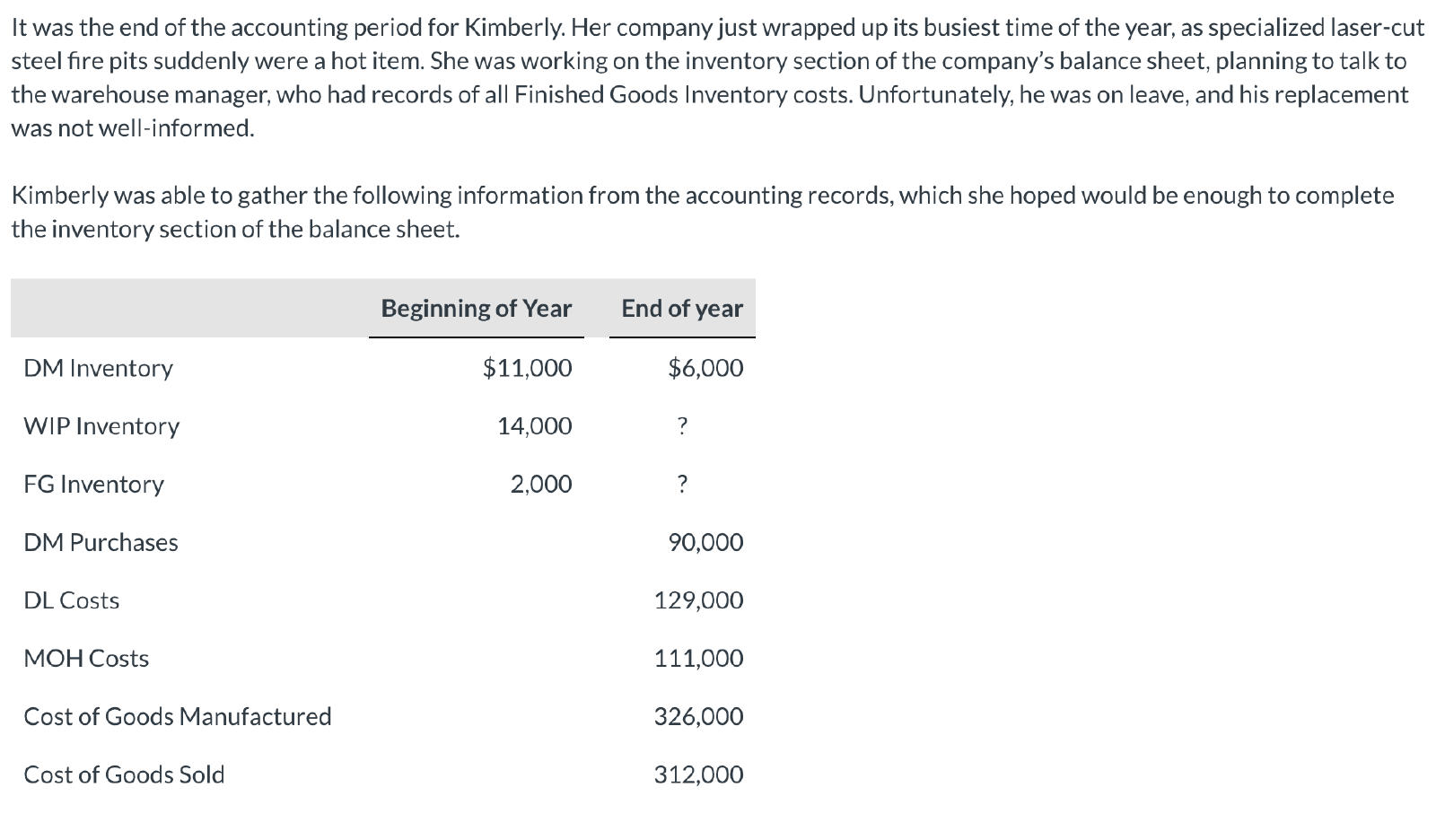
SInce, COGS = Beginning FG + COGM - Ending FG
Then,
Ending FG = COGS - Beginning FG - COGM
**If the answer goes to (-) its fine, just make it positive (+) since inventory accounts cannot be negative
So,
Ending FG = 312,000 - 2,000 - 326,000
Then,
Ending FG = COGS - Beginning FG - COGM
**If the answer goes to (-) its fine, just make it positive (+) since inventory accounts cannot be negative
So,
Ending FG = 312,000 - 2,000 - 326,000
36
In the hidden area, would it be "Less" or "Add"?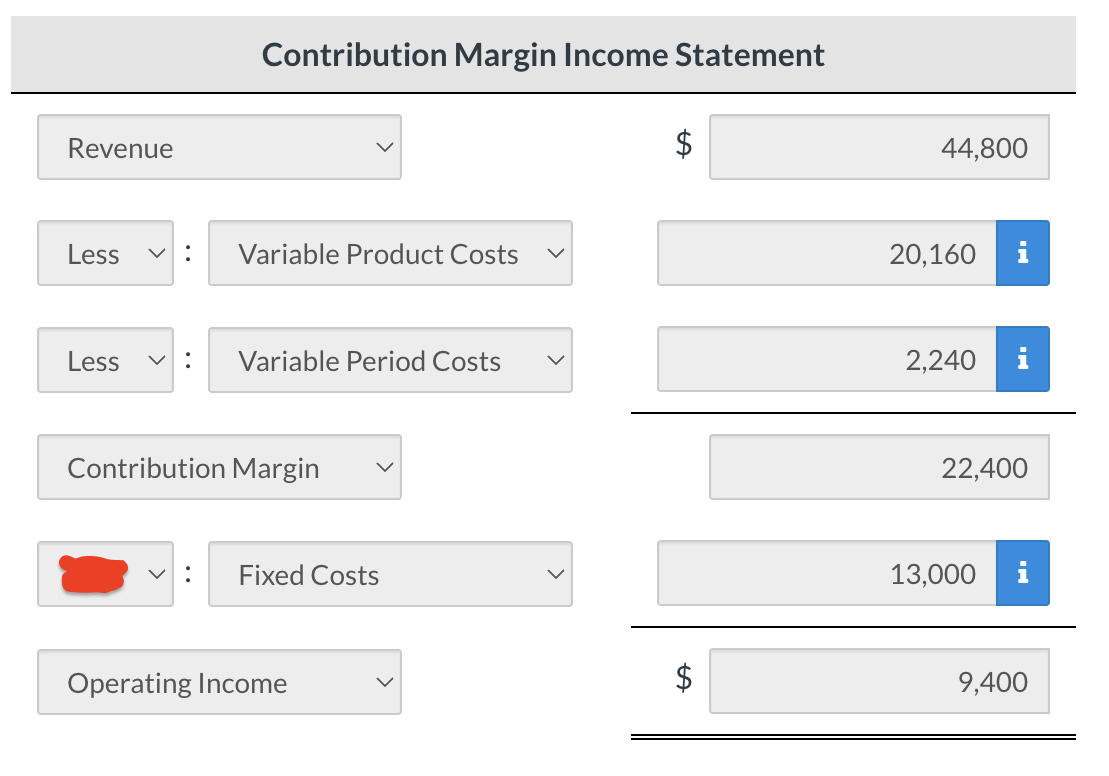
OBVIOUSLY "LESS" (Since, your subtracting costs from revenue to find income)
*You made the mistake of putting plus, so, don't do that again.
*You made the mistake of putting plus, so, don't do that again.
37
What here would equal = DM used + DL + MOH?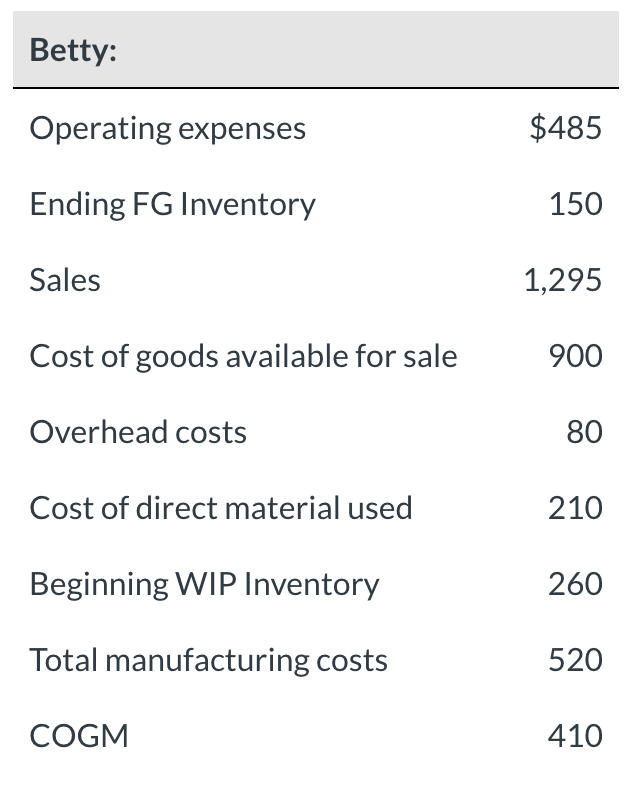
Total Manufacturing Cost!!!!!!!!!
38
Formula for Gross Margin Percentage?
39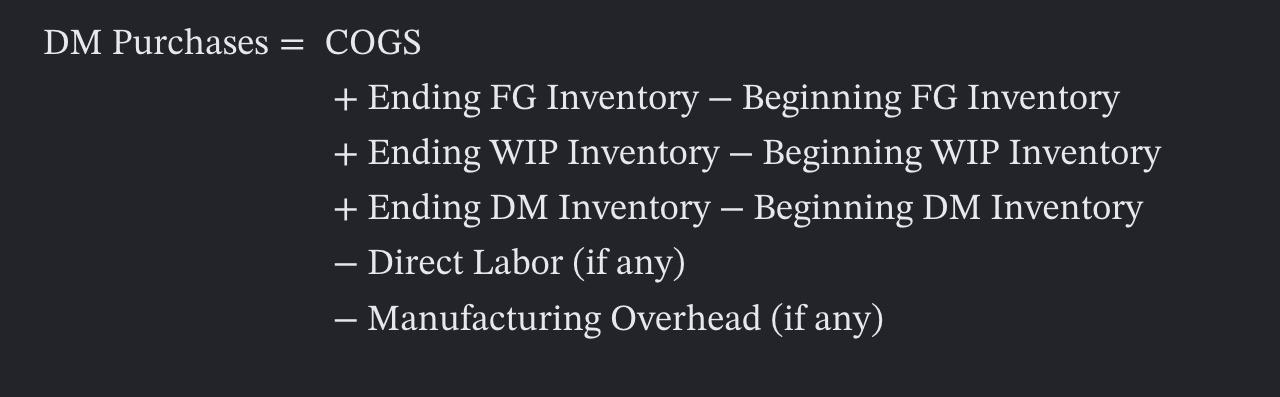
How to find DM Purchases?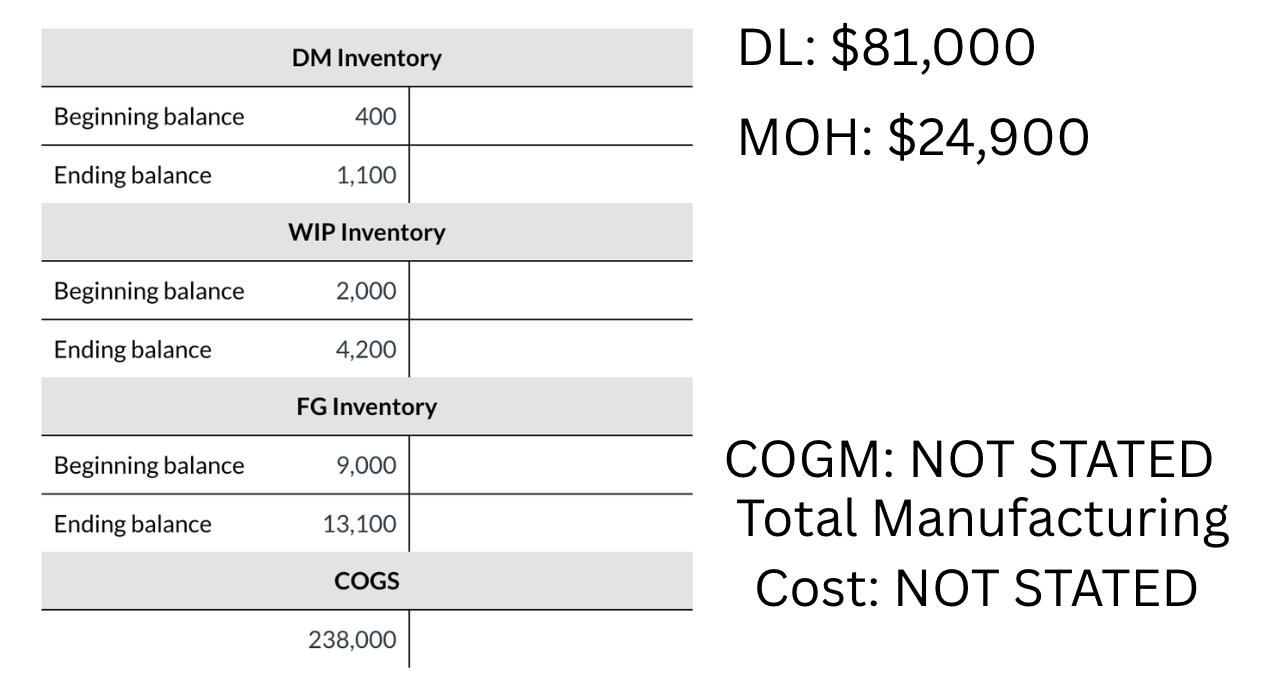
40
Find the direct materials used (aka, direct materials transferred to production), with the info below
-Raw Materials Inventory Beginning: \$12,600
-Raw Materials purchased on account: \$132,000
-Raw Materials Inventory Ending: \$10,700
-Indirect Materials Used in Production: \$2,700
-Raw Materials Inventory Beginning: \$12,600
-Raw Materials purchased on account: \$132,000
-Raw Materials Inventory Ending: \$10,700
-Indirect Materials Used in Production: \$2,700
FIRST: Raw Materials includes BOTH indirect and direct materials!!!
So,
-Raw Materials Inventory Beginning: \$12,600
-Raw Materials purchased on account: + \$132,000
-Raw Materials Inventory Ending: - \$10,700
= \$133,900 Raw Materials Used in Production
Then, you have to subtract the indirect materials used.
\$133,900 - 2,700 = \$131,200
So,
-Raw Materials Inventory Beginning: \$12,600
-Raw Materials purchased on account: + \$132,000
-Raw Materials Inventory Ending: - \$10,700
= \$133,900 Raw Materials Used in Production
Then, you have to subtract the indirect materials used.
\$133,900 - 2,700 = \$131,200
41
current asset vs long term asset
Current asset: Resource you expect to use or turn into cash in the next 12 months
Long-term Asset: Resource you expect to use or turn into cash BEYOND 12 months
Long-term Asset: Resource you expect to use or turn into cash BEYOND 12 months