Lecture 7 - Intervention in the presence of Connective Tissue Injury Shoulder
Study these flashcardsFree · spaced repetition · iPhone, Android, Mac & web
All cards
1
key impairments - Non structural disorder
Nothing found in MRI
Scapula dyskinesis present -> RTC unstable
Pain with ROM, may demonstrate increase ROM in direction of joint laxity
Joint hypermobility (typically anterior), hypomobility in posterior direction
Muscle performance: Pain contraction of RTC and Biceps, Weakness of ST muscles or poor timing / recruitment during task, reduced length of muscles around shoulder (pec minor, major, lats, and biceps)
Impaired joint position sense/end point accuracy
Selective Tissue testing: apprehension tests +
Scapula dyskinesis present -> RTC unstable
Pain with ROM, may demonstrate increase ROM in direction of joint laxity
Joint hypermobility (typically anterior), hypomobility in posterior direction
Muscle performance: Pain contraction of RTC and Biceps, Weakness of ST muscles or poor timing / recruitment during task, reduced length of muscles around shoulder (pec minor, major, lats, and biceps)
Impaired joint position sense/end point accuracy
Selective Tissue testing: apprehension tests +
2
early stages
reduce pain
restore optimal movement
High irritability
if tissue injury, may start with protection
restore optimal movement
High irritability
if tissue injury, may start with protection
3
Middle stages
moderate to low irritability
if tissue injury, entering proliferative stage
Ensure optimal muscle function
Ensure optimal Neuromuscular integration
if tissue injury, entering proliferative stage
Ensure optimal muscle function
Ensure optimal Neuromuscular integration
4
Late stages
low irritability
progress activity without risk of repeat injury
promote functional restoration
endurance and dynamic stabilization
progress activity without risk of repeat injury
promote functional restoration
endurance and dynamic stabilization
5
early intervention goals <4 weeks
protect injury, reduce pain, prevent muscle wasting
educate about position and stress to structures
symptom modulation, promote stimulus for Tissue recovery
consider type of tissue involved
educate about position and stress to structures
symptom modulation, promote stimulus for Tissue recovery
consider type of tissue involved
6
4-6 weeks
retrain dyamic stability
restore functional ROM
retrain proprioception and kinesthesia
promote optimal motor control
restore functional ROM
retrain proprioception and kinesthesia
promote optimal motor control
7
12+ weeks
return to function so focus should be patient specific and at the level of necessary to insure adequate remodeling
8
early exercises
Tissue healing - introduce safe tissue loading
Ligament/capsule and Labrum
Ligament/capsule and Labrum
9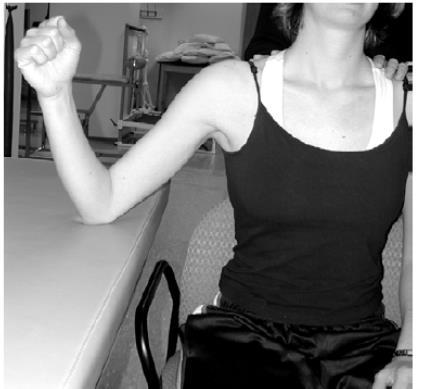
for tissue healing
compresses GH
actively engaging ER - teres minor, infra
internal moment controlled by supra and subscap
intermittent shear force that permits repair
get the ER rotators to fire properly by creating compressive load passively
compresses GH
actively engaging ER - teres minor, infra
internal moment controlled by supra and subscap
intermittent shear force that permits repair
get the ER rotators to fire properly by creating compressive load passively
10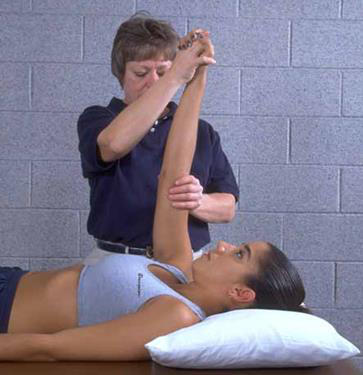
ask pt to hold the arm up
intermitted compression
making RTC and ST fire
also strengthen's serratus
also less stress on the anterior structures
intermitted compression
making RTC and ST fire
also strengthen's serratus
also less stress on the anterior structures
11
dynamic stability early
balance or hold full cup of water in hand - during sit to stand or walk
Dose for 80% accuracy
sets for time or distance
goal - activate rtc muscles
Within the pain free safe ROM
stabilizing reversals
rhythmic stabilization
Dose for 80% accuracy
sets for time or distance
goal - activate rtc muscles
Within the pain free safe ROM
stabilizing reversals
rhythmic stabilization
12
stabilizing reversals
slowly build up isometric contraction in 1 muscle, slowly switch the isometric contraction to an opposing muscle
13
rhythmic stabilization
provide resistance to agonist and antagonist muscles at the same time
isometrics surounding the joint
isometrics surounding the joint
14
dose for co contractions of RT (stabilizing reversals and rhythmic stabilization)
3 sets 20-30 secs as long as pain reduced and fatigue not too great
Begin slow and close to joint, move away
eyes open to start, then closed as progress
Begin slow and close to joint, move away
eyes open to start, then closed as progress
15
Dynamic stability - closed chain
1 - begin standing at wall, pick up alternate arm, feet, march
2 - platargrade: increasing load to arm. add external pertubation or alternate arm reach, march
3 - progress to against gravity, hands, and knees. high plank can add external pertubation, or alternate ar and leg lifts
4 - press hand into unstable surface, ask for holds
2 - platargrade: increasing load to arm. add external pertubation or alternate arm reach, march
3 - progress to against gravity, hands, and knees. high plank can add external pertubation, or alternate ar and leg lifts
4 - press hand into unstable surface, ask for holds
16
stability with dynamic mobility
try to reintroduce the firing of ST muscles with rotator cuff muscles as soon as possible
- pushing into ball, or rolling arm on ball
- pushing into ball, or rolling arm on ball
17
Neuro
joint position test training
18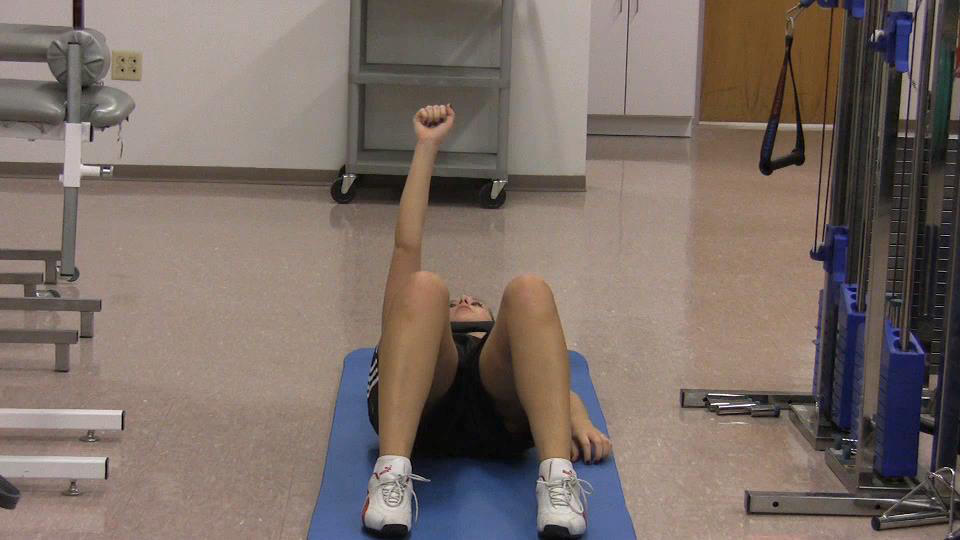
stability of the GH
always keep the humerus aligned with the scapula
always keep the humerus aligned with the scapula
19
reaching tasks and kineshesia
closing eyes - use more mechanoreceptors
20
progressing exercises
1. initial stress to joint is under control of patient
- ER against pulley or weight to point in range that feels ok
2. Pulley or weight exerts the stress to joint, patient needs to stop
-IR against pulley or weight, start in full IR, allow pulley to take arm out, stop at point of apprehension, and bring back to full IR
-no muscle rest, active in IR the entire time
- ER against pulley or weight to point in range that feels ok
2. Pulley or weight exerts the stress to joint, patient needs to stop
-IR against pulley or weight, start in full IR, allow pulley to take arm out, stop at point of apprehension, and bring back to full IR
-no muscle rest, active in IR the entire time
21
dynamic stability - later stages
1. side lying and drop catching ball
2. standing and using boddy blade to progress - able to activate RTC muscles
2. standing and using boddy blade to progress - able to activate RTC muscles