All cards
1
Orientation of the Hip
Lateral
Anterior (anteversion)
Inferior
Anterior (anteversion)
Inferior
2
roles of the hip joint
primary - support weight of head, arms, and trunk in closed chain
secondary - position the foot in space during open chain activity
secondary - position the foot in space during open chain activity
3
there is less bony support for the femoral head in what direction?
anterior
4
the superior portion of the acetabulum articulates with the
femoral head
5
transverse acetabular ligament does what
provides protection for blood vessels that pass through
6
does the acetabular fossa articulate with the femoral head?
no
7
what does the acetabular labrum do?
increases coverage of the femoral head and creates a vacuum seal
proproceptive function - mechanoreceptors and nociceptors
dissipation of WB'ing forces
proproceptive function - mechanoreceptors and nociceptors
dissipation of WB'ing forces
8
why does the labrum decrease stress?
because it increases the surface area
9
the acetabular labrum is made up of
fibrocartilage
10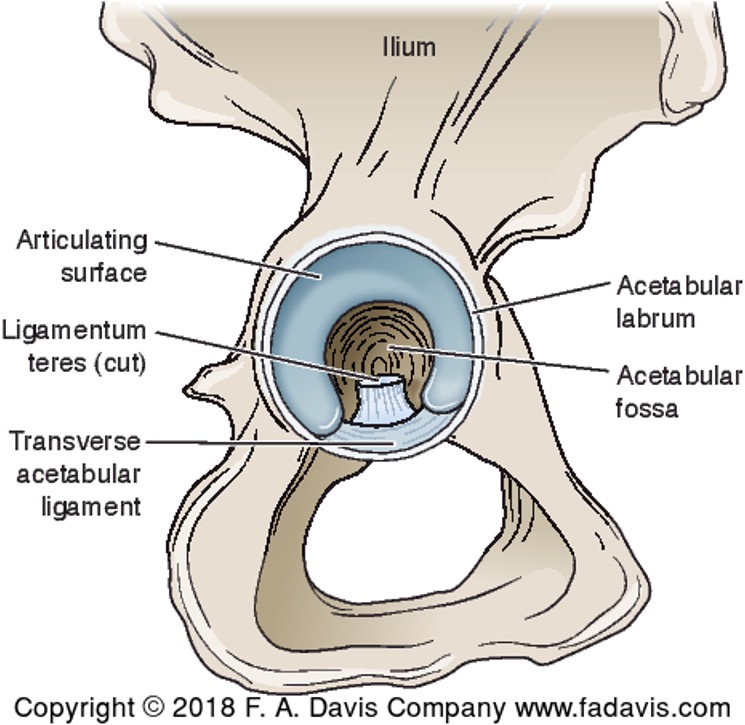
Image occlusion: name the hidden labels
11
Image occlusion: name the hidden labels
12
Image occlusion: name the hidden labels
13
Image occlusion: name the hidden labels
14
the depth of the acetabulum determines
femoral head coverage
15
dysplasia
decreased coverage
<16 degrees
Stress increases!
<16 degrees
Stress increases!
16
coxa profunda
increased coverage
>40 degrees
Stress + ROM decreases
>40 degrees
Stress + ROM decreases
17
the ligamentum teres attaches to the
fovea
18
weight bearing adaptations
trabecular bone is laid down in a way to best handle the loads based on the pattens of tensile and compressive loads created by load of head arms and trunk
19
valgus
increase in the medial angle
20
varus
decrease in the medial angle
21
In Valgus
femoral head coverage __
MA of Glut Med __
Force needed from Glut Med __
Joint Stress __
Bending moments __
femoral head coverage __
MA of Glut Med __
Force needed from Glut Med __
Joint Stress __
Bending moments __
decrease
decrease
increase
increase
decrease
decrease
increase
increase
decrease
22
In Varus
femoral head coverage __
MA of Glut Med __
Force needed from Glut Med __
Joint Stress __
Bending moments __
femoral head coverage __
MA of Glut Med __
Force needed from Glut Med __
Joint Stress __
Bending moments __
increases
increases
decreases
decreases
increases
increases
decreases
decreases
increases
23
angle of torsion (femur) is typically
10-20 degrees anteriorly
24
femoral anteversion
femoral head coverage __
MA of Glut Med __
Force needed from Glut Med __
Joint Stress __
femoral head coverage __
MA of Glut Med __
Force needed from Glut Med __
Joint Stress __
decreases
decreases
increases
increases
decreases
increases
increases
25
femoral retroversion
femoral head coverage __
MA of Glut Med __
Force needed from Glut Med __
Joint Stress __
femoral head coverage __
MA of Glut Med __
Force needed from Glut Med __
Joint Stress __
increases
increases
decreases
decreases
increases
decreases
decreases
26
internal rotation at the femur can cause what at the knee?
increased knee valgus
27
the joint capsule at the hip is strong/weak?
strong (stiff)
28
joint capsule attaches proximal to the
periphery of the acetabulum
29
joint capsule covers what distally?
head and neck
30
Line of Gravity/Ground Reaction force passes ______ to hip joint axis, causing
posterior
thickened anterior/superior
thickened anterior/superior
31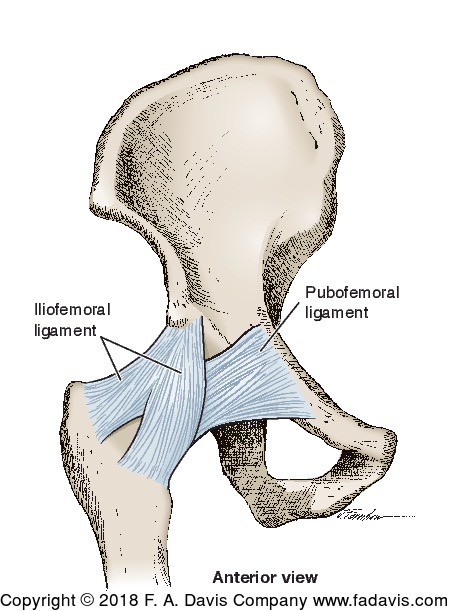
Image occlusion: name the hidden labels
32
Image occlusion: name the hidden labels
33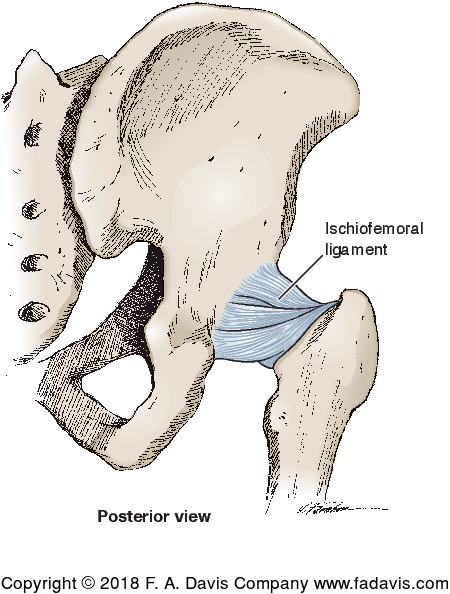
Image occlusion: name the hidden labels
34
the iliofemoral ligament, pubofemoral ligament, and ischiofemoral ligament all limit
hip extension
35
what does the ligamentum teres connect?
fovea of femur -> acetabular notch
36
role of ligamentum teres
source of stability
source of secondary blood supply
source of secondary blood supply
37
blood supply to the hip via
medial and lateral circumflex arteries
superior and inferior gluteal arteries
superior and inferior gluteal arteries
38
medial and lateral circumflex arteries
deep femoral artery
supply hip capsule distally/anteriorly
supply hip capsule distally/anteriorly
39
superior and inferior gluteal arteries supply what
supply hip capsule proximally/posteriorly
40
femoral head supplied by
medial circumflex artery and vessels through ligamentum teres
41
Legg-Calve-Perthes Disease (AVN)
bone death in the hip due to too little blood supply
avascular necrosis
avascular necrosis
42
hip can flex more when the knee is?
bent
43
moving the pelvis on the femur causes what motions?
anterior/posterior tilt
Hip Hike/Hip Drop
Forward/Backward Rotation
Hip Hike/Hip Drop
Forward/Backward Rotation
44
what is the impact of the pelvic movement on the lumbar spine in open vs closed chain?
open - anterior pelvic tilt with lumbar flexion
closed - anterior pelvic tilt with lumbar extension
closed - anterior pelvic tilt with lumbar extension
45
flexors of the hip
iliacus and psoas major - main
rectus femoris
sartorius
TFL/ITB
rectus femoris
sartorius
TFL/ITB
46
role of TFL/ITB
form/function
lots of tenside loading on the outside of the knee
lots of tenside loading on the outside of the knee
47
adductors of the hip
adductor brevis, longus, magnus
gracilis
pectineus
gracilis
pectineus
48
hip extensors
glute max
hamstrings
glute med
piriformis
hamstrings
glute med
piriformis
49
glute max has max MA at what angle and peak torque at what angle? What does this mean
max MA at 0 deg
peak torque at 70 deg of flexion
the ability of the glute max to produce force must be really good - length tension relationship greatest at 70 deg (cross bridges)
peak torque at 70 deg of flexion
the ability of the glute max to produce force must be really good - length tension relationship greatest at 70 deg (cross bridges)
50
hip abductors
glute med
glute min - stabilizes the femoral head
glute min - stabilizes the femoral head
51
hip external rotators - also good what at the hip?
obturator internus
obturator externus
gemellus superior
gemellus inferior
quadratus femoris
piriformis
also good compressors/stabilizers of the hip
obturator externus
gemellus superior
gemellus inferior
quadratus femoris
piriformis
also good compressors/stabilizers of the hip
52
hip internal rotators depend on the
position of the hip
in hip flexion we have posterior glide of the femoral head, moving the axis of rotation posterior
-causes some of the short external rotators to work anteriorly so you can stretch it
in hip flexion we have posterior glide of the femoral head, moving the axis of rotation posterior
-causes some of the short external rotators to work anteriorly so you can stretch it
53
hip internal rotators are usually what
glute med
glute min
TFL
glute min
TFL
54
muscles pull on __________________________ when they contract
pull on both attachment sites
the end that is easier to pull will move
the end that is easier to pull will move
55
hip muscles help with ______ control
postural - leaning forward or back
56
Bilateral stance
LoG falls ______ to axis of flex/ext of the hip
tend to rest in hip _______
need for muscle force?
equal ______ ______
LoG falls ______ to axis of flex/ext of the hip
tend to rest in hip _______
need for muscle force?
equal ______ ______
posterior
extension
equal external torques L and R
frontal plane - no forces needed
saggital plane - resist hip extension with capsular ligaments so muscle force not really needed
extension
equal external torques L and R
frontal plane - no forces needed
saggital plane - resist hip extension with capsular ligaments so muscle force not really needed
57
Unilateral Stance
additive torques on the ________ side of the pelvis - what are they?
increased force from hip _____ to maintain ________
maintain equilibrium how?
joint reaction force is ______ x body weight
additive torques on the ________ side of the pelvis - what are they?
increased force from hip _____ to maintain ________
maintain equilibrium how?
joint reaction force is ______ x body weight
opposite - gravity and contralateral limb
abduction to maintain equilibrium (glute med)
pulling up on drop side, and pushing down on the other side
2-3x
abduction to maintain equilibrium (glute med)
pulling up on drop side, and pushing down on the other side
2-3x
58
femeroacetabular impingement
excessive bony growth
59
cam impingement
excessive bony growth of the femur
60
pincer impingement
excessive bony growth of the acetabulum
61
what happens in cam impingement?
femur side abnormality
labral tearing
artcular cartilage degeneration
vulnerable in flex or abd (pain in the front/lateral site of the hip)
labral tearing
artcular cartilage degeneration
vulnerable in flex or abd (pain in the front/lateral site of the hip)
62
what happens in pincer impingement?
acetabulum side
labral degneration/calcification
labral degneration/calcification