Lecture 8 - Intervention connective tissue: elbow
Study these flashcardsFree · spaced repetition · iPhone, Android, Mac & web
All cards
1
Key Impairments
Test of function typically limited movement of arm
ROM deficits in either direction
ROM deficits in either direction
2
Valgus (MCL) Impairments
putting on seatbelt
Pronation may be painful - ulna being pushed away by humerus
anything away from body + ER (must examine GH ER)
P/A - pain with distraction
Full elbow ext may be relieving bc of bony congruency
Closed chain activities may also be painful
Pronation may be painful - ulna being pushed away by humerus
anything away from body + ER (must examine GH ER)
P/A - pain with distraction
Full elbow ext may be relieving bc of bony congruency
Closed chain activities may also be painful
3
Varus (LCL) Impairments
Supination/pronation + ER
more supination painful - gap on lateral side
ex - pouring something (supinated)
Grip dynamometry - dominant side slightly stronger, overall stregnth deficits in grip for either
Examine ST peformance and trunk stability bc upper quadrant weakness possible in both (ST, shoulder, trunk)
more supination painful - gap on lateral side
ex - pouring something (supinated)
Grip dynamometry - dominant side slightly stronger, overall stregnth deficits in grip for either
Examine ST peformance and trunk stability bc upper quadrant weakness possible in both (ST, shoulder, trunk)
4
stiffness in the elbow is _______ to overcome
harder
5
prolonged _______ is bad
immobility
6
need movement at ______ at most
2 weeks
7
Early Intervention
protect injury, reduce pain, prevent muscle wasting
Educate about position and stress to structures
Symptom Modulation, promote stimulus for Tissue Recovery
Consider type of tissue involved
Insure that normal ROM avail in GH joint to offset stress to elbow
Educate about position and stress to structures
Symptom Modulation, promote stimulus for Tissue Recovery
Consider type of tissue involved
Insure that normal ROM avail in GH joint to offset stress to elbow
8
4-6 Weeks intervention
retrain dynamic stability, restore functional ROM, retrain proprioception and kinesthesia, promote optimal motor control
9
12+ weeks
return to function so focus should be patient specific and at the level of intensity necessary to insure adequate remodeling
10
Intervention for all
Promote Stability
Tissue Healing
Functional Restoration of ROM as early as possible
Tissue Healing
Functional Restoration of ROM as early as possible
11
Promote Stability
Therapeutic Exercise
Alternating isometrics with pertubations
Quick reversals of shoulder, elbow, forearm motion
Sustained contractions 'Body Blade'
Need to insure optimal mobility of shoulder and stability of trunk
Alternating isometrics with pertubations
Quick reversals of shoulder, elbow, forearm motion
Sustained contractions 'Body Blade'
Need to insure optimal mobility of shoulder and stability of trunk
12
Tissue Healing
Therapeutic Exercise
Exercise that imparts a perpendicular stress to ligament
Use entire upper extremity, shoulder, forearm and wrist
Exercise that imparts a perpendicular stress to ligament
Use entire upper extremity, shoulder, forearm and wrist
13
Medial Elbow Intervention Acute (7-14 days)
Goal: Protect structure and modulate pain
Modalities for pain
Isometric contractions finger, wrist, elbow
Avoid shoulder ER
Insure good upper quadrant control/mobility
Modalities for pain
Isometric contractions finger, wrist, elbow
Avoid shoulder ER
Insure good upper quadrant control/mobility
14
Medial Elbow Intervention Subacute (2-6 weeks)
Goal: protect structure, restore safe mobiity, promote healing
controlled wrist flex/extension
Supported gravity minimized elbow flex/ext 3 sets 30 reps rest between each set
active control of elbow valgus stresses, resisted shoulder IR, Prone Horizontal ABD (T's)
controlled wrist flex/extension
Supported gravity minimized elbow flex/ext 3 sets 30 reps rest between each set
active control of elbow valgus stresses, resisted shoulder IR, Prone Horizontal ABD (T's)
15
Medial Elbow Intervention Intermediate Load Progression (5-12 weeks)
Goal: restore mobility, promote tissue healing, begin return to strength
Full elbow flexion/extension/pronation/supination
Begin full UE exercise including elbow flexion/extension
Now external torque producing valgus stresses
Full elbow flexion/extension/pronation/supination
Begin full UE exercise including elbow flexion/extension
Now external torque producing valgus stresses
16
Medial Elbow Intervention Funtional Restoration (12 weeks +)
Goal: Return to Function
Identify tasks that will place demand on elbow
Identify tasks that will place demand on elbow
17
Flexor pronator group - why?
FDS, PT, FCU
FCU Most Important
All blend into MCL so can provide stabilizing force to medial elbow
FCU Most Important
All blend into MCL so can provide stabilizing force to medial elbow
18
how to work flexor pronator group
Isometric contractions of long finger flexors in varying angles of elbow flexion using gripping
Safe to do as long as forearm is supported
Safe to do as long as forearm is supported
19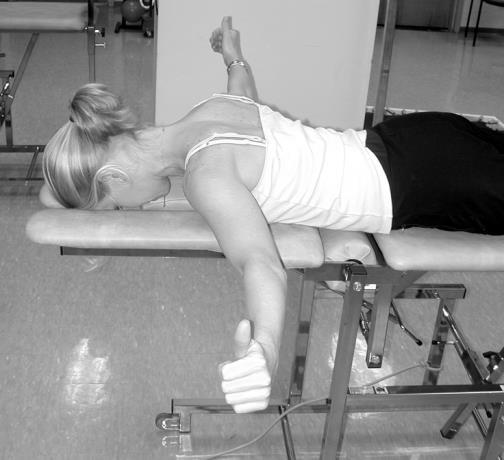
gravity producing varus stress, providing stabilization against valgus stress from GH ER
20
early intervention movement
active movement where external force protects joint
ex - MCL sprain prone horizontal abd against gravity thumbs up
Active movement into flex/ext
ex - either MCL or LCL most effort exerted by shoulder girdle, individual can control how much flex and extension at elbow
ex - MCL sprain prone horizontal abd against gravity thumbs up
Active movement into flex/ext
ex - either MCL or LCL most effort exerted by shoulder girdle, individual can control how much flex and extension at elbow
21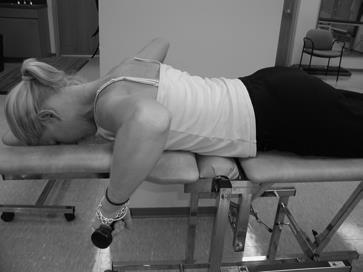
good for early intervention
pt controls how much flex/ext
most work done by shoulder
pt controls how much flex/ext
most work done by shoulder
22
if pt persistently presents with ulnar nerve or neuropathic symptoms
surgery faster
23
don't want pt to go into surgery with
instability
24
Tommy John
operative technique
stabilization with tendon transfer
stabilization with tendon transfer
25
Rehab Considerations for Varus Instability (Lateral) - Posterolateral Rotary Instability (PRI)
Extensor supinator muscle complex in pronated position
Open chain Ex vs closed chain ex
Pronator quadratus - active in sup and pron, stabilizer of distal forearm
Open chain Ex vs closed chain ex
Pronator quadratus - active in sup and pron, stabilizer of distal forearm
26
Lateral Elbow Intervention Acute (7-14 days)
Goal: Protect structure and pain modulation
Modalities for pain
Isometric contractions finger extensors/wrist extensors in pronation of forearm
avoid full supination with elbow extension
Avoid horizontal adduction with elbow extension
Insure good upper quadrant control/mobility
Modalities for pain
Isometric contractions finger extensors/wrist extensors in pronation of forearm
avoid full supination with elbow extension
Avoid horizontal adduction with elbow extension
Insure good upper quadrant control/mobility
27
Lateral Elbow Intervention subacute (2-6 weeks)
Goal: Protect structure, restore safe mobility, promote healing
Controlled forearm pronation/supination with ulna supported, wrist extension
Supported gravity minimized elbow flex/ext 3 sets 30 reps rest between each set
Active control of elbow varus stresses tat involve elbow extension and supination to neutral
Supine Flies
Controlled forearm pronation/supination with ulna supported, wrist extension
Supported gravity minimized elbow flex/ext 3 sets 30 reps rest between each set
Active control of elbow varus stresses tat involve elbow extension and supination to neutral
Supine Flies
28
Lateral Elbow Intervention Intermediate Load Progression (5-12 weeks)
Goal: Restore mobility, promote tissue healing, begin return to strength
Full elbow Flexion, ext, pron, sup
Begin full UE exercise including elbow flex/ext
Now external torque producing varus stresses
Full elbow Flexion, ext, pron, sup
Begin full UE exercise including elbow flex/ext
Now external torque producing varus stresses
29
Lateral Elbow Intervention Functional restoration 12 weeks +
Identify tasks that will place demand on elbow
Closed chain load into flexion and ext last to return
push up progressions
Closed chain load into flexion and ext last to return
push up progressions
30
pron/sup exercise
start with forearm supported active/ resisted forearm supination
progress to full arc supination with external torque greatest from neutral to full pronation
add active elbow extension with dowel or barbell vary pronation/supination position of forearm
progress to full arc supination with external torque greatest from neutral to full pronation
add active elbow extension with dowel or barbell vary pronation/supination position of forearm
31
closed chain
closed chain done later with elbow instability
begin with holds in elbow flexion (plank with elbows bent)
begin with holds in elbow flexion (plank with elbows bent)
32
Stage 1 dislocation
LCL and lateral capsule failure with spontaneous reduction
33
Stage 2 dislocation
LCL progressive capsule failure and perched joint
34
Stage 3 dislocation
complete ulnohumeral dislocation