Upper Limb
Study these flashcardsFree · spaced repetition · iPhone, Android, Mac & web
All cards
1
oxygenated blood leaving the left ventricle goes down to the
down to the thoracic aorta, then becomes abdominal aorta
2
as it descends through the thorax, the aorta sends off
visceral and parietal branches
3
visceral branches of the thoracic aorta serve
thoracic organs
4
parietal branches of the thoracic aorta serve
the body wall
5
the thoracic aorta becomes the abdominal aorta as it
passes through the hiatus of the diaphragm
6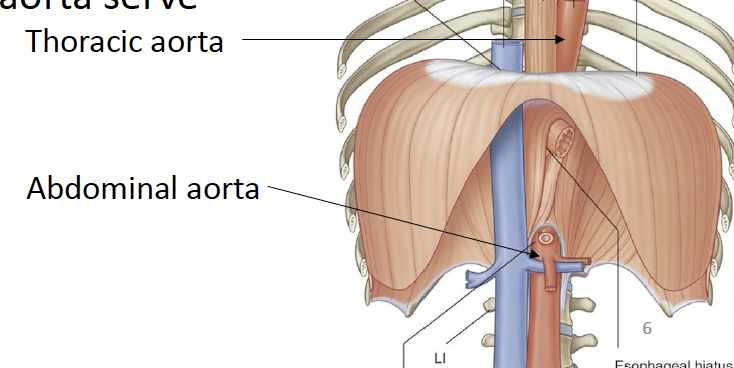
Image occlusion: name the hidden labels
7
Image occlusion: name the hidden labels
8
oxygenated blood from left ventricle goes outward to
the subclavian arteries in the arms
9
branches off the subclavian artery supply the
head and the inferior neck
10
as the subclavian artery approaches the axilla, it is now called
the axillary artery
11
as the axillary artery reaches the arm it is called
the brachial artery
12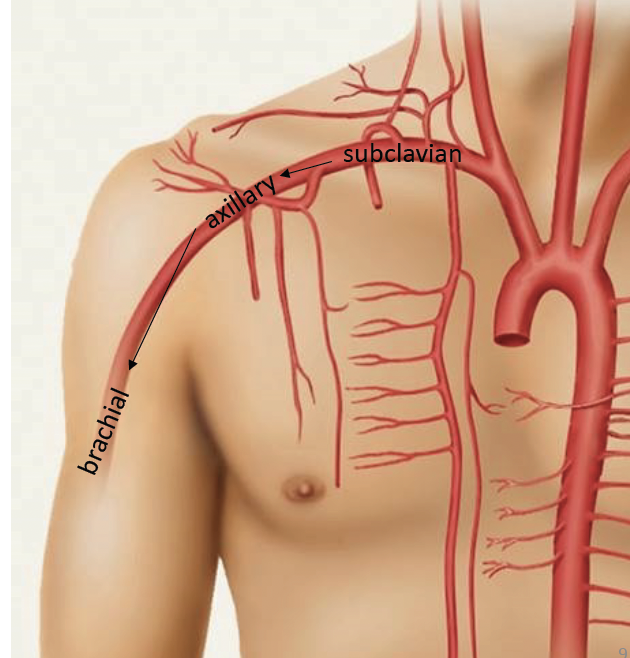
Image occlusion: name the hidden labels
13
Image occlusion: name the hidden labels
14
Image occlusion: name the hidden labels
15
Two major branches off the axillary are the
circumflex humeral arteries
16
major branch off the brachial artery is
the deep brachial
(brachial profunda)
(brachial profunda)
17
at the elbow, the brachial artery branches into the
radial artery, ulnar artery, and the interosseous artery
18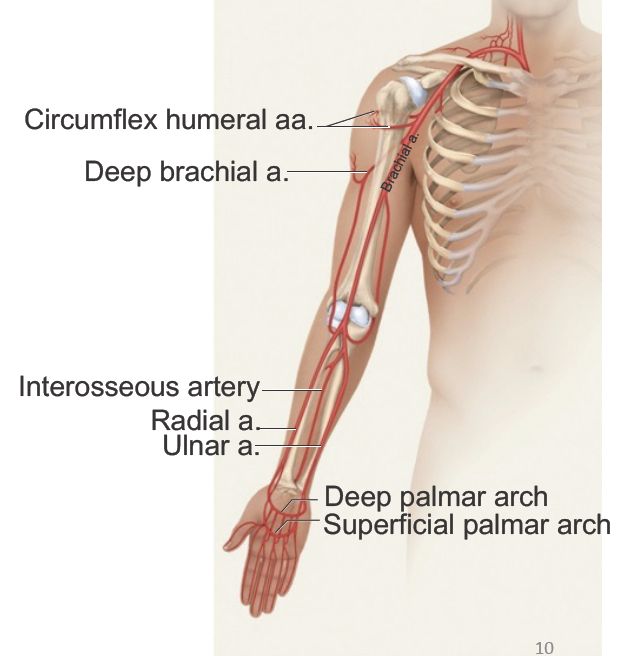
Image occlusion: name the hidden labels
19
Image occlusion: name the hidden labels
20
Image occlusion: name the hidden labels
21
Image occlusion: name the hidden labels
22
Image occlusion: name the hidden labels
23
all the veins are companion vessels of the arteries except
median antebrachial vein
basilic vein
cephalic vein
basilic vein
cephalic vein
24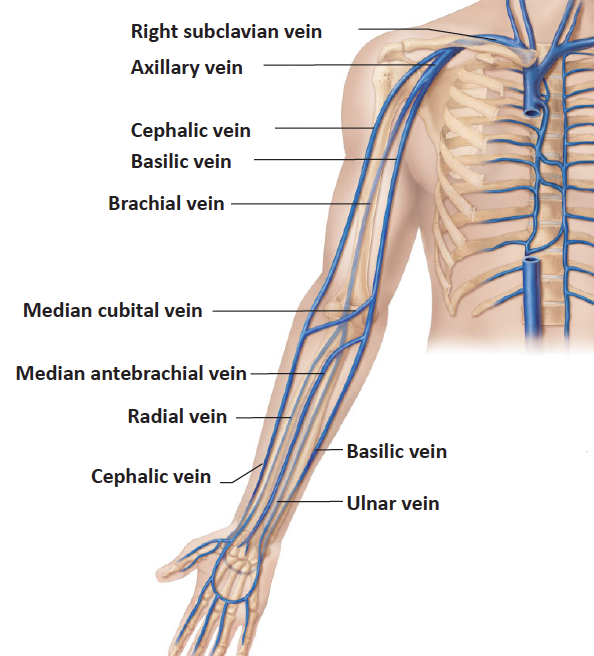
Image occlusion: name the hidden labels
25
Image occlusion: name the hidden labels
26
Image occlusion: name the hidden labels
27
Image occlusion: name the hidden labels
28
Image occlusion: name the hidden labels
29
Image occlusion: name the hidden labels
30
Image occlusion: name the hidden labels
31
Image occlusion: name the hidden labels
32
Image occlusion: name the hidden labels
33
Image occlusion: name the hidden labels
34
Image occlusion: name the hidden labels
35
the medan cubital vein is often used for
injections and blood samples
36
the brachial plexus is housed
deep to the clavicle and within the axilla
BP is carefully protected from damage
BP is carefully protected from damage
37
the brachial plexus roots from
anterior rami
38
the earliest branches off the brachial plexus are the
long thoracic nerve (C5-C7)
dorsal scapular nerve (C5)
Arise from the anterior rami before the trunks are formed
dorsal scapular nerve (C5)
Arise from the anterior rami before the trunks are formed
39
the dorsal scapular nerve innervates
levator scapulae and the rhomboids
40
the long thoracic nerve innervates
serratus anterior
41
secondary branches off the brachial plexus are the
suprascapular and nerve to subclavius
C5 and C6
C5 and C6
42
the suprascapular nerve innervates
supraspinatus, infraspinatus, and the glenohumoral joint
43
nerve to subclavius innervates
subclavius
44
3 trunks of the brachial plexus
superior trunk: C5 and C6
middle trunk: C7
Inferior trunk: C8 and T1
middle trunk: C7
Inferior trunk: C8 and T1
45
the trunks of the brachial plexus pass
posterior to the clavicle
46
as the trunks cross the first rib, they divide into
anterior and posterior divisions of the plexus
47
the divisions of each trunk form the
cords of the brachial plexus that are found within the axilla
48
3 cords
lateral
medial
posterior
medial
posterior
49
the lateral cord is formed from the
anterior divisions of the superior (C5 and C6) and middle trunks (C7)
50
the medial cord is formed by the
anterior division of the inferior trunk (C8 and T1)
51
the posteiror cord is formed by the
posterior divisions of the superior (C5 and C6), middle (C7), and inferior (C8 and T1) trunks
52
the lateral cord gives rise to
lateral pectoral nerve (C5, C6, C7)
musculocutaneous nerve (C5, C6, C7)
lateral contribution of the median nerve (C5, C6, C7)
musculocutaneous nerve (C5, C6, C7)
lateral contribution of the median nerve (C5, C6, C7)
53
The medial cord gives rise to
medial pectoral nerve
Medial brachial and antebrachial cutaneous nerve
ulnar nerve
medial contribution to the median nerve
(All C8 and T1)
Medial brachial and antebrachial cutaneous nerve
ulnar nerve
medial contribution to the median nerve
(All C8 and T1)
54
the posterior cord gives rise to
axillary nerve (C5 and C6)
radial nerve (C5-T1)
Upper subscapular nerve
Thoracodorsal nerve
Lower supscapular nerve
radial nerve (C5-T1)
Upper subscapular nerve
Thoracodorsal nerve
Lower supscapular nerve
55
sensory innervation of the upper limb
spinal nerves (dermatome) - the maps
peripheral nerves (brachial plexus cutaneous innervation)
peripheral nerves (brachial plexus cutaneous innervation)
56
motor innervation of the upper limb
spinal nerves (myotome)
peripheral nerves (brachial plexus muscle innervation)
peripheral nerves (brachial plexus muscle innervation)
57
radial nerve path
arises from brachial plexus
dips posterior to the humerus
appears laterally through the antebrachium
at the cubital fossa branches into superficial (sensory) and deep (motor)
dips posterior to the humerus
appears laterally through the antebrachium
at the cubital fossa branches into superficial (sensory) and deep (motor)
58
the radial nerve innervates
triceps and all muscles of the posterior compartment of the arm
59
Ulnar nerve path
arises from the BP
dips posterior to the medial epicondyle of the humerus
runs along the medial surface then on anterior surface of the ulna
dips posterior to the medial epicondyle of the humerus
runs along the medial surface then on anterior surface of the ulna
60
ulnar nerve innervates
flexor carpi ulnaris, and ulnar half of flexor digitorum profundus
61
the funny bone is
a compression of the ulnar nerve behind elbow
62
median nerve path
arises from BP in two roots (medial and lateral) then merge together to form median nerve
runs straight down the middle
runs straight down the middle
63
median nerve innervates
anterior forearm muscles
64
axillary nerve path
arises from the BP
winds around humerus
winds around humerus
65
axillary nerve innervates
glenohumoral joint
deltoid
teres minor
deltoid
teres minor
66
musculocutaneous nerve path
arises from the BP
continues as lateral antebrachial cutaneous n
continues as lateral antebrachial cutaneous n
67
musculocutaneous nerve innervates
coracobrachialis
biceps brachii
brachialis
biceps brachii
brachialis
68
main contributers to upward rotation of scapula
upper and lower fibers of trapezius
serratus anterior
serratus anterior
69
downward rotation of scapula main contributers
rhomboids
levator scapulae
levator scapulae
70
elevation of the scapula
upper trapezius
levator scapulae
levator scapulae
71
depression of the scapula
lower fibers of trapezius
pec minor
pec minor
72
protraction of the scapula
serratus anterior
pectoralis minor
pectoralis minor
73
retraction of the scapula
middle fibers of trapezius
rhomboids
rhomboids
74
shoulder flexion
anterior deltoid
clavicular head of pectoralis major
coracobrachialis
biceps brachii - short head
clavicular head of pectoralis major
coracobrachialis
biceps brachii - short head
75
shoulder extension
latissimus dorsi
triceps brachii
teres major
posterior deltoid
triceps brachii
teres major
posterior deltoid
76
adduction of arm
can occur by pulling on medial or lateral surface
coracobrachialis
teres major
pec major
latissimus dorsi
coracobrachialis
teres major
pec major
latissimus dorsi
77
abduction of arm
pulling on the lateral surface of the humerus
lateral deltoid
supraspinatus
lateral deltoid
supraspinatus
78
medial/lateral rotation location
insert onto the tubercles and rotate the head within the glenoid cavity
79
internal rotation
pec major
anterior deltoid
teres major
subscapularis
anterior deltoid
teres major
subscapularis
80
external rotation
infraspinatus
teres minor
posterior deltoid
teres minor
posterior deltoid
81
rotator cuff muscles
supraspinatus
infraspinatus
teres minor
subscapularis
infraspinatus
teres minor
subscapularis
82
tendons of rotator cuff muscles wrap
around the glenohumeral joint, stabilizing it
83
no tendons pass over the ____ side of GH joint
inferior
point of weakness
point of weakness
84
rotator cuff muscles work to
rotate, adduct, and abduct the arm
stabilizers of the glenohumeral joint
stabilizers of the glenohumeral joint
85
subclavius pulls the
lateral clavicle down
(depressing clavicle and scapula)
(depressing clavicle and scapula)
86
the belly of the subclavius
protects artery in clavicular fracture
belly sits between the subclavian artery and the clavicle
belly sits between the subclavian artery and the clavicle
87
latissimus dorsi has a wide _____ and narrow ______ which
origin
insertion
produces lots of force
insertion
produces lots of force
88
the levator scapulae and rhomboids collectively
elevate, medially retract and stabilize the scapula during arm movements
89
in addition to depression of scapula, pec minor can also aid in
respiration when you are lacking air, and need the extra support
90
when the serratus anterior is weak
the scapula can start poking out backwards
91
the elbow joint is a _____ joint with ____ articulations
synovial
2: humerus and radius, humerus and ulna
2: humerus and radius, humerus and ulna
92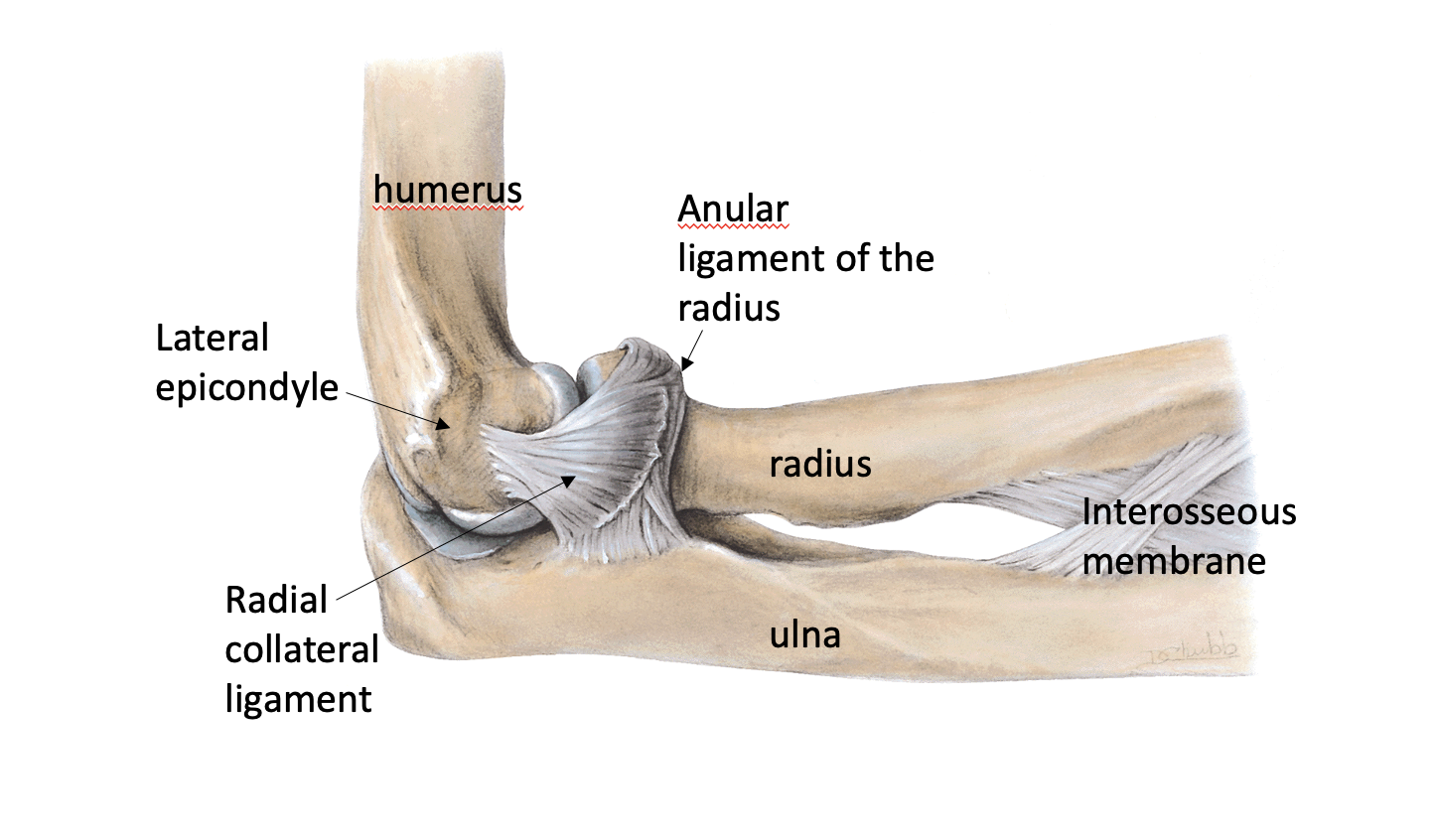
Image occlusion: name the hidden labels
93
Image occlusion: name the hidden labels
94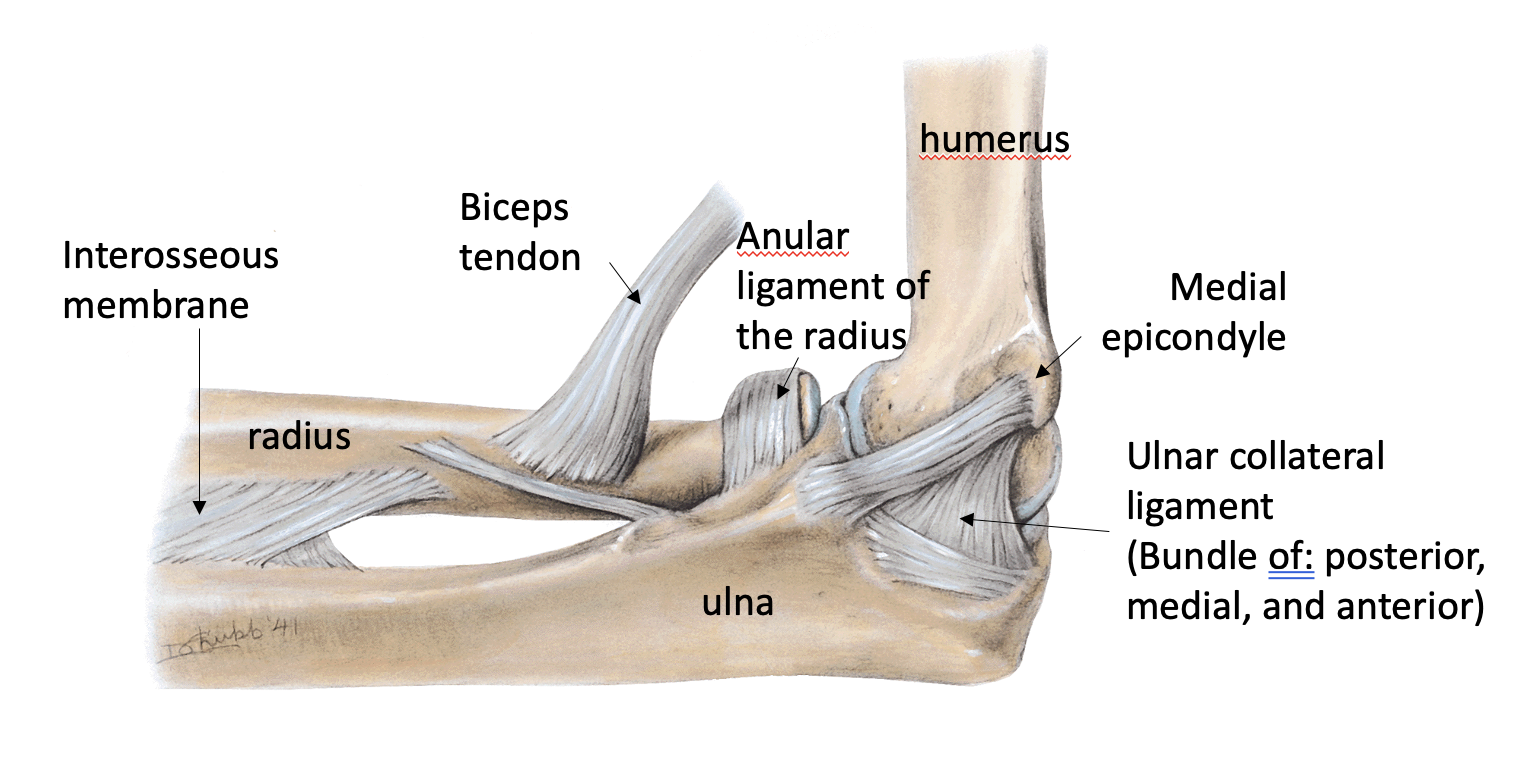
Image occlusion: name the hidden labels
95
Image occlusion: name the hidden labels
96
Image occlusion: name the hidden labels
97
anular ligament
runs around radial head and holds it in place like a seatbelt
this way, rotation is not limit, but it prevents dislocation
this way, rotation is not limit, but it prevents dislocation
98
radial collateral ligament
prevents side to side motion of the elbow
99
collateral
parallel
100
carrying angle in the elbow
pelvis is wider than the vertbral column, needs to go around the hips
101
biceps is a prime _____ of the elbow
flexor
102
the bicipital aponeurosis inserts into ____ and reinforces
fascia
cubital fossa
cubital fossa
103
Brachioradialis can flex in the absence of
resistance
104
in the presence of resistance, the brachioradialis assists in
slowing flexion - controlling the motion
105
the innervation of the brachioradialis is
posterior, despite it being an anterior muscle
(radial nerve)
(radial nerve)