Cancer Biology
Study these flashcardsFree · spaced repetition · iPhone, Android, Mac & web
All cards
1
Cell cycle order
Gap 1
Synthesis
Gap 2
Mitosis
Synthesis
Gap 2
Mitosis
2
What does the p53 protein do?
It regulates the checkpoint between G1 and S phase that checks for damaged DNA. Mutations of this protein often seen in cancer. When expressed in high levels, it binds to DNA, initially arresting the cell cycle and eventually leading to apoptosis if left unchecked.
3
What does MDM2 do?
It binds to p53 and breaks it down. When there is DNA damage, MDM2 stops binding to p53, which raises the levels of p53 and allows it to halt the cell cycle or cause apoptosis.
4
What do the chk1 and chk2 kinases do?
They regulate a DNA damage checkpoint in G2 and possibly S phase.
5
What do cyclins do?
They recieve signals from growth factors, which prompt them to bind to CDKs (Cyclin dependent kinases) to activate them.
6
What do CDKs do?
They phosphorilate things, such as Rb, when activated by being bound to cyclin.
7
What does Rb do?
It prevents the cells from entering the S phase. It gets phosphorilated by CDKs and upon being phosphorilated stops preventing the cell from begining DNA replication, transitioning from G1 to S.
8
What does CDKi do?
It binds to the cyclin CDK complex and inactivates it.
9
What is this structure?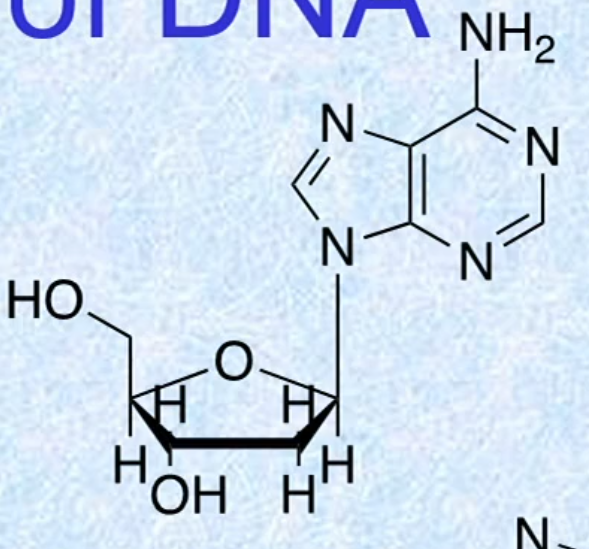
Nucleoside, a sugar and a base. The sugar can have 1 or 2 OH groups (DNA vs RNA)
10
What is this structure?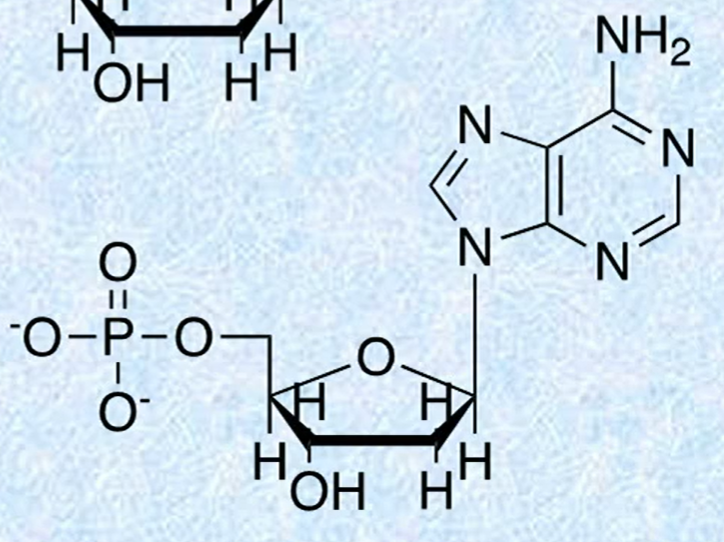
Nucleotide, a sugar, base, and phosphate
11
What is this structure?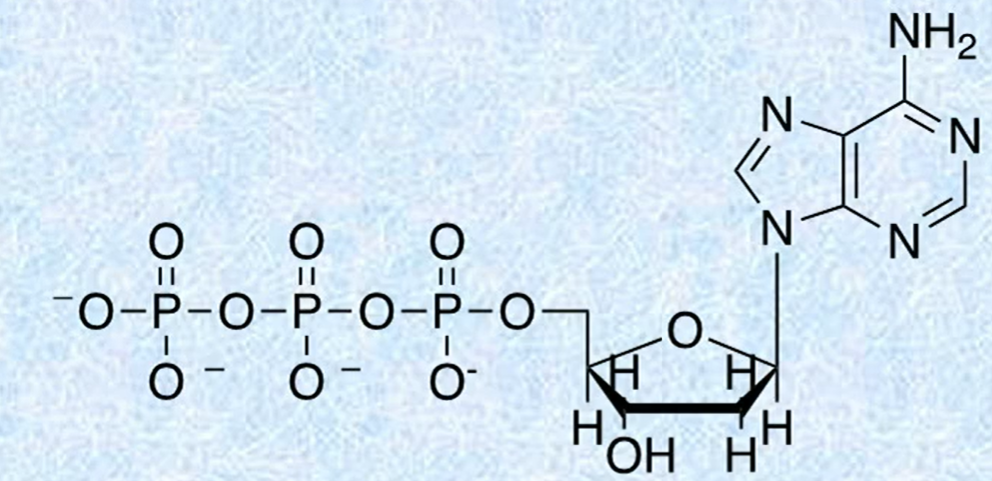
Nucleotide triphosphate, a sugar, base, and triphosphate chain
12
What type of nucleoside base is this?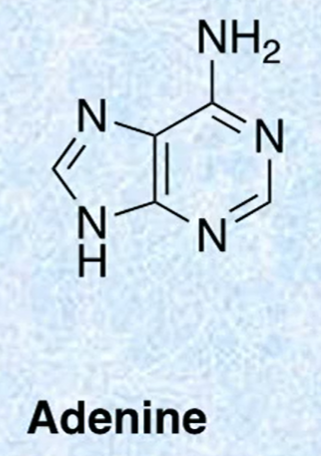
Purine
13
What are the purines?
Adenine
Guanine
Guanine
14
What type of nucleoside base is this?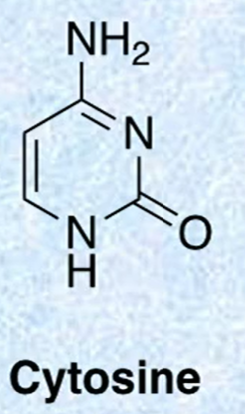
Pyrimidine
15
What are the pyrimidines?
Cytosine
Thymine
Uracil
Thymine
Uracil
16
What does helicase do?
It opens up the double stranded DNA and unwinds it to allow synthesis.
17
What does DNA polymerase do?
It copies the DNA in order to synthesis a new strand of DNA.
18
What does topoisomerase do?
It relieves stress on DNA during replication by breaking the DNA strands ahead of where replication is occuring and religating them once the stress has been reduced. Type 1 breaks 1 strand, type 2 breaks 2 strands.
19
What are proto-oncogenes?
Regular proteins in cells that have the potential to lead to cancer if mutated or misregulated, things that control cell growth and proliferation.
20
What are oncogenes?
proto-oncogenes that have mutated to increase the rate of growth and proliferation of the cell.
21
What are tumor supressor genes?
Genes that limit cell growth and serve as a check to cancer. Often mutated to not be functional in cancer.