BIO 265 FINAL CUMULATIVE
Study these flashcardsFree · spaced repetition · iPhone, Android, Mac & web
All cards
1
Which researcher used swan-necked flasks and beef broth to disprove the spontaneous generation of microscopic organisms?
Louis Pasteur
2
How does pasteurization help to prevent spoilage of wine, milk, and other foods?
Since it kills microbe that would cause it because it rapidly heats and cools before it reaches boiling point
3
Which scientist’s experimental steps are still used today to establish causation between a microbe and a disease?
Robert Koch's postulates
4
Which researcher was the first scientist to show that a bacterium can cause disease by discovering the causative agent of anthrax to be a Bacillus?
Robert Koch
5
What is the correct order of Koch’s postulates?
1. Identify suspected pathogen in infected individuals 2. Isolate & grow suspected pathogen in lab 3. Infect healthy host & demonstrate disease 4. Re-isolate the suspected pathogen from the new host
6
1st step of Koch's postulates
Identify suspected pathogen in infected individuals
7
2nd step of Koch's postulates
Isolate & grow suspected pathogen in lab
8
3rd step of Koch's postulates
Infect healthy host & demonstrate disease (not ethical)
9
4th step of Koch's postulates
Re-isolate the suspected pathogen from the new host
10
What kind of bacterial arrangement is this? 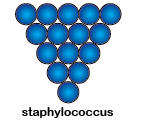
bacteria with staphylococcal arrangement
11
NAG
N-acteylglucosamine
12
NAM
N-acetlymuramic acid
13
Do gram positive cell walls contain lipopolysaccharide?
No
14
Gram-Postive cell walls
Monoderm (thick & extends from the cell membrane), have no outer membrane and have teichoic and lipoteichoic acids
15
Components inside a gram-positive cell wall
Peptidoglycan, teichoic acid, and lipoteichoic acid
16
Do gram negative cell walls contain teichoic acids?
Diderm, has an outer membrane, and has LPS
17
Components of outer membrane in a Gram-negative cell wall
porins, lipoproteins, and lipopolysaccharides (LPS)
18
Which step of the Gram stain procedure, if performed incorrectly, can result in Gram-negative cells appearing as Gram-positive
De colorizing and specifically if we under-de colorize
19
What are two differences between the gram-positive and gram-negative cell walls?
gram positives are monoderm and have teichoic acids while gram negatives have diderm and have LPS
20
What are the top three most difficult microbes/microbial structures to disinfect?
Prion, bacterial endospores, and protozan cyst
21
What is the purpose of the vented caps on the test tubes we use in the lab?
Allows autoclave steam to enter the tube
22
What is the typical temperature and pressure that an autoclave must reach to sterilize?
121 °C or 249.8 °F for 15 min
23
Which method of sterilization would be most effective for sterilizing nutrient broth that does not contain heat-sensitive compounds such as urea?
moist heat in autoclave
24
Which method is best for sterilizing heat-sensitive liquid medications?
filtration thru .2 micrometer or smaller pore filter
25
If a molecule loses an electron has it been oxidized or reduced?
oxidized
26
Oxidized form of an ion
Cu2+ -> Cu3+
27
Reduced form of an ion
Fe3+ -> Fe2+
28
Identify the oxidized members in a chemical reaction.
NADH -> NAD+
29
Identify the reduced members in a chemical reaction.
FAD -> FADH2
30
What high-energy particle is harvested in a redox reaction?
electrons
31
Name the enzyme from glycolysis discussed in lecture that can perform substrate level phosphorylation.
Pyruvate Kinase
32
How many pyruvate molecules are produced by the glycolysis pathway?
2
33
During electron transport, the first electron carrier is ___________ by the incoming NADH, which leaves as NAD+.
reduced
34
How many H+ are transported out of a bacterium per NADH oxidized?
2 per cycle which happens 3 times which gives a total of 6 H+
35
Fermentation often involves the reduction of ___________, which is a product of glycolysis.
Organic pyruvate
36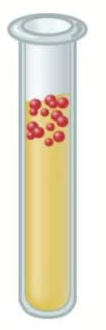
obligate aerobe
37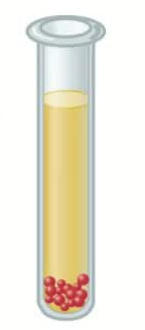
Obligate anaerobe
38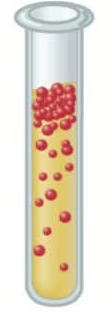
Faculative Anaerobe
39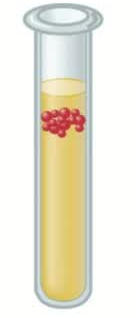
Microaerophile
40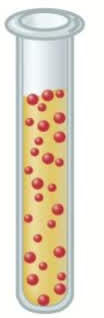
aerotolerant anaerobe
41
Why do facultative anaerobes grow more densely at the top of the culture tube than at the bottom?
Because they can aerobically respirate which makes more ATP
42
A complex community of microbes adhering to a surface would be called a _________.
bioflim
43
What is quorum sensing?
Chemical communication cells can use within biofilms with high densities
44
How do bacteria control pathogenicity?
Through Quorum sensing
45
List 2 benefits that bacteria gain by living in a biofilm.
Microbial self-defense, keeps cells in favorable niche, make genetic transfer more stable, and slows growth of the microbe (maintains stable genome)
46
How are bacteria in a biofilm protected from antibiotics?
resist phagocytosis; antibiotics and antimicrobials
47
What are the steps of binary fission?
1. DNA replicates and Cell elongate 2. Cell wall and plasma membrane begin to constrict 3. cross wall forms 4. Daughter cells separate
48
1st step of binary fission
DNA replicates and Cell elongate
49
2nd step of binary fission
Cell wall and plasma membrane begin to constrict
50
3rd step of binary fission
cross wall forms
51
4th step of binary fission
Daughter cells separate
52
Thinking about a bacterial growth curve, which phase of growth contains the healthiest members of the population?
Log Phase
53
Thinking about a bacterial growth curve, which phase(s) involve exponential changes in cell number?
Log and death phase
54
Which phase of bacterial growth contains the hardiest members of the bacterial population?
Stationary phase because starvation, lack of space and waste product buildup
55
If an antibiotic is only effective against one group of microbes is it a broad or narrow spectrum antibiotic?
Narrow spectrum
56
What is synergism?
Two drugs working together to make a greater output
57
Why is it inappropriate to prescribe antibacterial agents to treat a cold or the flu?
Because they are caused by viruses
58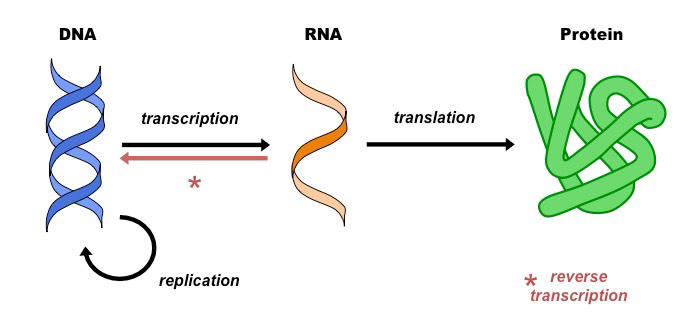
the central dogma of molecular biology
59
What is the importance of the central dogma of molecular biology?
Because it tells us that self-replicating DNA transcripts for mRNA and that translates into proteins
60
DNA polymerase enzymes can only synthesize new DNA in the __’ to __’ direction.
5' to 3' (-OH end)
61
During DNA replication, which strand of the parental DNA serves as the template strand?
The 3' to 5' strand (Phosphate group)
62
During DNA replication, which strand contains Okazaki fragments?
lagging strand
63
Which protein binds to the origin of replication?
dnaA
64
This enzyme does most of the synthesis of new DNA strands during DNA replication.
DNA Pol III
65
This enzyme removes RNA primers and replaces them with DNA nucleotides
DNA Pol I
66
This enzyme can connect a 5’ end to a 3’ end in a DNA molecule, sealing gaps in its backbone.
Ligase
67
This protein unwinds and separates the helix of DNA one base pair at a time.
Helicase
68
This enzyme moves in front of the replication forks and relieves supercoiling.
DNA Gyrase
69
This enzyme synthesizes RNA primers during DNA replication.
DNA Primase
70
What is exonuclease activity?
cutting RNA nucleotide out of the ends of DNA strands
71
During which stage of transcription does RNA polymerase bind to the promoter of a gene?
initiation
72
Write the mRNA that would be produced by the transcription of the following sequence in DNA: TAC GGG TTT AAA CGC CAT
AUG CCC AAA UUU GCG GUA
73
RNA polymerase can only synthesize mRNA in the __’ to __’ direction.
5' to 3'
74
During transcription, which strand of DNA serves as the template strand?
Single strand 3' to 5' DNA
75
During transcription, what protein assists RNA polymerase with promoter recognition?
σ (Sigma) factor
76
This enzyme “reads” the coding region of a gene and synthesizes complementary mRNA
RNA Polymerase
77
What sequence in mRNA is complementary to the anticodon of a tRNA?
Condon of mRNA
78
What role do F+ cells play in conjugation?
they are donor cells since they have F Factor to donate
79
If a bacterium is described as “competent”, which form of horizontal gene transfer is this bacterium capable of performing?
transformation
80
If a plasmid contains a tra region, then what type of plasmid is it?
F Plasmid
81
Does a transducing phage contain viral and bacterial DNA?
Depends
82
An F+ cell is introduced into a culture of F- cells. Predict what will happen to the F- cells over the next 48 hours.
conjugation will occur so F- cells become F+ cells
83
the process of conjugation pt. 1
F+ connects F- using F pilus and then pilus leaves
84
the process of conjugation pt. 2
Two cells connect so their cytoplasms can join.
85
the process of conjugation pt. 3
F factor copies itself and trasnfers into F-, converting into F+
86
the process of conjugation pt. 4
2 F+ cells separate
87
the process of transformation pt. 1
Donor cell explodes releasing its DNA.
88
the process of transformation pt. 2
Component recipient cell expresses DNA receptor on surface so that it grabs naked DNA and uptakes it
89
the process of transformation pt. 3
Inside DNA is recombined with recipient chromosome
90
transducing phage produced by generalized transduction
It only contains bacterial DNA
91
phage produced by specialized transduction?
contains bacterial and viral DNA
92
Which kinds of horizontal gene transfer require the DNA donor to die?
transformation and transduction
93
What is the natural role of CRISPR in a bacterial cell?
Immune memory for bacteria
94
What is the biggest advantage of next generation sequencing versus traditional methods?
speed
95
List a couple of ways high-throughput sequencing has changed genetic research.
96
What is the purpose of the polymerase chain reaction?
Amplify the amount of DNA so we can have multiple copies
97
What is RT-PCR used for?
Detecting specific RNA sequences
98
What is qPCR used for?
Measure the amount of a target sequence present in a sample using fluorscent markers
99
What do we call virus particles?
Virion
100
What is the function of a capsid?
protective coating so it protects genome
101
How are enveloped viruses released from an infected host cell?
budding
102
If the capsid is brought into the cell by endocytosis, this would be __________ animal virus penetration.
naked
103
List the 6 steps associated with the replication of an animal virus, and briefly describe what occurs during each step.
attachement, penetration, uncoating, biosynthesis, assembly and release
104
attachment (animal virus)
Virion attaches to specific cell receptors
105
penetration (Naked)
enter by endocytosis
106
Penetration (enveloped)
enter by fusion
107
uncoating
capsid released nucleic acid payload
108
biosynthesis (animal virus)
early (enzyme for nucleic acid replication) and late genes (capsomere and any other proteins needed by virus) expressed
109
assembly (animal virus)
new virions are made
110
release (animal virus)
new virions are released by host cell
111
When does “uncoating” occur in the replication cycle of an animal virus?
after penetration and before biosynthesis
112
Why must (+)ssRNA viruses produce (-)ssRNA during their replication process?
Since they're complementary to one another in order to synthesize
113
Which error prone enzyme of RNA viruses is the primary reason the common cold currently has no vaccine?
RdRP
114
What enzyme must (-)ssRNA viruses carry in their capsid?
RdRP
115
What molecules are released into the nucleus of a host cell during uncoating of HIV?
HIV dsDNA & integrase
116
Once integrated into the host cell’s chromosome, retroviral DNA is called a ____________________.
provirus
117
Which enzyme of HIV is capable of synthesizing DNA using an RNA template?
reverse transcriptase
118
What is a retrovirus that has integrated with the host’s chromosome called?
provirus
119
Which immune system cells are infected by HIV?
T-helper cells and marcophages
120
What do over the counter HIV tests detect?
AntiHIV antibodies
121
What is detected in a blood test for HIV?
Either HIV (+)ssRNA or HIV specific proteins like gp120/p41
122
What is the most common route of accidental HIV transmission to health care workers?
needle stick
123
What are the primary reasons why anti-HIV drugs are difficult to develop?
expensive and virus mutation rate
124
Currently, what are the best ways to stop the spread of HIV?
education, abstinence, PrEP, not sharing needles, condoms, and ART
125
What is the specific effect of Truvada on the replication cycle of HIV?
stops HIV from making dsDNA during biosynthesis
126
How does prion PrP replicate itself in the brain?
PrPsc refolds PrP into more copies of PrPsc
127
List and briefly describe the three lines of defense in the human body.
First two lines of defense are innate immunity and third is adaptive
128
What are a couple of ways your innate immune system protects you from infection?
chemical defenses; intact skin and normal microbiota.
129
Adaptive immunity
protects from specific antigens
130
The presence of normal microbiota that protects the body by competing with pathogens in a variety of ways to prevent pathogens from invading the body is _____________ _____________.
microbial antigen
131
What role does chemotaxis plan in phagocytosis?
releases chemokines which are molecules that attract phagocytes leading them to infection
132
Which complement proteins cause chemotaxis and inflammation?
C3a and C5a
133
Which complement protein is also known as “opsonin”?
C3b
134
Does complement activation interfere with viral replication?
Yes
135
Why or why not?
Because its an effect of imflammation
136
Which complement proteins are involved in the MAC?
C5b, C6-C8, and mulitple C9s
137
At what point in the cascades do both the alternative and classical pathways of complement activation become the same?
when cleaving onto C3
138
What is the relationship between antigen and epitope?
epitodes are recognized region of antigen
139
Which type of biomolecule stimulates the strongest immune response in humans?
proteins
140
Which areas of an immunoglobulin molecule are variable and bind to antigen?
variable region (Fab)
141
Which areas are similar for all antibodies?
constant region (Fc)
142
Which immune cells are involved in a cell-mediated response?
T helper cells and T cytotoxic cells
143
What is the function of MHC II on an antigen presenting cell (APC)?
Present exgenous antigens to Th
144
Which kind cytokines act as communication signals between leukocytes?
interleukin (IL)
145
Which interleukin stimulates Th proliferation?
IL-2
146
What are a couple ways that memory B cells differ from plasma cells?
memory cells are there for a lifetime possibly and need to be reactivated to differeniate into plasma cells to secrete antibodies
147
ways that plasma cells differ from memory B cells?
Plasma is around for 6-12 months and actively secretes antibodies
148
Which type of vaccine contains whole, killed microbe?
inactived vaccine
149
Which type of vaccine contains live, weakened microbe?
live attenuated vaccine
150
Which type of vaccine contains inactivated toxin?
toxoid vaccine
151
Which type of vaccine contains a carbohydrate antigen that has been chemically bonded to a protein antigen?
conjugated vaccine
152
Which type of vaccine contains antigens only?
subunit vaccine
153
Which type of vaccine only contains mRNA for antigen?
mRNA vaccine
154
How has vaccination improved childhood survivability?
kids are more likely to surive to adulhood if they're vaccinated
155
According to current scientific research, is there a link between vaccination and autism?
No
156
Which results in longer lasting immunity, vaccination or recovery from infection?
Depends
157
Which type of hypersensitivity is also known as the allergic response?
Type I Hypersensitivity
158
Which antibody isotype becomes an allergen receptor during sensitization?
IgE