BIO 265 Unit 2
Study these flashcardsFree · spaced repetition · iPhone, Android, Mac & web
All cards
1
All chemical reactions occurring in a microbe are its
Metabolism
2
Enzymes lower the activation energy of chemical reactions. What effect does this lowering of EA have on a reaction?
It speeds up the rate of reaction
3
How do cold temperatures affect enzyme activity?
When it gets too cold, then substrate binds too slowly
4
What do we call an enzyme that has its cofactor/coenzyme bound to it?
holoenzyme
5
If a molecule loses an electron has it been oxidized or reduced?
oxidized
6
Oxidized form of an ion
Cu2+ -> Cu3+
7
Reduced form of an ion
Fe3+ -> Fe2+
8
Identify the oxidized members in a chemical reaction.
NADH -> NAD+
9
Identify the reduced members in a chemical reaction.
FAD -> FADH2
10
What high-energy particle is harvested in a redox reaction?
electrons
11
Is oxygen required for glycolysis to occur?
No
12
Which enzyme of glycolysis catalyzes the production of glucose-6-phosphate from glucose and ATP?
hexokinase
13
How many ATP are consumed during glycolysis?
2 ATP
14
Name the enzyme from glycolysis discussed in lecture that can perform substrate level phosphorylation.
Pyruvate Kinase
15
How many pyruvate molecules are produced by the glycolysis pathway?
2
16
What energy benefit does the intermediate reaction provide for a bacterium?
NADH
17
Per glucose oxidized, how many NADH molecules are produced by the Krebs cycle?
6 NADH
18
After completion of the Krebs cycle, in what form would you detect the carbon atoms from the glucose that was oxidized?
They are lost as CO2
19
During electron transport, the first electron carrier is ___________ by the incoming NADH, which leaves as NAD+
reduced
20
How many H+ are transported out of a bacterium per NADH oxidized?
2 per cycle which happens 3 times which gives a total of 6 H+
21
If sulfur (S) is the final electron acceptor of electron transport, then what kind of respiration is being employed by the bacterium?
anaerobic respiration
22
In a bacterium, per glucose oxidized, how many ATP are produced by oxidative phosphorylation alone?
34 ATP
23
Theoretically, how many ATP can be produced from the oxidation of 10 FADH2 molecules by the electron transport chain? Assume all the electrons pass through all ETC carrier proteins and join with oxygen and hydrogens to form water.
20 ATP since oxidizing 1 FADH2 gives 2 ATP
24
What is chemiosmosis?
The diffusion of H+
25
O State
rotates gamma and newly formed ATP exits
26
L State
ADP & Pi enter site and gamma rotates
27
T State
ADP & Pi smahed into ATP, gamma rotates
28
What form of energy to H+ possess that enables them to power the generation of ATP via the F1/FO ATPase?
Potential Energy
29
Fermentation often involves the reduction of ___________, which is a product of glycolysis.
Organic pyruvate
30
During electron transport, the first electron carrier is ___________ by the incoming NADH, which leaves as NAD+
Oxidized
31
Example of Lactic Acid
Cheddar cheese, pickle, and soy sauce
32
Example of Ethanol
Wine, Beer, and CO2
33
Example of Propionic Acid
Swiss Cheese
34
Are fermentation and anaerobic respiration synonyms?
No
35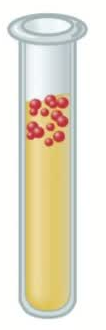
obligate aerobe
36
obligate aerobe SOD & Catalase
Yes to both
37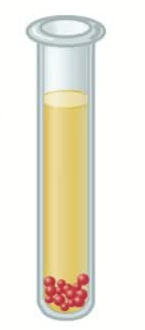
Obligate anaerobe
38
Obligate anaerobe SOD & Catalase
No to Both
39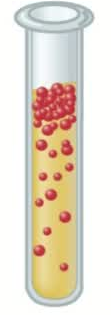
Faculative Anaerobe
40
Faculative Anaerobe SOD & Catalase
Yes to Both
41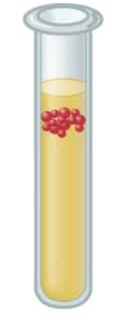
Microaerophile
42
Microaerophile SOD & Catalase
Yes to SOD and yes or No for Catalase
43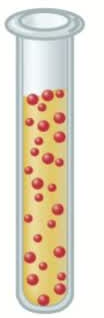
aerotolerant anaerobe
44
aerotolerant anaerobe SOD and Catalase
Yes to SOD and No to catalase
45
Why do facultative anaerobes grow more densely at the top of the culture tube than at the bottom?
Because they can aerobically respirate which makes more ATP
46
Why is the reduction of atmospheric nitrogen to ammonia by Rhizobium in plant roots important?
It begins the precoess of fixing nitrogen from a gas to a solid that can be used for plant food
47
A complex community of microbes adhering to a surface would be called a
bioflim
48
quorum sensing
Chemical communication cells can use within biofilms with high densities
49
How do bacteria control pathogenicity
Through Quorum sensing
50
benefits that bacteria gain by living in a biofilm
Microbial self-defense, keeps cells in favorable niche, make genetic transfer more stable, and slows growth of the microbe (maintains stable genome)
51
Microbial self-defense
resist phagocytosis; antibiotics and antimicrobials
52
what is it meant by keeping cells in a favorable niche
resist being swept away and living in nutrient rich system
53
How are bacteria in a biofilm protected from antibiotics
Since diffusion inside biofilm is difficult the antibiotic dont effectively kill bacteria especially in bottom.
54
Steps of binary fission
1. DNA replicates and Cell elongate 2. Cell wall and plasma membrane begin to constrict 3. cross wall forms 4. Daughter cells separate
55
1st step of binary fission
DNA replicates and Cell elongate
56
2nd step of binary fission
Cell wall and plasma membrane begin to constrict
57
3rd step of binary fission
cross wall forms
58
4th step of binary fission
Daughter cells separate
59
Thinking about a bacterial growth curve, which phase of growth contains the healthiest members of the population?
Log Phase
60
Thinking about a bacterial growth curve, which phase(s) involve exponential changes in cell number?
Log and death phase
61
Which phase of bacterial growth contains the hardiest members of the bacterial population?
Stationary phase because starvation, lack of space and waste product buildup
62
What historical figure proposed chemotherapy as a way of treating disease?
Paul Ehrlich
63
What is meant by selective toxicity?
Kill the microbe, not the patient/host cell
64
Why do protein synthesis inhibiting antibiotics not affect eukaryote ribosomes?
Since the antibiotics focus on the subunits (30s or 50s) which bacteria have since they are prokaroytic and eukaryotics are 40s and 60s subunit. Same function but different structure
65
How do beta-lactam antibiotics interfere with cell wall synthesis?
Binds to Penicillin bind protein (PBP) which prevents cross bridge sythnesis;
66
What are the targets of the antibiotics that affect the bacterial ribosome?
Targets the 30s subunit & 50s Subunit
67
Aminoglycosides target
target the 30S (small subunit)
68
Aminoglycosides function
misread of mRNA
69
Tetracyclines target
30s
70
Tetracyclines function
prevent tRNA binding
71
Macrolides target
50s
72
Macrolides function
prevent elongation
73
Chloramphenicol target
50s
74
Chloramphenicol function
prevents peptide bond formation
75
Oxazolidinone target
50s
76
Oxazolidinone function
Stops translation
77
Where are 70S ribosomes located in eukaryotic cells?
mitochondria of cells
78
Which class of antibiotics should not be taken internally?
Ones that disrupts/injuries the cell membrane
79
Examples of antibiotics that shouldn't be taken internally
Neosporin & topical only
80
Which class of antibiotics are the only 100% synthetic antibiotics?
Sulfa drugs
81
Examples of Metabolic pathway inhibitors
Sulfonamides and trimethoprim
82
If an antibiotic is only effective against one group of microbes is it a broad or narrow spectrum antibiotic?
Narrow spectrum
83
How can taking an antibiotic lead to the rise of a drug-resistant population of bacteria?
Because bacterua can adapt by making new mutations or acquistion of R-Plasmids (transform, transduction & conjugation)
84
Antibiotic resistance by bacteria began when humans began using antibiotics.
True or false?
True or false?
False
85
Can a plasmid spread antibiotic resistance from microbe to microbe?
Yes
86
What kind of plasmid contains antibiotic resistance genes?
R-Plasmids (resistance plasmids)
87
Which type of antibiotic resistance involves the production of ß-lactamase by the microbe?
Inactivation of drug
88
synergism
Two drugs working together to make a greater output
89
Why is it inappropriate to prescribe antibacterial agents to treat a cold or the flu
Because they are caused by viruses