Freshwater Algae Ecology Final
Study these flashcardsFree · spaced repetition · iPhone, Android, Mac & web
All cards
1
Everything about Cladophora
-Filamentous green algae (Chlorophyta)
-1500 species
-“Cladophora is one of the most common genera and species of green algae in the world (freshwater and marine).”
-Considered a nuisance algae-> growth promoted by phosphorus (ex. people washing clothes in freshwater systems), which can cause growth rate to double
-Often transported through ballast water
-Diatoms often hold onto cell wall
-First discovered in the Great Lakes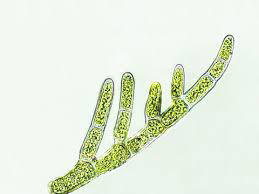
-1500 species
-“Cladophora is one of the most common genera and species of green algae in the world (freshwater and marine).”
-Considered a nuisance algae-> growth promoted by phosphorus (ex. people washing clothes in freshwater systems), which can cause growth rate to double
-Often transported through ballast water
-Diatoms often hold onto cell wall
-First discovered in the Great Lakes
2
What is a paramylon body? What group of algae have paramylon bodies?
-Stores food, such as sugars/starchs, in Euglenoids
-Euglenoids
-Euglenoids
3
What characteristic of the cell wall makes Flexiglena able to change its shape? Whats that called?
1. Pellicle = outer membrane
2. metaboly- the ability of some cells to alter their shape.
2. metaboly- the ability of some cells to alter their shape.
4
What algae makes red tide? What is the toxin called?
Karenia brevis. Breva toxin.
5
What is this? Group?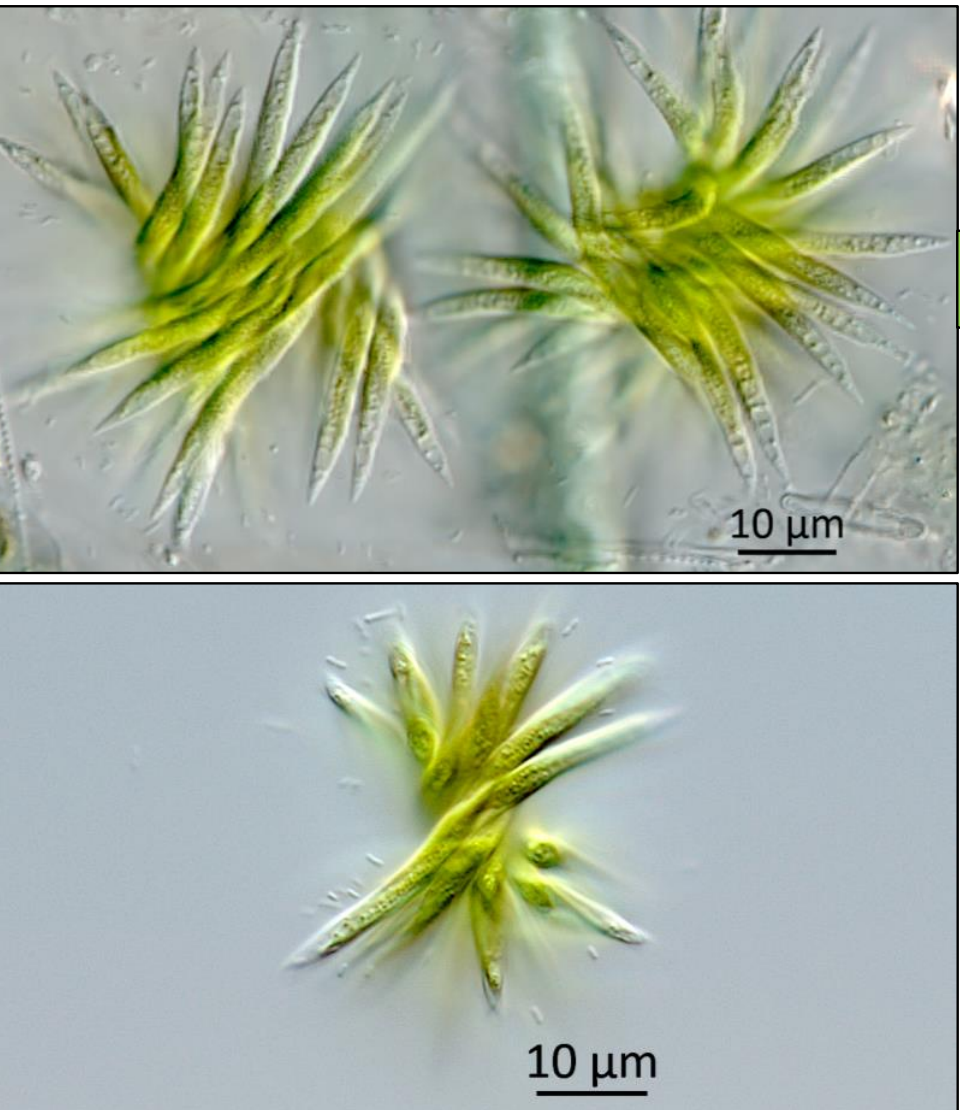
Ankistrodesmus; Chlorophyta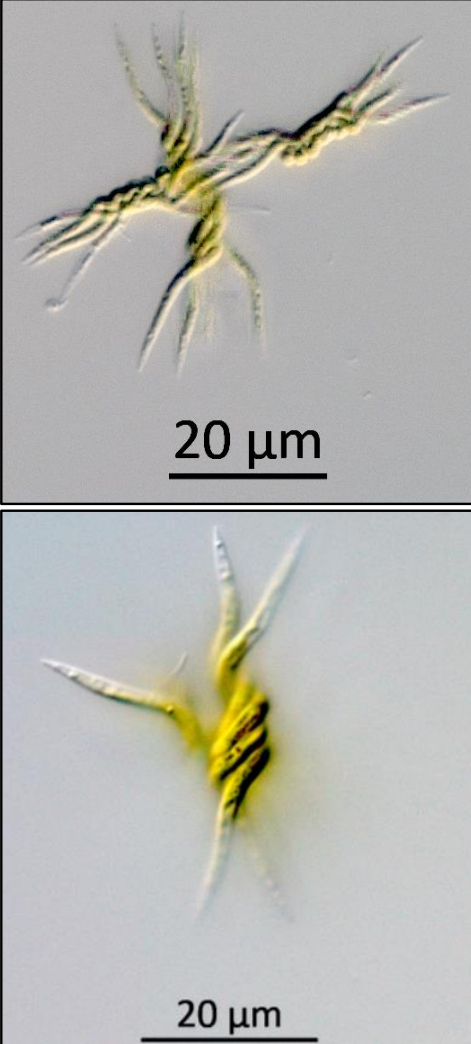
6
Which algae is organic nutrient pollution indicative of? Gets its color from what pigment?
-Euglena sanguinea
-astaxanthin
-astaxanthin
7
What is this? Group?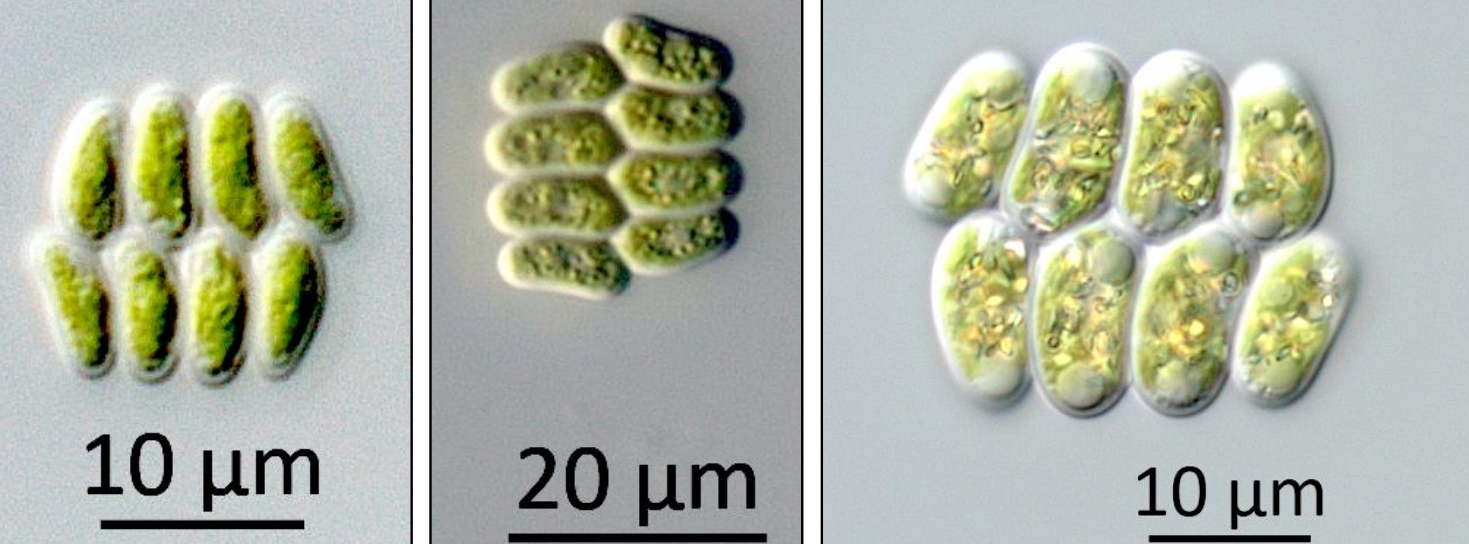
Comasiella; Chlorophyta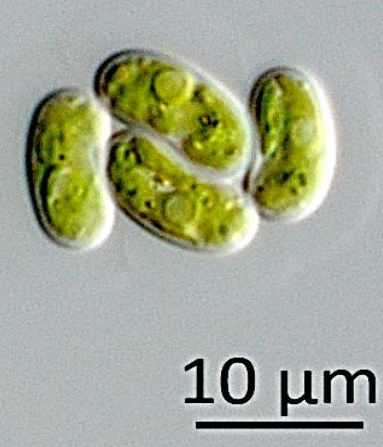
8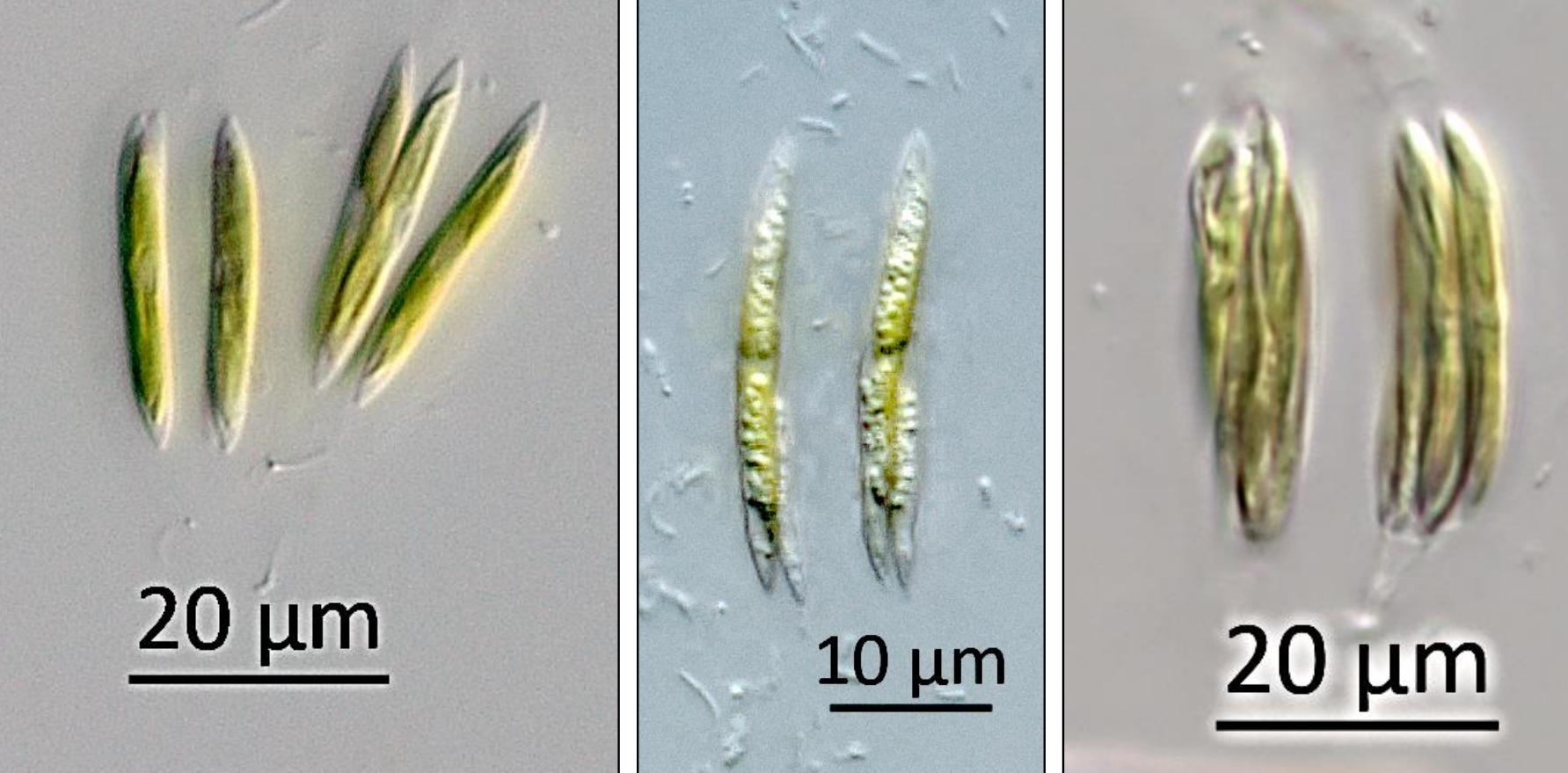
Quadrigula; Chlorophyta
9
What is this? Group?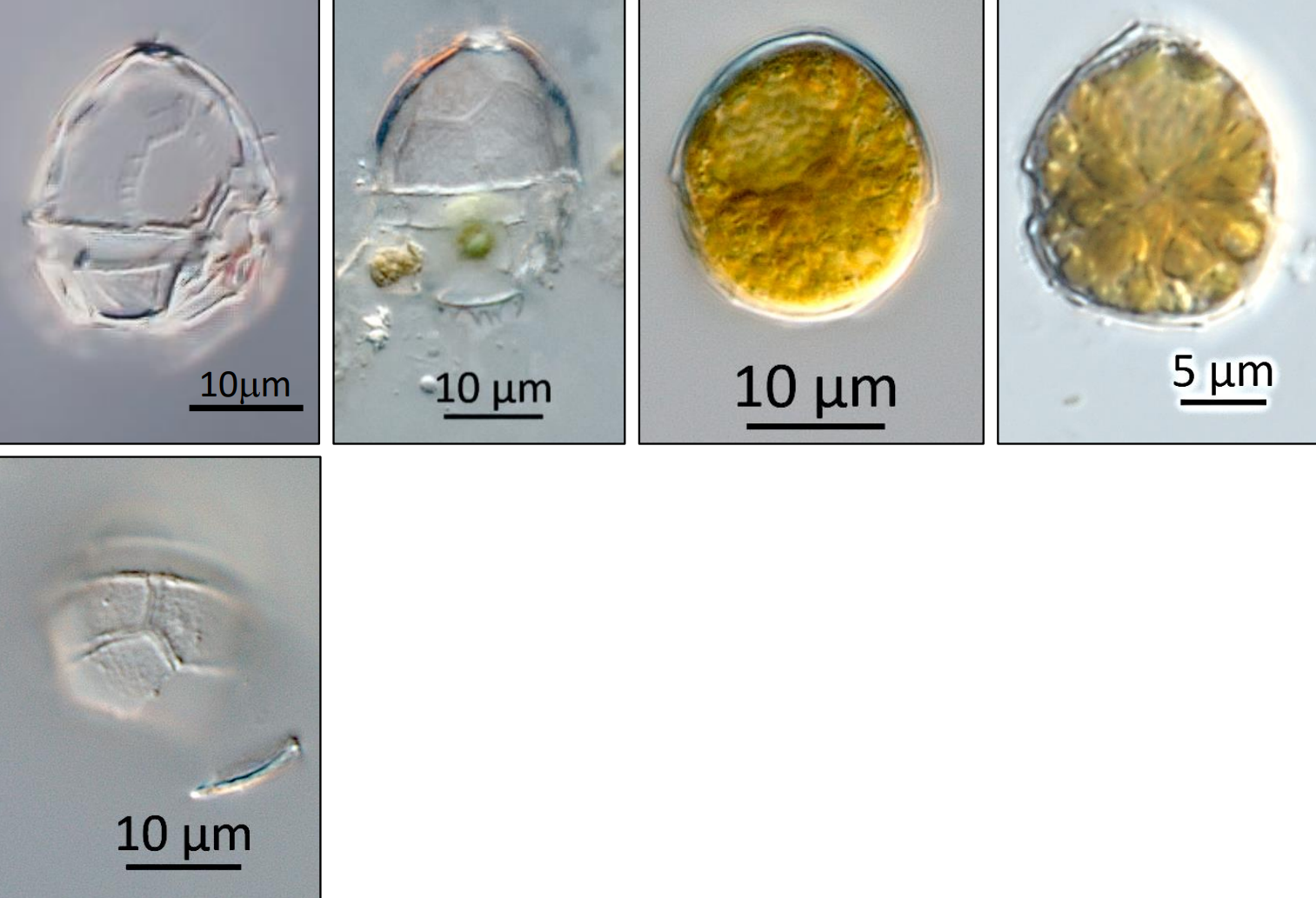
Parvodinium; Dinoflagellate
10
What is this? Group?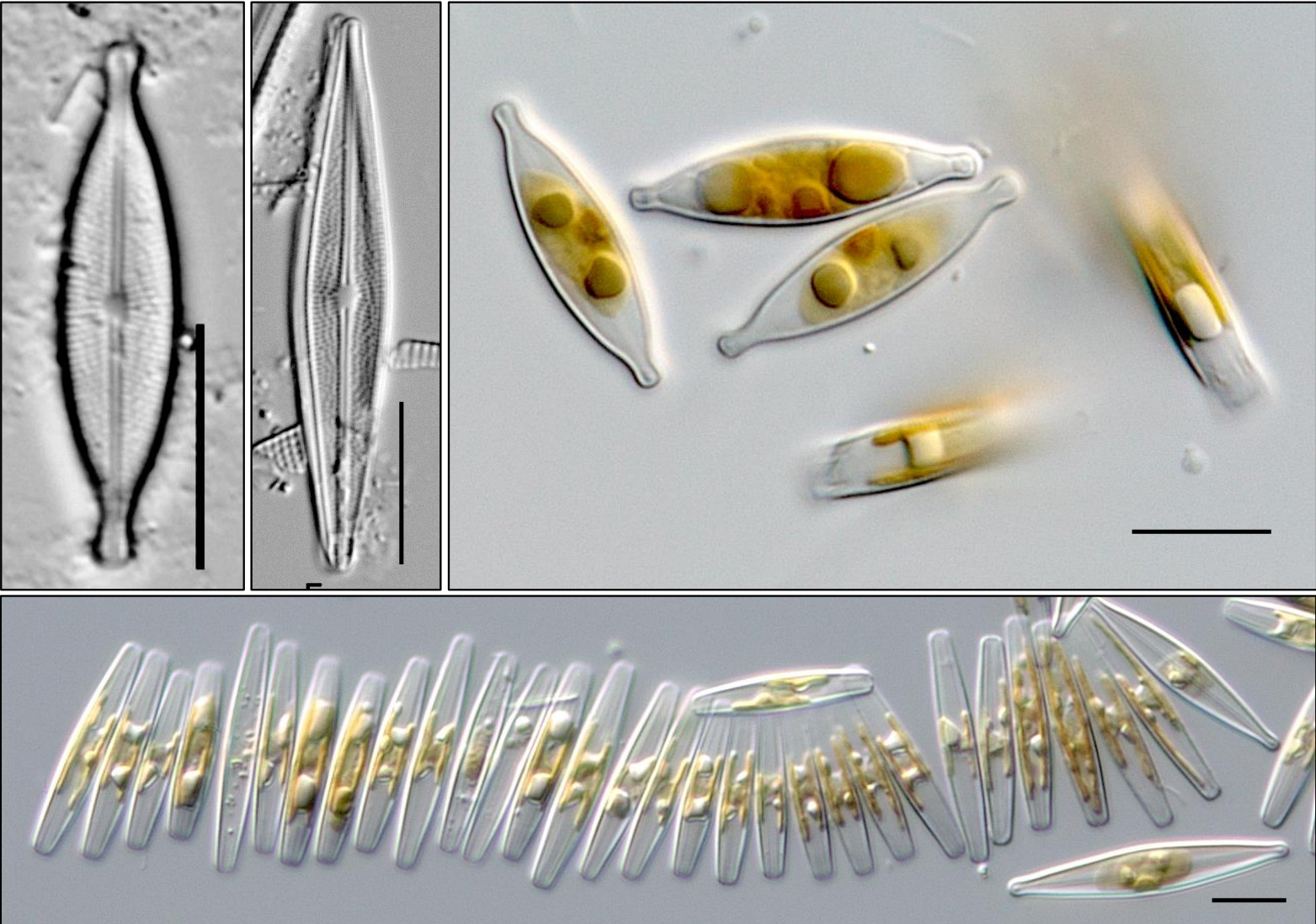
Brachysira; Diatom
11
Where is red algae mainly found?
Marine
12
What is this? Group?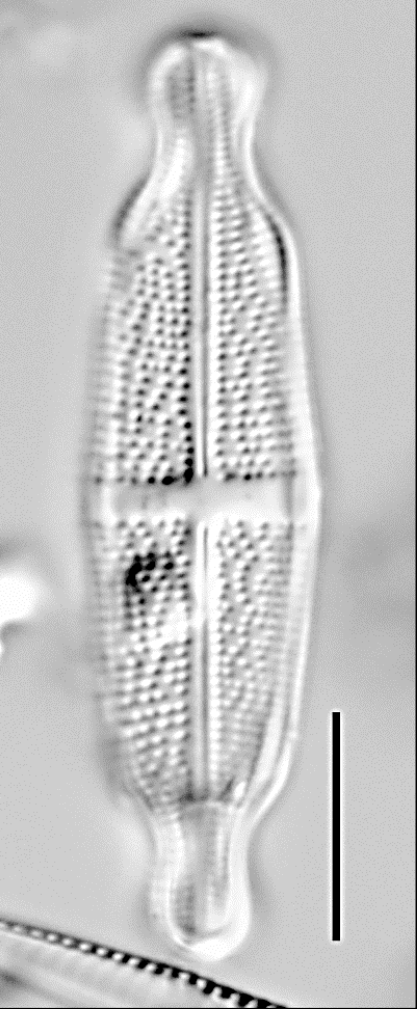
Luticola; Diatoms
13
What is a mixotroph? Which algae groups are categorized as this?
Consume prey (phagotrophy and myzocytosis) as well as photosynthesis; Chrysophytes, Haptophytes, and Dinoflagellates
14
What is this? Group?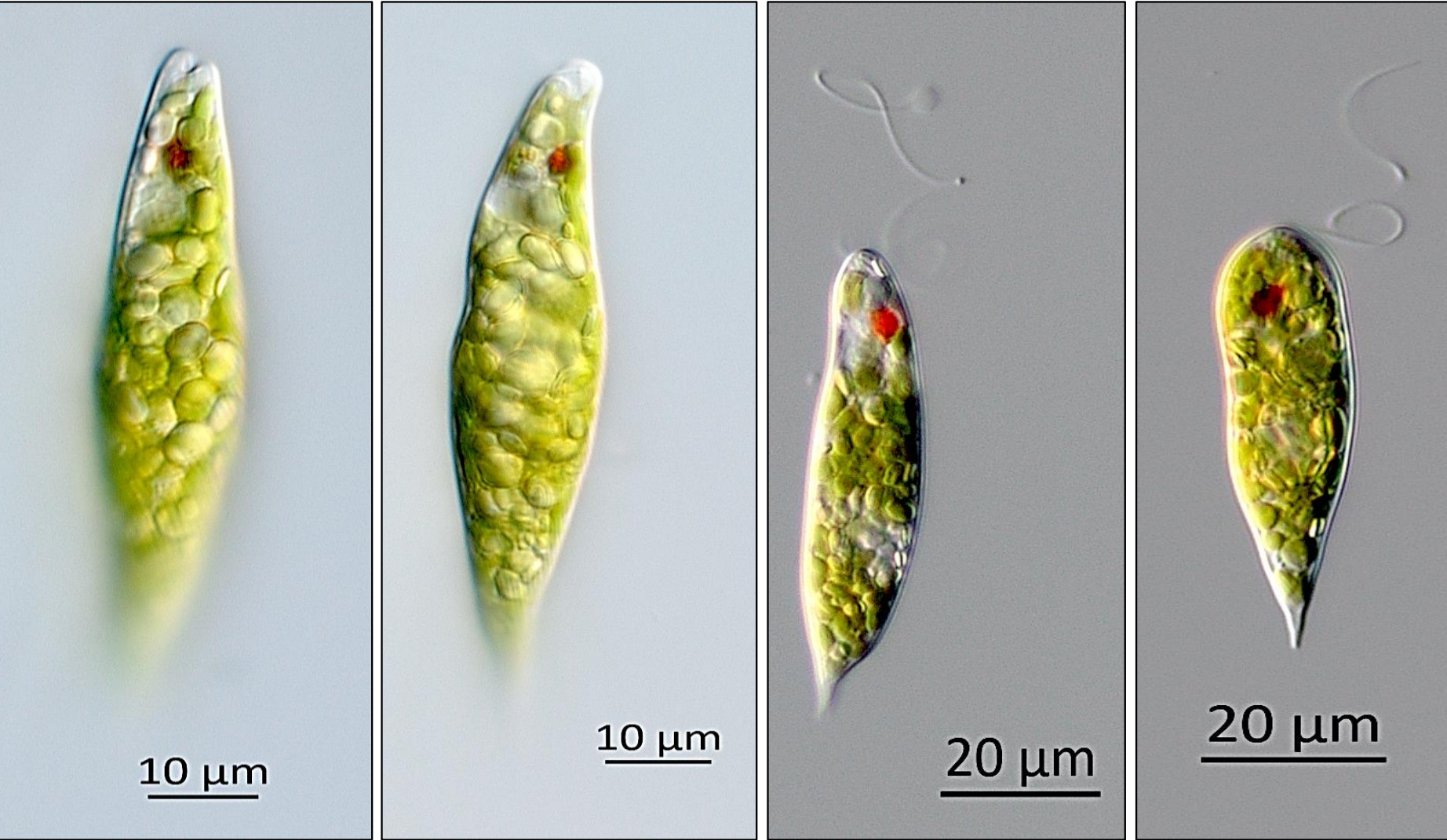
Euglenaformis; Euglenoids
15
What is this? Group?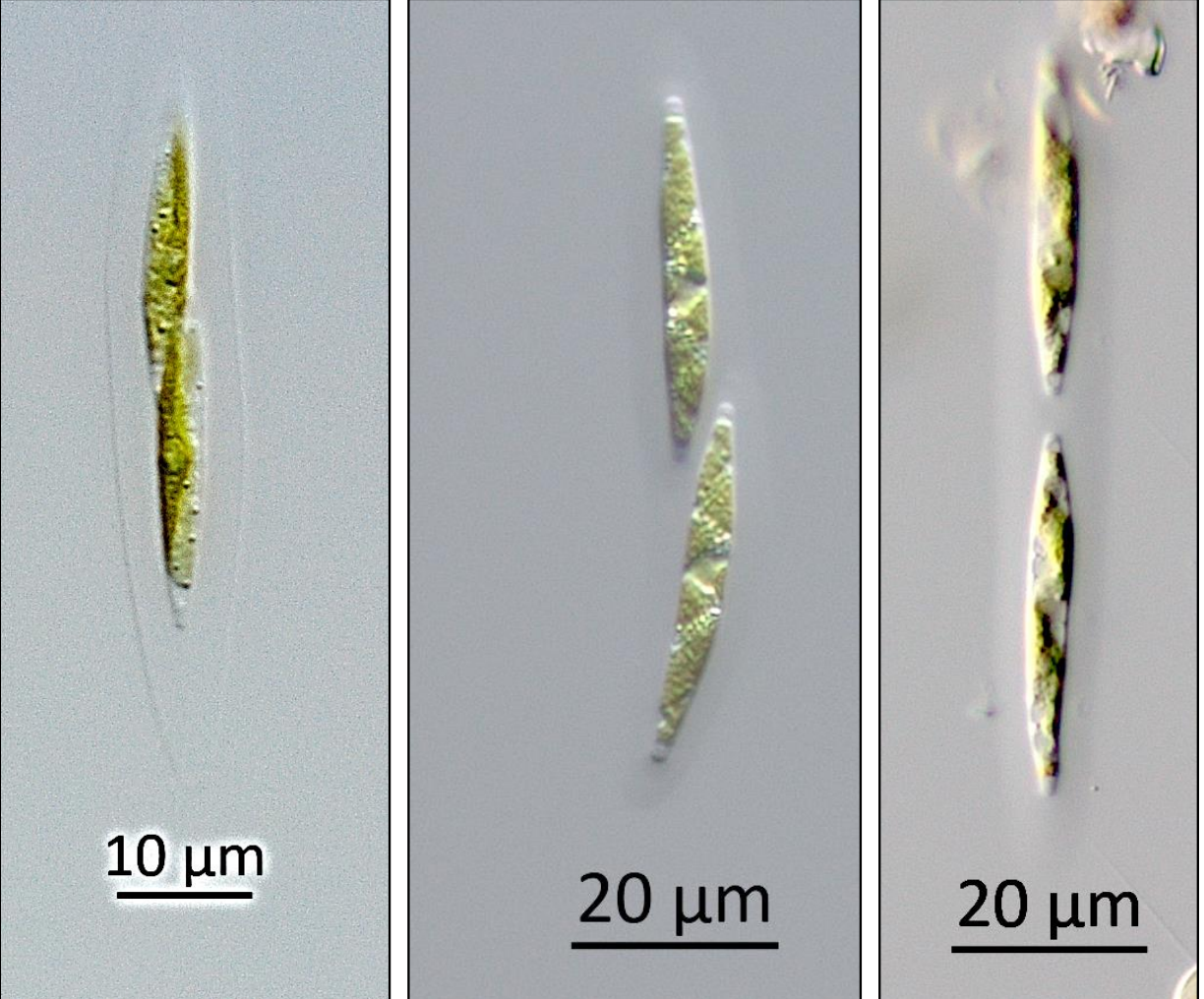
Elakatothrix; Charophyta
16
What do cryptomonads eat/need? How?
Bacteria; Has a gullet with stinging cells inside (ejectosomes)
17
What is Coenocytic? Which Xanthophyte has no cross walls separating the cells?
Doesn’t make individual cell walls, organism is one cell; Vaucheria (except when branching)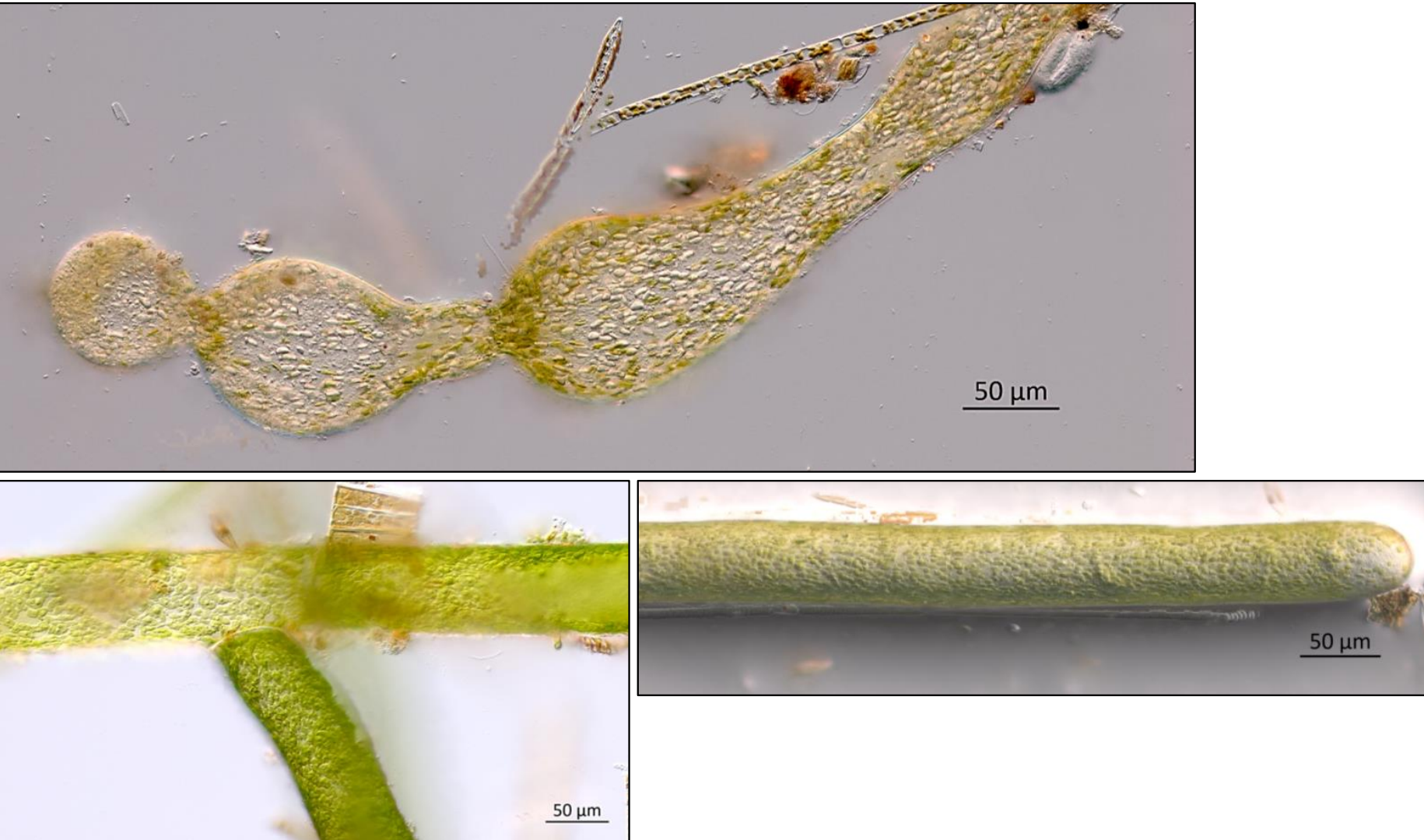
18
What is this? Group?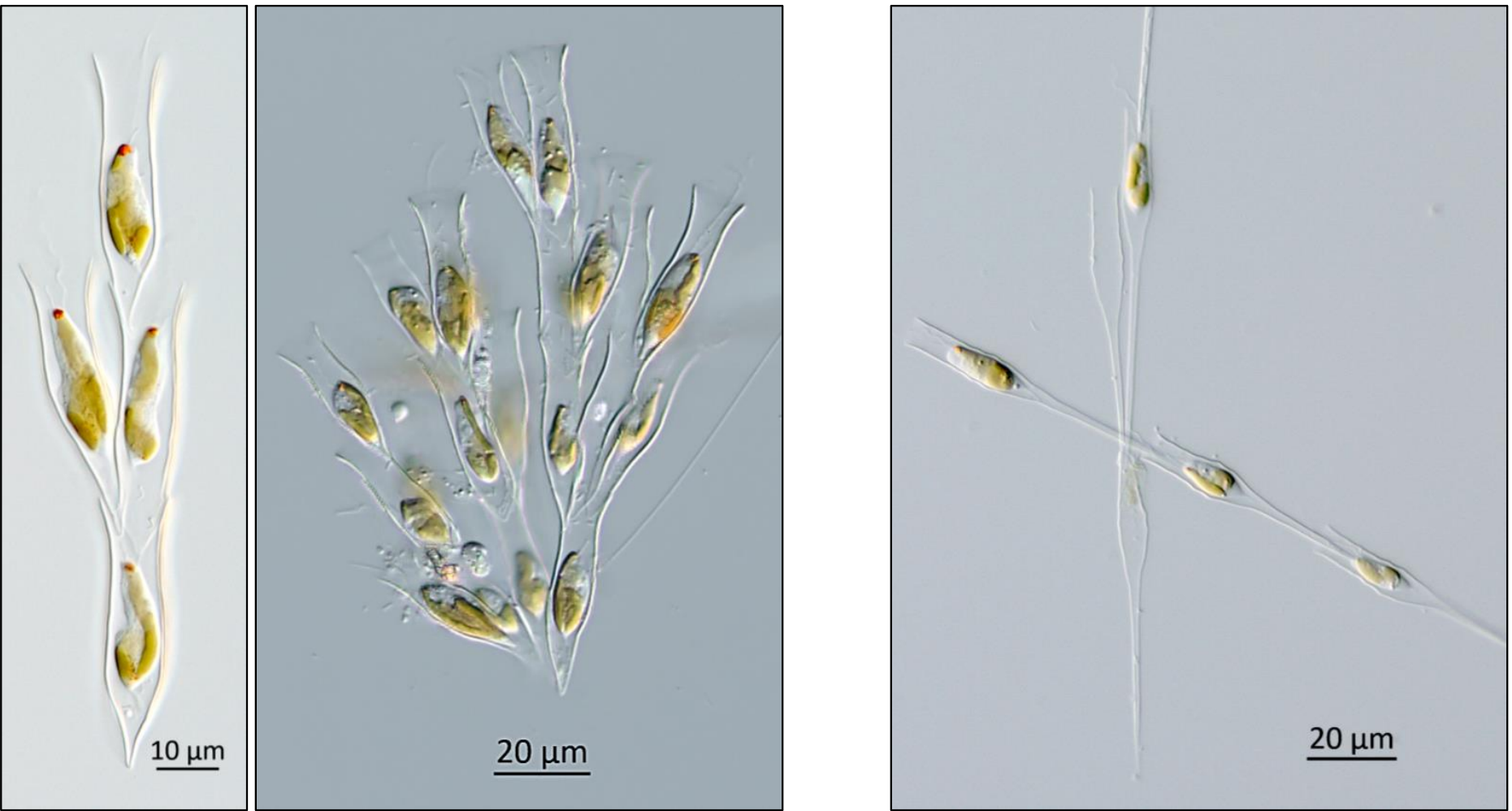
Dinobryon (common name: golden-brown algae); Chrysophyte
-cells live in a lorica (casing around cells; housing)
-2 flagella: 1 short and 1 long; silicious; has an eyespot
-cells live in a lorica (casing around cells; housing)
-2 flagella: 1 short and 1 long; silicious; has an eyespot
19
How do dinoflagellates differ from other algae in terms of DNA content?
Have 100 copies of every gene
20
Describe the relationship between dinoflagellates and cyanobacteria, including the
impact of this symbiotic relationship on both organisms and the environment.
impact of this symbiotic relationship on both organisms and the environment.
Cyanobionts- cyanobacteria that live in symbiosis with a wide range of organisms
Have a reduced genome and have not been found outside their host
Have a reduced genome and have not been found outside their host
21
What are two structures rhodophytes lack?
Flagella and centrioles
22
Common storage compounds in algae and their groups
1. Cyanobacteria: Glycogen (sugar molecules)
2. Chrysophytes: Laminarin
3. Diatoms: Chrysolamarin and lipids (oil)
3. Chlorophyceae (green algae): Starch, amylopectin and lipids
2. Chrysophytes: Laminarin
3. Diatoms: Chrysolamarin and lipids (oil)
3. Chlorophyceae (green algae): Starch, amylopectin and lipids
23
What is this? What group? Common name?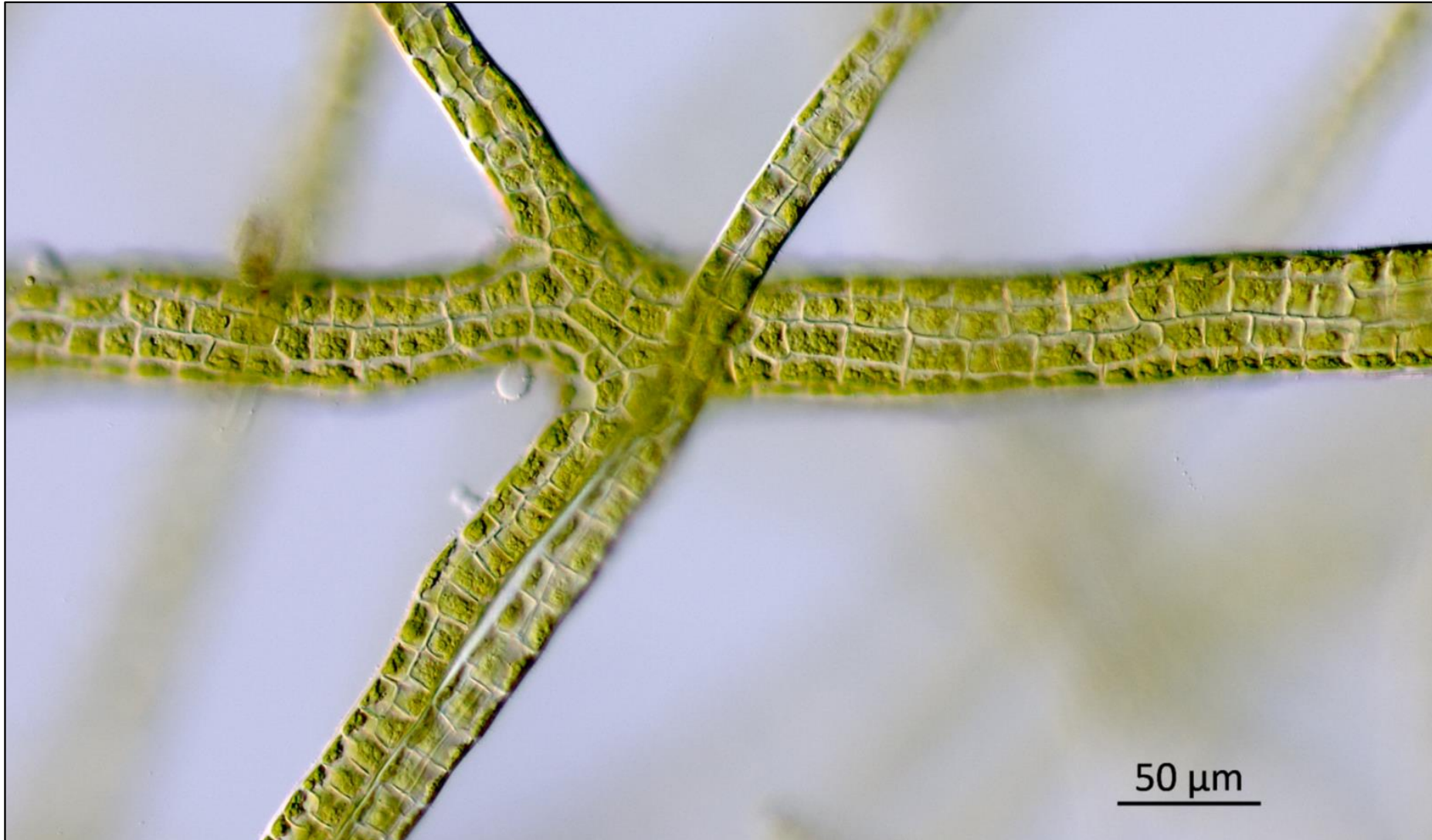
Ulva; Chlorophyta; "Sea lettuce"
24
What lichen contains algae, and what algae is it? Why does it do this? What is this relationship called?
-The lichen Parmelia sulcata (fungi) contains Trebouxia (algae) as its photobiont
- green algae or cyanobacteria that provide the simple sugars to their fungal partners
-Symbiosis
- green algae or cyanobacteria that provide the simple sugars to their fungal partners
-Symbiosis
25
Describe the size of each subsequent cell when a diatom is reproducing.
Subsequent cell is smaller than original
26
What is this? Group?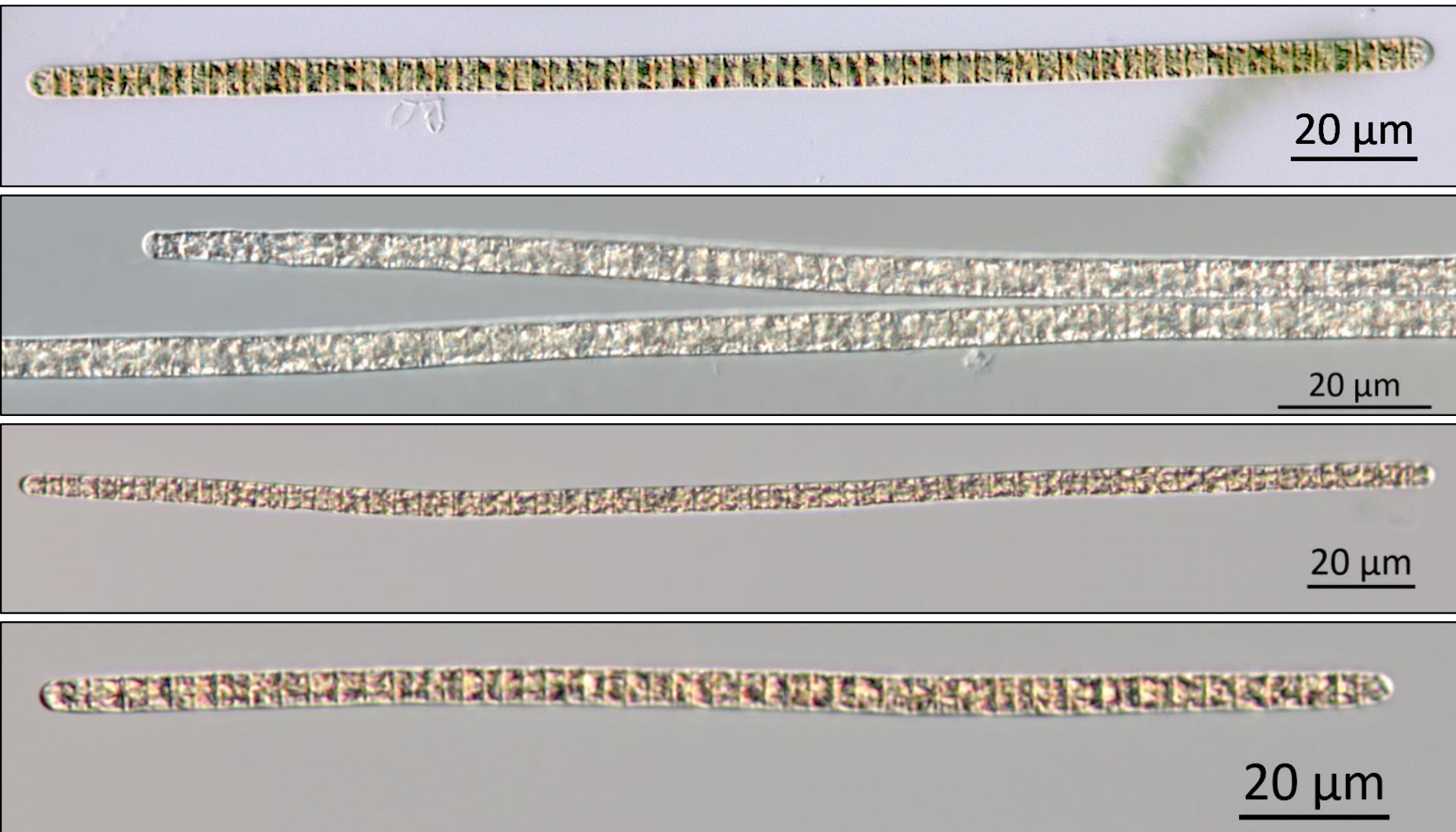
Planktothrix; Cyanobacteria
27
What is this? Group? What else can it do?
Microspora; Chloropyta; Can be an ecological indicator of hydrology
-Undergo morphological changes that correlated to changes in wetland water levels
-Can have hardened mucilage
-Undergo morphological changes that correlated to changes in wetland water levels
-Can have hardened mucilage
28
What is this? Group?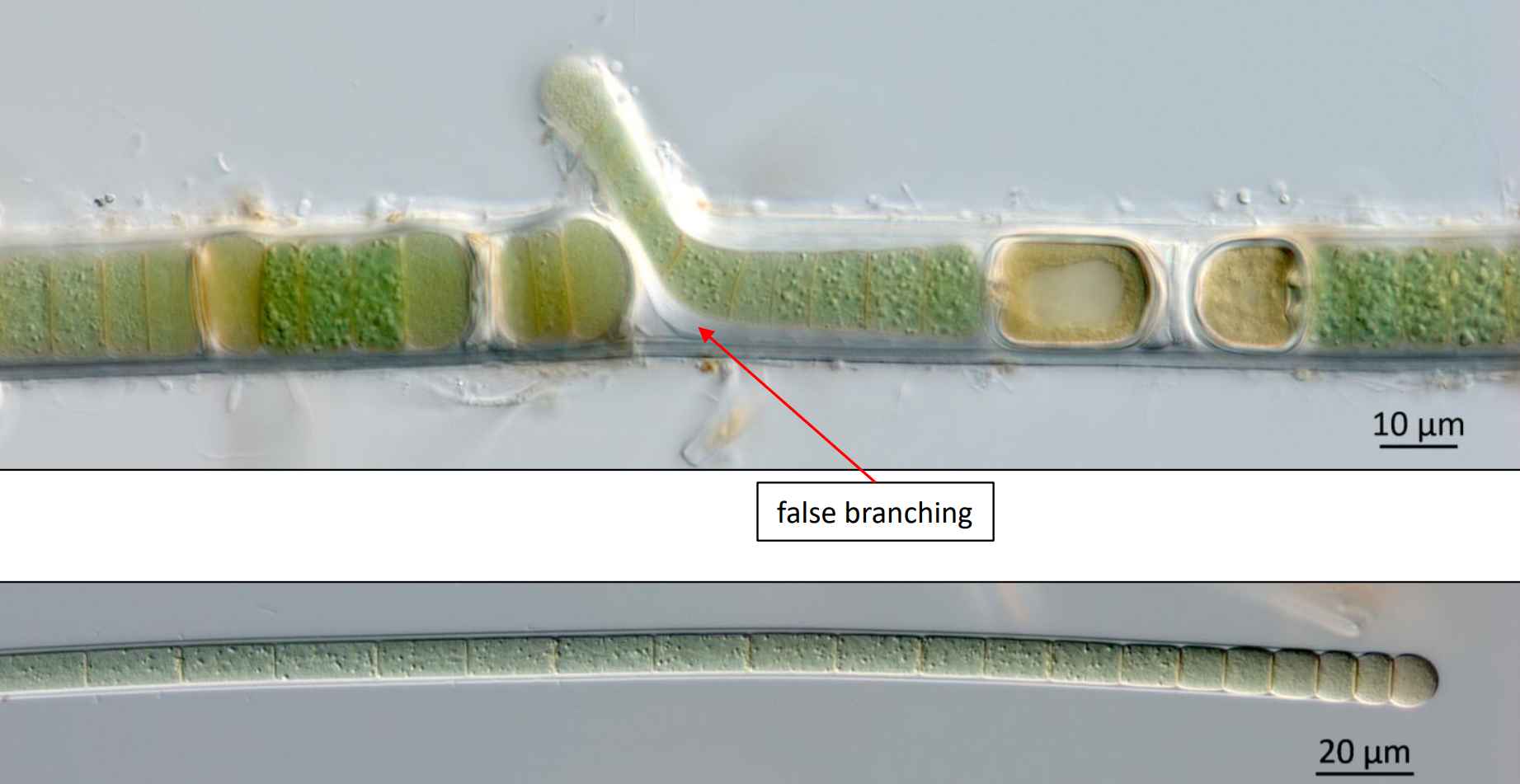
Tolypothrix; Cyanobacteria
-False branching can be caused by heterocyte
-False branching can be caused by heterocyte
29
What does rubisco do?
Grabs carbon dioxide and converts it to sugar
30
What is this? Group?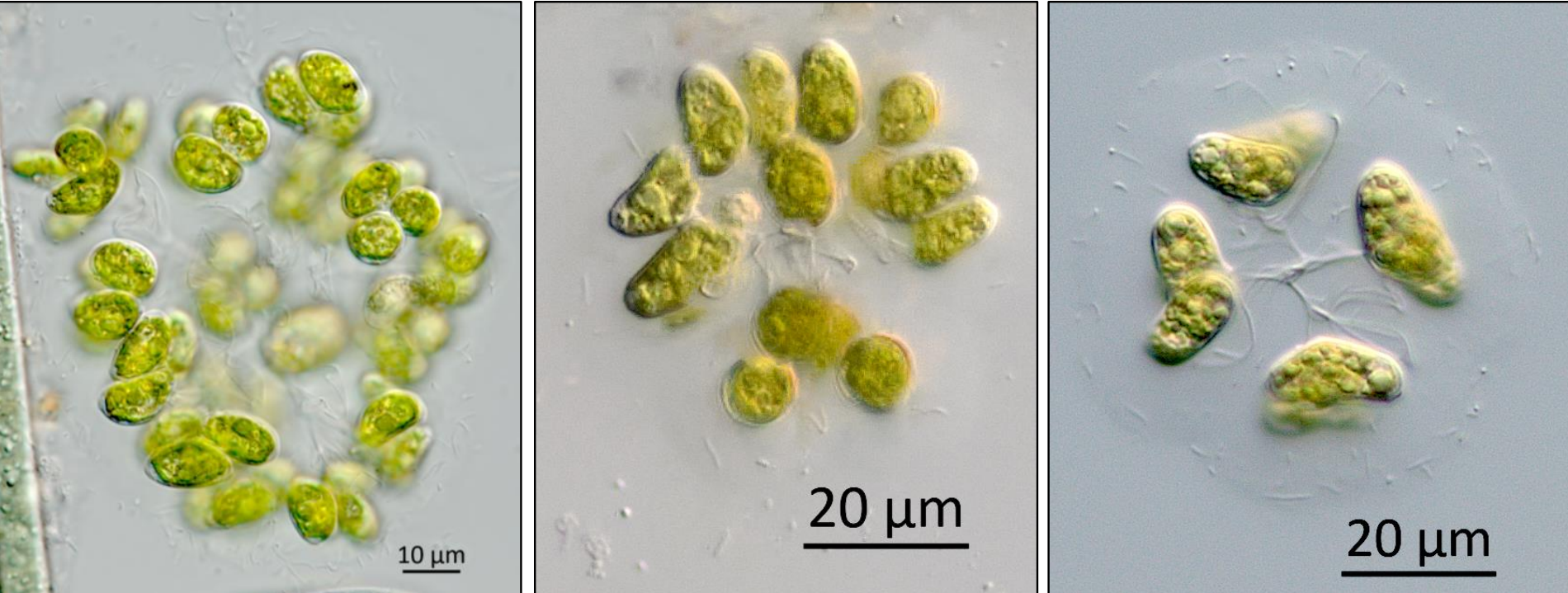
Dimorphococcus; Chlorophyta
31
What is this? Group?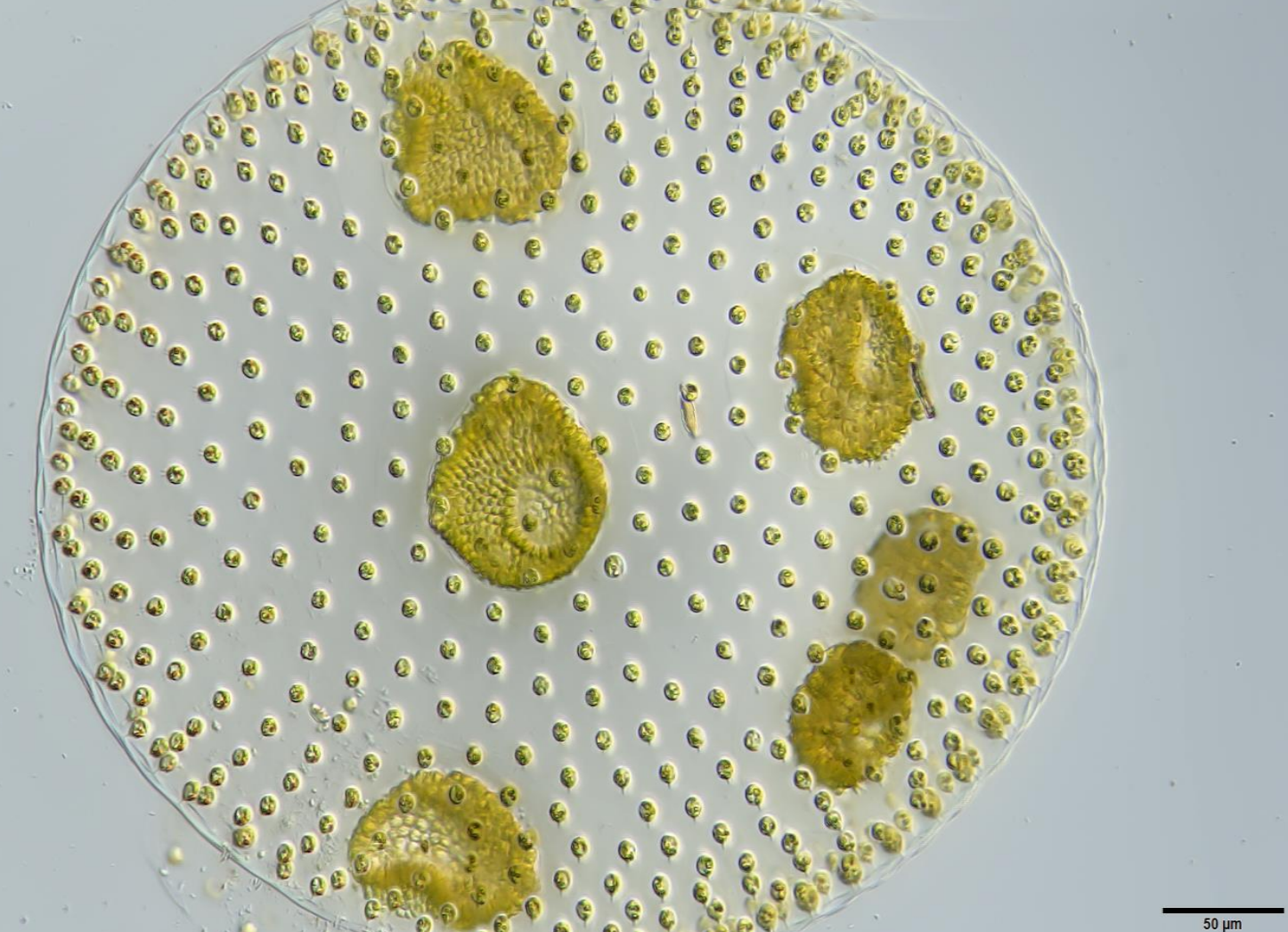
Volvox; Chlorophyta
32
What is this? Group?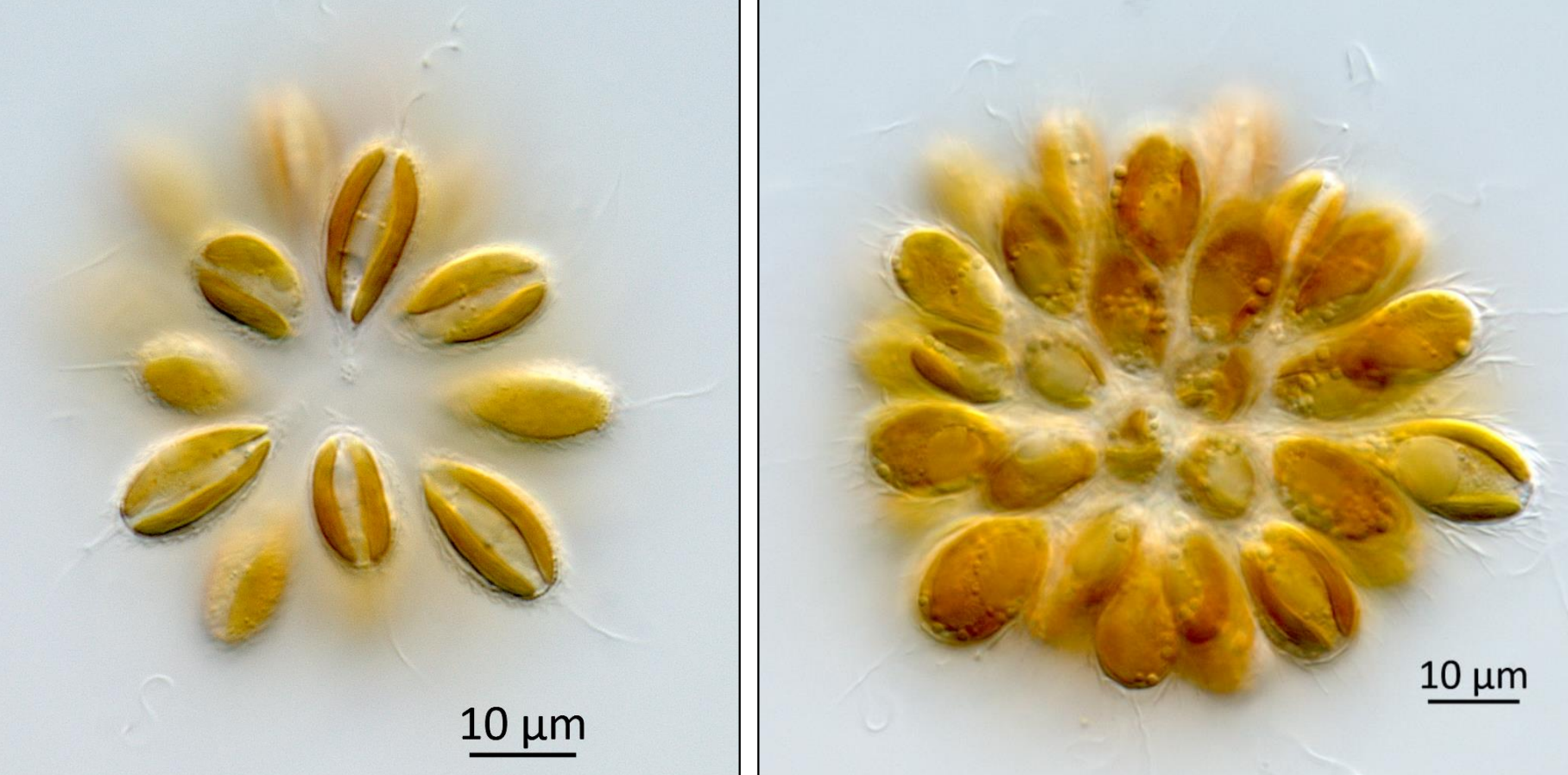
Synura; Chrysophyte
33
What is this? Group?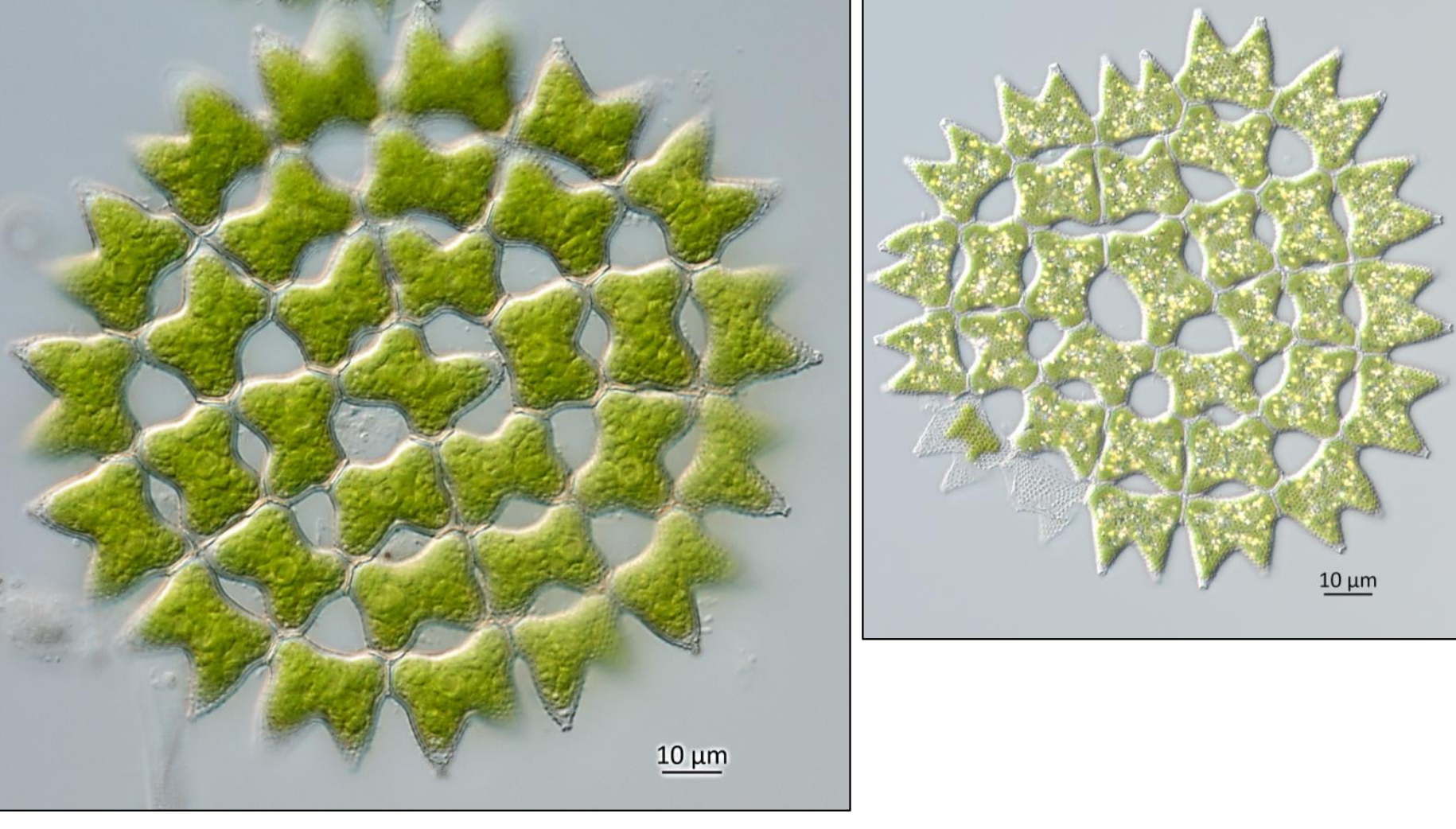
Pediastrum; Chlorophyta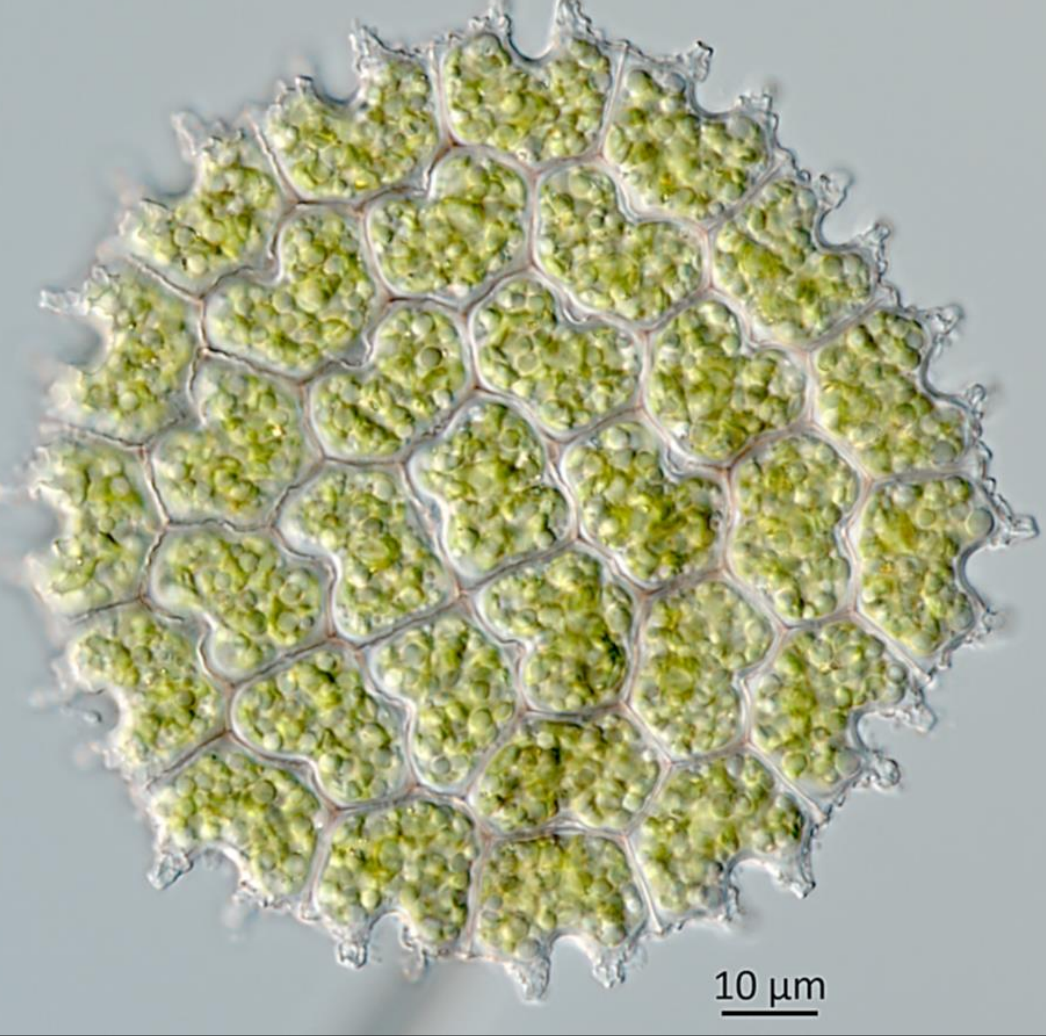
34
What is this? Group?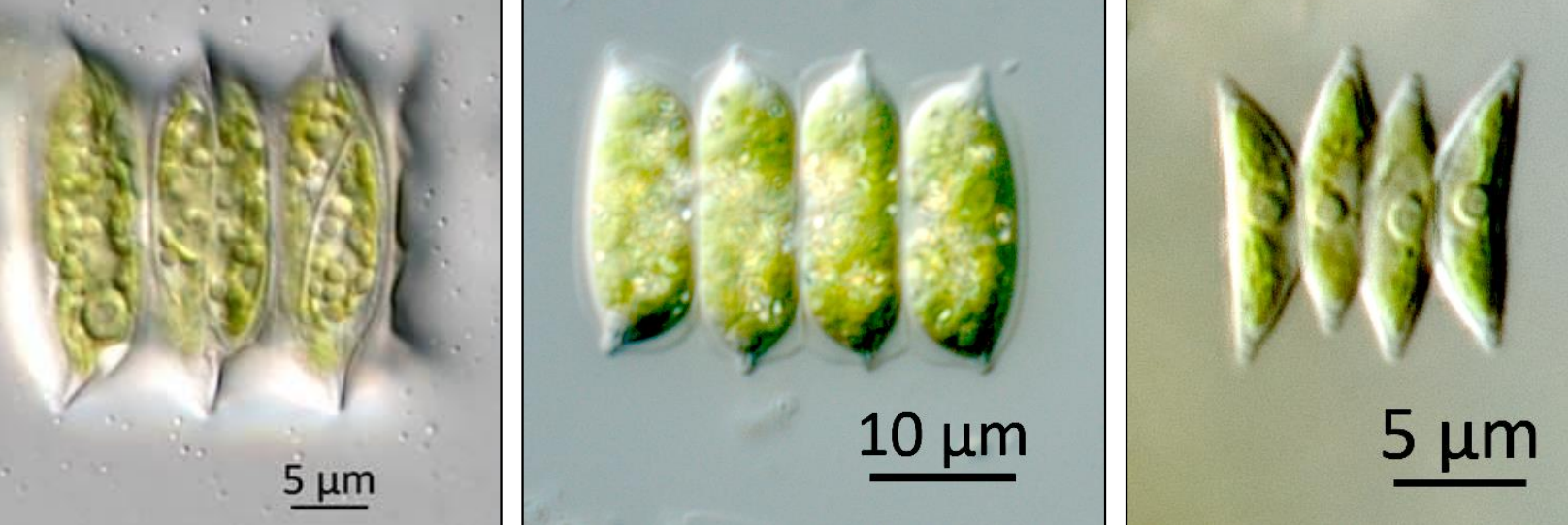
Tetradesmus; Chlorophyta
35
What is this? Group?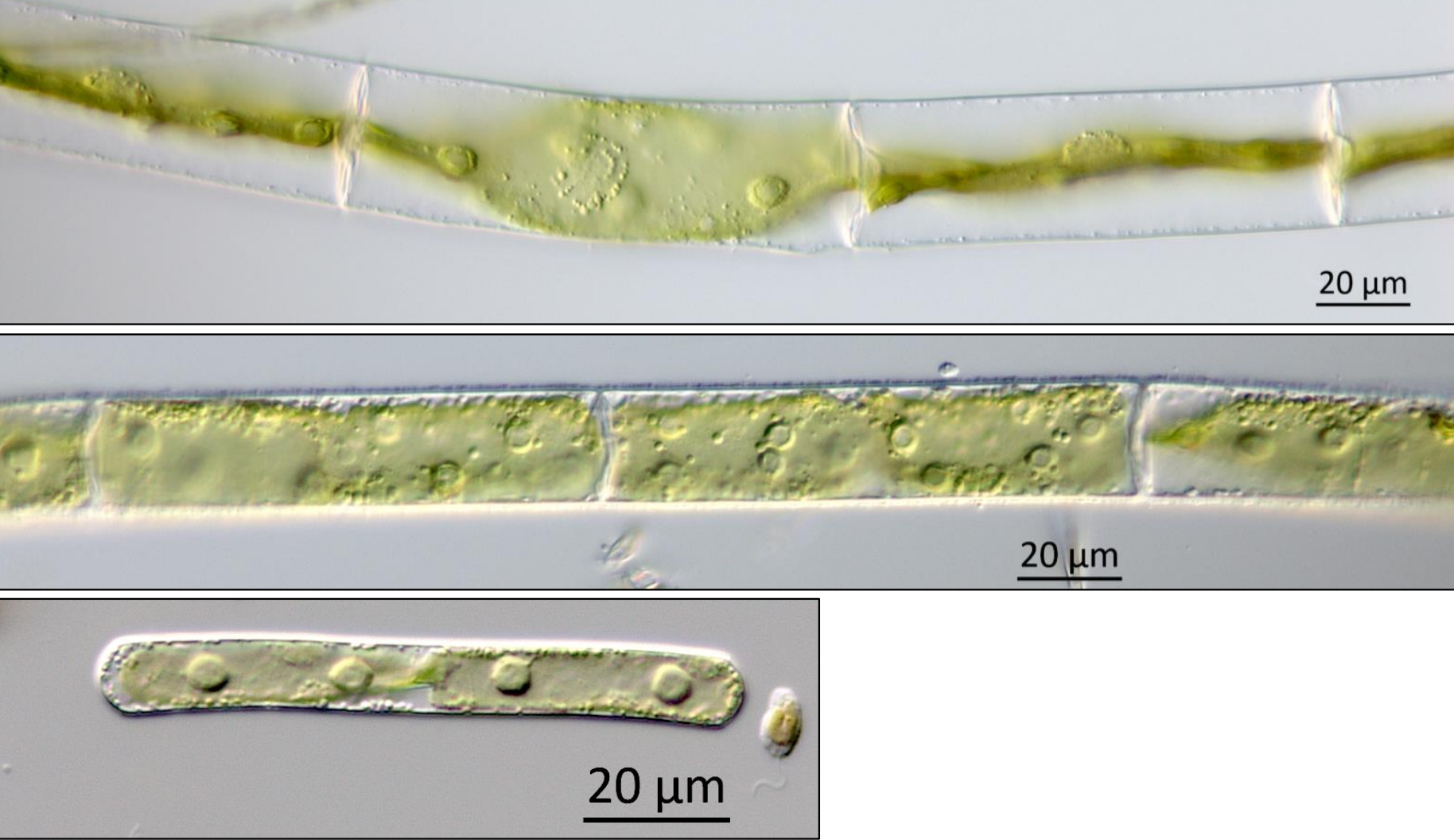
Mougeotia; Charophyta
36
What is this? Group?
Onychonema; Charophyta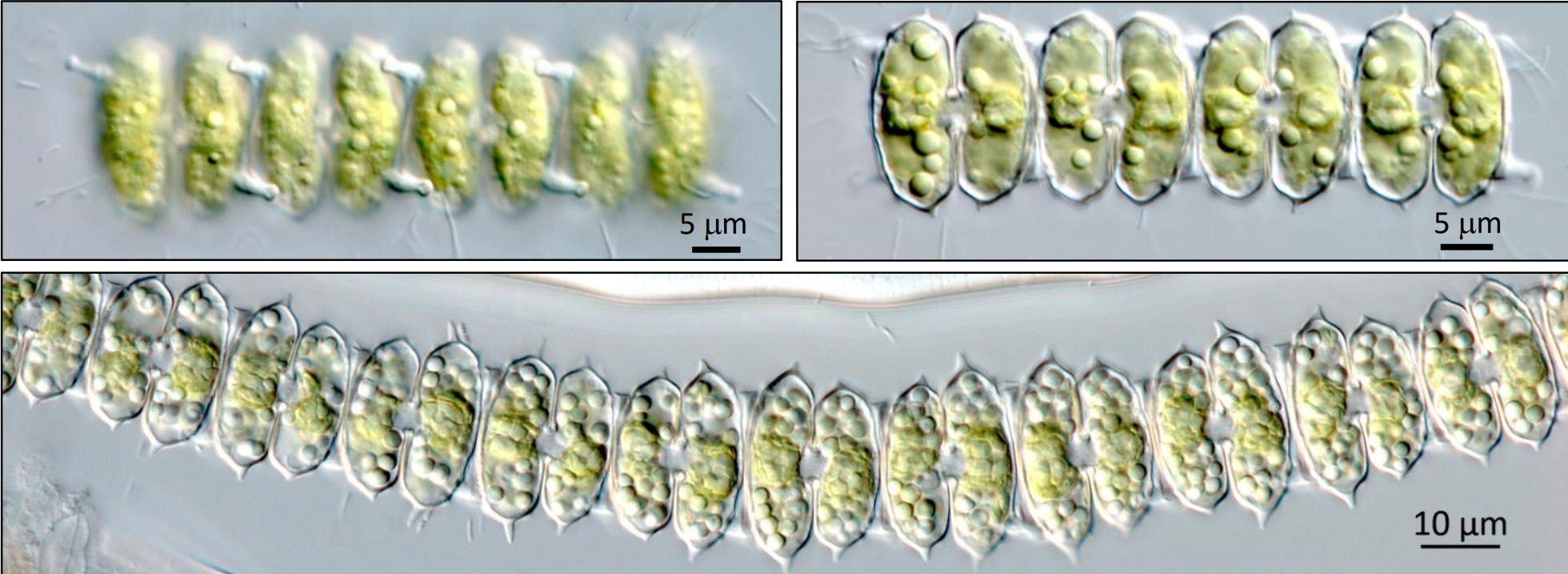
37
What is this? Group?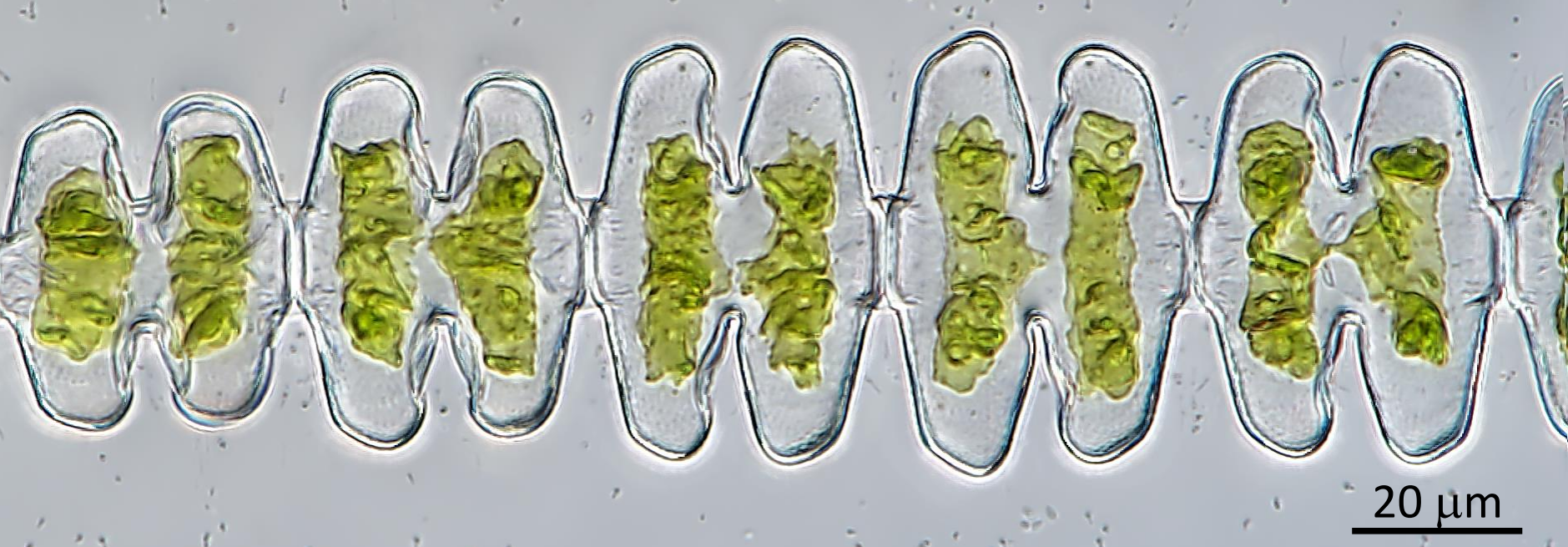
Spondylosium; Charophyta
38
What is this? Group?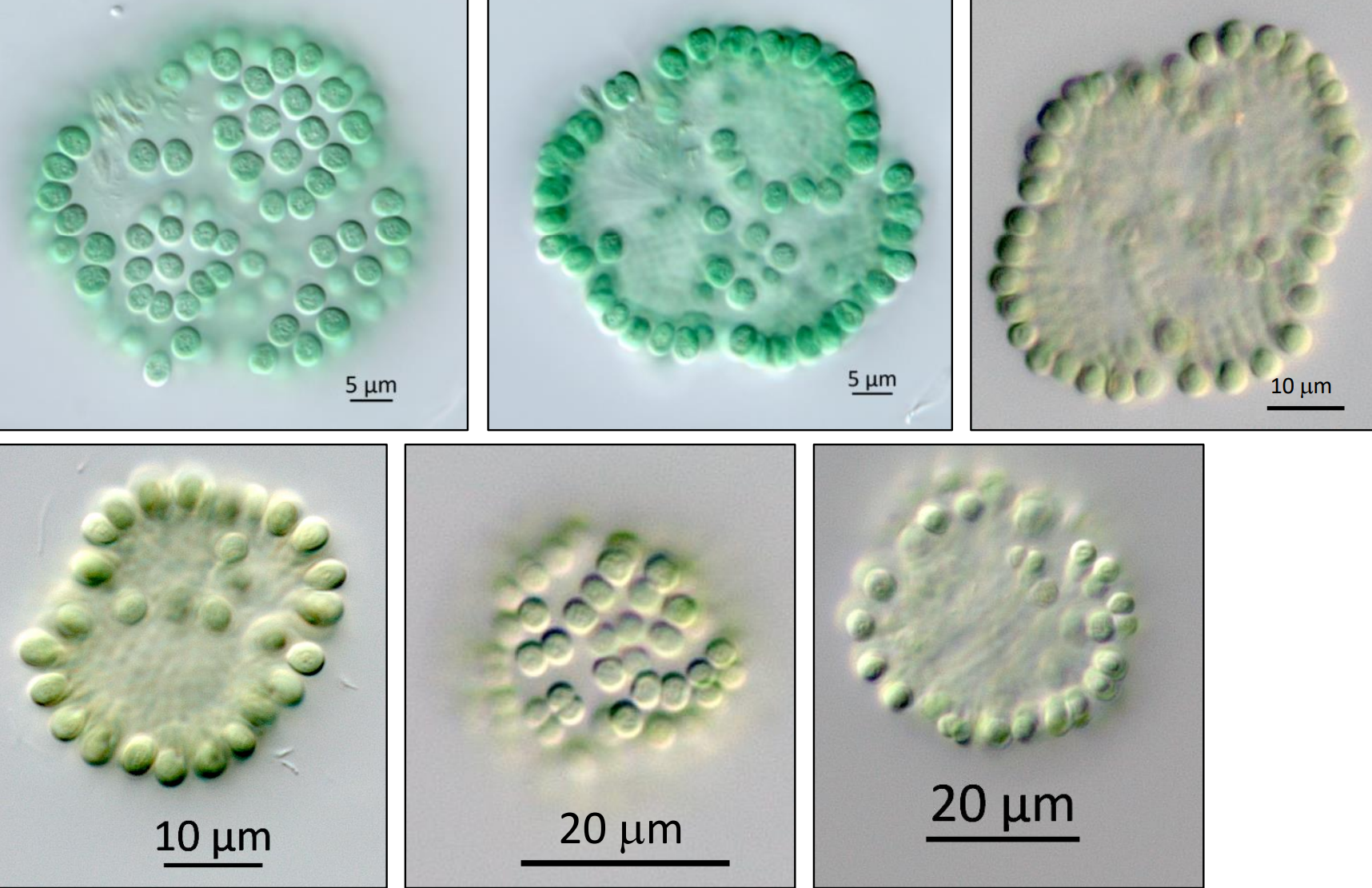
Coelosphaerium; Cyanobacteria
39
What is this? Group?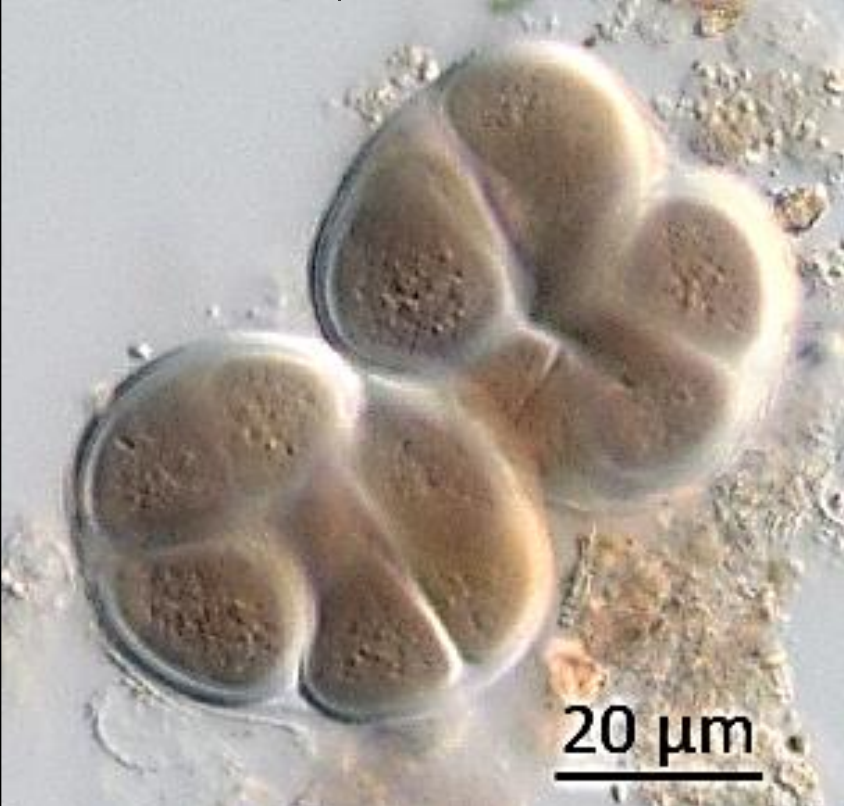
Chroococcopsis; Cyanobacteria
40
What is this? Group?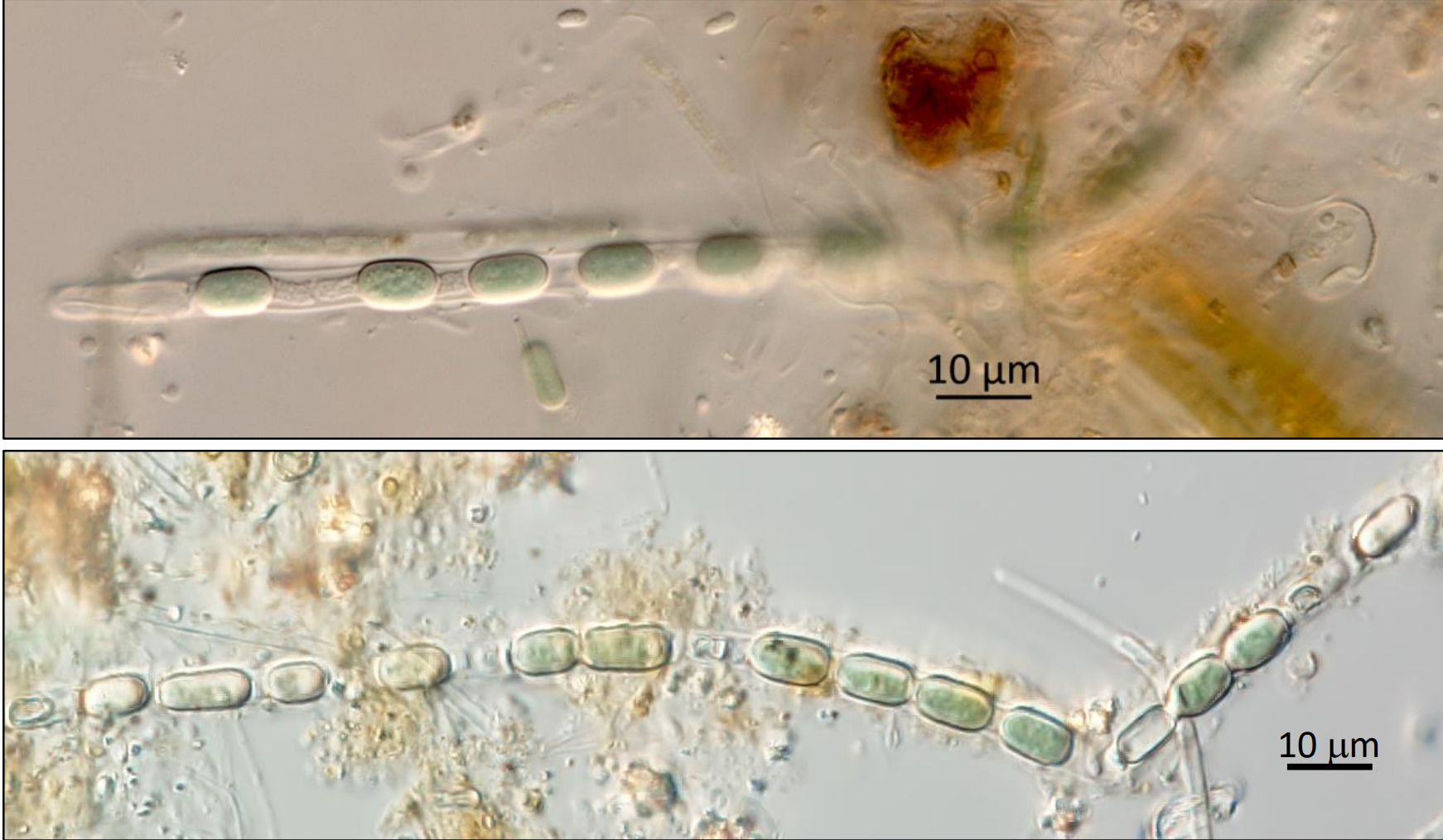
Fortiea; Cyanobacteria
41
What is this? Group?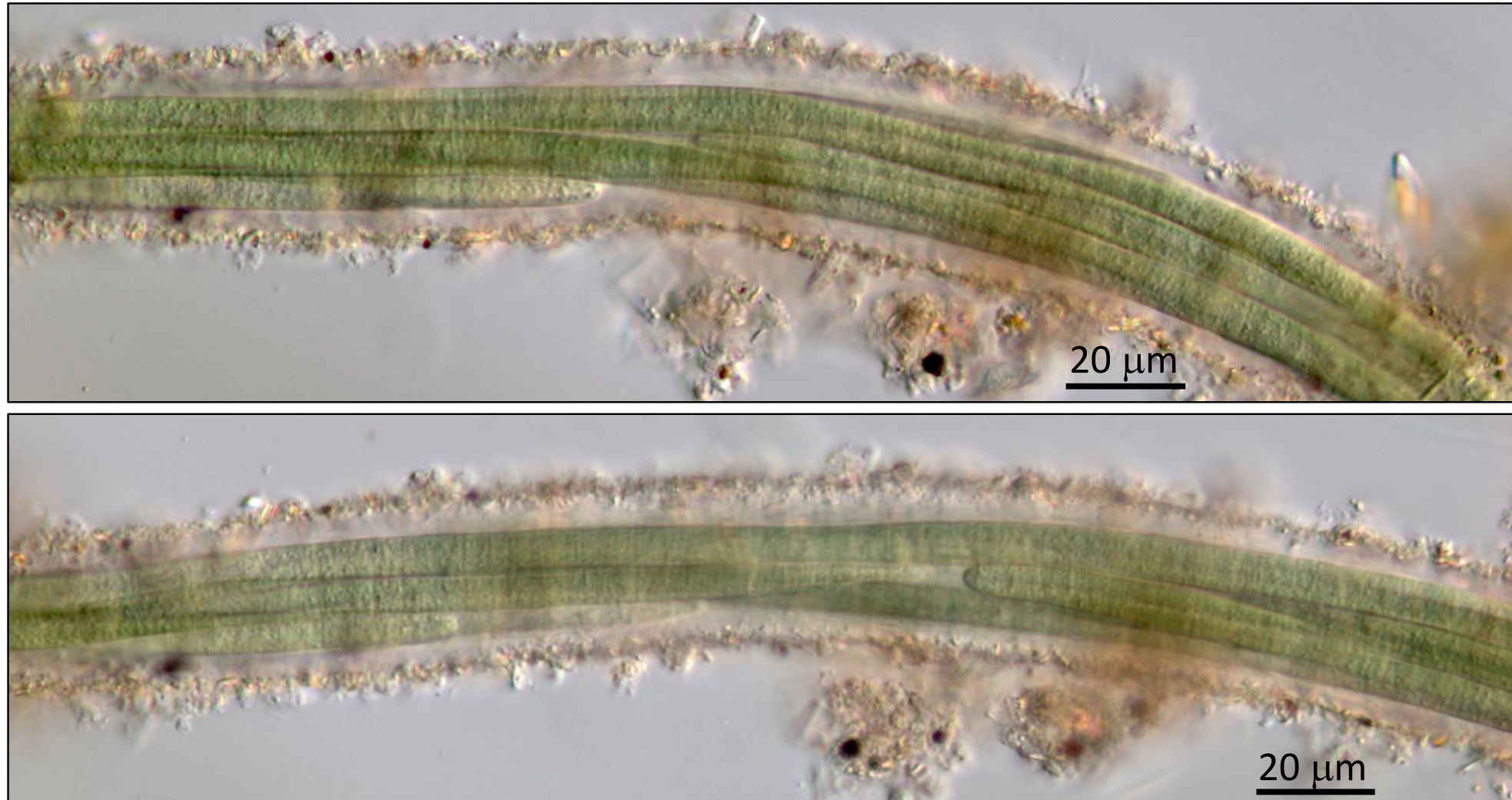
Coleofasciculus; Cyanobacteria
42
What is this? Group?
Penium; Charophyta
43
What can aid flotation?
Gas vescicle = aerotope
44
Diatom categories
Centric, eunotoid, araphid, and raphid (monoraphid and biraphid (symmetrical biraphids and asymmetrical biraphids))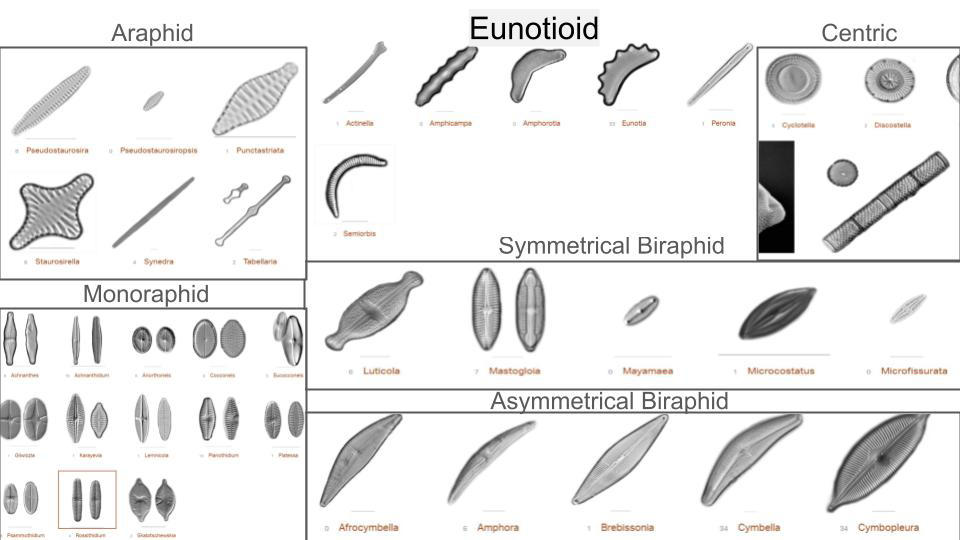
45
What is this?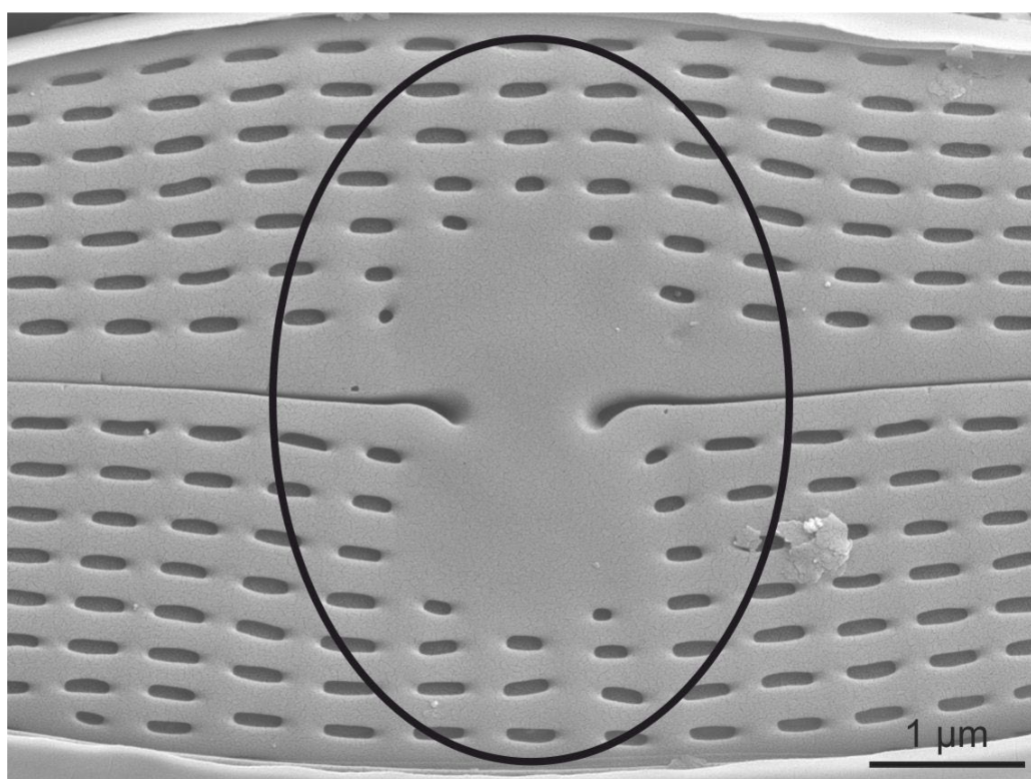
Central area- area at centre of valve, between the central raphe endings and the central striae.
46
What shape chloroplast? 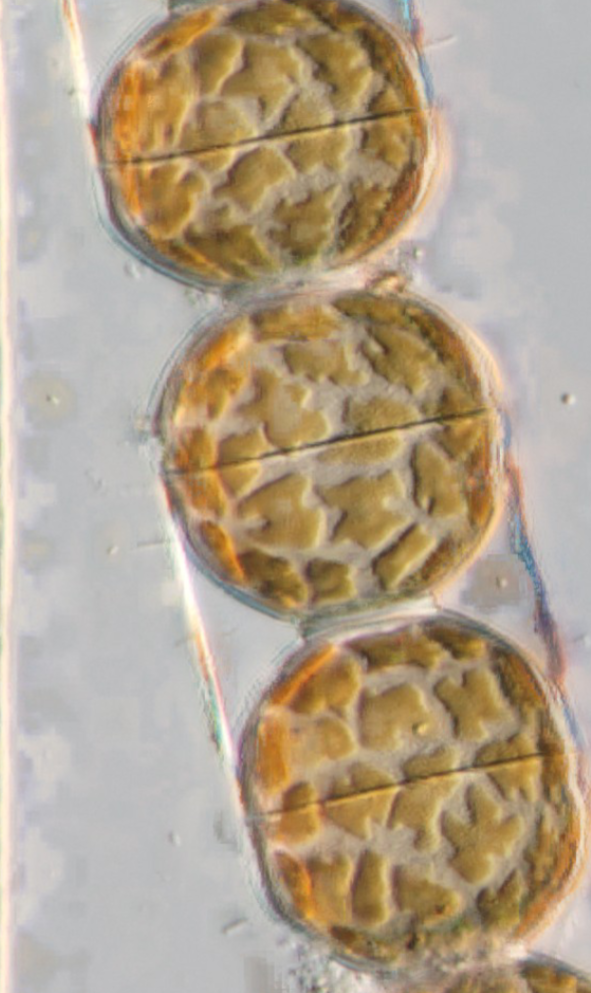
Discoid- Round chloroplast shape
47
What is this? Group?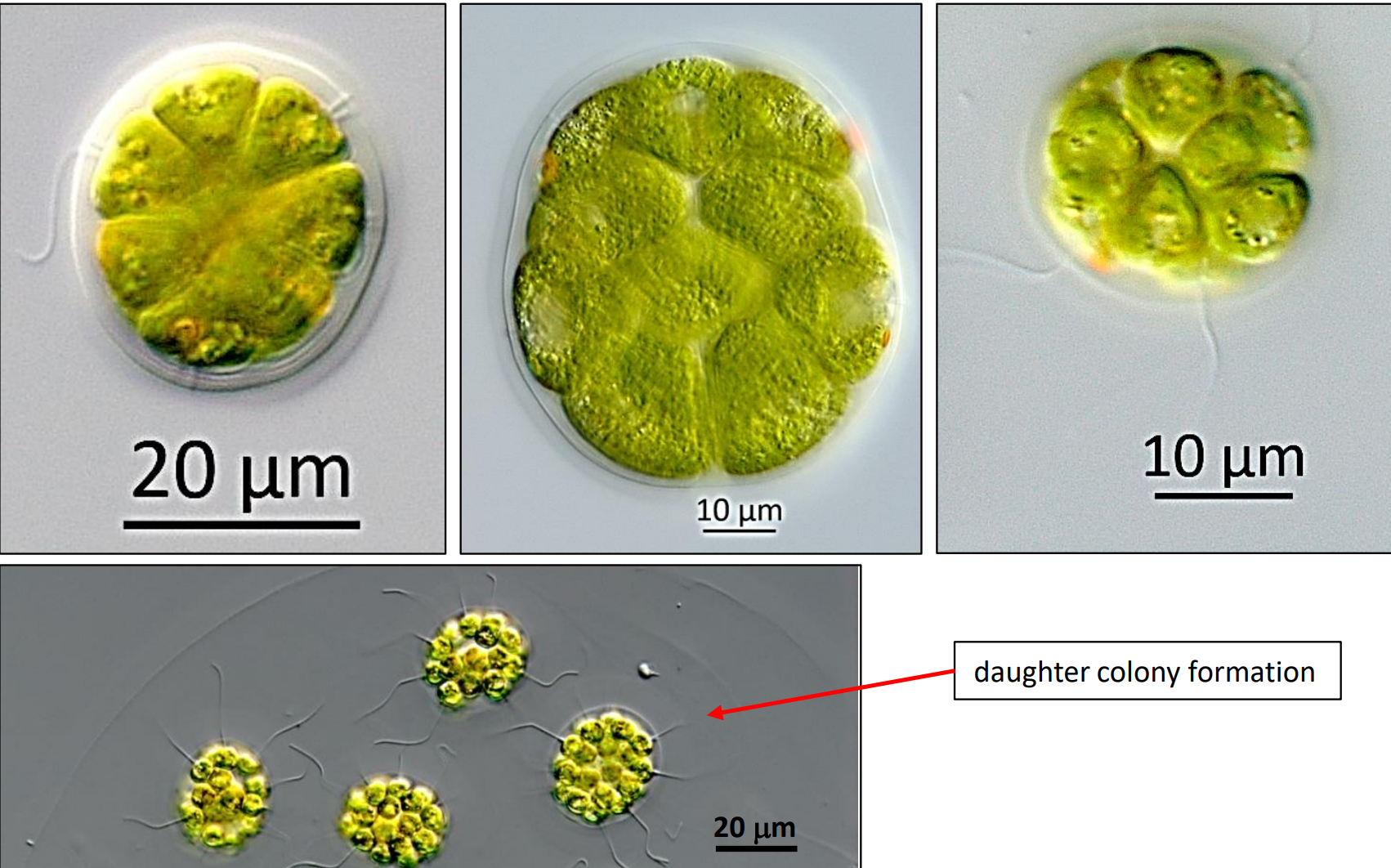
Pandorina; Chlorophyta
48
What is the silica deposition vesicle (SDV)? Everything else about diatom cell walls.
-Silica deposition vesicle (SDV)-Silica structure formation takes place inside this membrane-bound organelle, a modified golgi apparatus w/ a template to make the patterning
-Cell walls are rigid and resistent to acid
-Diatoms absorb silica as a liquid (often from sand)
-Has 4 membranes around the outside of cell wall
-As spring ends, silica becomes limited and diatoms stop growing
-Cell walls are rigid and resistent to acid
-Diatoms absorb silica as a liquid (often from sand)
-Has 4 membranes around the outside of cell wall
-As spring ends, silica becomes limited and diatoms stop growing
49
“Dino” is the Greek word for ______?
"whirling“
50
Do Xanthophytes have an eye spot?
No
51
What is this? Group?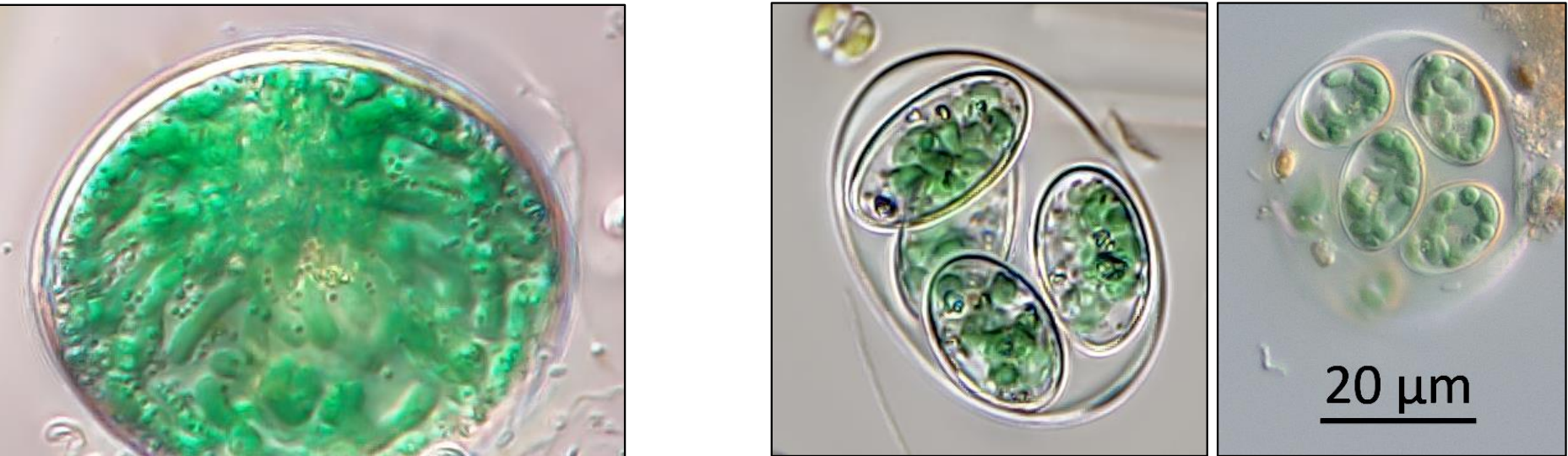
Glaucocystis; Glaucophyta
52
Why do diatoms need holes in their cell wall?
To exchange nutrients and gasses (goes through pores)
53
What is a raphe?
A slit in the middle to allow for movement 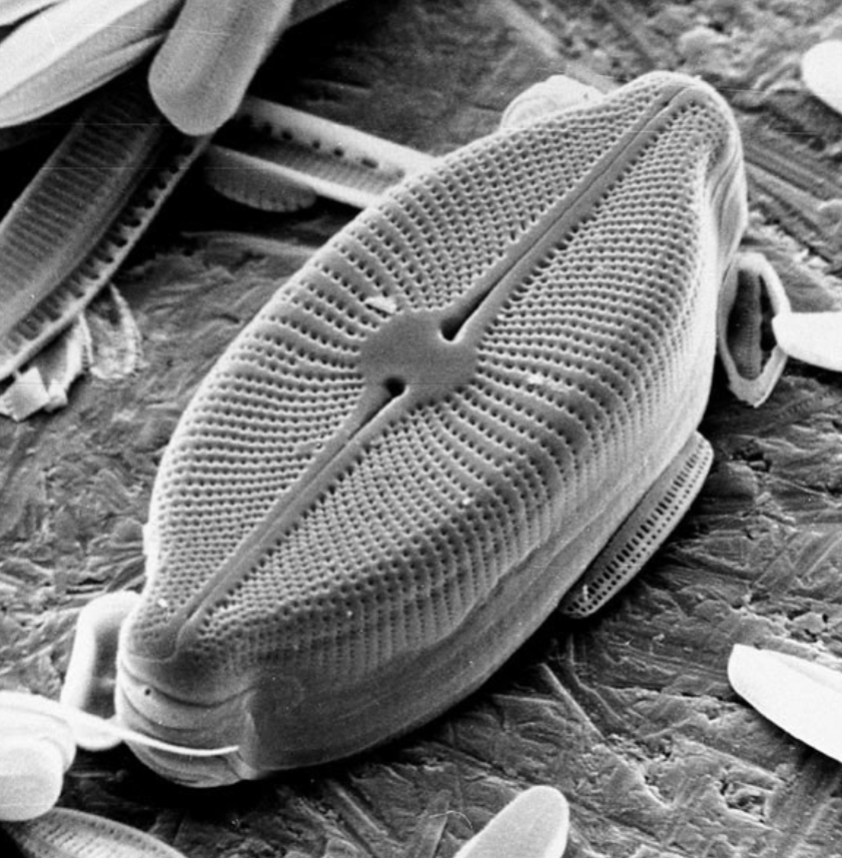
54
What is an araphid diatom?
Have NO raphe
55
Are diatoms diverse? Do they produce oxygen?
-Most diverse protists on earth
-They produce 50% of the oxygen we breath (mostly from oceans)
-They produce 50% of the oxygen we breath (mostly from oceans)
56
Diatom pigments. Things about their chromoplast.
-Chlorophyll, a, c’s, and carotenoids (xanthophylls that are brown)
-Extra membranes around the chromoplast
-Stack of three thylakoids
-Diatoms adapt to light and nutrients-> Chromoplast will adjust depending on light intensity
-Extra membranes around the chromoplast
-Stack of three thylakoids
-Diatoms adapt to light and nutrients-> Chromoplast will adjust depending on light intensity
57
What is this? Group?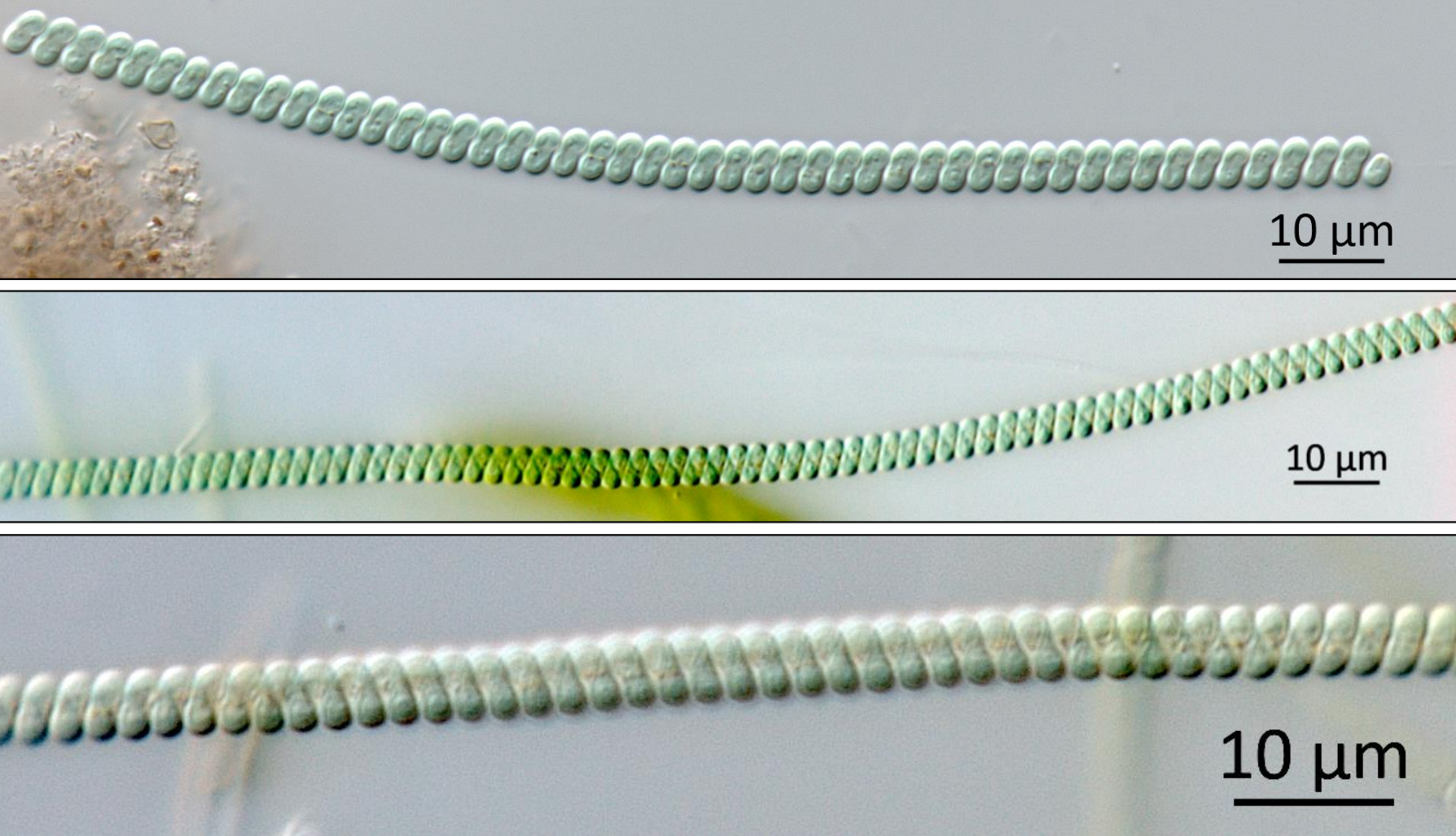
Spirulina; Cyanobacteria
58
What is this? Group?
Pseudanaebena; Cyanobacteria
59
What is this? Group?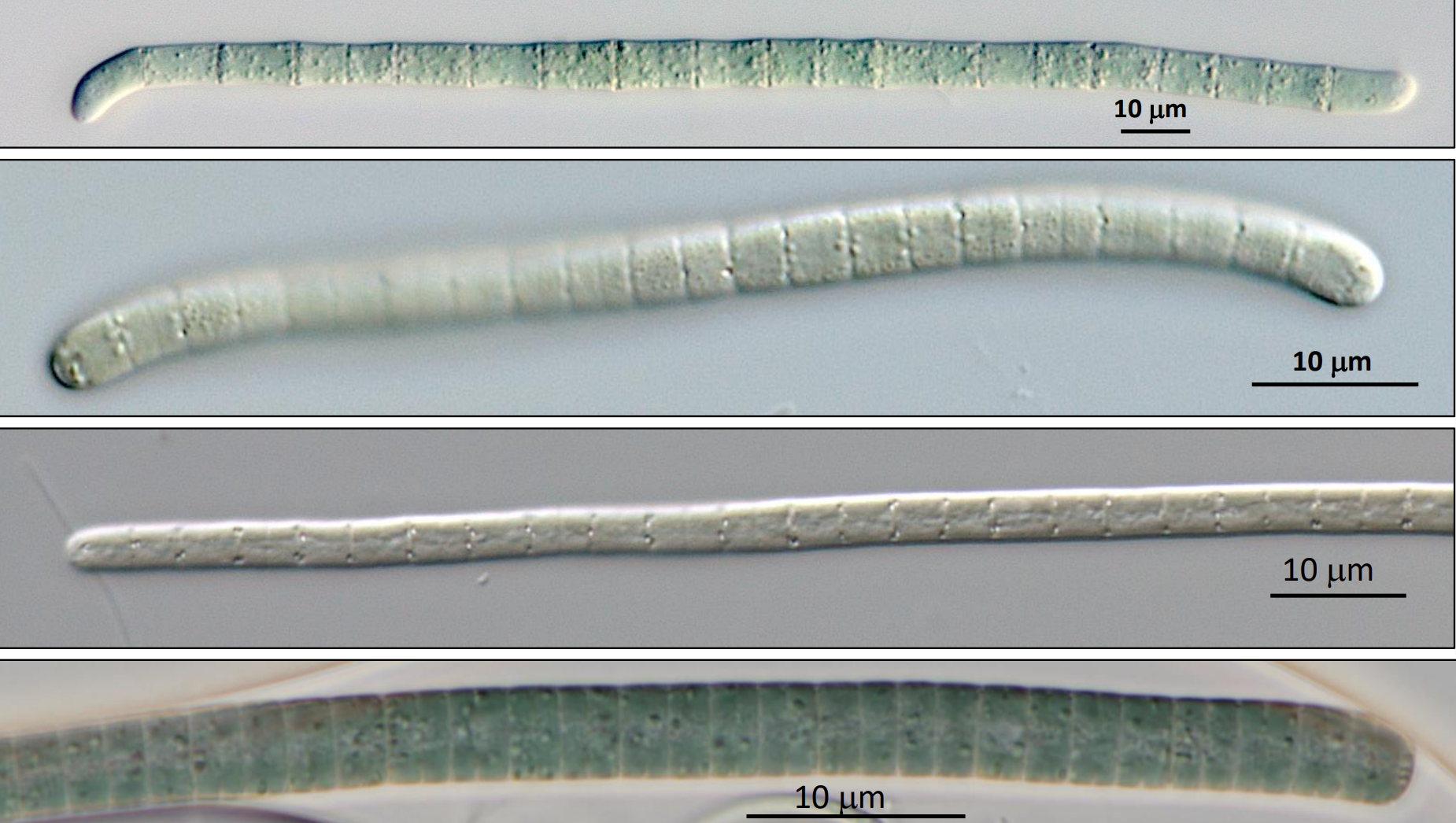
Phormidium; Cyanobacteria
60
What is this? Group?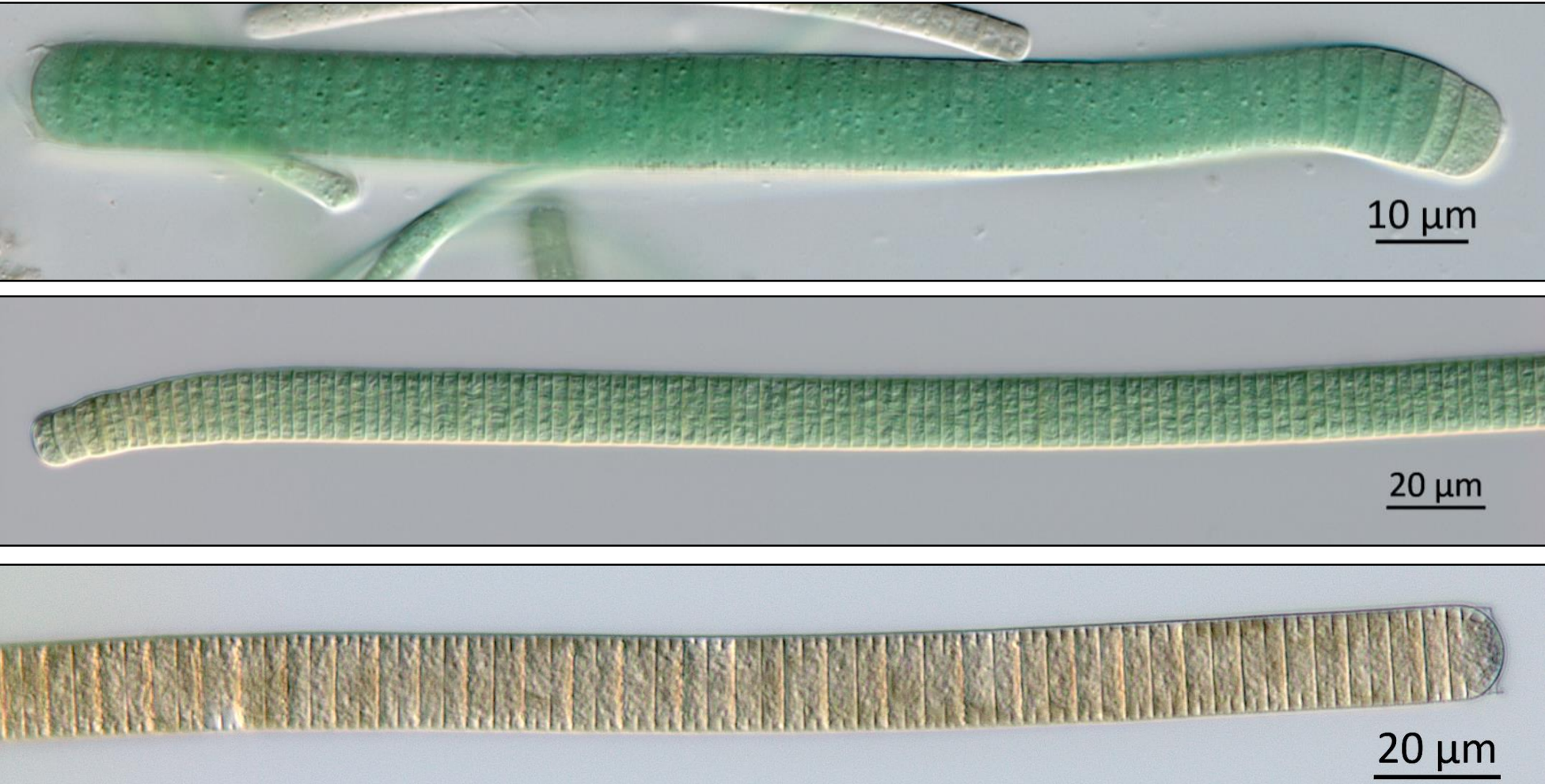
Oscillatoria; Cyanobacteria
61
What is this? Group?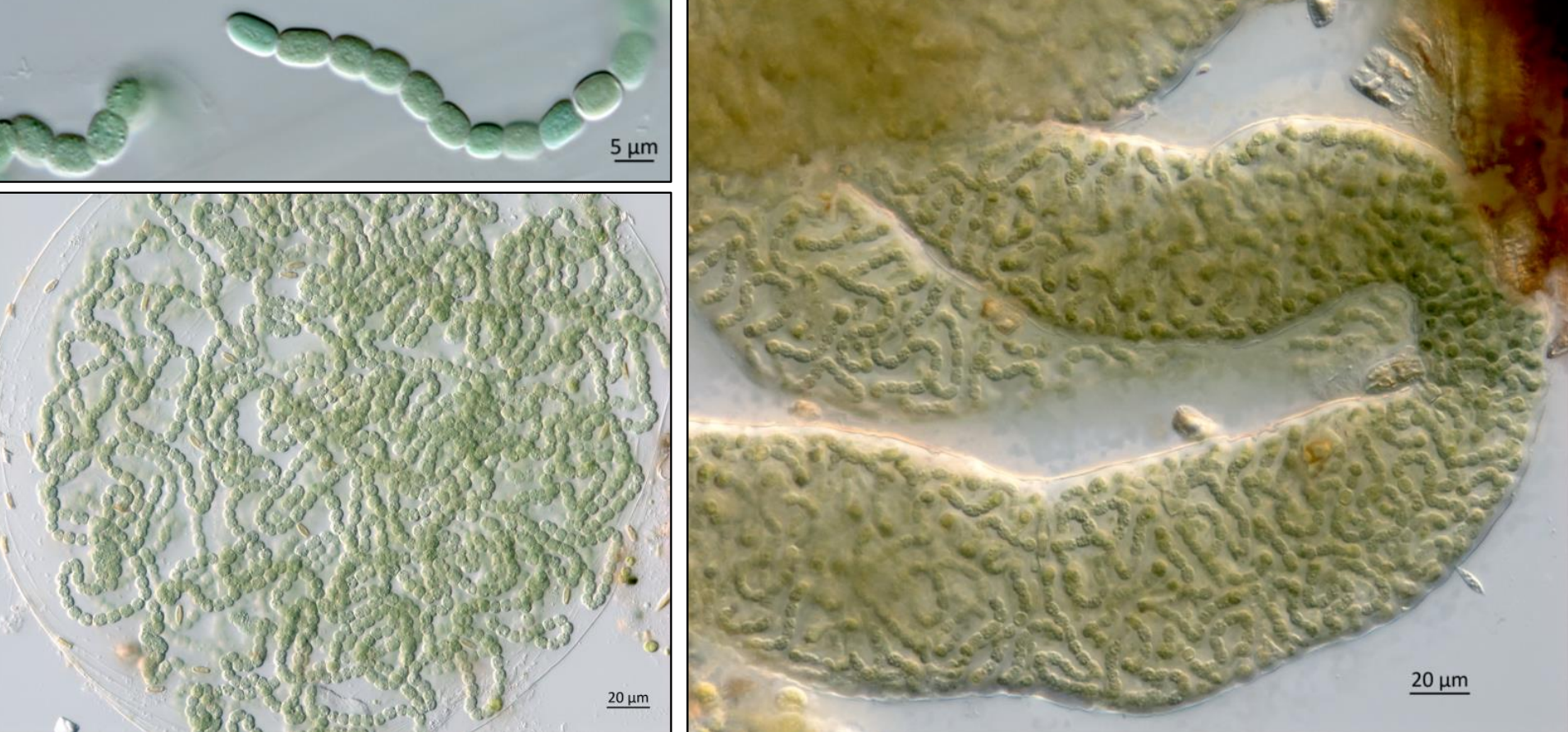
Nostoc; Cyanobacteria
62
What is this? Group?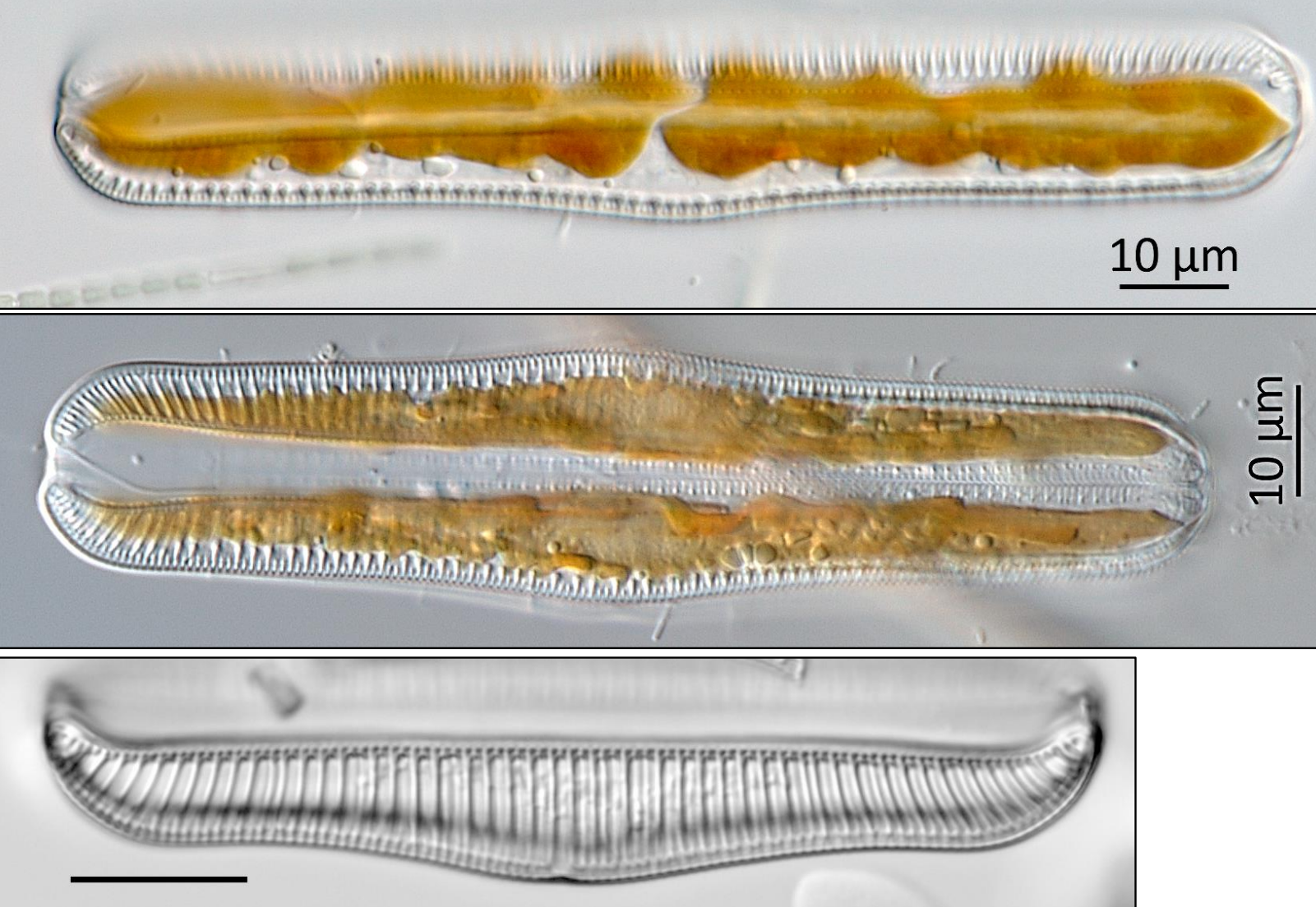
Epithemia; Diatom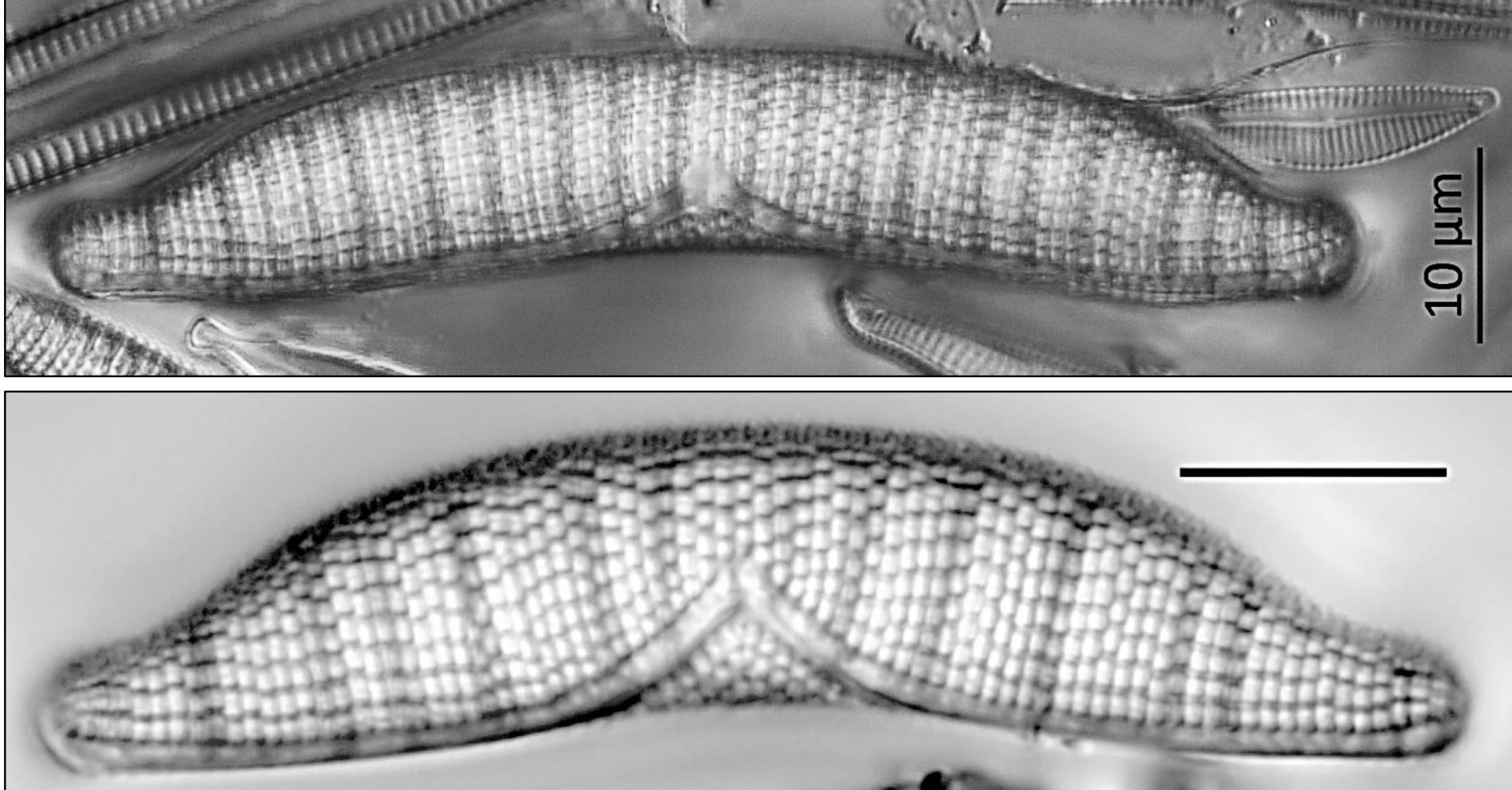
63
What is this? Group?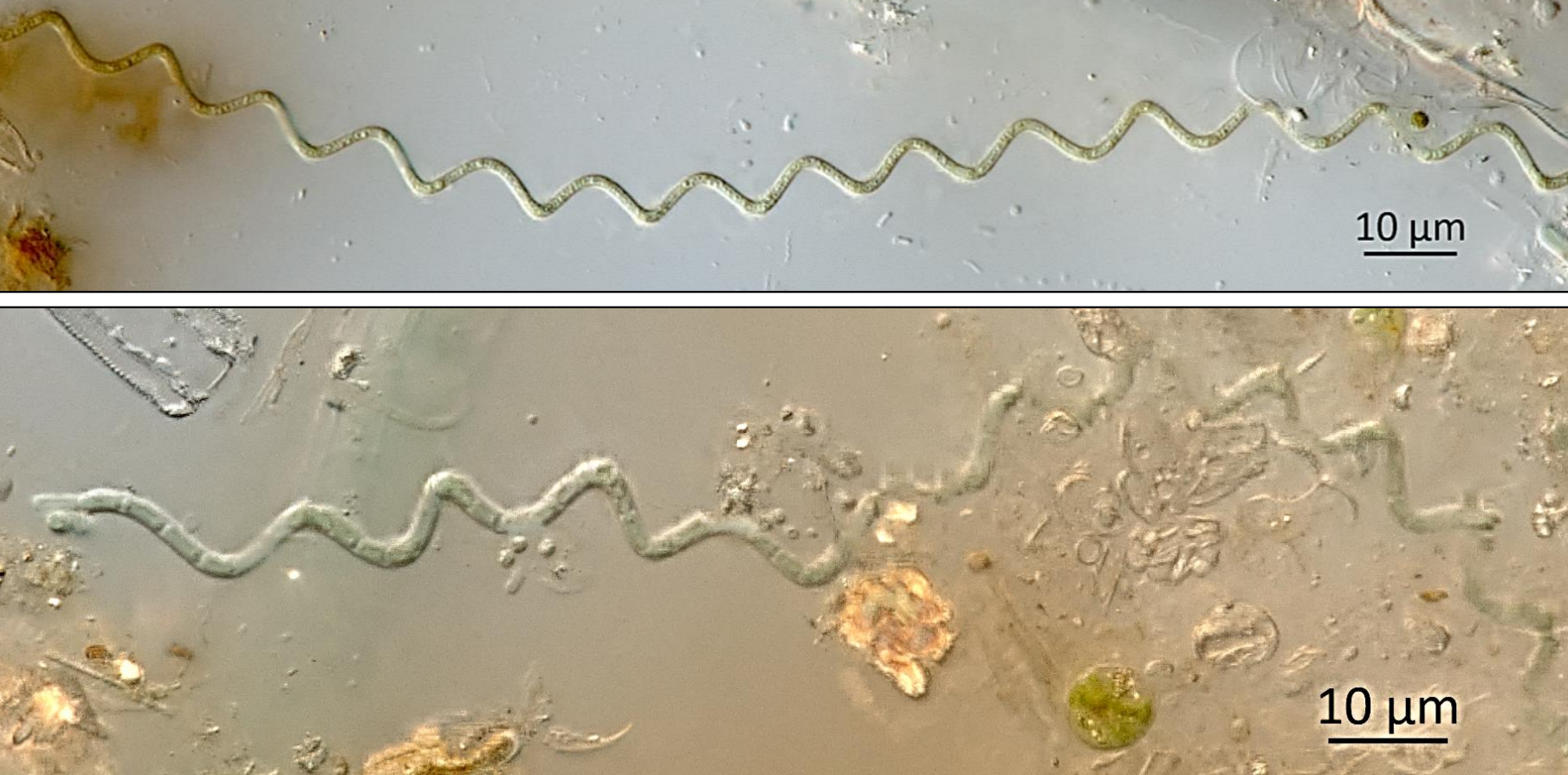
Leptolyngbya; Cyanobacteria
64
What is this? Group?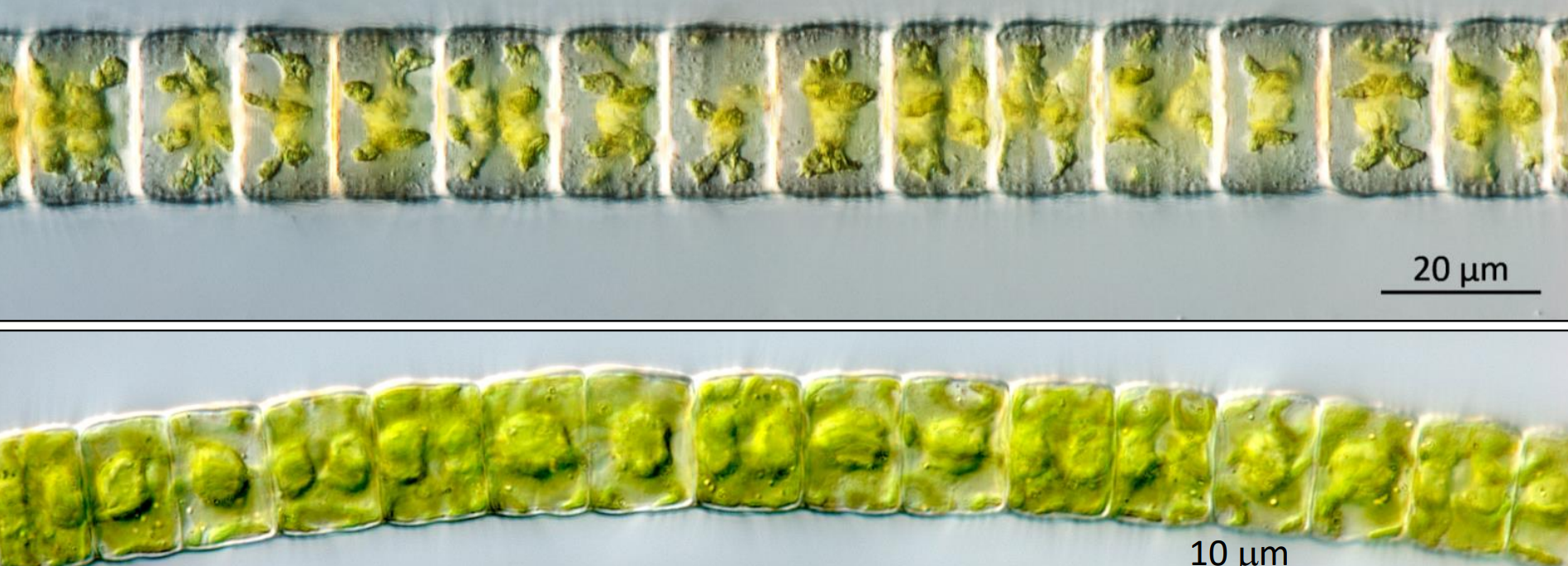
Hyalotheca; Charophyta
65
What is this? Group?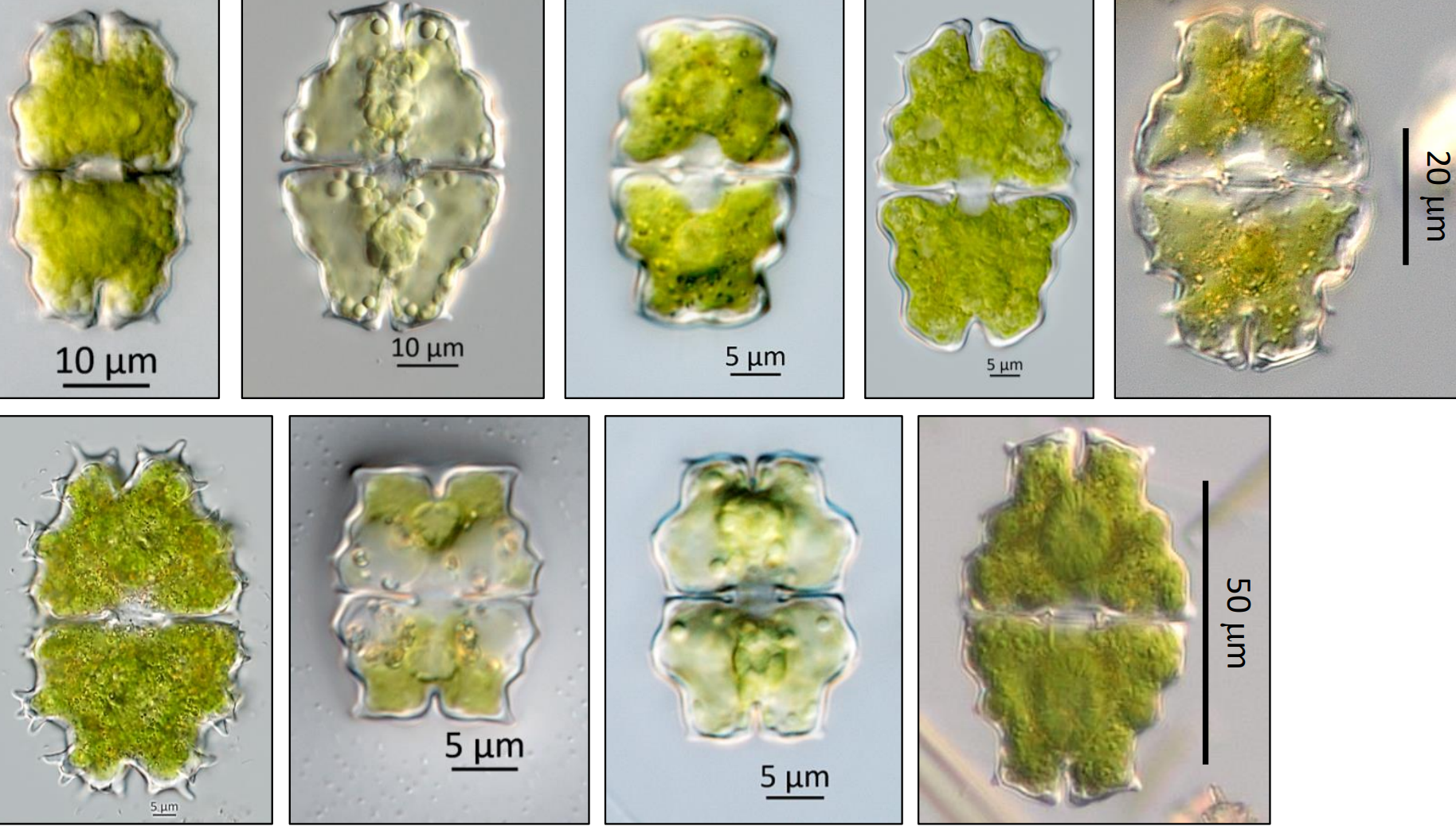
Euastrum; Charophyta
66
Diatom storage compounds?
Lipids and chrysolaminarin
67
What organism(s) do invertebrate prefer/need to eat?
-Diatoms are essential foods for invertebrates
-Diatoms feed zooplankton (most healthy for them/need the diatoms’ oil)
-Diatoms feed zooplankton (most healthy for them/need the diatoms’ oil)
68
What is this? Group?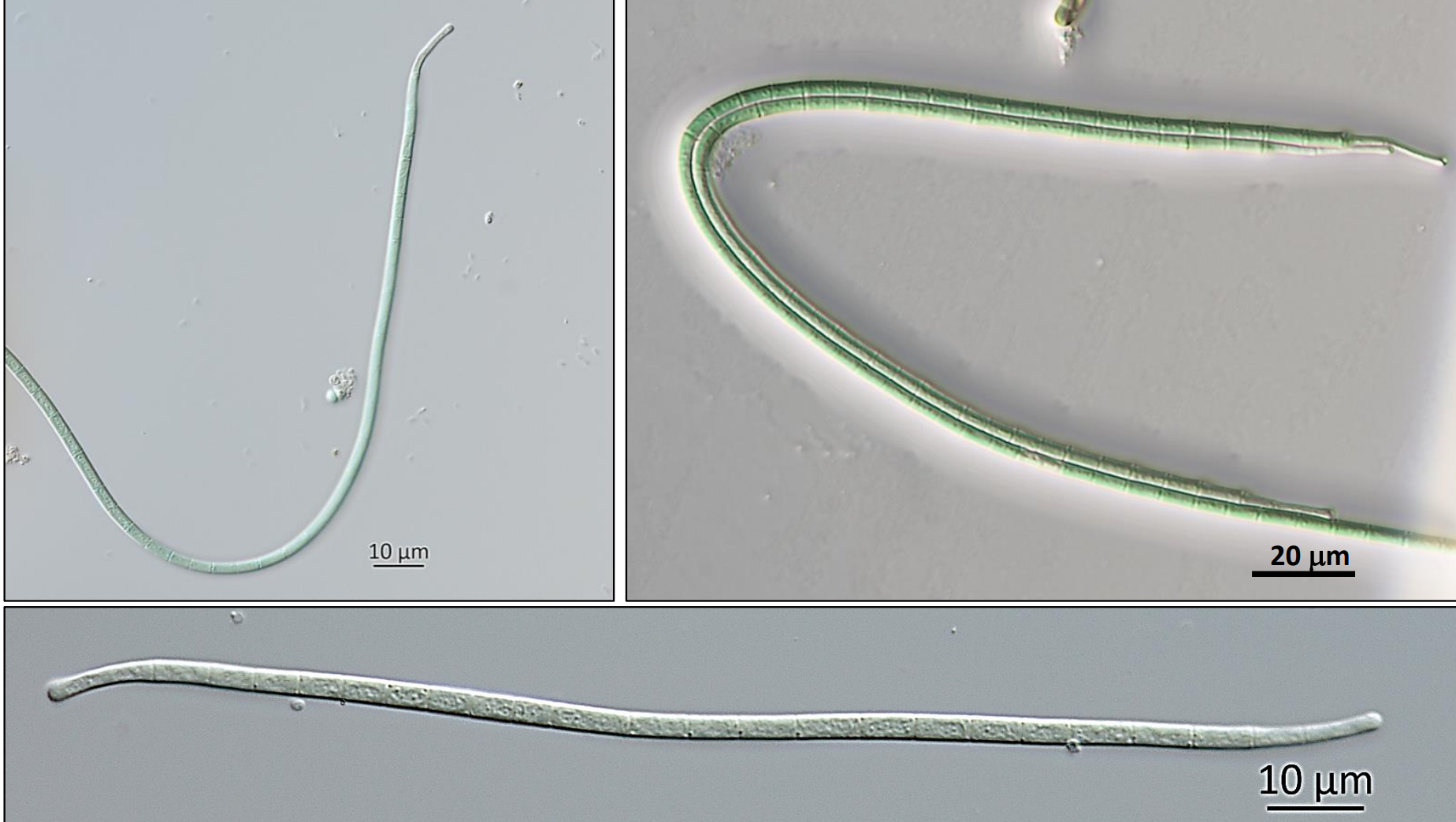
Geitlerinema; Cyanobacteria
69
What is this? Group?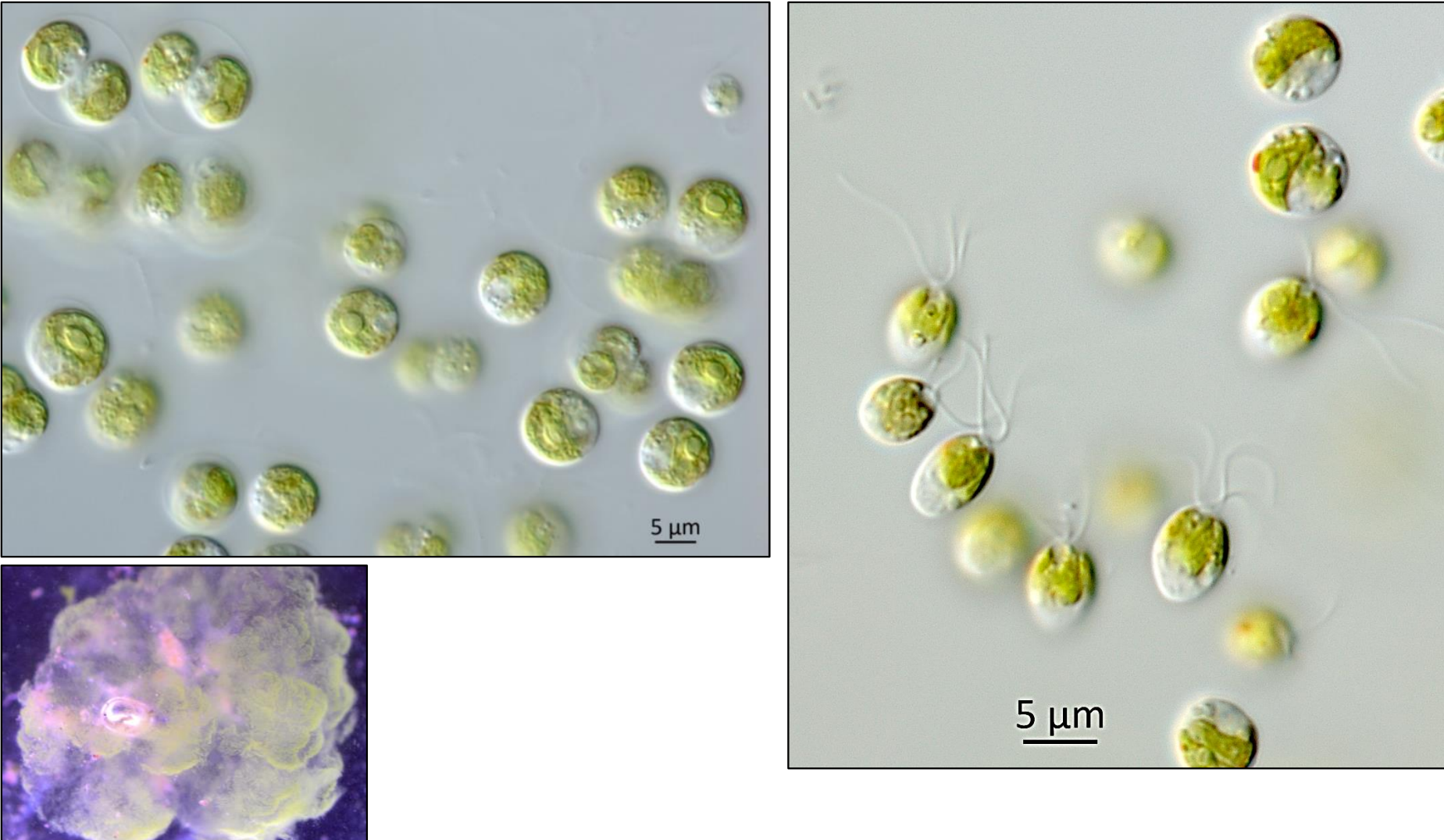
Tetraspora; Charophyta
70
Diatom mucilaginous stalk
Secreted mucilage from the apical pore field which solidifies into a stalk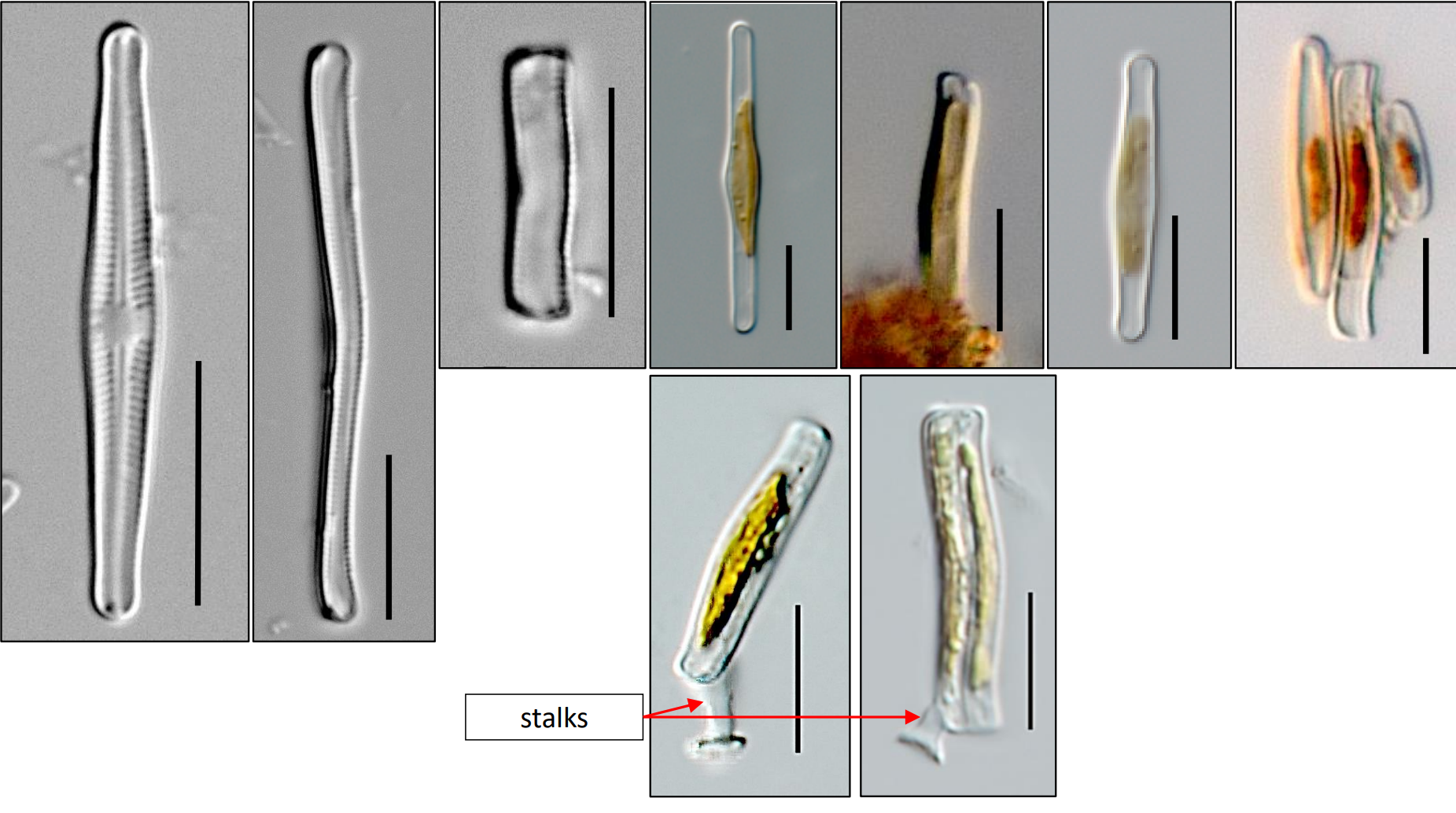
71
What is Didymosphenia and what does it do? What is it called? Why can it be bad?
Invasive diatom which produces mucilaginous stalks, coating boats, rocks, etc.; "Rock snot"; Can alter habitat and food sources for fish and can make recreation difficult or unpleasant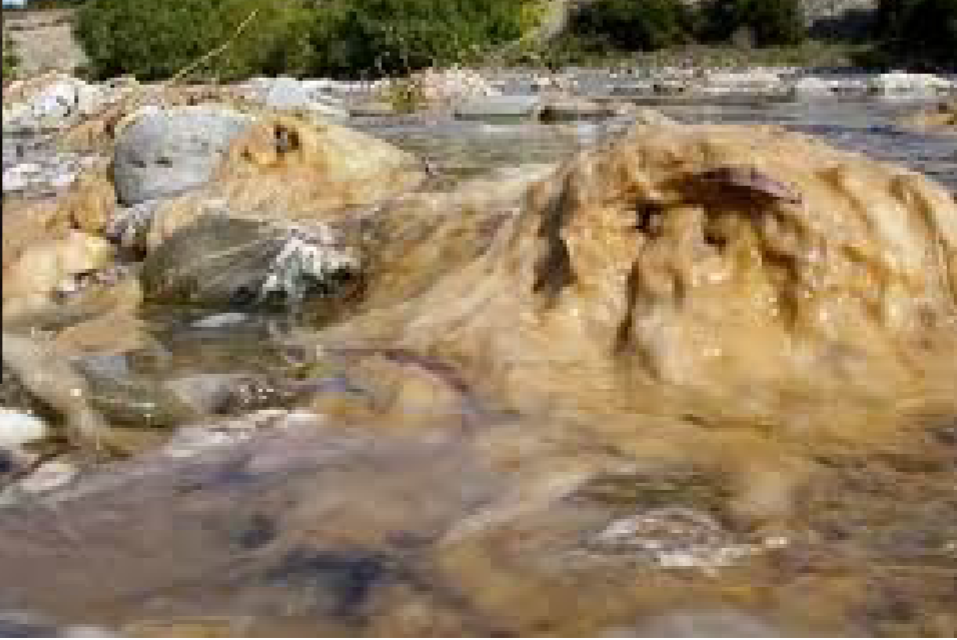
72
What do planktonic diatoms excrete and why?
Planktonic diatoms excrete nano fibrules, or B-chitin, to stay in the water column, due to heavy silica cell walls
73
What is this? Group?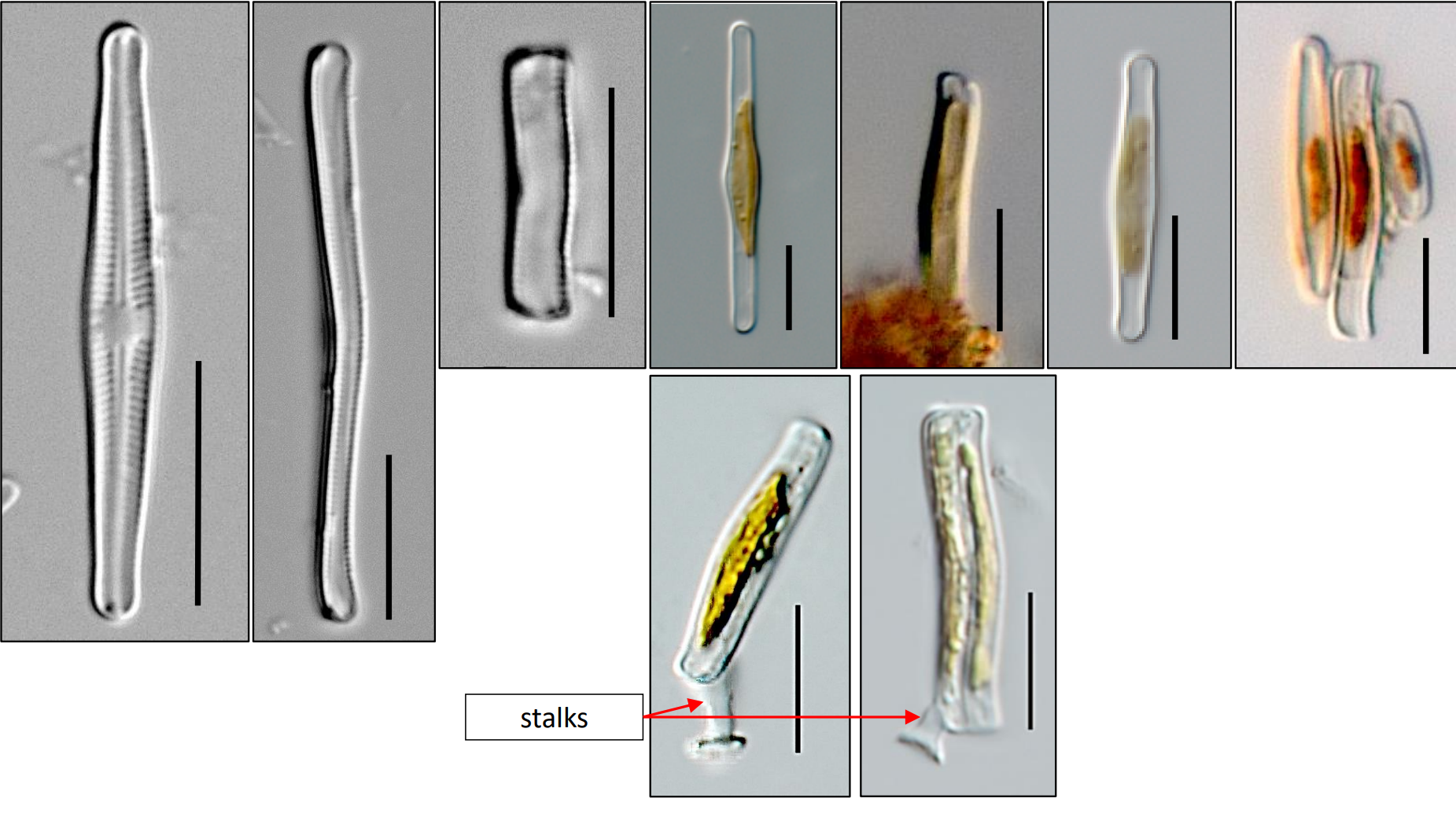
Achnanthidium; Diatom
Secretes a stalk to attach to plants and other algae
Secretes a stalk to attach to plants and other algae
74
Apical axis
Straight down the middle of the diatom (right in half), from end to end
75
Puncti
Slots/holes on diatoms-a mesh of silica to allow for nutrient and gas exchange (diatoms), but to keep out pathogens, etc.
76
What is this? Group?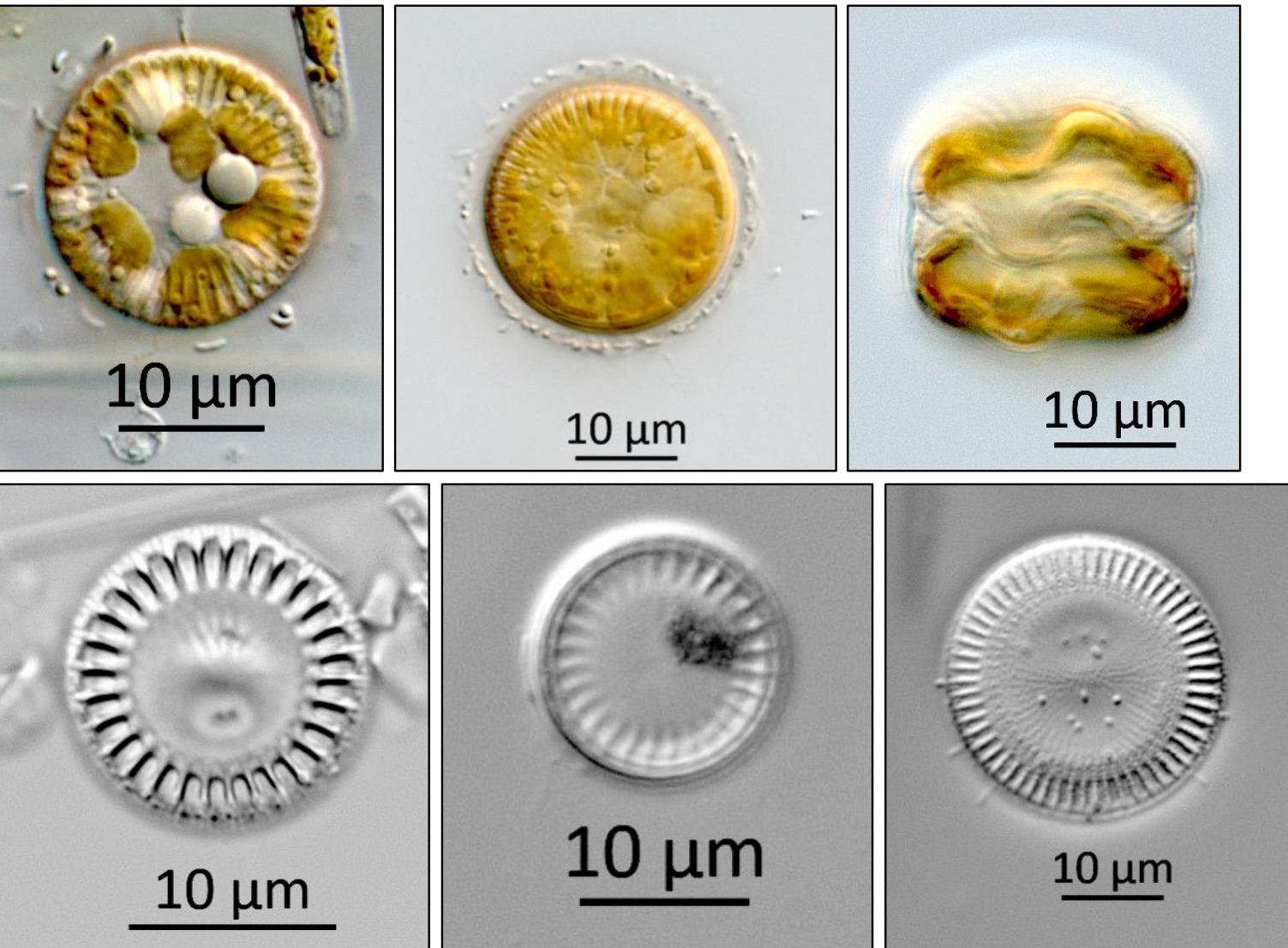
Cyclotella; Diatom
77
What is this? Group?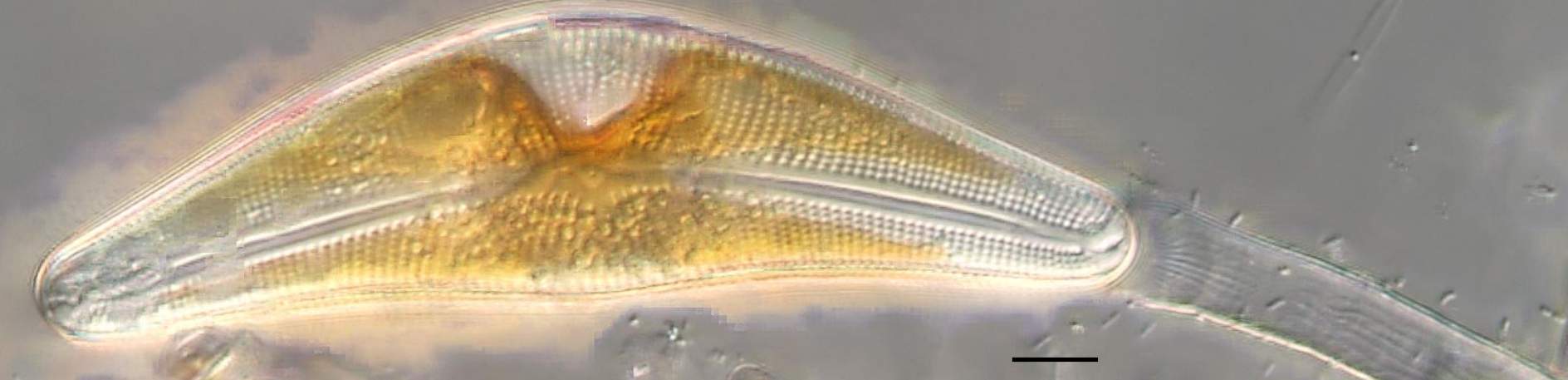
Cymbella; Diatom
78
What is this? Group?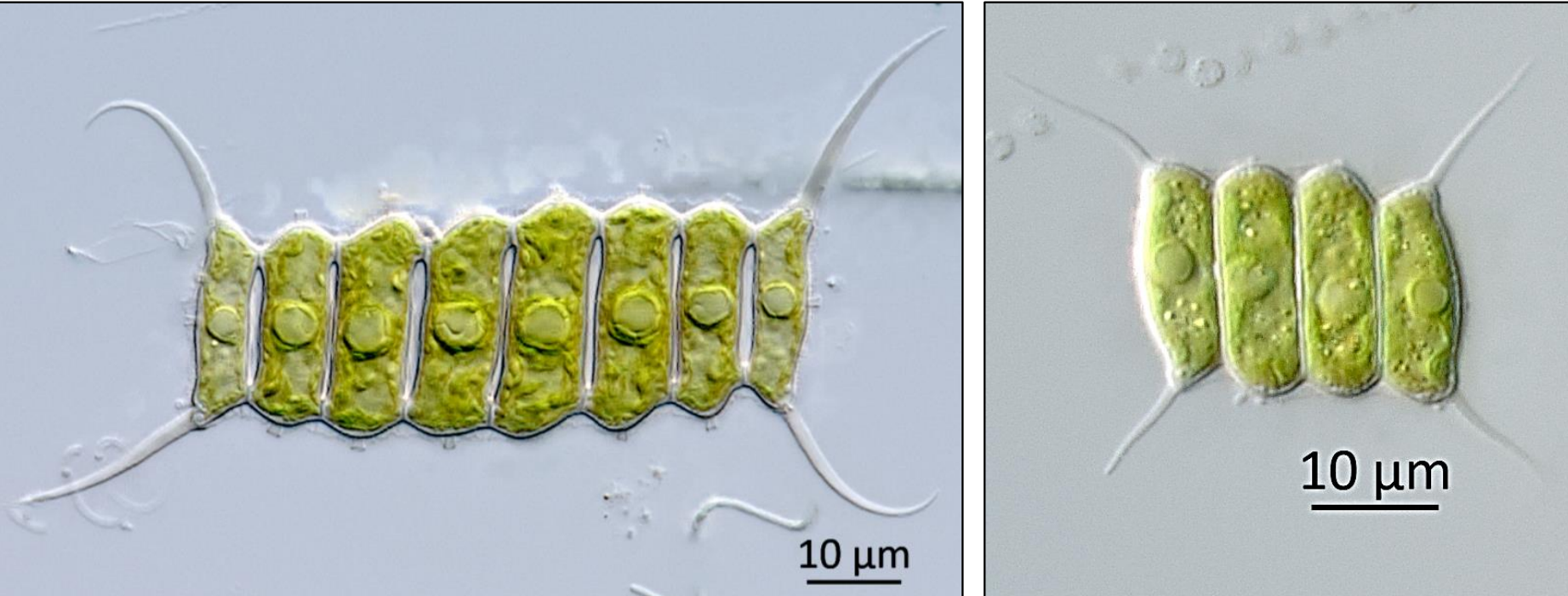
Desmodesmus; Chlorophyta
79
What is this? Group?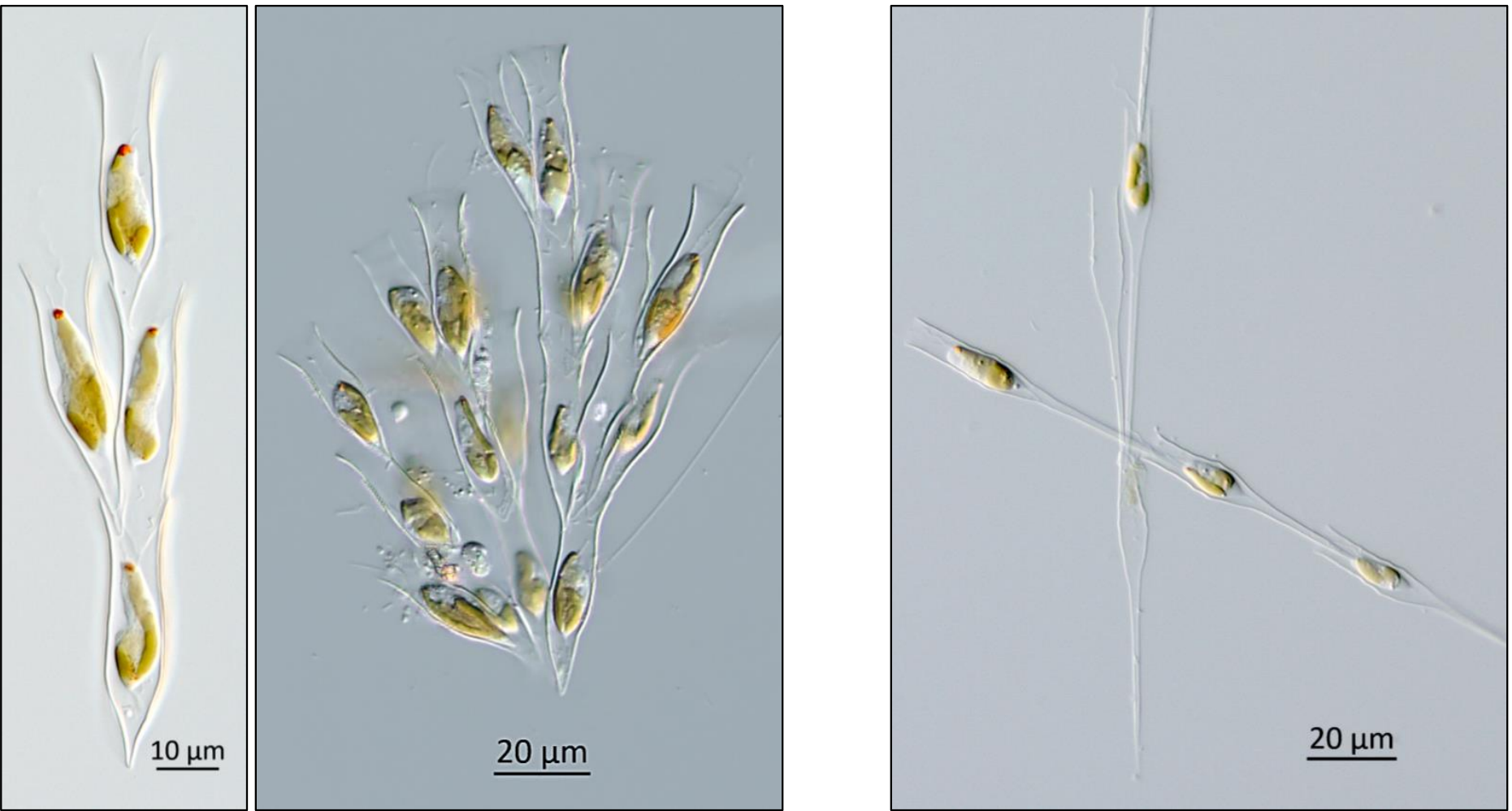
Dinobryon; Chrysophyte
80
What is this? Group?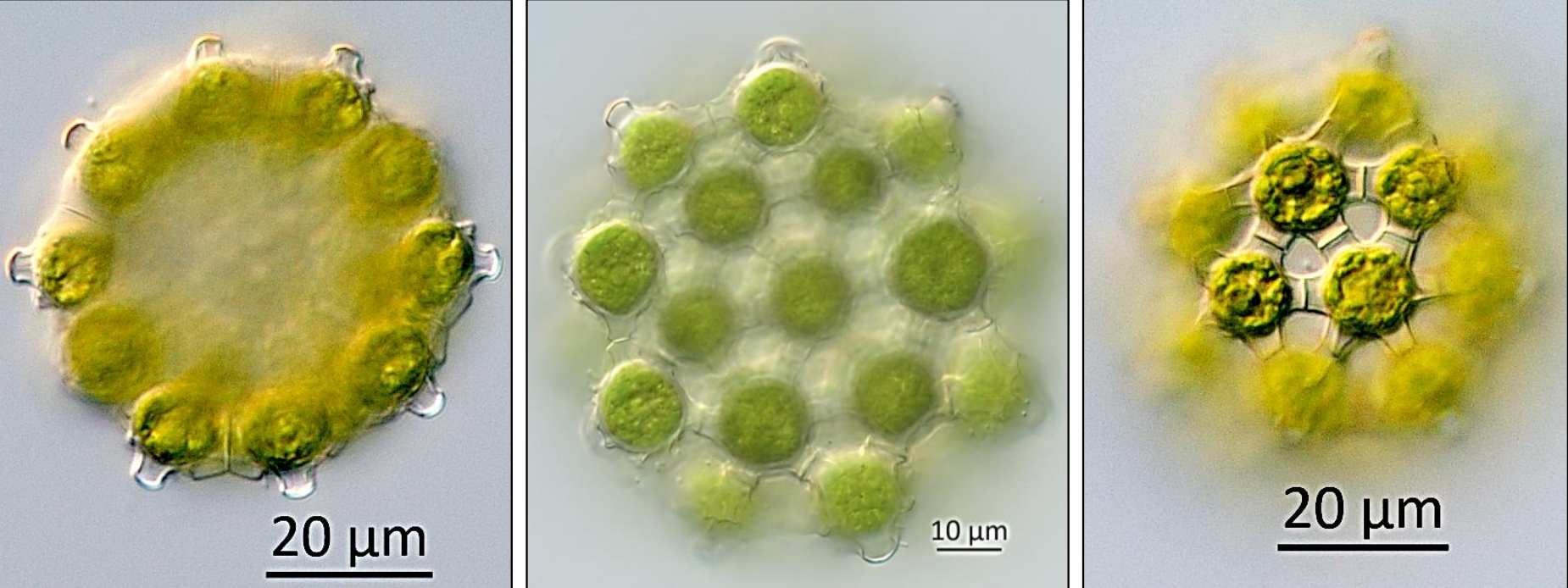
Coelastrum; Chlorophyta
81
What is this?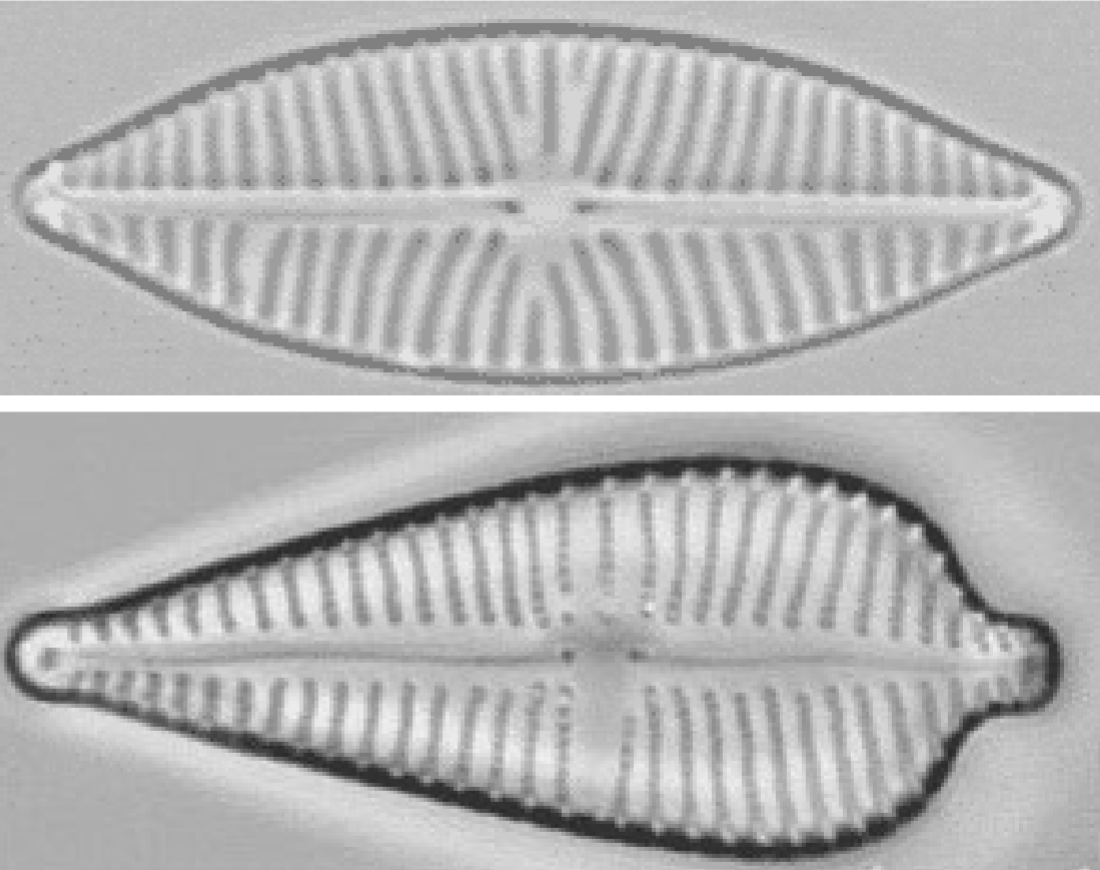
Striae- Silica “lines” across diatoms
82
Girdle bands
Holds two valves together 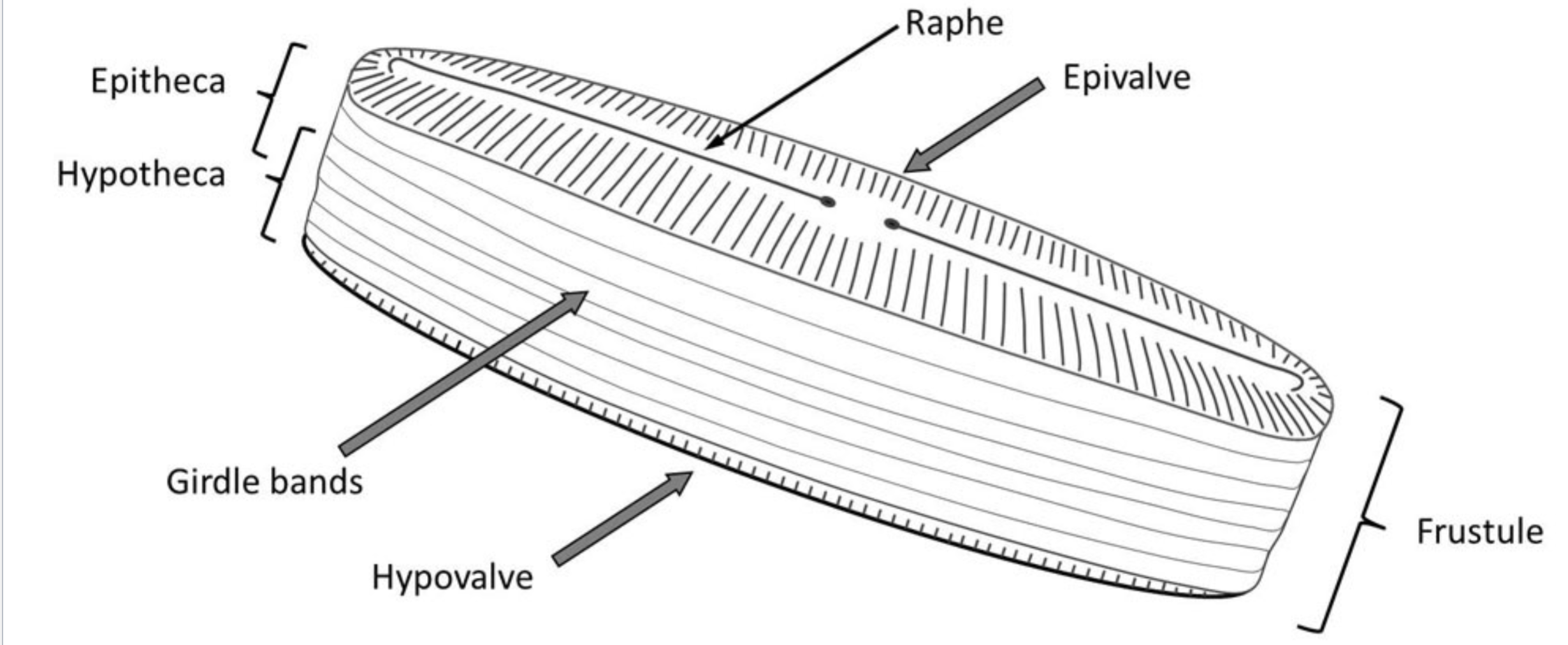
83
What is this? What group? 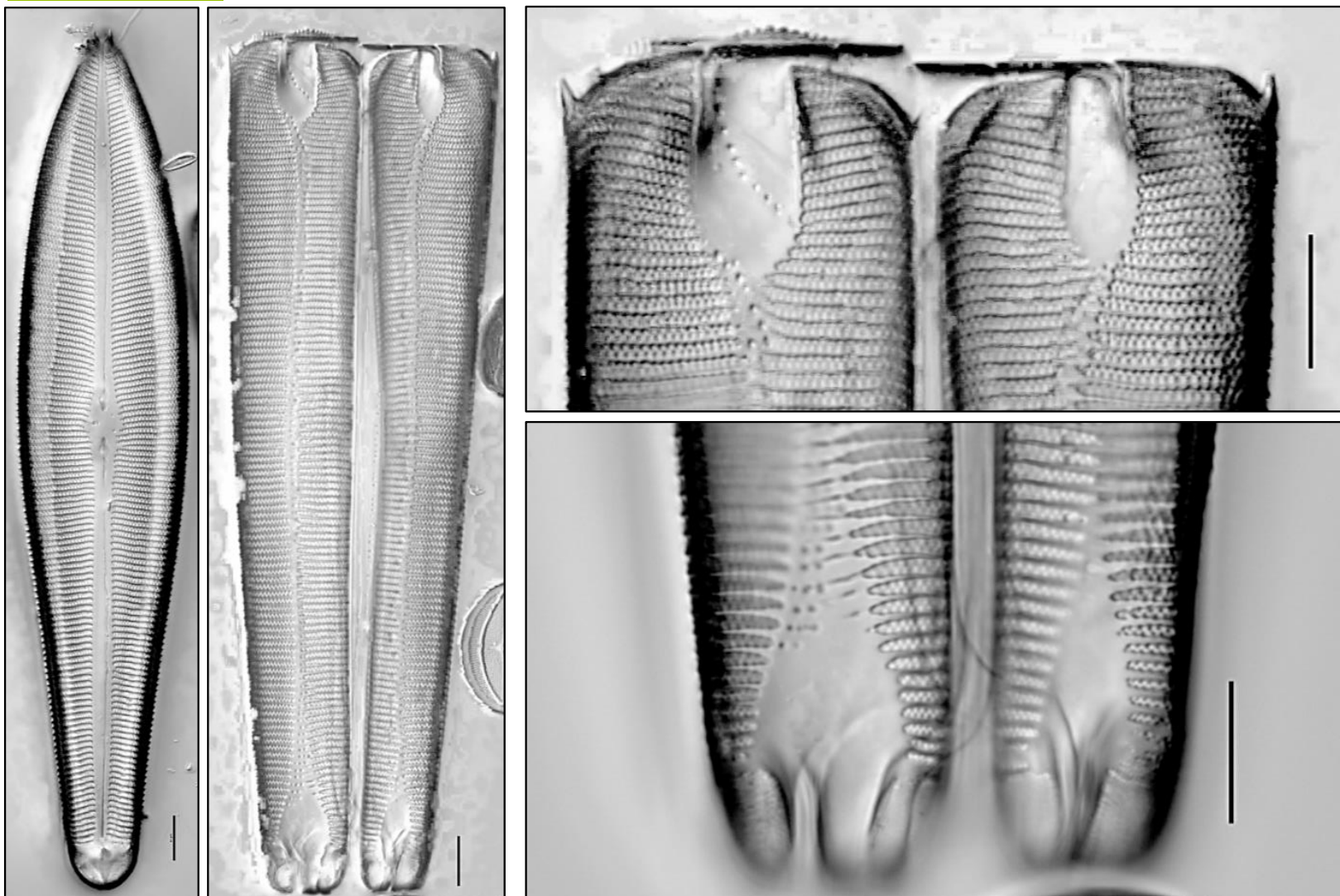
Gomphoneis; Diatom; Has a large apical pore and can create big stalks (to attach to rocks)
84
What is this? What group? 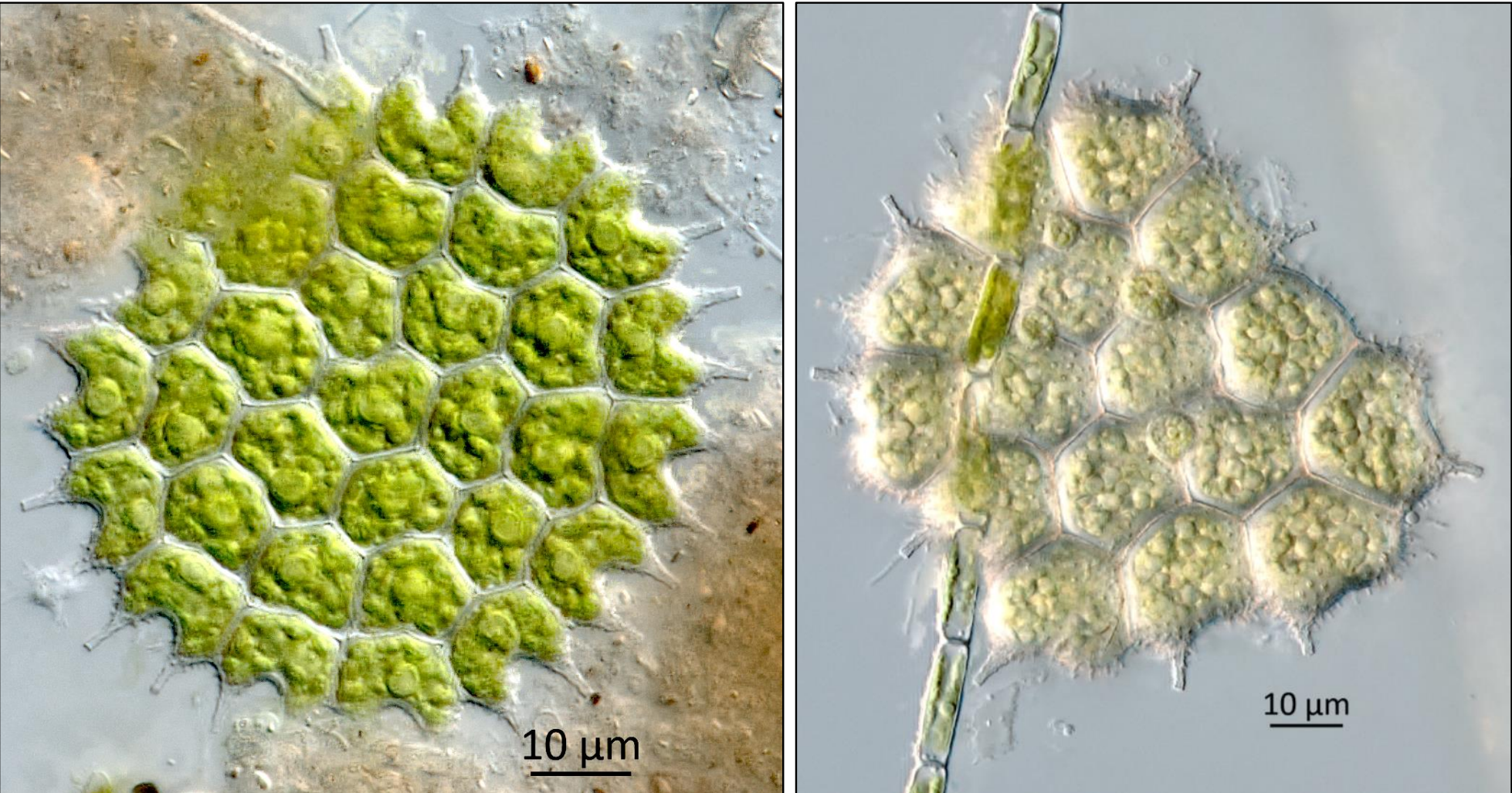
Pseudopediastrum; Chlorophyta
85
What does a contractile vacuole do?
Osmoregulation
86
In the Chrysophytes which flagella is hairy?
Long flagella
87
What is this? Group? What can it do? Can it be toxic?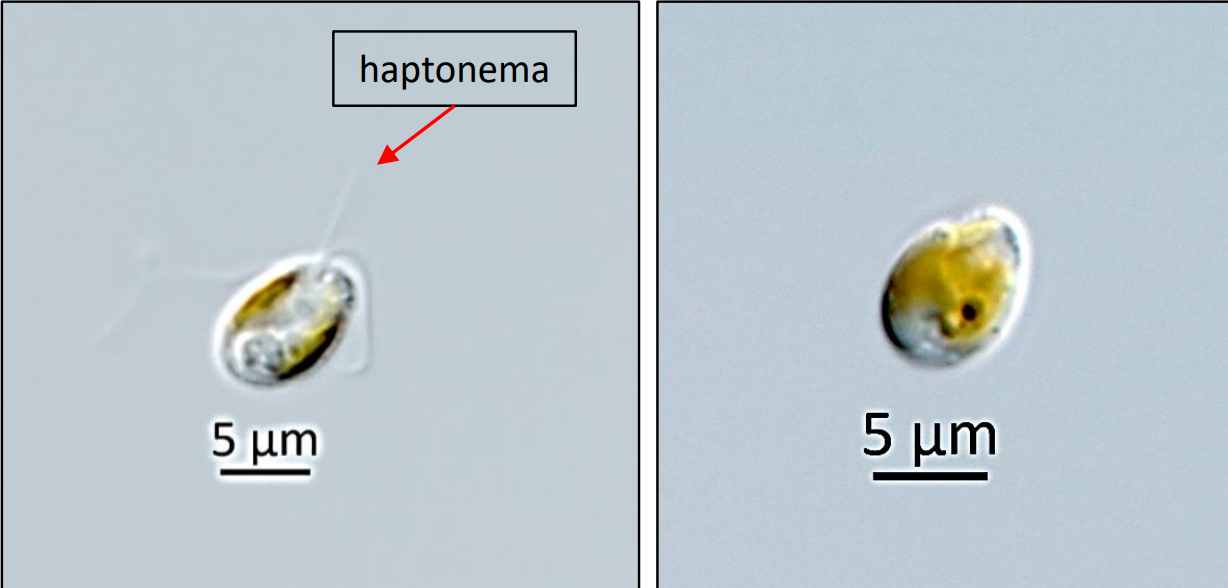
Prymnesium; Haptophyte; has a haptonema that comes out to stab prey; if it forms a bloom, it can kill fish (ichthyotoxin)
Typically find in coastal environments or where there’s higher salinity
Typically find in coastal environments or where there’s higher salinity
88
How many membranes do chrysophytes have? Why?
Chromoplasts have 4 membranes because of endosymbiosis
89
What is this? What group?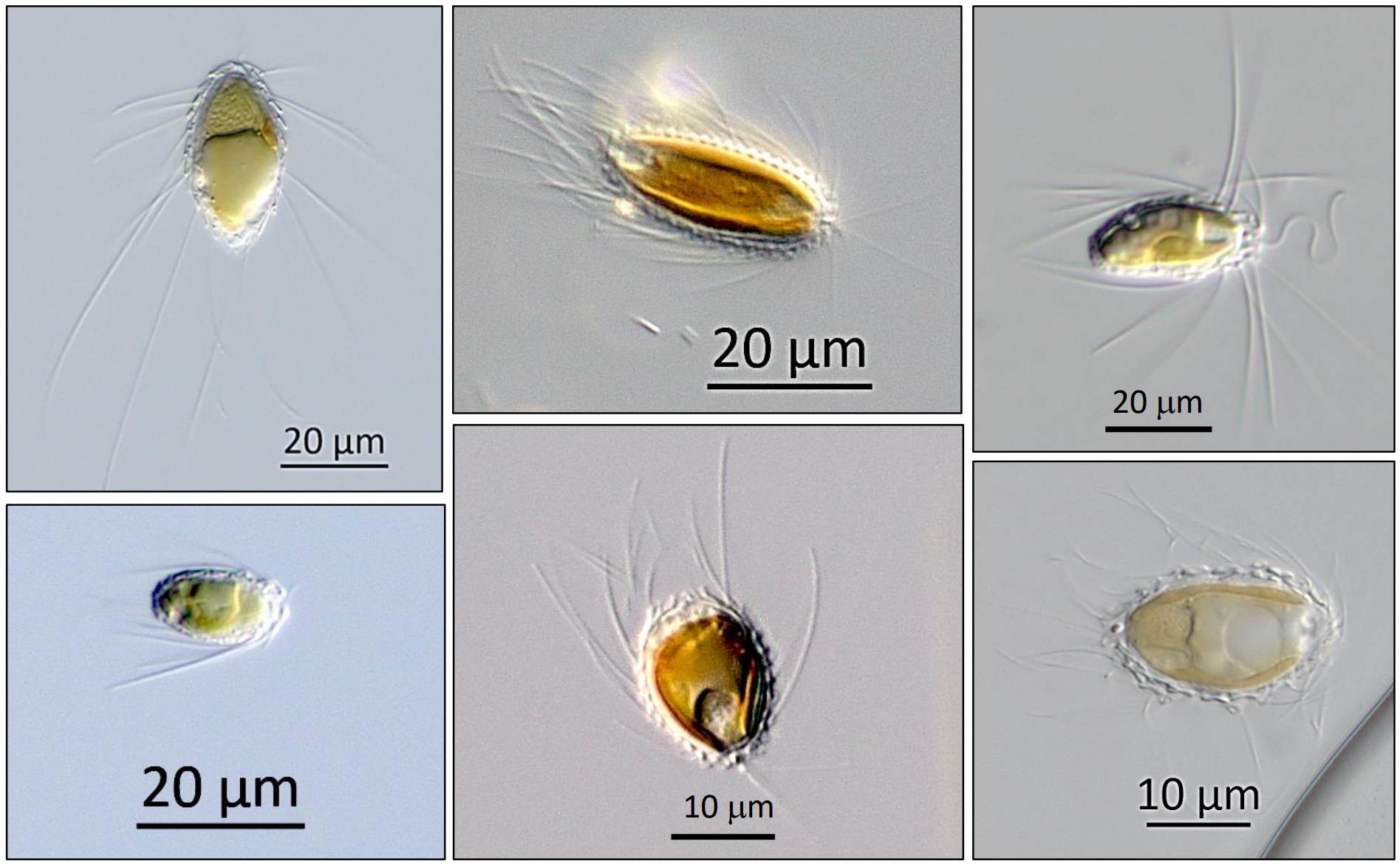
Mallomonas; Chrysophyte
-Has scales, and spines coming off the scales; special membrane that lays down the pattern->specific to each species
-Has scales, and spines coming off the scales; special membrane that lays down the pattern->specific to each species
90
What is this? What group? What does it create? Motile or sessile? Produce what?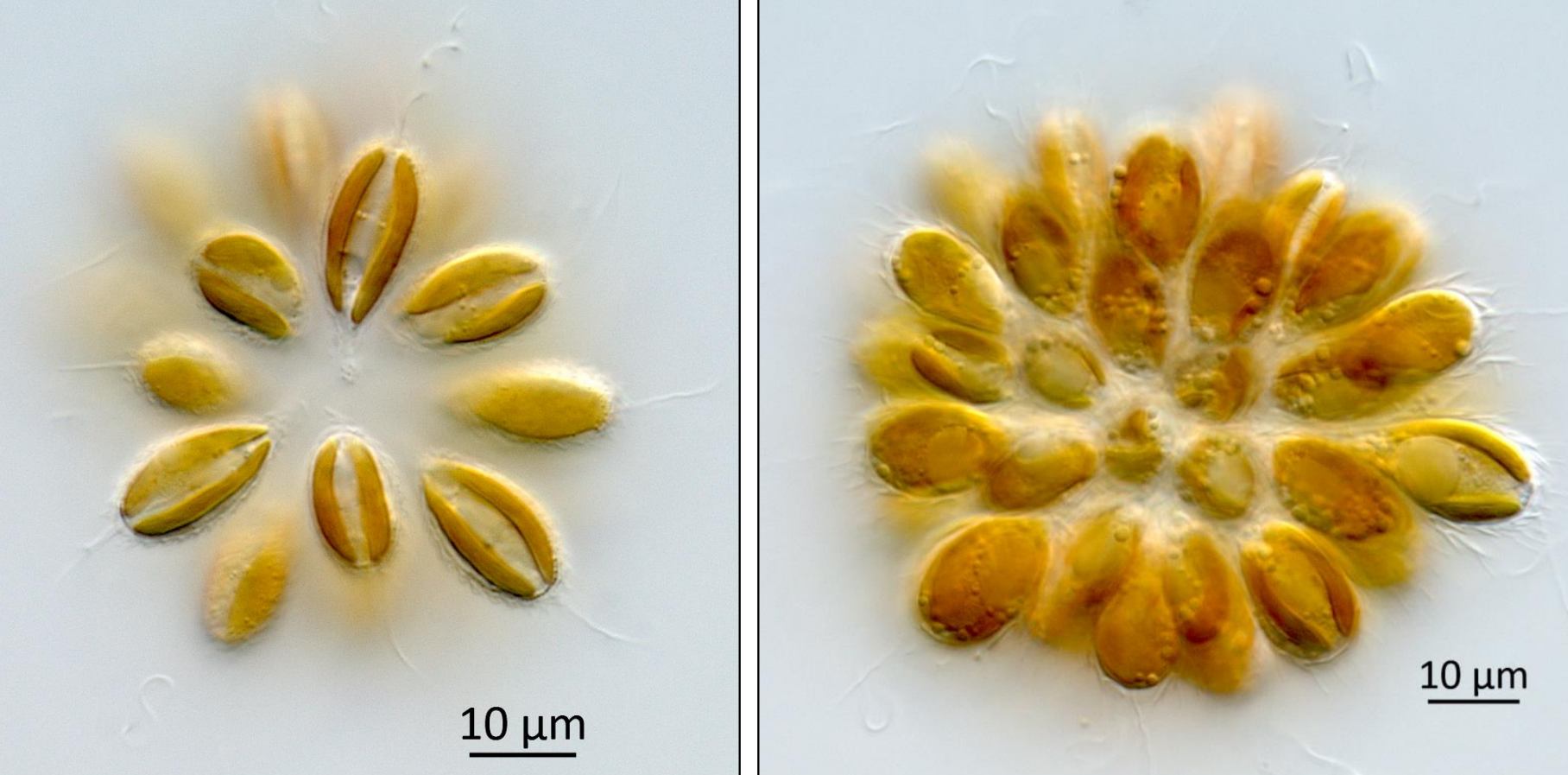
Synura; Chrysophyte
-Creates scales for armor; motile; plastids; taste and odor producers- fishy smell in water (Synuraphyte)
-Creates scales for armor; motile; plastids; taste and odor producers- fishy smell in water (Synuraphyte)
91
What are the top view and side view of a diatom cell called?
Valve view and girdle view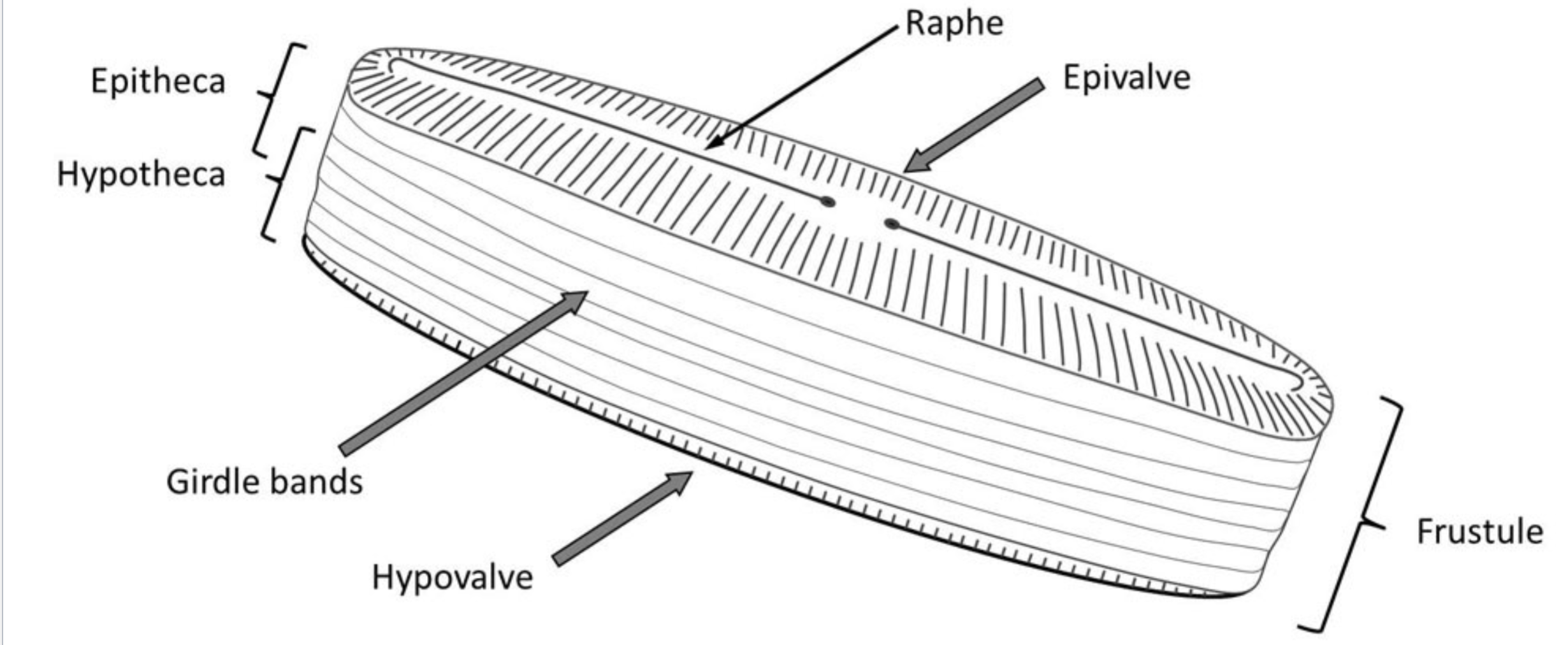
92
Describe the paleolimnological method that uses diatoms? How are they environmental indicators?
Sediment coreing
-Can see their tolerance
-Can date core samples and reconstruct time period, looking at the diatoms at different water depths
2. Respond quickly to environmental changes; sensitive
-Can see their tolerance
-Can date core samples and reconstruct time period, looking at the diatoms at different water depths
2. Respond quickly to environmental changes; sensitive
93
What is this? Group? What can it cause?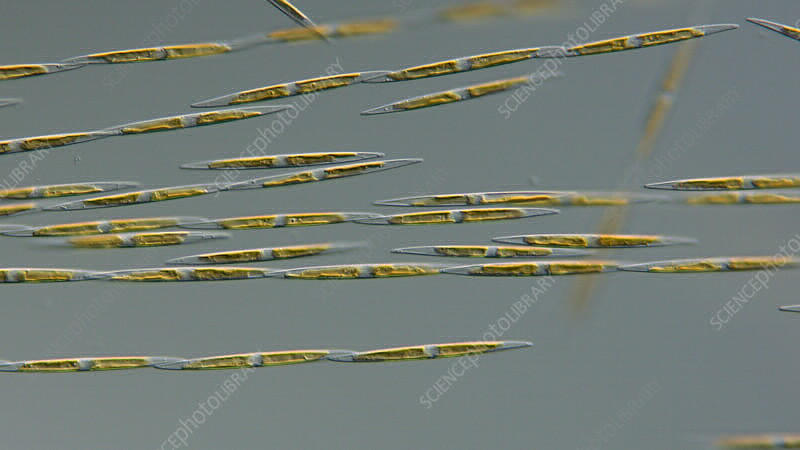
Pseudo-nitzschia; Diatom; Can cause human poisoning cases (Amnesic Shellfish Poisoning, or ASP)
94
What is a stomatacyst? Why take this form? What this be an indicator of?
Ornamental resting stage; adverse environmentl conditions (i.e. drought); indicator of past climate through reconstruction of cores
95
What is a stromenopile?
A clade of organisms distinguished by the presence of stiff tripartite external hairs. In most species, the hairs are attached to flagella, in some they are attached to other areas of the cellular surface
96
What is this? Group? Common name?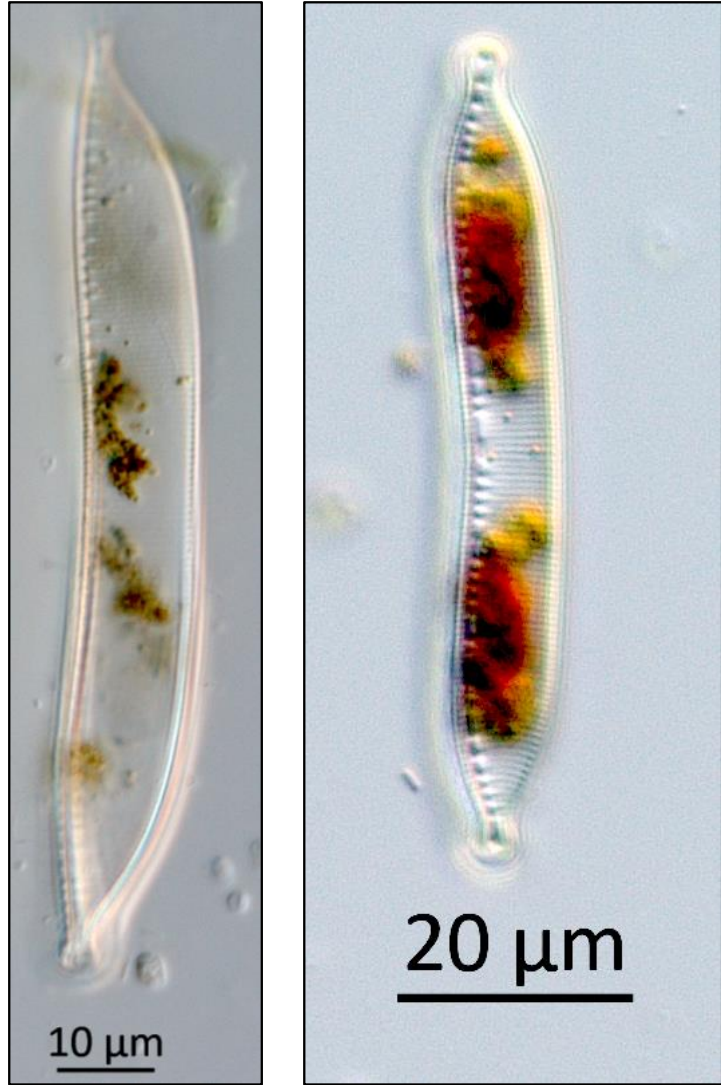
Hantzschia; Diatom; "Banana with a zipper"
Often found in wet soil
Often found in wet soil
97
What is this? Group? Where does it typically live? 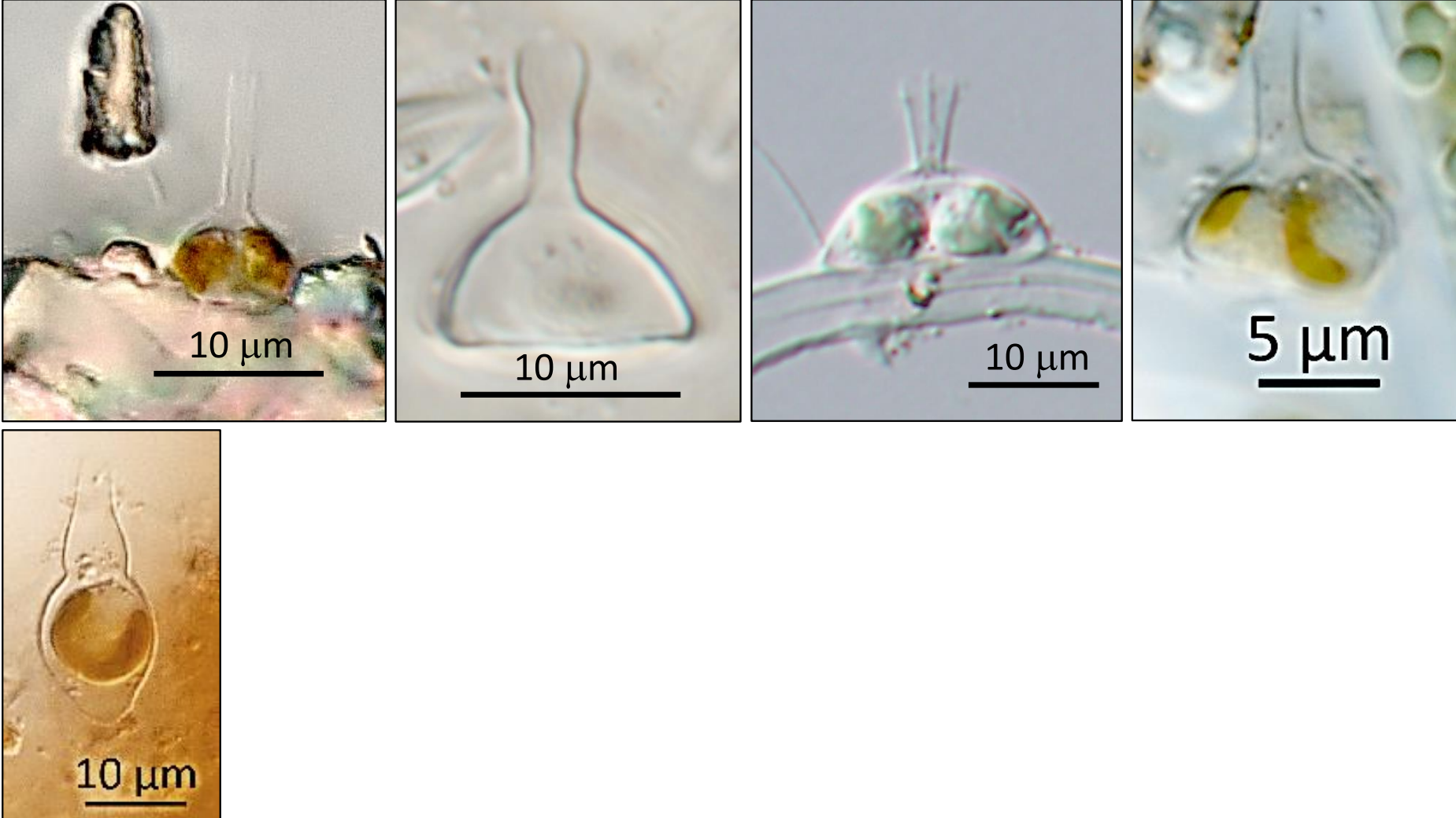
Lagynion; Chrysophyte
- Lives on sand grains/attached to plants; network of structures (amoeba-like) coming out the top to grab onto things and feed
-Secretes mucilage to attach as well; looks like a little flask/decanter
- Lives on sand grains/attached to plants; network of structures (amoeba-like) coming out the top to grab onto things and feed
-Secretes mucilage to attach as well; looks like a little flask/decanter
98
What can some algae be used to make? Example?
Some algae can be used to make biofuels (ex. Chlorella)
99
Explain-> constitutive production of chlorophyll a
Even many benthic organisms in complete darkness will often produce chlorophyll a in case they ever get into the light again (survival instinct)
100
Pigments associated with blue-green color, and pink-red color. Example of groups (hint: 3)?
Phycocyanin (can have a bluish hue) and phycoerythrin (pink-red hue); Cyanobacteria, Rohodophytes, Cryptophytes
101
What is this? Group?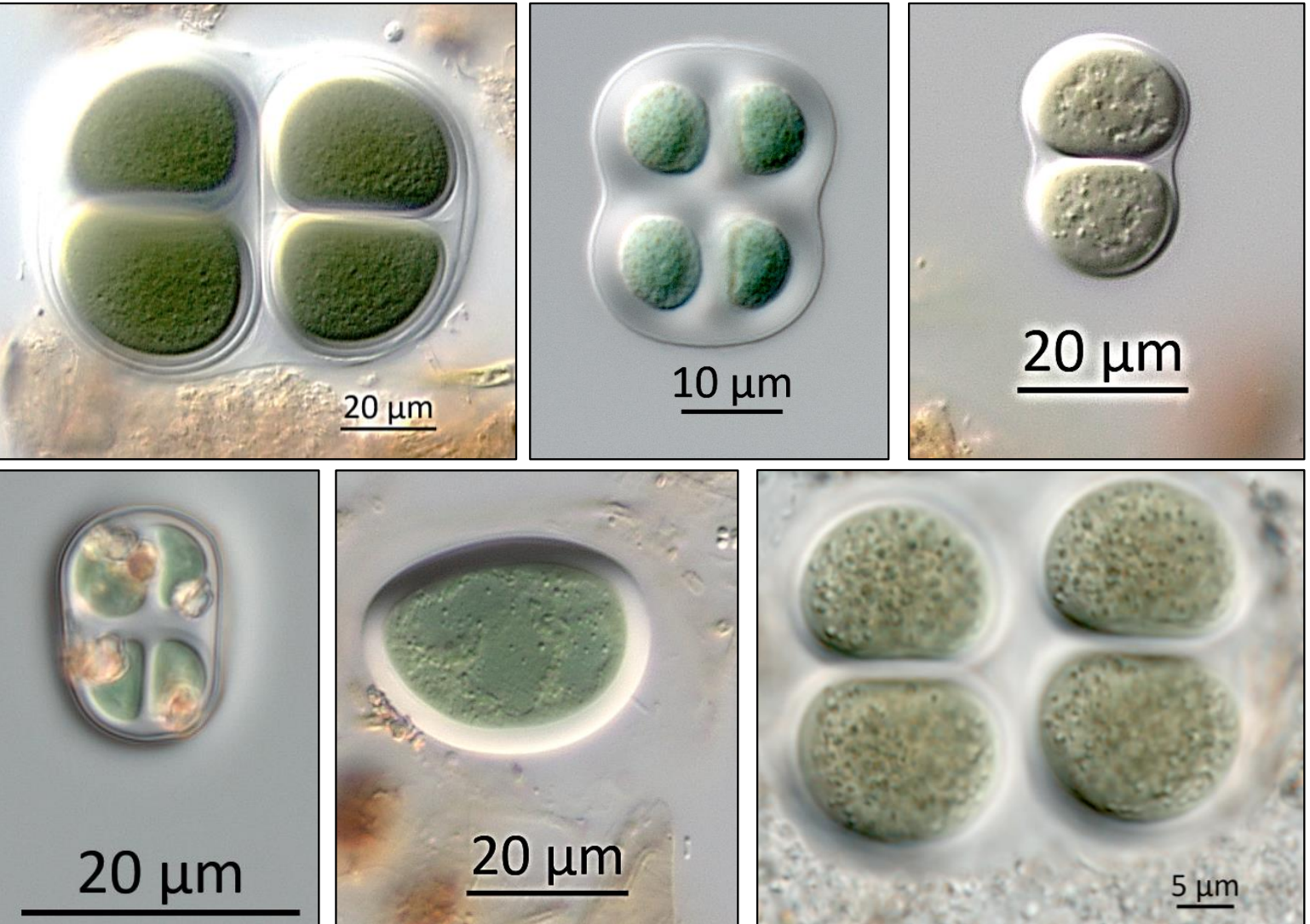
Chroococcus; Cyanobacteria
102
What is this? Group?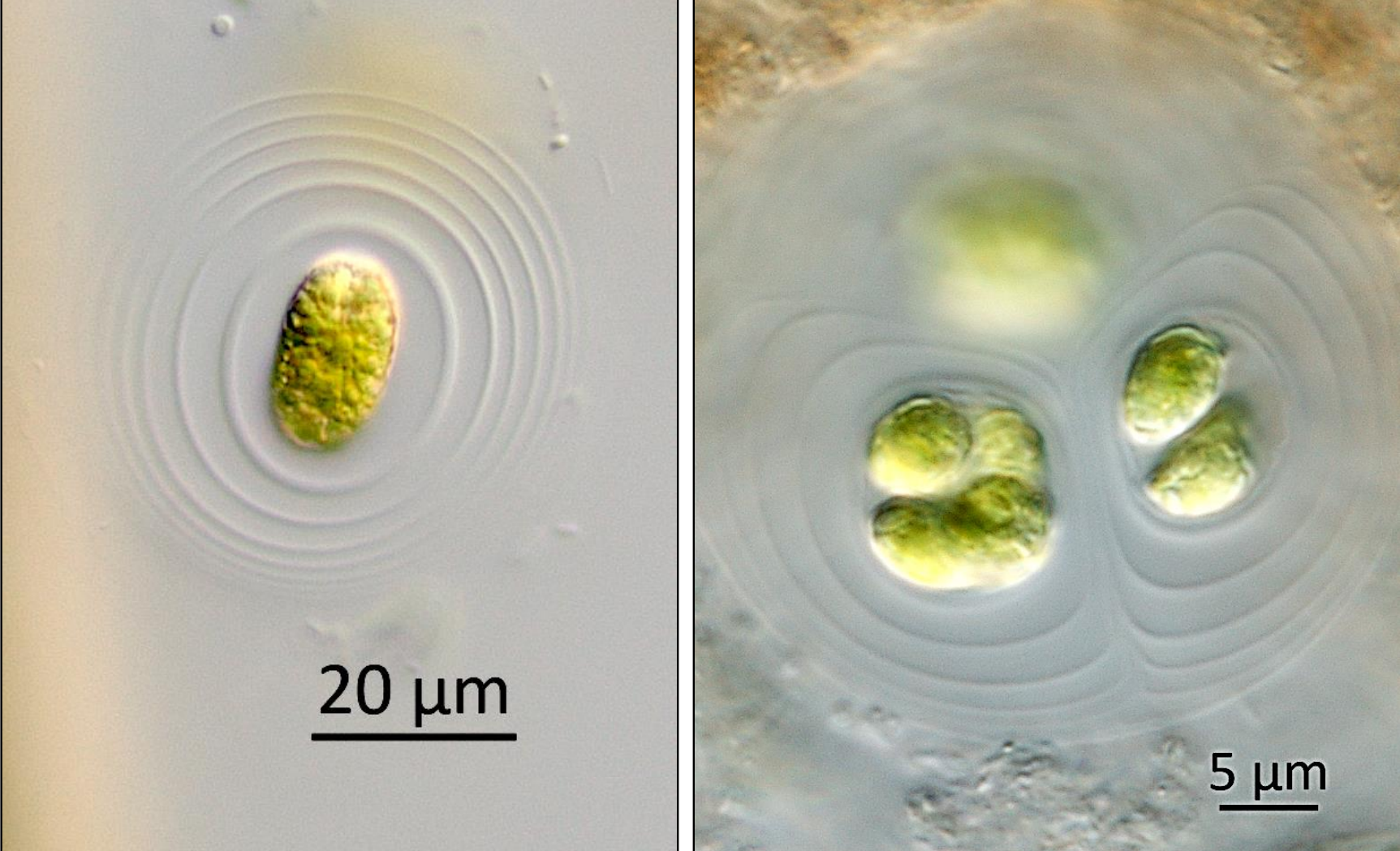
Gloeocytis; Chlorophyta
103
What is this? Group?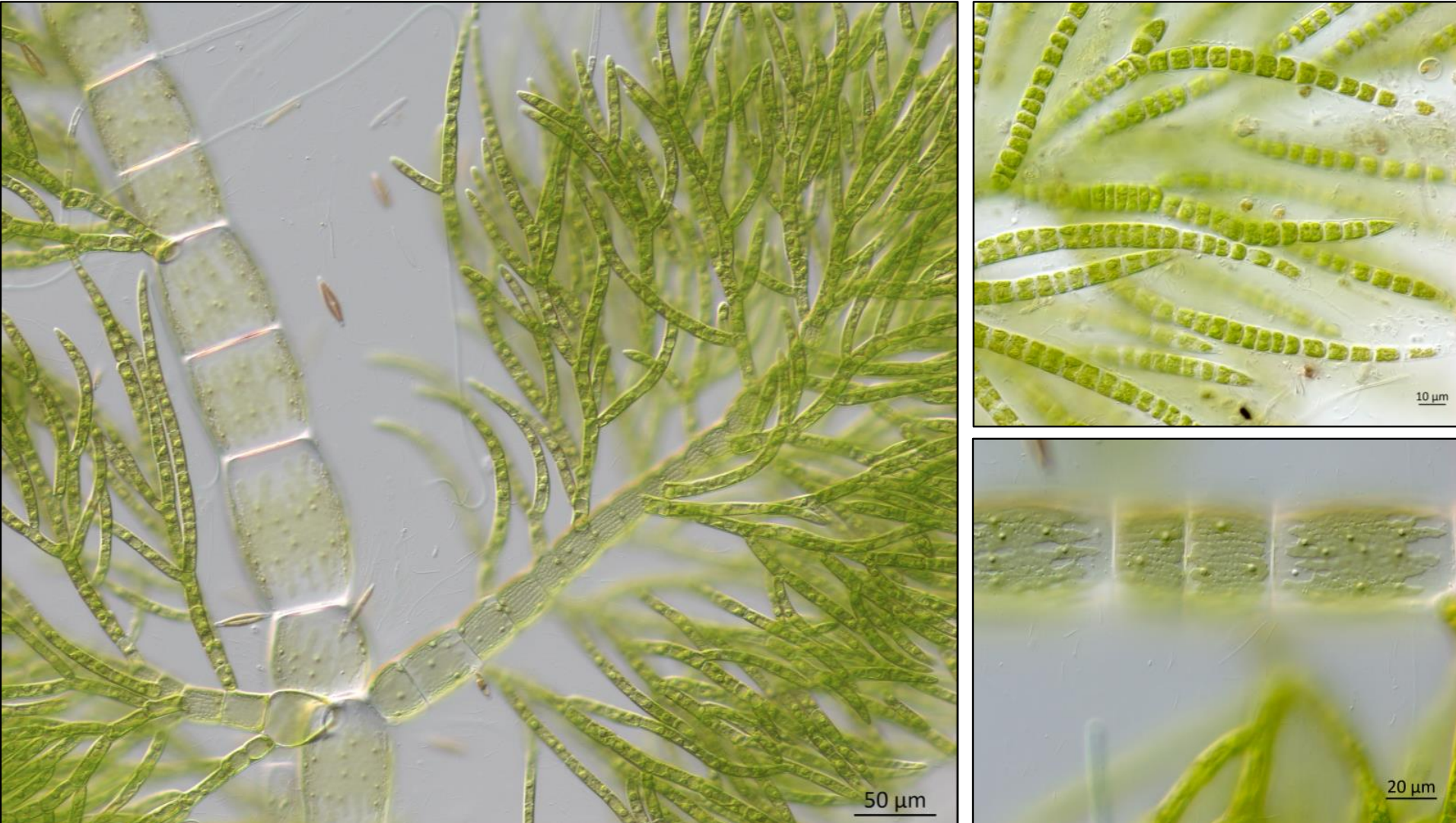
Draparnaldia; Chlorophyta
104
What is this? Group?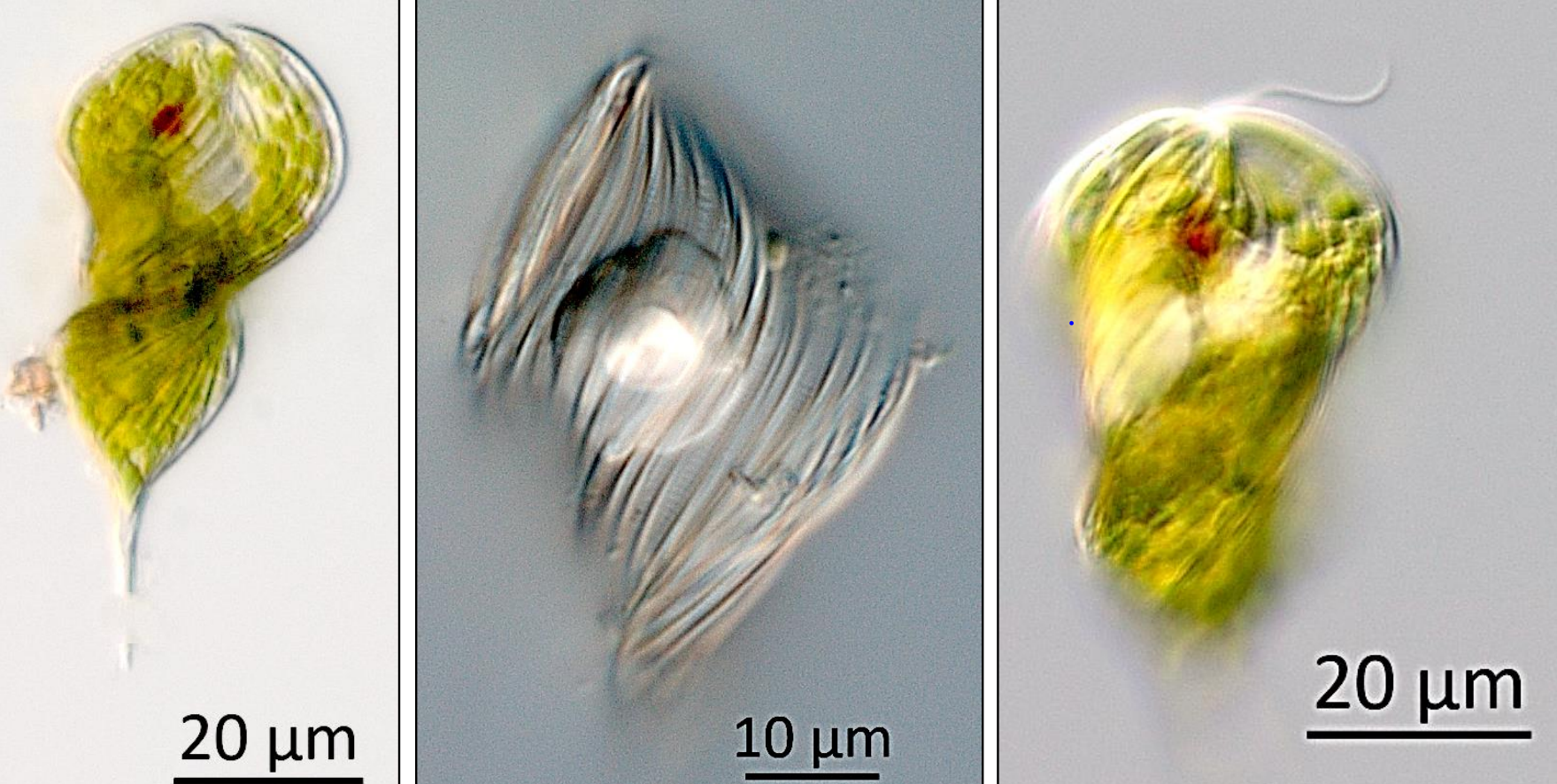
Phacus; Euglenoid
105
What is this? Group?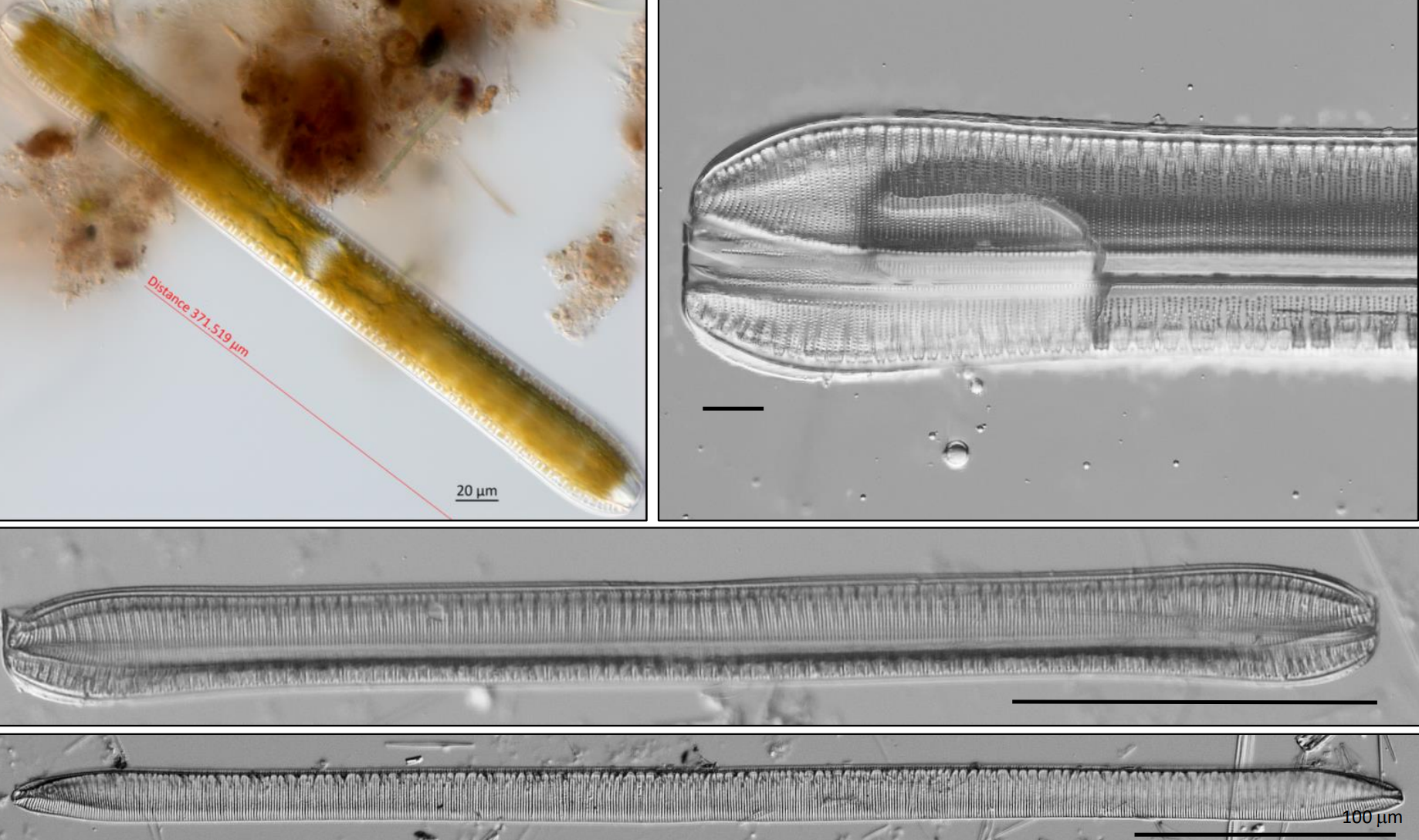
Nitzschia; Diatom
106
What is this? Group?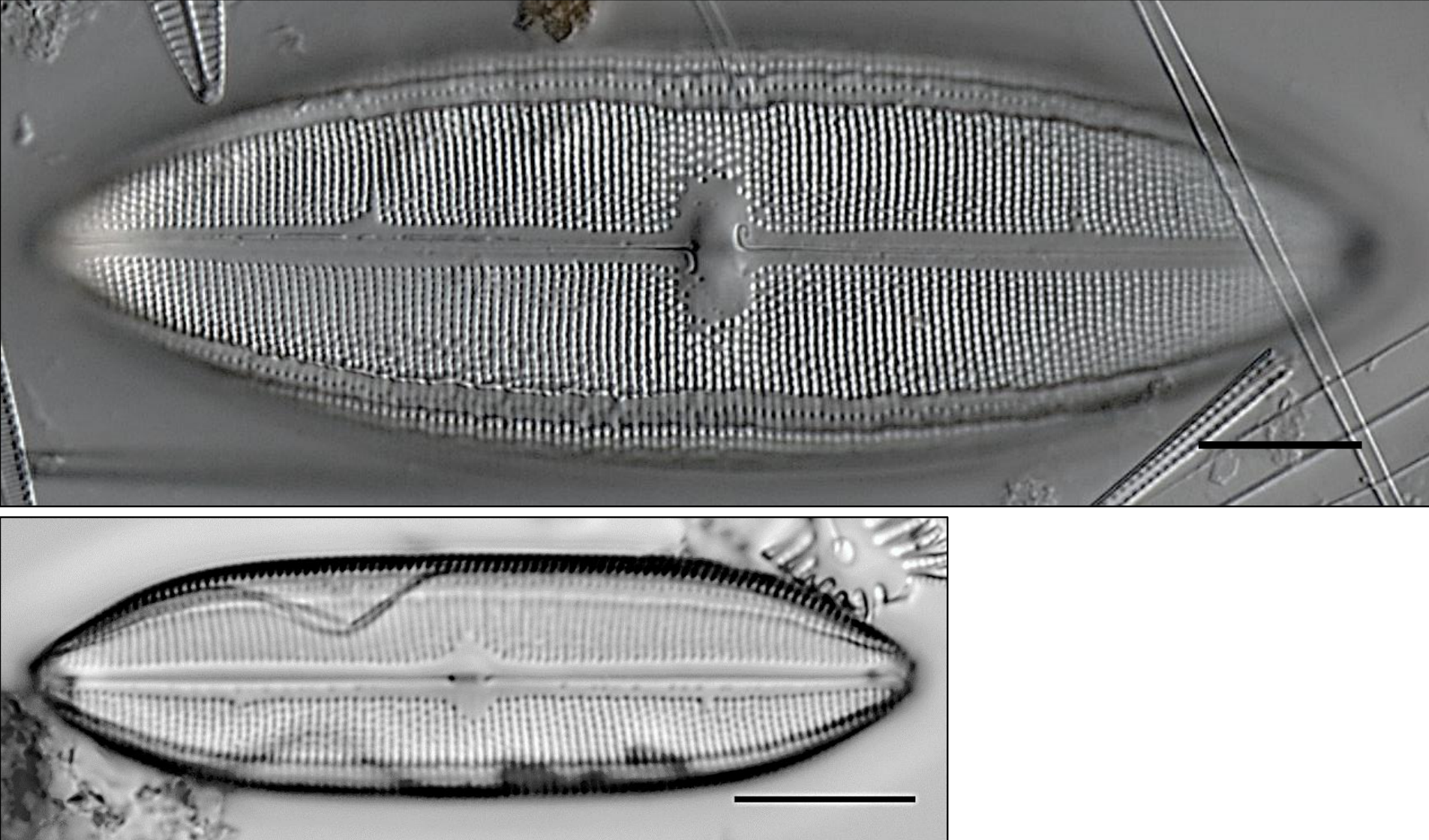
Neidium; Diatom
107
What is this? Group?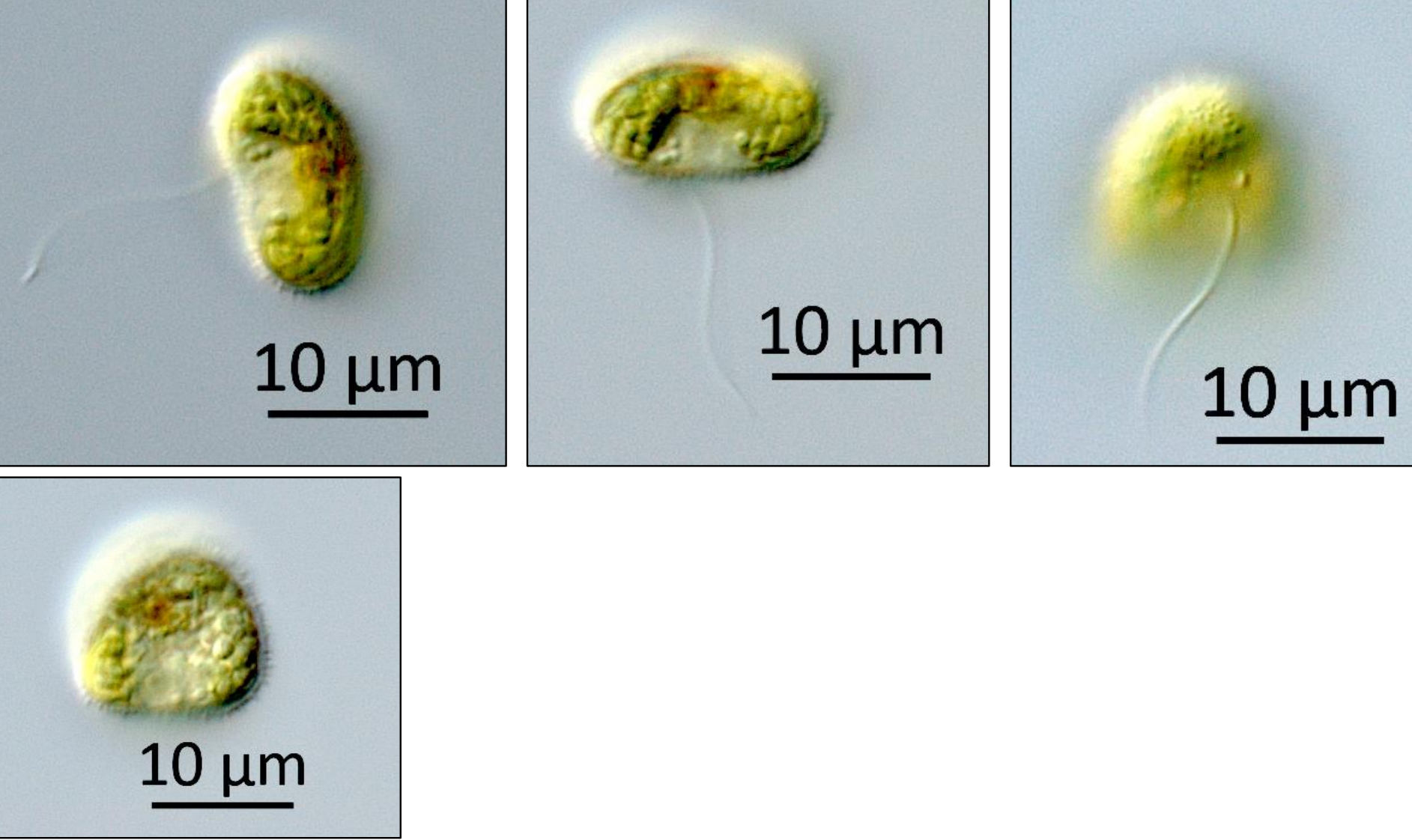
Nephroselmis; Chlorophyta
108
What is this? Group?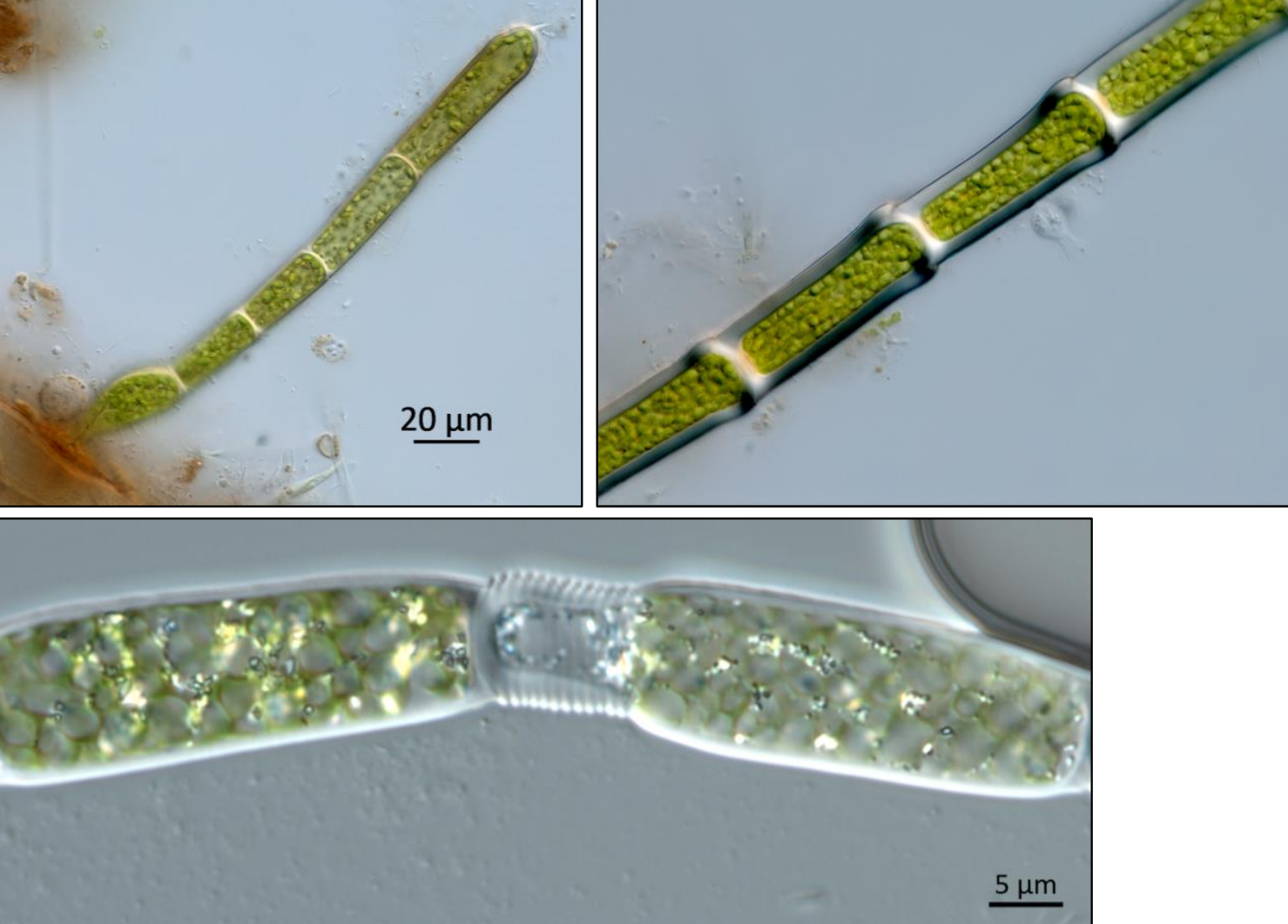
Oedogonium; Chlorophyta
109
What is this? Group?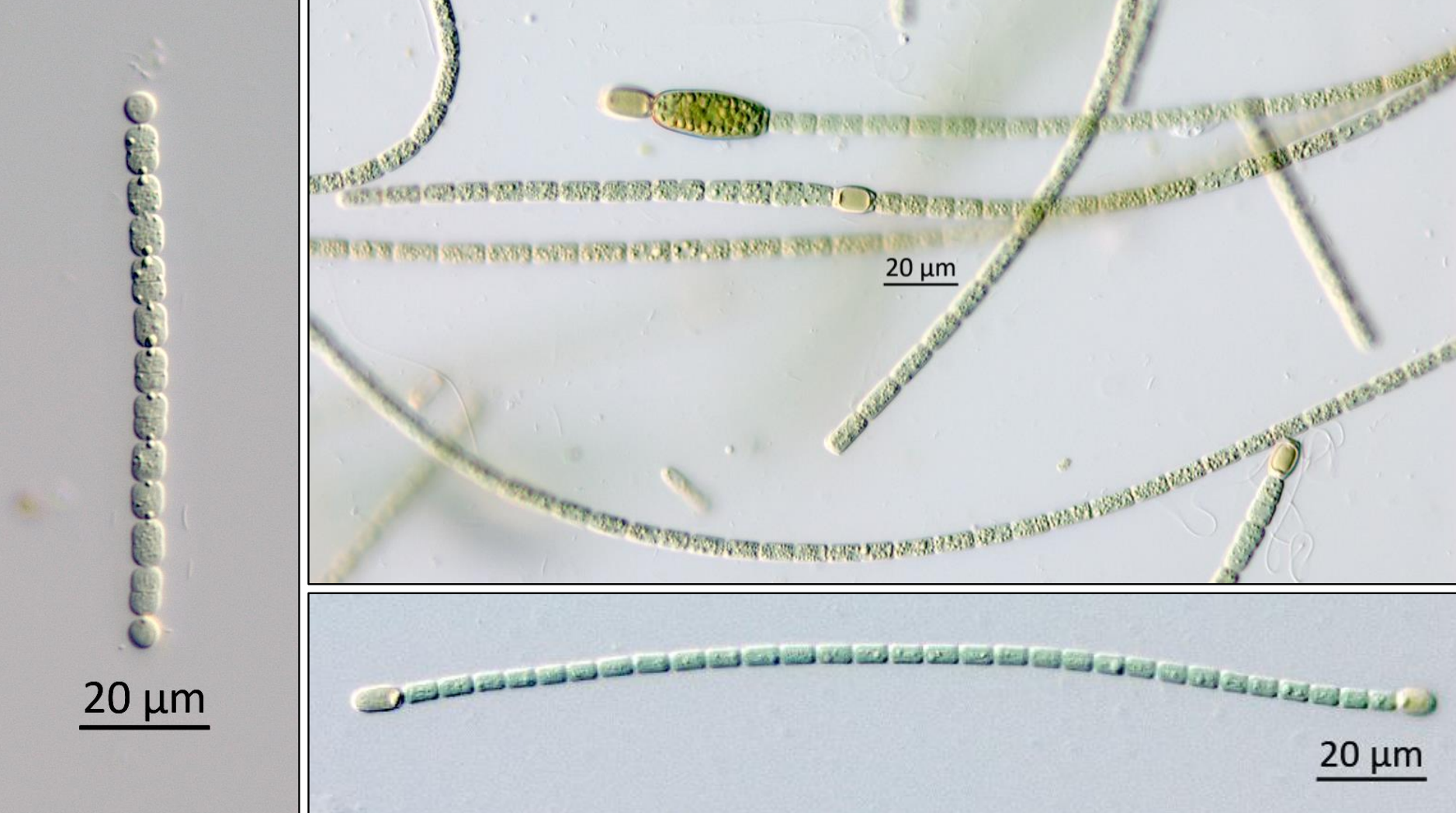
Cylindrospermum; Cyanobacteria
110
General info about dinoflagellates.
-Photosynthetic, but large amount are mixotrophic-consume prey (phagotrophy and myzocytosis) as well as photosynthesis
-Have 100 copies of every gene (large nucleus)
-1 long trailing flagella (longitudinal) , and 1 going around the middle (transverse)
-Triploblastic body stinging cells outside known as nematocysts
-Many have plates on them with pores
-Some dinoflagellates also exhibit bioluminescence
-Have 3 membranes
-Have 100 copies of every gene (large nucleus)
-1 long trailing flagella (longitudinal) , and 1 going around the middle (transverse)
-Triploblastic body stinging cells outside known as nematocysts
-Many have plates on them with pores
-Some dinoflagellates also exhibit bioluminescence
-Have 3 membranes
111
How many membranes do diatoms have?
4
112
What are glaucophytes?
Rare, freshwater algae retaining the most ancestral features of primary photosynthetic eukaryotes or Archaeplastida
113
What pigments do Chrysophytes have? Chloro- or Chromoplast?
-Chlorophyll a, c, and carotenoids
-Chromoplasts
-Chromoplasts
114
What is this? Group?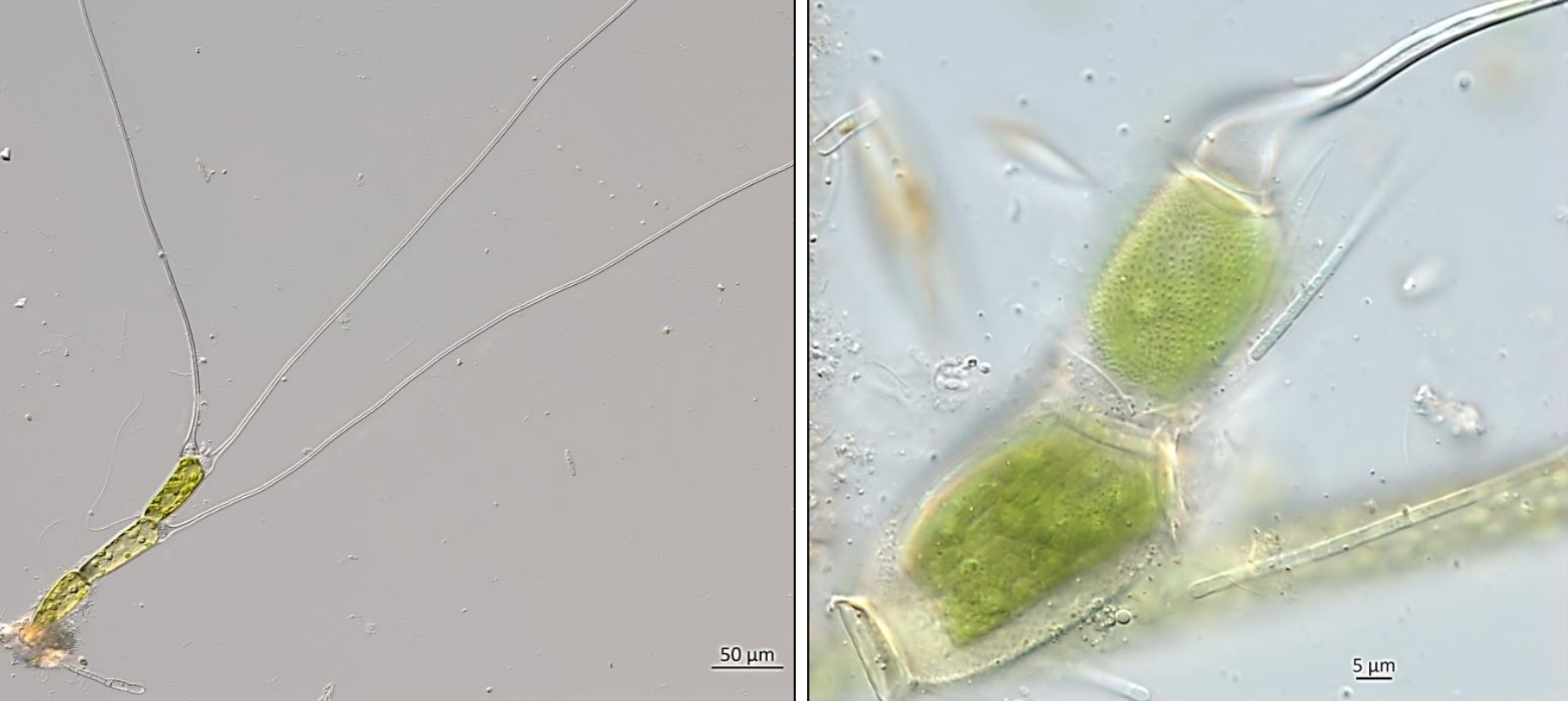
Bulbochaete; Chlorophyta
115
What is this? Group?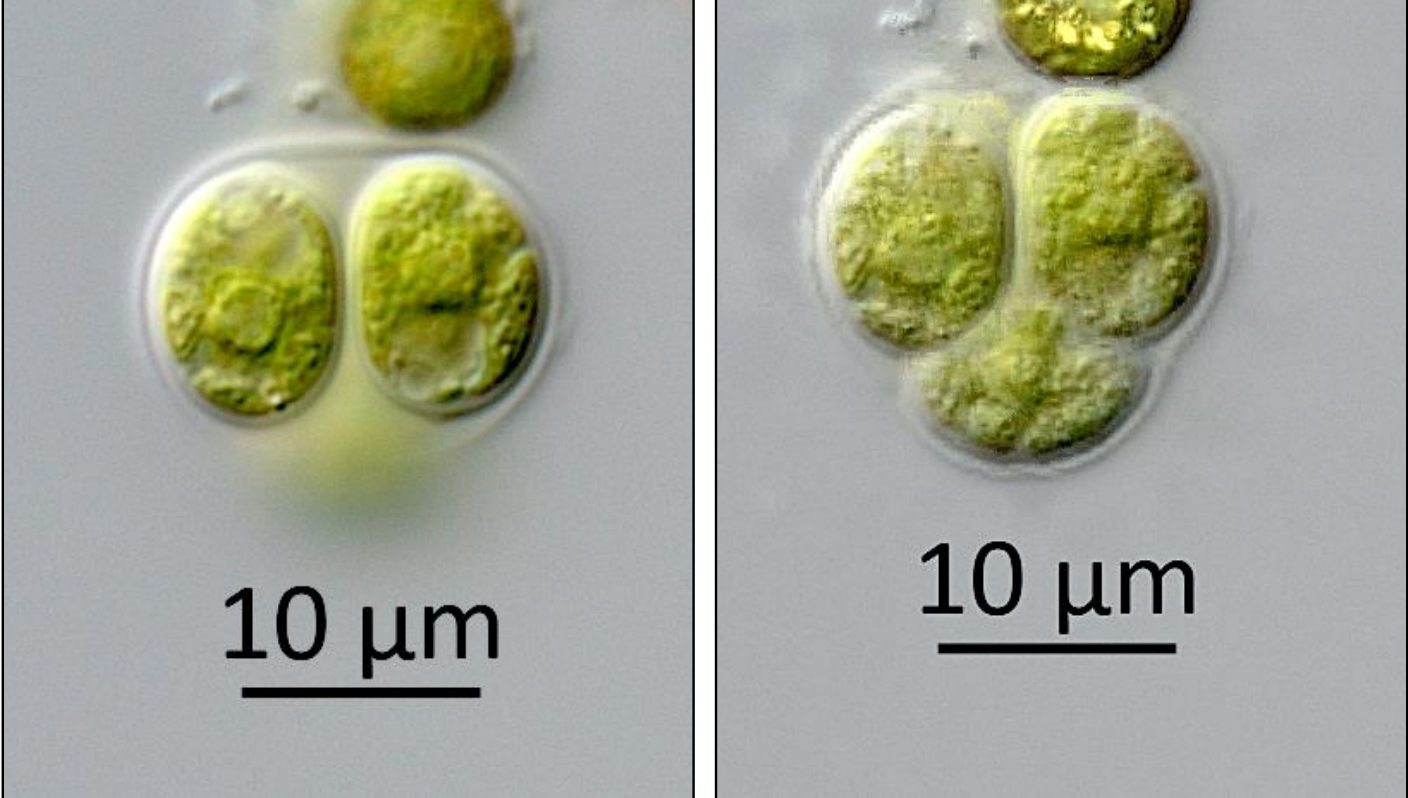
Chlorococcum; Chlorophyta
116
What is this? Group?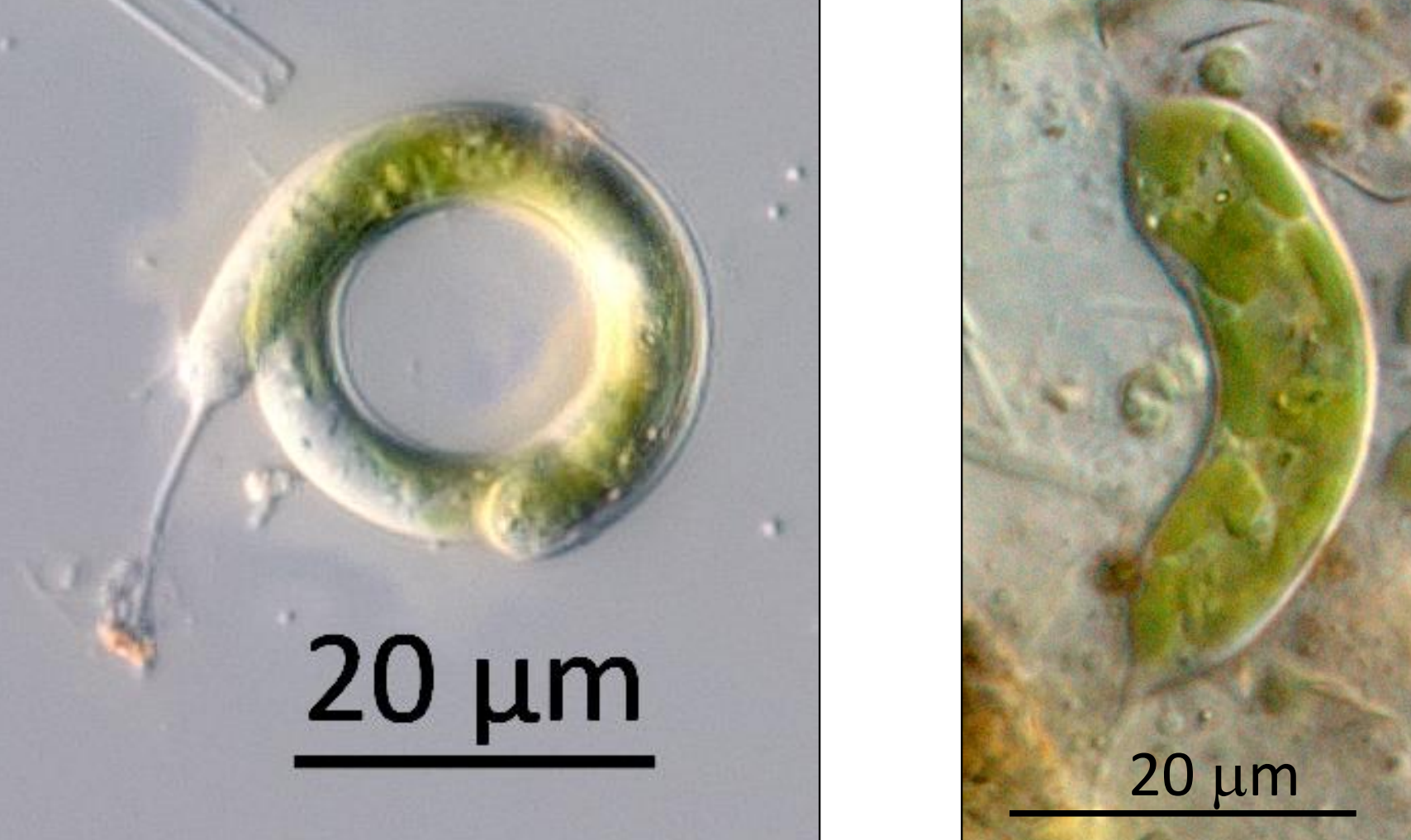
Ophiocytium; Xanthophyte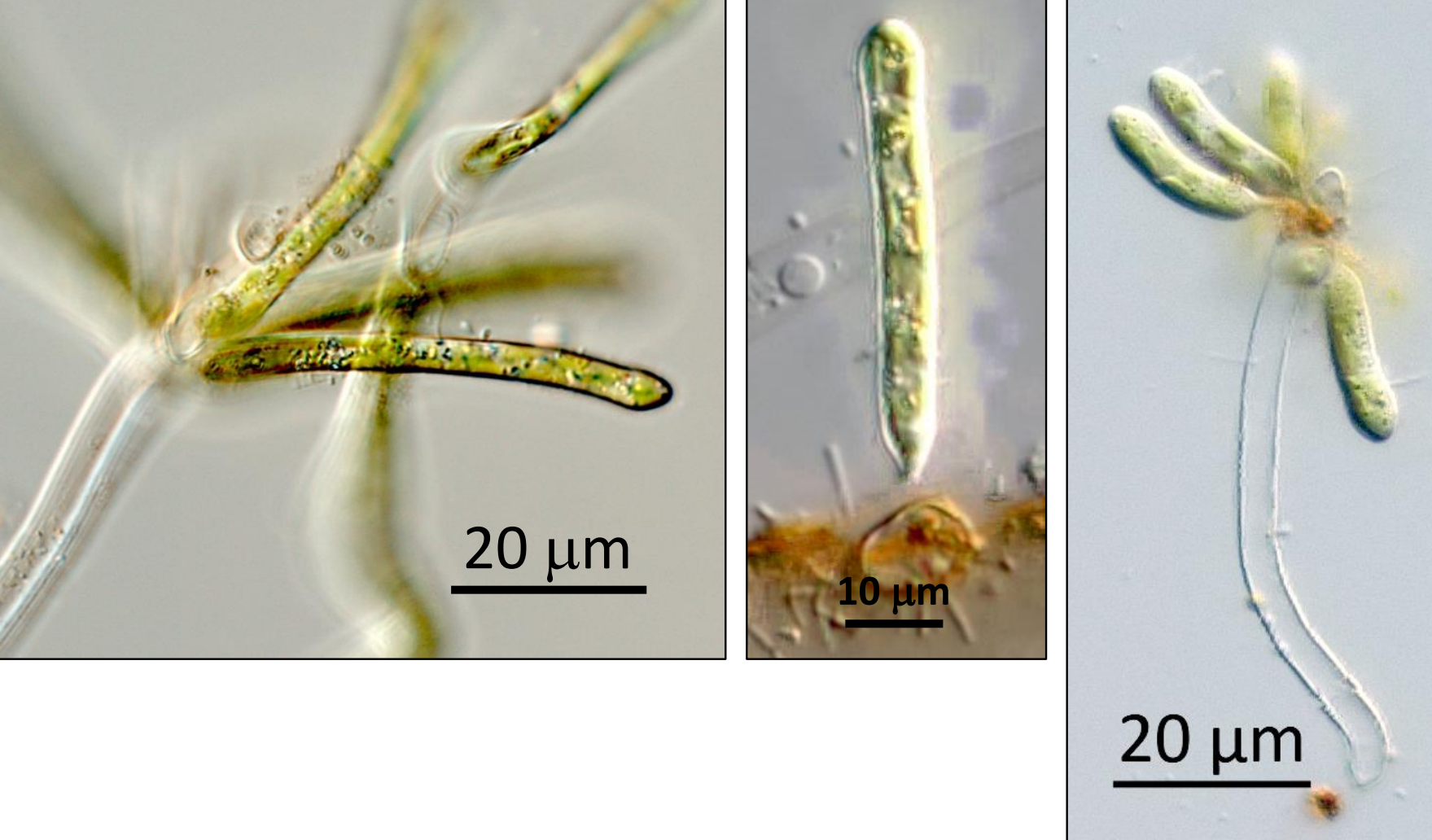
117
What is this? Group?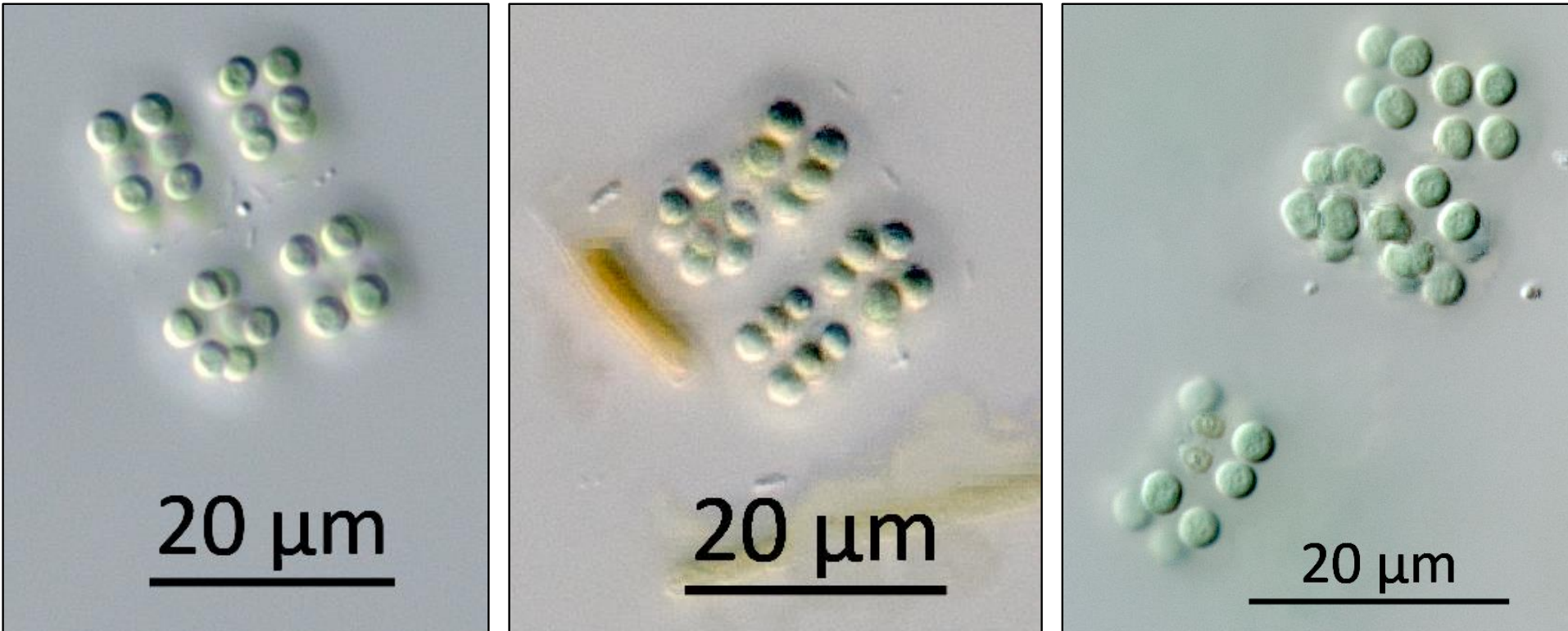
Eucapsis; Cyanobacteria
118
What is this? Group?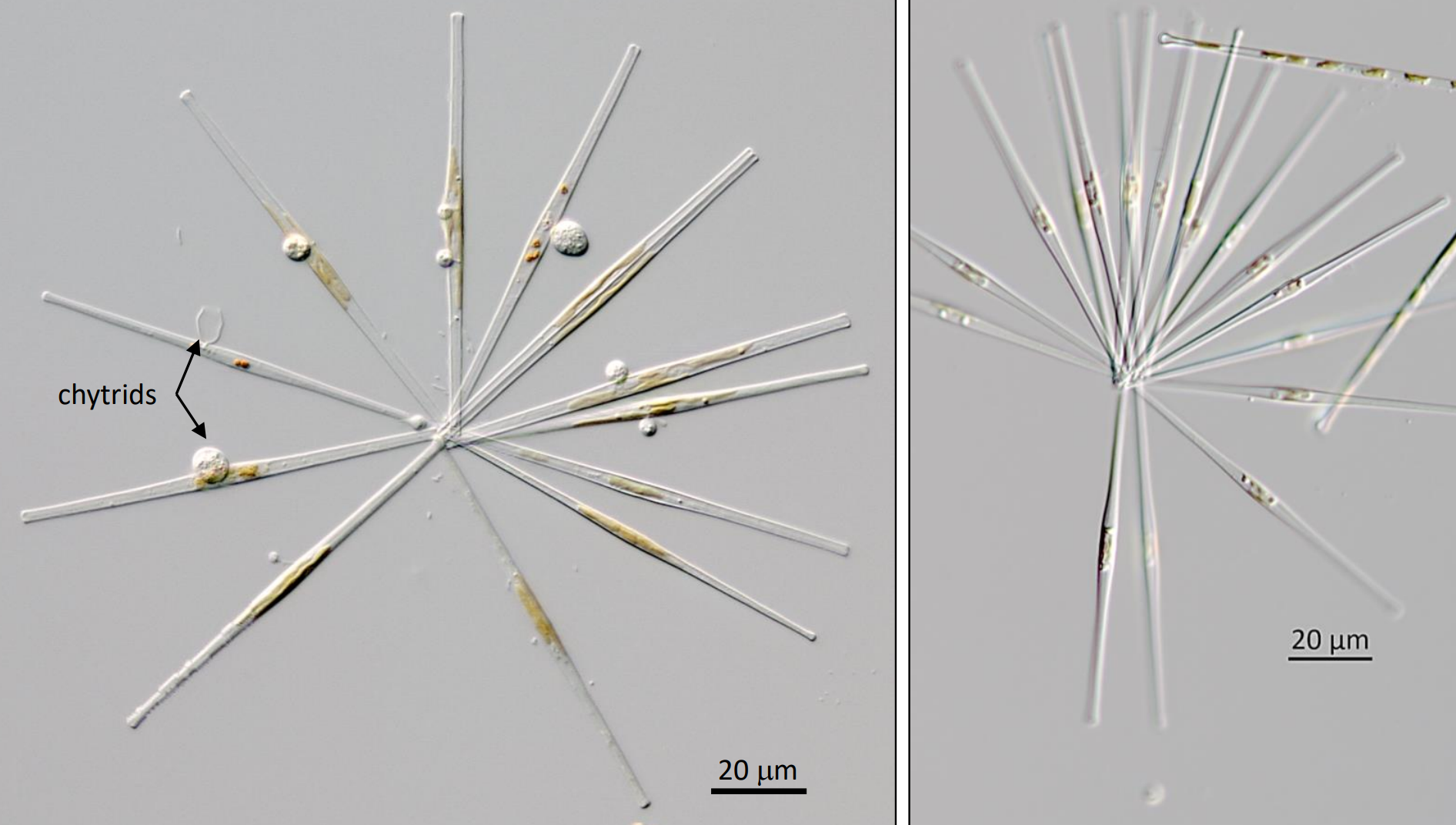
Synedra; Diatom
119
What is this? Group?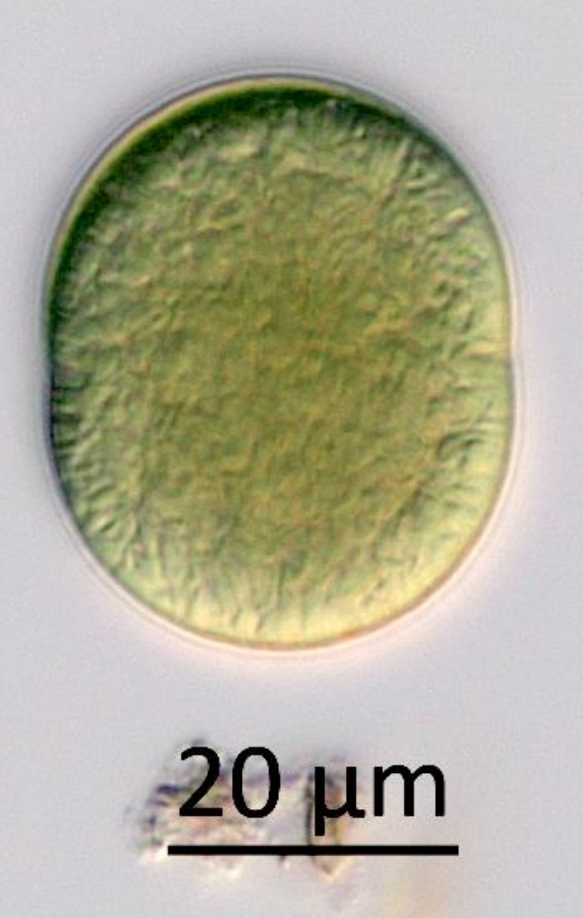
Synechocystis; Cyanobacteria
120
What is this? Group?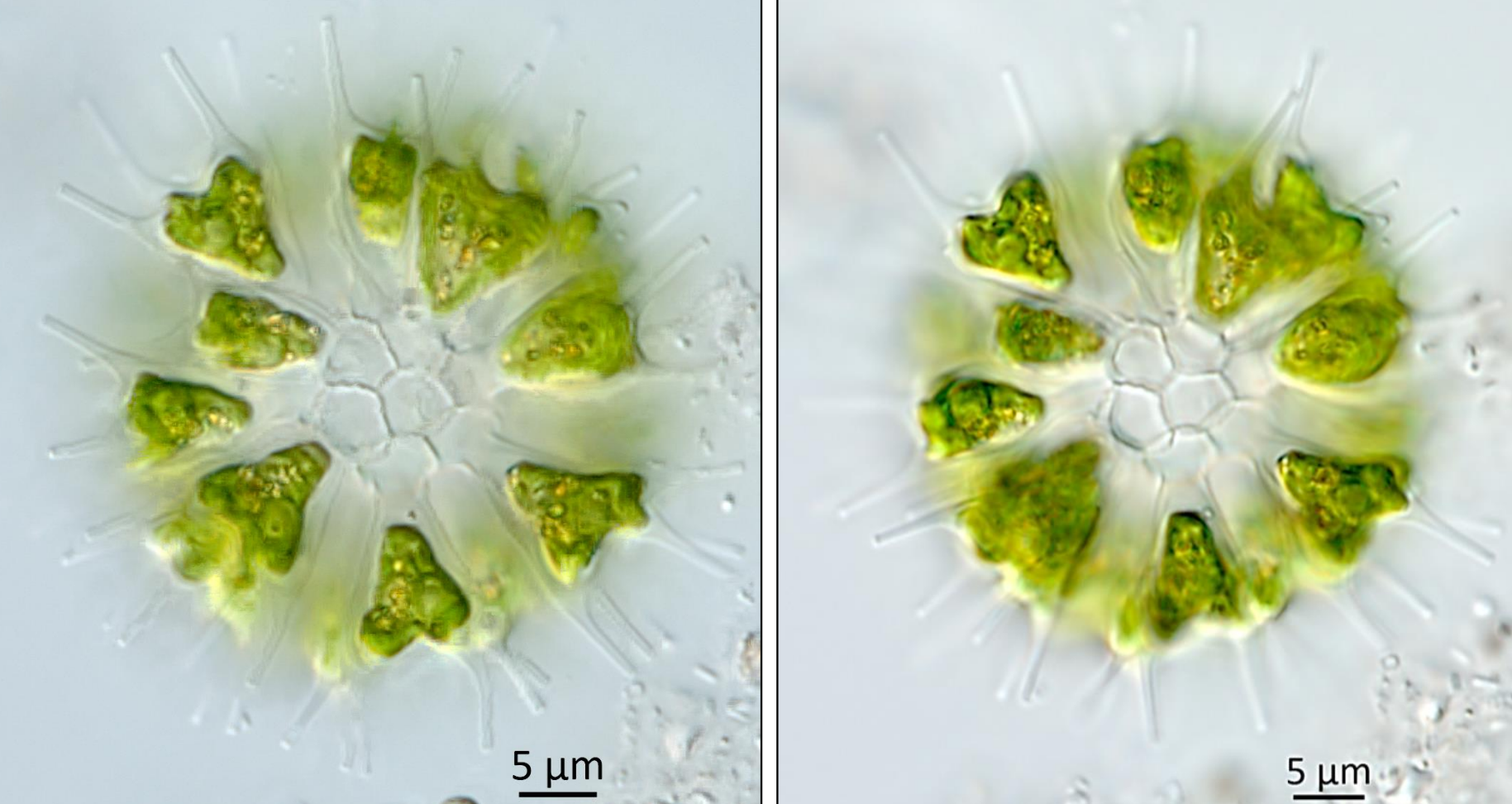
Sorastrum; Chlorophyta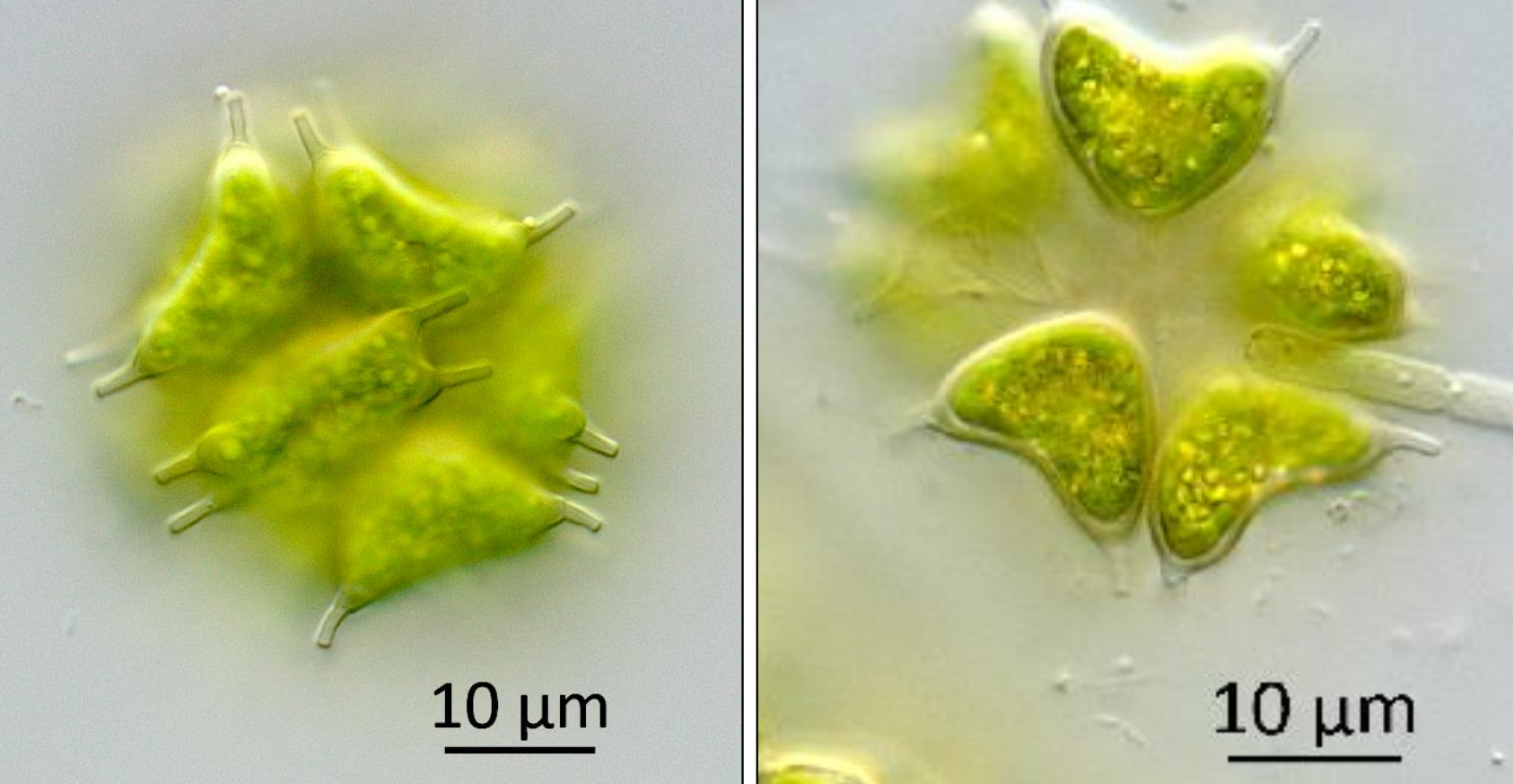
121
What is this? Group?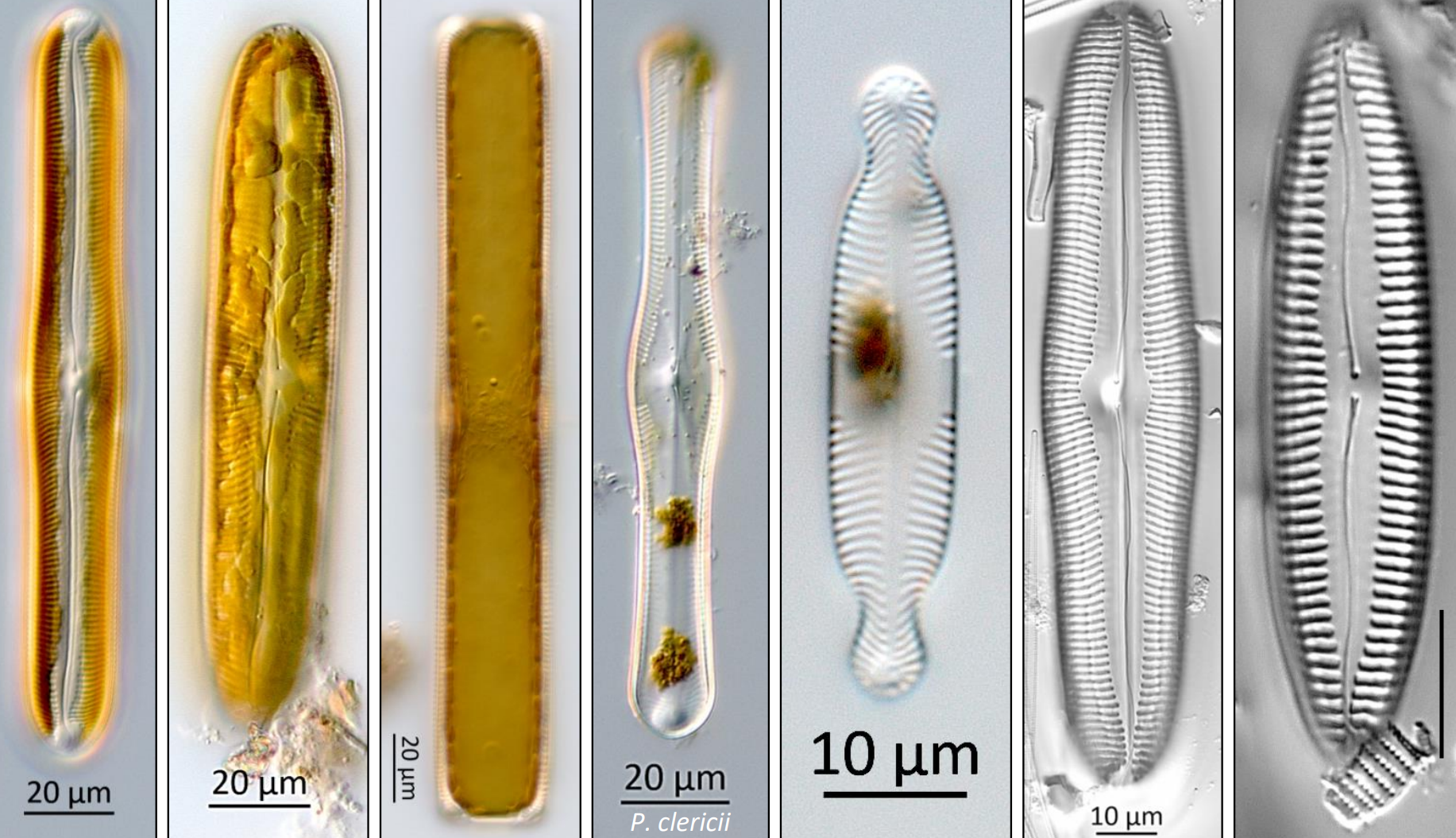
Pinnularia; Diatom
122
What is this? Group?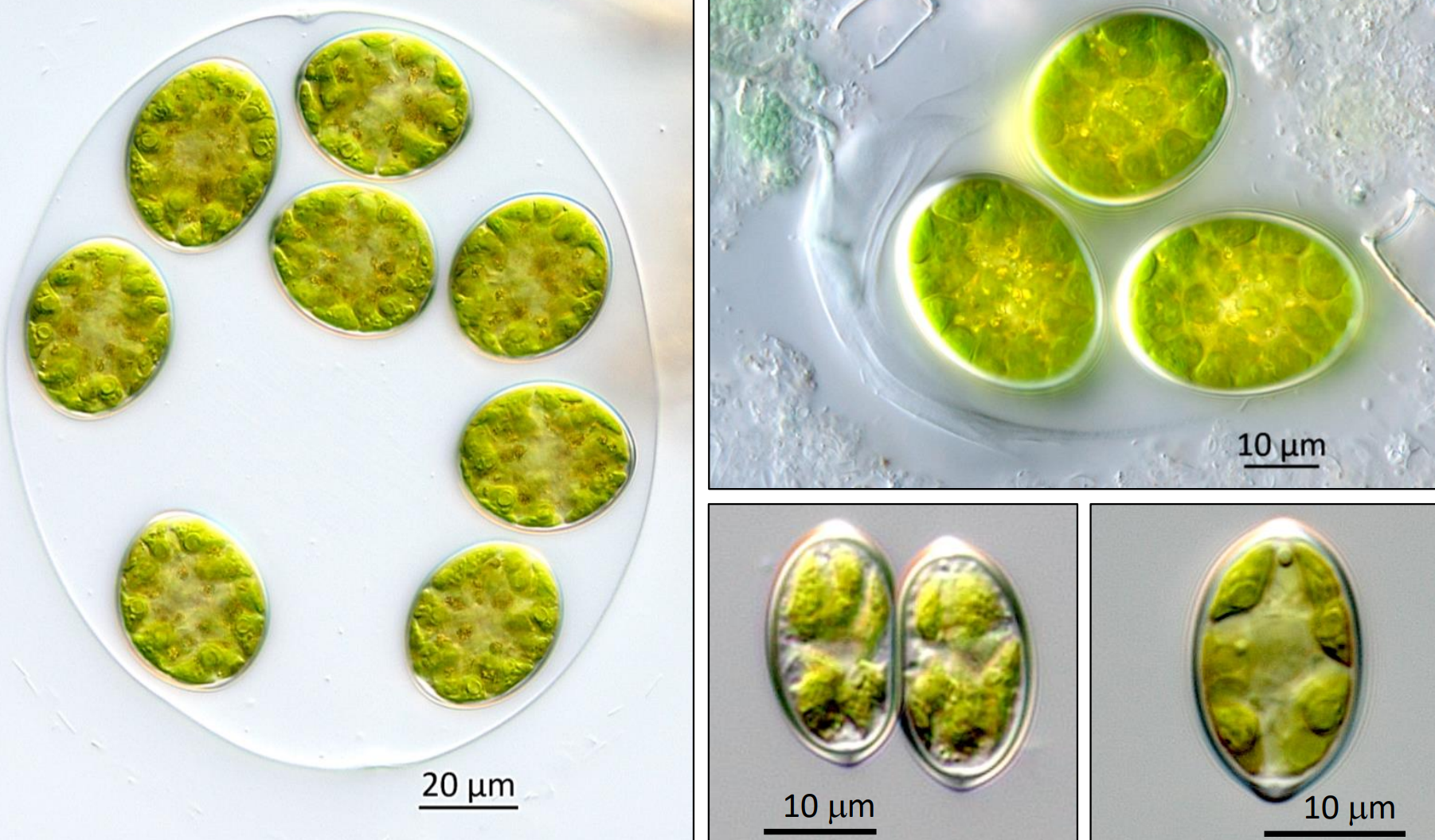
Oocystis; Chlorophyta
123
What is this? Group?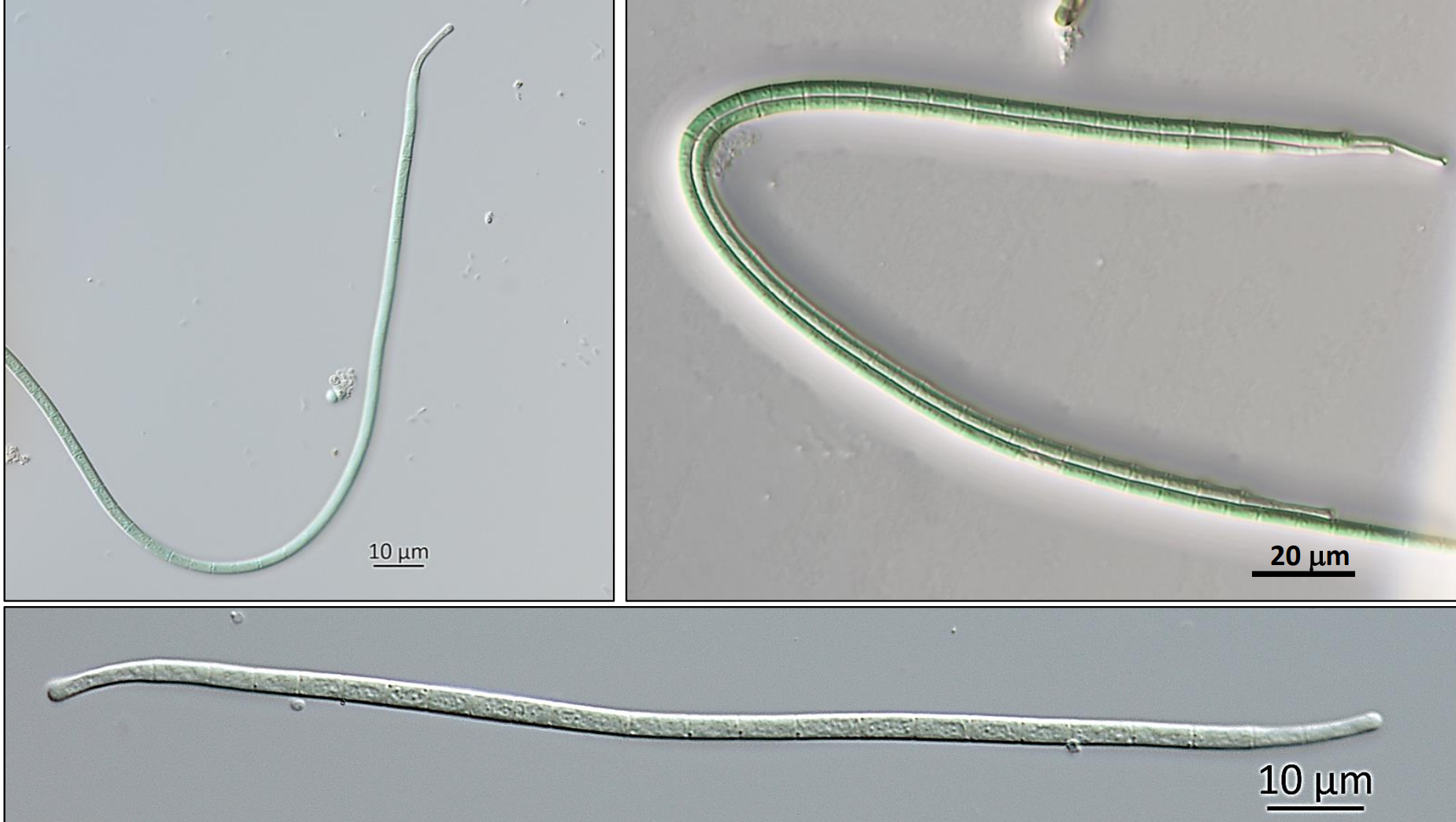
Geitlerinema; Cyanobacteria
124
What is this? Group?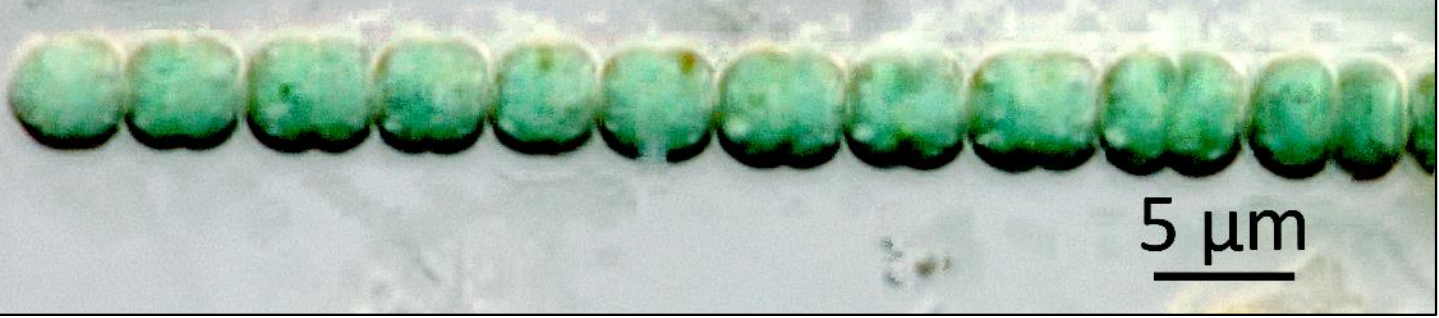
Komvophoron; Cyanobacteria
125
Endosymbiosis
symbiotic relationship where one organism lives inside the other
126
Thylakoids in Chrysophytes are in stacks of?
3
127
What triggers a cellular response in chrysophytes? What is this response?
Stress/adverse environmental conditions: lipid production/shut down and wait for better times
128
What is this? Group?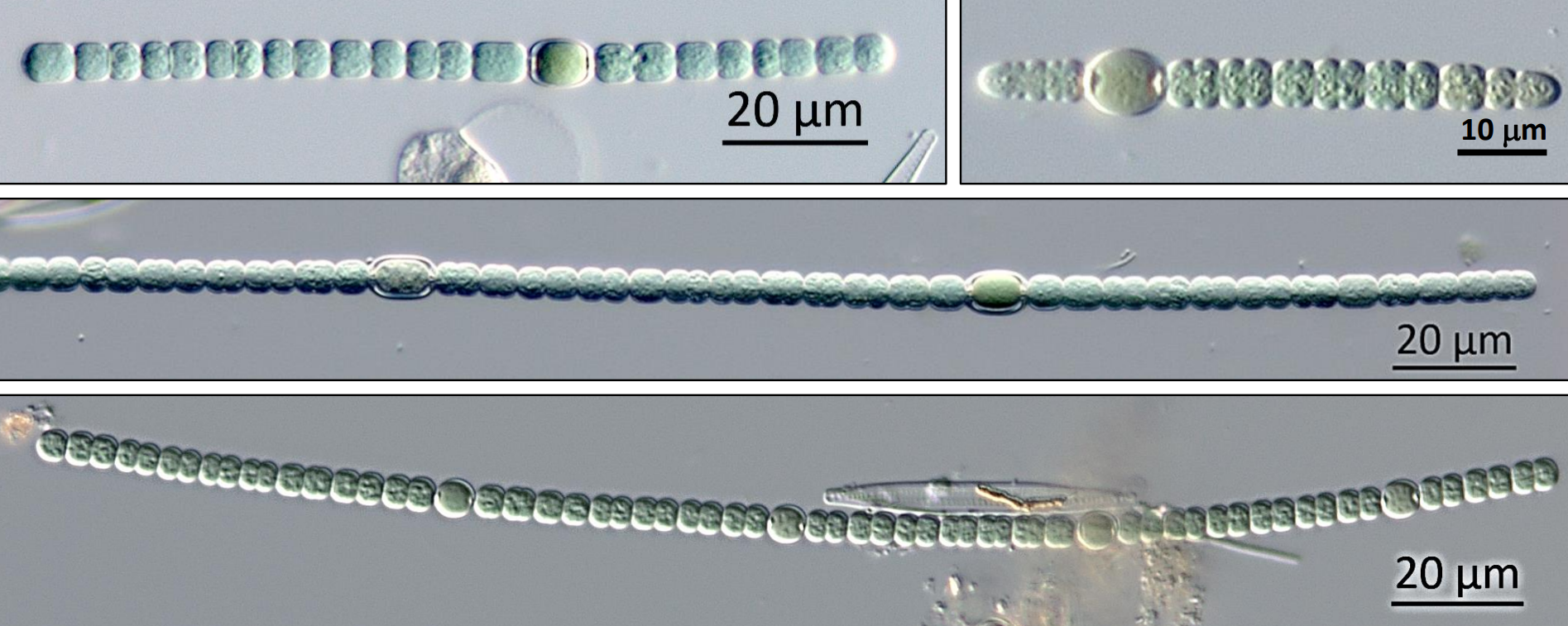
Anabaena; Cyanobacteria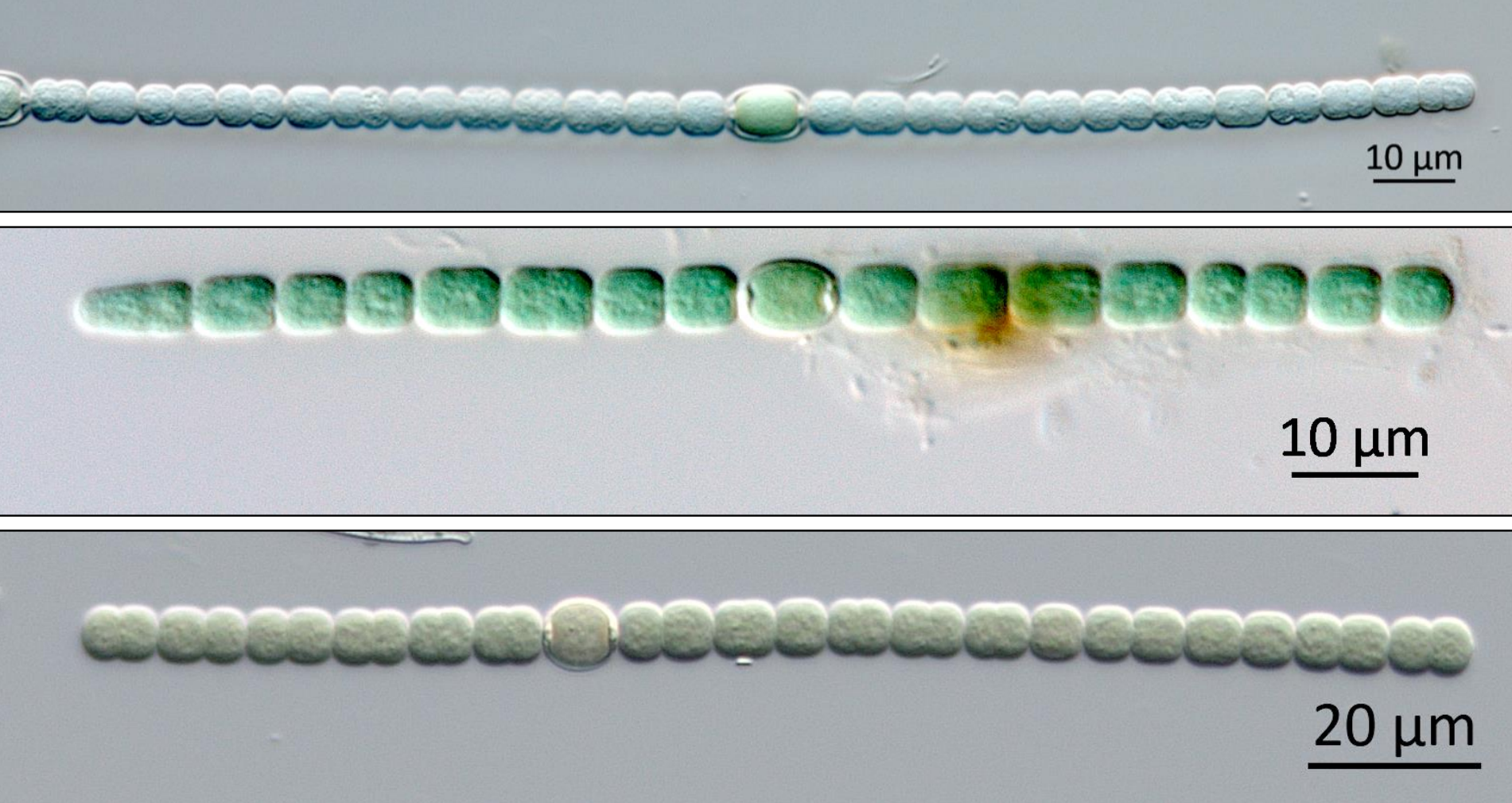
129
What is this? Group?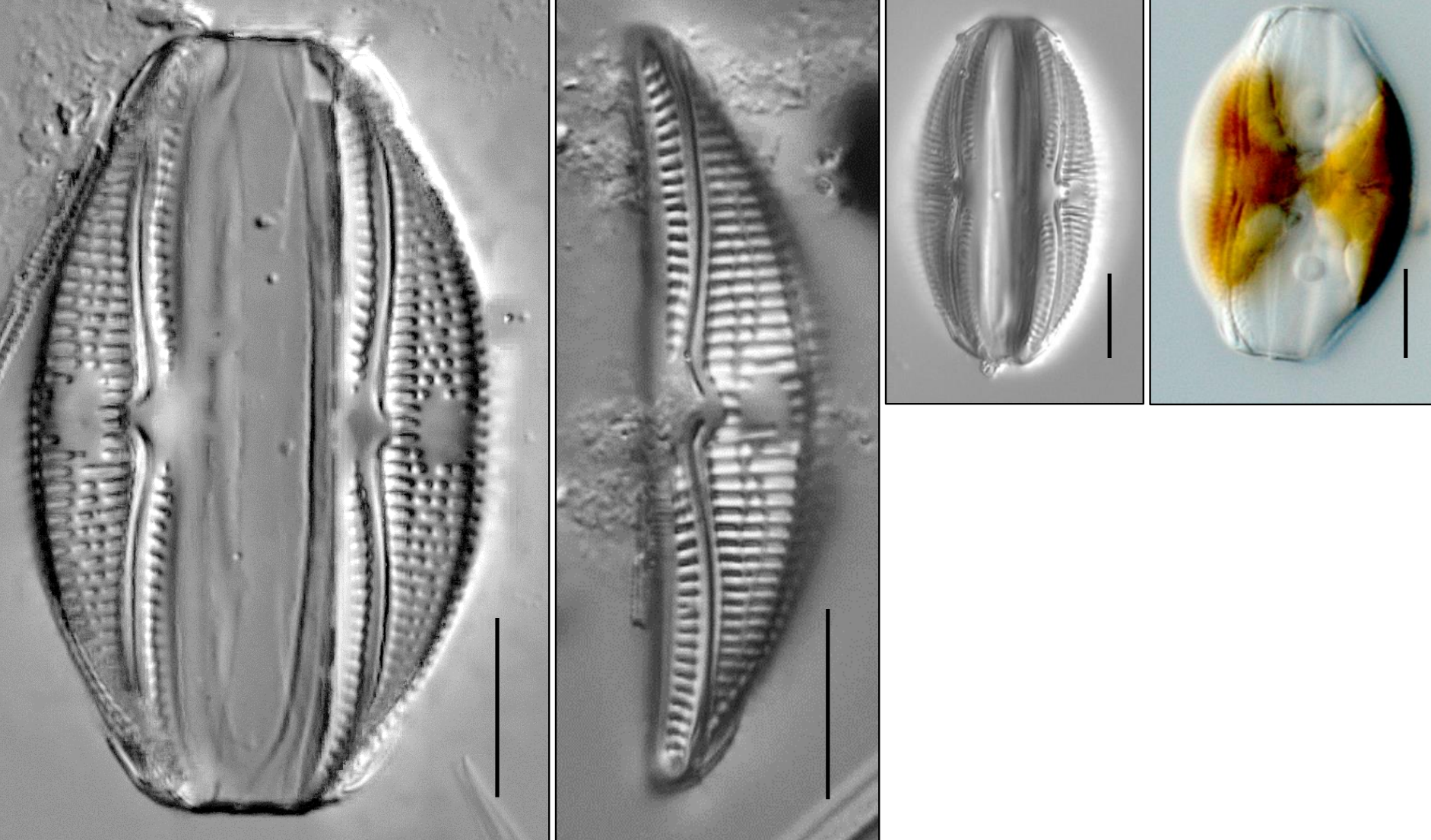
Amphora; Diatom
130
What is this? Group?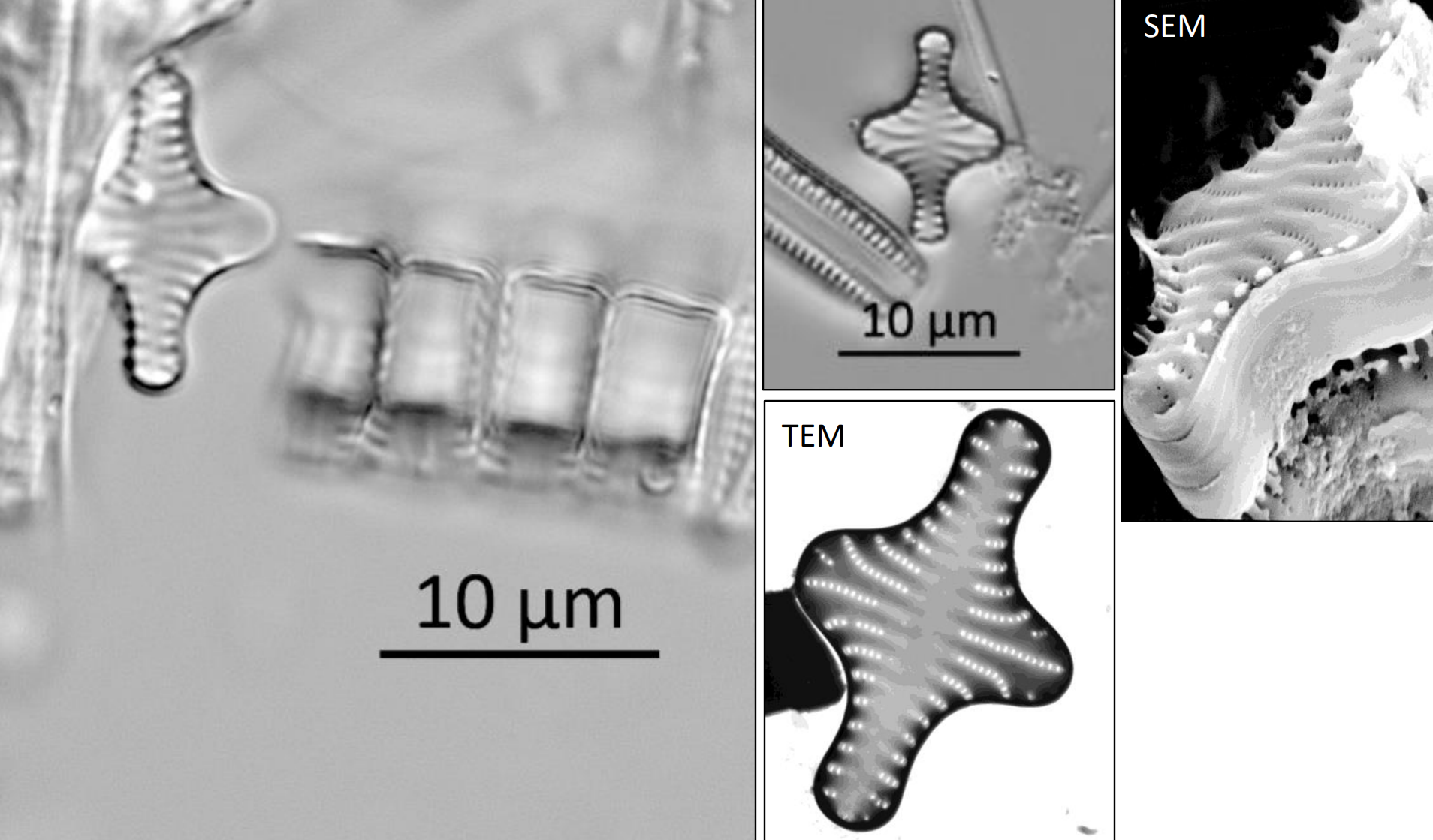
Staurosira; Diatom
131
What is this? Group?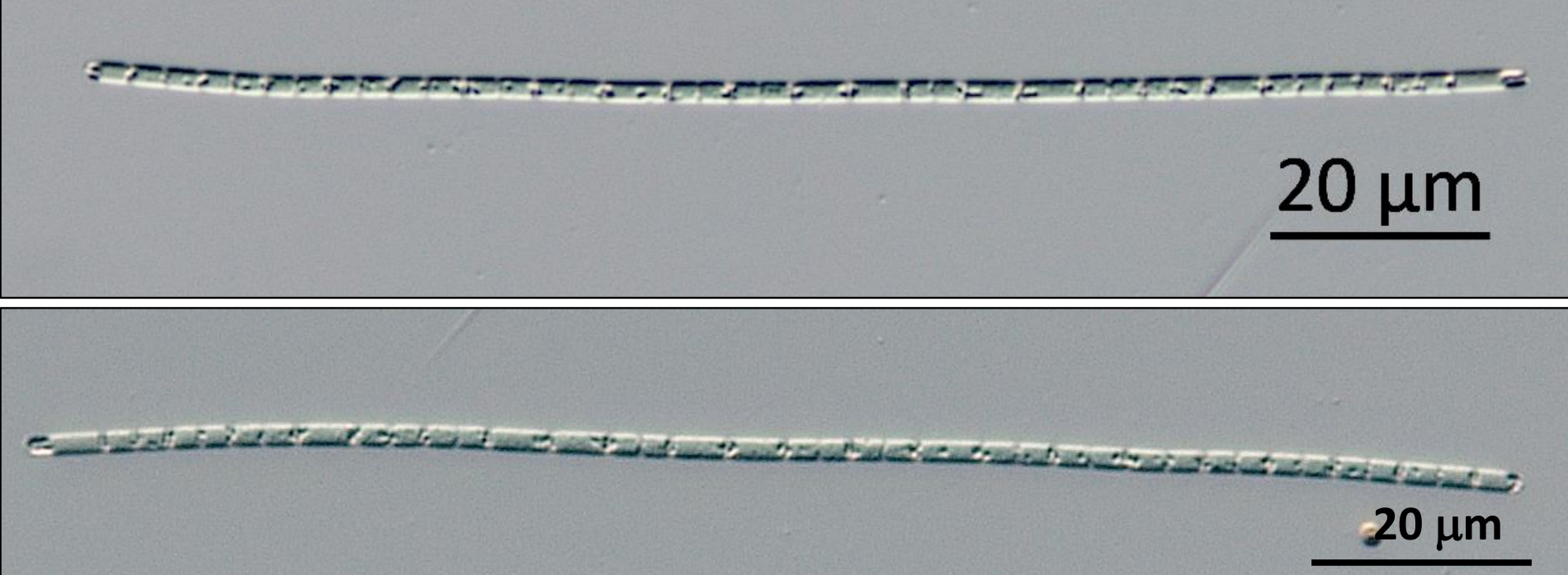
Limnnothrix; Cyanobacteria
132
What is this? Group?
Desmidium; Charophyta
133
What is this? Group?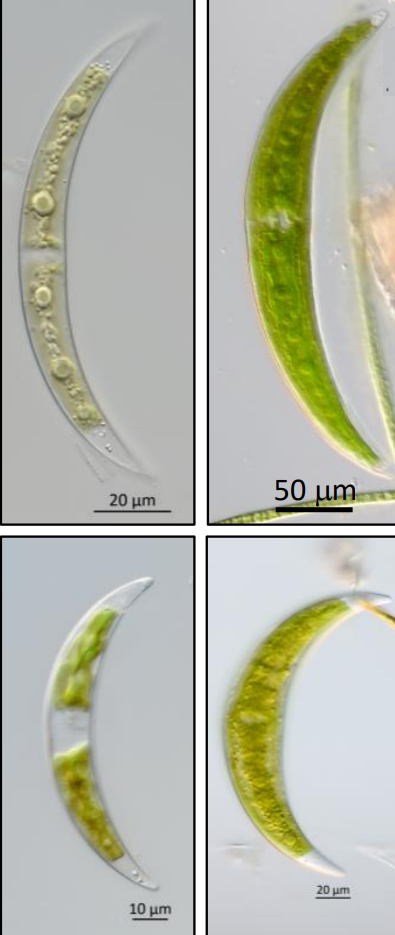
Closterium; Charophyta
134
What is this? Group?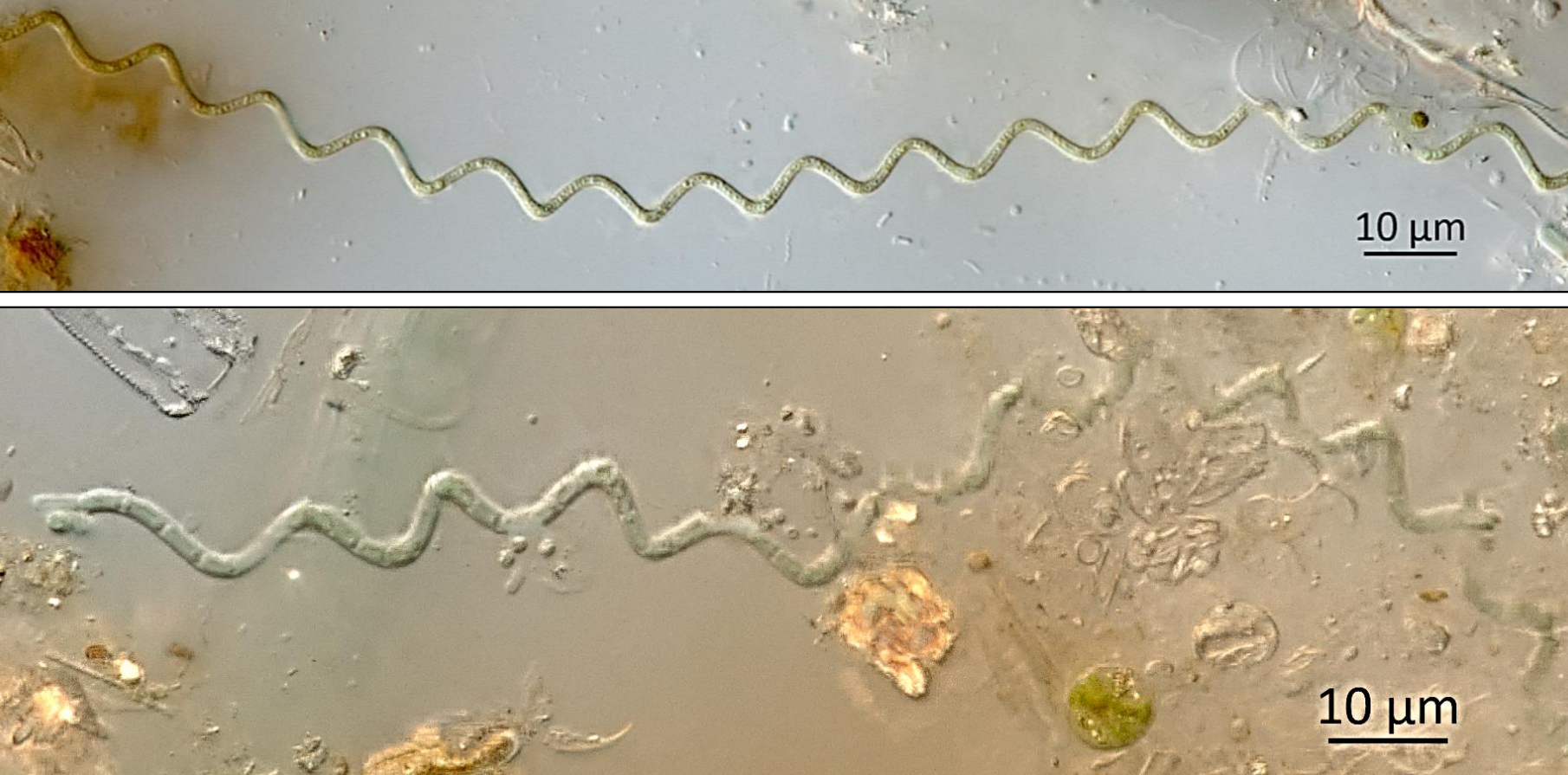
Leptolyngbya; Cyanobacteria
135
What is this? Group?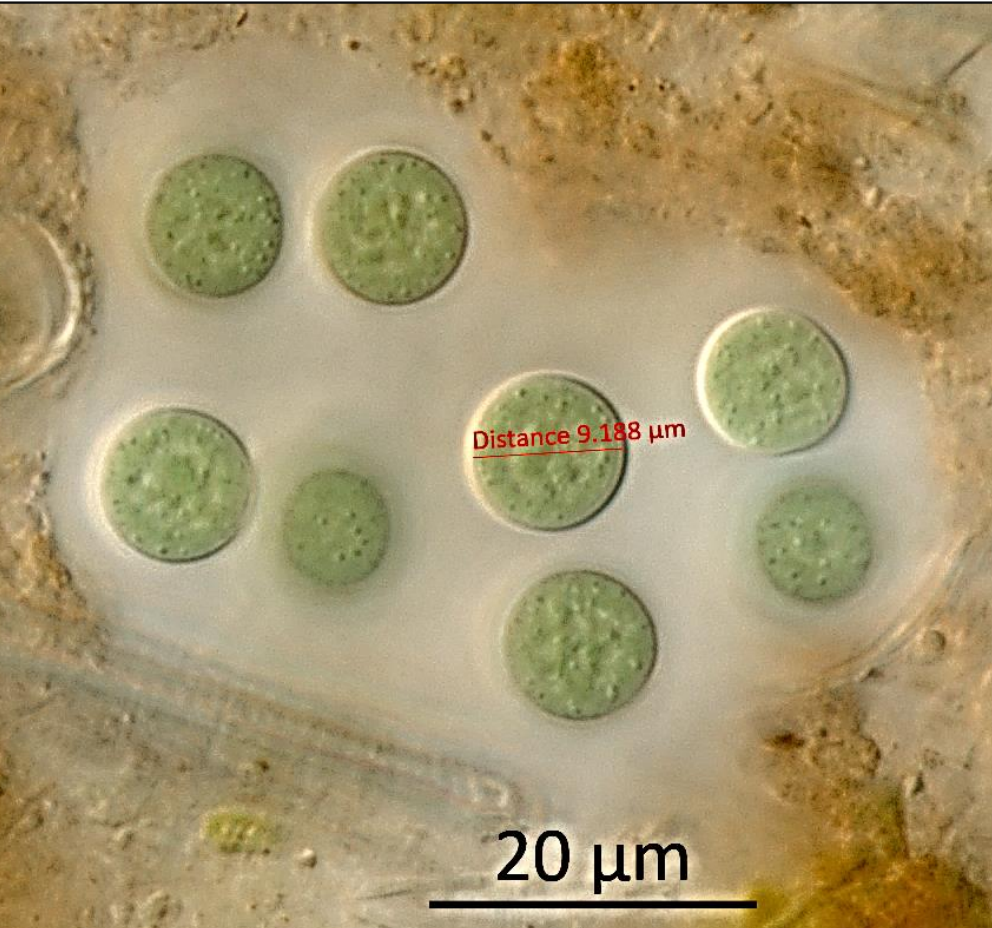
Aphanocapsa; Cyanobacteria
136
What is this? Group?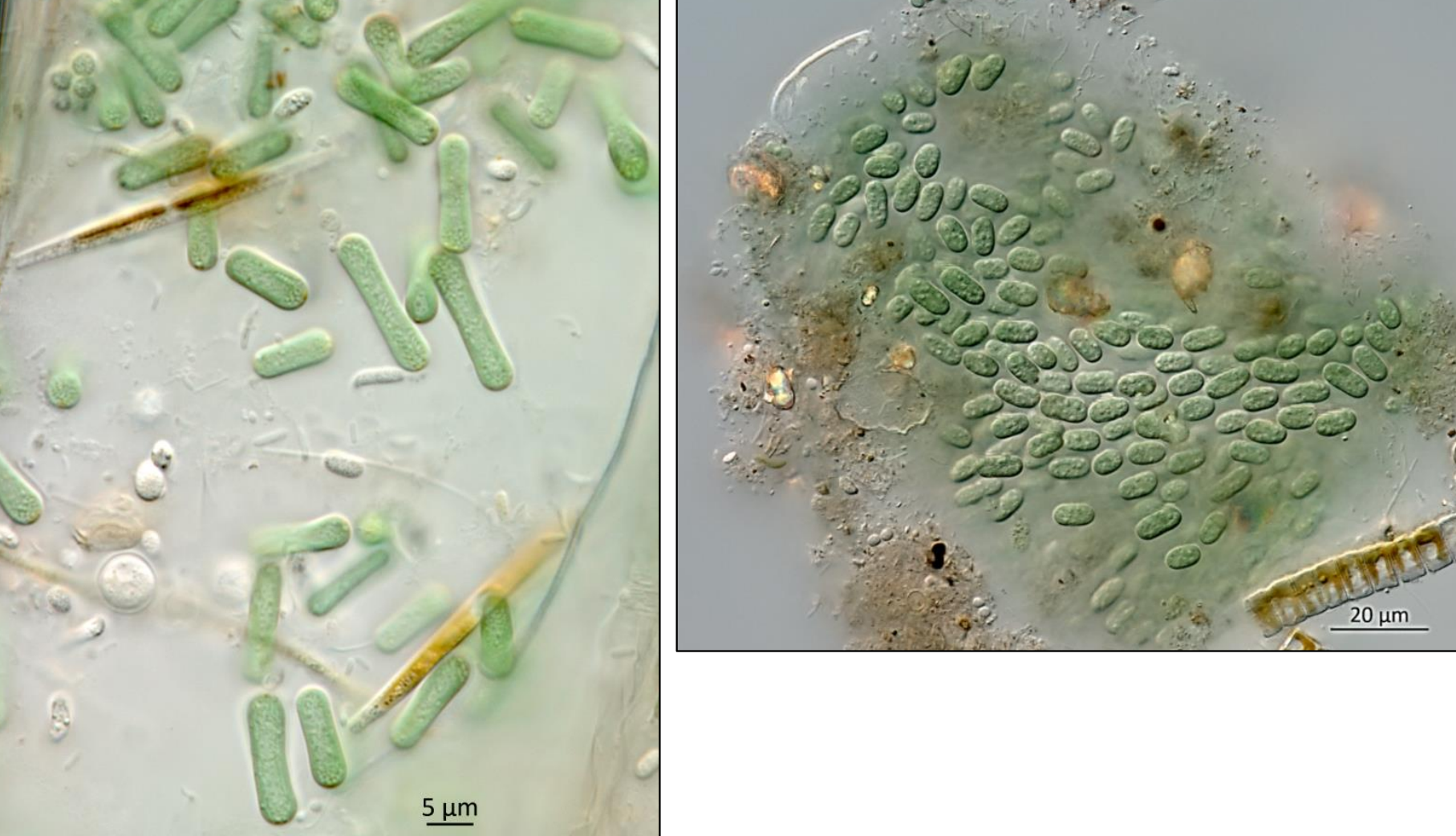
Aphanothece; Cyanobacteria
137
What is this? Group?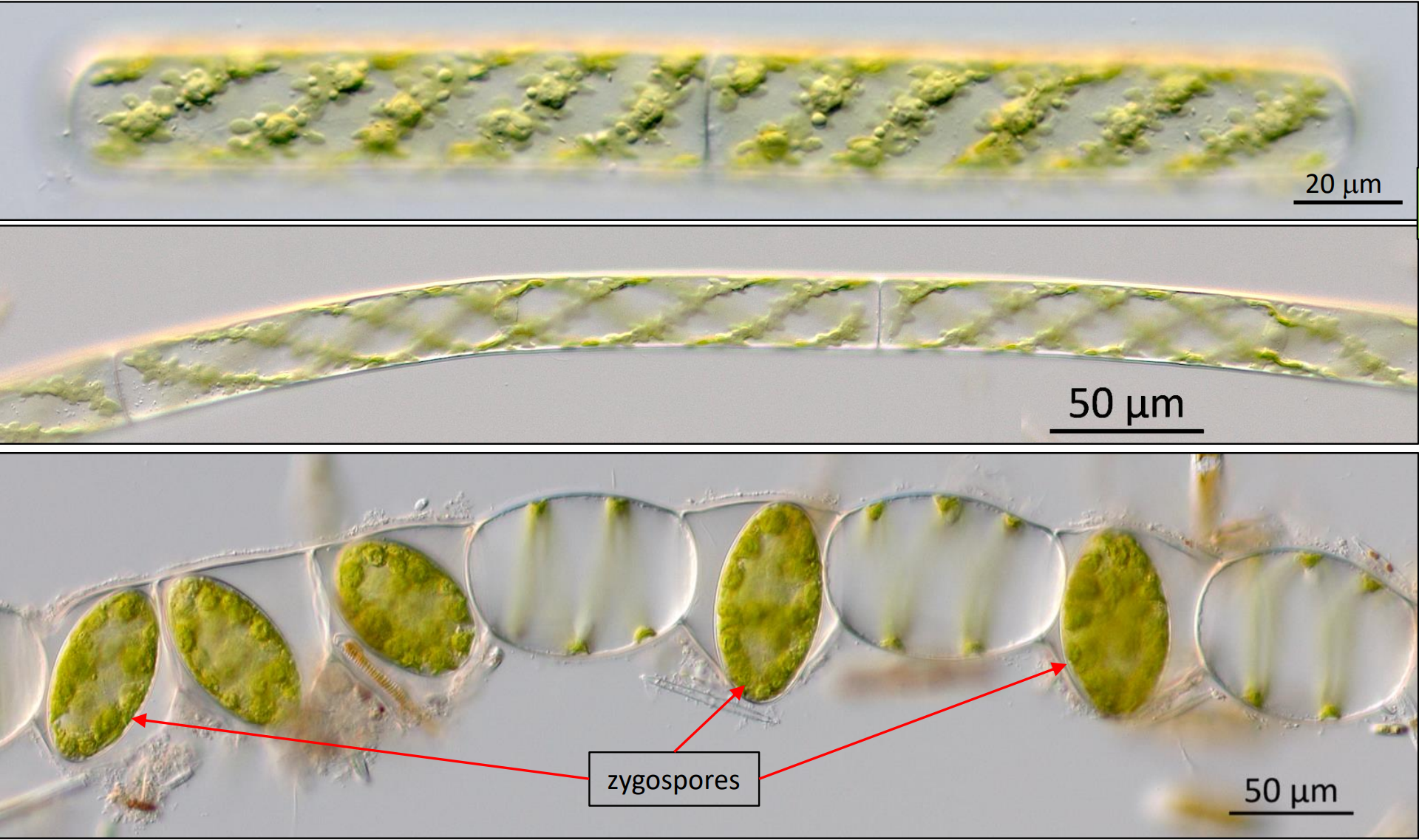
Spirogyra; Chlorophyta
138
What is this? Group?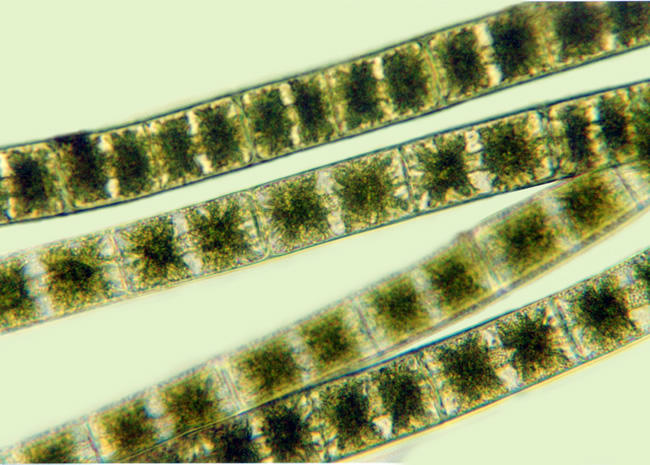
Zygnema; Charophyta
139
What is this? Group?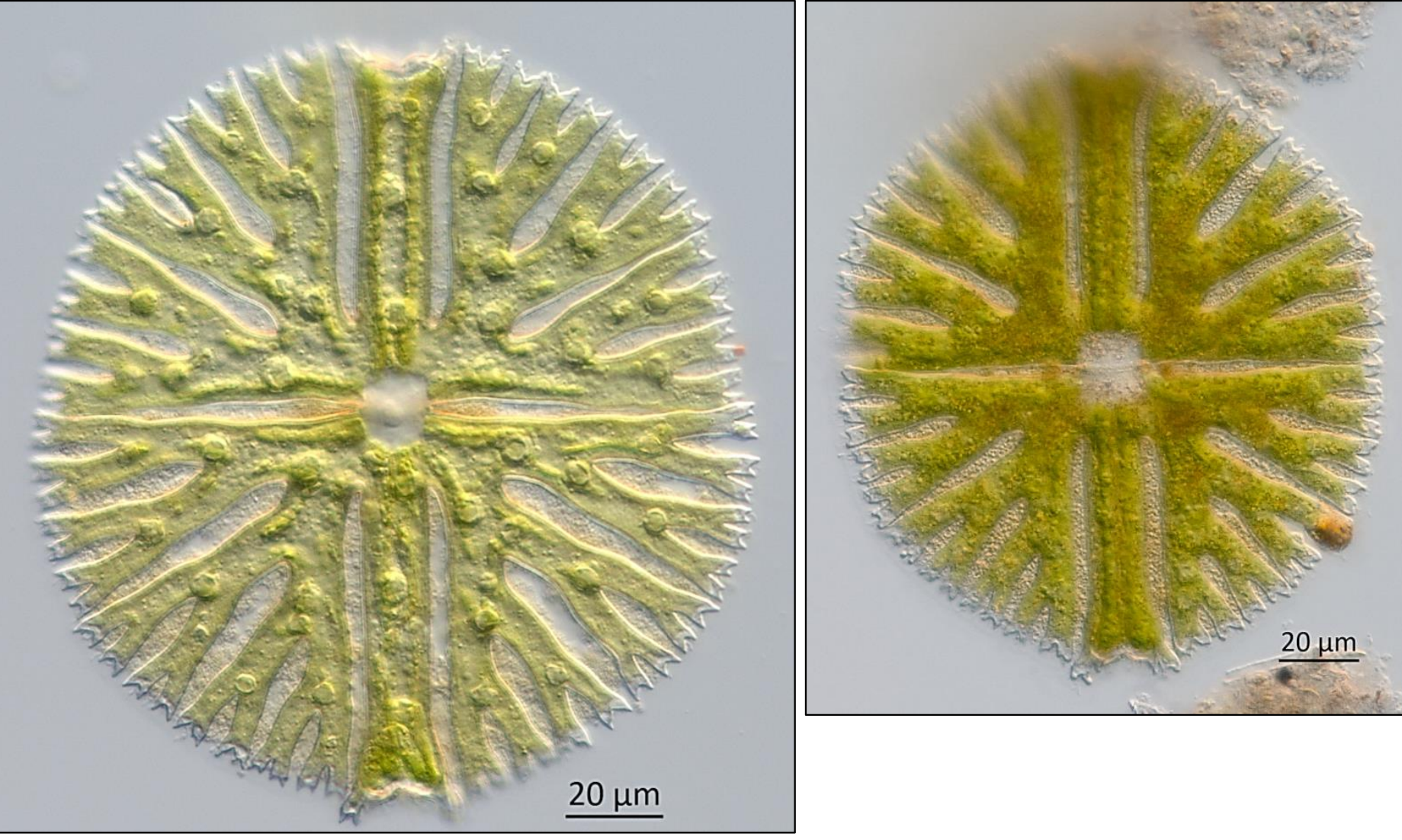
Micrasterias; Charophyta
140
What is this? Group?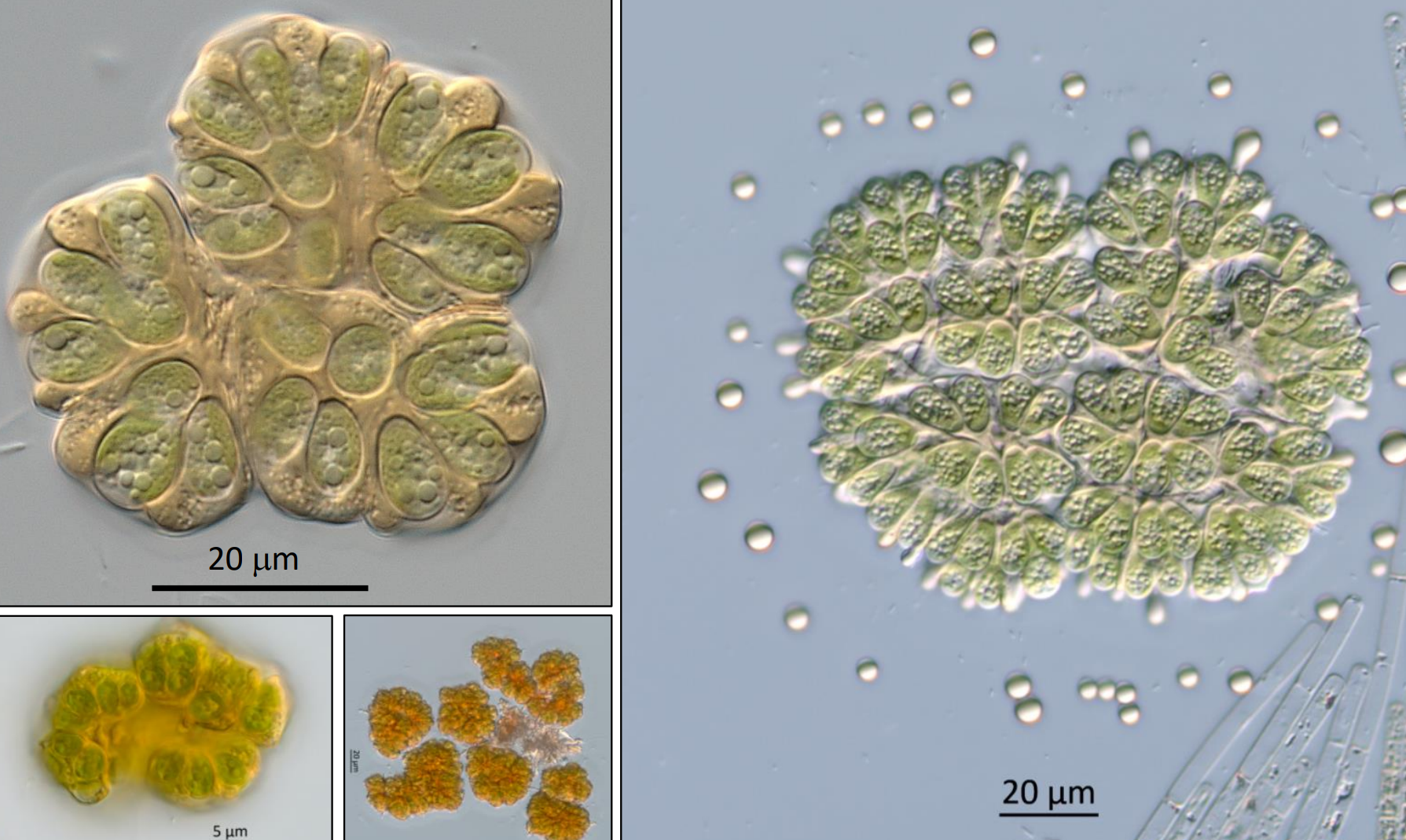
Botryococcus; Chlorophyta
141
What is this? Group?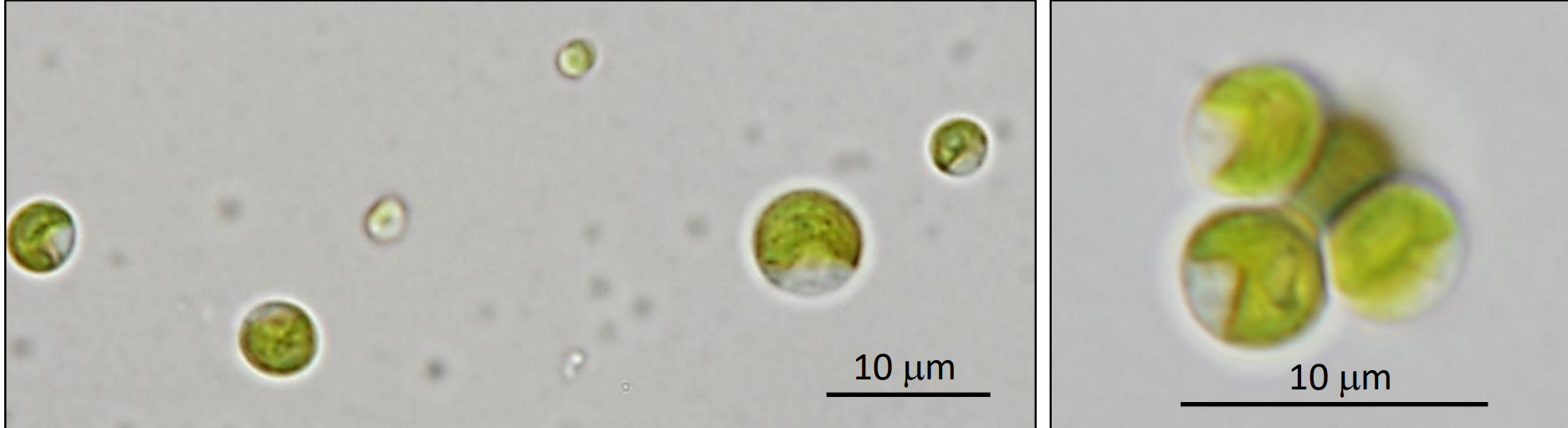
Chlorella; Chlorophyta
142
What is this? Group?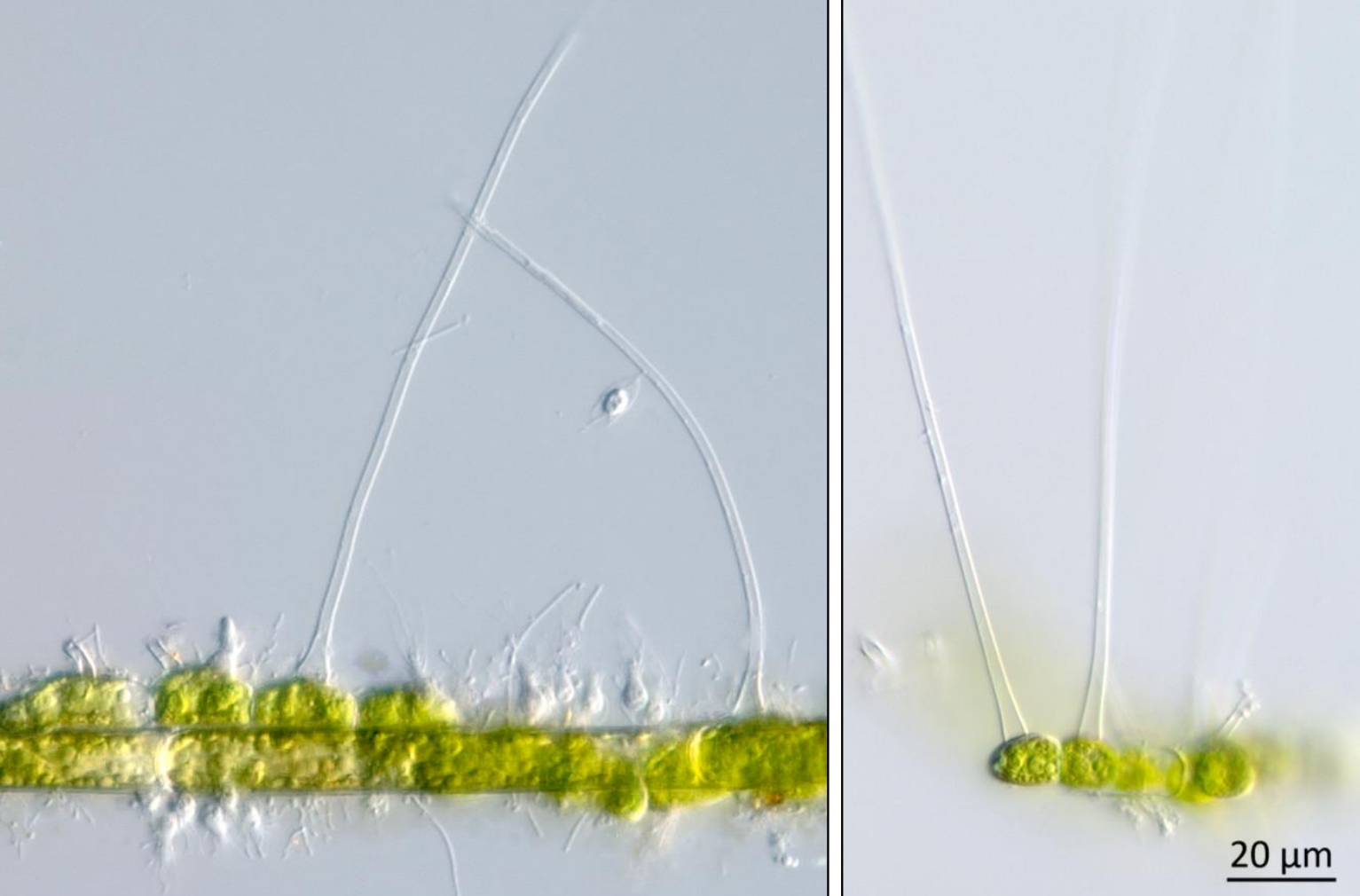
Aphanochaete; Chlorophyta
143
What is this? Group?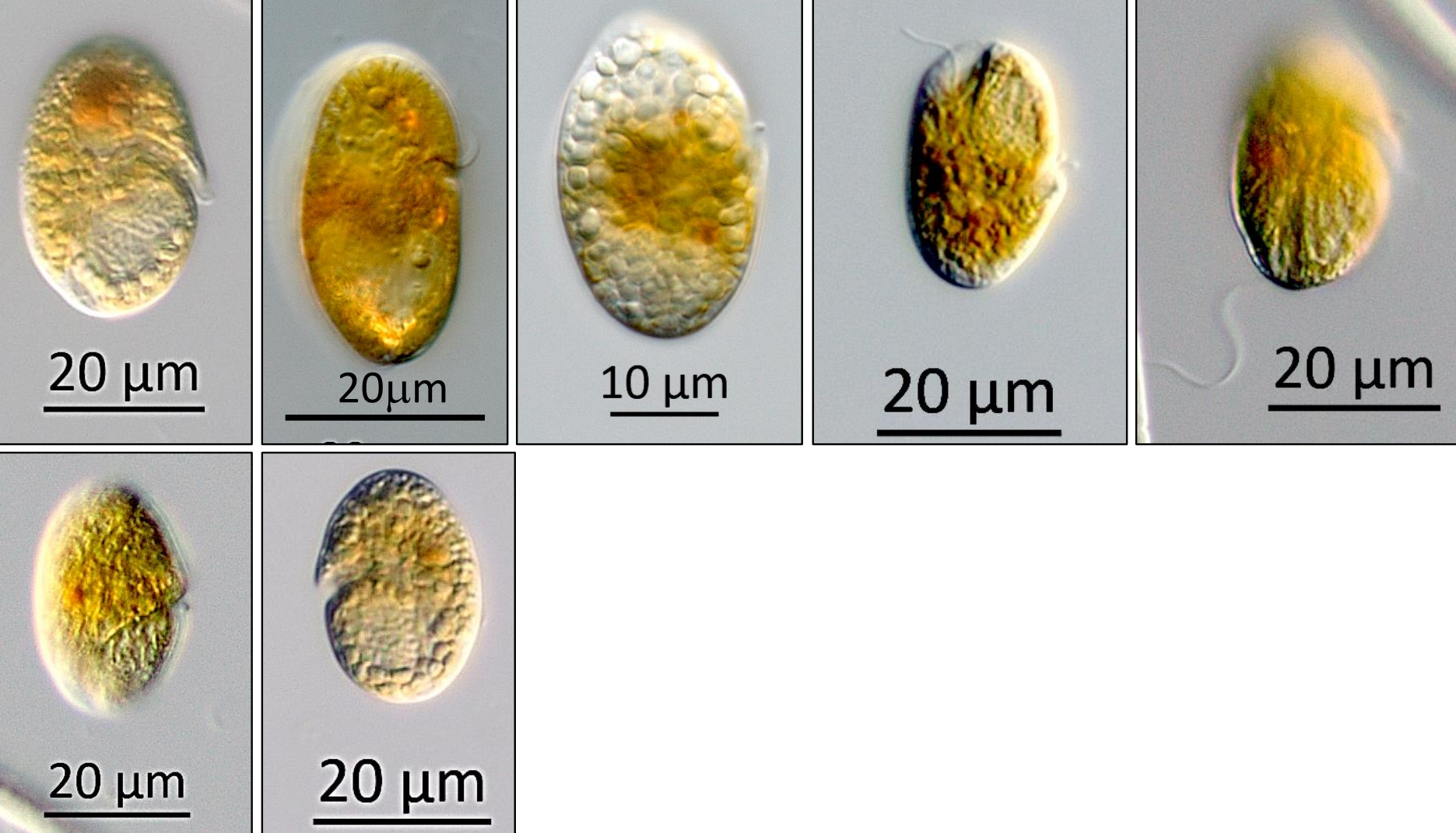
Hemidinium; Dinoflagellate
144
What is this? Group?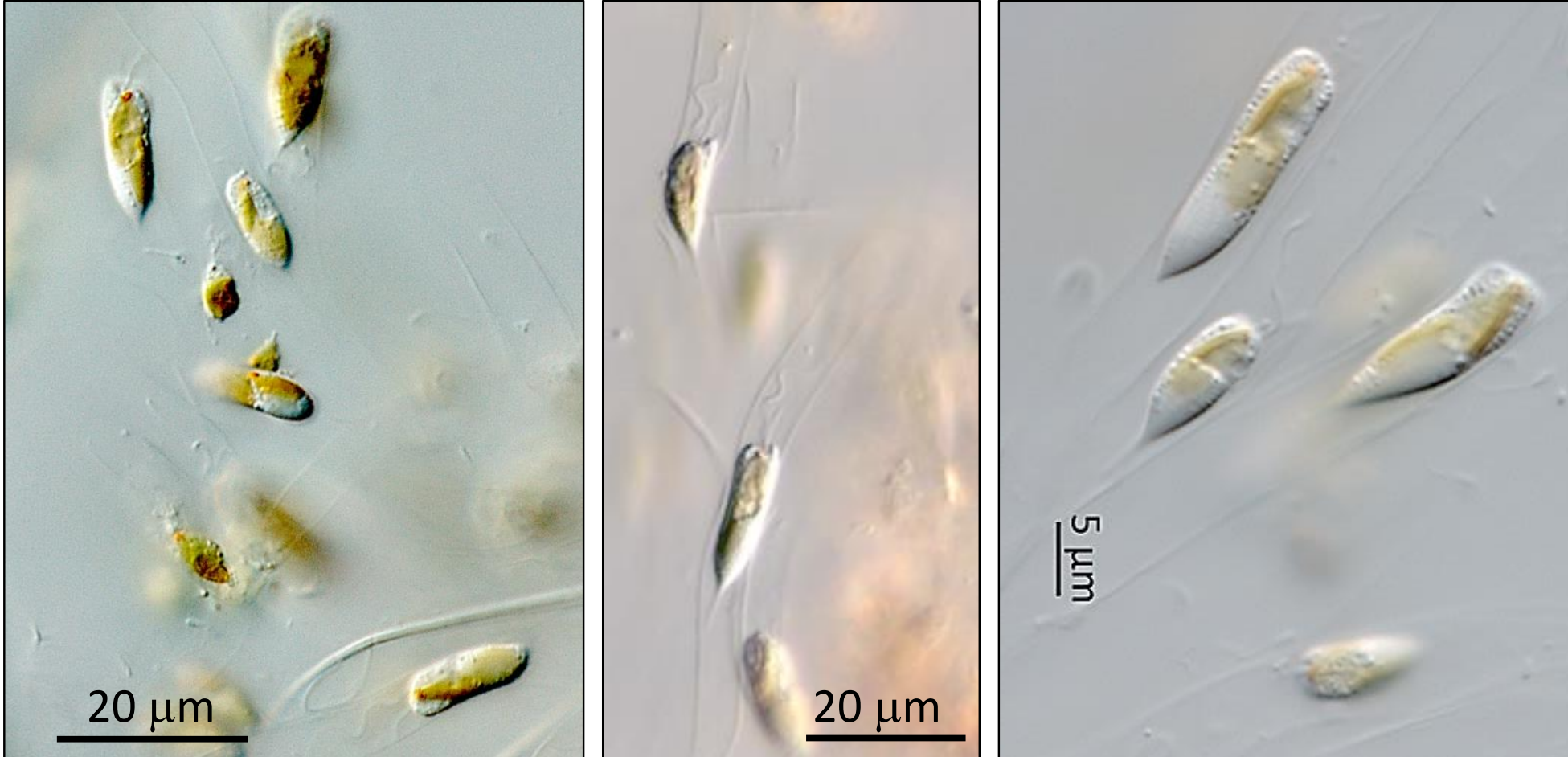
Chrysoxys; Chrysophyte
-cells live and move around in “tubes”, clear tubing that appears like sheath; appears similar to Dinobryon, but NO lorica; has an eyespot
-cells live and move around in “tubes”, clear tubing that appears like sheath; appears similar to Dinobryon, but NO lorica; has an eyespot
145
What is this? Group?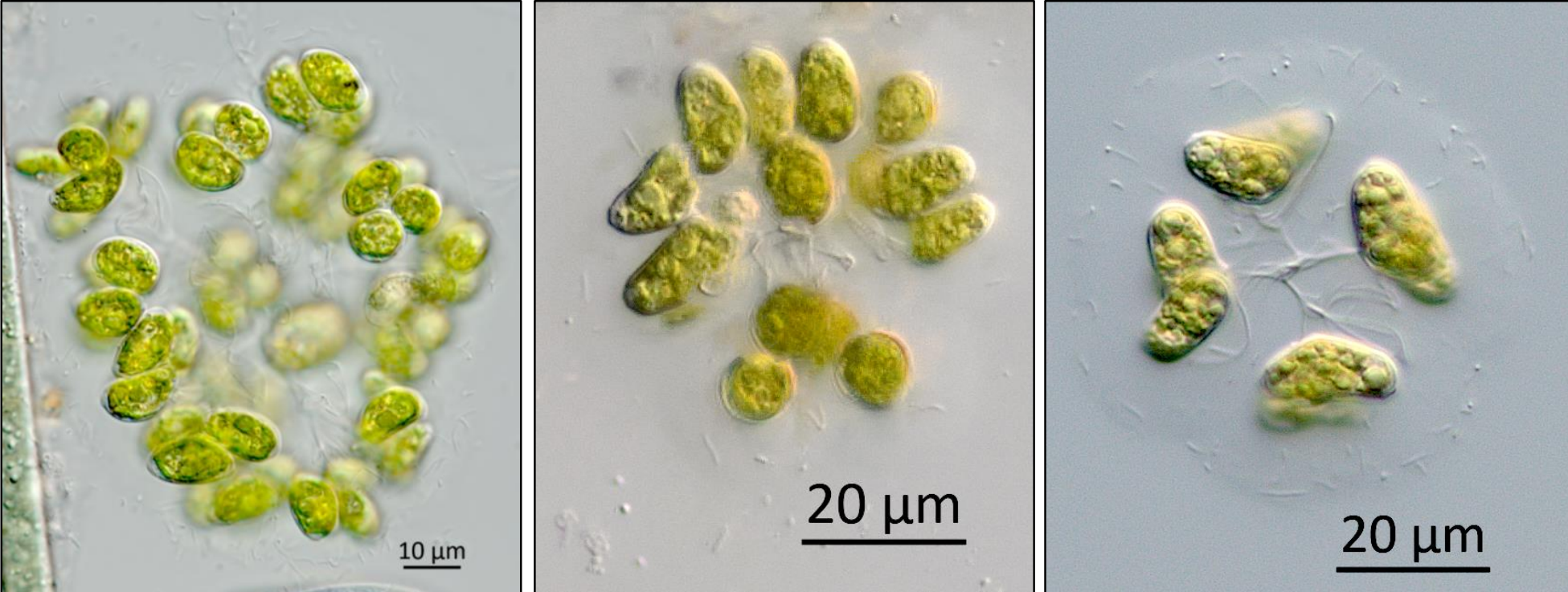
Dimorphococcus; Chlorophyta
146
What is this? Group?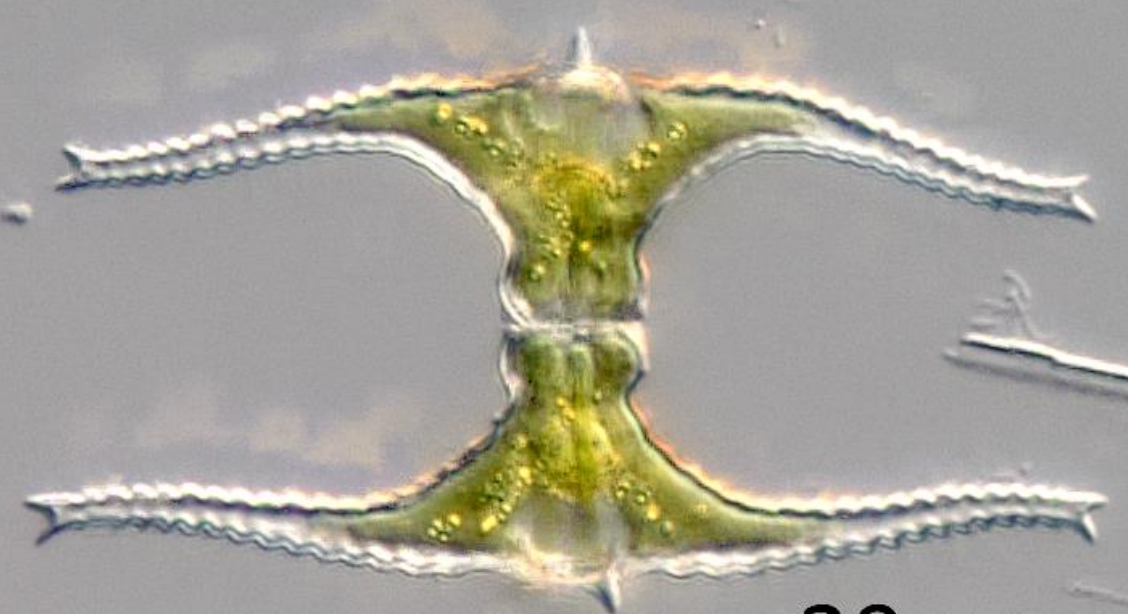
Staurastrum; Charophyta
147
What is this? Group?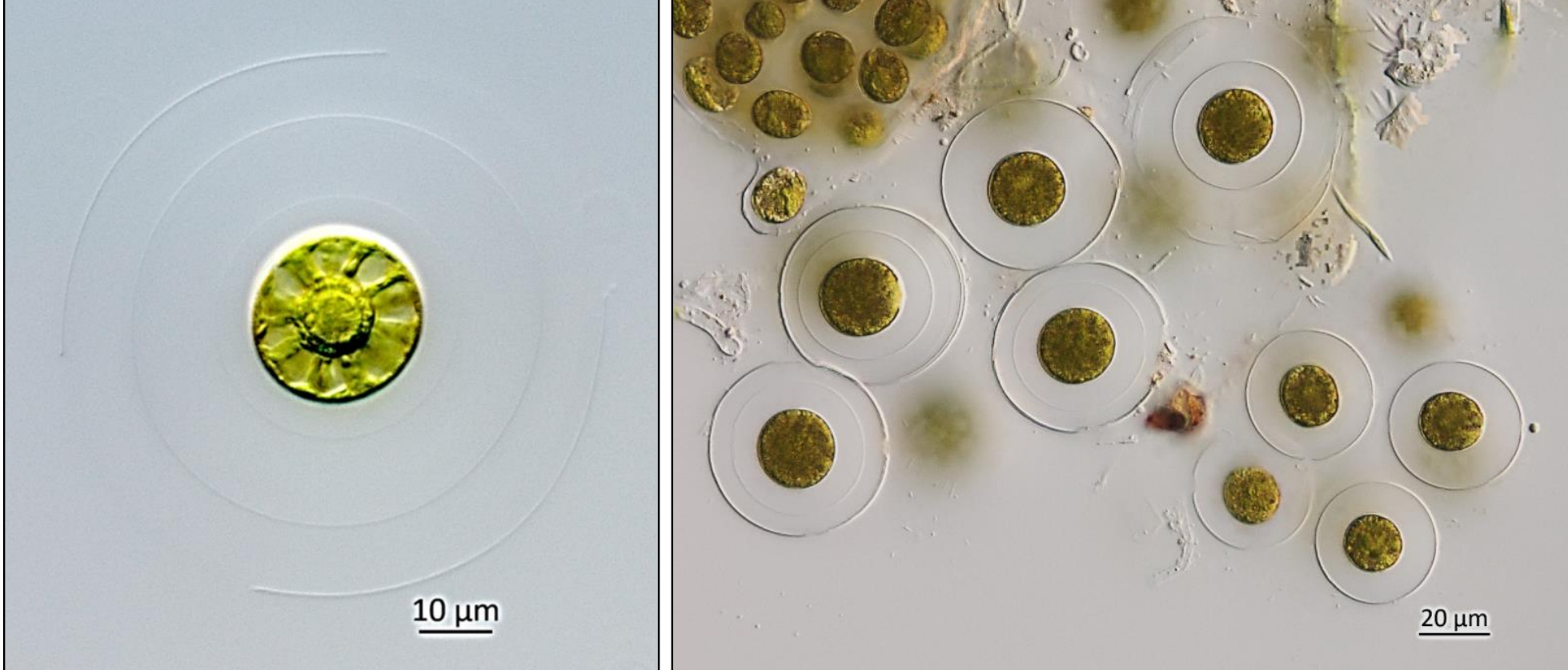
Asterococcus; Chlorophyta
148
What is this? Group?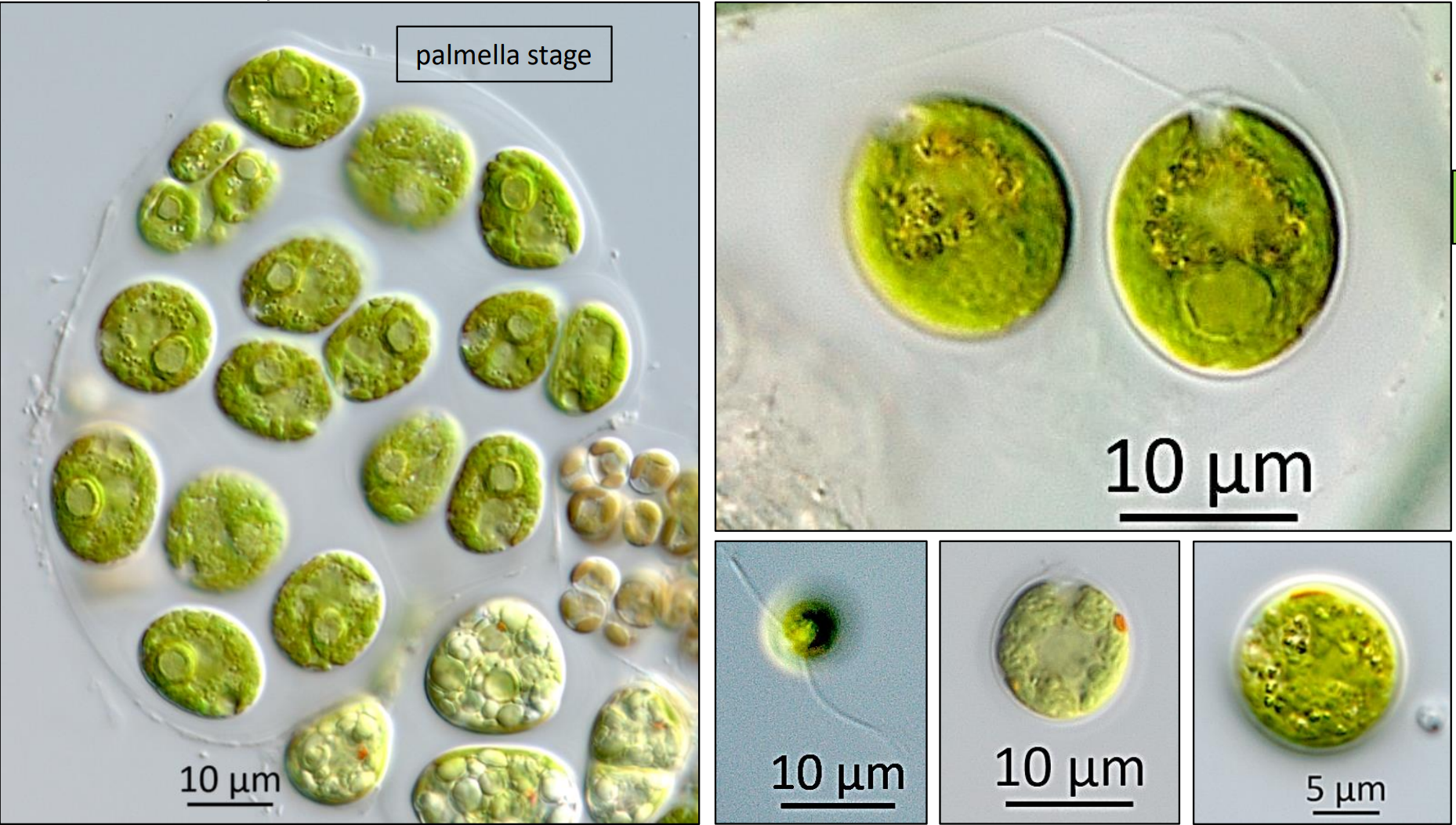
Chlamydomonas; Chlorophyta
149
What is this? Group?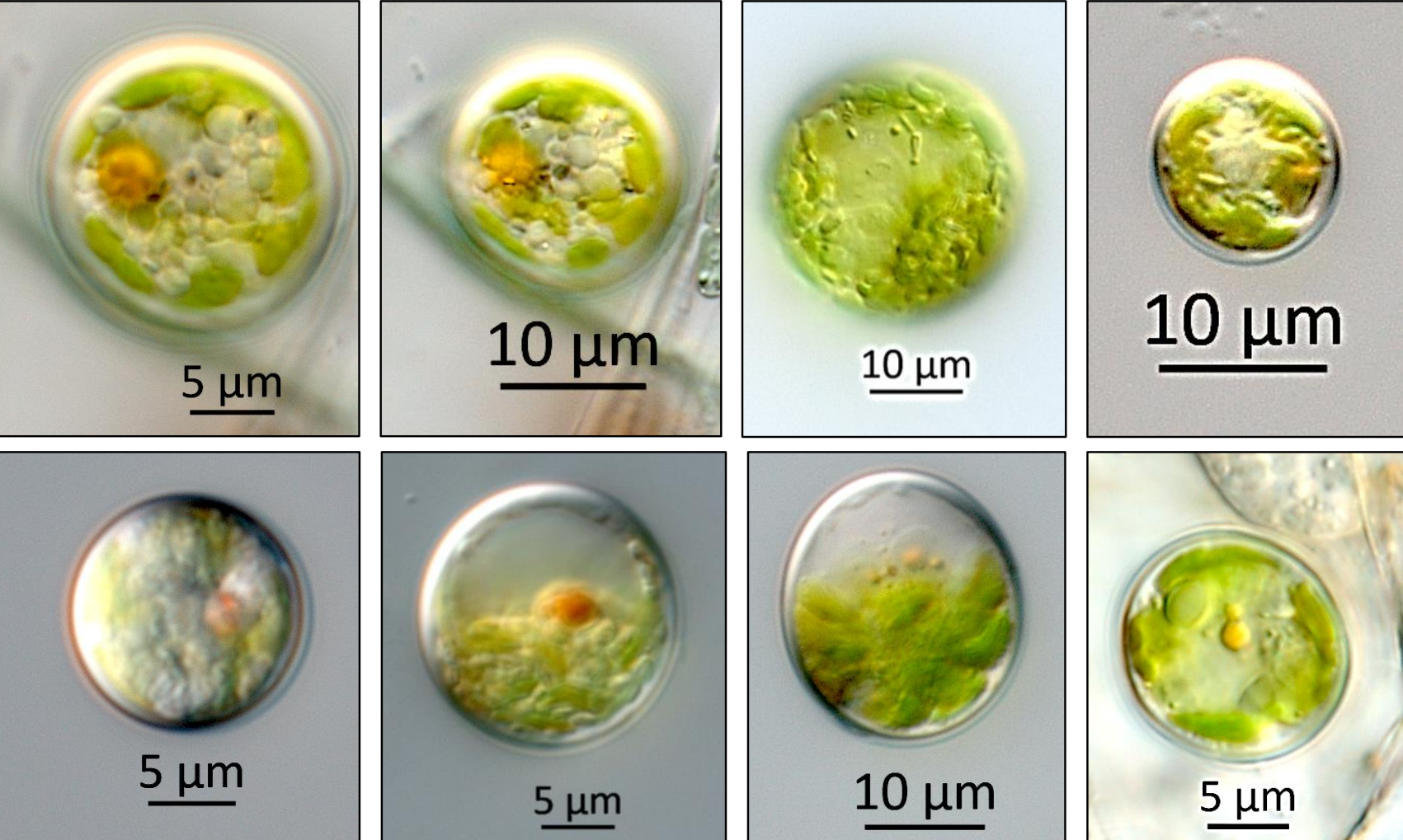
Visheria; Eustigmatophytes
150
What is this? Group?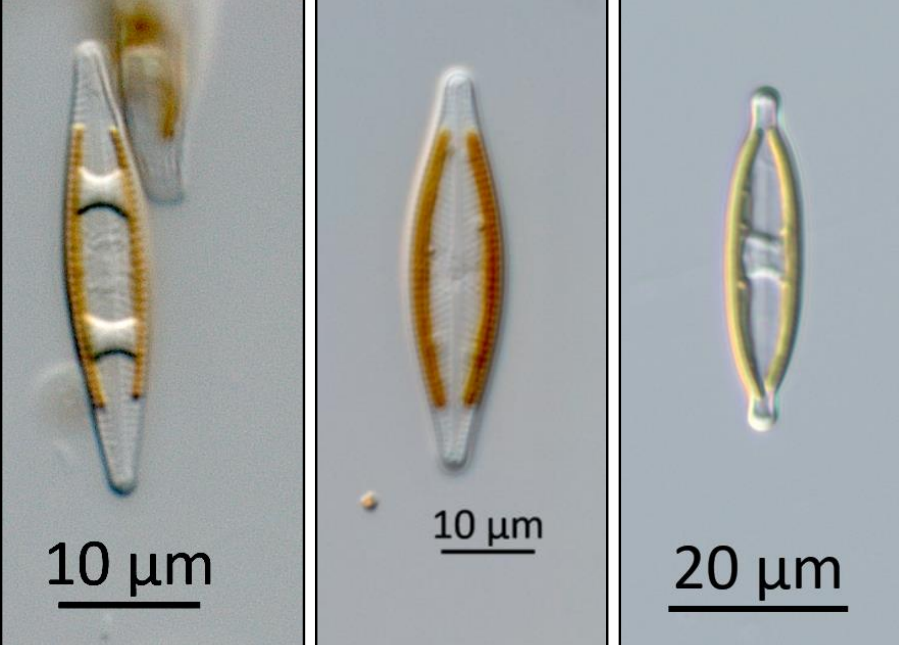
Navicula; Diatom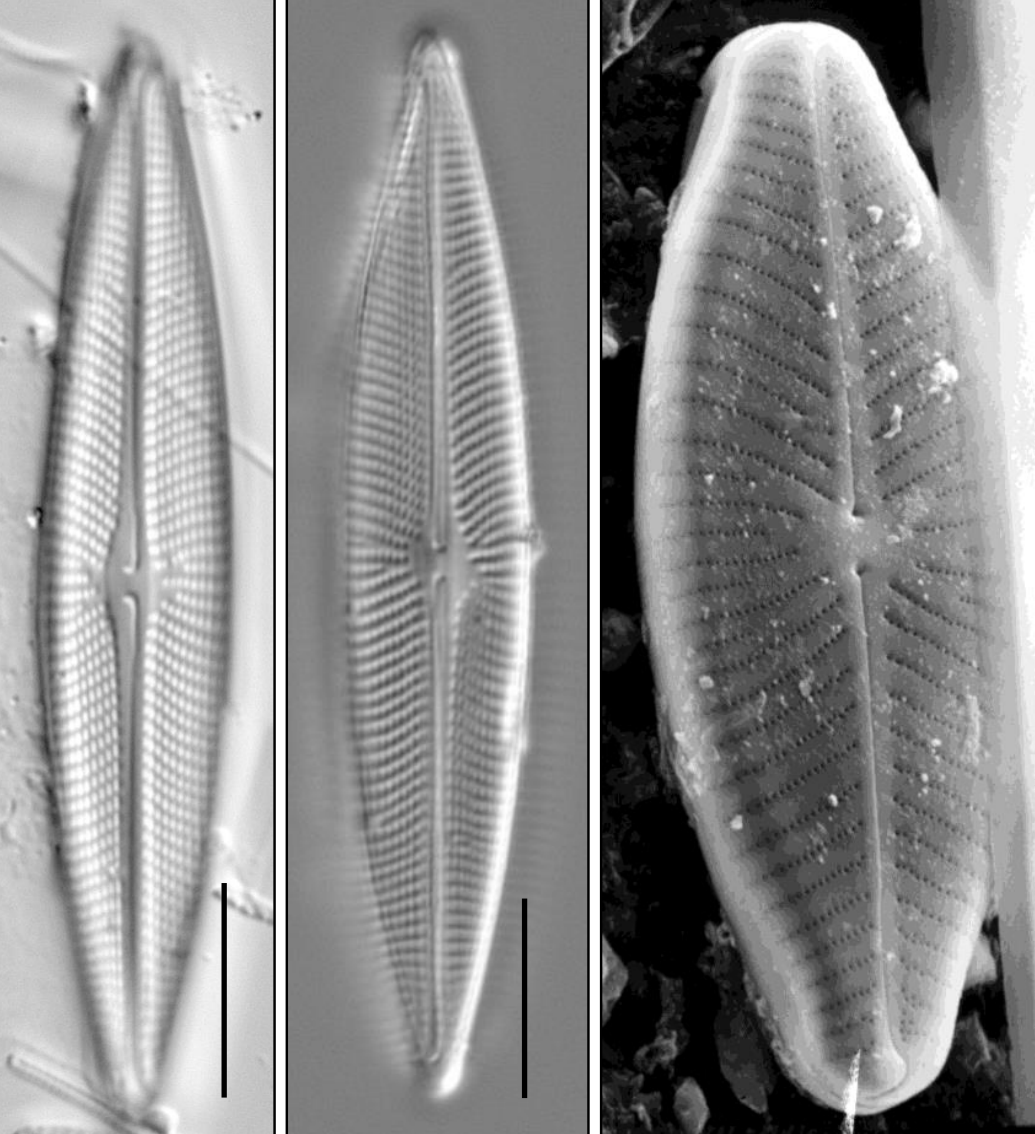
151
What is this? Group?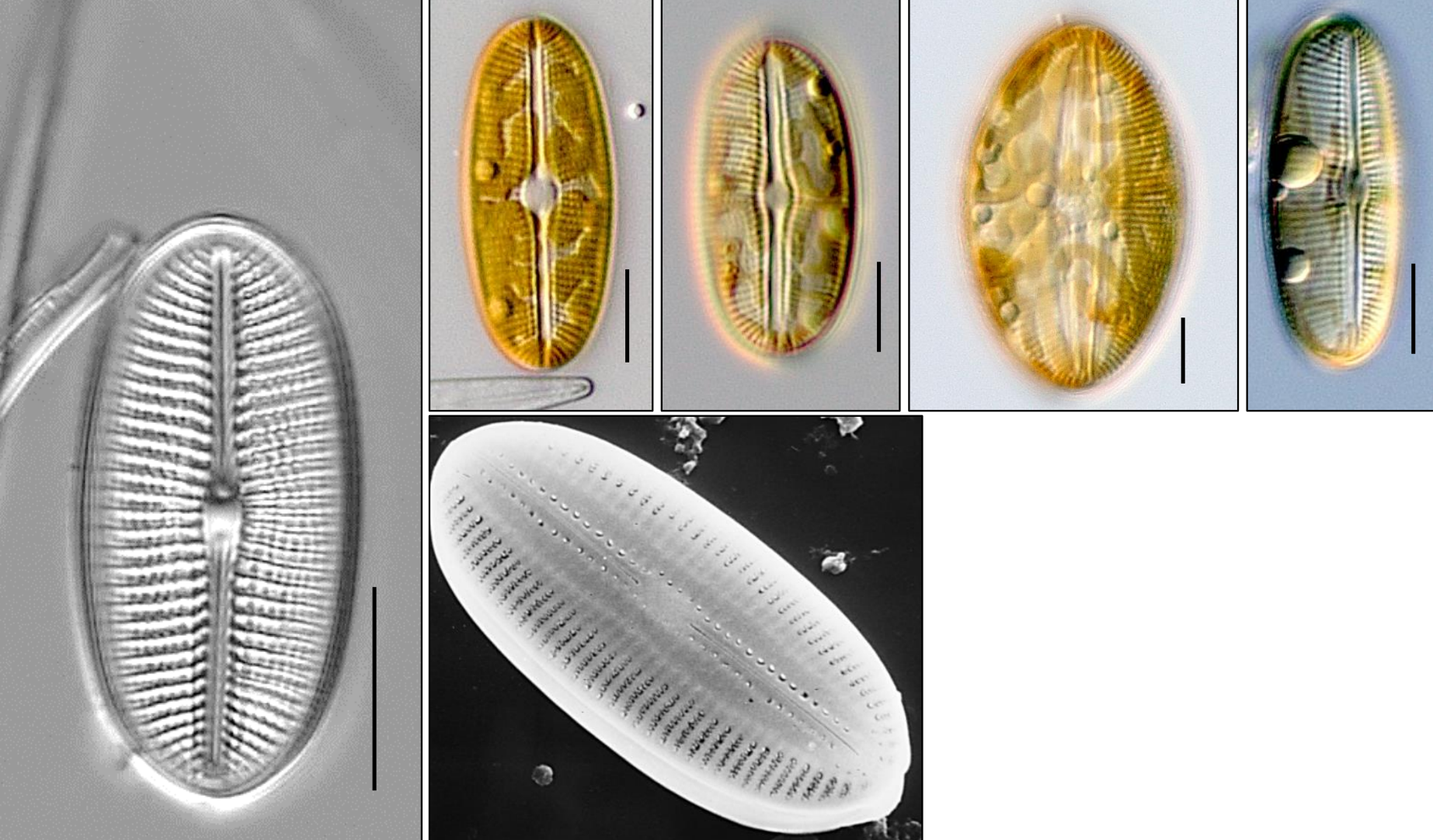
Diploneis; Diatom
152
What is this? Group?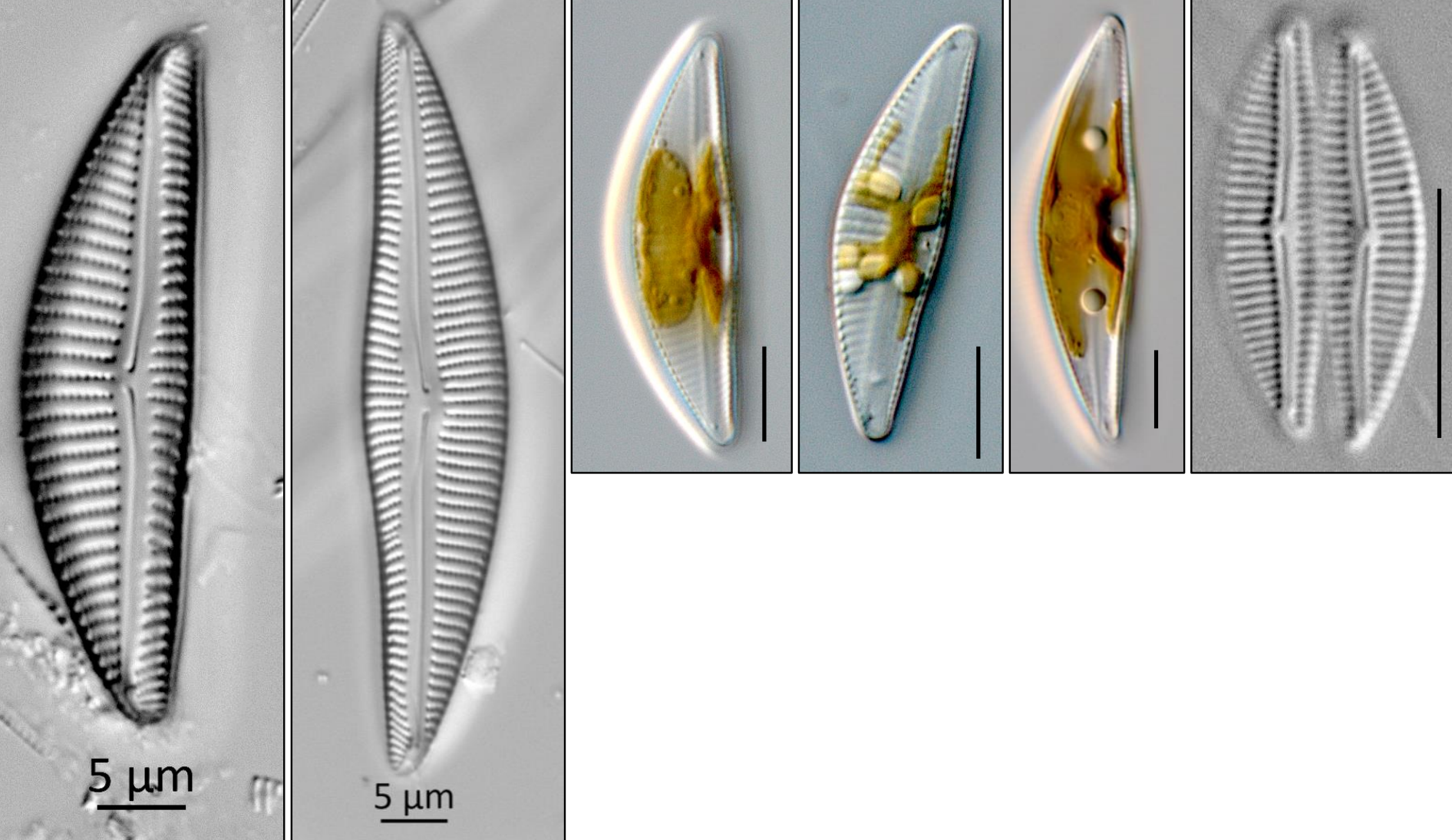
Encyonema; Diatom
153
What is this? Group?
154
What is this? Group?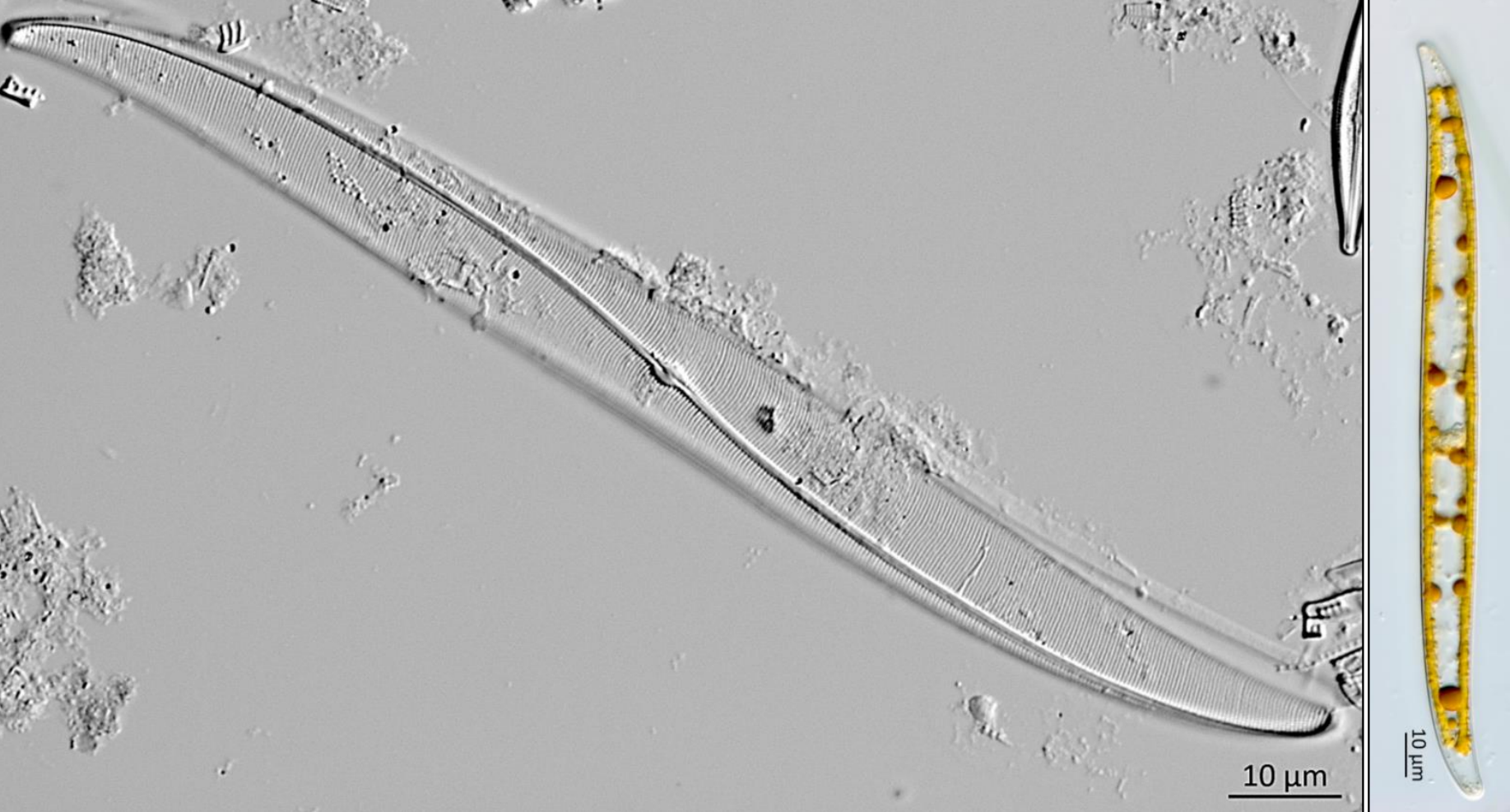
Gyrosigma; Diatom
155
What is this? Group?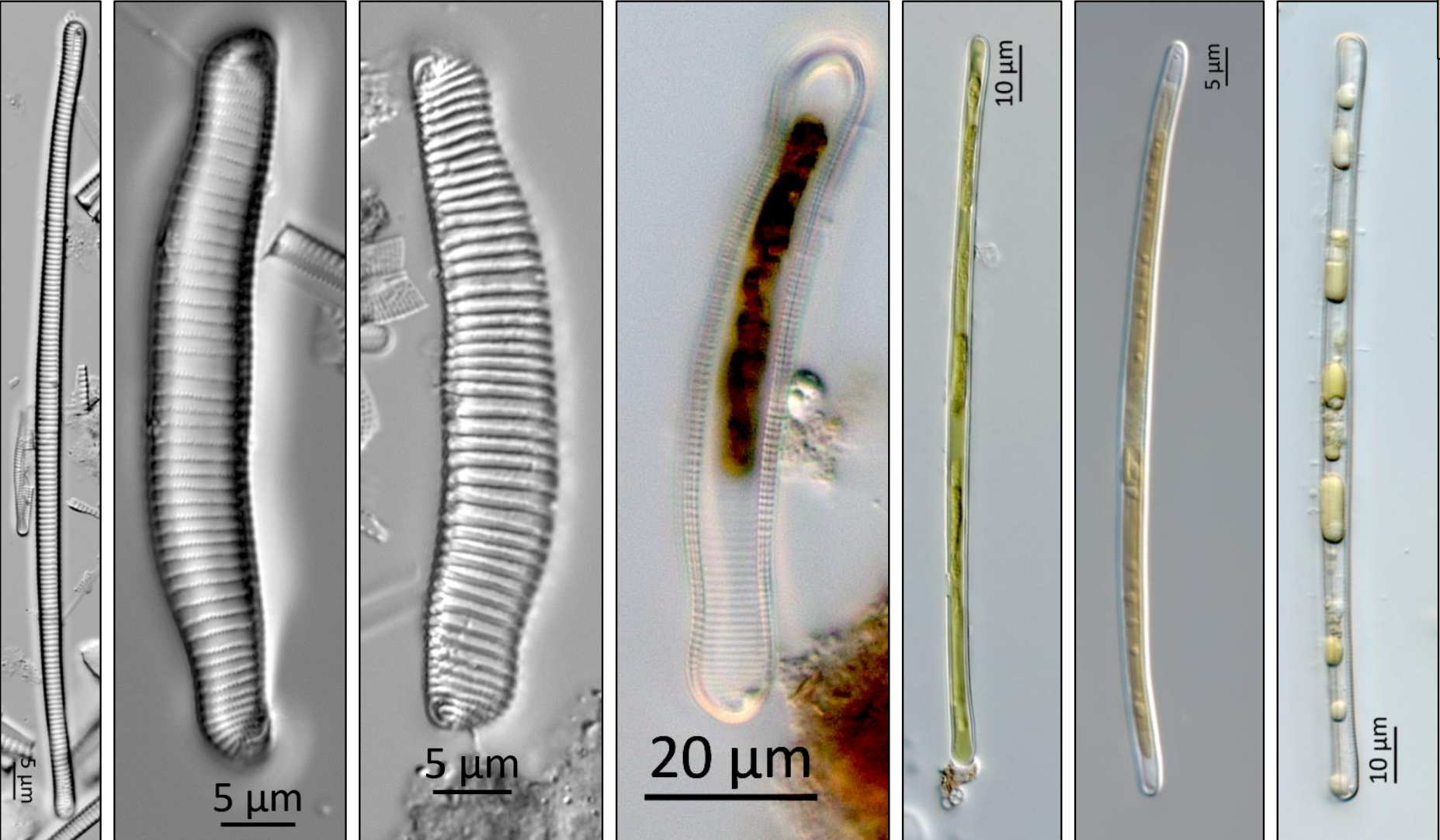
Eunotia; Diatom
156
What is this? Group?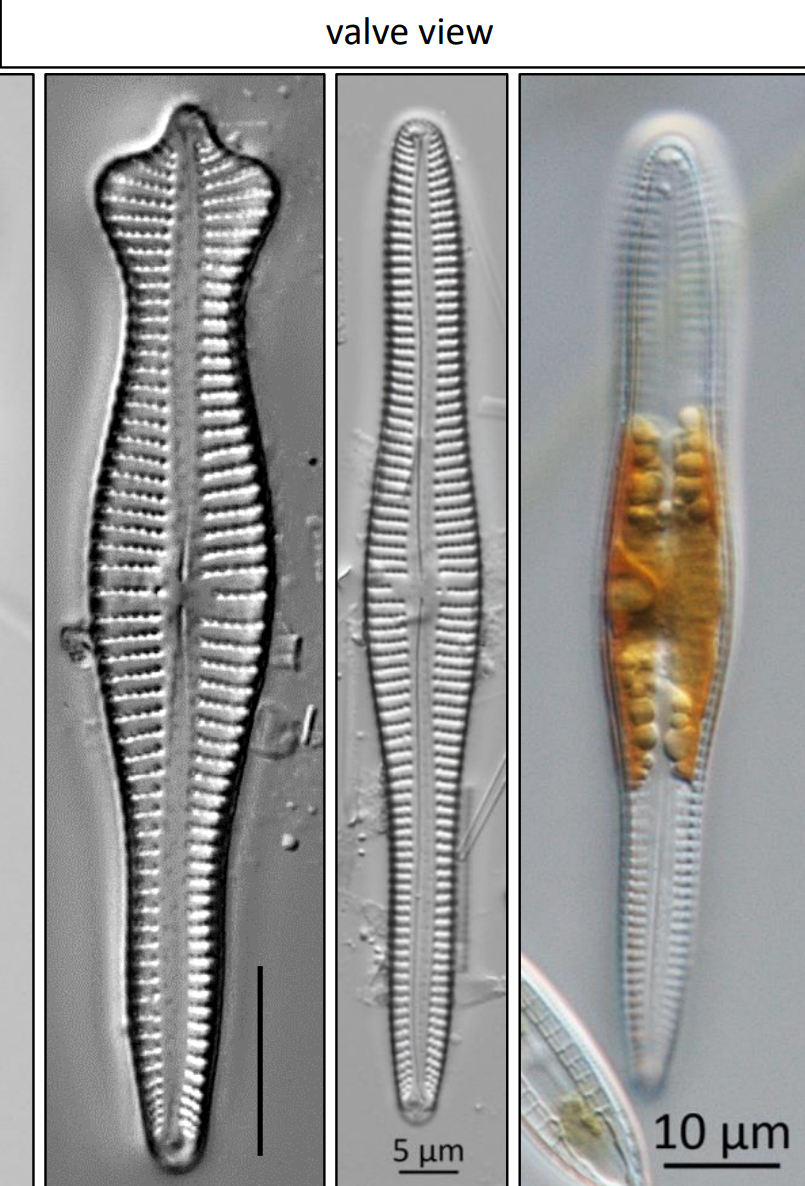
Gomphonema; Diatom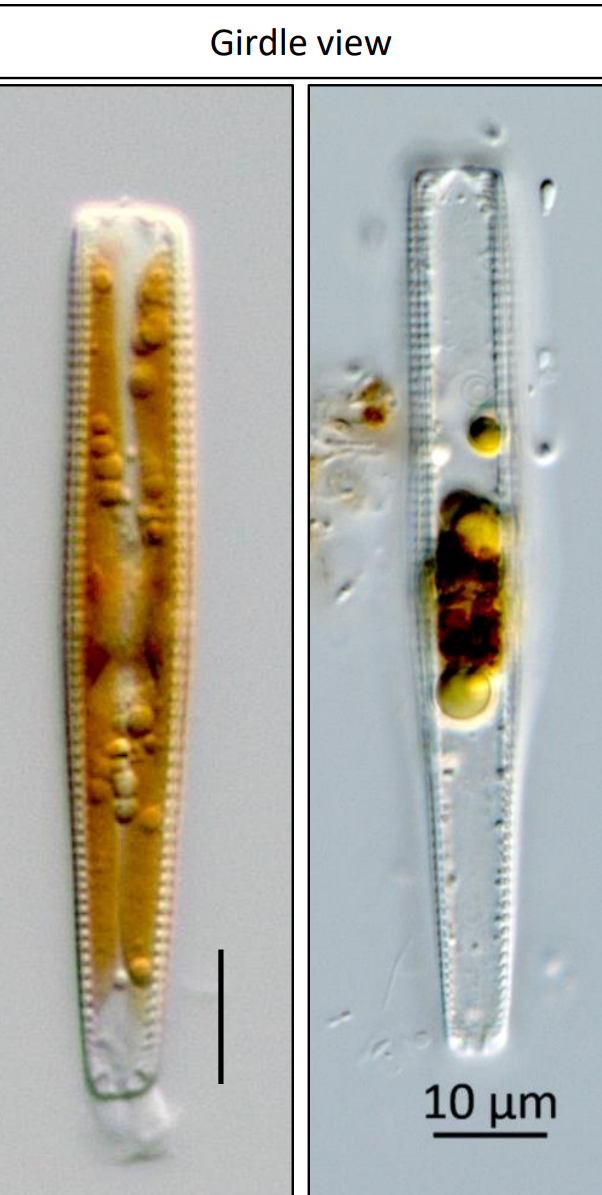
157
What is this? Group?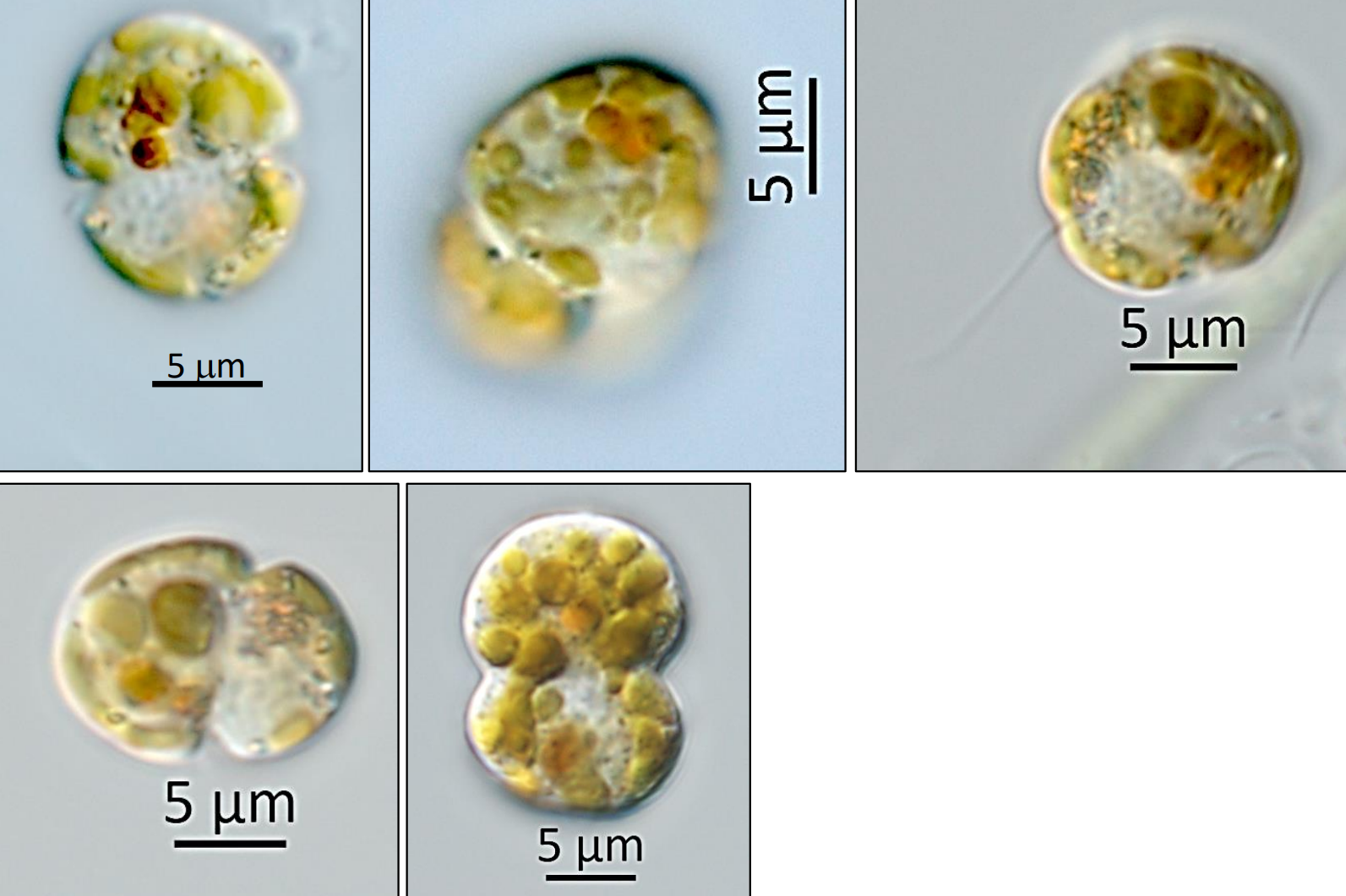
Gymnodinium; Dinoflagellates
158
What is this? Group?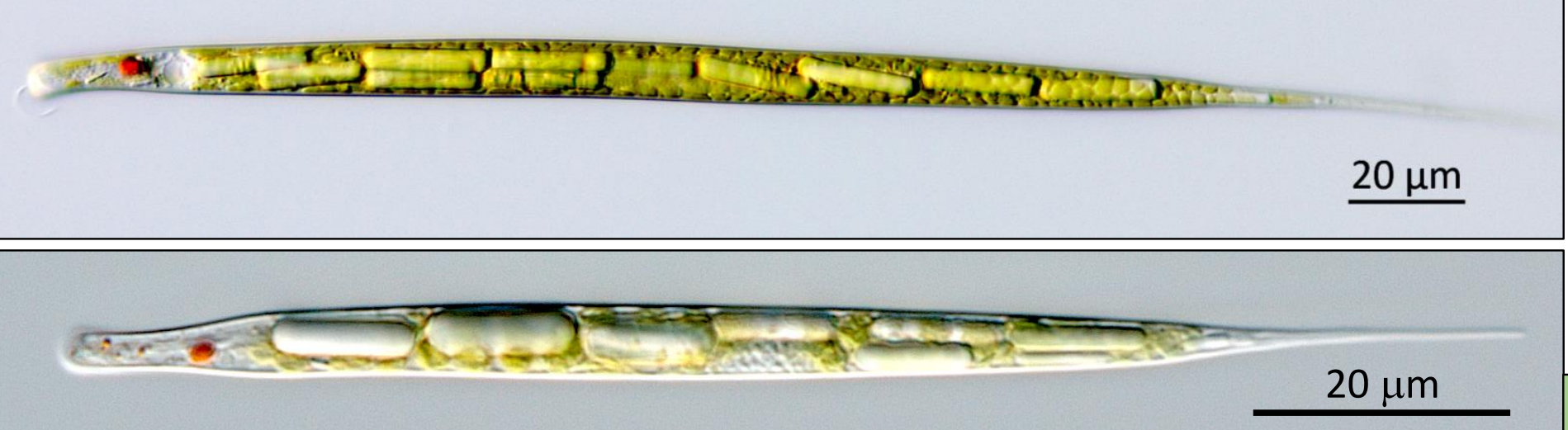
Lepocinclis; Euglenoid
159
What is this? Group?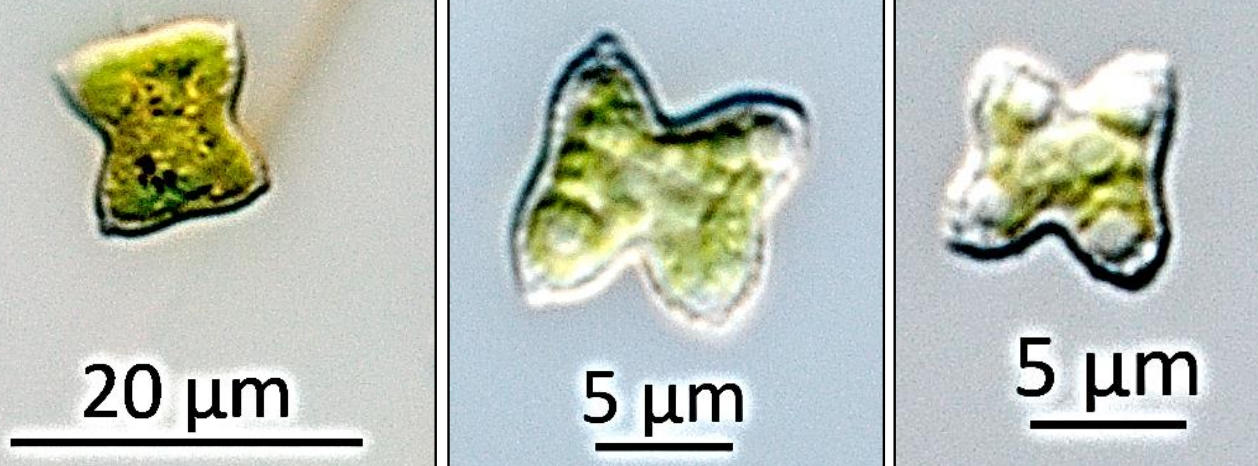
Tetraedron; Chlorophyta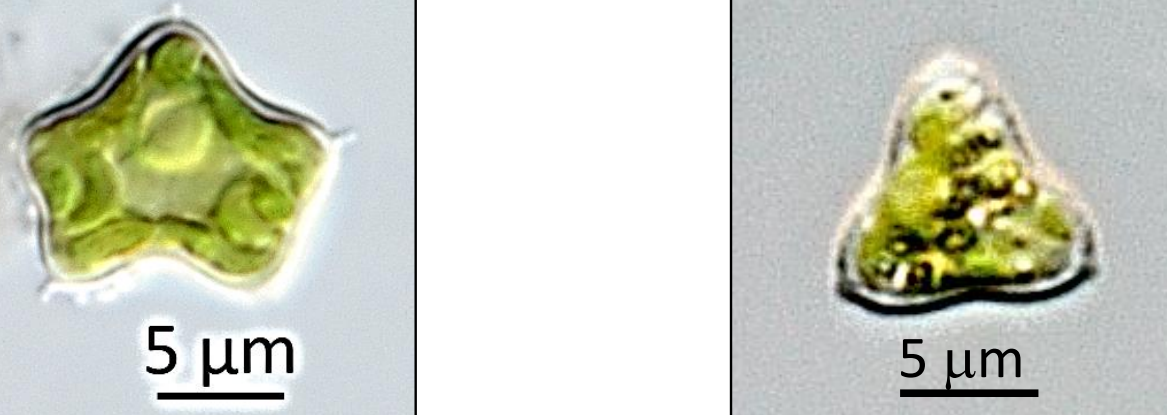
160
What is this? Group?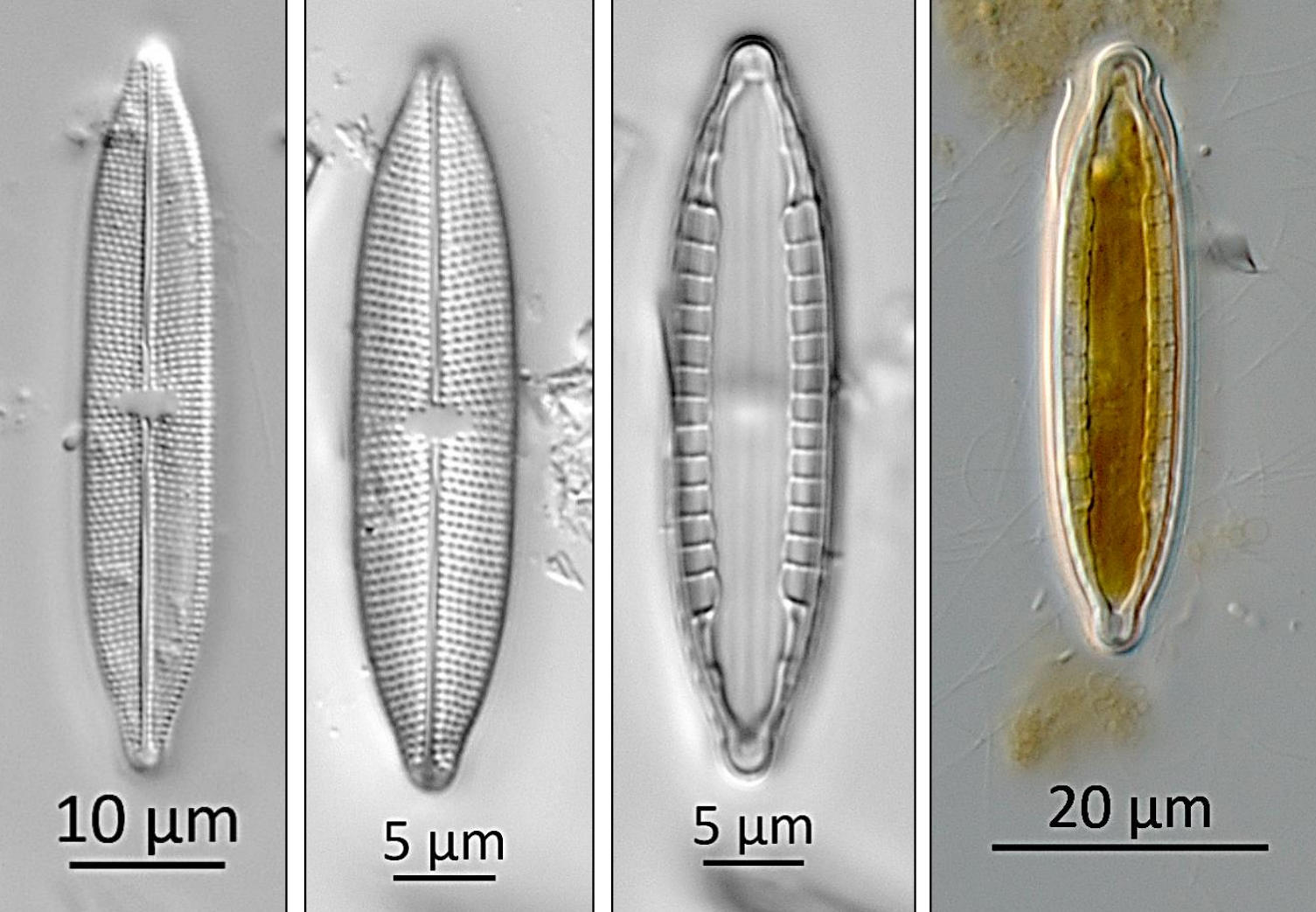
Mastogloia; Diatom
161
What is this? Group?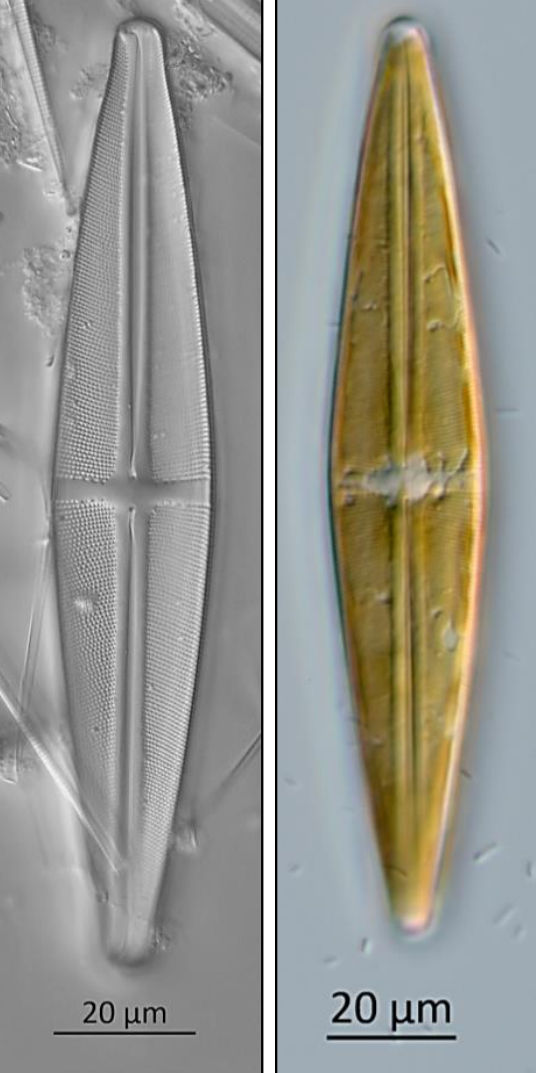
Stauroneis; Diatom
162
What is this? Group?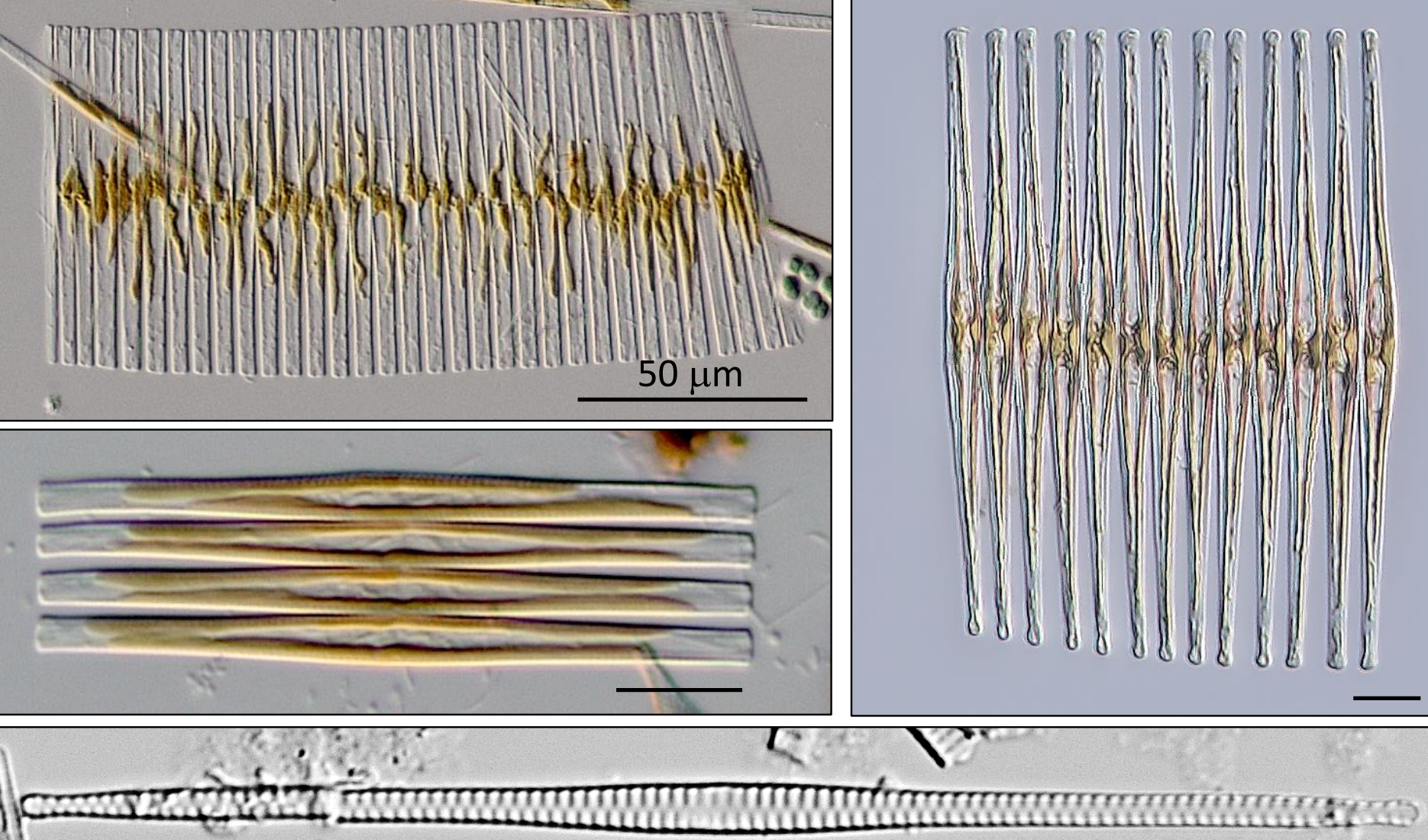
Fragilaria; Diatom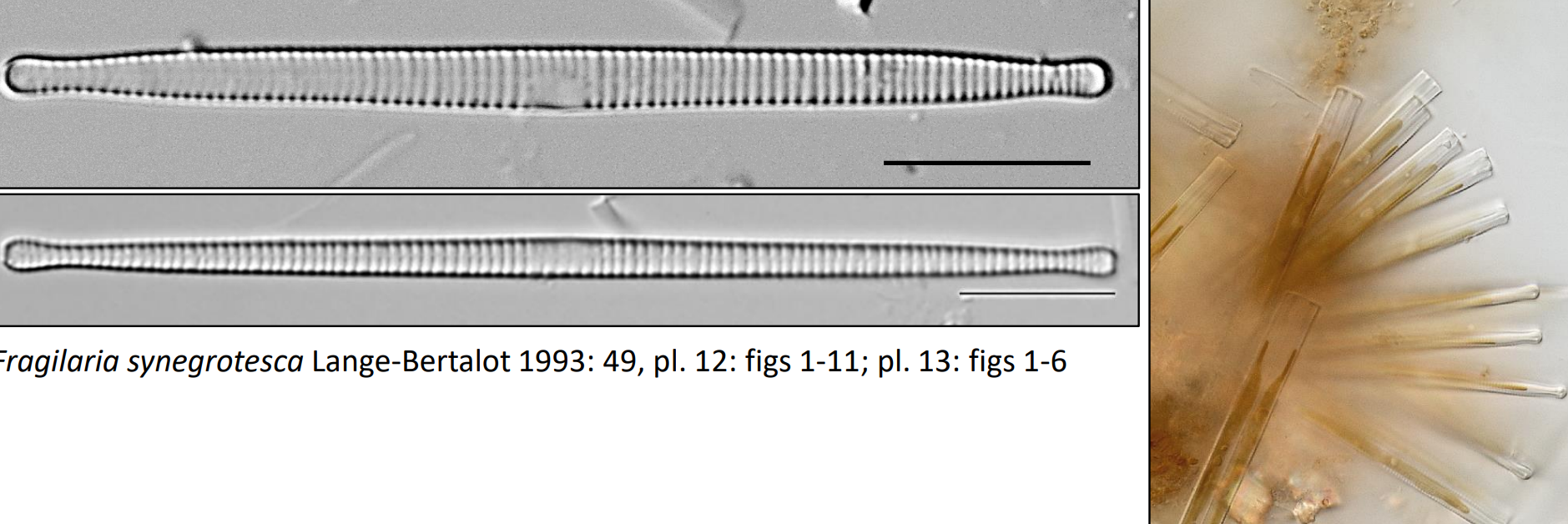
163
What is this? Group?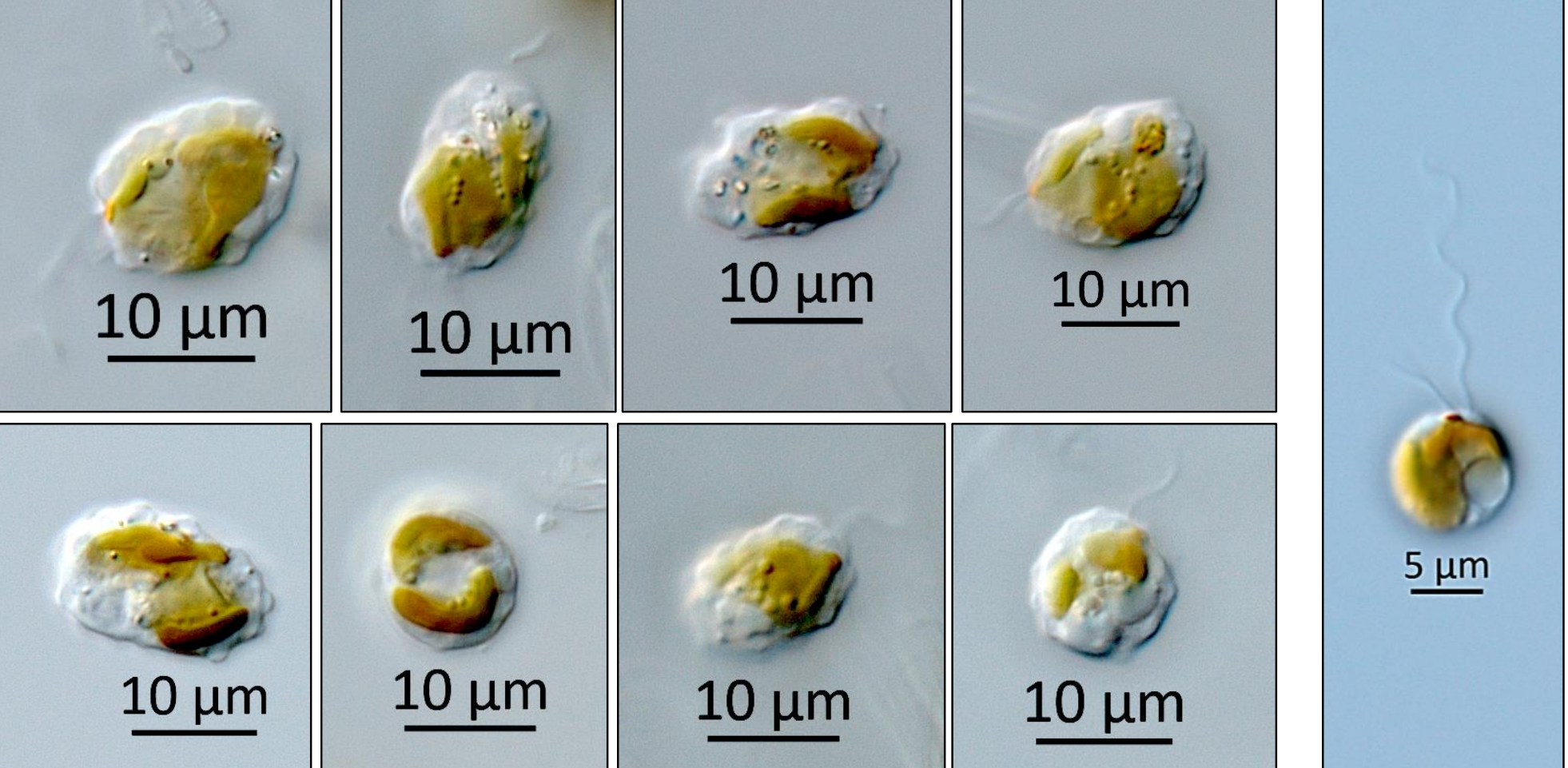
Ochromonas; Chrysophyte
164
What is this? Group?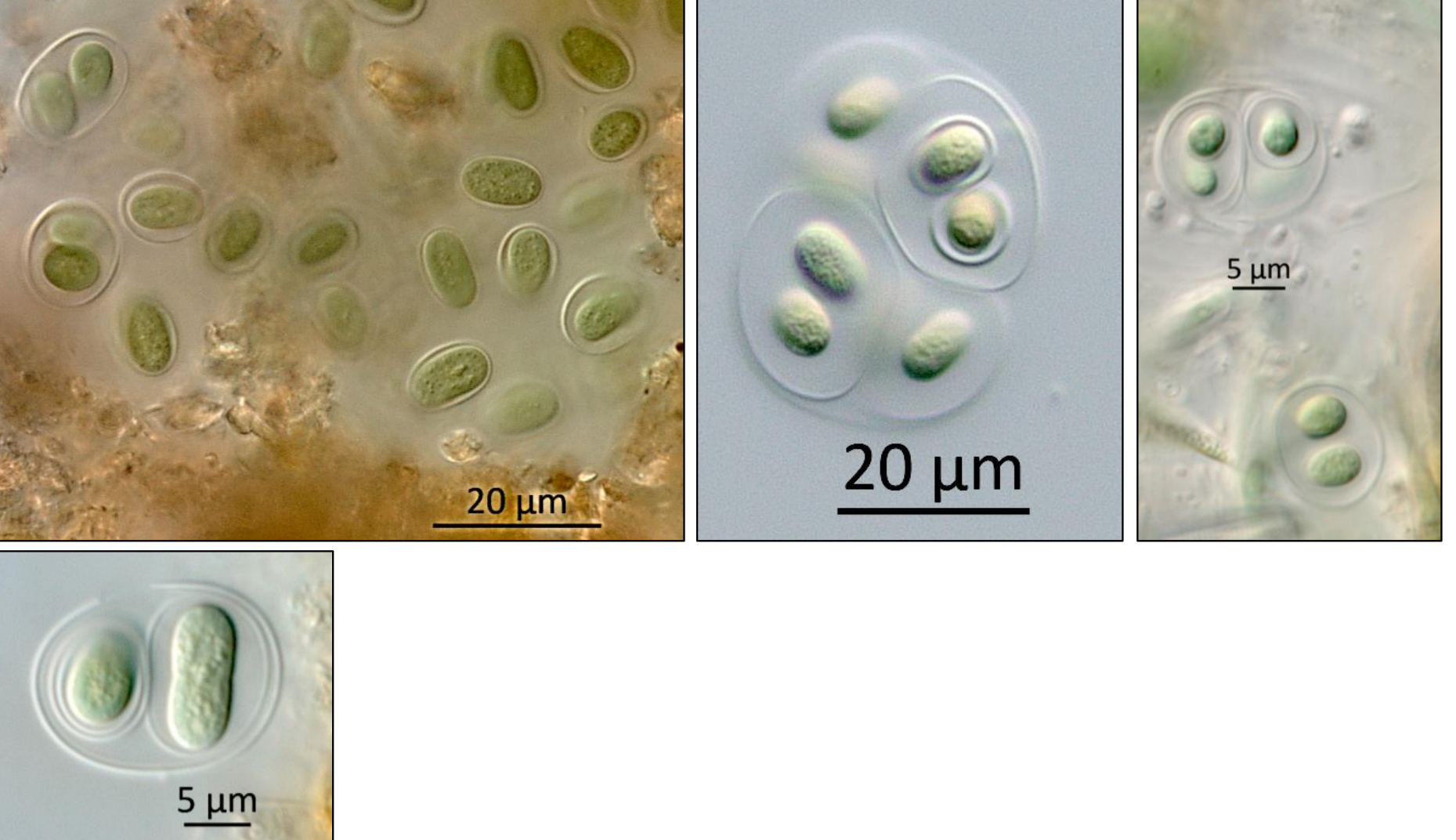
Gloeothece; Cyanobacteria
165
What is this? Group?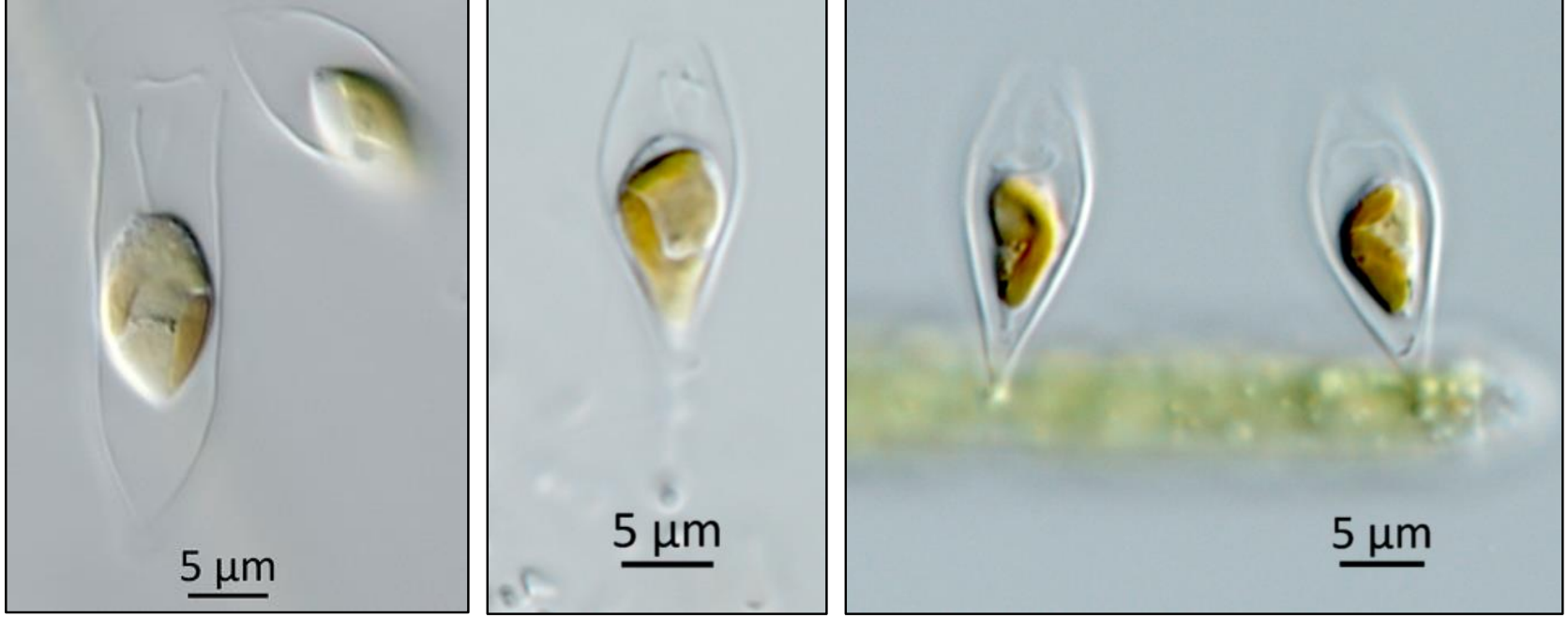
Epipyxis; Chrysophyte
166
What is this? Group?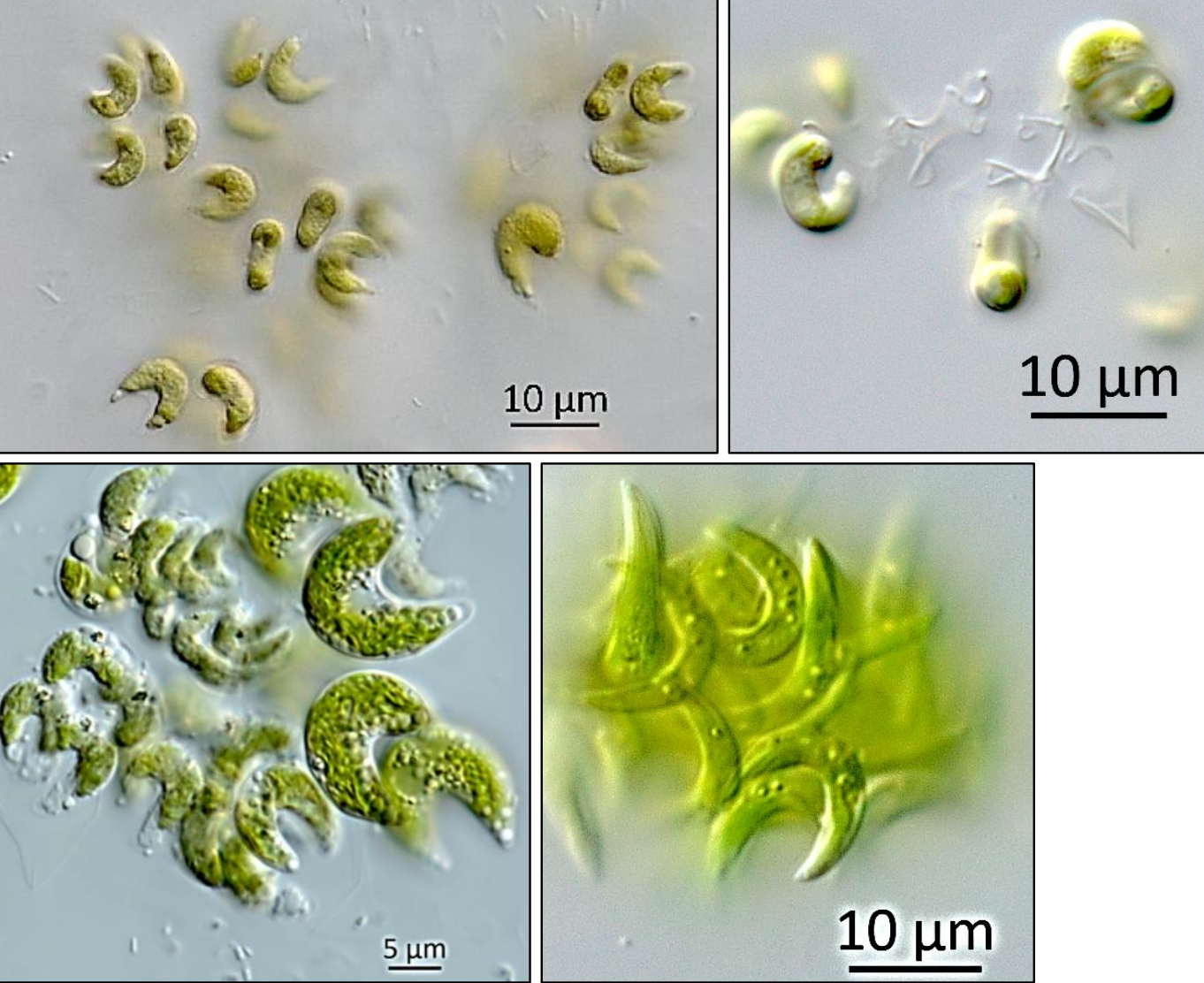
Kirchneriella; Chlorophyta
167
What is this? Group?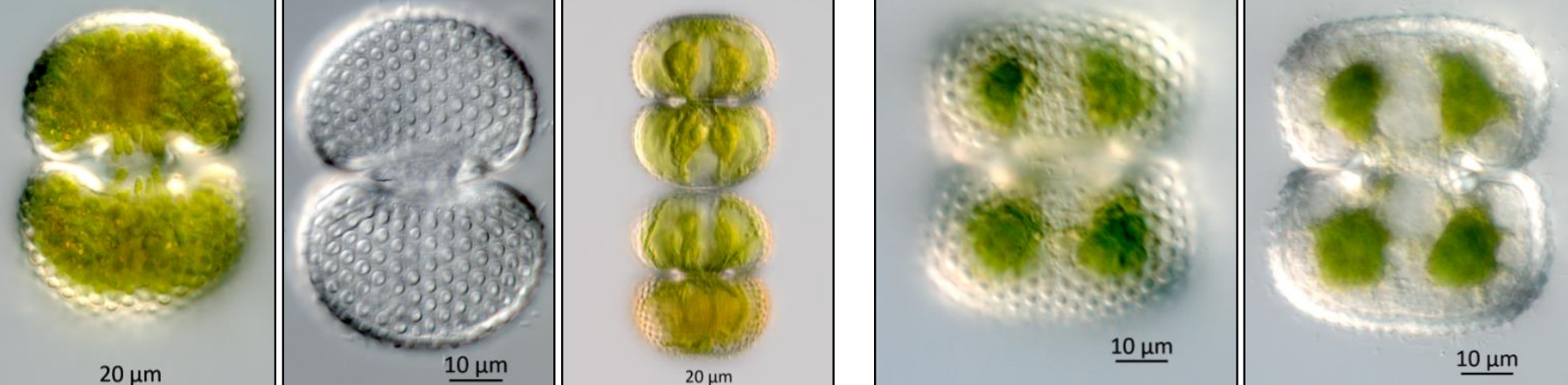
Cosmarium; Charophyta
168
What is this? Group?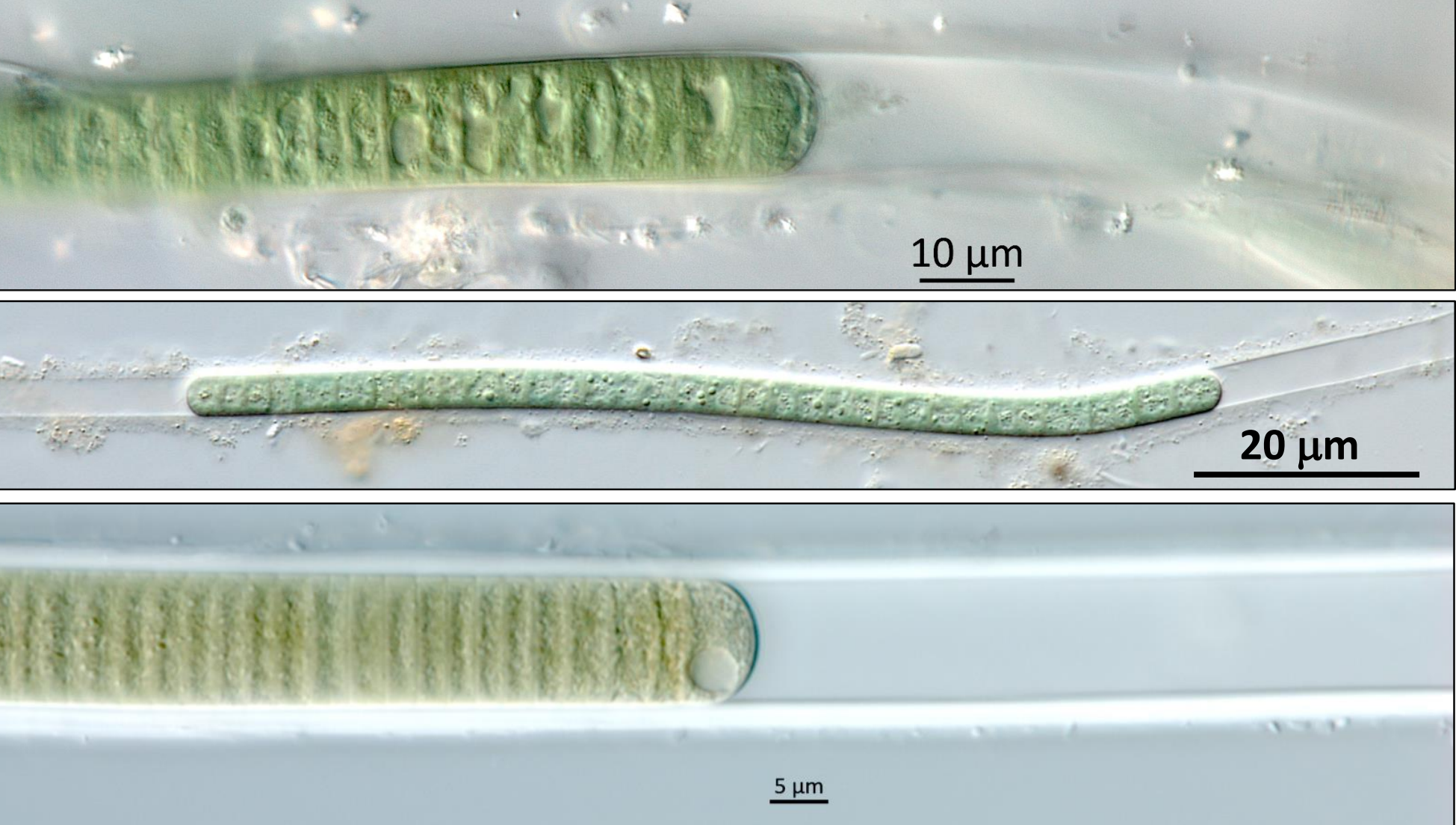
Lyngbya; Cyanobacteria
169
What is this? Group?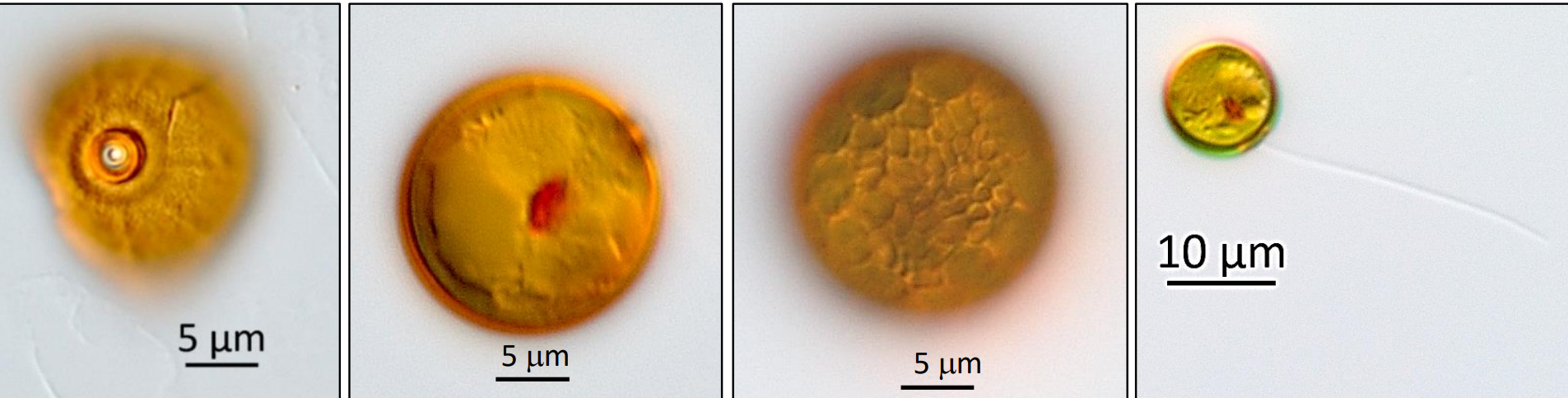
Trachelomonas; Euglenoid