Arts&crafts Movement
Study these flashcardsFree · spaced repetition · iPhone, Android, Mac & web
All cards
1
Thomas Hope's chair in the Egyptian style, crafted around 1805, exemplifies the neoclassical movement, drawing inspiration from ancient Egyptian motifs and architecture. It features sleek lines, geometric patterns, and symbolic elements reminiscent of Egyptian art and design, reflecting the fascination with exoticism and antiquity prevalent during the neoclassical period.
Thomas Hope, chair in the Egyptian
style, from a design by Thomas Hope,
English, c. 1805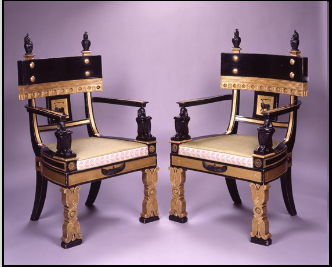
style, from a design by Thomas Hope,
English, c. 1805
2
Thomas Wedgwood's 18th-century replica of a Roman vase, created in Wedgwood pottery, exemplifies Neoclassical art style, characterized by its revival of classical Greek and Roman aesthetics, including symmetrical designs, classical motifs, and a restrained color palette.
Thomas Wedgewood, 18th C. replica of
a Roman vase. Wedgwood pottery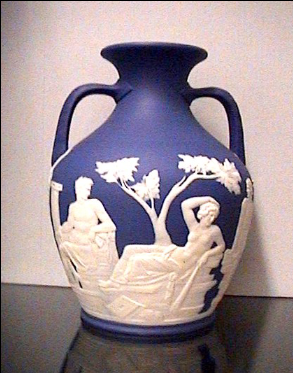
a Roman vase. Wedgwood pottery
3
what are some similarities and differences between Thomas Hope, chair in the Egyptian
style, from a design by Thomas Hope,
English, c. 1805 and Thomas Wedgewood, 18th C. replica of
a Roman vase. Wedgwood pottery
style, from a design by Thomas Hope,
English, c. 1805 and Thomas Wedgewood, 18th C. replica of
a Roman vase. Wedgwood pottery
Both Thomas Hope's chair in the Egyptian style and Thomas Wedgewood's replica of a Roman vase exhibit a fascination with ancient cultures and styles prevalent during the Neoclassical period. However, while Hope's chair reflects the Egyptian aesthetic with its geometric forms and motifs, Wedgewood's pottery focuses on replicating the classical elegance of Roman artistry, showcasing the versatility of Neoclassical influences across different mediums and design approaches.
4
Revival Styles
The revival of classical styles including Greek, Roman and
Egyptian were in part the result of a distinction made between modernity and
past epochs
Egyptian were in part the result of a distinction made between modernity and
past epochs
5
New technologies and industrial materials available in the 19th C. enabled the
mass production of buildings and designed objects such as:
mass production of buildings and designed objects such as:
(fabric, pottery, wall
paper)
paper)
6
an iconic example of the Victorian architectural style. Rising 135 feet high, it utilized prefabricated industrial materials such as cast and wrought iron, along with expansive glass panels, showcasing the innovative use of iron and glass in architecture during the mid-19th century.
Joseph Paxton, Crystal Palace, London
England, 1850-51. 135’ high. Prefabricated
industrial materials: cast and wrought iron
and glass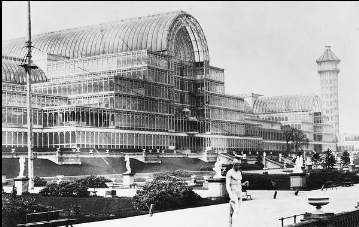
England, 1850-51. 135’ high. Prefabricated
industrial materials: cast and wrought iron
and glass
7
What are some similarities and differences between Bramante, Michelangelo, della Porta,
Maderno, Gianlorenzo Bernini,
Saint Peter’s Basilica, Vatican City,
Rome, Italy, 1505-1667 and Joseph Paxton, Crystal Palace, London
England, 1850-51. 135’ high. Prefabricated
industrial materials: cast and wrought iron
and glass?
Maderno, Gianlorenzo Bernini,
Saint Peter’s Basilica, Vatican City,
Rome, Italy, 1505-1667 and Joseph Paxton, Crystal Palace, London
England, 1850-51. 135’ high. Prefabricated
industrial materials: cast and wrought iron
and glass?
Both Saint Peter's Basilica and the Crystal Palace represent significant advancements in architectural engineering and scale for their respective time periods. They both utilized innovative construction methods and materials – Saint Peter's Basilica with its classical masonry techniques and the Crystal Palace with its pioneering use of prefabricated cast and wrought iron and glass. However, while Saint Peter's Basilica is a monumental religious structure characterized by its Renaissance and Baroque architectural styles, the Crystal Palace is a secular exhibition hall showcasing the possibilities of industrial design and engineering during the Victorian era, reflecting the differing purposes and cultural contexts of their construction.
8
The Machine (positives)
could be seen as an instrument of progress offering new
frontiers over land and sea, generating wealth, creating a new culture based
upon science and rationality
frontiers over land and sea, generating wealth, creating a new culture based
upon science and rationality
9
The Machine (negatives)
could be seen as the great destroyer which raped nature,
obliterated identity and region, and enslaved the working classes in an
endless cycle of drudgery.
obliterated identity and region, and enslaved the working classes in an
endless cycle of drudgery.
10
A.W.N. Pugin
argued in the
1830s that the Gothic was the
most spiritually uplifting and
the most structurally rational of
styles. He believed that pagan
forms were irrelevant to a
Christian society.
1830s that the Gothic was the
most spiritually uplifting and
the most structurally rational of
styles. He believed that pagan
forms were irrelevant to a
Christian society.
11
This iconic Gothic Revival architectural masterpiece is characterized by its elaborate ornamentation, pointed arches, intricate tracery, and vertical emphasis, embodying the grandeur and medieval aesthetic of the Victorian era.
Sir Charles Barry and A.W.N. Pugin, Houses of Parliament, London. 1836-1860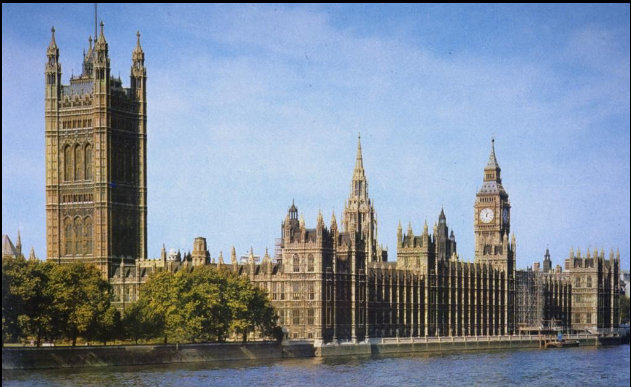
12
English Gothic architecture, constructed between 1089 and 1499. It features characteristic elements of the style, including pointed arches, ribbed vaults, and large stained glass windows, creating a sense of verticality and grandeur typical of Gothic cathedrals.
Glouster Cathedral, Gloustershire,
England, 1089-1499 [English Gothic]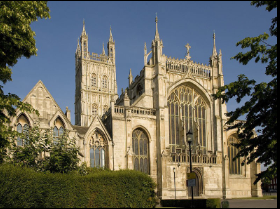
England, 1089-1499 [English Gothic]
13
exemplifies the Victorian Gothic architectural style. This grandiose structure features pointed arches, intricate ornamentation, and dramatic proportions, embodying the revival of medieval design aesthetics during the Victorian era.
Sir Charles Barry and A.W.N. Pugin, Houses
of Parliament, St. Stephens Hall, view from
south. London. 1836-1860.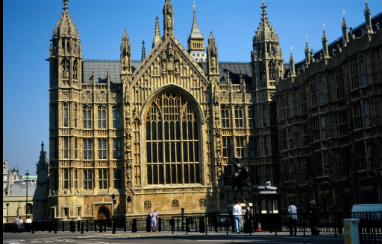
of Parliament, St. Stephens Hall, view from
south. London. 1836-1860.
14
What are some simmilarities and differences between Glouster Cathedral, Gloustershire,
England, 1089-1499 [English Gothic] and Sir Charles Barry and A.W.N. Pugin, Houses
of Parliament, St. Stephens Hall, view from
south. London. 1836-1860?
England, 1089-1499 [English Gothic] and Sir Charles Barry and A.W.N. Pugin, Houses
of Parliament, St. Stephens Hall, view from
south. London. 1836-1860?
Gloucester Cathedral and the Houses of Parliament share architectural grandeur and a sense of historical significance. Both exemplify their respective styles – English Gothic for Gloucester Cathedral and Victorian Gothic Revival for the Houses of Parliament. However, while Gloucester Cathedral is a religious structure, characterized by its soaring arches, intricate stonework, and spiritual symbolism, the Houses of Parliament serve a secular purpose as the seat of government, showcasing a fusion of medieval Gothic elements with modern engineering techniques, reflecting the political and cultural aspirations of the Victorian era.
15
England, is an iconic example of the Arts and Crafts architectural style. It features a traditional English design with elements inspired by medieval architecture, emphasizing craftsmanship, simplicity, and a connection to nature.
Philip Webb and William Morris, Red House, 1859-60.
Bexleyheath, Kent, England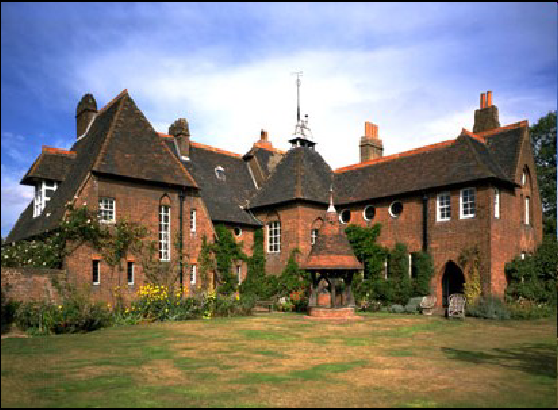
Bexleyheath, Kent, England
16
an exemplar of the Arts and Crafts movement. The stained glass window in the ground floor hallway leading to the Canterbury Porch reflects the movement's emphasis on handmade craftsmanship and intricate design, featuring motifs inspired by nature and medieval aesthetics.
Philip Webb and William Morris, Red House, 1859-60.
Stained glass window on ground floor hallway leading to Canterbury Porch.
Bexleyheath, Kent, England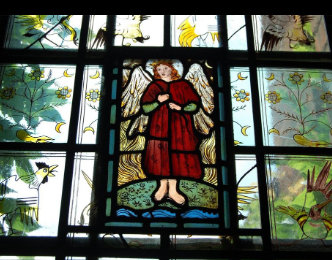
Stained glass window on ground floor hallway leading to Canterbury Porch.
Bexleyheath, Kent, England
17
Pugin, Ruskin and Morris believed
that the corruption of 19th C. styles
would be counteracted by inspired craftsmanship, and an authentic
architecture would be achieved through the direct expression of pristine
moral virtues.
would be counteracted by inspired craftsmanship, and an authentic
architecture would be achieved through the direct expression of pristine
moral virtues.
18
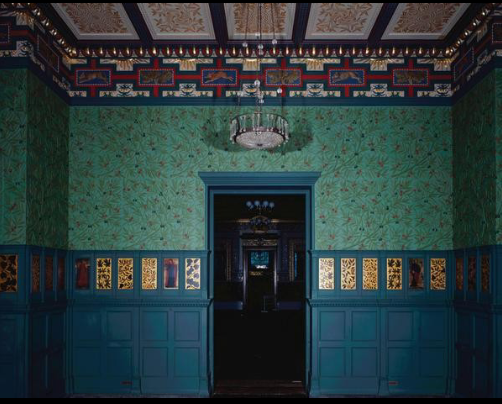
a prime example of Arts and Crafts interior design. It features elaborate wallpaper, textiles, and furniture designed by William Morris and his associates, showcasing intricate patterns, natural motifs, and craftsmanship, all reflecting the ideals of the Arts and Crafts movement.
Morris & Co., The Green Dining Room, 1866