Cubism, Collage, Assemblage
Study these flashcardsFree · spaced repetition · iPhone, Android, Mac & web
All cards
1
a poignant oil on canvas masterpiece measuring 6 feet by 4 feet, showcasing Picasso's transition from his earlier realist style to his later Cubist approach. Through its somber and introspective portrayal, the artwork captures the complexities of human relationships and existential themes, marking a pivotal moment in Picasso's artistic evolution towards Cubism.
Pablo Picasso, La
Vie, 1903. oil on
canvas. 6’ x 4’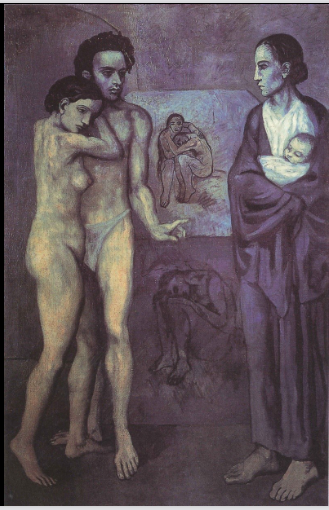
Vie, 1903. oil on
canvas. 6’ x 4’
2
depicts a woman engaged in the mundane task of ironing with a sense of melancholy, reflecting the artist's early Blue Period characterized by somber themes and colors. Through his unique Cubist style, Picasso fractures the woman's form, conveying a sense of emotional fragmentation and inner turmoil."
Picasso, Woman Ironing,
1904. oil on canvas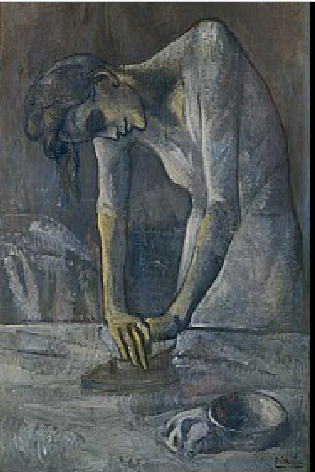
1904. oil on canvas
3
painted in 1884 during the Impressionist movement, captures the quiet dignity and laborious toil of everyday women through his characteristic blend of soft, atmospheric brushwork and keen observation of human gesture, evoking a sense of intimacy and realism within the domestic scene."
Degas, Women Ironing, 1884. oil on canvas.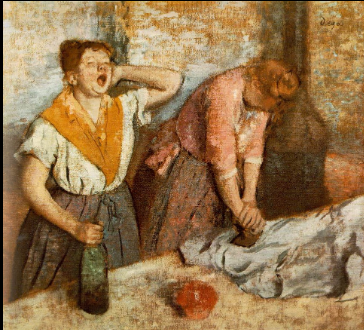
4
What are some similarities and differences between Picasso, Woman Ironing, 1904.
oil on canvas and Degas, Women Ironing, 1884. oil on canvas?
oil on canvas and Degas, Women Ironing, 1884. oil on canvas?
both depict the act of ironing as their subject matter, showcasing scenes of domestic labor. However, while Picasso's painting from 1904 features a single figure engaged in the task, rendered with bold, expressive brushstrokes and a sense of emotional intensity, Degas's work from 1884 presents multiple figures in a more naturalistic style, capturing the mundane rhythm of everyday life with subtle nuances of gesture and posture. Additionally, Picasso's painting reflects the artist's evolving modernist sensibility and departure from traditional representational techniques, whereas Degas's work demonstrates his mastery of composition and observation within the context of Impressionism.
5
created in 1907 during the height of the Cubist movement, disrupts traditional notions of form and perspective through its fragmented, geometric portrayal of five female figures, reflecting Picasso's groundbreaking exploration of space and representation in art."
Pablo Picasso,
Les Demoiselles
d’Avignon,
1907. Oil on canvas.
8’ x 7’ 8”
[Proto-Cubism]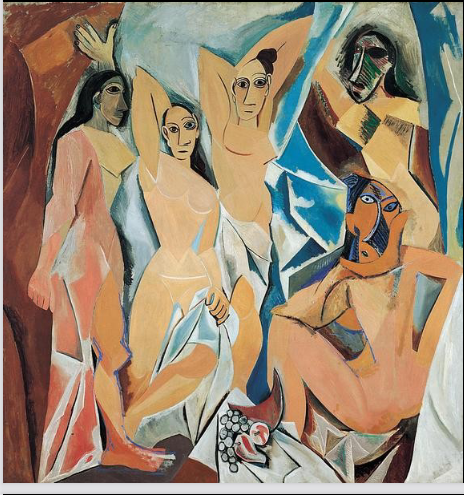
Les Demoiselles
d’Avignon,
1907. Oil on canvas.
8’ x 7’ 8”
[Proto-Cubism]
6
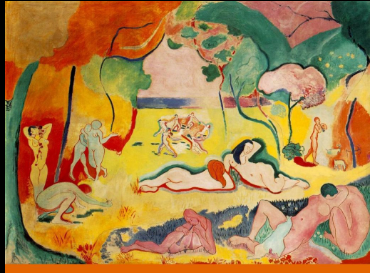
epitomizes the essence of Fauvism with its vibrant colors and simplified forms, capturing a celebratory vision of nature and human life in harmonious, rhythmic compositions. The painting's bold brushwork and non-naturalistic use of color exemplify the Fauvist movement's departure from traditional representation, emphasizing emotional expression over objective reality.
Henri Matisse, The Joy of Life, 1905
7
What are some similarities and differences between Pablo Picasso, Les Demoiselles
d’Avignon, 1907. Oil on canvas and Henri Matisse, The Joy of Life, 1905?
d’Avignon, 1907. Oil on canvas and Henri Matisse, The Joy of Life, 1905?
both mark significant developments in the history of modern art, showcasing innovative approaches to form and color. However, while Picasso's painting is characterized by its fragmented and angular figures, influenced by African tribal art and Iberian sculpture, Matisse's work features fluid and harmonious forms inspired by the human figure and nature. Additionally, both paintings challenge traditional notions of representation and perspective, but while Picasso's work reflects a more confrontational and dissonant aesthetic, Matisse's painting exudes a sense of joy and celebration through its lyrical and vibrant composition.
8
Picasso, Maquette for
Guitar, Paris, Oct.
1912. 25” x 13” x 7”.
Construction of
cardboard, string,
wire. Restored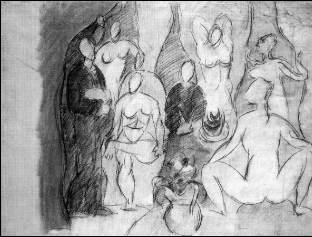
Guitar, Paris, Oct.
1912. 25” x 13” x 7”.
Construction of
cardboard, string,
wire. Restored
9
What are some similarities and differences between ablo Picasso, Les Demoiselles
d’Avignon, 1907. Oil on canvas and Picasso, Study for
Les Demoiselles d’Avignon?
d’Avignon, 1907. Oil on canvas and Picasso, Study for
Les Demoiselles d’Avignon?
Picasso's "Les Demoiselles d'Avignon" and his study for the painting share thematic and stylistic similarities as they both explore the depiction of the female form in a radical and innovative manner. However, while "Les Demoiselles d'Avignon" is a completed work that features five female figures in a confrontational and angular style influenced by African and Iberian art, the study is a preparatory work that offers a glimpse into Picasso's creative process, showing his initial ideas and experimentation with form and composition. Additionally, "Les Demoiselles d'Avignon" is considered a seminal work in the development of Cubism, while the study provides insight into the evolution of Picasso's artistic vision and the genesis of this groundbreaking painting.
10
exemplifies the mastery of the High Renaissance with its luminous colors, sensual form, and exquisite attention to detail, showcasing the artist's contribution to the Venetian Renaissance movement. Through its portrayal of the reclining nude figure, the painting epitomizes the ideals of humanism and the celebration of beauty that characterized the Renaissance era.
Titian, Venus of Urbino, 1538 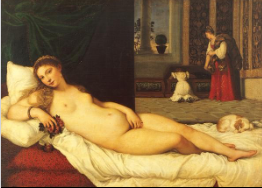
11
embodies the principles of Neoclassicism, with its idealized forms and meticulous attention to detail, while also subtly infusing elements of Romanticism through the sensual portrayal of the odalisque's elongated figure and exotic setting."
Ingres, Grande Odalisque, 1814 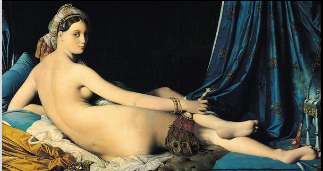
12
What are some similarities and differences between Titian, Venus of Urbino, 1538, Ingres, Grande Odalisque, 1814 and Pablo Picasso, Les Demoiselles d’Avignon, 1907. Oil on canvas.
Titian's "Venus of Urbino," Ingres's "Grande Odalisque," and Picasso's "Les Demoiselles d’Avignon" are all iconic representations of the female form in Western art. While Titian's painting exudes sensuality and depicts Venus in a reclining pose with classical elegance, Ingres's work presents an idealized and elongated female figure, inspired by Orientalist fantasies. In contrast, Picasso's painting is a radical departure from traditional norms, portraying five nude women in a fragmented and angular style influenced by African and Iberian art, challenging conventional ideas of beauty and representation. Despite their differences in style and context, all three works confront the viewer with powerful depictions of femininity, reflecting the evolving societal and artistic attitudes towards the female form across different historical periods.
13
created around 1800, showcases mastery of the Romantic movement with its provocative portrayal of a reclining nude woman, embodying both sensuality and mystery, reflecting the era's fascination with the human form and emotional expression. This painting exemplifies Goya's departure from the constraints of Neoclassicism, embracing the freedom and emotional intensity characteristic of the Romantic era in art.
Francisco Goya, Nude Maja, c. 1800 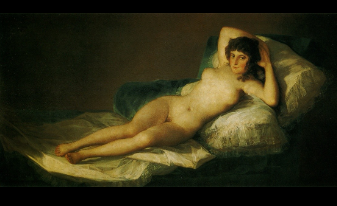
14
What are some similarities and differences between Francisco Goya, Nude Maja, c. 1800 and Pablo Picasso, Les Demoiselles d’Avignon, 1907. Oil on canvas.
both depict female nudes, yet they represent contrasting approaches to the subject matter. While Goya's painting from around 1800 captures a single nude woman in a reclining pose with a sense of sensual intimacy, Picasso's work from 1907 presents five nude women in a confrontational and fragmented style, challenging traditional ideals of beauty and composition. Additionally, "Nude Maja" reflects Goya's adherence to classical conventions and his exploration of the female form within a traditional framework, whereas "Les Demoiselles d’Avignon" marks a radical departure from academic norms, showcasing Picasso's innovative approach to form and representation influenced by African and Iberian art.
15
a quintessential example of Realism, challenging conventional artistic norms by juxtaposing a nude female figure with clothed men in a contemporary outdoor setting."
Manet, Luncheon on the Grass, 1863 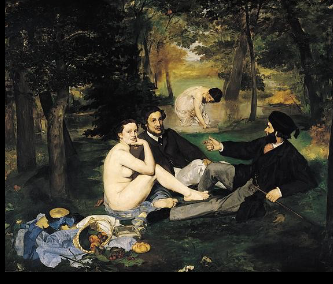
16
What are some similarities and differences between Pablo Picasso, Les Demoiselles
d’Avignon, 1907. Oil on canvas. and Manet, Luncheon on the Grass, 1863
d’Avignon, 1907. Oil on canvas. and Manet, Luncheon on the Grass, 1863
both caused controversy in their respective times and challenged prevailing artistic conventions. However, while Manet's painting from 1863 depicts a leisurely picnic scene with clothed men and a nude woman in a straightforward, realist style, Picasso's work from 1907 features five nude women in a fragmented and confrontational composition influenced by African and Iberian art, departing from traditional representation. Additionally, "Les Demoiselles d'Avignon" is considered a seminal work in the development of Cubism, whereas "Luncheon on the Grass" is often seen as a precursor to modern art movements, such as Impressionism and Realism, due to its rejection of academic norms and its focus on contemporary subject matter.
17
embodies the Kota art movement, characterized by its intricate use of wood, copper, iron, and brass to create protective figures guarding ancestral relics. These artworks served not only as aesthetic marvels but also as sacred guardians of the Kota people's cultural and spiritual heritage.
Reliquary guardian figure (mbulu-
ngulu) “Kota,” Gabon. 19th or early 20th
C. Wood, copper, iron, brass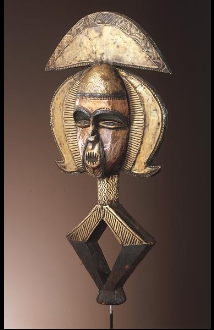
ngulu) “Kota,” Gabon. 19th or early 20th
C. Wood, copper, iron, brass
18
What are some similarities and differences between Georges Braque, Houses at
La’Estaque, 1908. oil on canvas.and Perugino, Delivery of the Keys, 1481-1482.
Sistine Chapel, Rome. fresco?
La’Estaque, 1908. oil on canvas.and Perugino, Delivery of the Keys, 1481-1482.
Sistine Chapel, Rome. fresco?
both depict architectural elements within their compositions, showcasing the artists' abilities to render space and perspective. However, while Braque's painting from 1908 presents a scene of houses in a Cubist style, characterized by fragmented forms and multiple viewpoints, Perugino's fresco from 1481-1482 depicts a biblical narrative in a Renaissance style, featuring harmonious proportions and classical architectural elements. Additionally, "Houses at L'Estaque" reflects Braque's engagement with the modernist movement and his experimentation with form and color, whereas "Delivery of the Keys" exemplifies Perugino's adherence to religious themes and his mastery of perspective and composition within the context of Renaissance art.
19
exemplifies the early stages of Cubism, revolutionizing traditional perspective and form by fragmenting and reassembling geometric shapes in a multi-dimensional exploration of space and light. Through oil on canvas, Braque intricately captures the essence of La'Estaque's architecture, defying conventional representation and inviting viewers into a complex visual dialogue on the interplay between structure and perception within the Cubist movement.
Georges Braque,
Houses at La’Estaque,
1908. oil on canvas. 28”
x 23’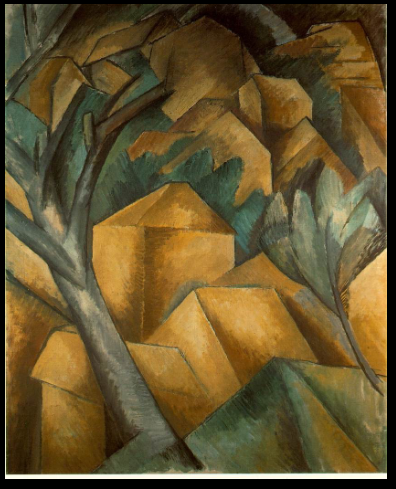
Houses at La’Estaque,
1908. oil on canvas. 28”
x 23’
20
exemplifies the Renaissance movement with its harmonious composition and use of perspective, depicting the biblical scene where Christ gives St. Peter the keys to the kingdom of heaven, showcasing Perugino's mastery of light and space within the fresco technique.
Perugino, Delivery of the Keys, 1481-1482.
Sistine Chapel, Rome. fresco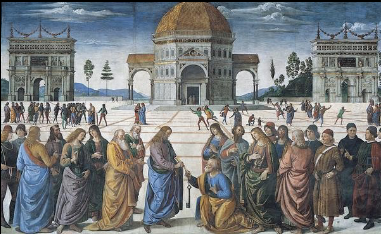
Sistine Chapel, Rome. fresco
21
Post-Impressionist movement, immortalized Mt. Sainte-Victoire in his paintings from 1904 to 1906, employing bold brushstrokes and innovative perspectives to depict the landscape with a unique blend of geometric forms and expressive color.
Paul Cezanne, Mt. Sainte-Victoire,
1904-1906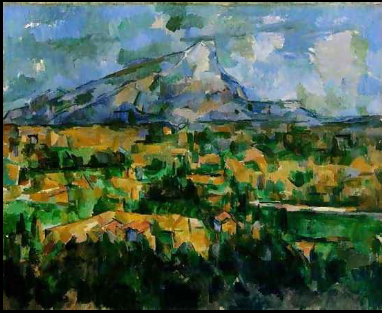
1904-1906
22
example of Cubism, showcasing fragmented forms and geometric shapes to depict the subject. Through bold use of color and abstracted composition, Picasso revolutionized the art world with this iconic piece."
Picasso, Girl with Mandolin
(Fanny Tellier), late spring
1910. oil on canvass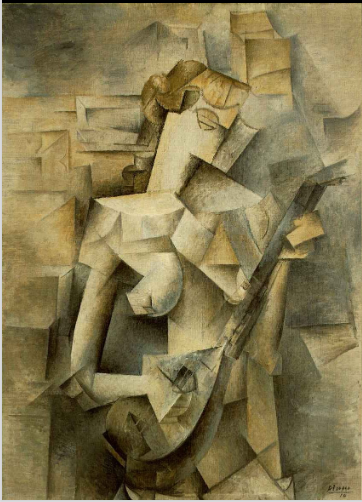
(Fanny Tellier), late spring
1910. oil on canvass
23
prominent figure in the Cubist movement, explores the fragmentation of form and space through the depiction of a man, possibly a fisherman, against a geometrically fractured background. Braque's Cubist approach in this oil on canvas work challenges traditional notions of representation, inviting viewers to engage with the fragmented reality of the subject.
Braque, The Portuguese (The
Emigrant), 1911. oil on canvas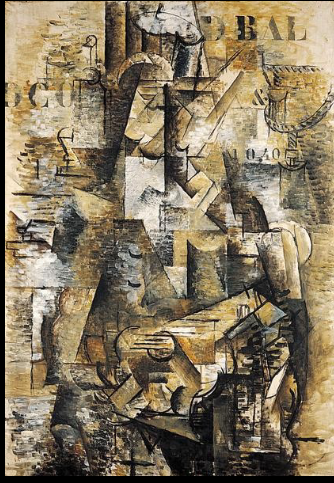
Emigrant), 1911. oil on canvas
24
created by Picasso in 1912 during the Cubist movement, is a groundbreaking artwork incorporating oil and oilcloth on canvas, featuring a chair caning pattern bordered by rope, challenging traditional notions of representation and materials in art.
Picasso, Still Life with Chair Caning, 1912.
Oil and oil cloth on canvas, edged with rope.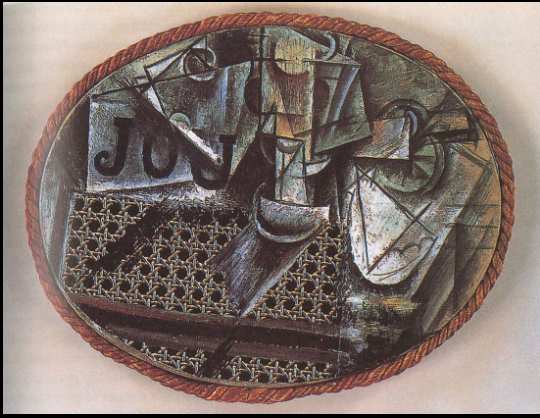
Oil and oil cloth on canvas, edged with rope.
25
As a pioneering piece within the Cubist movement, its restoration holds significant importance in preserving the evolution of avant-garde art.
Brancusi,
Bird in Space,
1925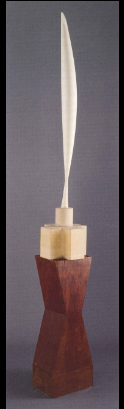
Bird in Space,
1925
26
What is cubism?
a style of art which aims to show all of the possible viewpoints of a person or an object all at once.
27
Collage definition
an artistic composition made of various materials (such as paper, cloth, or wood) glued on a surface.
28
Assemblage deffinition
sculpture or installation art that 'assembles' various found objects.