Modernity PP flashcards
Study these flashcardsFree · spaced repetition · iPhone, Android, Mac & web
All cards
1
modernity definition
refers to the cultural shift and artistic developments that emerged in the late 19th and early 20th centuries, characterized by a departure from traditional norms, a focus on innovation, and an exploration of new ideas, materials, and techniques.
2
an intellectual movement that placed central
importance on reason and empirical knowledge as means to combat
ignorance, superstition, and tyranny and to build a better world. Its
principal targets were religion (embodied in France in the Catholic
Church) and the domination of society by a hereditary aristocracy.
Broadly speaking, Enlightenment thinkers argued that individual
freedom was the key to happiness.
importance on reason and empirical knowledge as means to combat
ignorance, superstition, and tyranny and to build a better world. Its
principal targets were religion (embodied in France in the Catholic
Church) and the domination of society by a hereditary aristocracy.
Broadly speaking, Enlightenment thinkers argued that individual
freedom was the key to happiness.
The Enlightenment
3
a prime example of Romanticism in art. The painting depicts a contemplative scene of an abbey engulfed in a dense oak forest, evoking a sense of sublime solitude and spiritual introspection through its use of dramatic lighting and expansive landscape.
Casper David Friedrich, Abby in Oak
Forest, 1810. Oil on canvas.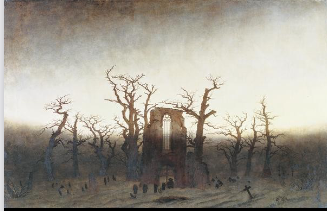
Forest, 1810. Oil on canvas.
4
a quintessential example of the Romantic landscape style, characterized by its emphasis on nature, emotional expression, and sublime depiction of the English countryside.
John Constable, The Haywain, 1821.
oil on canvas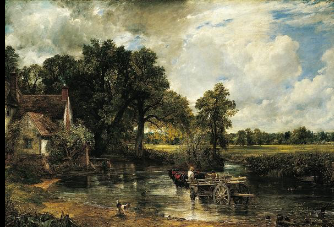
oil on canvas
5
what are some similarities and differences between Casper David Friedrich, Abby in Oak
Forest, 1810. Oil on canvas and John Constable, The Haywain, 1821.
oil on canvas?
Forest, 1810. Oil on canvas and John Constable, The Haywain, 1821.
oil on canvas?
Both Caspar David Friedrich's "Abby in Oak Forest" and John Constable's "The Haywain" are oil paintings that depict natural landscapes, but they convey different emotional tones. While Friedrich's work presents a contemplative and introspective mood, emphasizing the spiritual connection between man and nature, Constable's painting focuses on capturing the vitality and activity of rural life. Despite these differences in mood and emphasis, both artists demonstrate a deep appreciation for the natural world and its profound impact on human experience.
6
an oil on canvas masterpiece that exemplifies Neoclassical art. It depicts a dramatic scene from Roman history where the three Horatii brothers pledge allegiance before battle, showcasing sharp lines, idealized forms, and a focus on moral virtue and
jacques-Louis David, Oath of
the Horatii, 1784.
Oil on canvas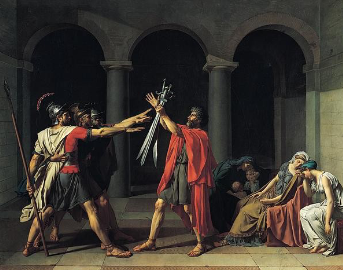
the Horatii, 1784.
Oil on canvas
7
a masterpiece of Academic art, characterized by its meticulous attention to detail, idealized figures, and classical subject matter. Depicting the goddess Venus emerging from the sea, the painting embodies the style's emphasis on technical skill and traditional themes.
William-Adolphe Bouguereau, Birth of Venus, c. 1879. oil on canvas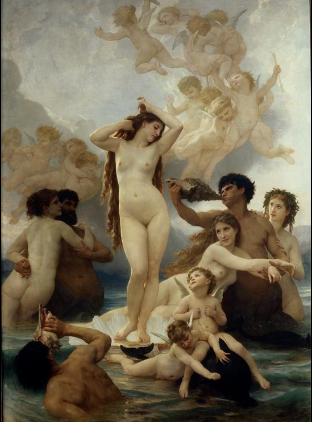
8
a masterpiece of the Early Renaissance period. Executed in tempera on canvas, it depicts the mythological scene of Venus rising from the sea, embodying ideals of beauty, grace, and classical mythology. Botticelli's use of delicate lines, pastel colors, and intricate details reflects the style of Italian Renaissance art, characterized by its revival of classical motifs, naturalism, and humanism.
Botticelli, Birth of Venus, 1482. tempera on
canvas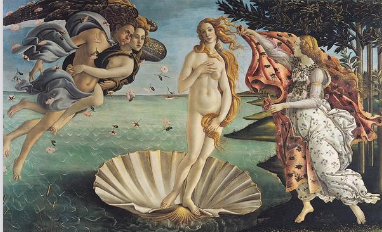
canvas
9
what are some similarities and differences between William-Adolphe Bouguereau, Birth of Venus, c. 1879. oil on canvas and Botticelli, Birth of Venus, 1482. tempera on
canvas? explain using three sentences
canvas? explain using three sentences
Both William-Adolphe Bouguereau's "Birth of Venus" and Botticelli's "Birth of Venus" depict the classical mythological scene of Venus emerging from the sea. However, while Botticelli's rendition adheres more closely to Renaissance artistic conventions, with its linear perspective and idealized figures, Bouguereau's interpretation reflects a more academic style characteristic of the 19th century, featuring smoother brushwork and a more naturalistic approach to anatomy. Furthermore, both artists use symbolism in their compositions, but while Botticelli incorporates allegorical elements referencing classical mythology and Neoplatonic philosophy, Bouguereau focuses more on capturing the physical beauty of the female form.
10
what are some similarities and differences between Giovanni Bellini, Madonna and
Child, 1487, oil on canvas and William-Adolphe Bouguereau,
Virgin and Child , 1888. oil on canvas?
Child, 1487, oil on canvas and William-Adolphe Bouguereau,
Virgin and Child , 1888. oil on canvas?
Both Giovanni Bellini's "Madonna and Child" and William-Adolphe Bouguereau's "Virgin and Child" depict the subject of the Madonna and Child in a traditional religious context. However, Bellini's work reflects the Renaissance style with softer, more delicate features and a serene atmosphere, while Bouguereau's painting belongs to the Academic art tradition, characterized by highly detailed and realistic rendering of figures. Despite the temporal and stylistic differences, both paintings convey a sense of reverence and spiritual devotion through the portrayal of the Madonna and Child.
11
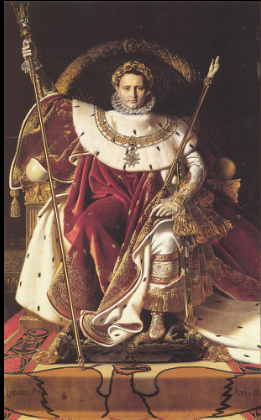
Jean-Auguste-Dominique Ingres, Napoleon on his Imperial
Throne, 1806. oil on canvas.
Throne, 1806. oil on canvas.
a neoclassical masterpiece that depicts Napoleon Bonaparte in a grand and majestic manner, sitting on a throne adorned with symbols of power. The painting reflects the neoclassical style with its emphasis on idealized forms, precise lines, and a sense of harmony and order inspired by ancient Greek and Roman art.
12
what are some similarities and differences between Reconstruction: colossal statue of
Zeus by Pheidias from the Temple of Zeus, Olympia,
Greece, c. 435 B.C.E. andJean-Auguste-Dominique Ingres, Napoleon on his Imperial
Throne, 1806. oil on canvas.? e
Zeus by Pheidias from the Temple of Zeus, Olympia,
Greece, c. 435 B.C.E. andJean-Auguste-Dominique Ingres, Napoleon on his Imperial
Throne, 1806. oil on canvas.? e
Both the statue of Zeus by Pheidias and Ingres' "Napoleon on his Imperial Throne" depict powerful and authoritative figures in grandiose settings. However, while the statue of Zeus portrays a deity seated majestically, exuding divine power and serenity, Ingres' painting depicts Napoleon in a more humanized and imperialistic manner, emphasizing his mortal authority over his empire. Additionally, the statue of Zeus represents classical Greek art characterized by idealized forms and proportions, whereas Ingres' painting is a product of Neoclassical art, which often incorporated classical themes but with a contemporary perspective.
13
This sculpture, considered one of the Seven Wonders of the Ancient World, depicts Zeus enthroned, conveying a sense of power, majesty, and divine authority through its idealized proportions and intricate detailing.
Reconstruction: colossal statue of
Zeus by Pheidias
from the Temple of Zeus, Olympia,
Greece, c. 435 B.C.E.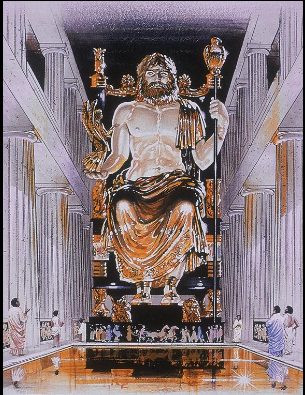
Zeus by Pheidias
from the Temple of Zeus, Olympia,
Greece, c. 435 B.C.E.
14
an example of Neoclassical art, characterized by its revival of classical Greek and Roman elements. The chair reflects the fascination with ancient Egyptian motifs and forms prevalent during the early 19th century, incorporating elements such as sphinxes, lotus flowers, and geometric patterns.
Thomas Hope, chair in the Egyptian style, from a design by Thomas Hope, English, c. 1805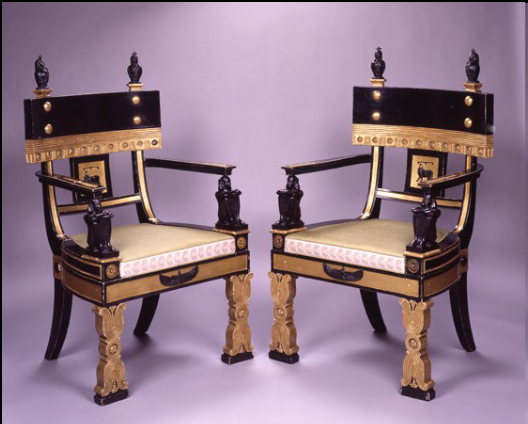
15
Bloomingdales, King of Prussia Mall,
K.o.P., PA
K.o.P., PA
a modern architectural style, characterized by sleek lines, geometric shapes, and minimalist aesthetics. The interior design likely features elements of modernism or contemporary design, emphasizing functionality, clean lines, and open spaces to create a sophisticated shopping environment.
16
an iconic example of architecture from the Victorian era. Utilizing prefabricated industrial materials such as cast and wrought iron combined with expansive sheets of glass, the building epitomizes the style of mid-19th-century industrial architecture, often categorized as Victorian or Iron and Glass architecture.
Joseph Paxton, Crystal Palace, London
England, 1850-51. Prefabricated
industrial materials: cast and wrought
iron and glass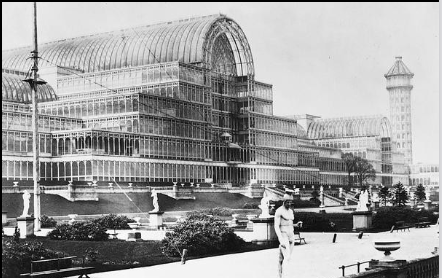
England, 1850-51. Prefabricated
industrial materials: cast and wrought
iron and glass