Minimalism and Post minimalism
Study these flashcardsFree · spaced repetition · iPhone, Android, Mac & web
All cards
1
showcasing his pioneering use of geometric abstraction. Through enamel on canvas, Stella explores the intersection of color, form, and space, inviting viewers into a dynamic visual experience emblematic of the Minimalist movement.
Frank Stella, Great Jones Street, 1958.
enamel on canvas.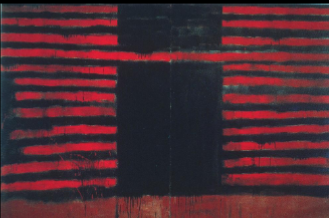
enamel on canvas.
2
a seminal example of Minimalist abstraction, showcasing geometric forms and bold colors in enamel on canvas, measuring approximately 7 by 11 feet."
Frank Stella, The Marriage of Reason and Squalor, II, 1959. enamel on canvas. C. 7 x 11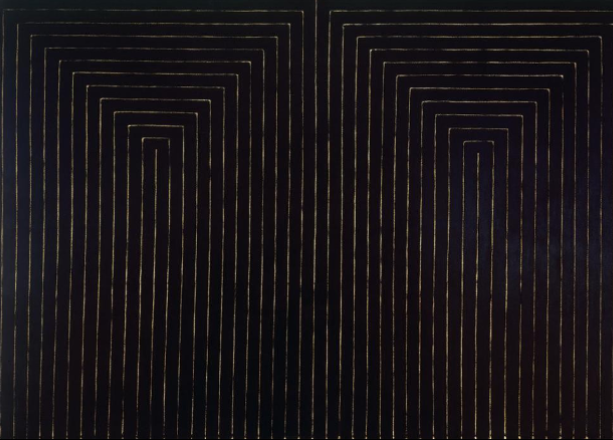
3
epitomizes the emergence of Minimalism in art. Stella employs a stark geometric abstraction, utilizing copper to create dynamic, three-dimensional compositions that challenge traditional notions of space and form.
Frank Stella, Copper series installation, 1960-61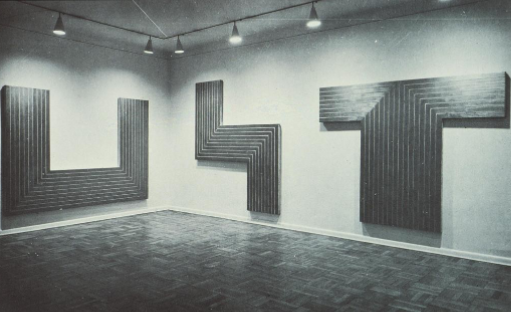
4
epitomizes his minimalist approach with its use of metallic powder in polymer emulsion, showcasing geometric abstraction. The piece, spanning approximately 6 by 18 feet, exemplifies Stella's exploration of form and color within the context of minimalism."
Frank Stella, Empress of India, 1965. metallic powder in polymer emulsion, paint on canvas.
C. 6 x 18’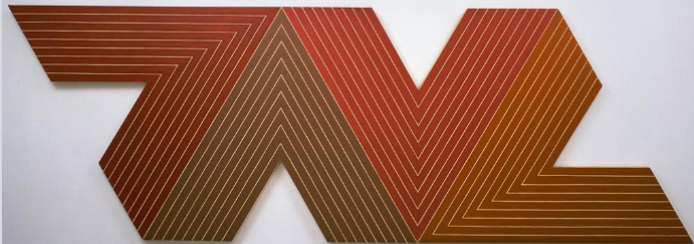
C. 6 x 18’
5
minimalist principles with its anodized aluminum and Plexiglas construction, emphasizing geometric forms and industrial materials. The work, consisting of multiple units measuring approximately 47 x 59 x 59 inches each, epitomizes Judd's exploration of space, materiality, and the relationship between art and its environment within the minimalist movement.
Donald Judd, Untitled, 1969. anodized aluminum and Plexiglas. c. 47 x 59 x 59” per unit.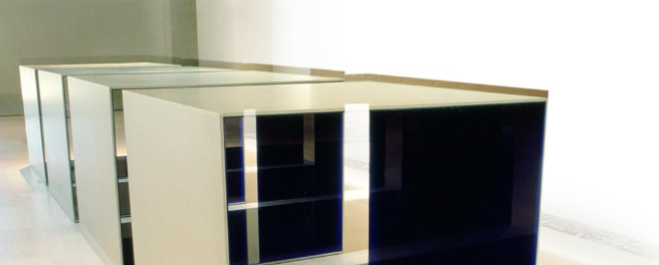
6
created in 1915 is an example of Constructivist art, characterized by its geometric forms and emphasis on industrial materials. It features iron, copper, wood, and rope, showcasing Tatlin's innovative approach to sculpture within the Constructivist movement.
Vladimir Tatlin, Counter-relief, 1915, iron, copper,
wood and rope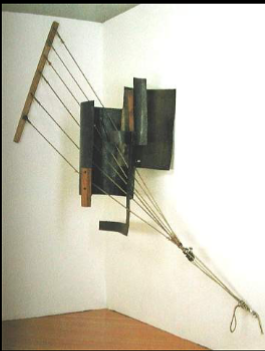
wood and rope
7
is a quintessential example of De Stijl art, characterized by geometric abstraction and primary colors intersecting with black lines on a white canvas, representing the harmony of universal order and simplicity."
mondrian, Tableau No. II with Red, Blue, Black, Yellow and Gray, 1921-25. oil on canvas.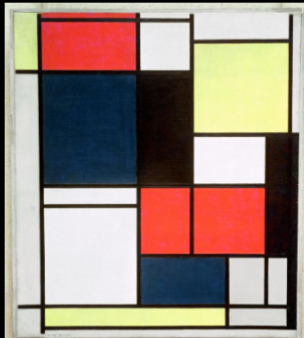
8
an installation piece characterized by its minimalist approach, featuring three identical L-shaped beams positioned vertically against a wall. Morris's work embodies the principles of minimalism, employing simple geometric forms to explore spatial relationships and the viewer's perception of physical space.
Robert Morris, 3 L-Beams, 1965. installation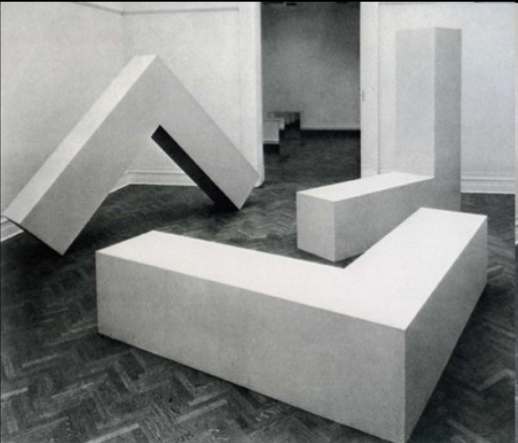
9
a seminal example of Minimalist sculpture, characterized by its use of industrial materials such as felt, asphalt, mirrors, wood, copper tubing, steel cable, and lead. Through a combination of these materials, Morris explores spatial relationships and materiality, inviting viewers to engage with the physical presence and phenomenological aspects of the artwork."
Robert Morris, Untitled, 1968. Felt, asphalt, mirrors, wood, copper tubing, steel cable, lead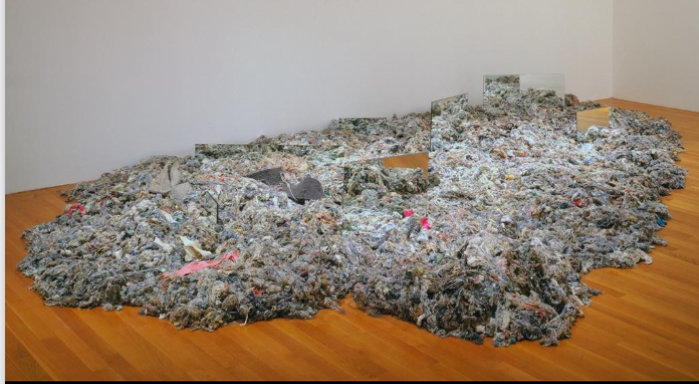
10
an internal speaker, and a cassette of ¼” tape. This conceptual artwork blurs the boundaries between object and sound, inviting viewers to contemplate the process of creation and the relationship between form and content in minimalist art.
Robert Morris, Box with the Sound of its Own Making, 1961. Wood, internal speaker, 7”
cassette of ¼” tape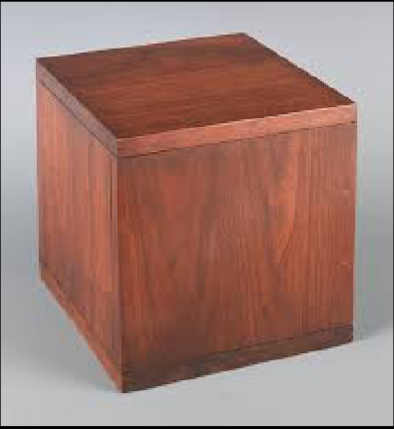
cassette of ¼” tape
11
a monumental installation measuring 18 x 312 inches, composed of lead. Utilizing the minimalist art style, it was installed in the Castelli warehouse, showcasing Serra's exploration of industrial materials and spatial dynamics."
Richard Serra, Splashing, 1968. lead 18 x 312”. Installed Castelli warehouse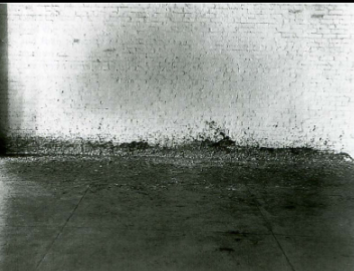
12
This performance art piece, embodying the process-oriented ethos of minimalism, blurred the boundaries between creation and destruction, challenging conventional notions of artistic expression.
richard Serra throwing lead, Castelli warehouse, New York, 1968. Photo Gianfranco
Gorgon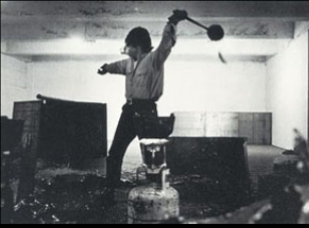
Gorgon
13
a striking sculpture crafted from polyurethane foam, characterized by its bold, organic forms and vibrant colors. Benglis employs elements of post-minimalism in this piece, challenging traditional notions of sculpture and materiality with its unconventional use of foam.
Lynda Benglis, Quartered Meteor,
1969. polyurethane foam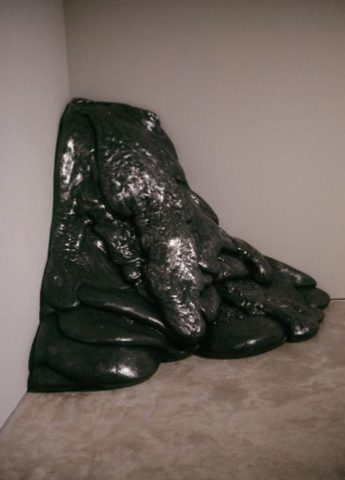
1969. polyurethane foam
14
epitomizes the avant-garde spirit of postmodernism through its innovative use of materials and bodily forms, blurring the boundaries between painting and sculpture. This work showcases Benglis's exploration of process art, as she pours and manipulates latex to create organic, textured compositions that challenge traditional notions of art-making.
Lynda Benglis, Latex Floor
Painting, 1969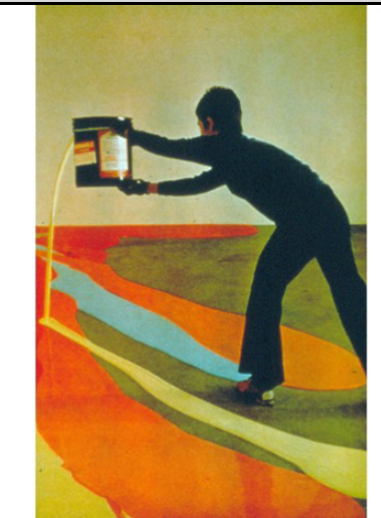
Painting, 1969
15
exemplifies her avant-garde approach, employing abstract expressionism and minimalist principles to create a visceral and emotionally charged installation that challenges traditional notions of form and materiality."
Eva Hesse,
Ishtar, Dec. 1965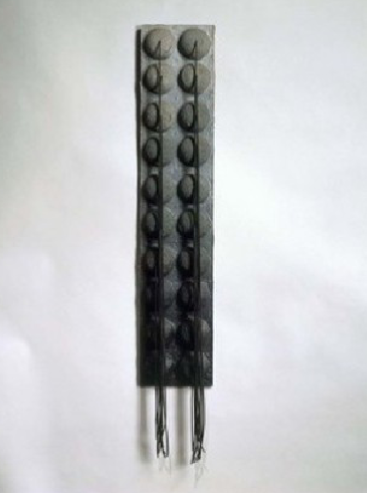
Ishtar, Dec. 1965
16
a seminal example of post-minimalism, showcasing acrylic paint on cloth over wood and cord over steel tube in a monumental yet delicately balanced composition, measuring 182.9 x 213.4 x 198.1 cm."
Eva Hesse, Hang Up, 1966. Acrylic
paint on cloth over wood; acrylic paint
on cord over steel tube
182.9 x 213.4 x 198.1 cm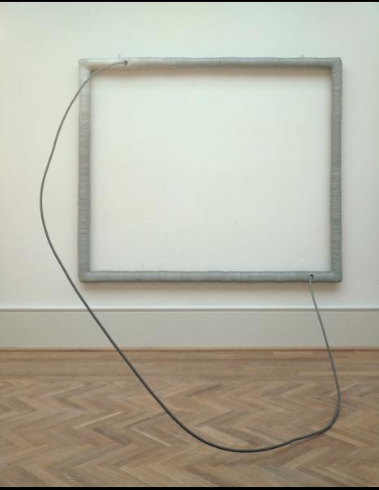
paint on cloth over wood; acrylic paint
on cord over steel tube
182.9 x 213.4 x 198.1 cm