Irrational in Post WW1 Europe: Dada
Study these flashcardsFree · spaced repetition · iPhone, Android, Mac & web
All cards
1
an avant-garde art movement that emerged in post-World War I Europe, rejecting traditional artistic norms and embracing absurdity, nihilism, and irrationality as a response to the chaos of the time. It encompassed various mediums including visual arts, literature, poetry, performance, and sound, seeking to challenge bourgeois culture and conventional notions of art. Art can be identified as dada if it is a readymade, collage/assemblage, a type of performance art, or a photo montage
The Dada movement
2
exemplifies Dadaist principles through torn and pasted paper, demonstrating the artist's embrace of randomness and spontaneity in art-making, reflecting the Dada art movement's rejection of conventional aesthetics and embrace of absurdity.
Jean (Hans) Arp, Collage Arranged According to the Laws of Chance, 1916-
1917. Torn and pasted paper.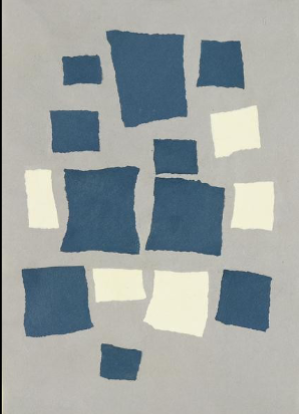
1917. Torn and pasted paper.
3
Dadaist spirit by combining disparate elements to create a surreal image, reflecting the movement's rejection of traditional artistic conventions and its embrace of absurdity and critique of societal norms.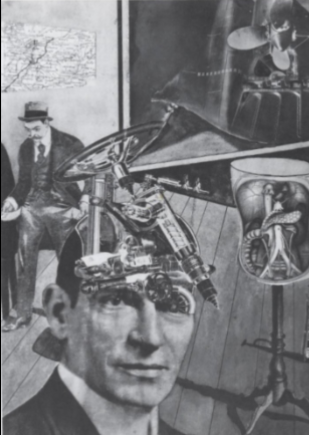
Raoul Hausmann, Tatlin at Home,
1920. Photomontage
1920. Photomontage
4
a visionary constructivist sculpture, standing at 20 feet tall, made from wood, iron, and glass, representing his revolutionary architectural design for a monumental structure intended to house the administrative apparatus of the Communist International.
Vladimir Tatlin with Monument to the
Third International, 1919-1920. 20’ h
wood, iron, glass model of an edifice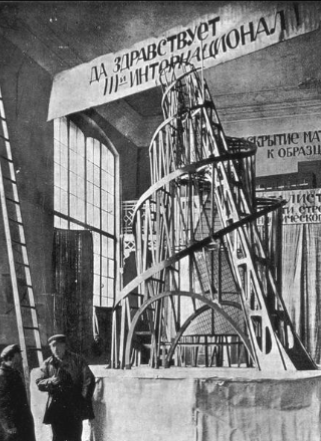
Third International, 1919-1920. 20’ h
wood, iron, glass model of an edifice
5
groundbreaking example of Cubist-inspired art, depicting the motion of a figure descending a staircase through overlapping geometric forms and fractured lines, challenging traditional notions of representation and perspective in painting.
Marcel Duchamp, Nude Descending a Staircase, 1912. Oil on canvas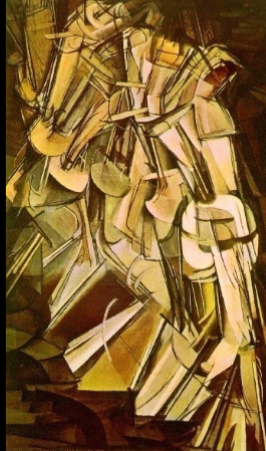
6
exploration of Futurism, capturing the energy and movement of a cyclist through dynamic, overlapping forms and blurred contours, reflecting the Futurist fascination with speed, technology, and the modern urban experience.
Boccioni, Dynamism of a Cyclist. 1913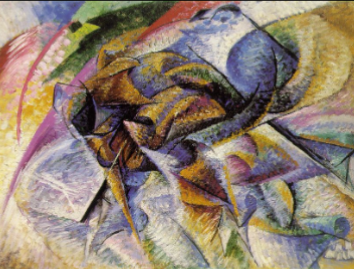
7
exploration of the readymade and challenges traditional notions of art by elevating everyday objects into the realm of artistic expression.
Marcel Duchamp, Bicycle Wheel, 1951 (third version, after lost original of 1913).
Assemblage: metal wheel mounted on painted wood stool, 50 x 25x 16”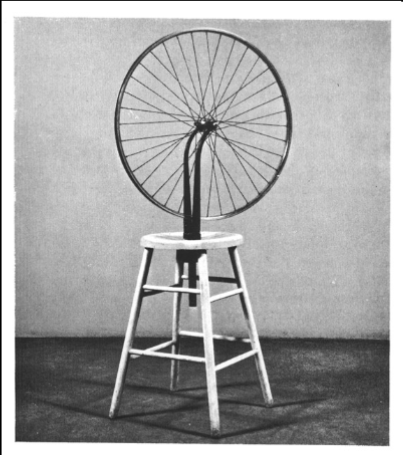
Assemblage: metal wheel mounted on painted wood stool, 50 x 25x 16”
8
It explores themes of desire, sexuality, and the complexities of human relationships through Duchamp's unique blend of symbolism, abstraction, and conceptualism.
Marcel Duchamp, The Bride
Stripped Bare by her Bachelors,
Even (The Large Glass), 1915-23.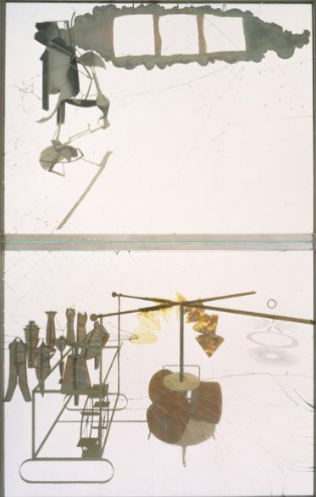
Stripped Bare by her Bachelors,
Even (The Large Glass), 1915-23.
9
exemplifies the artist's signature blend of conceptualism and pop art. This piece features a series of nine molds rendered in wash technique, exploring the intersection of everyday objects and artistic representation.
Duchamp, Wash Study for the Nine Malic Molds, 1965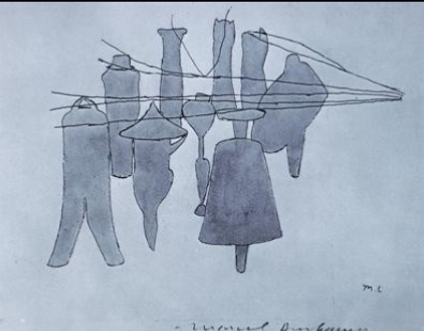
10
This assemblage is a seminal work in the development of Dadaism, showcasing his unique artistic style and conceptual approach.
Duchamp, Chocolate Grinder No. 1, first study for one of the principal elements of the
Bachelor Apparatus (Large Glass), 1913. oil on canvas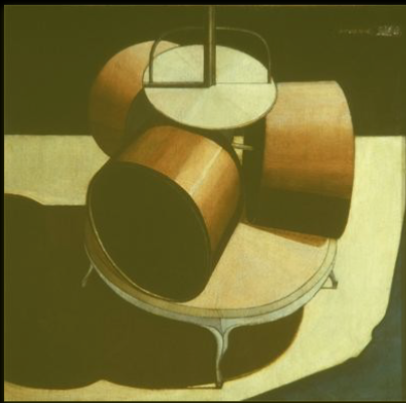
Bachelor Apparatus (Large Glass), 1913. oil on canvas
11
showcasing elements of Cubism and Futurism. 'Bachelor Apparatus (Large Glass), 1913' continues Duchamp's exploration of mechanical themes within a Surrealist framework, utilizing oil on canvas to depict an enigmatic apparatus symbolizing desire and frustration." Furutism is seen within moving elements in the piece, whilst cubism is seen through the use of geometric shapes and a blending of perspectives.
Duchamp, Bride, 1912. oil on canvas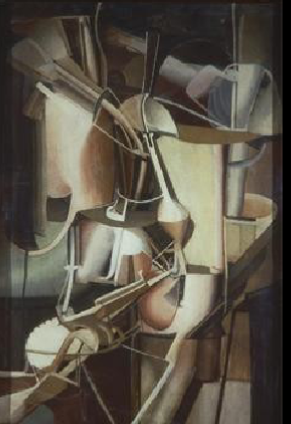
12
Exhibiting elements of Dadaism and Surrealism, it includes one "original" drawing on collotype on celluloid, showcasing Duchamp's innovative approach to art presentation and his exploration of the relationship between art and its reproduction. Dada comes from the work's assemblage aspect, where as surrealism comes from the enlightenment the pieces bring.
Duchamp, Box in a Valise, 1935-41. Leather valise containing miniature replicas,
photographs, color reproductions of works by Duchamp, and one "original" drawing
[Large Glass, collotype on celluloid]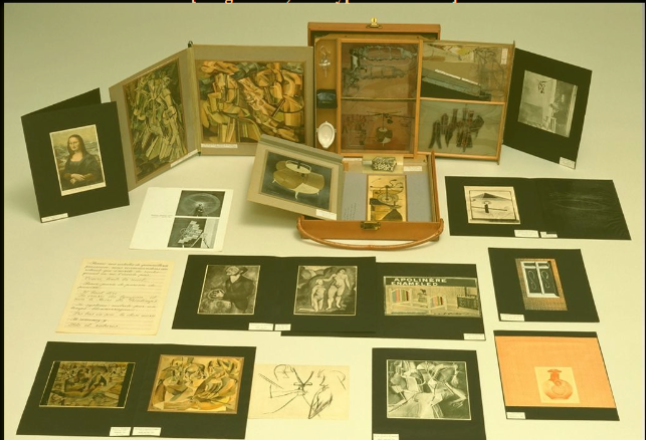
photographs, color reproductions of works by Duchamp, and one "original" drawing
[Large Glass, collotype on celluloid]