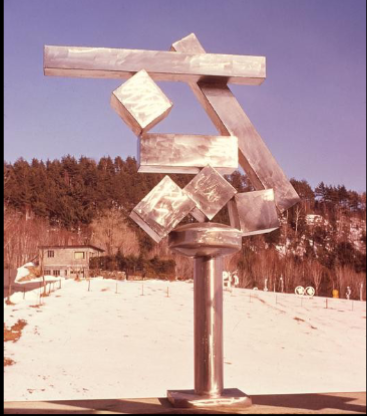
The New York School_Abstract expressionism
Study these flashcardsFree · spaced repetition · iPhone, Android, Mac & web
All cards
1
Define Fromalism
an approach to art criticism and theory that emphasizes the visual elements and formal properties of artwork, such as line, color, shape, and composition, over its social, historical, or cultural context. It seeks to analyze art based solely on its aesthetic qualities and internal structures, often advocating for the autonomy of art from external influences.
2
Define Autonomy
refers to the independence of artistic creation from external influences such as political, social, or commercial pressures. It embodies the artist's freedom to express their vision and ideas without constraints, allowing for originality, creativity, and self-expression to flourish.
3
embodies the essence of the Mexican Mural Movement. Through bold colors and dynamic forms, Siqueiros employs the style of social realism to convey the anguish and protest of the marginalized, echoing their silent screams against oppression.
David Siqueiros, Echo of a Scream,
1937. 48” x 36” enamel on wood.
[Mexican Mural Movement]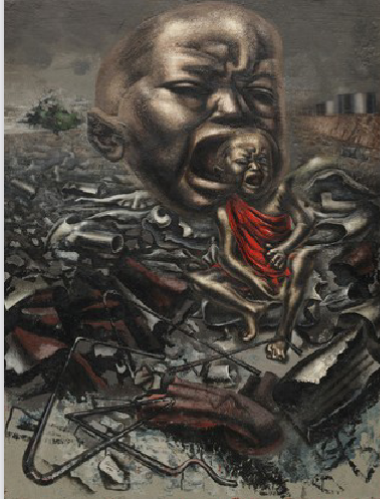
1937. 48” x 36” enamel on wood.
[Mexican Mural Movement]
4
It captures the overwhelming anxiety and existential dread of modern life, becoming a timeless symbol of human anguish and alienation.
Edvard Munch, The Scream, 1893. Oil on canvas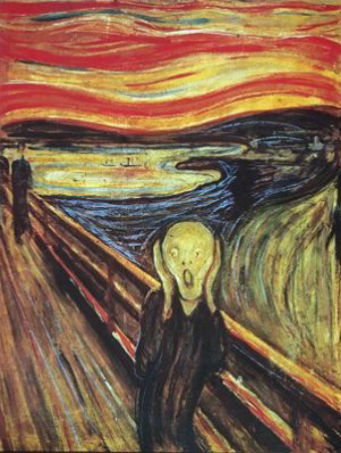
5
This powerful work, executed in the Cubist style, depicts the horrors of the Spanish Civil War through symbolic imagery and bold, fractured forms."
Picasso, Guernica, 1936. oil
on canvas. 137 x 305”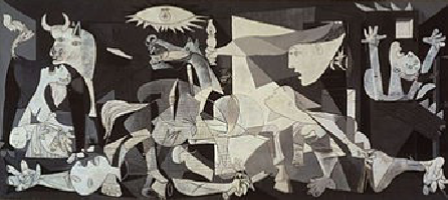
on canvas. 137 x 305”
6
depicting the interior of a lively New York City tavern, showcasing the artist's mastery of the Ashcan School style with its focus on urban realism and everyday scenes."
John Sloan, McSorley’s Bar, 1912. oil on canvas.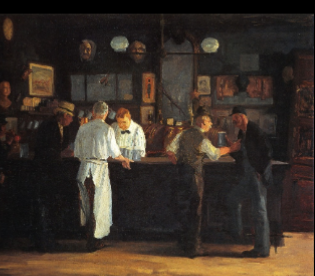
7
an abstract expressionist masterpiece, characterized by dynamic splatters and drips of oil paint on canvas, spanning approximately 48 by 75 inches."
Jackson Pollock, Guardians of the Secret, 1943. oil on canvas. c. 48” x 75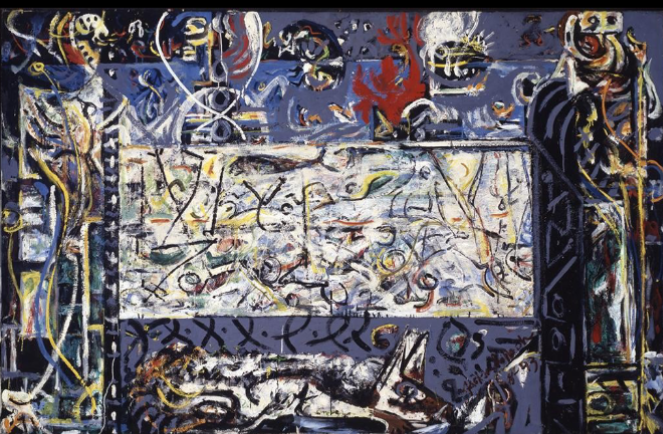
8
Rivera, a prominent figure of the Mexican Muralism movement, depicts the integration of modern machinery with traditional agriculture, reflecting the nation's industrialization and rural life in a dynamic and monumental art style.
Diego Rivera, Mechanization of the Country,
1926. Fresco. Ministry of Education, Mexico
City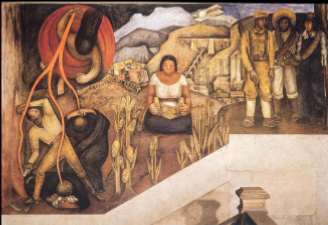
1926. Fresco. Ministry of Education, Mexico
City
9
an iconic piece of Abstract Expressionism, portraying a distorted yet powerful female figure with bold, gestural brushstrokes. Through its visceral energy and unresolved forms, the painting embodies the raw emotional intensity characteristic of the movement.
Willem De Kooning, Woman I, 1950-52. Oil on
canvas.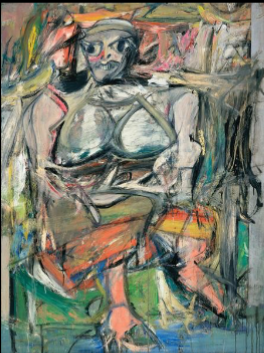
canvas.
10
an iconic 1940s pin-up actress, epitomized glamour and allure with her sultry persona captured in photographs and illustrations, often characterized by the sleek lines and vibrant colors of Art Deco style.
Actress Ava Gardner, 1940s pin-up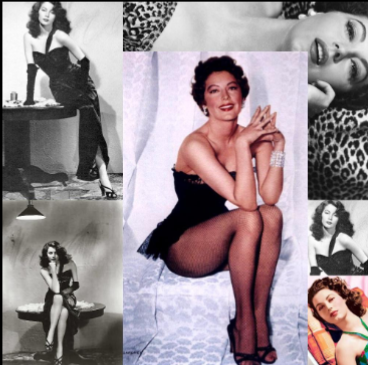
11
a dynamic oil painting on canvas measuring 69” x 79”. Displaying elements of Abstract Expressionism, it features energetic brushwork and vibrant colors, capturing the frenetic energy of urban life."
Willem deKooning, Gotham News, 1955, 69” x 79”. oil on canvas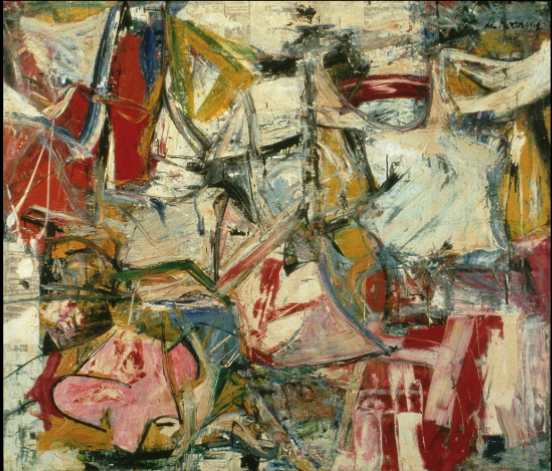
12
exemplifies Expressionism with its dynamic, abstract forms and vibrant colors. Through non-representational shapes and bold brushwork, Kandinsky explores the spiritual and emotional dimensions of art, inviting viewers into a realm of pure visual experience.
Vasily Kandinsky,
Composition VII, 1913. Oil on
canvas. [Expressionism]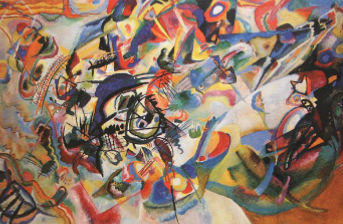
Composition VII, 1913. Oil on
canvas. [Expressionism]
13
a monumental oil on canvas painting created between 1950-51, standing at approximately 8 feet by 18 feet. This Abstract Expressionist masterpiece employs large fields of vibrant color, embodying Newman's exploration of the sublime and the heroic within minimalist composition."
Barnett Newman, Vir Heroicus Sublimus (Man, heroic and sublime), 1950-51.
oil on canvas. c. 8’ x 18’
oil on canvas. c. 8’ x 18’
14
a monumental oil on canvas piece measuring 6 feet by 10.5 feet. Employing his signature style of Abstract Expressionism, Rothko creates a visually arresting composition through large swaths of vibrant colors that evoke emotional depth and contemplation."
Mark Rothko, Untitled,
1949. 6’ x 10.5’ oil on canvas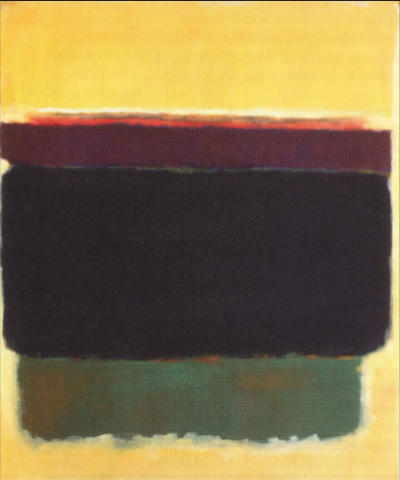
1949. 6’ x 10.5’ oil on canvas
15
an exemplar of Abstract Expressionism, featuring expansive fields of vibrant, layered colors that invite contemplation. With its monumental scale of 9’ 6” x 8’ 9”, Rothko's masterpiece engulfs viewers, evoking emotional responses through its immersive color fields."
Mark Rothko, No. 14, 1960. Oil on canvas.
9’ 6” x 8’ 9”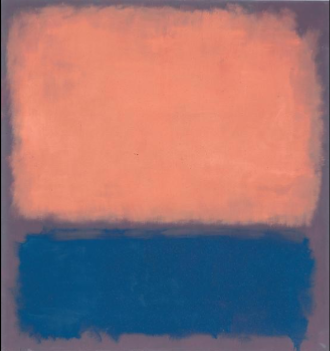
9’ 6” x 8’ 9”
16
Classified as prime examples of his signature abstract expressionism, characterized by large, enveloping fields of color that evoke deep emotional resonance. These monumental works, created specifically for the sacred space, immerse viewers in contemplation and spiritual reflection through their intense hues and subtle gradations of light.
Mark Rothko, North, Northeast, and East wall
paintings in the Rothko Chapel, Houston, TX,
1965-66 (opened in 1971)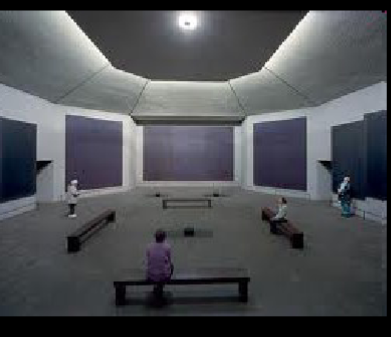
paintings in the Rothko Chapel, Houston, TX,
1965-66 (opened in 1971)
17
a seminal work of Surrealism, featuring vibrant colors and whimsical forms that evoke a dreamlike carnival scene. Miró's use of abstract shapes and playful imagery challenges conventional representation, inviting viewers into a fantastical realm of imagination.
Joan Miró, Carnival of Harlequin,
1924-25. oil on canvas. [Surrealism]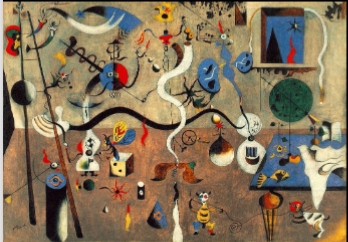
1924-25. oil on canvas. [Surrealism]
18
an oil on canvas piece that embodies the Abstract Expressionist style. Krasner's dynamic brushwork and bold use of color evoke a sense of energy and emotion, characteristic of the movement.
Lee Krasner, Untitled,
1949, oil on canvas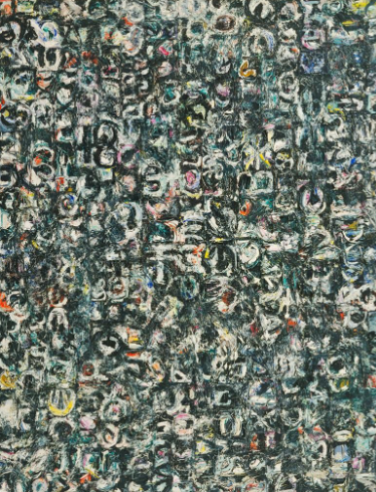
1949, oil on canvas
19
a prime example of Abstract Expressionism, showcasing his signature drip painting technique. Through layers of oil, enamel, and aluminum paint on a large canvas, Pollock creates a mesmerizing composition filled with dynamic movement and spontaneity."
Jackson Pollock, Number 1, 1950 (Lavender Mist), 1950.
Oil, enamel, and aluminum paint on canvas. c. 7’ x 10’
Oil, enamel, and aluminum paint on canvas. c. 7’ x 10’
20
embodies the essence of Abstract Expressionism through its stainless steel composition. The sculpture's dynamic forms and geometric precision reflect the artist's mastery of the style, encapsulating a sense of movement and raw emotion within its sleek contours.
David Smith, Sentinel, c. 1956. stainless steel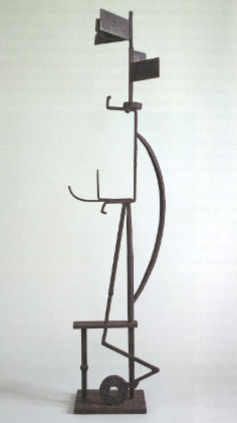
21
showcases stainless steel sculptures characterized by geometric forms and polished surfaces. Smith's abstract expressionist style is evident in these works, which explore the interplay of light and form in three-dimensional space.
David Smith, from the Cubi series, c. 1964. stainless steel