Purity, Geometric Abstraction, De Stijl
Study these flashcardsFree · spaced repetition · iPhone, Android, Mac & web
All cards
1
What is Geometric abstraction?
a style of abstract art that emphasizes the use of geometric shapes and forms as the primary visual elements in a composition. In geometric abstraction, artists often create non-representational artworks by arranging shapes such as squares, circles, rectangles, triangles, and lines in a deliberate and ordered manner. These shapes are typically simplified and stripped of any representational or figurative associations. key features include: simplified forms
2
What is De Stijl
an influential art movement founded in the Netherlands in 1917. It was also known as Neoplasticism, and it aimed to achieve a universal visual language through a reduction to the essentials of form and color.
3
What is russian Constructivism?
a pioneering avant-garde art movement that emerged in Russia in the early 20th century, particularly after the Russian Revolution of 1917. It was closely associated with the broader Constructivist movement, which aimed to create art that served a social and political purpose, often in conjunction with the goals of the socialist state. Focuses on Utilitarianism (Everyday Life), Industrial Materials, Geometric abstraction, social and political engagement, and Archtiectual influence
4
This innovative design, created during the Constructivist movement, utilized wood, iron, and glass, reflecting the avant-garde aesthetic and ideals of the early 20th century. key aspects of Russian constructivism in this work can be found in the gathering of materials and the political influence it has
Vladimir Tatlin with Monument to the Third International, 1919-1920. 20’ h wood,
iron, glass model of an edifice intended to be 1,300’ h.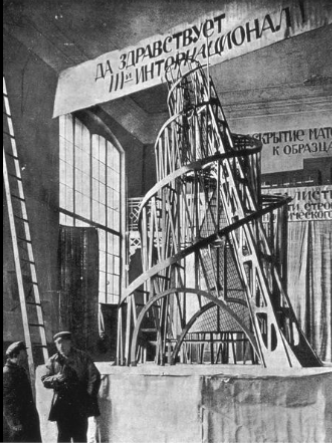
iron, glass model of an edifice intended to be 1,300’ h.
5
featuring collapsible constructions crafted from wood and wire, embodying the Constructivist ethos of geometric abstraction and industrial materials. Constructivist aspects are found in the gathering of everyday materials
Aleksandr Rodchenko,
Spatial Construction #12, c. 1920. Collapsible
constructions made of wood and wire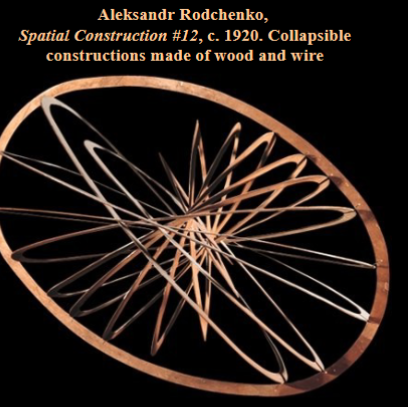
Spatial Construction #12, c. 1920. Collapsible
constructions made of wood and wire
6
epitomizes Constructivism with its motor-propelled kinetic design. This artwork, comprised of a single vibrating rod made of wood and painted metal, originally featured glass but was later replaced with Perspex, measuring 41x29x29.
Naum Gabo, Column, c. 1923. reconstructed 1937. Motor propelled kinetic object
consisting of a single vibrating rod. Wood, painted metal, glass (later replaced w/ Perspex).
41x29x29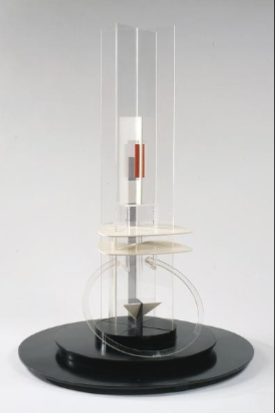
consisting of a single vibrating rod. Wood, painted metal, glass (later replaced w/ Perspex).
41x29x29
7
a dynamic Soviet propaganda poster employing geometric abstraction and Constructivist style. It features a red wedge piercing through a white circle, symbolizing the Bolsheviks' revolutionary force overcoming their opponents during the Russian Civil War. The aspects of geometric abstraction are found in the breaking down of simple shapes, while the constructivist style focuses mostly on the political message the piece potrays.
El (Eliezer Markovich) Lissitzky, Beat the
Whites with the Red Wedge, 1919. Poster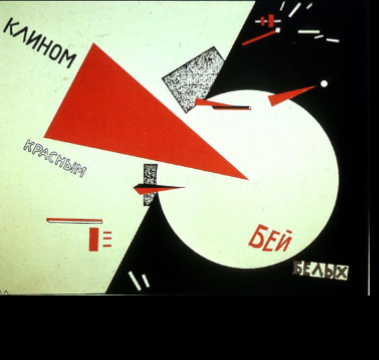
Whites with the Red Wedge, 1919. Poster
8
a seminal work by Kazimir Malevich, a pioneer of the Russian avant-garde movement known as Suprematism. Through geometric abstraction and bold use of color, Malevich explores the intersection of form and space, transcending representational art to evoke a sense of pure visual experience. The geometric abstraction is shown quite clearly through the breaking down of shapes to the point where only two squares are shown. Suprematism can be seen through the pieces purity in the composition.
Malevich, Painterly Realism. Boy with
Knapsack—Color Masses in the Fourth
Dimension, 1915. Oil on canvas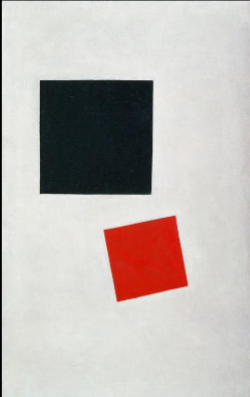
Knapsack—Color Masses in the Fourth
Dimension, 1915. Oil on canvas
9
captures Lissitzky's Constructivist style, merging photography and graphic design to convey dynamic compositions that celebrate modernity and industrialization. Constuctivism can be found in utilitatianism, or the everyday life in this piece.
El Lissitzky, The Constructor, 1924. Gelatin silver print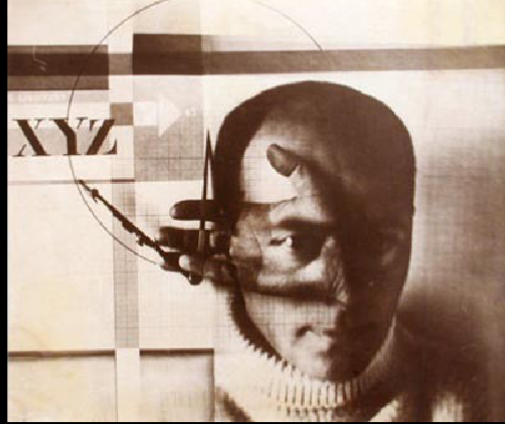
10
the artwork showcases Mondrian's transition from traditional landscape motifs to the abstract geometric style that would define his later work." The geometric abstraction can be seen in the breaking down of geometrical elements seen in the blue tree itself.
Piet Mondrian, Blue Tree, 1908. tempera on cardboard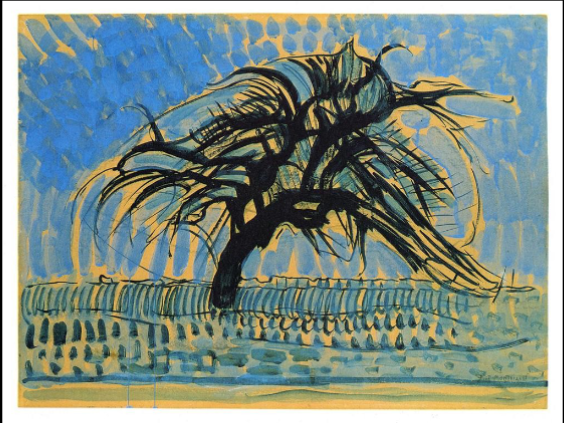
11
a seminal work of De Stijl, characterized by geometric abstraction and primary colors. Through intersecting lines and blocks of color, Mondrian achieved a harmonious balance, embodying the movement's principles of simplicity and universality." De stigl is seen through the use of primary colors and essential form.
Mondrian, Tableau No. II with Red, Blue, Black, Yellow and Gray, 1921-25.
oil on canvas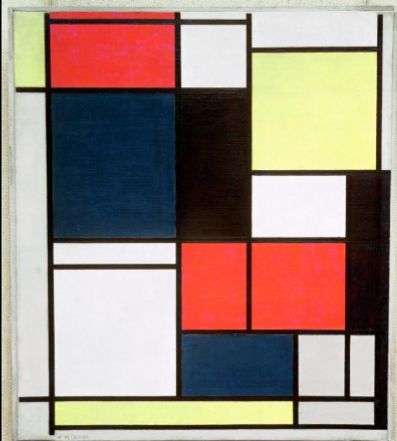
oil on canvas
12
showcases signature Neoplasticism style with bold, geometric grids and primary colors intersecting dynamically, capturing the rhythm and energy of New York City's bustling streets through abstract forms on canvas." both neoplastisism and de stijl are seen throughout this piece
Mondrian, Broadway Boogie Woogie, 1942-43. oil on canvas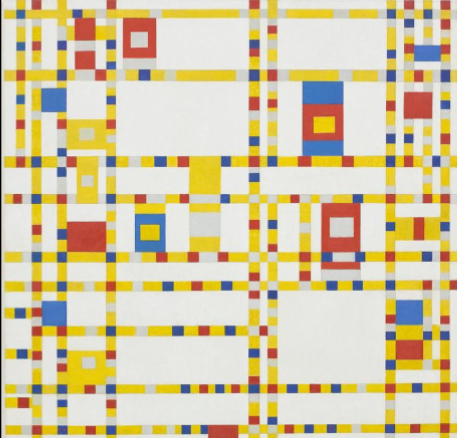
13
embodying the principles of De Stijl movement, their work featured geometric abstraction and primary colors, transforming the space into a dynamic synthesis of art, architecture, and design.
Van Doesburg with Sophie Taeuber-Arp and Hans Arp, Cinema-Dance Hall,
Café l’ Aubette, Strasbourg, France, 1926-28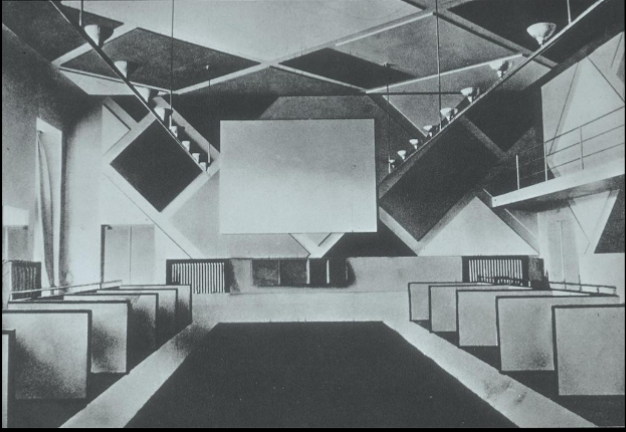
Café l’ Aubette, Strasbourg, France, 1926-28
14
exemplifies Rietveld's innovative use of de stigl principles, featuring an asymmetrical design with bold lines and blocks of color, pioneering modernist architecture.
Gerrit Thomas Reitveld, Schröder House, Utrecht, the Netherlands, 1924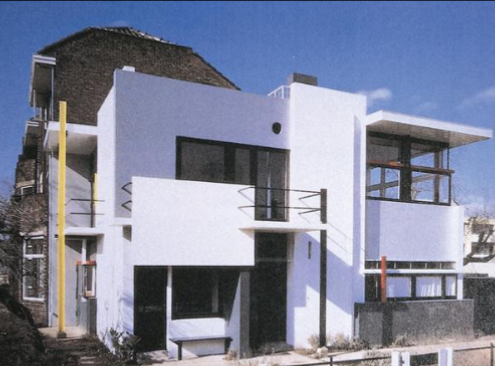
15
epitomizes De Stijl movement principles with its geometric forms and primary colors. It embodies the movement's emphasis on abstraction and simplicity, becoming an icon of modernist design.
Rietveld, Red and Blue Chair, 1917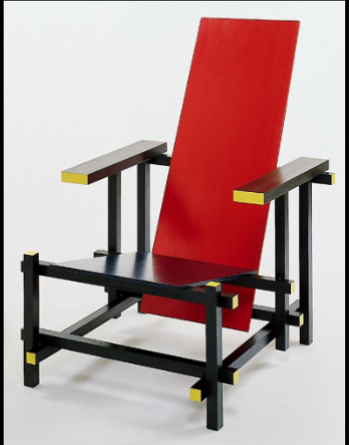
16
adherence to Purism, an art movement characterized by geometric forms and a focus on abstraction. In this oil on canvas work, Le Corbusier employs precise lines and simplified shapes to depict everyday objects, embodying the movement's emphasis on purity and order."
Le Corbusier, Purist Still Life, 1922. oil on canvas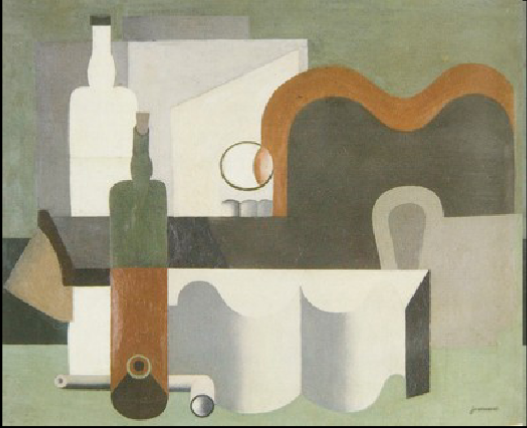
17
depicts a young woman holding a mandolin in Cubist style, characterized by fragmented forms and multiple viewpoints. Picasso's late spring masterpiece exemplifies his innovative approach to representation, challenging traditional perspectives and inviting viewers to see the subject in a new light.
Picasso, Girl with Mandolin
(Fanny Tellier), late spring
1910. oil on canvass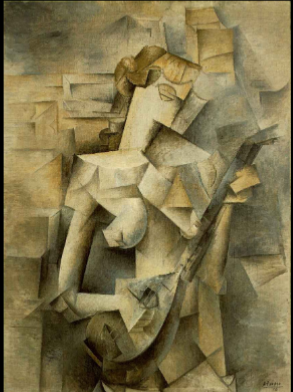
(Fanny Tellier), late spring
1910. oil on canvass
18
Its monumental scale and functionalist design embody the principles of German Jugendstil, or Art Nouveau, emphasizing both aesthetic appeal and industrial efficiency.
Behrens, AEG Turbine Factory, Berlin. 1908-09.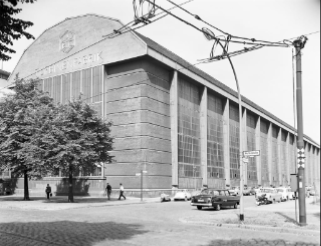
19
The building exemplifies the International Style with its use of reinforced concrete, glass windows, and timber window frames, embodying Le Corbusier's "Five Points of Architecture."
Le Corbusier, Villa Sovoye, Poissy, France, 1928-30. Concrete, glass, with
timber window frames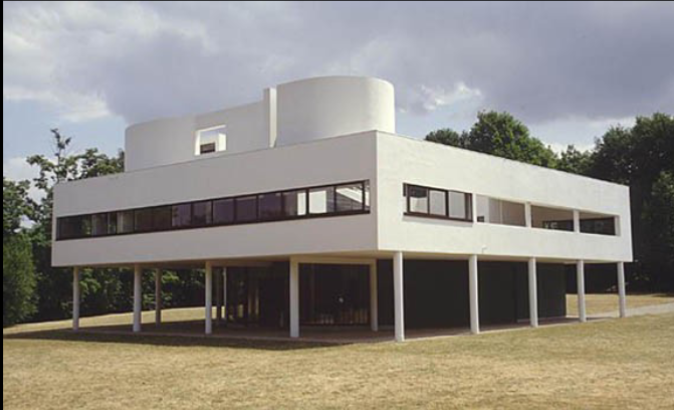
timber window frames