American Modernism, Stieglitz, Precisionism, Harlem Ren
Study these flashcardsFree · spaced repetition · iPhone, Android, Mac & web
All cards
1
Define Precisionism
American modernist art movement of the early 20th century characterized by its highly detailed, sharply defined depictions of urban and industrial landscapes. Artists associated with Precisionism sought to capture the geometric forms, clean lines, and machine aesthetics of modern America, often emphasizing the beauty of industrialization and technological progress.
2
Explain american modernism
American modernism in art emerged in the early 20th century as artists broke away from traditional styles and embraced experimentation and innovation, often reflecting the dynamism and diversity of American society. It encompassed a range of movements and styles, including Precisionism, Regionalism, and Abstract Expressionism, which sought to capture the spirit of modern life and explore new forms of expression. For context, modernism itself embraced abstraction, subjectivity, and new modes of representation to reflect the rapidly changing world.
3
refers to a pivotal moment in the history of photography in the early 20th century. It emphasized photography as a legitimate art form, breaking away from the purely documentary approach and exploring photography's expressive and aesthetic potential.
Stieglitz movement
4
an oil on canvas painting by Henri, showcasing his realist style and capturing the atmospheric beauty of the East River under a dramatic sky filled with billowing cumulus clouds.
Robert Henri,
Cumulus Clouds, East River, 1901-02. oil on canvas
Cumulus Clouds, East River, 1901-02. oil on canvas
5
Henri captures the gritty realism of urban life with masterful brushwork, portraying the bustling streets of New York enveloped in a serene blanket of snow, showcasing the Ashcan School's focus on depicting everyday scenes with honesty and immediacy.
Robert Henri,
Snow in New York,
1902. oil on canvas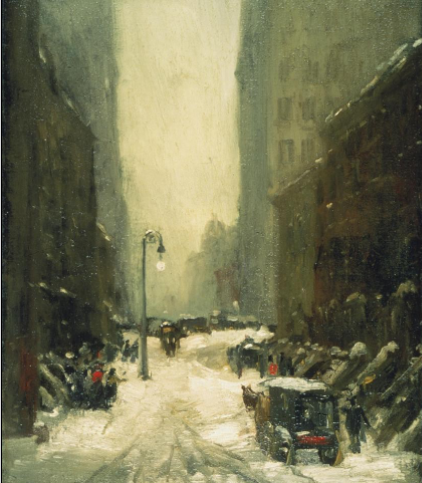
Snow in New York,
1902. oil on canvas
6
a monumental realist painting depicting a funeral scene in his hometown. Through meticulous detail and lifelike portrayal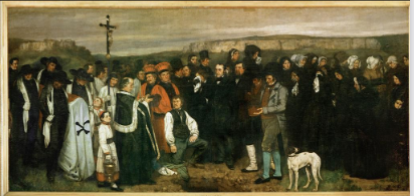
Courbet, Burial at Ornans,
1849-50. oil on canvas
1849-50. oil on canvas
7
captures the serene beauty of a snowy day in New York City with its soft focus and subtle tonal variations, showcasing elements of Pictorialism
Alfred Stieglitz, Winter on Fifth Avenue, New York, 1893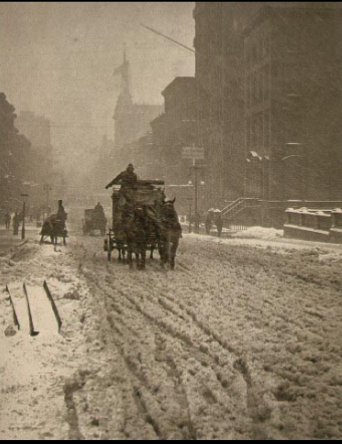
8
captures the gritty urban atmosphere of New York City in the early 20th century, portraying the serenity of a snowy day amidst the bustling city streets with his realist style
Robert Henri, Snow in New York, 1902.
oil on canvas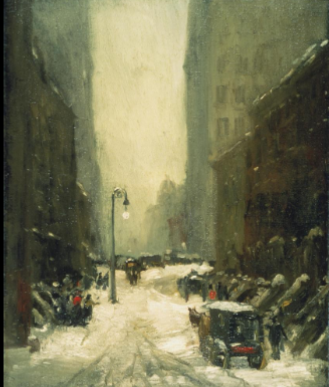
oil on canvas
9
a realist oil painting depicting the interior of a historic New York City tavern, capturing the atmosphere and characters with intricate detail
John Sloan, McSorley’s Bar, 1912. oil on canvas.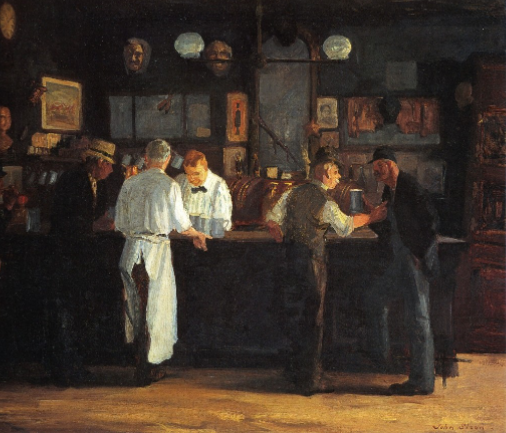
10
an oil-on-canvas artwork capturing the fervor and determination of women's suffrage activists in the early 20th century, employing elements of realism to depict the intense emotions and energy of the movement."
Theresa Bernstein, Suffrage Meeting, 1914
Oil on canvas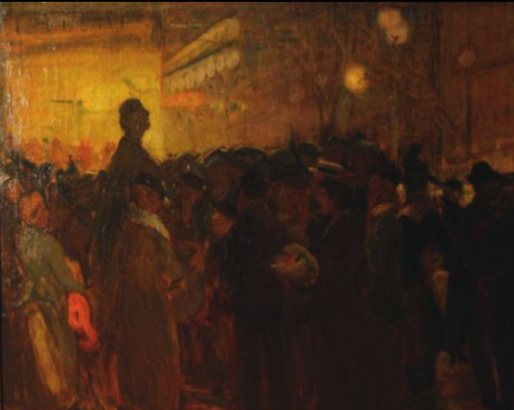
Oil on canvas
11
depicts urban life in New York City. Utilizing the Ashcan School style, Bellows captures the vitality and grit of the city streets with bold brushstrokes and a keen eye for realism.
George Bellows, Cliff Dwellers, 1914. oil on canvas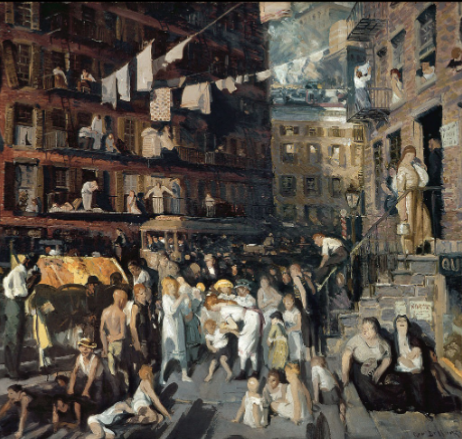
12
showcased avant-garde photography and modern art
Stieglitz at the Little Galleries
of Photo-Secession ('291')
at 291 Fifth Avenue (1905-1917)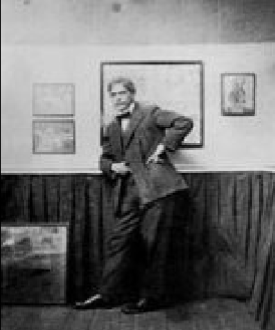
of Photo-Secession ('291')
at 291 Fifth Avenue (1905-1917)
13
epitomizes the essence of modernist sculpture with its streamlined forms and abstract representation of the female figure, capturing a sense of timeless elegance and simplicity.
Constantin Brancusi,
Madamoiselle Pagony, 1913.
bronze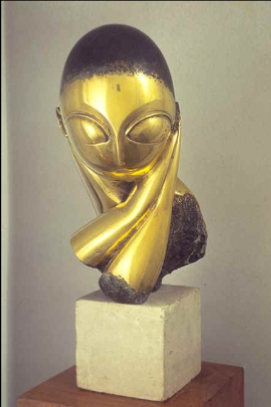
Madamoiselle Pagony, 1913.
bronze
14
depicts intertwined figures in graphite, pen, sepia ink wash, and gouache on paper, embodying the essence of romanticism and realism through its expressive forms and intricate detailing
August Rodin, Circle of Lovers, c. 1880.
graphite, pen, sepia ink wash, gouache
on paper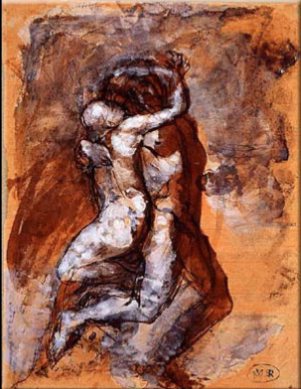
graphite, pen, sepia ink wash, gouache
on paper
15
abstract art style, blending vibrant colors and geometric shapes to evoke an emotional landscape reminiscent of a romantic garden, where the boundaries between form and feeling dissolve."
Wassily Kandinsky, Improvisation Number 27: The Garden of Love, 1912.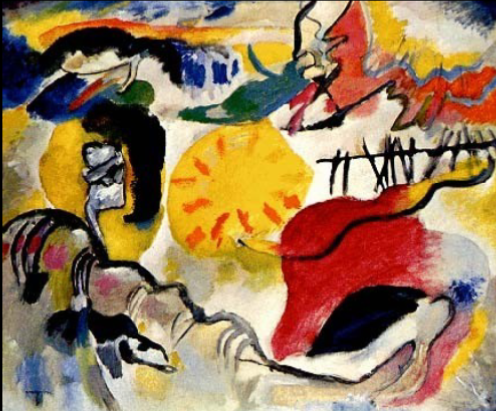
16
epitomizes the essence of Fauvism with its vibrant colors and simplified forms, depicting a serene scene of nude figures amidst a lush, dreamlike landscape, radiating an aura of bliss and harmony.
Henri Matisse, The Joy of Life, 1905
The Barnes Foundation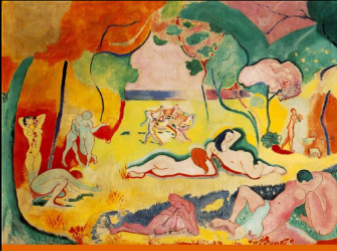
The Barnes Foundation
17
portrays a distorted, angular figure, characteristic of his Cubist style, which fractures and reassembles the human form, challenging traditional perspectives of beauty and representation."
Picasso, Standing Female
Nude, 1910.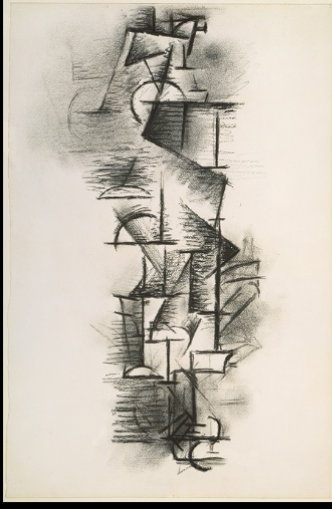
Nude, 1910.
18
a groundbreaking modernist painting, utilizing Cubist techniques to depict the abstract motion of a figure descending a staircase through overlapping geometric forms."
Duchamp, Nude Descending a
Staircase, oil on canvas
Staircase, oil on canvas
19
depicting the geometric forms and industrial landscape of urban America.
Charles Sheeler, Church Street El. 1920. oil on canvas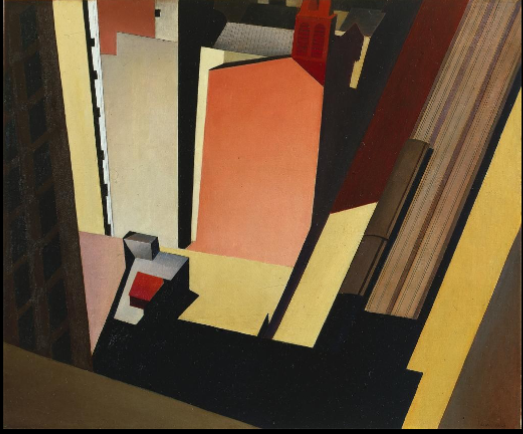
20
captures the industrial landscape with precision and clarity, showcasing the essence of Precisionism, characterized by sharp lines, geometric forms, and a focus on industrial subjects.
Charles Sheeler, Ford Plant, Detroit,
Henry Ford’s River Rouge Plant,
Detroit, commission by Ayers
Advertising Agency. 1927. Gelatin
silver print.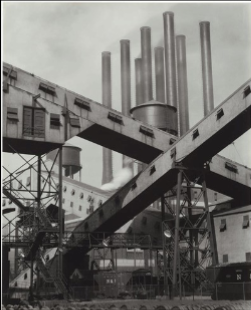
Henry Ford’s River Rouge Plant,
Detroit, commission by Ayers
Advertising Agency. 1927. Gelatin
silver print.
21
epitomizes Precisionism, featuring geometric forms and sharp lines to depict a simplified, modern interpretation of rural America, evoking both nostalgia and industrial progress.
Sheeler, Classic Landscape, 1931. Oil on canvas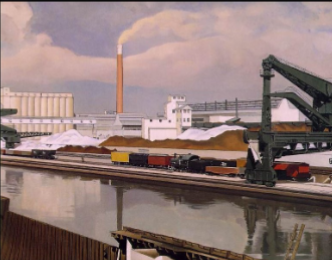
22
a striking example of Precisionism, characterized by its sharp geometric forms and emphasis on industrial subjects. Through the medium of gelatin silver print, Sheeler captures the essence of rural America with meticulous detail, presenting the barn as both a functional structure and a piece of architectural beauty.
Charles Sheeler, Bucks County Barn, 1916.
Gelatin Silver print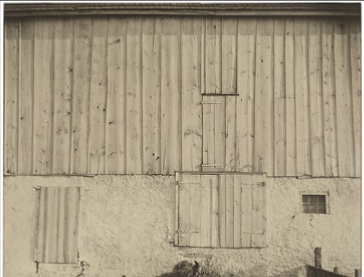
Gelatin Silver print
23
a striking depiction of an American farmhouse, celebrated for its geometric precision and stark simplicity. Sheeler's precisionist style captures the essence of modern industrial America with clean lines, sharp angles, and meticulous detail.
Charles Sheeler, Home Sweet
Home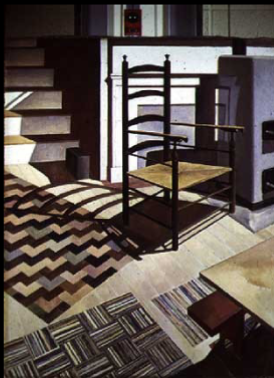
Home
24
portrays the iconic skyscraper in a blend of Precisionism and Modernism, capturing the geometric forms and urban dynamism of New York City at night through bold contrasts and simplified shapes."
Georgia O’Keefe, Radiator Building
—Night, New York, 1927. oil on
canvas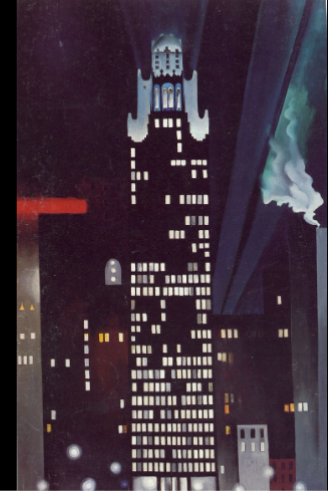
—Night, New York, 1927. oil on
canvas
25
depicts the renowned art dealer Ambrose Vollard in Cubist style, characterized by fragmented forms and geometric abstraction, reflecting Picasso's innovative approach to representation at the time."
Pablo Picasso, Ambrose Vollard,
1910. Oil on canvas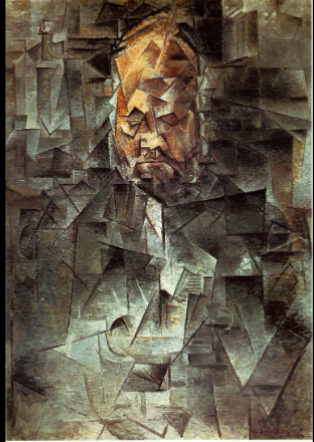
1910. Oil on canvas
26
an oil-on-canvas masterpiece rendered in the style of German Expressionism. It captures the emotional intensity and turmoil of the artist's grief over the death of his lover during World War I, blending abstract elements with symbolic imagery to convey a profound sense of loss and mourning."
Marsden
Hartley, Portrait
of a German
Officer, 1914. oil
on canvas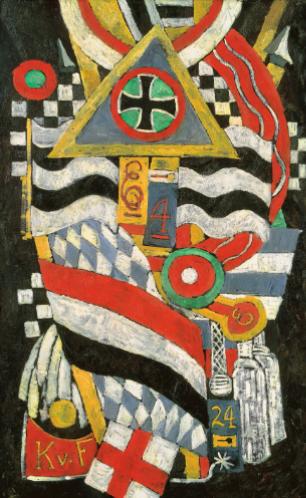
Hartley, Portrait
of a German
Officer, 1914. oil
on canvas
27
a striking example of Precisionism, characterized by its geometric precision and focus on industrial subjects. Rendered in oil on composition board, this piece features a bold, stylized depiction of the number 5 against a golden backdrop, celebrating the modernist aesthetic of the early 20th century."
Charles Demuth, The
Figure 5 in Gold, 1928.
Oil on composition board.
36 x 29 ¼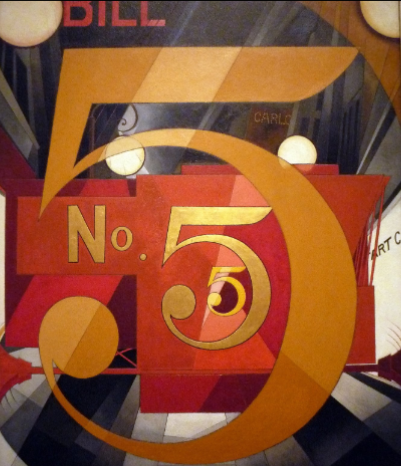
Figure 5 in Gold, 1928.
Oil on composition board.
36 x 29 ¼
28
portrays the industrial landscape of Lancaster, Pennsylvania, through precise geometric forms and vibrant colors, emblematic of Precisionism, an early 20th-century American art movement."
Charles Demuth, My Egypt, 1927.
Oil on composition board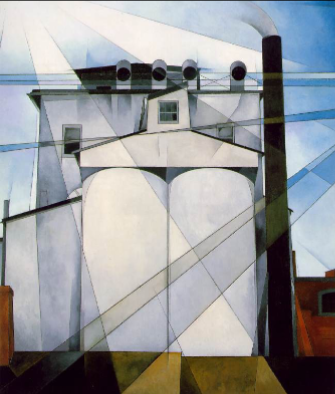
Oil on composition board
29
Utilizing precisionist style, Demuth captures the geometric forms and industrial essence of Lancaster's architecture with sharp lines and vibrant colors.
Charles Demuth, Buildings Lancaster,
1930.
Oil on composition board. 24” x 20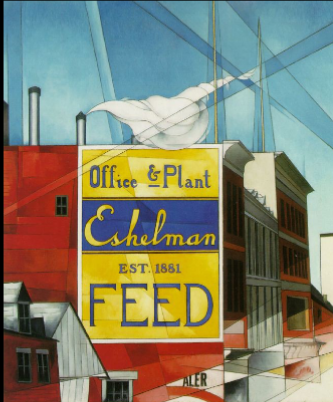
1930.
Oil on composition board. 24” x 20
30
depicts a janitor immersed in his artistic passion. Executed in oil on canvas, Hayden employs elements of realism to portray the ordinary yet dignified life of his subject, capturing the essence of American Scene painting."
Palmer Hayden, A
Janitor Who
Paints, c. 1930. oil
on canvas. 39 x 32”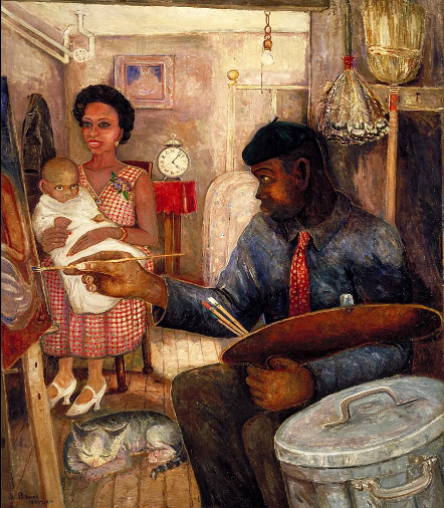
Janitor Who
Paints, c. 1930. oil
on canvas. 39 x 32”