Bauhaus/International Style
Study these flashcardsFree · spaced repetition · iPhone, Android, Mac & web
All cards
1
What was the Bauhaus style?
emphasized functionalism, simplicity, and the integration of art, craft, and technology. It rejected traditional ornamentation in favor of clean lines, geometric shapes, and a focus on mass production. The style aimed to create designs that were both aesthetically pleasing and suited to modern industrial society.
2
encapsulates the spirit of the Bauhaus movement with its geometric abstraction and dynamic composition, symbolizing the convergence of art and societal ideals amidst the tumultuous post-war period.
Lyonel Feininger, Cathedral of Socialism,
woodcut, Cover of Bauhaus manifesto,
1919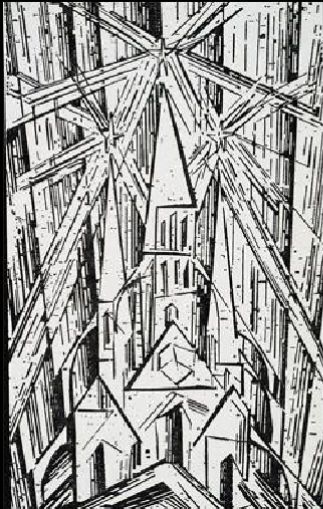
woodcut, Cover of Bauhaus manifesto,
1919
3
epitomizes Bauhaus principles with its functionalist approach and integration of art, architecture, and craftsmanship in a modernist style.
Walter Gropius and Bauhaus workshop, Sommerfeld House, Berlin, 1920-21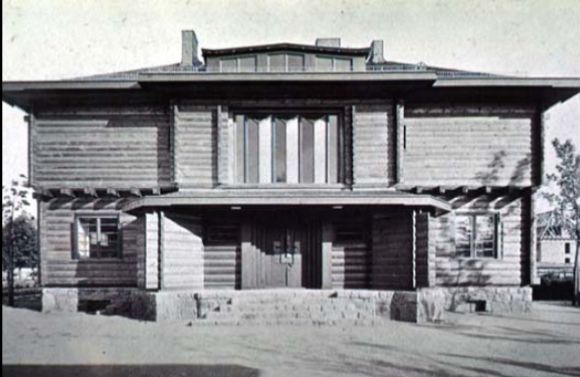
4
epitomizes the Arts and Crafts movement with its meticulous craftsmanship, emphasis on natural materials, and integration of design with the surrounding environment. Inspired by Japanese aesthetics and traditional American craftsmanship, its architectural style blends elements of Asian and Arts and Crafts sensibilities, creating a harmonious and serene living space.
Greene and Greene, The Gamble
House, Pasadena, CA. 1907-08
[Arts & Crafts]
House, Pasadena, CA. 1907-08
[Arts & Crafts]
5
epitomized the school's ethos of merging fine art with craftsmanship, fostering innovative design across disciplines. The interior of the Sommerfeld House, designed during this period, showcased Bauhaus's signature style, characterized by clean lines, geometric forms, and a harmonious integration of function and aesthetics.
Bauhaus workshops, Sommerfeld House interior, 1920-22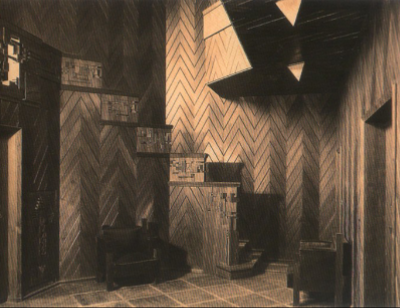
6
This work, characterized by its geometric abstraction and exploration of color theory, exemplifies Albers' innovative approach to modernist art and design.
Josef Albers, window from Sommerfeld House, 1922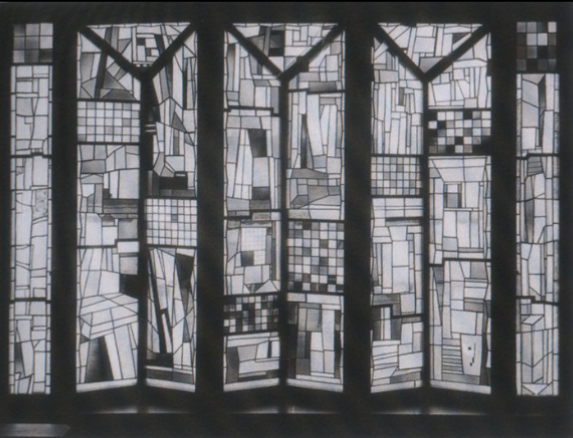
7
The design embodies the principles of Bauhaus, a modernist art style that emphasizes simplicity, functionality, and the fusion of art with technology and craftsmanship.
Walter Gropius, Bauhaus, Dessau, Germany, 1925-26.
Steel frame, non-structural glass walls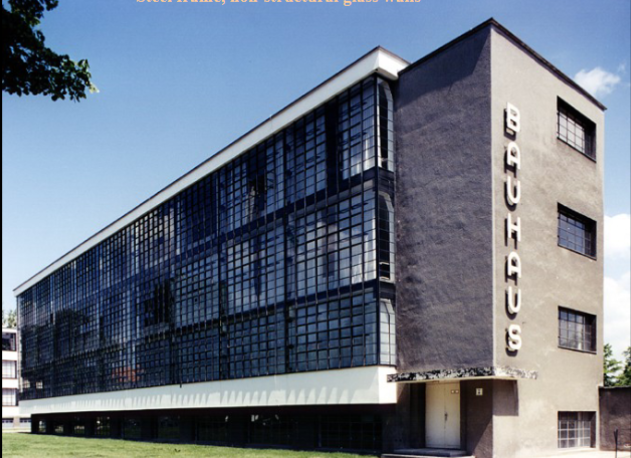
Steel frame, non-structural glass walls
8
mastery of the Bauhaus style. This piece features geometric abstraction and meticulous craftsmanship, embodying the intersection of art and functionality within modernist principles
Anni Albers, Silk wall hanging, 1927-28. Textile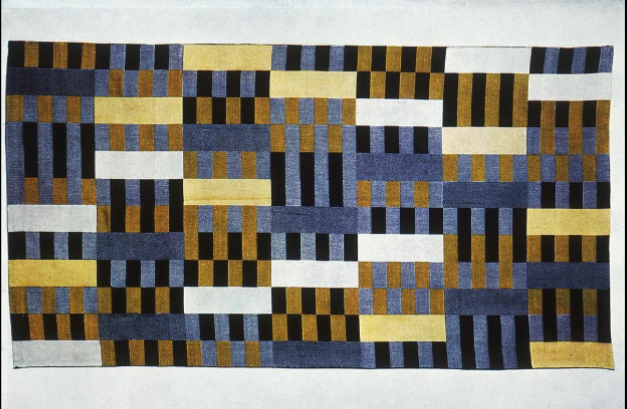
9
This iconic piece exemplifies the Bauhaus ethos, emphasizing functionality, geometric forms, and industrial materials in furniture design.
Marcel Breuer, tubular metal chair, c. 1928. Chrome plated steel,
wood and cane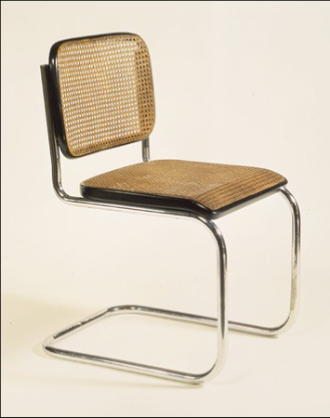
wood and cane
10
epitomizes the Bauhaus style with its sleek, minimalist design and innovative use of chrome-plated steel, reflecting the era's embrace of industrial materials and functional aesthetics.
Mies van der Rohe, tubular metal
cantilever chair, c. 1926. Chrome
plated steel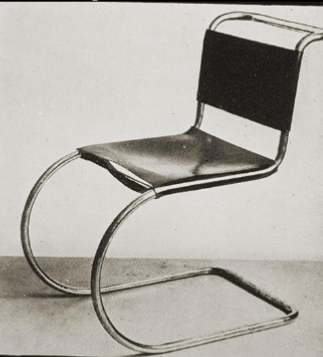
cantilever chair, c. 1926. Chrome
plated steel
11
epitomizes the Bauhaus movement's functional yet elegant design ethos. With its sleek geometric forms and minimalist aesthetic, it embodies the principles of modernism and industrial design prevalent in the early 20th century.
Marianne Brandt, Tea and Coffee Service, c. 1924. silver and ebony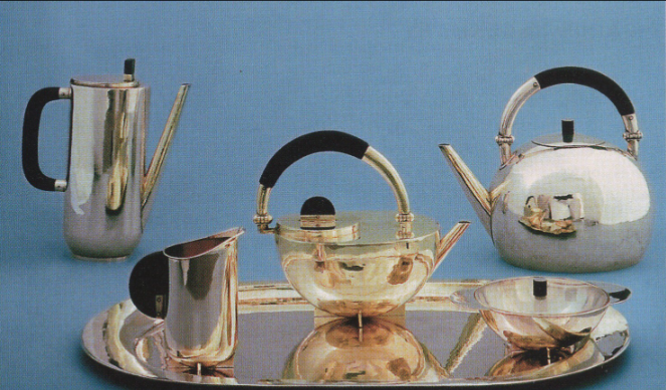
12
His cover for the Bauhaus Quarterly Journal in 1928 features a striking composition using geometric abstraction and experimental typography, emblematic of the Bauhaus style's emphasis on simplicity and functional design.
Herbert Bayer, Cover Bauhaus Quarterly
Journal, 1928. photomontage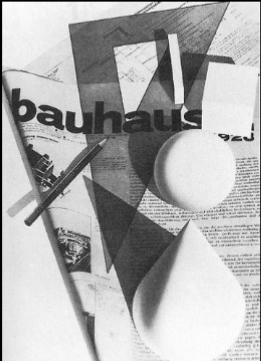
Journal, 1928. photomontage
13
a dynamic propaganda poster designed in the style of Russian Constructivism. It features geometric shapes and bold colors, depicting a red wedge piercing through white, symbolizing the Bolsheviks overcoming their opponents during the Russian Civil War.
El (Eliezer Markovich) Lissitzky, Beat the
Whites with the Red Wedge, 1919. Poster
Whites with the Red Wedge, 1919. Poster
14
mastery of the Constructivist style. This piece features geometric abstraction and dynamic composition, embodying Lissitzky's innovative approach to art and design.
El Lissitzky, The Constructor, 1924.
Gelatin silver print
Gelatin silver print
15
Employing the principles of the International Style, his design embraced simplicity, geometric forms, and the innovative use of glass, although the structure itself no longer exists.
Mies van der Rohe, model for a
glass skyscraper, Berlin,
Germany, 1922 (No longer
extant)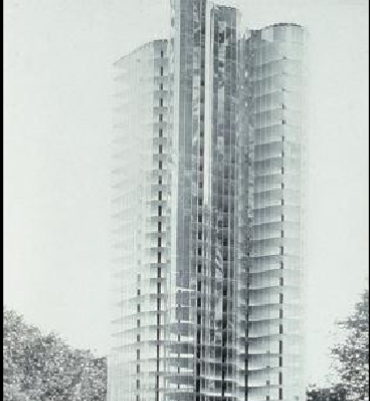
glass skyscraper, Berlin,
Germany, 1922 (No longer
extant)
16
features a modernist style, characterized by sleek lines, a tapering silhouette, and a blend of glass and steel, showcasing contemporary engineering marvels.
Skidmore Owings, Merrill, The Burj
Khalifa, Dubai, United Arab Emirates,
2010. 2,717’ high (tallest structure in
the world)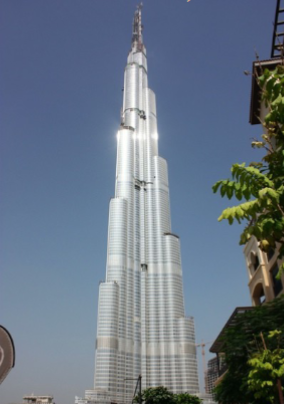
Khalifa, Dubai, United Arab Emirates,
2010. 2,717’ high (tallest structure in
the world)
17
epitomizes the principles of modernist architecture with its minimalist aesthetic and emphasis on open space. Characterized by clean lines, structural clarity, and the innovative use of steel and glass, Crown Hall stands as a hallmark of the International Style, showcasing Mies's vision of architectural purity and functionality.
Mies van der Rohe, Crown Hall, Illinois Institute of Technology, Chicago, 1950-56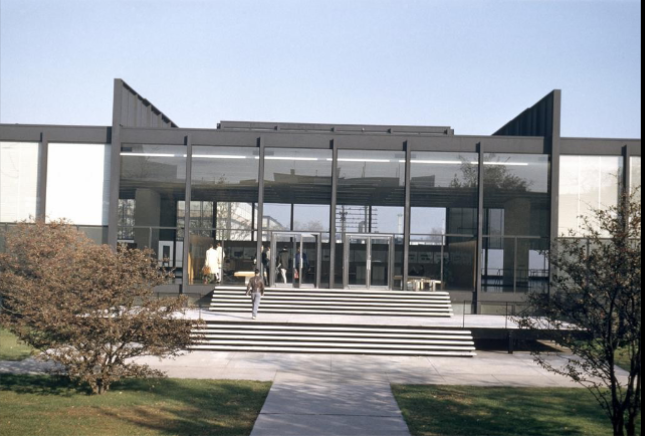
18
embodies the essence of the Chicago School of architecture with its distinctive vertical emphasis, steel frame construction, and ornamental terra cotta detailing.
Adler and Louis Sullivan, Wainwright
Building, St. Louis, Mo. 1890-91.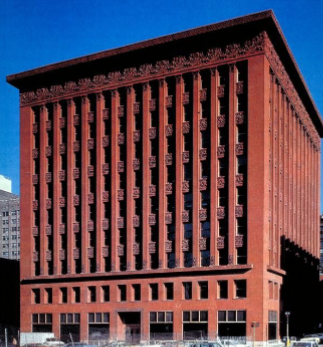
Building, St. Louis, Mo. 1890-91.
19
epitomizes the International Style with its sleek steel frame, reinforced concrete shell, and non-structural glass walls, accented by bronze-toned I-beams. Its minimalist design and emphasis on functionalism characterize it as a quintessential example of modernist architecture.
Ludwig Mies van der Rohe, Seagram Building,
New York, 1958. Steel frame, reinforced
concrete shell, non-structural glass walls, non-
structural bronze-toned I-beams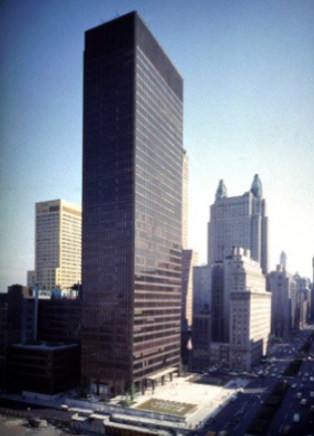
New York, 1958. Steel frame, reinforced
concrete shell, non-structural glass walls, non-
structural bronze-toned I-beams