Social Realism: Mexican Mural Movement
Study these flashcardsFree · spaced repetition · iPhone, Android, Mac & web
All cards
1
created by José Clemente Orozco in 1926, situated in the National Preparatory School in Mexico City. Orozco, a prominent figure of the Mexican Muralist movement, skillfully employs dramatic realism to depict the clash and synthesis of indigenous and colonial cultures through the portrayal of a Franciscan friar and a Native American.
José Clemente Orozco, The Franciscan and the Indian,
Fresco, 1926. National Preparatory School,
Mexico City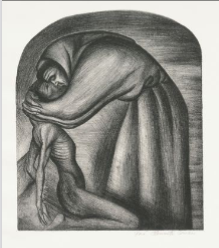
Fresco, 1926. National Preparatory School,
Mexico City
2
a fresco located in the Courtyard of the Fiestas at the Ministry of Education in Mexico City. It depicts a scene of opulent revelry, showcasing Rivera's signature style of Mexican muralism with its bold colors and social commentary on class dynamics.
Diego Rivera, Night of the Rich, 1928.
Fresco. Courtyard of the Fiestas,
Ministry of Education, Mexico City.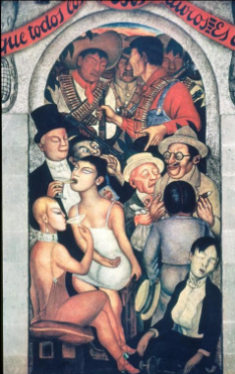
Fresco. Courtyard of the Fiestas,
Ministry of Education, Mexico City.
3
a powerful artwork measuring 48" x 36", executed in enamel on wood. This piece, belonging to the Mexican muralist movement, encapsulates the artist's signature style of dynamic realism, portraying the anguish and social commentary emblematic of his oeuvre.
David Siqueiros, Echo of a
Scream, 1937. 48” x 36”
enamel on wood.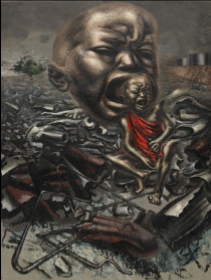
Scream, 1937. 48” x 36”
enamel on wood.
4
Term used to refer to the work of painters,
printmakers, photographers and film makers who draw attention to
the everyday conditions of the working classes and the poor, and who
are critical of the social structures that maintain these conditions.
printmakers, photographers and film makers who draw attention to
the everyday conditions of the working classes and the poor, and who
are critical of the social structures that maintain these conditions.
Social Realism
5
a fresco located in the Ministry of Education in Mexico City, depicts the transformative impact of industrialization on rural life in Mexico. Rivera employs his signature style of Mexican Muralism to blend realism with symbolic elements, showcasing the integration of machinery and traditional agriculture.
Diego Rivera, Mechanization of the Country, 1926. Fresco. Ministry of Education,
Mexico City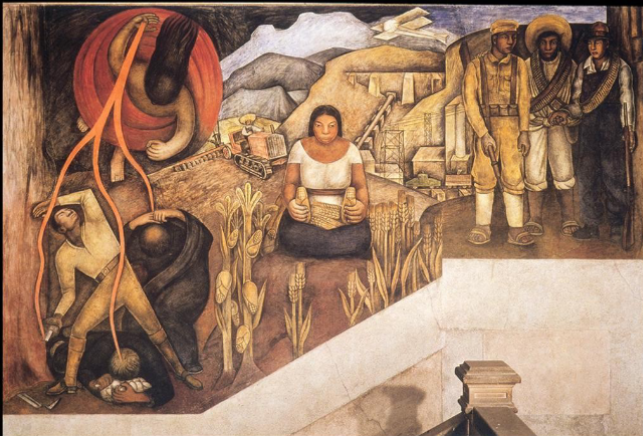
Mexico City
6
depicts dynamic, fragmented forms symbolizing the elemental forces of nature. Executed at the Colegio Chico within Mexico City's National Preparatory School, it embodies Siqueiros' revolutionary spirit and commitment to conveying societal themes through bold visual language.
David Alfero Siqueiros, The
Elements (detail), 1922.
Encaustic. Colegio Chico,
National Preparatory School,
Mexico City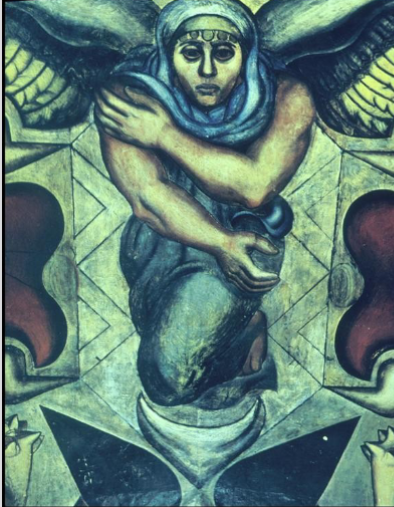
Elements (detail), 1922.
Encaustic. Colegio Chico,
National Preparatory School,
Mexico City
7
It was renowned for its Baroque architecture and decoration, reflecting the prevailing art style of the time in Mexico.
The National Preparatory School
(The Antiguo Colegio de San Idelfonso, Jesuit),
Mexico City. 1573- c. 1740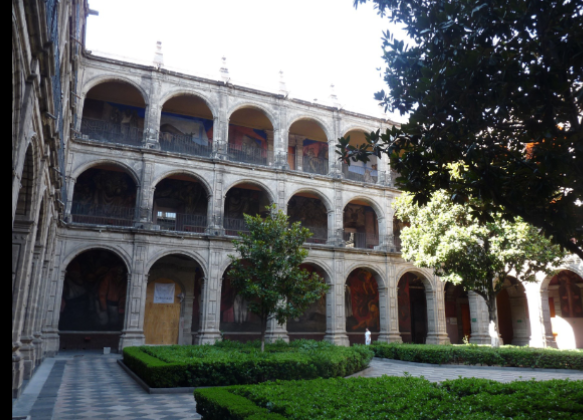
(The Antiguo Colegio de San Idelfonso, Jesuit),
Mexico City. 1573- c. 1740
8
completed in 1926 at the National Preparatory School in Mexico City, portrays the complex dynamic between Spanish conquistador Hernán Cortés and the indigenous woman Malinche, employing Orozco's signature style of Mexican muralism to depict themes of conquest, cultural clash, and power dynamics in vivid, emotive detail.
José Clemente Orozco, Cortez
and Malinche, Fresco, 1926.
National Preparatory School,
Mexico City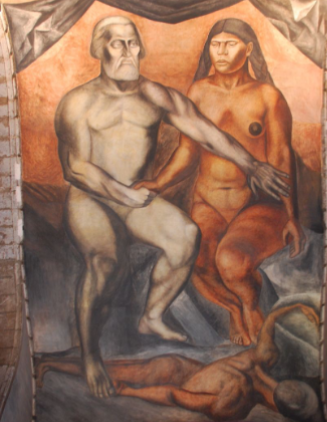
and Malinche, Fresco, 1926.
National Preparatory School,
Mexico City
9
a powerful fresco created in 1930 at Pomona College in Claremont, CA. Employing the bold and emotive style of Mexican muralism, Orozco depicts the mythological figure of Prometheus, symbolizing defiance and sacrifice, in vibrant and dramatic hues.
Jose Clemente Orozco, Prometheus, Fresco, 1930. Pomona College,
Claremont CA. Fresco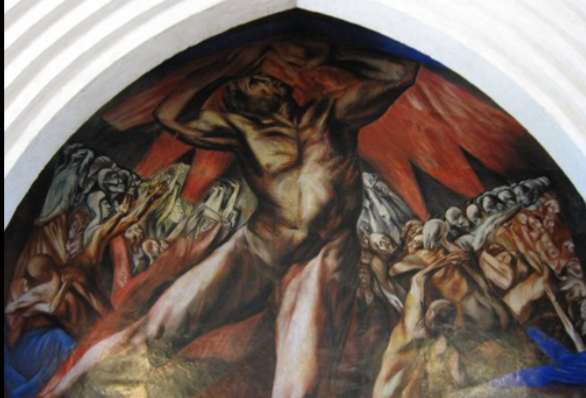
Claremont CA. Fresco
10
a fresco depicting a lavish gathering of wealthy capitalists, contrasting opulence with underlying social tensions. Rivera's bold use of Mexican muralism captures the scene, emphasizing the disparity between the elite and the working class during the Roaring Twenties.
Diego Rivera, Wall Street Banquet,
1928. Fresco.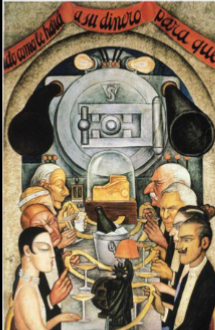
1928. Fresco.
11
Through his distinctive muralist style, Rivera portrays the contrast between opulence and poverty, capturing the societal divisions of the time with rich symbolism and vivid colors.
Rivera, Night of the Rich, 1928.
Fresco. Courtyard of the Fiestas,
Ministry of Education, Mexico City.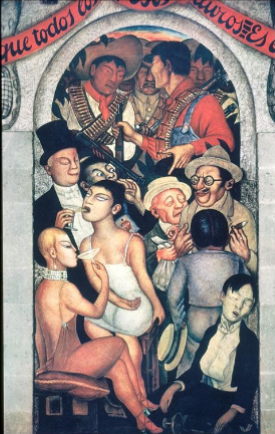
Fresco. Courtyard of the Fiestas,
Ministry of Education, Mexico City.
12
a fresco located in the Courtyard of the Fiestas at the Ministry of Education in Mexico City. This mural, executed in Rivera's signature style of Mexican muralism, celebrates the cultural significance of bread in Mexican society, depicting workers harvesting wheat and baking bread as a symbol of sustenance and labor.
Diego Rivera, Our Bread, 1928. Fresco.
Courtyard of the Fiestas, Ministry of
Education, Mexico City.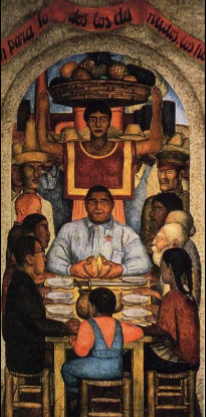
Courtyard of the Fiestas, Ministry of
Education, Mexico City.
13
a groundbreaking fresco located in the Santa Maria Novella church in Florence, Italy, created around 1428. It depicts the crucifixion of Jesus within a meticulously constructed architectural setting, employing perspective and realism characteristic of the early Renaissance art style.
Masaccio, Holy Trinity, Santa Maria
Novella, Florence, Italy, ca. 1428, Fresco,
21' x 10' 5"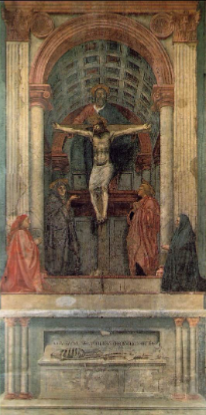
Novella, Florence, Italy, ca. 1428, Fresco,
21' x 10' 5"
14
Commissioned for Rockefeller Center in 1933, it depicted various historical figures and symbols, but after Rivera included a portrait of Lenin, he was dismissed, and the mural was destroyed before completion.
Diego Rivera, Man at the Crossroads, 1933. Unfinished mural at Rockefeller
Center, taken when Rivera was dismissed and before the mural was
destroyed.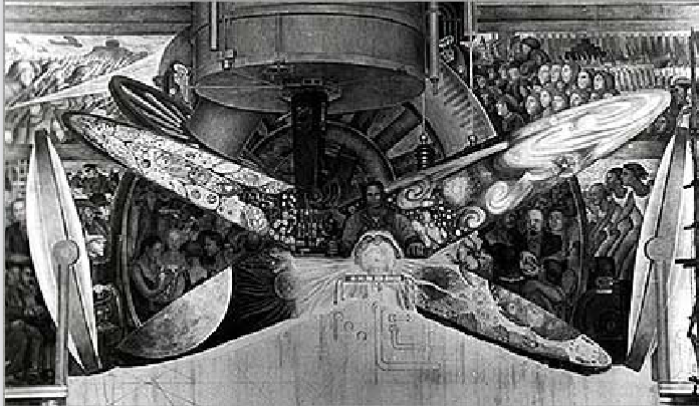
Center, taken when Rivera was dismissed and before the mural was
destroyed.
15
portrays a complex mural depicting humanity's struggle and potential at a crossroads of history, blending elements of social realism and muralism to convey a powerful political and social message.
Diego Rivera, Man at the Crossroads, 1934. Palace of Fine Arts
(Museo de Bellas Artes), Mexico City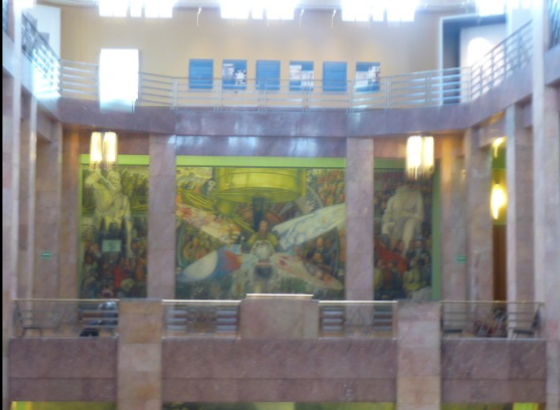
(Museo de Bellas Artes), Mexico City