Intro to Psychology Test 2
Study these flashcardsFree · spaced repetition · iPhone, Android, Mac & web
All cards
1
NS
Neural stimulus
2
US
unconditioned stimulus
3
UR
unconditioned response
4
CS
conditioned stimulus
5
CR
conditioned response
6
Positive Reinforcement
Add a desirable stimulus
7
Negative Reinforcement
Remove a negative (aversive) stimulus
8
Developmental researchers who consider how biological, psychological, and social-cultural forces interact:*\ are focusing on _______ and ________.
nature; nurture
9
Developmental researchers who emphasize learning and experience are supporting _________; those who emphasize biological maturation are supporting _________.
continuity; stages
10
Put the following cell structures in order from smallest to largest: nucleus, gene, chromosome.
Gene, chromosome, nucleus
11
The first 2 weeks of prenatal development is the period of the _________. The period of the ________ lasts from 9 weeks after conception until birth. The time between those two prenatal periods is considered the period of the ______.
zygote; fetus; embryo
12
The biological growth process called _________ explains why most children begin walking by about 11 to 15 months.
maturation
13
Piaget stage for object permanence:*\
Sensorimotor
14
Piaget stage for pretend play:*\
Preoperational
15
Piaget stage for conservation:*\
Concrete operational
16
Piaget stage for abstract logic:*\
Formal operational
17
Identify each of the following developmental abilities (i–vi) with the correct cognitive developmental stage: (a) sensorimotor, (b) preoperational, (c) concrete operational, (d) formal operational.
Thinking about abstract concepts, such as “freedom.”
Thinking about abstract concepts, such as “freedom.”
Formal Operation
18
Identify each of the following developmental abilities (i–vi) with the correct cognitive developmental stage: (a) sensorimotor, (b) preoperational, (c) concrete operational, (d) formal operational.
Enjoying imaginary play (such as dress-up).
Enjoying imaginary play (such as dress-up).
Preoperational
19
Identify each of the following developmental abilities (i–vi) with the correct cognitive developmental stage: (a) sensorimotor, (b) preoperational, (c) concrete operational, (d) formal operational.
Understanding that physical properties stay the same even when objects change form.
Understanding that physical properties stay the same even when objects change form.
Concrete operational
20
Identify each of the following developmental abilities (i–vi) with the correct cognitive developmental stage: (a) sensorimotor, (b) preoperational, (c) concrete operational, (d) formal operational.
Understanding that something is not gone for good when it disappears from sight.
Understanding that something is not gone for good when it disappears from sight.
Sensorimotor
21
Identify each of the following developmental abilities (i–vi) with the correct cognitive developmental stage: (a) sensorimotor, (b) preoperational, (c) concrete operational, (d) formal operational.
Having difficulty taking another’s point of view (as when blocking someone’s view of the TV).
Having difficulty taking another’s point of view (as when blocking someone’s view of the TV).
Preoperational
22
What skill is associated with theory of mind?
Reading others' mental states
23
According to Kohlberg, ___________ morality focuses on self-interest, ________ morality focuses on self-defined ethical principles, and ____________ morality focuses on upholding laws and social rules.
Conventional, preconventional, postconventional
24
Freud defined the healthy adult as one who is able to ______ and to _______.
Love; work
25
The first step of classical conditioning, when an NS becomes a CS, is called _________. When a US no longer follows the CS, and the CR becomes weakened, this is called ________.
Acquisition; extinction
26
With classical conditioning, we learn associations between events we ________ (do/do not) control. With operant conditioning, we learn associations between our behavior and _________ (resulting\/random) events.
Do not; resulting
27
What type of reinforcement to take away a desired stimulus (for example, a teen's use of the car)
negative punishment (NP)
28
What type of reinforcement to give a undesired/aversive (for example, an insult)
Postive punishment (PP)
29
What type of reinforcement to take away a undesired/aversive (for example, an insult)
Negative reinforcement (NR)
30
What type of reinforcement to give a desired stimulus (for example, a teen's use of the car)
Positive reinforcement (PR)
31
Salivating in response to a tone paired with food is a(n) __________ behavior; pressing a bar to obtain food is a(n) _________ behavior.
Respondent; operant
32
Knowing the way from your bed to the bathroom in the dark
- Classical Conditioning
- Operant conditioning
- Latent learning
- Observational learning
- Biological predispositions
33
Your little brother getting in a fight after watching a violent action movie
- Classical Conditioning
- Operant conditioning
- Biological predispositions
- Observational learning
- Latent learning
34
Salivating when you smell brownies in the oven
- Operant conditioning
- Observational learning
- Latent learning
- Biological predispositions
- Classical Conditioning
35
Disliking the taste of chili after becoming violently sick a few hours after eating chili
- Operant conditioning
- Observational learning
- Biological predispositions
- Latent learning
- Classical Conditioning
36
Your dog racing to greet you on your arrival home
- Latent learning
- Operant conditioning
- Classical Conditioning
- Biological predispositions
- Observational learning
37
The three major issues that interest developmental psychologists are nature/nurture, stability/change, and ______________.
Continuity/stages
38
Although development is lifelong, there is stability of personality over time. For example,
- Most personality traits emerge in infancy and persist throughout life
- Temperament tends to remain stable throughout life
- Few people change significantly after adolescence
- People tend to undergo greater personality changes as they age
39
The threadlike structures made largely of DNA molecules are called _________.
chromosomes
40
A small segment of DNA is called a ______.
gene
41
Epigenetics is the study of the molecular ways by which ________ trigger or block genetic expression.
Environments
42
Body organs first begin to form and function during the period of the _______; within 6 months, during the period of the ______, the organs are sufficiently functional to provide a good chance of surviving and thriving.
- Zygote; embryo
- Zygote; fetus
- Embryo; fetus
- Placenta; fetus
43
Chemicals that the placenta isn't able to screen out that can harm an embryo or fetus are called _______.
Teratogen
44
Stroke a newborn's cheek and the infant will root for a nipple. This illustrates
- Nurture
- A preference
- Continuity
- A reflex
45
Fraternal twins result when
- A single egg is fertilized by a single sperm and then split
- Two eggs are fertilized by a single sperm
- A single egg is fertilized by two sperm and then splits
- Two eggs are fertilized by two sperm
46
______ twins share the same DNA.
Identical (monozygotic)
47
Adoption studies seek to understand genetic influences on personality. They do this mainly by
- Studying the effect of prior neglect on adopted children
- Evaluating whether adopted children's personalities more closely resemble those of their adoptive parents or their biological parents
- Comparing adopted children with nonadopted children
- Studying the effect of children's age at adoption
48
Between ages 3 and 6, the human brain experiences the greatest growth in the _______ lobes, which enable reasoning and planning.
frontal
49
Which of the following is true of motor-skill development?
- It is determined solely by environmental factors
- It is determined solely by genetic factors.
- The timing, but not the sequence, is universal
- The sequence, but not the timing, is universal
50
Why can't people consciously recall learning to walk?
We have little conscious recall before age 4 partly due to major brain areas not being fully matured.
51
Although Piaget’s stage theory continues to inform our understanding of children’s thinking, many researchers believe that
- Piaget's stages begin earlier and development is more continuous than he realized.
- Few children progress to the concrete operational stage.
- Children do not progress as rapidly as Piaget predicted.
- There is no way of testing much of Piaget's theoretical work.
52
An 8-month-old infant who reacts to a new babysitter by crying and clinging to his father’s shoulder is showing __________ ________.
Stranger anxiety
53
From the very first weeks of life, infants differ in their characteristic emotional reactions, with some infants being intense and anxious, while others are easygoing and relaxed. These differences are usually explained as differences in ___________:*\.
temperament
54
Adolescence is marked by the onset of
- Moral reasoning
- Parent-child conflict
- An identity crisis
- Puberty
55
According to Piaget, a person who can think logically about abstractions is in the __________ __________ stage.
Formal operations
56
In Erikson’s stages, the primary task during adolescence is
- Attaining formal operations
- Forging an identity
- Developiong a sense of intimacy with another person
- Living independent of parents
57
Some developmental psychologists refer to the period that occurs in some Western cultures from age 18 to the mid-twenties as ________ _________.
emerging adulthood
58
By age 65, a person would be most likely to experience a cognitive decline in the ability to
- Select the correct definition in a multiple-choice question.
- Practice a well-learned skill, such as knitting.
- Recall and list all the important terms and concepts in a chapter.
- Recall their own birth date.
59
Freud defined the healthy adult as one who is able to love and work. Erikson agreed, observing that the adult struggles to attain intimacy and ________.
generativity
60
Contrary to what many people assume,
- Positive feelings tend to grow after midlife.
- People become less happy as they move from their teen years into midlife.
- Older people are significantly less happy than adolescents are.
- Those whose children have recently left home - the empty nesters - have the lowest level of happiness of all groups.
61
Learning is defined as "the process of acquiring, through experience, new and relatively enduring _________ or _______.
Information; behaviors
62
Two forms of associative learning are classical conditioning, in which we associate _________, and operant conditioning, in which we associate _________.
Two forms of associative learning are classical conditioning, in which we associate _________, and operant conditioning, in which we associate _________.
- Two or more responses; two or more stimuli
- Two or more stimuli; two or more responses
- Two or more stimuli; a response and its consequence
- Two or more responses; a response and its consequence
63
In Pavlov's experiments, the tone started as a neutral stimulus, and then became a(n) ________ stimulus.
Conditioned
64
Dogs have been taught to salivate to a circle but not to a square. This process is an example of _________
Discrimination
65
After Watson and Rayner classically conditioned Little Albert to fear a white rat, the child later showed fear in response to a rabbit, a dog, and a furry coat. This illustrates
- Extinction
- Discrimination between two stimuli
- Generalization
- Spontaneous recovery
66
Thorndike's law of effect was the basis for _________'s work on operant conditioning and behavior control.
Skinner
67
One way to change behavior is to reward natural behaviors in small steps, as they get closer and closer to a desired behavior. This process is called _______.
Shaping
68
Your dog is barking so loudly that it’s making your ears ring. You clap your hands, the dog stops barking, your ears stop ringing, and you think to yourself, “I’ll have to do that when she barks again.” The end of the barking was for you a
- Postive reinforcer
- Negative punishment
- Positive punishment
- Negative reinforcer
69
Reinforcing a desired response only some of the times it occurs is called __________ reinforcement.
partial
70
A restaurant delivery service is running a special deal. After you buy four meals at full price, you will get a free appetize r. This is an example of a _______-________ schedule of reinforcement
- Fixed-interval
- Variable-ratio
- Variable-interval
- Fixed-ratio
71
The partial reinforcement schedule that reinforced a response after unpredictable time period is a _______-_______ schedule
Variable-interval
72
An old saying notes that “a burnt child dreads the fire.” In operant conditioning, getting burned would be an example of
- negative reinforcer
- Positive reinforcer
- Punisher
- Primary reinforcer
73
Which research showed that conditioning can occur even when the unconditioned stimulus (US) does not immediately follow the n eutral stimulus (NS)?
- Pavlov's experiments with dogs
- The Little Albert experiment
- Garcia and Koelling's taste aversion studies
- Watson's behaviorism studies
74
Taste-aversion research has shown that some animals develop aversions to certain tastes but not to sights or sounds. This finding supports
- Darwin's principle that natural selection favors traits that aid survival.
- Pavlov's demonstration of generalization.
- The early behaviorists' view that any organism can be conditioned to any stimulus
- Watson's belief that psychologists should study observable behavior, not mentalistic concepts.
75
Evidence that cognitive processes play an important role in learning comes in part from studies in which rats running a maze develop a __________ ___________ of the maze.
cognitive map
76
Rats that explored a maze without any reward were later able to run the maze as well as other rats that had received food rewards for doing so. The rats that had learned without reinforcement demonstrated _________ _________.
latent learning
77
Children learn many social behaviors by imitating parents and other models. This type of learning is called _____________ _________
observational learning
78
According to Bandura, we learn by watching models because we experience _______________ reinforcement or ______________ punishment
Vicarious; vicarious
79
Parents are most effective in getting their children to imitate them if
- They do not have outgoing personalitie
- Their words and actions are consistent
- They carefully explain why a behavior is acceptable in adults but not in children
- They have outgoing personalities
80
Some scientists believe that the brain has _________ neurons that enable empathy and imitation.
mirror
81
Most experts agree that repeated viewing of media violence
- Has little effect on viewers
- Makes viewers angry and frustrated
- Is a risk factor for viewers' increased aggression
- Makes all viewers significantly more aggressive
82
Image occlusion: name the hidden labels
83
Image occlusion: name the hidden labels
84
Image occlusion: name the hidden labels
85
Image occlusion: name the hidden labels
86
Image occlusion: name the hidden labels
87
Image occlusion: name the hidden labels
88
Image occlusion: name the hidden labels
89
Image occlusion: name the hidden labels
90
What three things does the brain automatically remember?
Space, time, frequency
91
Semantic Memories
facts and general knowledge
92
Episodic Memory
experienced events
93
What does the basal ganglia learn?
motor skills
94
The psychological terms for taking in information, retaining it, and later getting it back out are _______, _______, and________
encoding; storage; retrieval
95
The concept of working memory
- Splits short-term memory into two substages--sensory memory and iconic memory.
- Clarifies the idea of short-term memory by focusing on space, time, and frequency.
- Clarifies the idea of short-term memory by focusing on the active processing that occurs in this stage
- Splits short-term memory into two types --implicit and explicit memory.
96
Sensory memory may be visual (________ memory) or auditory (__________ memory).
Iconic; echoic
97
Our short-term memory for new information is limited to about ____________ bits of information.
Seven
98
Memory aids that use visual imagery or other organizational devices are called ________.
mnemonics
99
Hippocampus damage typically leaves people unable to learn new facts or recall recent events. However, they may be able to learn new skills, such as riding a
bicycle, which is an ____________ (explicit/implicit) memory.
bicycle, which is an ____________ (explicit/implicit) memory.
implicit
100
Long-term potentiation (LTP) refers to
- The potential for learning in late adulthood
- The role of the hippocampus in processing explicit memories
- Emotion-triggered hormonal changes
- An increase in a cell's firing potential
101
A psychologist who asks you to write down as many objects as you can remember having seen a few minutes earlier is testing your ________.
Recall
102
Specific odors, visual images, emotions, or other associations that help us access a memory are examples of ______ ______.
Retrieval cues
103
When tested immediately after viewing a list of words, people tend to recall the first and last items more readily than those in the middle. When retested after a
delay, they are most likely to recall
delay, they are most likely to recall
- the first and last items on the list
- The first items on the list
- A few items at random
- The last items on the list
104
When forgetting is due to encoding failure, information has not been transferred from
- Sensory memory into long-term memory
- Short-term memory into long-term memory
- Long-term memory into short-term memory
- The environment into sensory information
105
Ebbinghaus' forgetting curve shows that after an initial decline, memory for novel information tends to
- Decrease greatly
- Level off
- Increase slightly
- Decrease noticeably
106
You will experience less __________________ proactive\/retroactive interference if you learn new material in the hour before sleep than you will if you learn it
before turning to another subject.
before turning to another subject.
retroactive
107
Freud proposed that painful or unacceptable memories are blocked from consciousness through a mechanism called __________.
repression
108
One reason false memories form is our tendency to fill in memory gaps with our reasonable guesses and assumptions, sometimes based on misleading information.
This tendency is an example of
This tendency is an example of
- Retroactive interference
- The forgetting curve
- Proactive interference
- The misinformation effect
109
We may recognize a face at a social gather but be unable to remember how we know that person. This is an example of ______ _______.
Source amnesia
110
When a situation triggers the feeling that "I've been here before," you are experiencing _______ ______.
Deja vu
111
Children can be accurate eyewitnesses if
- Interviewers give the children hints about what really happened
- A neutral person asks nonleading questions soon after the event
- Interviewers use precise technical and medical terms
- The children have a chance to talk with involved adults before the interview
112
Memory researchers involved in the study of memories of abuse tend to disagree with some therapists about which of the following statements?
- We tend to repress extremely upsetting memories
- Memories can be emotionally upsetting
- Memories of events that happened before age 4 are not reliable
- Sexual abuse happens.
113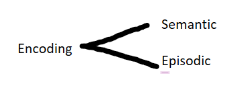
Image occlusion: name the hidden labels
114
Image occlusion: name the hidden labels
115
Image occlusion: name the hidden labels
116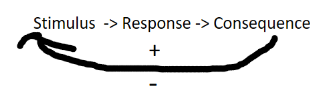
Image occlusion: name the hidden labels
117
Image occlusion: name the hidden labels
118
Image occlusion: name the hidden labels
119
Image occlusion: name the hidden labels
120
Image occlusion: name the hidden labels
121
Is the continous or intermittent reinforcement schedule better?
Intermittent
122
Fixed ratio
set number
123
Fixed interval
set time
124
variable ratio
average number
125
variable time
average time
126
Which is the best reinforcement schedule?
- Fixed ratio
- Fixed interval
- variable ratio
- variable time
127
Trust vs mistrust
Erickson Infants stage
128
Erickson Infants stage
Trust vs mistrust
129
Autonomy vs. shame
Erickson Toddler Stage
130
Erickson Toddler Stage
Autonomy vs. shame
131
Intiative vs Guilt
Erickson Preschool stage
132
Erickson Preschool stage
Intiative vs Guilt
133
Competency vs. Inferiority
Erickson Middle/Late-Childhood (6-puberty)
134
Erickson Middle/Late-Childhood (6-puberty)
Competency vs. Inferiority
135
Identity vs. Role Confusion
Erickson Teens-20s stage
136
Erickson Teens-20s stage
Identity vs. Role Confusion
137
Intimacy vs isolation
Erickson Young adult stage
138
Generativity vs. Stagnation
Erickson Middle adult stage
139
Erickson Middle adult stage
Generativity vs. Stagnation
140
Integrity vs Despair
Erickson Late adult stage
141
Erickson Late adult stage
Integrity vs Despair