All cards
1
What is Hooke known for?
Invention of modern microscope, compound microscope.
2
What is Bertrand known for?
Invented the Bertrand Lens. Betrand lens is used with polarized light to examine interference light.
3
What is Leeuwenhoek known for?
Discovered bacteria and microscopic life. Father of Microscopy.
4
What is Abbe known for?
Invented the apochromatic lens, a microscope lens which eliminates both primary and secondary color distortion. And also created Abbe lens.
5
What is Snell known for?
Discovered law of refraction. Related the degree of bending light to properties of refractive material.
6
Define the Bertrand Lens:
From orthoscopic to conoscopic view. Unique to PLM.
7
Define the Diopter:
Located in eyepiece. Rotates and adjusts the focus of the individual eyepiece.
8
Define the Nosepiece:
Allows for rotation of objectives.
9
Define the Analyzer:
Located between eyepiece and sample. Blocks all but one polarization of light, determining the amount of light on a sample.
10
Define the Numerical Aperture:
A unitless measurement of how much light a lens can collect.
11
Define Conjugate Foci:
Points along the principal axis where the position of object and image can be interchanged. Multiple planes in simultaneous focus.
12
Define Stage Micrometer:
A microscopic slide with scale that is used to calibrate PLM
13
Define Angular Aperture:
The angle of a cone of light that the objective lens can capture
14
Define Graticule:
Eyepiece with crosshair etched into glass, Diamond and HF
15
How does Abbe lens work?
Abbe lens condenses light onto specimen.
16
What are 2 types of reflection?
Specular and Diffuse
17
How do you measure thickness?
Compare to a standard.
18
How do you make angular measurements?
Stage rotations
19
How do you make linear measurements?
eyepiece with protractor and scaled slide
20
Define Chromatic Aberration:
Color fringing, color distortion caused by unwanted colors.
21
Define Refraction:
The bending of light when it passes through object.
22
Define Medullary Index:
MI=MD/HD
23
What are the advantages of PLM?
Polarizing filters, Rotatable stage, Bertrand lens.
24
Differences between PLM and other microscopes?
Rotating stage and polaroid filters.
25
Define Objective lens:
Magnification, Captures and refracts light reflected from an object.
26
Define Ocular lens:
Magnifies image created by the objective.
27
Define Condenser lens:
Gathers light from source into a cone of light that illuminates the specimen.
28
What kind of lens is apart of the condenser lens?
Abbe lens
29
Explain the 10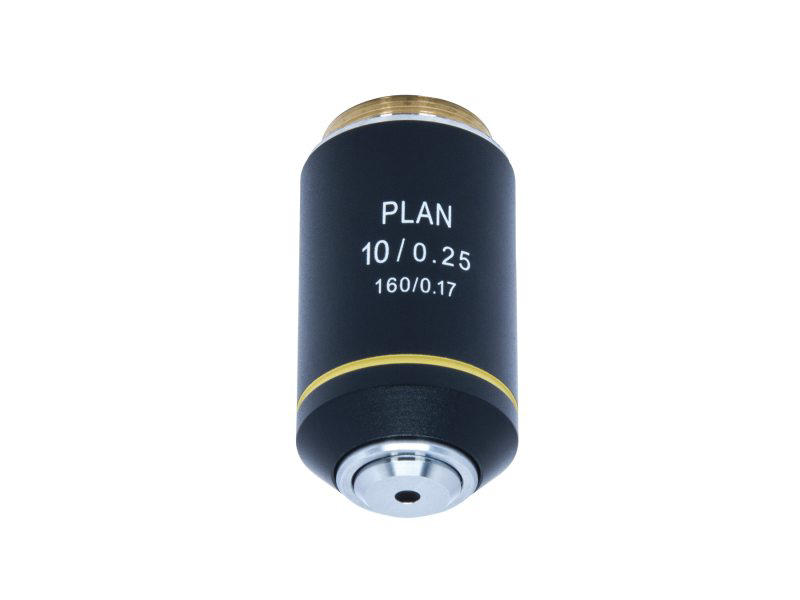
10x objective, magnification.
30
What is the formula for MUM?
NA*1000
31
How do you calculate alpha?
AA/2
32
What is monochromatic light?
Single wavelength light
33
How do you calculate resolution?
(0.61*lamda)/NA
34
Explain the 0.25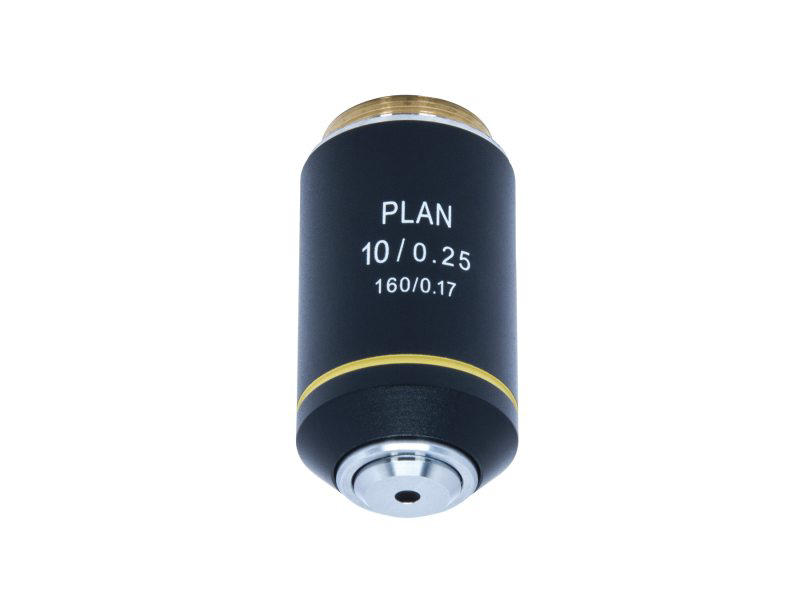
Numerical Aperture, range is (0.1-1.4).
35
Explain the 160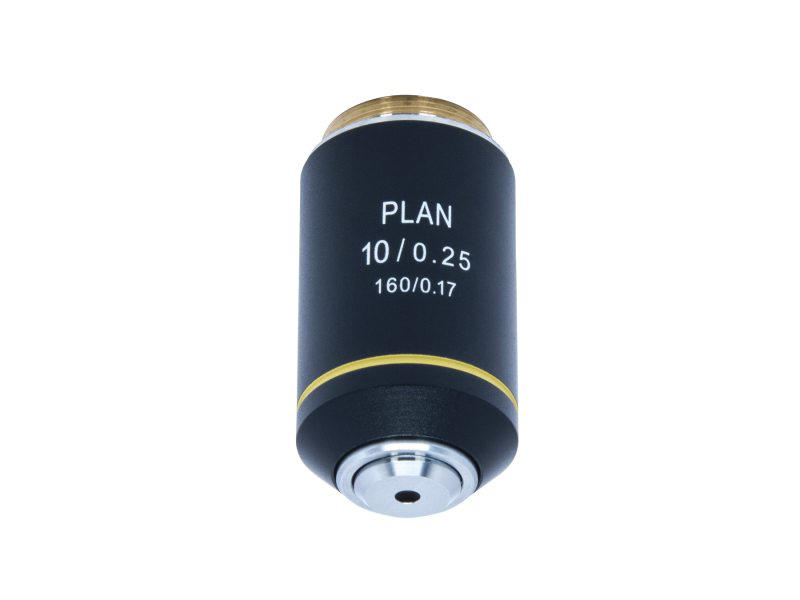
Tube length, physical distance between ocular lens and slide.
36
How do you improve resolution?
Decrease wavelength and Increase NA.
37
How do you decrease wavelength?
Violet filter (Monochromatic), UV light, Fluorescence.
38
Explain the 0.17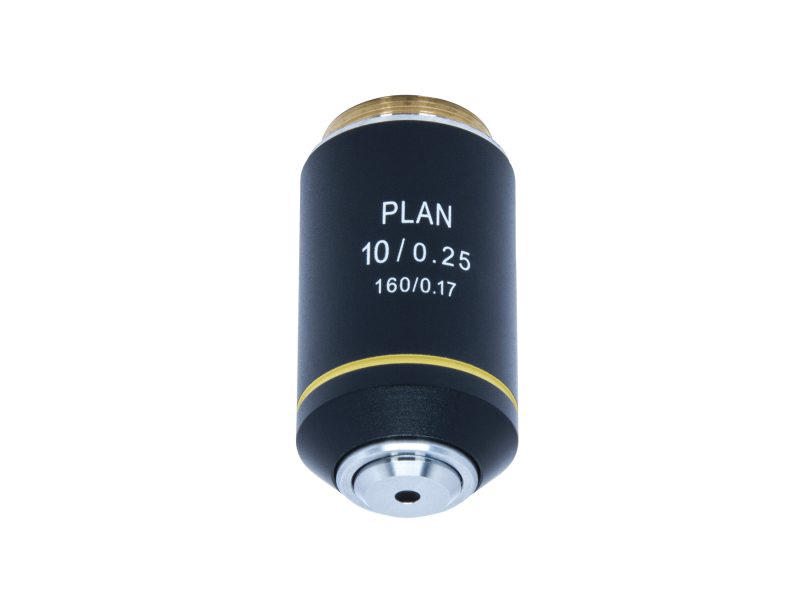
Coverglass thickness
39
How do you increase Numerical Aperture?
Change objectives (Increases AA), Oil immersion (Increases n).
40
Does opening or closing substage aperture increase or decrease resolution...
Increases resolution
41
What are 2 types of abberration:
Spherical and Chromatic abberration.
42
How do you fix Spherical abberration? Chromatic?
Green lens and Monochromatic lens.
43
What is the formula for Numerical Aperture?
NA=n*sin*alpha