Neuronal Physiology
Study these flashcardsFree · spaced repetition · iPhone, Android, Mac & web
All cards
1
Types of signaling systems:
Nervous, fast and short term. Endocrine, moderate and long or short term.
2
What kind of tissue is excitable?
Nerve and muscle
Undergo rapid changes in membrane potentials.
An electrical signal is generated
Undergo rapid changes in membrane potentials.
An electrical signal is generated
3
Define Polarization, Resting membrane potential, Depolarization, Repolarization and Hyperpolarization:
Polarization - Any state other than 0 mV.
Resting membrane potential - Vrest is negative (-70).
Depolarization - Becoming less negative, closer to zero. Opening of Na+ channels. (-70 to -30). Flow of positive ions into ICF.
Repolarization - Back to Vrest. Closure of Na+ and opening of K+ channels.
Hyperpolarization - More negative than its resting potential. K+ channels remain open after the potential reaches the resting level. (-70 to -90). A flow of positive ions out of ICF.
Resting membrane potential - Vrest is negative (-70).
Depolarization - Becoming less negative, closer to zero. Opening of Na+ channels. (-70 to -30). Flow of positive ions into ICF.
Repolarization - Back to Vrest. Closure of Na+ and opening of K+ channels.
Hyperpolarization - More negative than its resting potential. K+ channels remain open after the potential reaches the resting level. (-70 to -90). A flow of positive ions out of ICF.
4
What kind of ion is associated with Hyperpolarization and Repolarization?
Potassium (K+).
5
What is graded potential?
- Local change
- Strength depends on the size of stimuli
- Local ion channels open
- Greater stimuli open more channels
- Gated Na+ channels opening lead to depolarization
- Loss of charge away from the stimulus.
- Strength depends on the size of stimuli
- Local ion channels open
- Greater stimuli open more channels
- Gated Na+ channels opening lead to depolarization
- Loss of charge away from the stimulus.
6
What is action potential?
- An all or nothing change, same potential or magnitude everytime.
- Not local, long distance signals.
- Graded potentials initiate action potentials
- An action potential is a rapid depolarization followed by a repolarization to the membrane potential.
- Occurs at small portion of membrane.
- Not local, long distance signals.
- Graded potentials initiate action potentials
- An action potential is a rapid depolarization followed by a repolarization to the membrane potential.
- Occurs at small portion of membrane.
7
Graded potentials _____ or _____. If depolarization reaches a "threshold", what is the threshold and what number must be reached above to trigger?
Depolarize or Hyperpolarize. -20mv above Vrest, which is -50mv.
8
What does rapid depolarization trigger? Repolarization?
Reverses the polarity of the cell and increases positive charges exponentially, +30mv.
Repolarization will often overshoot Vrest.
Repolarization will often overshoot Vrest.
9
What is number 1?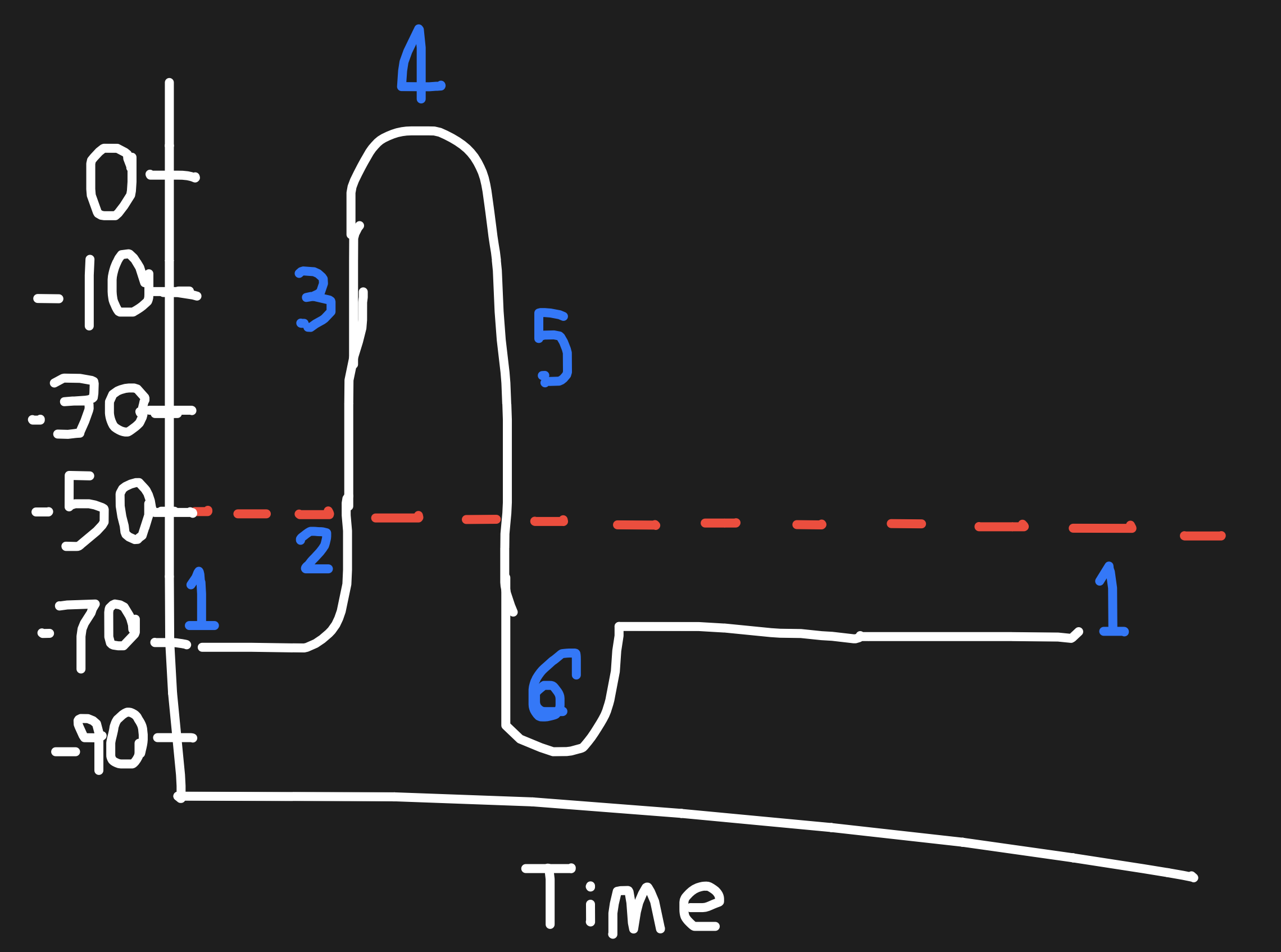
Resting membrane potential, leaky channels and Na+/K+ pump. -70mV.
10
What is number 2?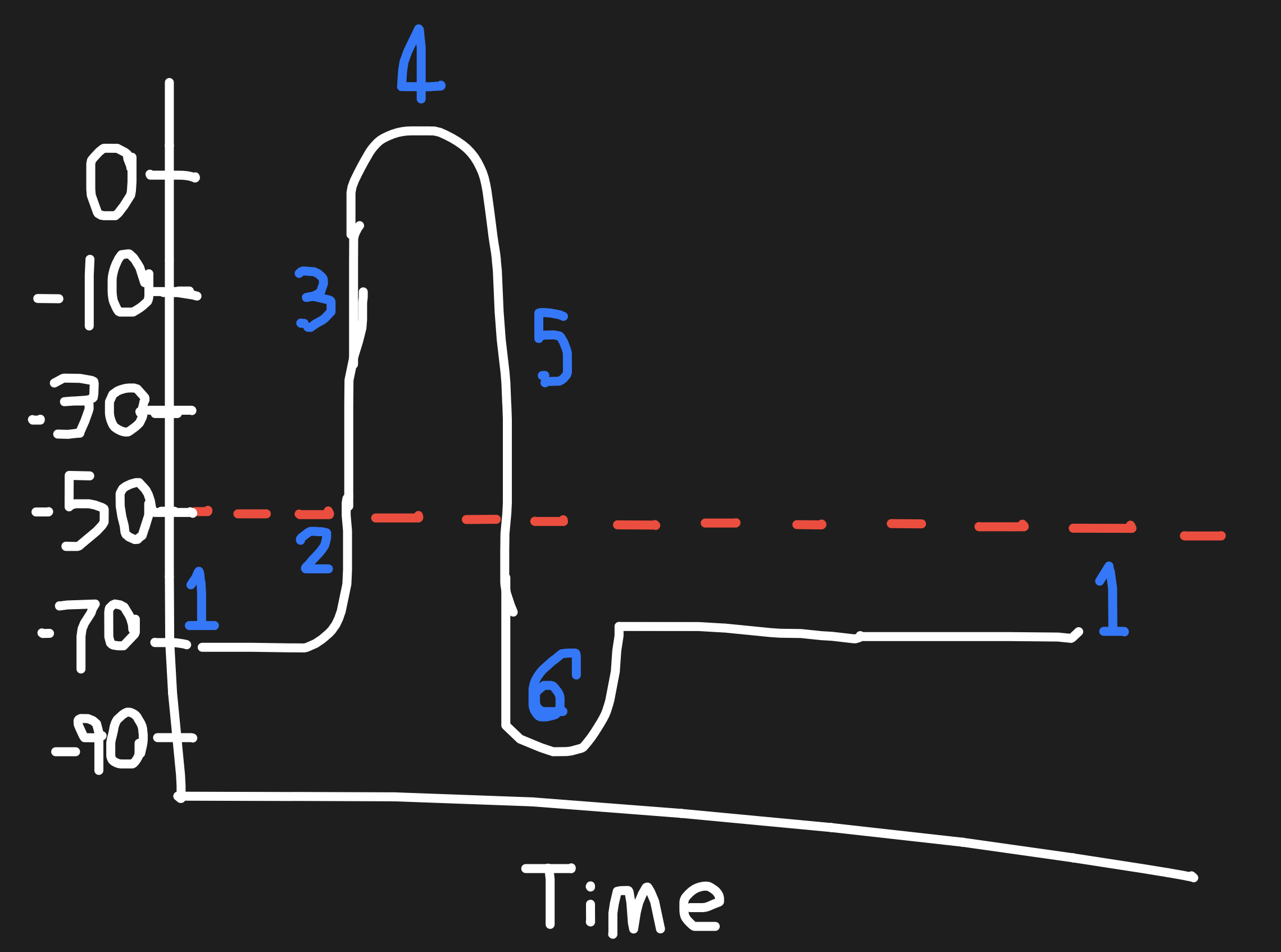
- Depolarization, drip feeds Na+ ions into cell.
- Ligand gated Na+ ion channels and VLTG gated Na+ ion channels triggered but only ligand opens
- Na+ moves into cell along the gradient.
- Ligand gated Na+ ion channels and VLTG gated Na+ ion channels triggered but only ligand opens
- Na+ moves into cell along the gradient.
11
What is number 3?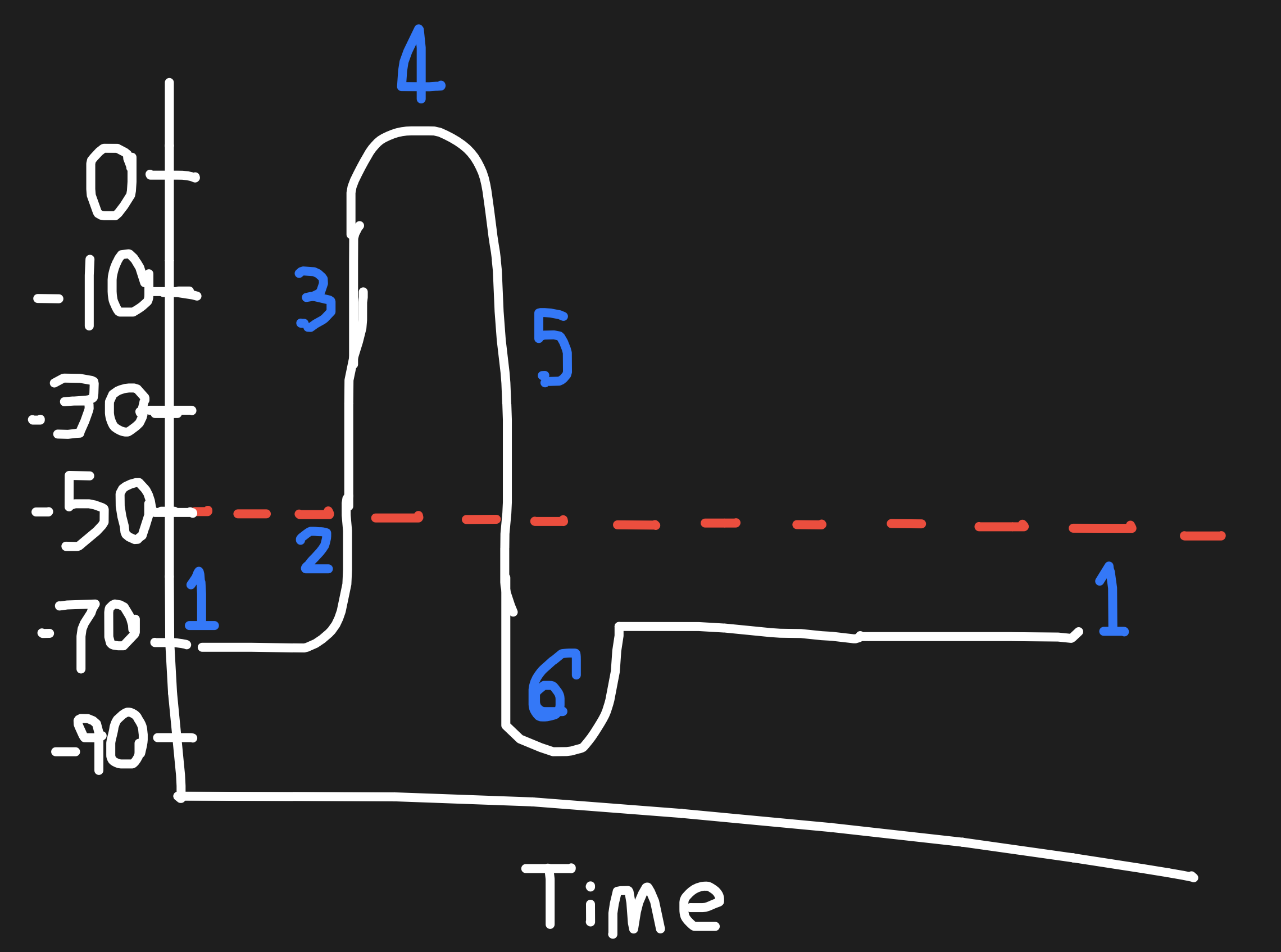
Upshoot, "flood gates" open and Na+ rapidly floods into the cell. Vltg gated Na+ channels open.
12
What is number 4?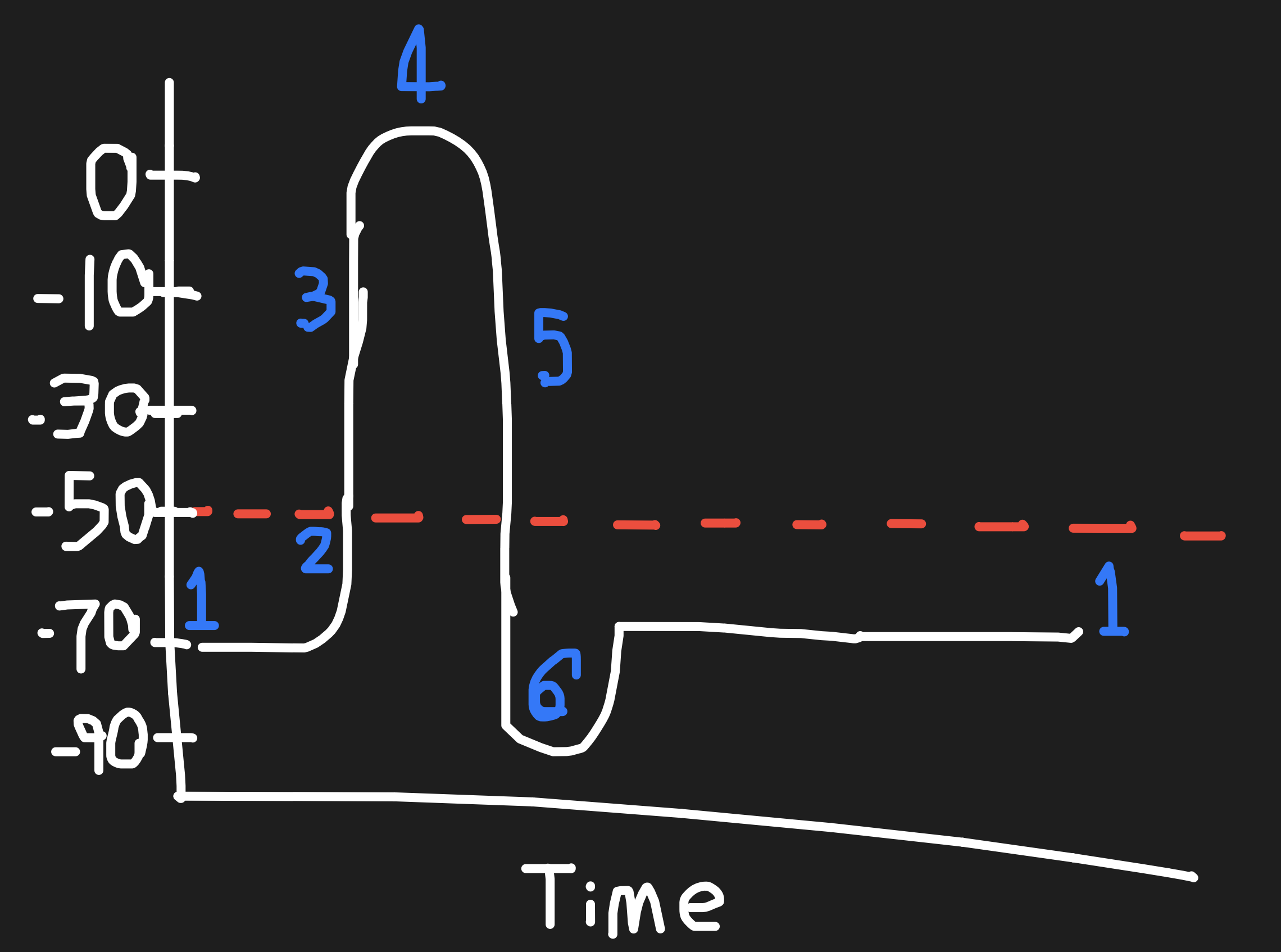
Peak, vltg gated Na+ channels close.
13
What is number 5?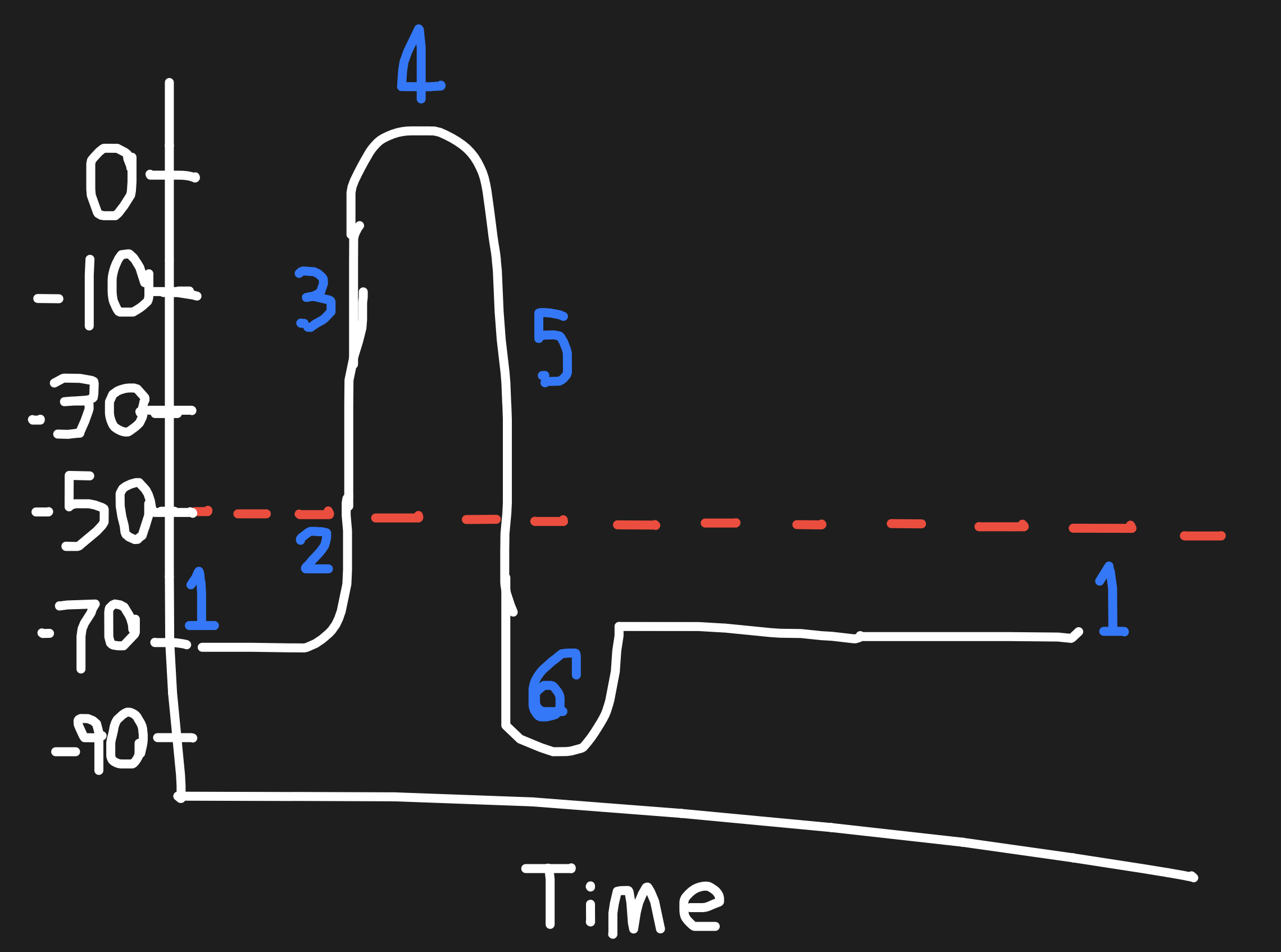
Downshoot, K+ ion channels open and repolarize the cell
- K+ ions escape the ICF/cell and increase negativity
- K+ ions escape the ICF/cell and increase negativity
14
What is number 6?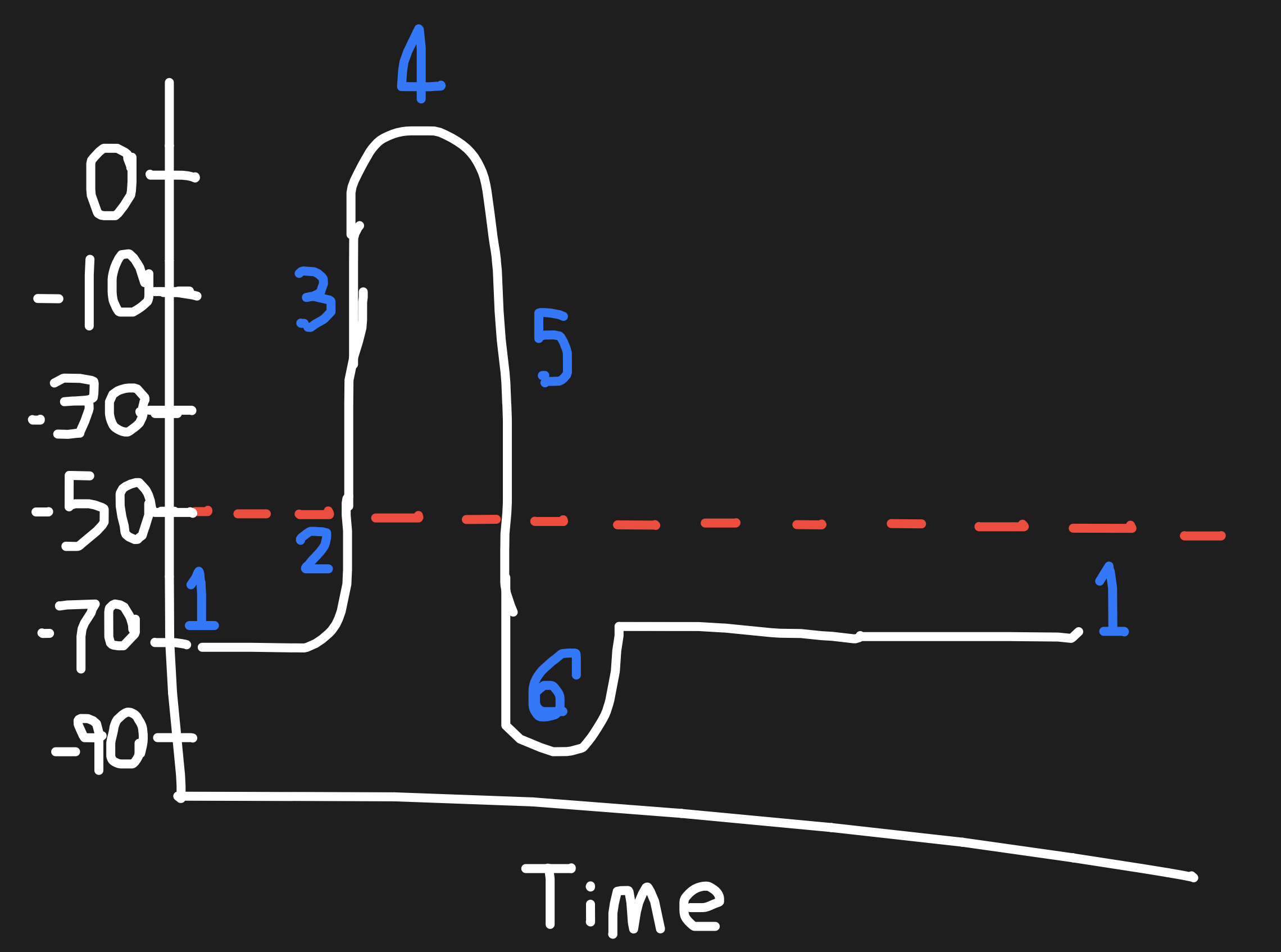
Hyperpolarization, Overshoots and K+ channels close.