Proteins and Enzymes
Study these flashcardsFree · spaced repetition · iPhone, Android, Mac & web
All cards
1
What are the circled called bonds called and what are their purpose?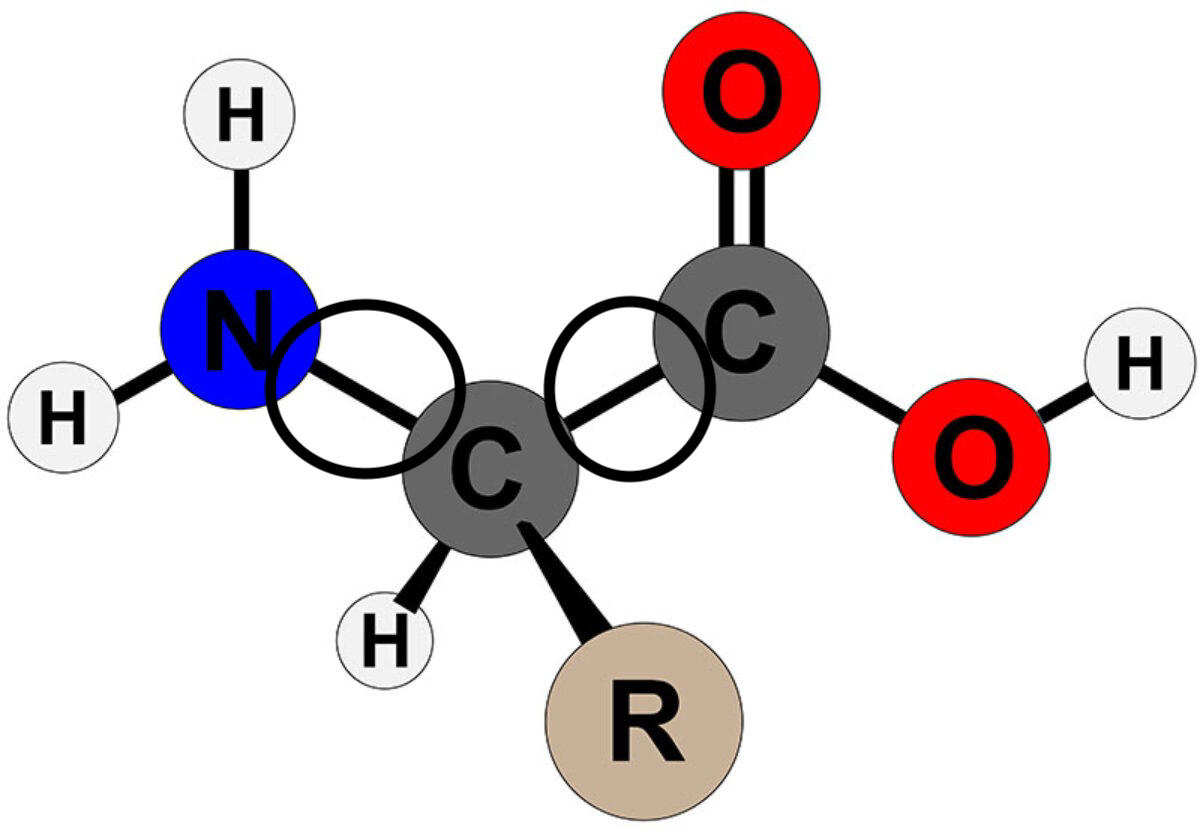
Psi bond is C-C and Phi bond is C-N, they allow rotation of the sides of the polypeptide backbone to fit into position of lowest free energy.
2
Describe how peptide bonds are formed?
Peptide bonds are formed from Carboxy ends connecting to the N terminus end from both Amino Acids.
3
Why do proteins fold?
- Intramolecular forces, such as hydrogen bonds, ionic bonds, van der Waals.
- Polarity
- Distribution of Amino Acids
- Polarity
- Distribution of Amino Acids
4
Describe how nonpolar and polar amino acids arrange/cluster in a molecule?
Nonpolar Amino Acids cluster in the interior of a peptide and Polar Amino Acids are arranged on the outside of the molecule.
5
Molecular Chaperones
Binds to partly folded proteins and helps them progress along the more energy-efficient folding pathway.
6
Describe all protein levels of organization:
Primary structure - Refers to the Amino Acid sequence
Secondary structure - Segments of the polypeptide sequence that spontaneously form alpha helices and beta sheets. Does not involve R groups. Involves N-H and C=O bonds.
Tertiary structure - Involves R groups, 3D organization that includes all non covalent bonds.
Quaternary structure - Protein has multiple subunits, noncovalent bonds hold the subunits together.
Secondary structure - Segments of the polypeptide sequence that spontaneously form alpha helices and beta sheets. Does not involve R groups. Involves N-H and C=O bonds.
Tertiary structure - Involves R groups, 3D organization that includes all non covalent bonds.
Quaternary structure - Protein has multiple subunits, noncovalent bonds hold the subunits together.
7
Where are Alpha Helices found?
In transport proteins and receptors. Flexible and Fibrous alpha helices.
8
What are the 2 ways Beta sheets can be formed?
From a parallel polypeptide running in same direction called parallel chains, a polypeptide chain that folds back and forth upon itself called antiparallel chains.
9
What are Beta Barrels?
Very large beta sheet that curves on itself, acts as water channels (porins).
10
What is protein function dependent on?
Shape
11
What are the different methods that proteins bind to other proteins?
Surface to surface interaction, Surface to string interaction, Coiled coil interaction or helix helix.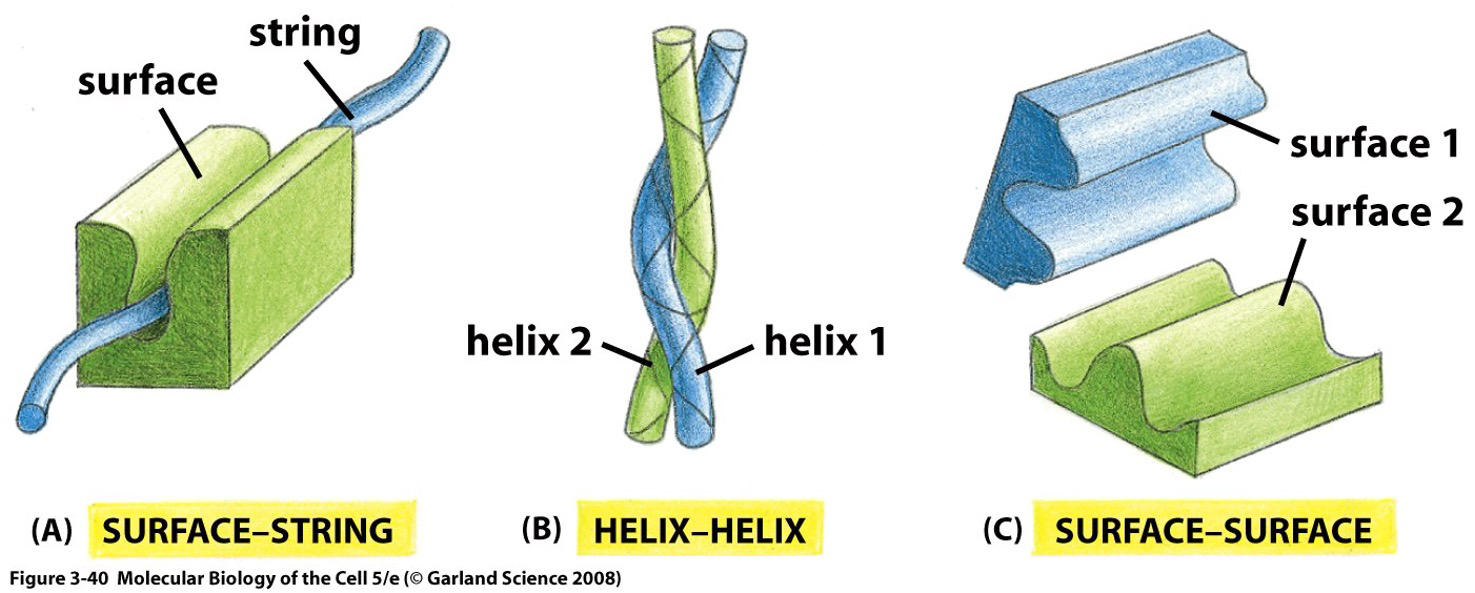
12
Describe protein binding
Protein binding is specific, substance bound to the protein is a ligand and depends on high affinity and formation of noncovalent bonds.
13
Define the Vmax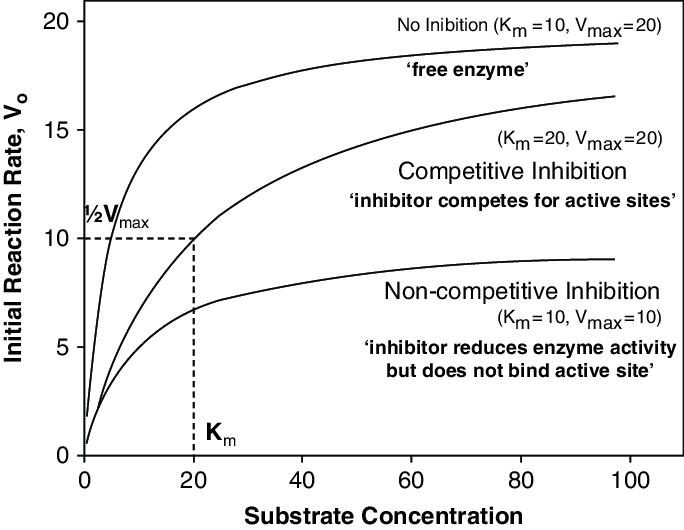
The max rate of product being produced in a reaction
14
Define the Km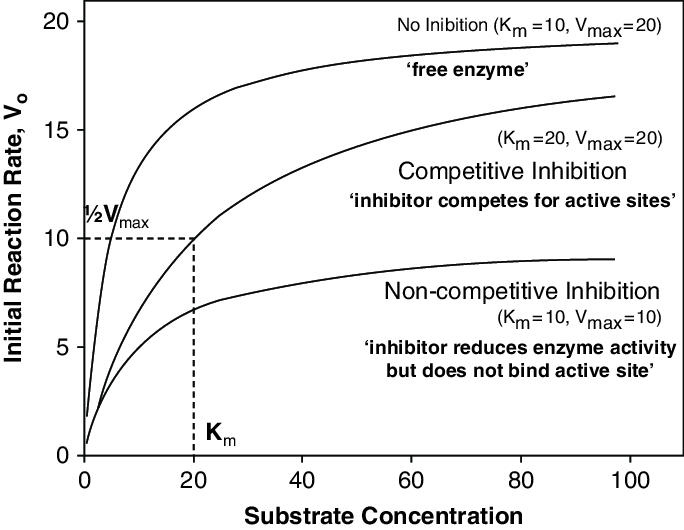
Half of the Vmax
15
How do you reach Vmax?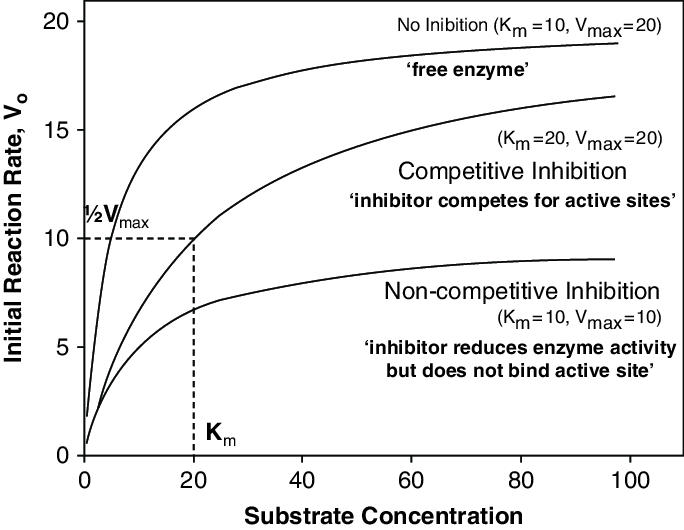
Increasing Substrate concentration.
16
Enzymes have a higher affinity for _____ state than the _____ "_____" stable state
Transition, Basic normal
17
Define Positive Feedback
Where allosteric binding of a ligand actualy increases activity of enzyme.
18
What does GTP do for a reaction?
Increases or activates activity.
19
Describe Competitive, Noncompetitive and Uncompetitive inhibition: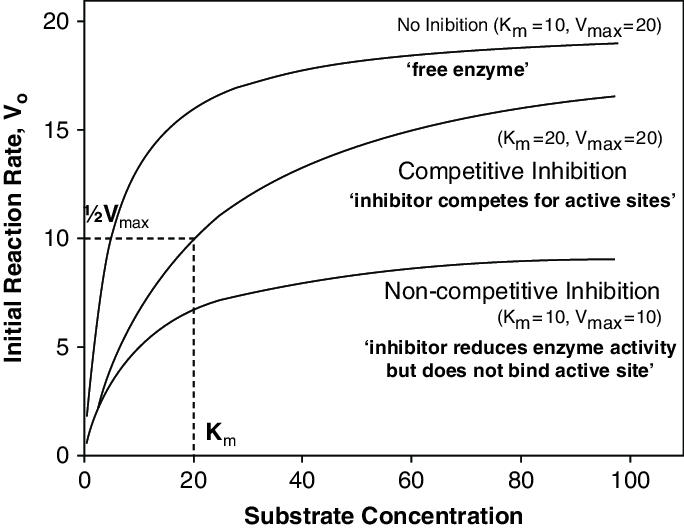
Competitive - Vmax same, Km increases
Noncompetitive - Vmax decreases, Km same
Uncompetitive - Vmax decreases, Km decreases
Noncompetitive - Vmax decreases, Km same
Uncompetitive - Vmax decreases, Km decreases