Bio 1010 Exam 1
Study these flashcardsFree · spaced repetition · iPhone, Android, Mac & web
All cards
1
Biology is
the scientific study of life.
2
Cells are
the basic units of life.
3
Every organism, or living individual, consists of
one or more cells
4
Cells use DNA to
produce proteins.
5
All life shares five characteristics:
Organization
Energy use
Maintenance of internal constancy (Homeostasis)
Reproduction, growth, and development
Evolution
Energy use
Maintenance of internal constancy (Homeostasis)
Reproduction, growth, and development
Evolution
6
An atom is
The smallest chemical
unit of a type of pure
substance (element) and the smallest portion of an element
Example: Carbon atom
unit of a type of pure
substance (element) and the smallest portion of an element
Example: Carbon atom
7
ORGANISM is
A single living individual.
Example: One acacia tree
Example: One acacia tree
8
Homeostasis is
the process by which a cell or organism maintains equilibrium. Example: Thermostat
9
Reproduction is either
asexual or sexual
10
Offspring of asexually reproducing organisms are
identical to their single parent. Example Strawberry Plants
11
Offspring of sexually reproducing organisms receive
genetic material from two parents.
12
Three Domains of Life
Archaea, Bacteria, Eukarya
13
Taxonomy
The biological science of naming and classifying organisms.
14
Domain Bacteria and Domain Archaea are
prokaryotic and unicellular.
15
Organisms in Domain Eukarya have
cells with nuclei.
16
Matter is
any material that takes up space
17
Elements are
Substances that cannot be broken down into other substances
18
Bulk Elements are
elements which make up the majority of cells (C,H,O,N, +)
19
Trace Elements are
elements required in small amounts (Fe, ZN)
20
Protons are
positively charged particles; located in nucleus (center) of the atom
21
Neutrons are
uncharged particles; located in the nucleus of the atom
22
Electrons are
negatively charged particles; located in energy levels outside nucleus
23
Atomic Number is the
number of protons in nucleus
24
In a neutral atom the # of electrons ______ the # of protons
equal
25
How many electrons can all three energy shells hold?
1st (closest) can hold 2 electrons
2nd can hold 8 electrons
3rd can hold 8 electrons
=18
2nd can hold 8 electrons
3rd can hold 8 electrons
=18
26
The Valence shell is
an atom's outer-most energy shell
27
A Molecule is
two or more atoms covalently bonded together
28
A Compound is
two or more elemental materials united in a definite ratio
29
Electronegativity is
an atom's ability to attract electrons
30
An Ion is
charged atoms; have unequal numbers of electrons and protons
31
An Isotope is
atom with same number of protons but different number of neutrons
32
A Covalent Bond is
2 or more atoms share pairs of electrons to form molecules
33
An Ionic Bond is
attraction between oppositely charged ions
34
Polarity is
partial charges on molecules due to unequal sharing of electrons
35
A Polar Covalent Bond is when
atoms share electrons unequally
36
A Hydrogen Bond is what
forms when partial positive regions of one polar molecule are attracted to the partial negative regions of another polar molecule
37
The 7 Properties of Water:
cohesion
adhesion
high surface tension
resists temperature change
water expands when frozen - solid (ice) less dense than liquid
evaporative cooling
solvent for many molecules, atoms, and ions
adhesion
high surface tension
resists temperature change
water expands when frozen - solid (ice) less dense than liquid
evaporative cooling
solvent for many molecules, atoms, and ions
38
Cohesion is
the sticking together of particles of the same substance.
39
Adhesion
the action or process of adhering to a surface or object.
40
Solvent
able to dissolve other substances.
41
Solution
a liquid mixture in which the minor component (the solute) is uniformly distributed within the major component (the solvent).
42
Solute
the minor component in a solution, dissolved in the solvent.
43
Hydrophilic
having a tendency to mix with, dissolve in, or be wetted by water. Loves Water.
44
Hydrophobic
tending to repel or fail to mix with water. Hates Water.
45
Evaporation
is the process of a substance in a liquid state changing to a gaseous state due to an increase in temperature and/or pressure.
46
When liquid water begins to freeze, the molecules move
apart for maximum stability of their hydrogen bonds.
47
Ice is ______ dense than liquid water
Less
48
Three States of Water on Earth
Solid
Liquid
Gas
Liquid
Gas
49
Acid is
a substance that causes increase of H+ ions in a solution
50
Base is
a substance which makes the concentration of OH- ions exceed the concentration of H+ ions
51
Neutral is
a substance which contains as much H+ as it does OH-
52
Buffer is
a substance that minimizes changes in the concentration of H+ and OH- ions in a solution. They help maintain a constant pH by consuming or releasing H+.
53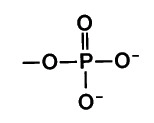
Phosphate
54
Amino
55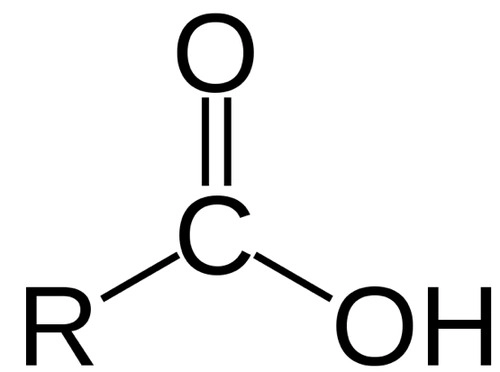
Carboxyl
56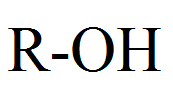
Hydroxyl
57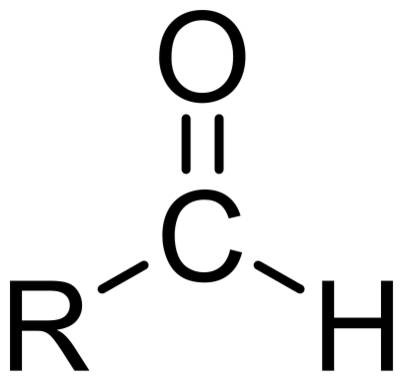
Aldehyde
58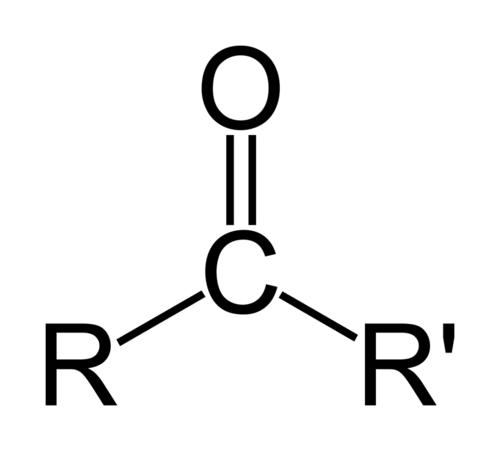
Ketone
59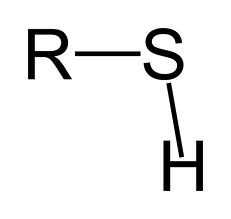
Sulfhydryl
60
Methyl
61
Functional Group is a
Group that attaches to one of more of the carbons [replaces H] and changes the molecule's chemical properties.
62
When one or more functional groups are attached to the carbon skeleton
the nature and shape of the functional group determines most of the chemical behavior of the molecule
63
A Functional Group is generally know as
the active site of the molecule
64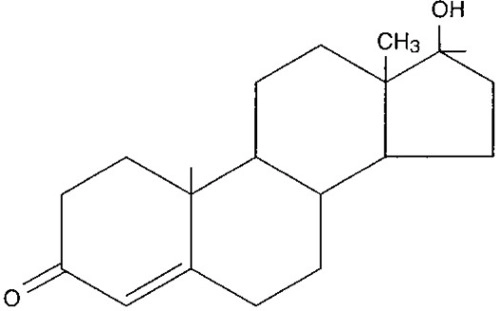
Steroid
65
Organic molecules are a
chemical compounds which contain carbon and hydrogen
66
Monomers are
single subunits which make up large organic molecules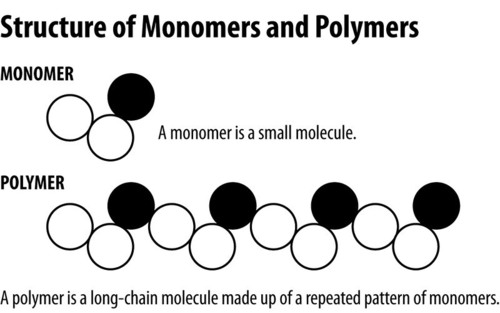
67
Polymers are
long chain of monomer subunits linked together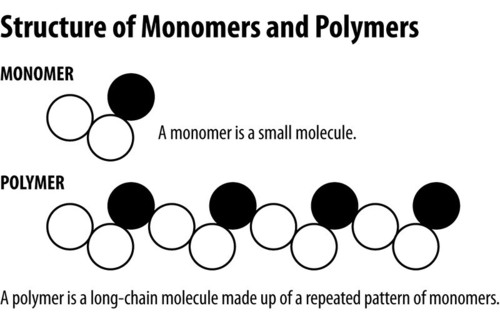
68
Macromolecules are
large molecules
69
Carbohydrates are
organic molecules which consist of Carbon, Hydrogen, and Oxygen in the proportion C1H2O1; composed of simple sugar (monosaccharide) subunits
70
Lipids are
large organic molecules that typically do not dissolve in water
71
Proteins are
polymers which consist of amino acid subunits
72
Nucleic Acids are
polymers which consist of nucleotide subunits
73
Dehydration (Condensation) synthesis is a
chemical reaction which joins monomers together with the removal of a water molecule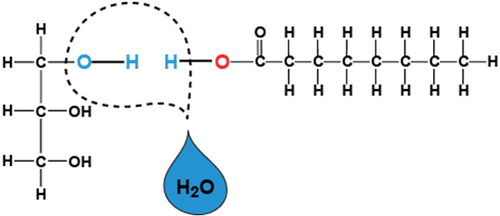
74
Hydrolysis is a
chemical reaction which separates monomers by the addition of a water molecule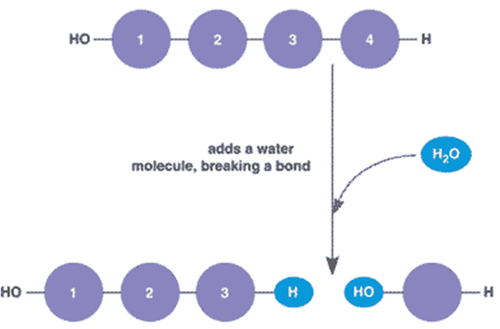
75
Monosaccharides (simple sugars)
are the monomers of the carbohydrates.
76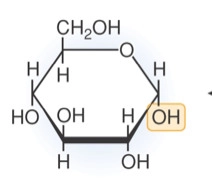
Glucose
77
Monosaccharides (simple sugars) which contain
3 carbons are commonly called triose sugars
5 carbons pentose sugars
6 carbons hexose
5 carbons pentose sugars
6 carbons hexose
78
Disaccharides are
two monosaccharides bonded together by a glycosidic bond (i.e., sucrose & lactose)
79
A glycosidic bond is
A covalent bond that joins the hemiacetal group of a saccharide molecule and the hydroxyl group of some organic compound (e.g., an alcohol).
80
Polysaccharides are
long chains of carbohydrates.
81
Cellulose
Cellulose is an organic compound with the formula n, a polysaccharide consisting of a linear chain of several hundred to many thousands of β linked D-glucose units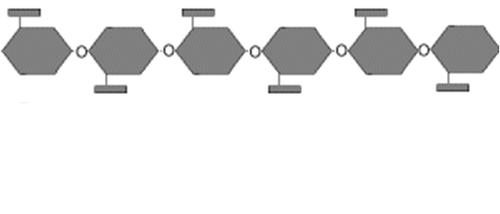
82
Starch
Starch or amylum is a polymeric carbohydrate consisting of a large number of glucose units joined by glycosidic bonds. This polysaccharide is produced by most green plants as an energy store.
83
Glycogen
Glycogen is a multibranched polysaccharide of glucose that serves as a form of energy storage in animals and fungi. The polysaccharide structure represents the main storage form of glucose in the body.
84
Chitin
found in outside skeleton of arthropods and in the cell walls of fungi
85
4 Roles of Carbohydrates:
Energy (fuel) source
Storage
Structure
Protection
Storage
Structure
Protection
86
Proteins have more
variable structures and functions than any of the other organic molecules.
87
The monomers of proteins are
amino acids.
88
All amino acids have the same general structure. They all contain
amino and carboxyl functional groups.
89
The R group of amino acids is
variable
90
Dehydration synthesis binds two amino acids, forming a
dipeptide
91
A peptide bond connects
amino acids.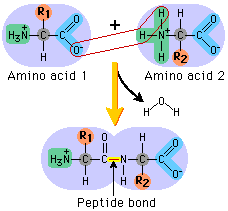
92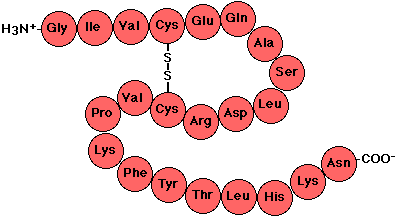
Protein primary structure
93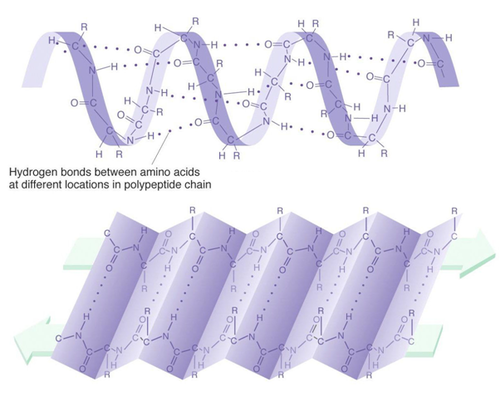
Protein secondary structure
94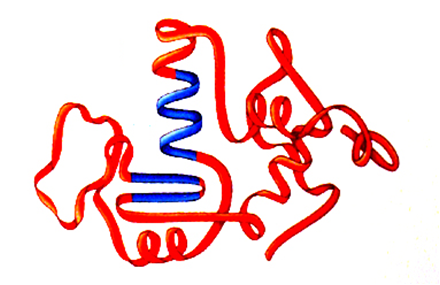
Protein tertiary structure
95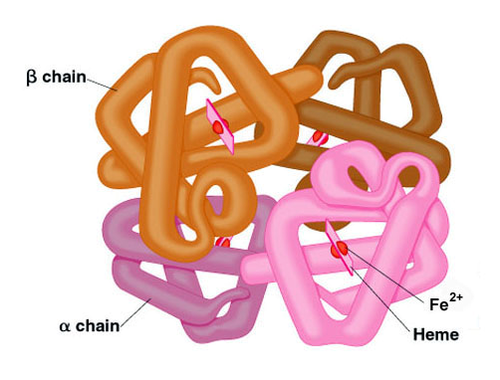
Protein Quaternary structure
96
The function of a protein depends on its
shape.
97
If a protein becomes ________, its shape changes, there for its function changes.
denatured
98
The 8 Roles of Proteins:
Energy (fuel) source
Structure
Catalytic
Signalingegulatory
Contractile
Transport
Storage
Protection/defense
Structure
Catalytic
Signalingegulatory
Contractile
Transport
Storage
Protection/defense
99
Nucleic acids include . These molecules contain genetic information
DNA and RNA
100
Nucleic acids molecules contain
genetic information
101
The monomers of nucleic acids are
nucleotides
102
A nucleotide consists of a
Pentose sugar (Ribose or Deoxyribose)
Phosphate group
Nitrogenous Base
Phosphate group
Nitrogenous Base
103
There are five types of nucleotides
adenine
cytosine
guanine
uracil
thymine
cytosine
guanine
uracil
thymine
104
Only DNA uses the nucleotide
thymine
105
Only RNA uses the nucleotide
uracil
106
Both DNA and RNA use these 3 nucleotides
adenine
cytosine
guanine
cytosine
guanine
107
There are two major groups of nitrogenous bases:
Pyrimidines and Purines
108
The nucleotides of the Pyrimidines base
cytosine
uracil
thymine
uracil
thymine
109
The nucleotides of the Purines base
adenine
guanine
guanine
110
The size of Pyrimidines are
Small
111
The size of Purines are
Large
112
The bond between the nucleotide monomers is called a
posphodiester bond.
113
Role of Nucleic Acids
Storage and use of genetic information
114
4 Lipid Types
Triglycerides
Steroids
Waxes
Phospholipids
Steroids
Waxes
Phospholipids
115
Unlike carbohydrates, proteins, and nucleic acids, lipids are NOT
built from chains of monomers.
116
Dehydration synthesis links 3 fatty acids to a glycerol molecule, forming a .
triglyceride
117
All carbons of a saturated fatty acid are
bonded to four other atoms. They are saturated
118
Naturally occurring unsaturated fats that have kinks.
Cis Fats
119
Trans fats have double bonds, like unsaturated fats, but remain straight. They therefore are
solid at room temperature.
120
Cholesterol is in
is in animal cell membranes; also, several hormones are derived from cholesterol.
121
Phospholipids are an important component of the
cell membrane.
122
Phospholipids have a
polar (hydrophilic) head and two nonpolar (hydrophobic) tails.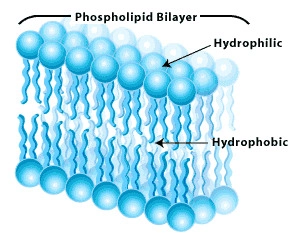
123
The 7 Roles of Lipids
Energy (fuel) source
Long-term storage of energy
Cell membrane structure
Protection
Insulation
Cushioning
Signaling
Long-term storage of energy
Cell membrane structure
Protection
Insulation
Cushioning
Signaling