Unit 4.6 Amines
Study these flashcardsFree · spaced repetition · iPhone, Android, Mac & web
All cards
1
What is an amine?
A compound containing a nitrogen atom with a lone pair of electrons.
2
What is an amide?
A carboxylic acid where the OH has been substituted for an $NH_2$ ($CONH_2$)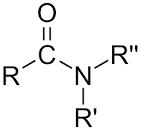
3
How can aliphatic amines be formed?
1.) Nucleophilic substitution of a halogenoalkane. The halogenoalkane is heated with a concentrated solution of ethanolic ammonia in a sealed tube. The product must then be treated with NaOH to reduce the amine salt to the amine.
2.) Reduction of a hydroxynitrile. This is done dry using lithium tetrahydridoaluminate as a very strong reducing agent is required. The product must then be treated with a dilute acid.
2.) Reduction of a hydroxynitrile. This is done dry using lithium tetrahydridoaluminate as a very strong reducing agent is required. The product must then be treated with a dilute acid.
4
What is one of the problems with the formation of amines through nucleophilic substitution?
Primary, secondary, tertiary, and quaterrnary amines and their salts are formed, requiring additional purification steps.
5
How can aromatic amines be formed?
Aromatic amines can be formed through the reduction of nitrobenzenes. This is done using concentrated hydrochloric acid and tin, heated under reflux. The aminobenzene salt is formed, which must be treated with dilute NaOH to form the desired product. The final product is the aminobenzene, plus a mixture of various tin compounds.
6
Describe the nature of amines
Amines are basic in nature, as their lone pair allows them to act as a proton acceptor. They are also nucleophilic
7
Describe the order of basicity of aliphatic and aromatic amines, and ammonia.
Aromatic amines are less basic than ammonia as the lone pair of electrons on the nitrogen overlap with the pi electron cloud of the benzene. Aliphatic amines are more basic than ammonia, as the carbon chain can shuttle electrons to stabilise the charge
8
What reactions do amines undergo in the prescence of acid chlorides?
A condensation reaction (addition-elimination)
9
What is the product of the reaction between an acid chloride and an amine?
An N-substituted amide and ammonium chloride
10
What is an N-substituted amide?
An amide where a hydrogen off of the nitrogen has been substituted for an R group
11
What is another name for the reaction between ethanoyl chloride and an amine?
Ethanoylation
12
What is another name for aminobenzene?
Phenylamine or aniline
13
How can amines be tested for?
Using nitric iii acid, $HNO_2$. An amine will result in
14
Which halogenoalkane is normaly used for the production of amines?
Bromoalkanes are normaly used due to their balance between being electronegative enough to form a dipole susceptible to nucleophilic attack, and ease of leaving.