CIVE 321 Exam 1
Study these flashcardsFree · spaced repetition · iPhone, Android, Mac & web
All cards
1
Environmental engineering is ...
the extension of principles from envrionmental science to solve complex environmental problems
2
Environmental engineering is NOT...
landscape architecture, cooling and heating of buildings, management and education with stormwater
3
Point source
from a discrete, identifiable location; can usually be measured directly or quantified
4
from a discrete, identifiable location; can usually be measured directly or quantified
Point source
5
Examples of a point source
sewage outfall, smoke stack
6
sewage outfall, smoke stack
Examples of a point source
7
Non-point source
those not defined as point sources
8
those not defined as point sources
Non-point source
9
Examples of a non-point source
auto exhaust, agricultrual and municipal runoff
10
auto exhaust, agricultrual and municipal runoff
Examples of a non-point source
11
Waste management hierarchy (from best to worst approach)
Source reducation (energy efficiency), recycling, treatment, disposal
12
Source reducation (energy efficiency), recycling, treatment, disposal
Waste management hierarchy (from best to worst approach)
13
Treatment
treating waste streams to minimize impact on public health and environment
14
treating waste streams to minimize impact on public health and environment
Treatment
15
Recycling
transport off-site and reprocess to become a feedstock
16
transport off-site and reprocess to become a feedstock
Recycling
17
Source Reduction
reduce waste quantity/toxicity at source of production
18
reduce waste quantity/toxicity at source of production
Source Reduction
19
Disposal
place in an engineered landfill to avoid impact on public health and environment
20
place in an engineered landfill to avoid impact on public health and environment
Disposal
21
Inflow
flow to sewers from illicit drain pipes that should be routed to storm sewer (especially during rainstorms)
22
flow to sewers from illicit drain pipes that should be routed to storm sewer (especially during rainstorms)
Inflow
23
How is Inflow addressed?
smoke bombs
24
Infiltration
groundwater entering sewer pipes
25
groundwater entering sewer pipes
Infiltration
26
How is Infiltration addressed?
engineering new systems
27
Sanitary sewers
carry municipal wastewater from home and commerical buildings
28
carry municipal wastewater from home and commerical buildings
Sanitary sewers
29
Combined sewers
accommodate both municipal wastewater and stormwater
30
accommodate both municipal wastewater and stormwater
Combined sewers
31
CFR / Code of Federal Regulations
compilation of regulations updated annually; Title 40 deals with the environment
32
compilation of regulations updated annually; Title 40 deals with the environment
CFR / Code of Federal Regulations
33
Federal Register
published each working day for the US government with announcements, regulation drafts, and new regulations
34
published each working day for the US government with announcements, regulation drafts, and new regulations
Federal Register
35
Sustainability
balancing social responsibility, corporate and societal prosperity, and protection for the environmental so that together they lead to an improved quality of life for ourselves and future generations
36
balancing social responsibility, corporate and societal prosperity, and protection for the environmental so that together they lead to an improved quality of life for ourselves and future generations
Sustainability
37
Three pillars of sustainability
people, prosperity, and the planet
38
Underlying physical law for material balances
conservation of mass (matter cannot be created or destroyed)
39
conservation of mass (matter cannot be created or destroyed)
Underlying physical law for material balances
40
one of the primary tools for analyzing environmental engineering problems
Material balances
41
steady state
no net change in mass in a system over time
42
no net change in mass in a system over time
steady state
43
What is the significance of a non-conservative pollutant in a steady state system?
assumed to have a constant reaction rate, so the pollutant reaction terms stays the same (use -VkC for reaction term)
44
Conservative substance
stays in same form in system
45
stays in same form in system
Conservative substance
46
Nonconservative substance
will undergo a reaction in system
47
will undergo a reaction in system
Nonconservative substance
48
Simplifying assumption for steady state in a material balance
rate of mass accumulation is zero
49
Simplifying assumption for conservative substance in a material balance
reaction term is zero
50
What is the significance of a nonconservative pollutant in a nonsteady-state system?
accumulation is nonzero, flow in and flow out are zero
51
Reactor
tanks where chemical and biological reactions are performed
52
tanks where chemical and biological reactions are performed
Reactor
53
Examples of reactors
beaker, concrete basin, lake, pond, city
54
3 type of ideal reactors in environmental engineering
batch, plug flow, completely-mixed flow
55
Batch reactor
no flow in or out during reaction time; convenient for reaction rate studies; used for small treatment plants
56
no flow in or out during reaction time; convenient for reaction rate studies; used for small treatment plants
Batch reactor
57
Plug Flow reactor
input moves a plug through system; no mixing in direction of flow
58
input moves a plug through system; no mixing in direction of flow
Plug Flow reactor
59
Completely-mixed flow reactor (CMF or CSTR)
concentration in reactor is instantly and completely mixed; concentration is same everywhere in tank and in effluent
60
reactor, input = ?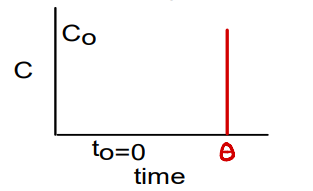
plug flow reactor, pulse input
61
reactor, input = ? 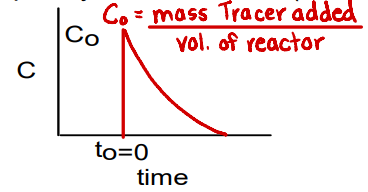
completely mixed reactor, pulse input
62
reactor, input = ?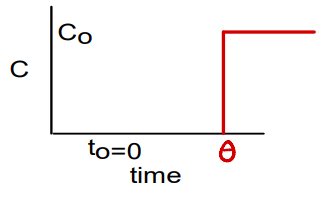
plug flow reactor, step input
63
reactor, input = ?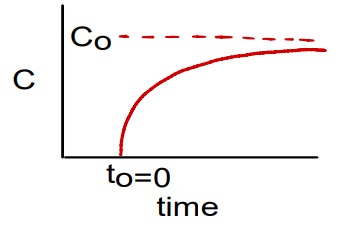
completely mixed reactor, step input
64
For a first order reaction, why does a higher initial concentration have a larger reaction rate?
The reaction rate is directly proportional to initial concentration for a first order reaction since r = kC.
65
Key water pollutants
Oxygen Demanding Matter, Pathogens, Nutrients, Salts, Toxic Organic Chemicals, Toxic Metals, Suspended solids, Heat, Contaminants of emerging concern (CEC), Unregulated Drinking Water Contaminents
66
Examples of oxygen demanding matter
sewage, industrial wastes, animal wastes
67
Common water-born diseases caused by pathogenic bacteria, virus, and protozoa
cholera, dysentery, typhoid, polio, hepatitius, giardia
68
NPDES
National Pollution Discharge Elimination System
69
What does NPDES regulate?
the types and amounts of pollutants that may be discharged into water bodies
70
UCMR
Unregulated Contaminant Monitoring Rule
71
Example on the UCMR list
Manganese
72
TMDL
Total Maximum Daily Load
73
What is the total maximum daily load?
the maximum amount of pollutant that a waterbody can receive and still meet water quality standards
74
Endocrine disruptor
any chemical that interferes with the body's endocrine system, resulting in developmental, reproductive, neurological, or immune deficiencies in humans and animals
75
any chemical that interferes with the body's endocrine system, resulting in developmental, reproductive, neurological, or immune deficiencies in humans and animals
Endocrine disruptor
76
PPCP
Pharmaceuticals and Personal Care Products; products used in personal healthcare, cosmetics, and medicated product that contain a collection of thousands of chemical compounds
77
BOD
Biochemical oxygen demand; measures O2 consumed by microbes as they oxidize organic compounds and grow new cells
78
ThOD
Theoretical oxygen demand
79
Practical reasons for BOD measurements
1. analysis of stream assimilative capacity 2. quantifying the estimated biodegradability of a waste stream 3. monitoring and control of wastewater treatment plants 4. regulation of discharges to natural waters
80
Limitations of BOD as a measurement tool
1. Toxins can inhibit organisms 2. Seed variability 3. Length of incubation time 4. Nitrification may occur
81
COD
Chemical oxygen demand; more rapid than BOD, organic chemicals oxidized chemically instead of biologically
82
Reason for nitrification on the BOD test
many wastewaters contain ammonia, which can be oxidized biologically to nitrate
83
Reaeration in rivers
the process through which oxygen from the air dissolves into rivers and replenishes dissolved oxygen
84
Deoxygenation in rivers
the process through which the concentration of dissolved oxygen in rivers decreases
85
Purpose of the Streeter-Phelps equation
predict minimum DO in order to determine if better treatment of water prior to discharge is needed to raise DO at a critical point
86
Assumptions for streeter-phelps oxygen sag model
steady state, plug flow, complete mixing in lateral direction, stream velocity is constant
87
Limitations of Streeter-Phelps equation
source/sinks ignored; NBOD not included; non-point sources not included; mutliple point sources are handled by dividing the river up into segments
88
thermal stratification
seasonal variation in air and water temperatures result in different density layers in lakes throughout the year
89
annual mixing cycle in lakes
turnover/mixing in the fall and spring, stratification in the winter and summer
90
three layers in a lake (from top to bottom)
epilimnion, metalimnion, hypolimnion
91
Eutrophication
increase in algae growth caused by high nutrient concentrations in lakes in the spring (can cause DO fluctuations and toxic biological products)
92
Ways of preventing eutrophication
low nitrogen/phospherous fertilizer, low phospherous detergent, dredging phospherous-rich sediments, P-precip with Alum